Stanbic Bank
Stanbic Bank
21.2 C
Kampala
Stanbic Bank
Stanbic Bank
Home Blog Page 1623

The role of women in education systems in Africa

Hendrina Chalwe Doroba

By Hendrina Chalwe Doroba

Nowadays, International Women’s Day (IWD) is celebrated in many countries around the world. It is a day when women are recognized for their achievements without regard to divisions, whether national, ethnic, linguistic, cultural, economic or political.

IDW is also an opportunity to accelerate the 2030 Agenda as well as Africa’s Agenda 2063, transforming this momentum into action through the effective implementation of the Sustainable Development Goals (SDGs), especially goals number 5: Achieve gender equality and empower all women and girls; and number 4: Ensure inclusive and quality education for all and promote lifelong learning.
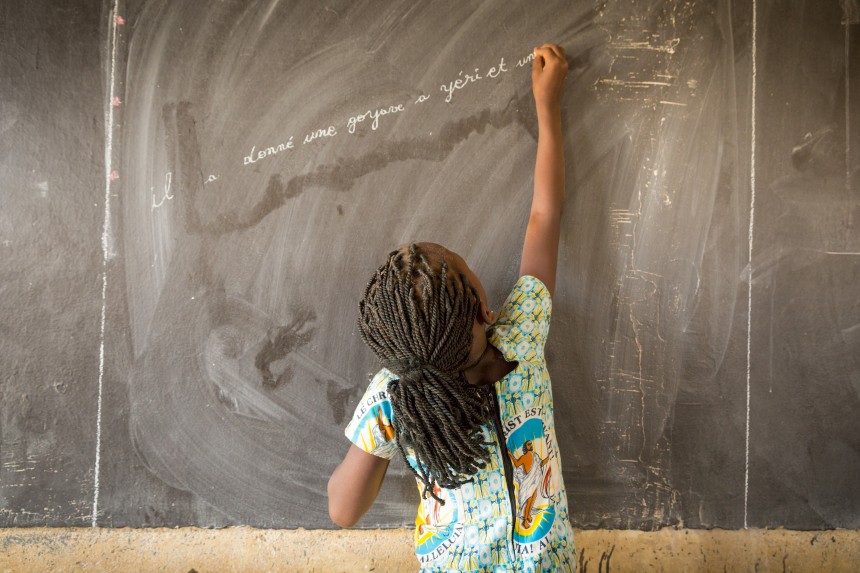
A girl writes on the board in a classroom

The absence of women in education systems reinforced gender inequalities

Women have in the past been ignored in the development of education systems in Africa. This is evident in the blatant disparities in the rates of access, retention and completion for boys and girls. For a very long time girls have comprised the largest proportion of children that have been unable to access education.

The latest UIS data reveals that Africa is home to more than half of the global total of out-of-school children of primary school age. Half of these children in the region have never been enrolled and may never enroll without added incentive. Girls are 56% more likely to never have enrolled in school than boys at 42%.

These glaring statistics corroborate the fact that the absence of women during the development of education and training systems in Africa has had serious implications on gender inequality in education and consequently on the socio-economic development of Africa.

The education of women is the most effective means for reducing the inequalities between men and women and guaranteeing the full participation of women in the socio-economic development process.

Bridging the gender gap through policy

Notably, there has been a significant development in the inclusion of women and women’s rights in key decisions in the education arena. The advent of the Maputo Protocol and other key Africa Union frameworks speak of the need to bridge the gender gap in education and other sectors as well as underpin the importance of including women in decision-making processes. These documents have set the right pace and environment for women to add their voices on Africa development matters.

African governments have also developed policies that recognize roles of women in education systems. These policies have given rise to affirmative action across all levels of education where women have been allocated more positions in different levels of learning institutions, and teenage mothers have been integrated back to school. There have also been provisions on gender-friendly environment with some governments establishing laws and guidelines to prevent and mitigate school-related gender-based violence (SRGBV).

In addition, a number of countries are implementing gender-responsive budgeting and reserving positions in their respective ministries of education and parliaments for women as in the case of Rwanda and Kenya. Women have also been appointed to head learning institutions. This is great progress, but a lot remains to be done to bridge the gender equality gap in Africa’s education systems.

Women are needed in the decision and policy-making process

Today, 263 million children and youth are out of school globally, of which 130 million are from Africa, according to a new data by the UNESCO Institute for Statistics (UIS) in 2016.  Issues such as poverty, war and cultural stereotypes continue to get in the way of children’s access to education.

Girls with disabilities can be especially marginalized. A recent research from western Africa found that they face increased isolation, stigmatization and discrimination, lack schooling and other opportunities to participate in communal life, and are at elevated risk of abuse, including forms of sexual violence.

This underscores the need to have women in decision making spaces in social, economic and political spheres for Africa’s development.

Women should not only have a comfortable space to facilitate their work but there should also be an increase in the number of women in policy-making positions.

Women will need to support their fellow women within these decision-making and decision-implementing structures. It is however very crucial for these women not to operate in isolation as they still require continuous mentoring and support.

The global and continental appeal by FAWE

The Continental Education Strategy for Africa 2016 – 2025 (CESA 16-25) is very clear in terms of aspirations of education within the continent and how it fits in to the sustainable development agenda. Unfortunately, issues of women are not well articulated in this document.

As the Forum for Africa Women Educationalists (FAWE), we felt there is need to support various governments that will be implementing the strategy to operationalize and integrate gender issues in their work programs and budgets for all interventions that they will be implementing in the education sector. The respective governments should be in a position to adopt and domesticate the Gender Equality Strategy for CESA 16-25 developed by FAWE and AU/CIEFFA as a tool to address gender issues in the education sector.

But then again, women also need to play a critical role in mentoring young girls and boys into decision- making spaces. Coming from a position where society has looked down on them to becoming part and parcel of leadership in Africa including the highest organs of the continent, such as the appointment of Dlamini Zuma as Chair of the Africa Union Commission (AUC), women need to create spaces for young people to explore their potential.

Women in high places should push for policies that create an enabling environment for the allocation of resources towards the development of youth (18-35 years) and young people on the continent. This will go a long way in ensuring that girls, boys and youth have equal opportunities and resources to achieve their aspirations.


The Writer is the Executive Director for the Forum for African Women Educationalists (FAWE). She is responsible for coordinating regional programmes across the 33 sub-Saharan African countries.

 

Stories Continues after ad

Let’s save the future of our children, do not perpetrate bringing children to the streets

KCCA Spokesperson Peter Kaujju

By Peter Kaujju

On Saturday of January 2018, while I observed the traffic signs along Jinja Road near Centenary Park, just before Kitgum House, a very handsome little boy who I later came to know as Brian approached me and asked for money, indicating he wanted it to buy something to eat. Brian, who is about 10 years old, spoke relatively good English and I was prompted to engage him further in a conversation, asking him I wanted to be his friend. Since then, I have been speaking to this little soul every Saturday as I head to work in the City Center of Kampala and sometimes when heading out of town.

Brian, has since revealed to me that he comes from Karamoja and was brought to Kampala by a distant relative who promised to take him to school but has since ended on the streets of Kampala daily to ask for money. This money is given to his Kampala caretaker or ‘guardian’ every end of day. I have for the past two months now been engaging him about a plan to take him back to his home but he told me ‘that woman who brought me will pick me and I will be killed’. He has revealed to me that his mother is alive but he won’t go back home because of the fear he told me about. My confidence building mission that he will be absolutely safe continues by the day and there is progress, I must say!

The slight setback I experienced last weekend was to find him with a small box of chewing gum given to him by the master to sell as he asks for money. Though I insisted on taking him back home so he can continue with school, it took us time to chat freely as he was not sure what my intentions to discuss with him were. In fact, one time when I appeared with someone else, he told us a different name and said he was from Kenya until I removed a cap I reminded him about myself. This is very typical of many of these children as they are coached not to reveal their identity or share details where they come from.

Painfully, as my conversation continues with him, Brian is only one among many children who previously were living with their parents, guardians and attending school in the countryside but have ended up on city streets to ‘work’ (beg) for money on behalf of such adult offenders that bring them to Kampala and I guess, other towns under the guise of better life depriving them of their future!

Many of these children live unaccompanied, some report to the streets for ‘work’ but stay with their families from surrounding slums while others live there all by themselves. The influx of many families from Karamoja settling in Katwe and Kisenyi does not make the situation any better and points greatly to the falling apart of the social fabric and family bond.

More worrying is that while on these streets, these children are exposed to many activities which are of high risk to their lives such as child labour, drug abuse, crime and exposure to poor health conditions amidst the high-speeding motor vehicles, Boda Bodas and Bicycles.

A number of state and non-state interventions have been embraced such as rescue, rehabilitation and resettling of these children with their parents and guardians back home. Kampala Capital City Authority (KCCA) is working with entities like Ministry of Gender, UWESO, Retrak, Dwellings Places and KYDA among others but the push factors such limited or lack of care and responsibility on the side of parents/guardians, lies propagated by adult offenders luring these children continue the undermine these efforts.

There are several engagements that have been conducted including sensitization of these communities with area Members of Parliament and other key stakeholders, reuniting children with their families and arrest as well as prosecution of adult offenders that lure these children living their homes but the vice continues.

Chapter 4 of the Uganda Constitution provides for the numerous rights of children which we must observe all the time.

In addition to a continued rescue of these children, a firm stand especially prosecution of those taking advantage of these children and engagement with communities to observe the constitutional rights of children, KCCA is planning a tougher child protection Ordinance.

In our African setting, children belong to the community and I implore parents, guardians, Local Council leaders, Members of Parliament and the communities to always work tirelessly in protecting the children. Let’s redeem those that have ended up on the streets because of mistreatment, propagation of lies, neglect and grant them chance to prepare for adult life and also address the push factors in our respective jurisdictions.

The Writer is Head of Public & Corporate Affairs, KCCA


Stories Continues after ad

Hope Kivengere to lead Comesa observers for Egypt presidential elections

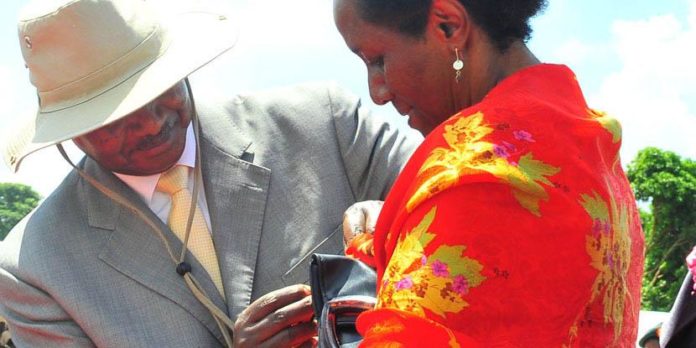
President Yoweri Museveni dons Ms. Hope Kivengere with a medal during the 2010 Heroes Day. Ms Kivengere will the COMESA delegation for the Egyptian elections.

Hope Kivengere, member of the COMESA Committee of Elders from Uganda, will lead the COMESA Observer team to monitor the Egyptian presidential elections set for March 26 -28 2018.

A seasoned communications professional, Ms. Kivengere is currently the Advisor of the AU/UN Information Support Team.

At the invitation of the National Elections Commission (NEC) of Egypt, COMESA and the Community of Sahel-Saharan States (CENSAD) will deploy a joint Election Observation Mission to the elections after undergoing a joint two-day training in Cairo before deployment to various governorates.

As part of its mission in Egypt, the COMESA delegation will conduct pre-election observation which will include consultations political parties, the NEC, security agencies, Civil Society Organizations (CSOs) the Media and other stakeholders. The aim is to gather information on election-related issues and to assess election preparedness. The delegation will also engage with the Diplomatic Community as well as with other election observers on the ground in the selected provinces.

The findings of the Pre-Election Observer missions will enhance understanding of the electoral processes in Egypt. These findings will be included in the detailed report that will be submitted to the NEC and the Government within 90 days from the election date.

The joint COMESA -CENSAD deployment is informed by a Memorandum of Understanding signed between the AU and the Regional Economic Communities (RECs) in 2008, and a decision of 20th Technical Meeting of AU and RECs on Early Warning Systems held in December 2017 in Djibouti further underscored the need for collaboration between the RECs.


Stories Continues after ad

Sudhir expands horticulture to Kayunga

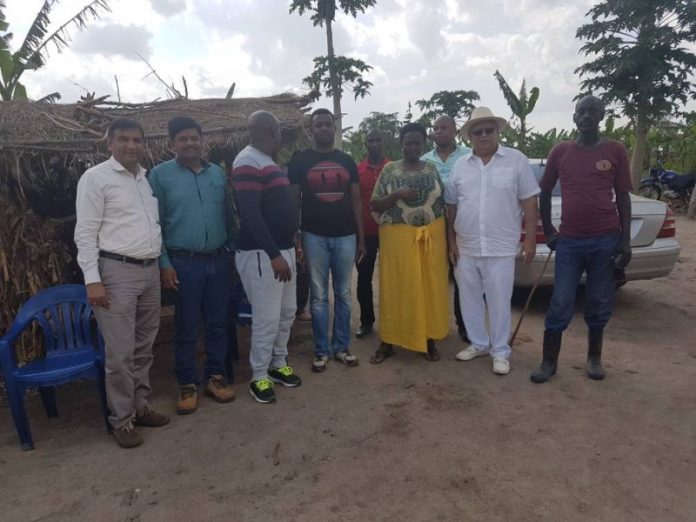
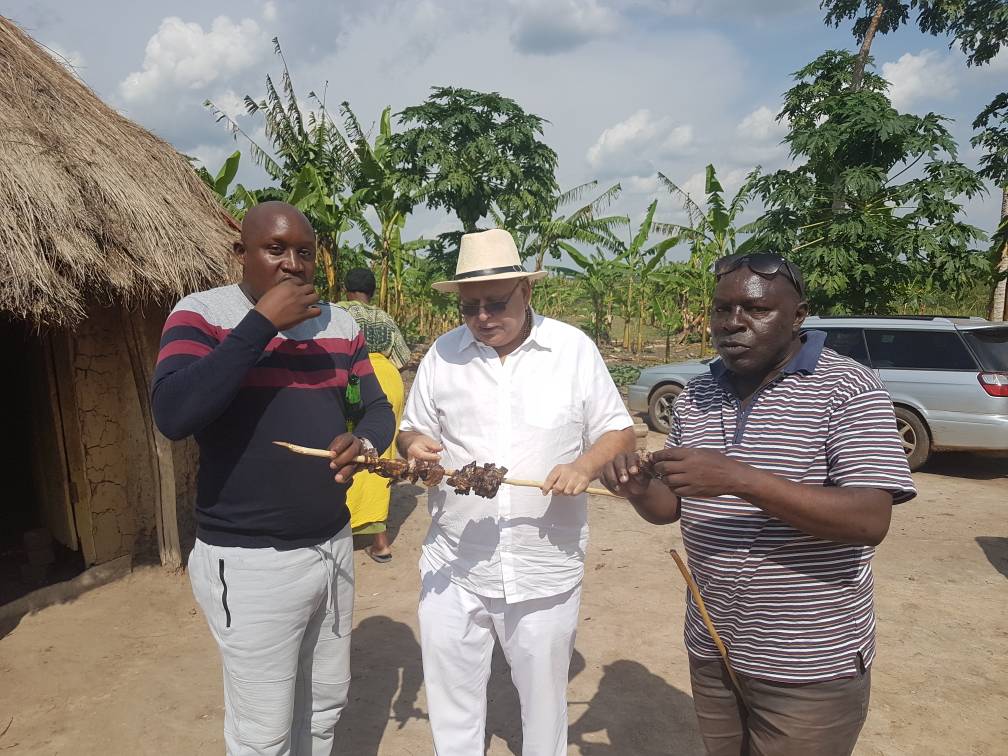
Sudhir and some of the people who sold him land in Kayunga pose for a photo.

City tycoon, Sudhir Ruparelia has acquired 9 square miles of land in Kayunga district to expand on his horticulture and floriculture farming business.
Sudhir bought the land in Bale County as part of expansion to Masaka and Entebbe road floriculture business.
His flower businesses last year were selected the best from the East African region and top the flower exporting countries from East Africa. Sudhir flower business employs more than 50,000 people both indirect and directly.

Sudhir is one of the top tax and employers in Uganda and his expansion into the fertile Kayunga district which boarders River Nile is seen as part of his growing horticulture industry that has made Uganda one of the leading fresh flower exporting countries in the world.

Stories Continues after ad

Parliament hosts the fourth Commonwealth Youth Assembly Summit

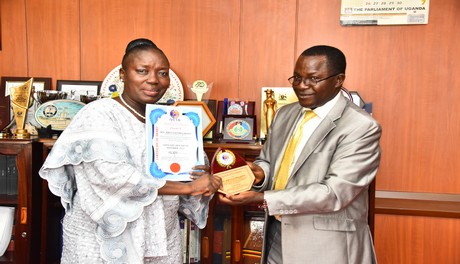
SPEAKER RT. HON REBECCA KADAGA RECEIVING AN AWARD FROM HON TWESIGYE JOHN (BUNYARUGURU COUNTY FOR HER SUPPORT FOR VOCATIONAL EDUCATION IN UGANDA AT PARLIAMENT

Kampala: Parliament of Uganda is set to host a landmark Fourth Commonwealth Youth Parliament Summit from 14 to 19 March with a motive of exposing youth to all levels of engagements in leadership.
Youth Parliament Summit is an annual event hosted by various common wealth countries attended by the youth between the ages of 12 and 22 with the inception of exposing them to the realities of legislation and governance at regional level.
Speaking in a meeting with the delegation from the Commonwealth Parliamentary Association (Africa Region) yesterday, the Deputy Speaker of Parliament, Jacob Oulanyah such conferences are so empirical in that they avail all required platforms for youth to learn to respect the rules of the house and play within them hence leading to the opening of a new chapter of order and stability.
‘’under the theme; ‘Securing a better future for Africa: Role of the youth’, various topics such as youth unemployment, alcoholism and drug abuse, teenage pregnancy and HIV/AIDS will be discussed for harnessing the youth in leadership.’’ He said at parliament.
And according to Kasilo County MP Elijah Okupa who doubles as the Treasurer of the CPA (Uganda), youth will hold a plenary session in the Parliamentary Chambers and thereafter, make resolutions.
He noted that Uganda will be represented by 25 youths selected from all regions of the country, while other countries will each select two representatives; male and female.
However the Assistant Regional Secretary at the CPA (Africa Region) Demetrus Stephen Mgalami, said the resolutions from the Youth Conference will form the agenda of the regional conference that will be held in Botswana August this year.
‘’Their Resolutions will be presented by the Speaker and the Deputy Speaker that will be elected during the Youth Conference, heard and debated by over 300 Members of Parliament across Africa sitting in Botswana who will make recommendations.’’ Mgalami said.

Stories Continues after ad

Fortbet punter wins Shs99m from Shs5, 000

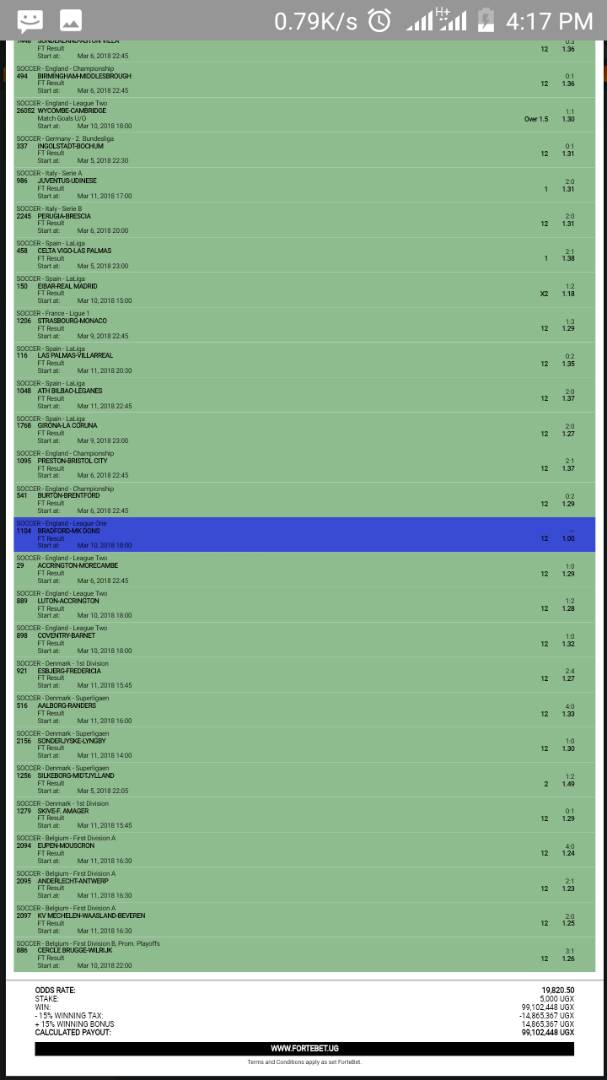
It did not end with the punter (client) who recently won Shs308 million after only staking Shs1000. Another punter has done it winning Shs99, 102,448 and guess what, after staking only Shs5000.
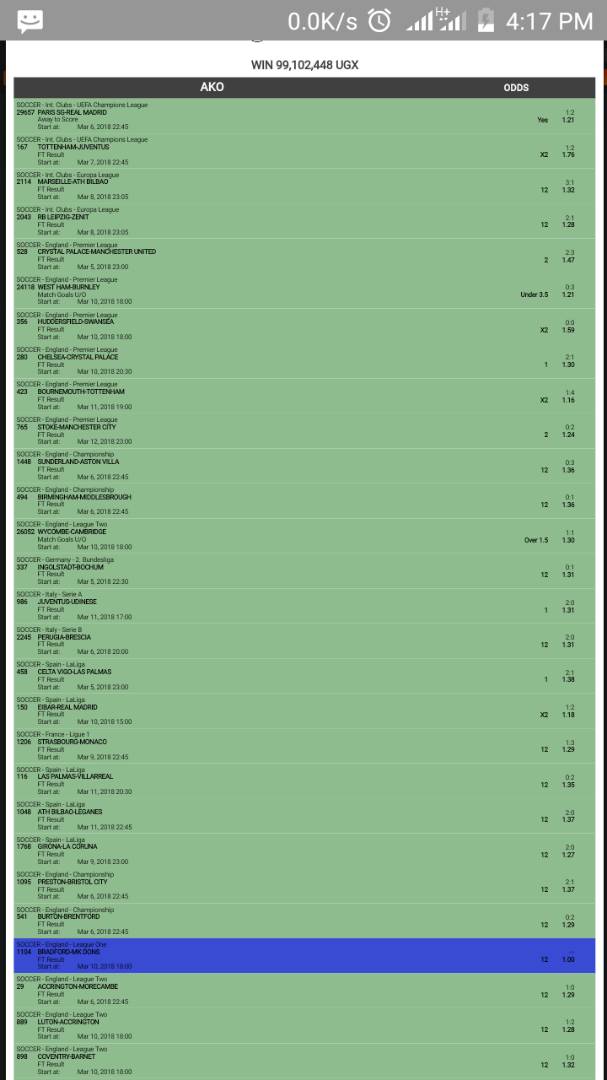
But how did this punter make it? Well, the trick was as very simple as selecting most games for either team to win (12). Out of the 37 matches that this punter selected, he predicted that 23 games would end without a draw and indeed it happened.
Under this prediction, he selected the following matches; Marseille-Athletic Bilbao and RB Leipzig-Zenit (Europa League), Sunderland-Aston Villa, Birmingham-Middlesbrough, Preston-Bristol City and Burton-Brentford (English Championship), Ingolstadt-Bochum (Bundesliga 2), Perugia-Brescia (Bendesiliga B), Strasbourg-Monaco (French League 1). Still under this either teams to win, he selected three matches from La Liga; Las Palmas-Villarreal, Ath Bilbao-Leganes and Girona-La Coruna.
He added on the following matches from English League Two; Accrington-Morecambe, Luton-Accrington and Coventry-Barnet. He went ahead to select matches (under the same prediction) from elsewhere as follows; Esbjerg-Fredericia and Skive-F.Amager (Denmark 1st Division), Aalborg-Randers, Sonderjyske-Lyngyby and Silkeborg-Midtjylland (Denmark Super League). He then selected other three matches from Belgium first Division A; Eupen-Mouscron, Anderlecht-Antwerp and KV Mechelen-Waasland and then Cercle Brugge-Wilrljk from Belgium first Division playoffs.
Away from either team to score, this punter also made another prediction. Here, he selected two matches from Champions League; both teams to score for PSG-Real Madrid and a draw or away win Tottenham-Juventus.


He also selected an away win for Crystal Palace-Manchester United, fewer than four goals for West Ham-Burnley, an away win for Huddersfield-Swansea, home win for Chelsea-Crystal Palace, a draw or away win for Bournemouth-Tottenham and an away win for Stoke-Manchester City (all from English Premier League). He too selected home wins for matches; Juventus-Udinese (Italian serie A) and Celta Vigo-Las Palmas (La lIga). This was in addition to-a draw or away wins for Eibar Real Madrid. This punter had also selected either teams to win in the match Brandford-MK Dons but it was cancelled. This ticket carried a total odd of 19,820 and it won. This money was paid out as soon as this ticket won. Congratulations! Do you want to also win big, try Fortebet today and put your luck to test? Remember you can only win if you place a bet.

Stories Continues after ad

Zuma finally charged with corruption

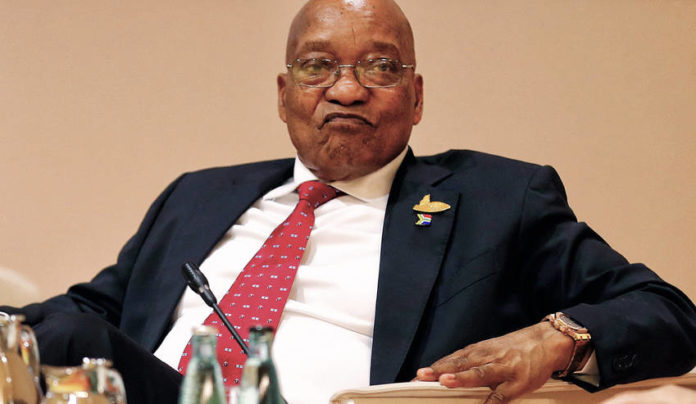
President Jacob Zuma

Former South African President Jacob Zuma was charged with corruption on Friday over a US $2.5 billion state arms deal, a stunning judicial ruling on a continent where political ‘Big Men’ rarely face their day in court.
Zuma, who was forced to resign by the ruling African National Congress (ANC) last month, was at the center of the deal to buy European military kit that has cast a shadow over politics in Africa’s most industrialized economy for years.
Chief state prosecutor Shaun Abrahams told a media conference that Zuma’s attempts to head off the charges that have been hanging over him for more than a decade had failed.
The 75-year-old disputed all the allegations against him, he added.
“After consideration of the matter, I am of the view that there are reasonable prospects of successful prosecution of Mr Zuma on the charges listed in the indictment,” Abrahams said.
“I am of the view that a trial court would be the most appropriate forum for these issues to be ventilated and to be decided upon,” he said.
Zuma will face 16 charges relating to 783 instances of alleged wrongdoing, National Prosecuting Authority (NPA) spokesman Luvuyo Mfaku said.
Then deputy president, Zuma was linked to the arms deal through Schabir Shaikh, his former financial adviser who was jailed for corruption. The counts were filed but then dropped by the NPA shortly before Zuma successfully ran for president in 2009.
Since his election, his opponents fought a lengthy legal battle to have the charges reinstated. Zuma countered with his own legal challenges.
Zuma has also been implicated by South Africa’s anti-corruption watchdog in a 2016 report that alleges the Gupta family, billionaire friends of Zuma, used links with him to win state contracts. The Guptas and Zuma have denied any wrongdoing.

Stories Continues after ad

IGG, which way the BoU saga?

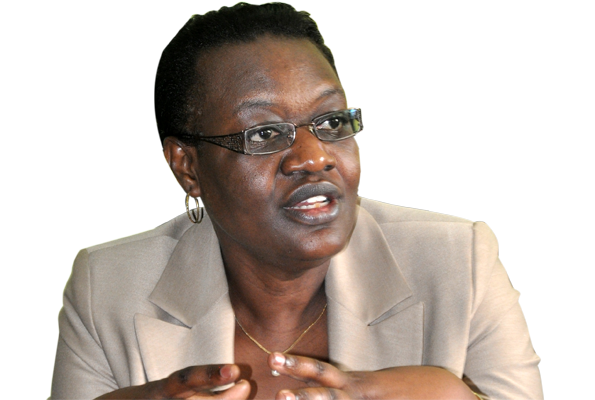
IGG Justice Irene Mulyagonja

There is no doubt corruption in Uganda has reached a crescendo, with public servants being cited in the theft of billions, money that is supposed to go towards service provision for the benefit of all people in Uganda, irrespective of status.

The most recent and shameful theft was in the Office of the Prime Minister, where officials of the refugee department reportedly inflated figures of those fleeing insecurity in their countries, and also allegedly dipped their fingers in the kitty meant to help these hapless people.

Needless to say, some of this money is invested here, and one wonders what the accountability oversight agencies and institutions like Parliament, Police and the Inspector General of Government (IGG) are doing to bring this madness to a halt.

Therefore, it was not surprising that the IGG Justice Irene Mulyagonja recently urged Parliament to reinstate the Leadership Code to its original form, to allow for those holding public office to declare all assets belonging to them, their spouses and children.

Indeed, she noted, and rightly so, that previously the IGG office would verify the declared information but that the lacuna created by the amendment (to exclude the spouses and children) had made it ‘impossible’ for her office to ascertain the authenticity of the declarations.

However, the conundrum does not only engender the possibility of abusing the authenticity of declarations, but has now also encroached on the space that would seemingly be for procedural matters relating to staff working in institutions and agencies of government.

Of recent the IGG is faced with the conundrum as to whether the Bank of Uganda Governor acted within his powers to make administrative changes at the Central Bank, one of which involved the retirement of Justine Bagyenda, the erstwhile Director of Bank Supervision. Ms. Bagyenda has since sought the protection of the IGG, who in turn has reportedly blocked the changes made by Prof. Mutebile.

‘This is to direct the Board of Directors of BoU not to ratify any actions or decisions taken by the Governor on or around February 7, 2018 in relation to the impugned appointments and transfers until such time as the investigation by the Inspectorate has been concluded or until this office directs otherwise’, the IGG’s March 12 letter states in part.

But the IGG’s intervention into the matter has raised serious questions about the role and the administrative power of the BoU Governor, after it emerged the IGG wrote to Prof. Mutebile casting aspersions about his decision to retire Ms. Bagyenda.

And needless to mention, such communication is not good for any of the parties involved as it affects staff performance across the board at the Central Bank.

Stories Continues after ad

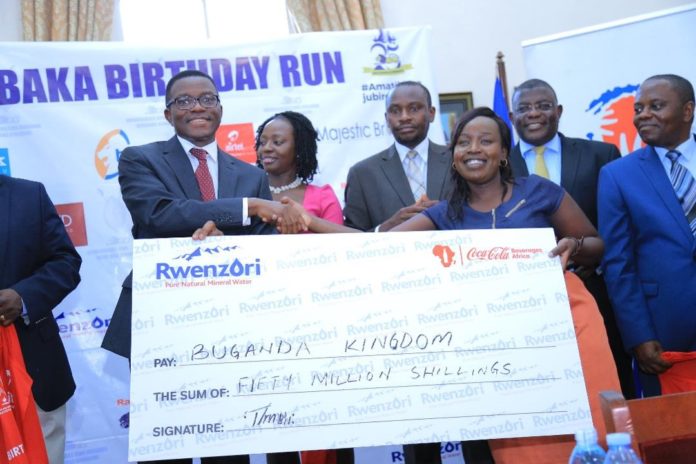
Coca Cola contributes Shs50m to Kabaka Birthday Run

Coca-Coca Uganda Brand Manager, Miriam Limo hands over a dummy cheque to Buganda Kingdom officials led by Katikiro Charles Peter Mayiga

Coca-Cola Beverages Africa Uganda will once again participate in the annual Kabaka Birthday Run through its brand, Rwenzori Natural Mineral Water.

Coca-Cola Uganda confirmed participation with a cheque handover of Sh50 million, the equivalent of about 3000 cartons of Rwenzori Natural Mineral Water, at the Buganda Kingdom headquarters in Bulange, Mengo, this morning.

Handing over the contribution to positive social change within communities in Uganda, Miriam Limo, the Coca-Cola Brand Manager for Uganda said the company was committed to improving Uganda through its regular business operations and partnering for causes like the Kabaka Birthday Run which has a humanitarian angle of creating awareness for the sickle cell disease, among others.

“It is a pleasure to be here today as we once again handover our sponsorship package to the Birthday Run which this time round is dubbed Jubileo, symbolizing the 25 years since the Coronation of the King. Our relationship with the prestigious Kabaka Birthday Run dates back five years. This is mainly because of the value that we attach to this run and to the thousands of Ugandans who have benefitted from the different causes over the years,” said Ms. Limo.

She emphasized that Rwenzori Water was an appropriate flagship brand for the Kabaka Birthday Run because of its hydrating and refreshing qualities required by every participant, and its acceptance across the country regardless of faith or culture.

“Our heritage in Uganda is not just pegged to being a symbol of refreshing hydration; it also includes decades of humanitarian causes either initiated or sponsored by us. It is therefore natural for Rwenzori Natural Mineral Water to be part of the Kabaka Birthday Run  – which brings together people from different nationalities, with different beliefs and speaking different languages, all for one common goal – to give back and improve the lives of the less privileged in our communities,” Ms. Limo added.

On her part, Maureen Kyomuhendo, the Public Affairs and Communications Manager,  Coca-Cola Beverages Africa Uganda, advised the runners to ensure that during and after the run, they discard the plastic bottles carefully to enable recycling at Plastic Recycling Industries (PRI), another subsidiary of the Coca-Cola Beverages Africa Group.

“PRI is one way we give back to the Community by removing used plastics from the environment, therefore limiting environmental hazards; We recycle these plastics and export plastic flakes, thus bringing in foreign exchange, and also provide a raw material for increased local manufacturing – which creates employment,” Ms. Kyomuhendo said.

PRI will deploy plastic collection points along the route in order to limit wrongful disposal of used plastic water bottles by the thousands of people who will be participating.

And Ms. Kyomuhendo said that PRI`s goal is to  collect and recycle more plastics than the quantity put onto the market by Coca-Cola Beverages Africa affiliates, the Century Bottling Company and Rwenzori Bottling Company.

“We are aggressively disseminating the message of plastic collection at every opportunity, and at every event. If all Ugandans join hands in limiting environmental damage by collecting plastics for recycling, we shall then have an even bigger positive impact in Uganda. The Kabaka Birthday Run is giving us another opportunity to demonstrate this even as we run together for other causes,” she added.

Katikkiro Charles Peter Mayiga, who received the contribution on behalf of the Kabaka, commended Coca-Cola for the gesture and noted that the company has been supportive to the Kingdom even in other ventures.


Stories Continues after ad

dfcu Bank woos NGOs

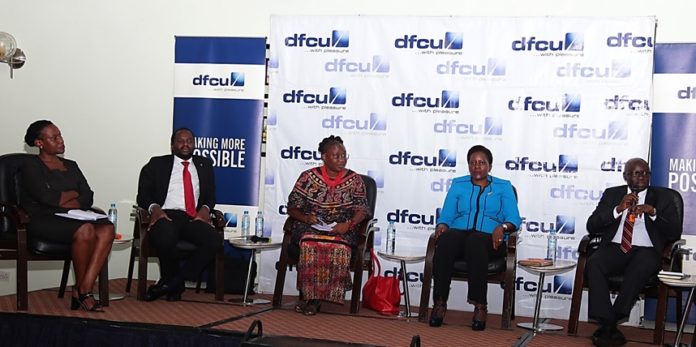
The panelists exchanging views during the breakfast meeting

In a move to grow the entrepreneurial outlook of Non-Governmental Organizations (NGOs), dfcu Bank hosted a breakfast meeting with over 150 current and prospective NGOs at the Imperial Royale Hotel, Kampala.

The meeting provided a platform for the NGOs to share insights on how to develop an entrepreneurial mindset in a bid to remain relevant and sustainable.

According to William Sekabembe, the dfcu Bank Chief of Business and Executive Director this calls for putting beneficiaries at the center of programme development; more structure, transparency, accountability and innovation.

“With shrinking donor funding and increasing competition, it is important that NGO’s realign their operations to transition from reliance on grants to becoming social enterprises. This change in mindset and ultimately operations will drive sustainability and make them more attractive to financial institutions and give them leverage in negotiating for better financial solutions,” Sekabembe said.

dfcu Bank introduced its NGO account in 2013 and has revamped its offering to give NGO’s more so they can carry out their operations with ease. The current customer value proposition includes among others: free account maintenance & activity fees; interest rates of up to 4% p.a on UGX accounts & 1.25% p.a on USD accounts; free internet banking; free access to a third-party & Bulk payments solution and dedicated services points at selected branches across the 66-branch nationwide network.

This is in line with dfcu’s brand promise of ‘making more possible’ for the sectors it serves and attain its aspiration of becoming a Universal Bank.


Stories Continues after ad