Stanbic Bank
Stanbic Bank
20.1 C
Kampala
Stanbic Bank
Stanbic Bank
Home Blog Page 1632

Giants qualify for CAF Champions League group stages

KCCA captain Timothy Awany in action in the 1-0 win against St. George

A total of 59 teams competed in the qualifying rounds from February 10, 2018 to March 18, 2018 to decide the 16 places in the group stage of the 2018 CAF Champions League.

KCCA FC, which won US$550, 000 (Approx.Shs2 billion), became the first Ugandan club to reach the CAF Champions League group stage following a 1-0 aggregate win over Ethiopian giants St. George in the qualification round.

Muhammad Shaban scored the only goal two minutes into the second half heading home from a Mustafa Kizza cross, and reports indicate individual players got Shs20 million.

For the first time in the history of the Caf Champions’ league, Botswana, Guinea, Swaziland, Togo and Uganda will have a representation in the knockout tournament.

Holders Wydad Athletic Club of Morocco remain on course to defend their title after they eliminated Williamsville of Cote d’Ivoire 7-2 on aggregate.

Former winners AS Vita of DR Congo, Ivorian gaints ASEC Mimosas and regular participants El Hilal of Sudan are some of the teams that fell along the road.

Kenyan champions Gor Mahia were eliminated by Tunisian side Esperance as they lost 1-0 on aggregate after the return leg of their second round clash at the Stade El Menzah in Tunisia.

Record winners, Al Ahly will carry high the flag of Egypt whilst TP Mazembe of DR Congo stages a comeback after missing out on the competition last year.

The group stage draw will take place on Wednesday, 21 March 2018 in Cairo, Egypt. The First group stage matches will be played on 4 May 2018.

The first leg of the final will be played on 3 November 2018 while the second leg will take place on 10 November 2018.

The winners of the 2018 CAF Champions League will qualify as the CAF representative at the 2018 FIFA Club World Cup in the United Arab Emirates, and also earn the right to play against the winners of the 2018 CAF Confederation Cup in the 2019 CAF Super Cup.

Qualified teams:

KCCA (Uganda), Mamelodi Sundowns (South Africa), Difaa El Jadidi (Morocco), Zesco (Zambia), AS Togo (Togo), Etoile du Sahel (Tunisia), Esperance (Tunisia), ES Setif (Algeria), Primeiro de Agosto (Angola), TP Mazembe (DR Congo), Township Rollers (Botswana), Horoya (Guinea), MC Alger (Algeria), Al Ahly (Egypt), Wydad Casablanca (Morocco), Mbabane Swallows (Swaziland).

Stories Continues after ad

Barclays apologies to Bagyenda over leaked bank details

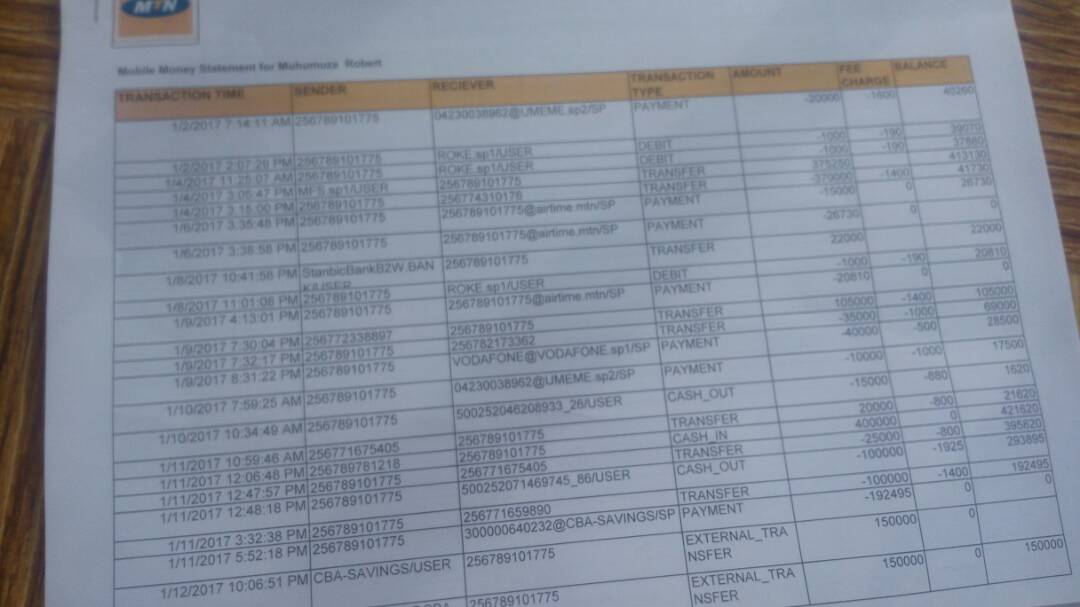
Barclays Bank has apologized to former Executive Director in Charge of Supervision at Central Bank Justine Bagyenda over the leaked details of her fat accounts she holds at the bank.
Barclays is the second bank to apologise to Ms Bagyenda after Diamond Trust Bank (DTB) came out first and issued the apology regarding similar issue.
In a press release, Barclays says in line with Financial Institution’s Act, their fiduciary responsibilities and internal company polices is protecting their customer’s personal data is the utmost priority for them as a bank and therefore, internal disciplinary actions are being undertaken to address the leaks.
“The bank regrets the unlawful act leading to disclosure of our said customer’s information in the media and sincerely apologies to Ms Justine Bagyenda for the inconvenience this regrettable incident may have caused” reads the press released.

It further adds “Following recent media reports which started on March 1, 2018, surrounding the handling of information relating to the account of Ms Justine Bagyenda, a customer of the bank, we would like to assure our customers and the general public that we take the matter of customer confidentiality very seriously” reads the statement.
The bank further said that whereas, there are alleged cases of customer information breach, Barclays has in place internal mechanism to ensure that they are thoroughly investigated and conclusively dealt with.
“Accordingly, disciplinary action is being taken against employees responsible for unauthorized access to her accounts in line with the law and our polices”
The leadked bank documents show that Ms Bagyenda in the last six years, her account balance was Shs20 billion.
Last three weeks, Eagle Online published a series of stories detailing the depths of Ms Bagyenda’s bank accounts she has with the bank, including one about how she has a whopping Shs20b sitting on two different accounts.
The stories have prompted DTB and Barclays to investigate the source of information in the bank, and the investigation, reportedly led them to one of their staff who, the Bank leadership claims, was ‘compromised’ and actively participated in leaking account details of their client.
Bagyenda, whose contract at BoU was supposed to end June 2018, went on annual leave on January 22, but in a reshuffle announced by BoU governor Emmanuel Tumusiime Mutebile, she was retired. In her place Prof. Mutebile appointed Dr Tumubweine Twinemanzi the new Director in charge of Supervision.

Stories Continues after ad

Burundi’s Nkurunziza sets May for referendum

ANNOUNCED DATE FOR REFERENDUM: President Pierre Nkurunziza

Burundi’s President Pierre Nkurunziza has set May 17 as the date for a referendum that could extend his rule for at least a decade.

The small and impoverished Central Africa nation has been unstable since 2015, when Nkurunziza decided to seek a third term in office that his opponents said was unconstitutional.

The referendum will decide whether to amend the Constitution to extend presidential terms to seven years from five.

The proposed changes would limit the president to two consecutive terms but would not take into account previous terms, potentially extending Nkurunziza’s rule to 2034.

“The draft constitution submitted to the referendum will be adopted if the absolute majority of votes or fifty percent plus one vote, approve it,” Nkurunziza said in a statement issued by his office announcing the date.

Several leaders around Africa have sought to void laws or use other tactics to thwart opponents and prolong their reigns beyond constitutional limits, sometimes for decades.

Those who opposed Nkurunziza’s third five-term launched an armed struggle against his government, and the resulting violence has left hundreds dead and forced at least 400,000 people into exile.

Regional efforts to find a peaceful resolution to the conflict have dragged on without results so far.

This month, the ruling CNDD-FDD decided to give Nkurunziza the title of ‘CNDD-FDD Party Visionary’ after appraising his ideas and teachings.

The title has no specific role attached to it and appeared to be aimed at shoring up support for the president ahead of the referendum.


Stories Continues after ad

Opportunity Bank rebrands, gets new home

Officials from BOU and Opportunity Bank during the rebranding launch

With the rise of digital innovation and changing consumer expectations, the financial services landscape is rapidly changing in Uganda. And with this in mind, Opportunity Bank, a leading microfinance institution with over 20 years’ experience announced a new brand the includes moving to a new and improved Head Office.

These changes will elevate Opportunity Bank’s focus on the ability to provide a strong customer experience and technology-led financial services offering to well serve their existing customers and potential target market in the small and mid-sized businesses (SMEs).

Opportunity Bank Uganda Limited is a Tier 2 financial institution licensed by the Bank of Uganda to offer savings, training, remittances and loan products to its customers across the country.

“There are still many people who are unbanked and have fettered access to loans for developing their businesses. Being able to provide a strong customer experience while exhibiting our unique brand values and financial solutions can be a key differentiator to enable the local market access to turn-key banking products and services,” Tineyi Emmanuel Mawocha, Chief Executive Officer of Opportunity Bank said at the launch.

He added: “With our rebranding efforts, Opportunity Bank has been empowered to offer banking solutions and experienced customer support services that SMBs need to grow.”

Speaking at the function, the bank’s acting Board Chairperson Mrs Winnie-Lawoko-Olwe, noted that the institution has a unique banking platform that is able to effortlessly meet consumer needs.

“Opportunity Bank continues to develop its multi-functional platform, helping our local markets grow one business at a time. The innovative banking solutions that a small business owner will need to grow their business is extensive. We knew that a unique approach was needed, and we have moved to tailor our products and services specifically to meet our client’s needs,” Ms. Lawoko-Olwe remarked.

The Executive Director-Supervision at Bank of Uganda Dr. Tumubweine Twinemanzi, who officiated at the launch, said that increased confidence in banking benefits will see the move of the ‘unbanked funds’ from under the mattress to commercial banks.

“It is, therefore, a real pleasure for me to officiate at the launch of yet another milestone for Opportunity Bank Uganda Limited,” Dr. Twinemanzi added.

Meanwhile, Opportunity Bank officials say the new branding further enables the bank to stand out, not only within the expansive financial sector industry, but also within the ever-growing mobile money banking sector technology ecosystem.

Small business owners will enjoy the ease-of-use of Opportunity Bank’s sophisticated technology, along with the human touch that is delivered through superior customer service, the officials add.

Established in 1995 as Faulu Uganda and acquired by Opportunity International in 2006, the Bank has evolved from a Tier 3 Micro Finance Institution to a Tier 2 Micro Finance and Deposit Taking Institution over the years.


Stories Continues after ad

Manufacturing driving Kampala GDP growth- WB report

Part of Kampala's Industrial Area. Photo/pinterest

Kampala’s annual Gross Domestic Product (GDP) growth of 6.7 percent is being driven by its manufacturing and other tradable goods and services sector, according to a World Bank report released recently in Kampala.

According to the report titled: ‘Role of City Governments in Economic Development of Greater Kampala’, the contribution of manufacturing representing a growth of 31.1%, was greater than its share of 27.7 of GDP in 2008, indicating an expansion of the sector.

The report indicates that tradable goods and services drove two thirds of GDP growth, indicating that Kampala is on the way to transitioning from a ‘market town’ producing local services towards being a ‘production center’ which produces tradable goods and services.

 “This pattern was similar for transportation, storage and ICT, which drove 26.2% of growth, off a base of only 11% of GDP, indicating a rapid expansion of the wholesale trading sector,” the report states in part.

On the other hand, non-tradable services contracted as a share of GDP, indicating a decreasing reliance on local demand. Consumer services, for instance, which includes mostly retail trade, comprised 39.4% of GDP in 2008 fell to 29.5% of growth between 2008 and 2012.

Nonetheless, the report notes that Kampala’s structural transformation is still at an early stage when compared to other African cities for manufacturing, tradable services, non-tradable services and agriculture. It says Kampala has the third lowest share of output in tradable goods, agriculture, manufacturing or tradable services.

 “It is thus at the beginning of its transition away from a “market town,” to a “production center with a higher share of tradable, high value-added output,” it says. According to the report, the only two cities below it in structural transformation, Addis Ababa and Kigali, have much lower per capita income.

The report says 56% of the firms are primarily engaged in trading and services within which the most common occupation is shopkeeper or street vendor. The next sector, hotels, bars and restaurants, comprises 26%. The report says manufacturing, which includes primarily tailoring and woodwork, comprises just 13%.

‘Not surprising for an urban area, agriculture comprises only 4% of firms,’ it adds.

Employment

The report says job creation in formal employment is not keeping pace with Kampala’s growing population. Current evidence, according to the report, indicates that Kampala’s unemployment is currently 10%, which while concerning, is not considered high relative to comparator cities in East Africa.

According to the report, underemployment and informality is the primary concern for the Greater Kampala, and that underemployment estimated at 23% and informal firms account for 57% of the city’s employment. The majority of Kampala’s employment is in micro or small firms. It says employment growth has dramatically increased in micro firms and reduced in large and medium firms. In particular, it says large firms in the tradable sector have lost five thousand jobs during 2001-2011 in Greater Kampala (four times more than that in the non-tradable sector).

‘Kampala will not be able to keep pace with its population growth and satisfy the expectations of its population for better quality jobs unless it is able to create more formal jobs in sectors which will encourage further industrialization and economies of scale,’ it warns.

Uganda has the third fastest growing population in Africa, with the population doubling around every twenty years, with young people joining the workforce at a rate of 4 million people per year, which is forecasted to increase to over 8 million by 2040.

Stories Continues after ad

The role of women in education systems in Africa

Hendrina Chalwe Doroba

By Hendrina Chalwe Doroba

Nowadays, International Women’s Day (IWD) is celebrated in many countries around the world. It is a day when women are recognized for their achievements without regard to divisions, whether national, ethnic, linguistic, cultural, economic or political.

IDW is also an opportunity to accelerate the 2030 Agenda as well as Africa’s Agenda 2063, transforming this momentum into action through the effective implementation of the Sustainable Development Goals (SDGs), especially goals number 5: Achieve gender equality and empower all women and girls; and number 4: Ensure inclusive and quality education for all and promote lifelong learning.

A girl writes on the board in a classroom

The absence of women in education systems reinforced gender inequalities

Women have in the past been ignored in the development of education systems in Africa. This is evident in the blatant disparities in the rates of access, retention and completion for boys and girls. For a very long time girls have comprised the largest proportion of children that have been unable to access education.

The latest UIS data reveals that Africa is home to more than half of the global total of out-of-school children of primary school age. Half of these children in the region have never been enrolled and may never enroll without added incentive. Girls are 56% more likely to never have enrolled in school than boys at 42%.

These glaring statistics corroborate the fact that the absence of women during the development of education and training systems in Africa has had serious implications on gender inequality in education and consequently on the socio-economic development of Africa.

The education of women is the most effective means for reducing the inequalities between men and women and guaranteeing the full participation of women in the socio-economic development process.

Bridging the gender gap through policy

Notably, there has been a significant development in the inclusion of women and women’s rights in key decisions in the education arena. The advent of the Maputo Protocol and other key Africa Union frameworks speak of the need to bridge the gender gap in education and other sectors as well as underpin the importance of including women in decision-making processes. These documents have set the right pace and environment for women to add their voices on Africa development matters.

African governments have also developed policies that recognize roles of women in education systems. These policies have given rise to affirmative action across all levels of education where women have been allocated more positions in different levels of learning institutions, and teenage mothers have been integrated back to school. There have also been provisions on gender-friendly environment with some governments establishing laws and guidelines to prevent and mitigate school-related gender-based violence (SRGBV).

In addition, a number of countries are implementing gender-responsive budgeting and reserving positions in their respective ministries of education and parliaments for women as in the case of Rwanda and Kenya. Women have also been appointed to head learning institutions. This is great progress, but a lot remains to be done to bridge the gender equality gap in Africa’s education systems.

Women are needed in the decision and policy-making process

Today, 263 million children and youth are out of school globally, of which 130 million are from Africa, according to a new data by the UNESCO Institute for Statistics (UIS) in 2016.  Issues such as poverty, war and cultural stereotypes continue to get in the way of children’s access to education.

Girls with disabilities can be especially marginalized. A recent research from western Africa found that they face increased isolation, stigmatization and discrimination, lack schooling and other opportunities to participate in communal life, and are at elevated risk of abuse, including forms of sexual violence.

This underscores the need to have women in decision making spaces in social, economic and political spheres for Africa’s development.

Women should not only have a comfortable space to facilitate their work but there should also be an increase in the number of women in policy-making positions.

Women will need to support their fellow women within these decision-making and decision-implementing structures. It is however very crucial for these women not to operate in isolation as they still require continuous mentoring and support.

The global and continental appeal by FAWE

The Continental Education Strategy for Africa 2016 – 2025 (CESA 16-25) is very clear in terms of aspirations of education within the continent and how it fits in to the sustainable development agenda. Unfortunately, issues of women are not well articulated in this document.

As the Forum for Africa Women Educationalists (FAWE), we felt there is need to support various governments that will be implementing the strategy to operationalize and integrate gender issues in their work programs and budgets for all interventions that they will be implementing in the education sector. The respective governments should be in a position to adopt and domesticate the Gender Equality Strategy for CESA 16-25 developed by FAWE and AU/CIEFFA as a tool to address gender issues in the education sector.

But then again, women also need to play a critical role in mentoring young girls and boys into decision- making spaces. Coming from a position where society has looked down on them to becoming part and parcel of leadership in Africa including the highest organs of the continent, such as the appointment of Dlamini Zuma as Chair of the Africa Union Commission (AUC), women need to create spaces for young people to explore their potential.

Women in high places should push for policies that create an enabling environment for the allocation of resources towards the development of youth (18-35 years) and young people on the continent. This will go a long way in ensuring that girls, boys and youth have equal opportunities and resources to achieve their aspirations.


The Writer is the Executive Director for the Forum for African Women Educationalists (FAWE). She is responsible for coordinating regional programmes across the 33 sub-Saharan African countries.


Stories Continues after ad

Let’s save the future of our children, do not perpetrate bringing children to the streets

KCCA Spokesperson Peter Kaujju

By Peter Kaujju

On Saturday of January 2018, while I observed the traffic signs along Jinja Road near Centenary Park, just before Kitgum House, a very handsome little boy who I later came to know as Brian approached me and asked for money, indicating he wanted it to buy something to eat. Brian, who is about 10 years old, spoke relatively good English and I was prompted to engage him further in a conversation, asking him I wanted to be his friend. Since then, I have been speaking to this little soul every Saturday as I head to work in the City Center of Kampala and sometimes when heading out of town.

Brian, has since revealed to me that he comes from Karamoja and was brought to Kampala by a distant relative who promised to take him to school but has since ended on the streets of Kampala daily to ask for money. This money is given to his Kampala caretaker or ‘guardian’ every end of day. I have for the past two months now been engaging him about a plan to take him back to his home but he told me ‘that woman who brought me will pick me and I will be killed’. He has revealed to me that his mother is alive but he won’t go back home because of the fear he told me about. My confidence building mission that he will be absolutely safe continues by the day and there is progress, I must say!

The slight setback I experienced last weekend was to find him with a small box of chewing gum given to him by the master to sell as he asks for money. Though I insisted on taking him back home so he can continue with school, it took us time to chat freely as he was not sure what my intentions to discuss with him were. In fact, one time when I appeared with someone else, he told us a different name and said he was from Kenya until I removed a cap I reminded him about myself. This is very typical of many of these children as they are coached not to reveal their identity or share details where they come from.

Painfully, as my conversation continues with him, Brian is only one among many children who previously were living with their parents, guardians and attending school in the countryside but have ended up on city streets to ‘work’ (beg) for money on behalf of such adult offenders that bring them to Kampala and I guess, other towns under the guise of better life depriving them of their future!

Many of these children live unaccompanied, some report to the streets for ‘work’ but stay with their families from surrounding slums while others live there all by themselves. The influx of many families from Karamoja settling in Katwe and Kisenyi does not make the situation any better and points greatly to the falling apart of the social fabric and family bond.

More worrying is that while on these streets, these children are exposed to many activities which are of high risk to their lives such as child labour, drug abuse, crime and exposure to poor health conditions amidst the high-speeding motor vehicles, Boda Bodas and Bicycles.

A number of state and non-state interventions have been embraced such as rescue, rehabilitation and resettling of these children with their parents and guardians back home. Kampala Capital City Authority (KCCA) is working with entities like Ministry of Gender, UWESO, Retrak, Dwellings Places and KYDA among others but the push factors such limited or lack of care and responsibility on the side of parents/guardians, lies propagated by adult offenders luring these children continue the undermine these efforts.

There are several engagements that have been conducted including sensitization of these communities with area Members of Parliament and other key stakeholders, reuniting children with their families and arrest as well as prosecution of adult offenders that lure these children living their homes but the vice continues.

Chapter 4 of the Uganda Constitution provides for the numerous rights of children which we must observe all the time.

In addition to a continued rescue of these children, a firm stand especially prosecution of those taking advantage of these children and engagement with communities to observe the constitutional rights of children, KCCA is planning a tougher child protection Ordinance.

In our African setting, children belong to the community and I implore parents, guardians, Local Council leaders, Members of Parliament and the communities to always work tirelessly in protecting the children. Let’s redeem those that have ended up on the streets because of mistreatment, propagation of lies, neglect and grant them chance to prepare for adult life and also address the push factors in our respective jurisdictions.

The Writer is Head of Public & Corporate Affairs, KCCA


Stories Continues after ad

Hope Kivengere to lead Comesa observers for Egypt presidential elections

President Yoweri Museveni dons Ms. Hope Kivengere with a medal during the 2010 Heroes Day. Ms Kivengere will the COMESA delegation for the Egyptian elections.

Hope Kivengere, member of the COMESA Committee of Elders from Uganda, will lead the COMESA Observer team to monitor the Egyptian presidential elections set for March 26 -28 2018.

A seasoned communications professional, Ms. Kivengere is currently the Advisor of the AU/UN Information Support Team.

At the invitation of the National Elections Commission (NEC) of Egypt, COMESA and the Community of Sahel-Saharan States (CENSAD) will deploy a joint Election Observation Mission to the elections after undergoing a joint two-day training in Cairo before deployment to various governorates.

As part of its mission in Egypt, the COMESA delegation will conduct pre-election observation which will include consultations political parties, the NEC, security agencies, Civil Society Organizations (CSOs) the Media and other stakeholders. The aim is to gather information on election-related issues and to assess election preparedness. The delegation will also engage with the Diplomatic Community as well as with other election observers on the ground in the selected provinces.

The findings of the Pre-Election Observer missions will enhance understanding of the electoral processes in Egypt. These findings will be included in the detailed report that will be submitted to the NEC and the Government within 90 days from the election date.

The joint COMESA -CENSAD deployment is informed by a Memorandum of Understanding signed between the AU and the Regional Economic Communities (RECs) in 2008, and a decision of 20th Technical Meeting of AU and RECs on Early Warning Systems held in December 2017 in Djibouti further underscored the need for collaboration between the RECs.


Stories Continues after ad

Sudhir expands horticulture to Kayunga

Sudhir and some of the people who sold him land in Kayunga pose for a photo.

City tycoon, Sudhir Ruparelia has acquired 9 square miles of land in Kayunga district to expand on his horticulture and floriculture farming business.
Sudhir bought the land in Bale County as part of expansion to Masaka and Entebbe road floriculture business.
His flower businesses last year were selected the best from the East African region and top the flower exporting countries from East Africa. Sudhir flower business employs more than 50,000 people both indirect and directly.

Sudhir is one of the top tax and employers in Uganda and his expansion into the fertile Kayunga district which boarders River Nile is seen as part of his growing horticulture industry that has made Uganda one of the leading fresh flower exporting countries in the world.

Stories Continues after ad

Parliament hosts the fourth Commonwealth Youth Assembly Summit

SPEAKER RT. HON REBECCA KADAGA RECEIVING AN AWARD FROM HON TWESIGYE JOHN (BUNYARUGURU COUNTY FOR HER SUPPORT FOR VOCATIONAL EDUCATION IN UGANDA AT PARLIAMENT

Kampala: Parliament of Uganda is set to host a landmark Fourth Commonwealth Youth Parliament Summit from 14 to 19 March with a motive of exposing youth to all levels of engagements in leadership.
Youth Parliament Summit is an annual event hosted by various common wealth countries attended by the youth between the ages of 12 and 22 with the inception of exposing them to the realities of legislation and governance at regional level.
Speaking in a meeting with the delegation from the Commonwealth Parliamentary Association (Africa Region) yesterday, the Deputy Speaker of Parliament, Jacob Oulanyah such conferences are so empirical in that they avail all required platforms for youth to learn to respect the rules of the house and play within them hence leading to the opening of a new chapter of order and stability.
‘’under the theme; ‘Securing a better future for Africa: Role of the youth’, various topics such as youth unemployment, alcoholism and drug abuse, teenage pregnancy and HIV/AIDS will be discussed for harnessing the youth in leadership.’’ He said at parliament.
And according to Kasilo County MP Elijah Okupa who doubles as the Treasurer of the CPA (Uganda), youth will hold a plenary session in the Parliamentary Chambers and thereafter, make resolutions.
He noted that Uganda will be represented by 25 youths selected from all regions of the country, while other countries will each select two representatives; male and female.
However the Assistant Regional Secretary at the CPA (Africa Region) Demetrus Stephen Mgalami, said the resolutions from the Youth Conference will form the agenda of the regional conference that will be held in Botswana August this year.
‘’Their Resolutions will be presented by the Speaker and the Deputy Speaker that will be elected during the Youth Conference, heard and debated by over 300 Members of Parliament across Africa sitting in Botswana who will make recommendations.’’ Mgalami said.

Stories Continues after ad