Stanbic Bank
Stanbic Bank
27.6 C
Kampala
Stanbic Bank
Stanbic Bank
Home Blog Page 1645

Strategies for regularly reinventing your business

By Martin Zwilling

Sometimes entrepreneurs are so focused on making change happen for customers that they forget that continually changing themselves and their company is equally important. Some get stuck in a rut and get run over by competitors with new technology, like Eastman Kodak, and others get pushed into a crisis, like Apple did, before they reinvent themselves into a new market.

Everyone and every company needs to continually learn from their experience and adapt to a changing world to thrive. “If it ain’t broke, don’t fix it” is an old adage that really doesn’t work in today’s business world. If you don’t plan to reinvent yourself regularly, your competitors will make you obsolete, and any success to-date will likely be short-lived.

In his classic book ‘ Invent, Reinvent, Thrive’ Lloyd E. Shefsky, Entrepreneurship Professor at the Kellogg School, highlights this message, and provides some expert insight on how entrepreneurs can apply the principles to their own career and company. Here are the key recommendations from both of us, based on my own business mentoring insights:

Re-launch using your enhanced core competency. Use that same technical and business expertise that served you well on this startup to find the next opportunity. I’m sure you have seen many new ones, and now understand even better the due diligence required to validate the opportunity, and the executions steps required to make it happen.

Ignore the voices of dissent again. Negative advice on an unknown is easy and safe to give, so every entrepreneur hears it over and over. As an entrepreneur with some success, you had the confidence to prove them wrong once, so don’t lose your nerve and try to play it safe now. Proven problem solvers only get better with practice.

Listen and act on the ideas of others around you. Take advantage of the fact that you have surrounded yourself with key people who have good ideas, but may lack the skills or confidence to act on them. Skip the arrogance of “not invented here,” and re-invent your current company, or start a new one, before a crisis occurs.

Move to a higher platform. Many entrepreneurs get their first taste of success running their own consultancy or practice. A few are able to move to higher platform, like moving from a sole practitioner physician to create and run a much larger medical organization. That’s a type of re-invention that can give you a major advantage over competitors.

Changing times call for a new skill set. Smart entrepreneurs in any given industry, like publishing, recognize the appearance of new technologies which threaten their survival, including digital publishing and print-on-demand. The best immerse themselves in these technologies, and invent new businesses, rather than fight in the old one to the death.

Seek out customer trends before they become an avalanche. Don’t stop doing the in-depth communication with customers that brought you initial success. Plan an annual set of customer sessions that you don’t delegate to subordinates. If customers don’t convince you to re-invent a part of your business each year, you probably aren’t listening.

  1. Find mentors who have the skills you lack. Proactively seek out mentors who will tell you what you need to hear, rather than what you want to hear. Work on the new skills you acquire from your mentor, and test incrementally what you have learned. With each new skill you acquire, your likelihood of long-term success is improved.
  2. Expand your investment alternatives. If your business success so far is based on family and Angel investors, perhaps it’s time to start working with institutional investors and external business partners. Their expectations and insights will broaden your view, and may incent you to upgrade your strategy, or re-invent a portion of your business.

Entrepreneurship is not a one-time transformation that qualifies you long-term success. It is a lifestyle, like many others, which requires constant effort to keep you ahead of the crowd in a rapidly changing business environment. Standing still is falling behind. What is your action plan to continually re-invent yourself and thrive?




Stories Continues after ad

Ugandans should borrow a leaf from Kenya and defend the media

Charity Ahimbisibwe

By Charity Ahimbisibwe

On January 30, 2018, the Kenyan government shut down four news channels; Citizen TV, Inooro TV, NTV and KTN for announcing plans to air the ‘swearing-in’ of opposition leader Raila Odinga as president.

Kenyans took to the streets of Nairobi and through various social platforms, protested the closure. The protest was joined by lawyers, who, on February 1, went to court and ordered a 14-day suspension of the shutdown to allow for a legal challenge.

These protests and condemnations by citizens who know and value the role of the media, is a lesson Ugandans should pick.

Unfortunately, in Uganda, it has become common for government to shut down media houses as and when it pleases. During the 2016 elections, social media was shut down on Election Day in February and as Yoweri Museveni swore-in as president on 12th May.

Most recently, since September 2017 to date, media houses have been on the receiving end of crackdown. The Red Pepper (and by extension its sister publications), was in November shut down following the publication of a story that government says was in breach of national security, among other charges. The paper only resumed operations on 29 January 2018 after meeting President Museveni and getting a ‘presidential pardon’.

Before that, several upcountry radio stations were shut down for airing content relating to the presidential age limit removal contained in Article 102(b) of the Constitution.  Uganda Communications Commission, in all counts stated that the stations were in breach of minimum broadcasting standards. Relatedly, editors of Daily Monitor and Red Pepper were summoned by police in relation to publishing stories about the presidential age limit debate, while a ban was slapped on live media coverage of the same.

Through all these crackdown against the media, Ugandans remain conspicuously silent, except for a few voices on social media and by civil society organisations. These voices eventually died down.

In my view, the problem of intimidation of journalists and the crackdown against the media can be solved if the Ugandan public learned from their Kenyan counterparts. Every-time a media house is shut down, Ugandans should protest using social media and various legal means. If the local press cannot carry the story of the shutdown, the international media will pick it up and keep it running. The idea is not to relent every time intimidation rears its ugly head.

Secondly, media houses should at all times publish fact-based and objective stories. These stories will speak for themselves in courts of law and in the eyes of the public. While some journalists lack professionalism, this should be addressed so that the entire media fraternity is not exposed to high-handedness by the state and individuals because of lapses by a few rotten eggs.

The Writer is the Communication and Advocacy Manager at FHRI/CCEDU


Stories Continues after ad

NGO wants court to suspend LC elections

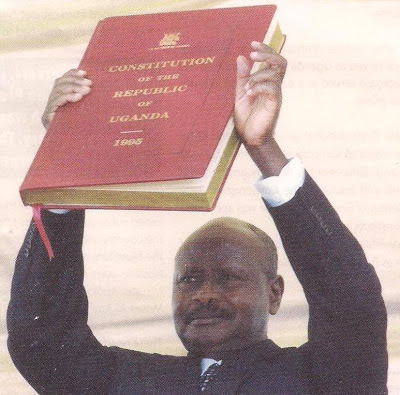
President Yoweri Museveni shows off the 1995 Constitution

By Taryn Weninger   & Dr. Fred Sekindi 

Uganda last held Local Council elections in 2001. The Government’s plan to conduct the election towards the end of 2017, was interrupted by a High Court challenge, in which among others, the petitioner alleged that if the elections were to be conducted at the time, they would impede on class time, and thereby exclude students to partake in the election.

The High Court has now authorised the Electoral Commission to start the local council election process. The elections are to be conducted under the Local Governments Amendment Act, 2015. However, the manner in which the elections are to be conducted remains contentious.

A constitutional petition brought forth by the Foundation for Human Rights Initiative and Legal Aid Service Providers Network Uganda alleges that subsections 12 (a) and (b) of the Local Governments Amendment Act, which amends Section 111 of the Local Government Acts, allowing local government elections to be conducted other than by secret ballot, violates the right to free elections guaranteed by Article 1(4) of the Constitution.

Subsection 12 (a) and (b) of the Local Government Amendment Act states: ‘Election of village, parish and county council chairperson and other officials shall be by the electorate lining behind the candidates nominated for the office or his or her representative or portrait’.

This makes subsections 12 (a) and (b) of the Local Government Act inconsistent with Articles 1 (4), 21, 33, 35, 45, 59 (1) (3) and (4), 68 (1) and 79 (1) of the Constitution of the Republic of Uganda.

The Constitution requires the Electoral Commission to ensure that elections are both free and fair, as well as ensure that election complaints are heard and determined both pre-polling and during polling. Along with questionable legality, the use of the line-up method has also fostered immense criticism from citizens across Uganda. In maintaining and utilising the right to vote under Article 59 of the Constitution, this provides that free and fair elections are one of the fundamental principles of democracy and the rule of law, with the secrecy of voting being a key aspect.

Article 68 (1) of the 1995 Constitution sets a standard of voting by means of a secret ballot using a ballot box. Conversely, subsections 12 (a) and (b) sets a lower standard of an election which is not justifiable in a democratic society. The key provision mandating how people shall be allowed to choose their leaders is found in Article 1 (4) which attests that elections must be regular, free, and fair. In addition, Article 68 (1) further augments the concept of both free and fair elections by urging that elections should solely be conducted by means of secret ballot. These sections are further supported by provision Article 61 (1) (a), which mandates the Electoral Commission to conduct free and fair elections.

The issue at stake is whether an elected leader can be considered a sovereign leader if the election is neither free nor fair. For an election to be free, a voter must be guaranteed the right to vote without any undue influence or fear.  The manner in which the elections are to be conducted, which requires people to openly line up behind their preferred candidate, leaves the voter vulnerable and exposed to extensive social scrutiny and political pressures which can ultimately sway a voter to choose differently in the apprehension of negative repercussions. It also violates the principle of a secret ballot as it erodes confidentiality. For an election to be free and fair, a secret ballot should be implemented.

Conducting elections by secret ballot ensures that the voter’s choice in an election remains private and the voter remains anonymous. The secret ballot method also prevents voters from being subjected to undue influence or intimidation and is aimed at achieving political privacy. It, therefore, ensures the credibility of the elections and preserves the integrity of the electoral process.

FHRI calls upon the Judiciary to issue an interim order suspending the election until the constitutional petition has been disposed of.


Stories Continues after ad

Ugandan traders to pick goods from Nairobi

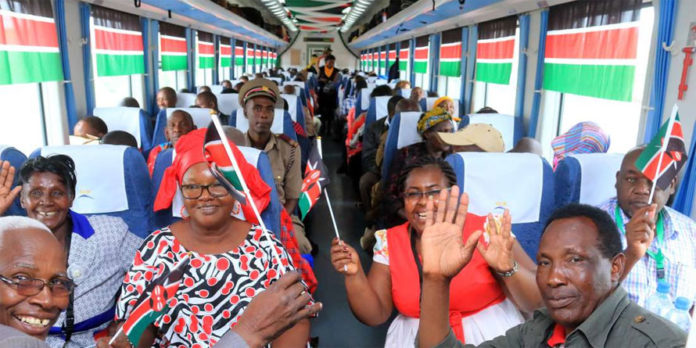
Kenya has already commissioned its Mombasa-Nairobi SGR, cutting down transport fees.

Ugandan traders and others in the region will soon be picking their cargo from Nairobi instead of Mombasa, officials have said.

The Kenya Ports Authority (KPA) says the move, coming after the completion of the Standard Gauge Railway by the Kenyan government from Mombasa to Nairobi, will help reduce the cost of doing business.

Stories Continues after ad

Jacob Zuma Resigns as South Africa’s President

Bye-Bye President Jacob Zuma has resigned as the third anti Apartheid leader of South Africa after his party forced him to step down.

President Jacob Zuma of South Africa, a master tactician who survived a string of scandals and harsh court judgments during his nearly nine-year presidency, agreed on Wednesday to step down, repudiated by the governing African National Congress Party, cornered by opposition parties and abandoned by millions of voters.
In an address to the nation Wednesday night, Mr. Zuma said he was resigning even though he disagreed with the party’s decision ordering him to do so.
“I have therefore come to the decision to resign as the president of the Republic with immediate effect, even though I disagree with the decision of the leadership of my organization,” he said at the end of a lengthy address on television. “I have always been a disciplined member of the A.N.C.”
It is a humiliating end for Mr. Zuma, a charismatic anti-apartheid hero who was imprisoned on Robben Island with Nelson Mandela and was once the A.N.C.’s intelligence chief.
Initially he inspired hope in millions of South Africans, especially the poorest. But, tainted by numerous accusations of misconduct, he came to symbolize the corruption that flourished during his time in office.

Influence-peddling in his administration was so widespread, according to the nation’s former public protector, that it became a form of state capture in which Mr. Zuma’s business partners or friends influenced government decisions in their personal interest.
Now, his departure as president leaves South Africa with a disillusioned electorate, a weakened economy and a tarnished image in the rest of Africa.
Only hours before his resignation he had sounded defiant and aggrieved during a live interview with the state broadcaster SABC, after party leaders had threatened to remove him through a no-confidence vote in Parliament on Thursday. He had indicated strongly that he would not resign, saying the party’s effort to pull him from office was “unfair,” that he was being “victimized,” and that he had done nothing wrong.

The deputy president, Cyril Ramaphosa — whose election as A.N.C. leader in December set off a power struggle with Mr. Zuma — immediately became acting president. On Thursday, Mr. Ramaphosa is almost certain to be chosen by Parliament to become the nation’s fifth president since the end of apartheid in 1994; all have been members of the A.N.C.
The resignation was the culmination of a long internal fight, pitting Mr. Zuma’s supporters against an ascendant faction led by Mr. Ramaphosa, who pushed the president to step down before the end of his full term in mid-2019. The balance finally tipped against Mr. Zuma, when the majority of party leaders concluded that the A.N.C.’s interests, and their own, would be better served under a new head of state.
On Tuesday, after more than a week of failed efforts by Mr. Ramaphosa to ease Mr. Zuma out office, party leaders ordered Mr. Zuma to step down, saying his continued presence as the nation’s leader would “erode the renewed hope and confidence among South Africans,” and indicating that he was hurting the party’s electoral prospects.
Mr. Zuma’s administration appeared to schedule an address to the nation by Mr. Zuma at 10 a.m. on Wednesday, but then issued a statement saying no such briefing was planned an hour before it was scheduled to start.
As Mr. Zuma remained defiantly silent, the police’s investigative unit — which has long been subject to political interference — raided the residence in Johannesburg of the Guptas, a family with wide-ranging business interests and close ties to one of the president’s sons and his political allies, and arrested three people.
The intended message, political analysts said, was that those closest to Mr. Zuma, or even Mr. Zuma himself, could be next unless he acceded to the party’s order to quit.
Then, a few hours after that, as Mr. Zuma gave no indication of responding to his party’s order, A.N.C. leaders escalated the pressure. If the president did not resign by the end of the day, they said, they would move to remove him through a vote of no confidence the next day.
“The ball is in his court,” said Paul Mashatile, the party’s treasurer general and a Ramaphosa ally.
Mr. Zuma broke his silence with the SABC interview shortly after that, before finally resigning during his address to the nation.
The developments were a clear sign of how much had changed in the two months since Mr. Ramaphosa was chosen to succeed Mr. Zuma as the leader of the A.N.C., creating what South Africans refer to as the two centers of power — the presidency and the head of the party.
Mr. Zuma, seemingly untouchable just a couple of months ago, was gone in just 58 days.
For years, Mr. Zuma — as the leader of both the party and the nation — had relied on his party’s support to fend off opposition-led no-confidence votes in Parliament and damning rulings by the nation’s highest courts.
Mr. Zuma’s reversal in fortunes began in December, when his choice as party successor, Nkosazana Dlamini-Zuma, a veteran politician and his former wife, lost to Mr. Ramaphosa by a small margin.
Mr. Ramaphosa’s election was considered a victory for reformers inside the A.N.C. After his election, South Africa’s currency, the rand, and overall business confidence have risen.
In recent weeks, Mr. Ramaphosa’s supporters lobbied for Mr. Zuma’s early exit. They argued that Mr. Ramaphosa needed time before the 2019 elections to rebuild the party and woo back voters, especially in the urban black middle class.
Pushing back, Mr. Zuma’s followers said he should be allowed to complete his term. But the momentum was not in their favor, and other challenges, potentially embarrassing to both Mr. Zuma and the party, lay ahead.
Mr. Zuma faced possible corruption charges for an arms deal in the 1990s, before he was president, as well as possible impeachment proceedings stemming from another corruption case, related to the misuse of public funds for upgrades to his homestead.

Mr. Zuma’s resignation saved the A.N.C. from a potentially embarrassing confrontation in Parliament. It is almost certain that the party would have succeeded in passing the no-confidence vote, given its dominance in the legislative body.
But the spectacle of a party finally turning against a leader it had protected steadfastly for nearly nine years would have likely resulted in awkward verbal footwork by A.N.C. lawmakers and stinging attacks by a reinvigorated opposition.
The same A.N.C. lawmakers, who had until a couple of months ago always offered a full-throated defense of Mr. Zuma’s conduct in a series of scandals, would have been forced to proffer reasons to remove him in Parliament — exposing the party to charges of hypocrisy and expediency, and casting doubt on Mr. Ramaphosa’s pledge to reform it.
The A.N.C.’s difficult position was on clear display on Tuesday. At a news conference at its headquarters in Johannesburg, Ace Magashule — who is third in the party’s hierarchy and has traditionally acted as its spokesman — struggled to explain why the party was asking for Mr. Zuma’s resignation.
Mr. Magashule said the corruption accusations against the president had played no role, saying, “We did not take these decisions because Comrade Jacob Zuma has done anything wrong.”
Mr. Magashule’s remarks suggested the party might be reluctant to deal head-on with the culture of corruption that was endemic under Mr. Zuma — and also that it was concerned about its success in future elections.
In the 2016 local elections, the A.N.C. lost control over the nation’s biggest cities after it was deserted by traditional supporters disillusioned by Mr. Zuma’s conduct; some party officials have since warned that it might face a similar fate in national elections in 2019.
But party leaders did not explain, as Mr. Zuma himself pointed out in the television interview, why they had loyally backed him until two months ago and were now demanding his resignation. What had changed, beyond the fact that there was now a new A.N.C. leader who wanted him out?
“Nobody’s saying what I’ve done,” Mr. Zuma said in his television interview.

Stories Continues after ad

Zimbabwe opposition leader Morgan Tsvangirai dead

Opposition leader of the movement for Democratic Change-Tsvangirai (MDC-T) Morgan Tsvangirai gestures during a press conference on February 5 2016 in Harare.

Zimbabwe’s main opposition leader, Morgan Tsvangirai, has died aged 65. He had been suffering from colon cancer for at least two years, but his condition deteriorated rapidly in recent days despite treatment in neighbouring South Africa.
His death will be an enormous blow to the opposition in Zimbabwe, coming only months before the first elections were due to be held in the former British colony since the end of Robert Mugabe’s near four-decade rule last year.
Tsvangirai’s illness, revealed in 2016, has divided his Movement for Democratic Change (MDC) party, with three deputy leaders and other officials publicly manoeuvring to succeed the former trade union leader.
The party will have to choose a new leader and launch a campaign against a resurgent Zanu-PF, the ruling party, to contest polls that may be held as early as May.
Without its founder at the helm, the MDC is likely to face immediate instability and could even split, handing a gift to Zimbabwe’s new president, Emmerson Mnangagwa. A broader alliance of seven political parties formed last year to take on Zanu-PF could also be destabilised.
“Tsvangirai’s death will force the MDC to convene an emergency conference to sort out the differences between the three vice-leaders. His sickness meant an impasse around internal dynamics so this might force a resolution. That’s a possible silver lining to this tragic event,” said Piers Pigou, Zimbabwe analyst for the International Crisis Group.
Tsvangirai died in a clinic in Johannesburg. Elias Mudzuri, one of the MDC’s vice presidents, said on Twitter: “Dr Morgan Richard Tsvangirai has not been feeling well for some time, it is sad for me to announce that we have lost our icon and fighter for democracy. Our thoughts and prayers are with the family, the party and the nation at this hour.”
Temba Mliswa, an independent MP, called Tsvangirai “a true democrat who fearlessly stood up to the Mugabe regime and was an inspiration to many”.
He added: “Although we may have differed politically I held a deep respect for MT.”
David Coltart, one of the founders of the MDC, said Tsvangirai was “one of the giants of the long struggle to bring democracy to Zimbabwe”. He added: “I will remember him for his courage, humility, humour and relentless determination.”
The course of Tsvangirai’s life was determined by his long political battle against Mugabe, the former guerrilla leader who had run Zimbabwe since independence from Britain in 1980 until November.
The oldest of nine children, Tsvangirai left school at 16 to help support his family. As a young miner he become a labour activist and rose through the ranks of the Associated Mine Workers Union. In 1988, he was elected secretary general of the Zimbabwe Congress of Trade Unions (ZCTU), the overarching body of the country’s labour movement.
In 1999, Tsvangirai founded the MDC. Although heavily influenced by the trade union movement, the party incorporated the church, business, women’s and students’ organisations and other interest groups.
As Mugabe launched a programme of radical measures designed to bolster his power but which brought economic chaos, Tsvangirai and the MDC stepped up their challenge to the government through a series of nationwide strikes and, despite fierce intimidation, came close to winning power in parliamentary elections in 2000 and in a presidential vote in 2002.
Tsvangirai’s leadership was questioned after a serious split in MDC ranks in 2005, when he overruled a decision by the party’s leadership to take part in elections for the senate and ordered a boycott.
Mugabe’s tactics of harassment enhanced the opposition leader’s reputation as a tenacious, courageous opponent of repression. Images of Tsvangirai after being badly beaten following a prayer meeting that police claimed was illegal were published around the world.
The MDC won the first round of elections in 2008 in the face of a vicious state campaign of violence against party workers and supporters. The MDC eventually joined a unity government that lasted until the 2013 election, which Mugabe won.
Criticised for his obvious affection for the outward trappings of power and failure to make a significant impact in the office of prime minister, Tsvangirai emerged from office a diminished figure. A leaked US diplomatic cable described him as “a flawed figure, not readily open to advice, indecisive and with questionable judgment”.
Tsvangirai nonetheless dominated the fractured opposition in Zimbabwe until his death.
“He was the presidential candidate for the opposition alliance. Recently they have been campaigning on the spirit of Tsvangirai alone. The dilemma is now to find someone who will play that central role,” said Pigou.

Stories Continues after ad

South African police raid Gupta home, ANC to sack Zuma via parliament

Police raid the home of the Gupta family, friends of President Jacob Zuma, in Johannesburg, South Africa.

South Africa’s ANC unveiled plans on Wednesday to sack President Jacob Zuma via a parliamentary no-confidence vote, hours after armed police raided the luxury home of his friends, the Gupta brothers, as part of an anti-corruption investigation.
his first response to an avalanche of pressure from the African National Congress (ANC) for him to quit, Zuma – who has been dogged by scandal throughout his political life – proclaimed his innocence and said he was being “victimized” by Nelson Mandela’s former liberation movement.
“There’s nothing I’ve done wrong,” a relaxed but indignant Zuma said during a nearly hour-long interview with the SABC, South Africa’s state broadcaster. “I don’t think it’s fair. I think it’s unfair.”
When asked point-blank if would step aside, he avoided the question and continued to allege a lack of principle in moves by the party’s National Executive Committee to oust him. He did say he would make a formal statement later on Wednesday.
He did not comment on the police raids, which marked a dramatic tightening of the net around the 75-year-old and the political faction around him accused of milking state resources for their own ends.
Even if he refuses to quit, with the ANC backing an opposition-led no-confidence motion on Thursday, Zuma appears to have run out of road after nine years in office marked by political tumult and economic stagnation.
ANC chief whip Jackson Mthembu said Deputy President Cyril Ramaphosa, whose election as head of the ANC in December marked the beginning of the end of Zuma’s tenure, could be sworn in as head of state as early as Friday.
“After we have voted for the removal of the President of the Republic tomorrow – and depending on the availability of the Chief Justice – we will also elect a new president,” Mthembu told a news conference in Cape Town.
The rand, which has gained ground whenever Zuma has hit political turbulence, soared more than one percent to a 2-1/2 year high of 11.79 against the dollar.
MORE ARRESTS
The speed of Zuma’s demise after two weeks of dithering by the ANC has stunned South Africa.
The early morning raid, which the police’s elite Hawks unit said resulted in three arrests, took place amid reports Zuma was preparing to tell the country he was stepping down
The SABC, South Africa’s state broadcaster, said a Gupta family member was among those detained. A senior judicial source said police expected to arrest up to seven more people and that Gupta family members would be among them.
“You can’t bring a matter of this nature to court and not charge the people who have benefited the most,” the source, who has knowledge of the police’s moves, told Reuters.
Zuma and the Guptas, a family of wealthy Indian-born businessmen, deny any wrongdoing. A lawyer for the Gupta family said he could not comment on the raid because he had yet to see the search warrant.
Meanwhile, there was chaos and confusion at Pretoria’s Union Buildings, the official seat of government, over reported plans for Zuma to address the country.
Finance Minister Malusi Gigaba said Zuma would speak at 0800 GMT and satellite trucks were in position overnight. However, Zuma’s office denied there had been any “official communication” of an address and the scheduled time came and went.
Adding to the mystery, a copy of an email, purportedly from deputy presidential communications director Shadi Baloyi, circulated on Twitter telling Pretoria police that plans for a “special media briefing” by Zuma at 0800 GMT had been canceled.
“Kindly ignore my earlier request, as the briefing will not take place tomorrow,” Baloyi wrote. Reuters could not confirm the email’s authenticity and Baloyi did not answer her phone or respond to text messages.
Zuma’s spokesman did not answer his phone.
“CRIME SCENE”
Shortly after dawn, a dozen Hawks police officers sealed off a street leading to the Gupta mansion in Johannesburg’s upscale Saxonwold suburb. One blocked access to Reuters, saying: “This is a crime scene.”
Minutes later, an unmarked police van left the compound as residents applauded police officers and hurled abuse at security guards for the Guptas, who have been accused by South Africa’s top anti-corruption watchdog of influence-peddling and swaying the appointment of cabinet ministers.
“Finally something is being done about it. These guys must get out of our country. They must leave us alone. They have done enough damage,” said Tessa Turvey, head of the local residents’ association, standing outside the compound’s iron gates.
Police also raided the Guptas’ Oakbay holding company in Johannesburg’s Sandton financial district, according to a security guard outside the building.
On Tuesday, the ANC ordered Zuma to step down as president of the country, giving him no firm deadline but saying the party was sure he would comply and “respond” on Wednesday.
Hawks spokesman Hangwani Mulaudzi said the raid was part of an investigation into influence-peddling allegations that are also the focus of a judicial inquiry into wider corruption involving the Guptas, dubbed “state capture” in local media.
“We’re not playing around in terms of making sure that those who are responsible in the so-called state capture, they take responsibility for it,” Mulaudzi said.
He declined to give details of what was seized or if the business premises of the Guptas, whose commercial empire stretches from mining to media, would also be raided. Under South African law, suspects cannot be named until they appear in court.

Stories Continues after ad

Agent banking to ease and increase financial inclusion

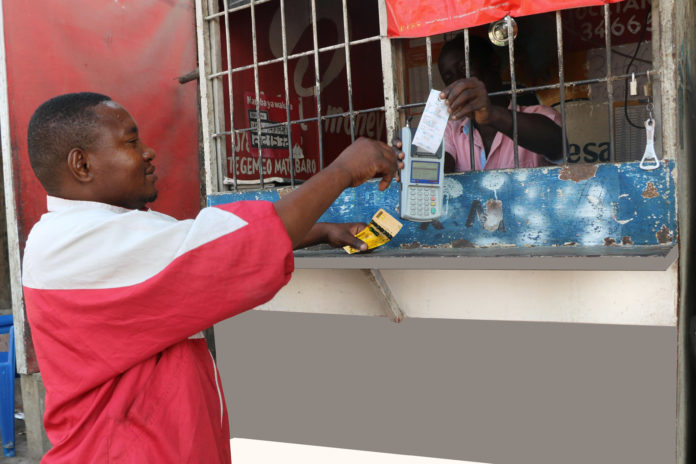
A client accesses financial services provided by a retailer

People living in areas without a commercial bank branch will soon be able to access formal bank services. Banks are currently putting final touches on the preparations to roll out agent banking following the approval of the regulations about three month ago.

Reports indicate that at least three banks – Stanbic, Barclay and Centenary Bank, have already been licensed and are expected to rollout agent banking services in late march, as they seek to increase access to formal financial services.

According to the2017 Demand and Supply Side Survey for agency banking a survey commissioned by the Financial Sector Deepening Uganda (FSDU) and conducted by Microsave, about 58% of Ugandan adults are unbanked.

This is not because they do not want to have bank accounts but because they do not have access to banking services as banks consider opening bank branches, especially in rural areas, not cost-effective.

The survey indicates that about 9.3 million Ugandan adults travel over an hour to reach the nearest bank branch.

The rolling out of agent banking (also known as agency banking) is expected the change the narrative.

Through agent banking, banks will now be able to cost effectively extend their services to remote areas to ease and increase access to the excluded Ugandans and boost financial inclusion.

What is Agency banking?

Agent banking is the delivery of financial services outside conventional bank branches, where a licensed deposit taking financial institution contracts (bank) a third party operator (agent) to provide a range of financial services on its behalf

Agency banking is provided for under the Financial Institutions Amendment Act, which was approved early last year. The agent could be any established retail shop, a permanent mobile money agent, a petrol station and hardware shop, among others.

Benefits of agent banking

According to the Uganda Bankers’ Association Head of Communication and Corporate Affairs, Patricia Amito, says that when it takes shape, banks will no longer need to set up the brick-and-mortar branches but will only appoint agents to transact business on their behalf.

Agents will be in position to conduct minor banking services like cash deposits and withdraw, utility bill payment, transfer funds, open bank accounts and initiate a loan application process.

This is expected to reduce the cost of operation for the commercial banks, increase financial inclusion, reduce access barriers to financial services and broaden financial products such as formal savings, credit services and insurance usage.

“Agents will mostly benefit from fees and commission which contribute almost half of the Shs710b” she said, adding that an agent, in essence, works as a channel that is a retailer between the bank and public based on the agreement with a commercial bank can agree on how to share revenue.

She adds: “We expect agent banking to be a catalyst for financial inclusion for the unbanked and the deepening of the financial infrastructures and sector.”

Stories Continues after ad

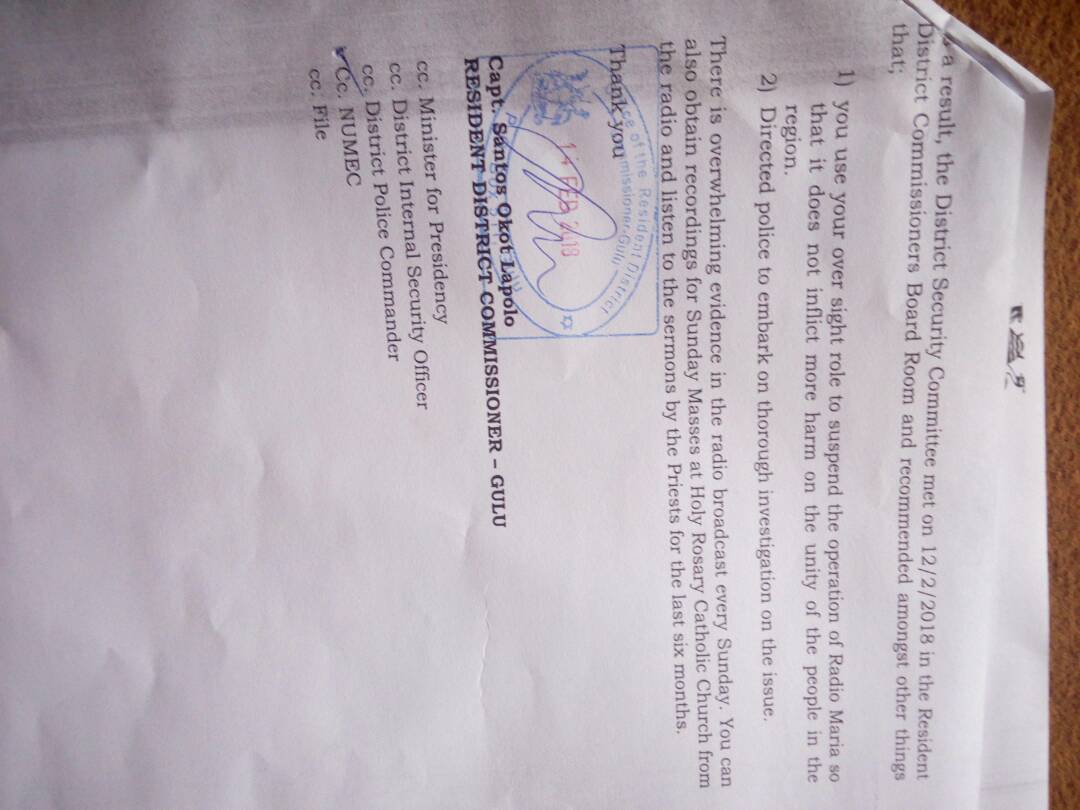
Govt wants Radio Maria in Gulu closed

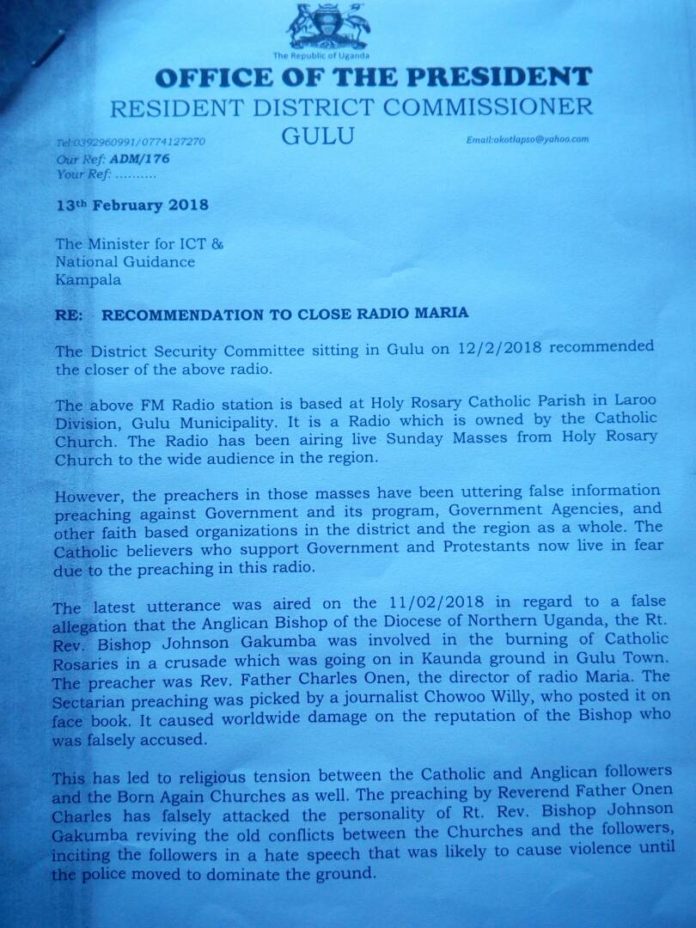
The letter calling for the closure of Radio Maria in Gulu

The Office of the President has called for the closure of Catholic Church-run Radio Maria in Gulu.

In a letter to the Ministry of Information and Communication Technology dated February 13, the Gulu Resident District Commissioner (RDC) Captain Santos Okot Lapolo, said that the district security committee had recommended the closure of Radio Maria after establishing that it has been preaching against Government and its programs, other faith based organizations and government agencies.

The letter is copied to the Minister of the Presidency, the District Security Officer (DISO) and the District Police Commander (DPC) Gulu.

The development comes in the wake of the Feb 11 accusations reportedly made by the Catholic Church priest Father Charles Onen against the Anglican Bishop of the northern Uganda Diocese Rt Rev Bishop Johnson Gakumba who they said, was involved in the burning of Holy Rosaries at Kaunda grounds in Gulu.

Stories Continues after ad

Cranes players to earn Shs1m every month

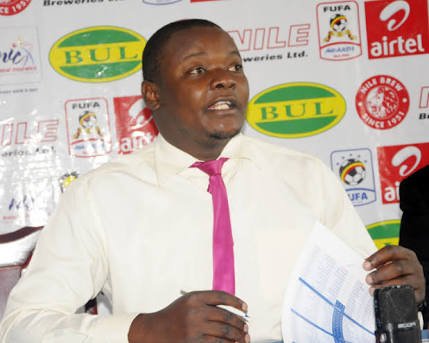
The Press Conference at which Eng. magogo announced the Cranes pay of Shs1 million a month

Federation of Uganda Football Associations (FUFA) President Engineer Moses Magogo held a press conference today afternoon at Mengo, Kampala, the first conference since the return of the Cranes team from the CHAN tournament in Morocco.

During the conference Magogo was joined by Cranes coach Sebastien Desabre, the federation’s Chief Executive Officer (CEO) Edgar Watson and FUFA communications manager Ahmed Hussein.

“I thank the Uganda Cranes players and coach Sebastien Desabre and the technical team for representing us at CHAN,” he said, adding that fifty Cranes players will each start receiving salary of one million Ugandan shillings every month.

The funds will come from the new released government supplementary budget of Shs4.3bn for football plus the money received from CAF for participation in the CHAN tournament.

Ali Mwebe, the new director of football development

Meanwhile, Ali Mwebe has been appointed the new Football Development Director and will be assisted by Bashir Mutyaba.

FUFA CEO Edgar Watson confirmed the appointment during the press conference.

Mwebe replaces Asuman Lubowa who retired from his position after nine years of service.

The Federation will also organise another football symposium on March 10 targeting the technical development of the game in the country.

Stories Continues after ad