Stanbic Bank
Stanbic Bank
18.8 C
Kampala
Stanbic Bank
Stanbic Bank
Home Blog Page 1653

Sure Deal closed over ‘harmful’ beauty products

UNBS Market Surveillance Inspector

Sure Deal beauty center closed over alleged fake beauty products
According to the Uganda National Bureau of Standards (UNBS), officials of Sure Deal have been fraudulently using their Quality Mark.

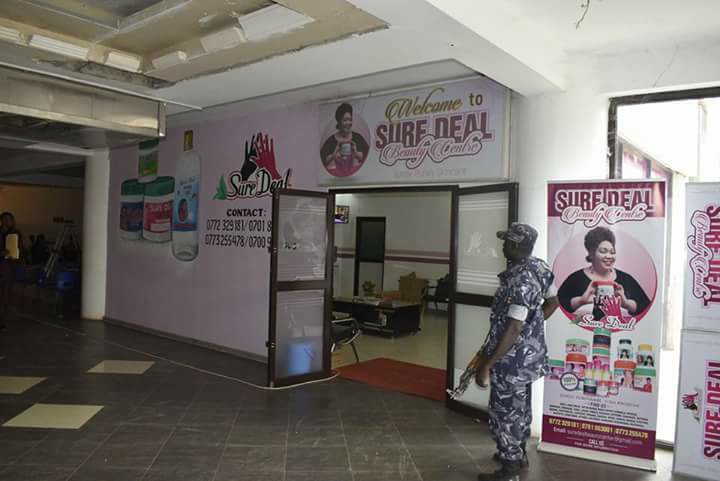
A policeman stands guard during the raid on Sure Deal offices

‘The products are dangerous and can cause serious effects to one’s health including cancer amongst other diseases’, a UNBS release states in part.

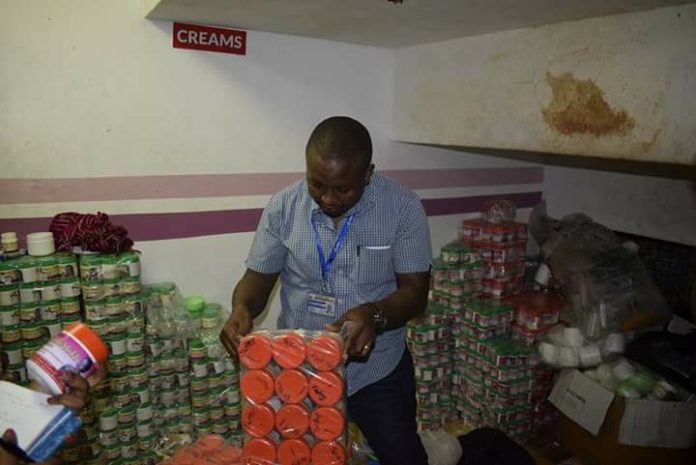
Earlier, UNBS Market Surveillance Inspectors raided offices of Sure Deal Beauty Center at Senana Building on Buganda Road and confiscated tonnes of cosmetics, which allegedly contained mercury and hydroquinone.

Stories Continues after ad

Fixtures for UPL second round released

The second round of the 2017/18 Azam Premier League season will kick-off on 10 February, 2018 with seven matches to be played at the different play grounds.

Sixteen time record champions SC Villa Jogoo will host Maroons at Masaka Recreation Ground.

The Jogoos are still top the table with 32 points, 5 points ahead of the defending champions KCCA from the first fifteen matches played.

Coach Wasswa Bbosa’s Blues are looking for the club’s first league title since 2004 which was won by former Cranes coach, now the Orlando Pirates boss, Micho Sredojevic.

Vipers travel away to Soana at Kavumba Recreation Ground while both Masavu and UPDF, who are in a relegation zone, face off at the Fisheries Training Institute in Entebbe.

URA face BUL at Kakindu stadium in Jinja, Police will be at home to Mbarara City while Kirinya Jinja SS hosts Proline at Lugogo.

Meanwhile, KCCA will be away on continental duty in Madagascar on the same weekend where they begin their CAF Champions League journey against CNasports. Their matchday opponents Bright Stars won’t be in action.

The league is expected to end on May 19, 2018.


Match Day 16 Fixtures:

Saturday, 10th February 2018:


BUL Vs URA – Kakindu Stadium, Jinja

Masavu Vs UPDF – Fisheries Training Institute, Entebbe

Onduparaka Vs Express – Green Light Stadium, Arua

Police Vs Mbarara City – Mandela National Stadium, Namboole

Proline Vs Kirinya-Jinja S.S – Star Times Stadium, Lugogo

Sports Club Villa Jogoo Vs Maroons – Masaka Recreational Stadium, Masaka


Soana Vs Vipers – Kavumba Recreational Stadium

Stories Continues after ad

Pearl of Africa Tourism Expo for February 23

POATE hosted buyers in Kibale Forest National Park last year

The Pearl of Africa Tourism Expo (POATE) is set for February 23-25,  Uganda Tourism Board (UTB), the agency mandated to promote tourism activities in Uganda, says.

POATE is an annual event organized by UTB to bring together all tourism stakeholders and other service providers along the tourism value chain from both the East African region and the international community.

Under the theme ‘Rediscovering the Pearl’, POATE, now in its fourth edition, is aimed at raising the profile of Uganda as a preferred destination for domestic, regional and international tourists.

POATE brings together different travel agents, tour operators, hoteliers, destination managers and other service providers along the tourism value chain, presenting a unique opportunity for the tourism business operators across Africa to meet new clients, network, and market and discuss business.

UTB officials say POATE is a good opportunity for those interested in leisure, business or educational travel, sports, adventure and entertainment.

“This will be a good opportunity to link up with the best operates in the different areas that appeal to; adults, youths and children,” reads a brief on the about the event.

“The Pearl of Africa Tourism Expo (POATE) will attract international hosted buyers from Europe, the Americas (North & South America), Africa, Australia and Asia,” it adds.

The event, according to organizers will also provide a platform of Business to Business engagements for tourism travel trade regionally, locally and internationally. Among others, it will also showcase, with special focus, the Ugandan product offering from the diverse bird life to the Big 7, adventure tourism, primates, culture tourism and much more.

Last year exhibitors representing airlines, hotel chains, safari lodges, tour operators, travel agencies, restaurants and regional tourism clusters attended.

Over 100 buyers and media from the USA, Canada, the United Kingdom, Brazil, Saudi Arabia, New Zealand and Russia, among others were invited to attend and participate at the Expo. Also invited were participants from Zimbabwe, Kenya, Tanzania, Rwanda, Ghana and Nigeria among others.

Safie Ali, UTB’s Senior Marketing officer and coordinator said some time back  that, “POATE is a must attend for the professional who wants to better understand tourism and key industry issues that can fundamentally impact their business – and that can help position them more competitively in their own market. We look forward to meeting with some of the hosted buyers next week.”

Visitor exports are a key component of the direct contribution of Travel and Tourism in Uganda and in 2016, Uganda generated Shs2, 592.9bn in visitor exports, an amount was expected to grow by 23.0% in 2017.The country expected to attract 1,459,000 international tourist arrivals in the same year.

Stories Continues after ad

St. Anthony Angal Catholic Parish celebrates 100 years

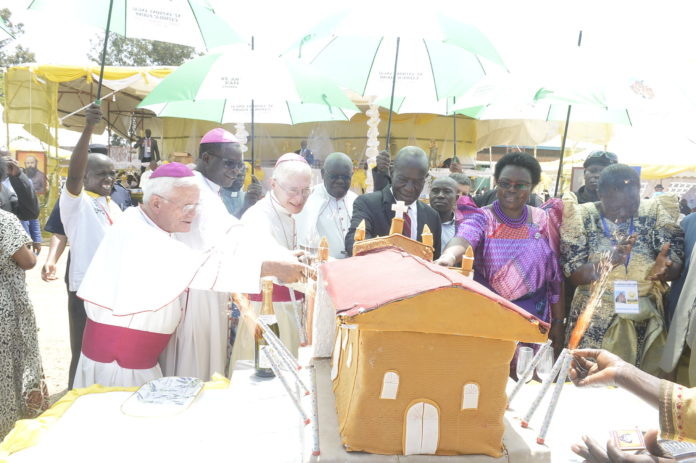
The Vice President Edward Kiwanuka Ssekandi accampanied by State Minister for Northern Uganda, Grace Kwiyucwiny (R) are joined by the clegy to cut the centinary cake for St. Antony Angal Catholic Parish (1)

The West Nile Catholic Parish of St. Anthony Angal in Nebbi Diocese has celebrated 100 years since its establishment by the Comboni Missionaries in 1917.

The colourful Centenary celebration held at the parish grounds and presided over by the Papal Nuncio Augustine Blume attracted hundreds of Catholic faithful from Zombo, Arua and Nebbi districts.

According to the Parish Priest Fr. Elio Zanai, Angal Parish was the first Catholic contact among the West Nile communities of the Alur and Madi as the Italian Comboni Missionaries reached the area by the twentieth Century.

President Yoweri Museveni, in a speech read for him by the Vice President Edward Kiwanuka Ssekandi, lauded the church as important conduit for attitude change towards development. He said that Uganda and Africa in general are blessed with abundant resources, good climate, sufficient rains and sunshine but the challenge is the commitment of leadership to develop it.

He urged the church to continue sensitising people the value of hard work, faithfulness, patience and self-reliance and asked the church to continue being agents of positive change in society beyond evangelism, teaching and discipleship.

Museveni noted now is the time for hard work, coupled with justice and integrity that must be taught to the next generation as the only way to preserve the nation from infiltration by moral decadence.

The President acknowledged the work of the Comboni missionaries who arrived in Uganda in 1917 for their humanitarianism and said they laid a strong foundation for the church as seen in the social-economic changes witnessed in the areas in education, health and economic development opportunities.

He congratulated Angal Catholic Parish for being a model of development not only spiritually, but also in the social and economic arenas and urged all the people in the parish, to remember and emulate the legacy of the founders.

Museveni, who gave Shs30 million towards the function, also reminded the people of West Nile to maintain peace and security.

The function attended by the State Minister for Northern Uganda, Grace Kwiyucwiny, the Archbishop of Gulu John Baptist Odama, the Bishop of Arua Diocese Rev. Sabino Odoki Ocan, Alur Chiefdom representatives and several members of Parliament and local leaders from the three districts.


Stories Continues after ad
South Sudan ex-army chief opts for life in exile

EXILED: Former SPLA Commander Gen. Paul Malong

South Sudan’s former army chief General Paul Awan Malong has credible threats to his life adding that he has no plans to return to the country after completing his medical examinations in Kenya.

“Why should I go to Juba? When they called me to come back, they put me under house arrest. Should I go to Juba to be arrested?” Awan asked. Juba is the capital of South Sudan and its largest city.

Awan had been a longtime governor of Northern Bahr el Ghazal before he was appointed chief of general staff of the Sudan People’s Liberation Army (SPLA) by President Salva Kiir Mayardit. His appointment followed mass resignations by a number of senior generals who claimed the SPLA was involved in ethnic cleansing and war crimes.

Awan was fired by Kiir in May 2017, and attempted to return to his hometown of Aweil. However, his convoy was intercepted at Yirol.

He was persuaded by the elders in Yirol to return to Juba to talk with Kiir, and was placed under house arrest there.

The former army chief was released in November 2017 to seek medical treatment in Kenya after one of his wives and community leaders pleaded for his release.

“If you are put under house arrest for seven months without charges, will you feel that is friendship?” Awan asked. “Our friendship started when President Salva was not a president. And today, we are not equal. He is the president, and I am an ordinary person. You cannot force somebody to be your friend.”

In January 2018, the South Sudan government accused Awan of ordering opposition fighters to attack government positions across the country, a charge Awan vehemently denied.

“What do I have in that place?” Awan asked. “Yes, my family is there. Some of my family are here [in Kenya]. But I am denied to be liberal [free] when I am there. Why should I go where I can be arrested?”

The European Union imposed sanctions Friday on Awan and two current South Sudanese officials who were implicated in human rights violations and obstruction of the country’s peace process.

The Trump administration imposed sanctions last year on two senior members of South Sudan’s government, including the former army chief.

Awan said he does not work for the government of South Sudan and wonders why he is still being sanctioned by a foreign government.


Stories Continues after ad
Producer Washington’s explanation of Radio’s death raises eyebrows

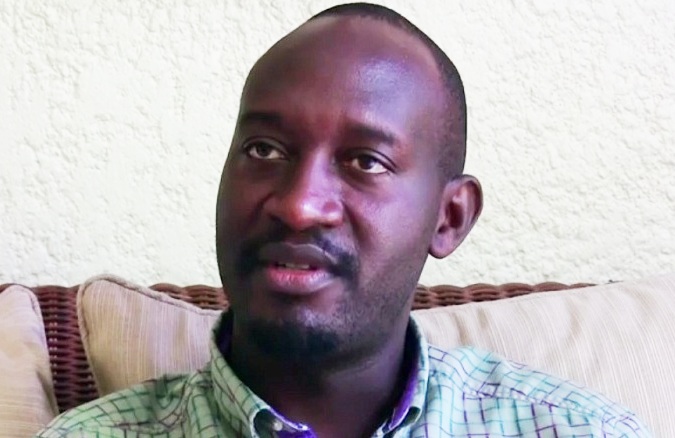
MORE QUESTIONS: Producer David Ebangit aka Washington

Celebrated producer David Ebangit aka Washington, who was with the late singer Moses Radio on the day he was killed, has finally spoken out.

According to Washington, on the fateful day, he found Radio at his home in Makindye. He wanted to go to Entebbe because he was constructing a house there and asked Washington to escort him.

Together with another person yet to be identified, they got into the car at around 3pm and drove to Entebbe. We were three in the car. On the site, Radio got a phone call from a one Pamela, who asked him to find her at Da Bar.

They walked to Da Bar between 5-6pm and according to Washington, Pamela was at the bar with a group of her friends. They apparently sat on one side while Washington sat on the other side.

He says that he started getting a bad feeling about what was happening and asked Radio to go but the deceased insisted that they stay. At that time, according to Washington, he briefly walked out to rest in the car before returning.

He then reportedly asked Pamela to tell Radio that they should leave, she then said Mowzey was about to get done.

Washington says he insisted and went inside Da Bar, only to realise  that they had changed their location.

“I sat with him for about 5 minutes. They brought a bottle of whisky and I saw him paying the money. He got the whisky and started pouring in different glasses. He then got agitated and poured whisky on the manager, the one who was talking ill about him.

“They didn’t react because they continued laughing but I noticed the manager wasn’t happy. When I asked Radio what he had done, he said that ‘they know what they were doing’. In about 5 minutes, the manager got very angry and threw the table away. The bar manager then came for Radio and they were separated by this tall guy, Troy, and Hassan. I told Pamela to pick Radio out because they were together.”

“On the way out, towards the door of the club, this tall guy, Troy, came shouting ‘you have disrespected the owner of the bar’. He lifted Radio up and threw him down, heard him hit his head down. I heard his head crack.”

They picked up Radio and drove him to Emmanuel Hospital and there was a bit of delay.

“We then requested for an ambulance to Nsambya.  From Nsambya Hospital, we were referred to Case hospital because they told us that the ICU was full.

“Mowzey Radio didn’t fight at all. This man Troy grabbed him and threw him down. The picture circulating is of the person who killed Radio. I can’t forget the face of the man who killed my brother. I asked Pamela to get Mowzey out of the bar four times. She didn’t do enough to protect Mowzey because she is the one who invited us.”

However, Washington’s narration has failed to satisfy a large section of the public who believe there is something which he is hiding away from them.

“Now look at this Washington thing, why is it you have been quiet not until your name has been mentioned and circulating on social media? Why didn’t you tell us all this when Mowzey was still in hospital so that all those people face charges? If Pamela couldn’t take away Radio, what did you do as a man in your capacity as in trying to take him away?” one Jude Kizito asks.

“HE was grabbed and thrown down while you were watching each and every thing…What did you do to protect Mowzey since you were with him?” Rymes Rickxon asks.

“If the manager got angry before they were separated and I will assume everything was back to normal then what prompted TROY to beat up Mowzey? What was Washington waiting for to tell this story?”


Stories Continues after ad
Judge threatens to cancel businessman Sebuwufu’s bail

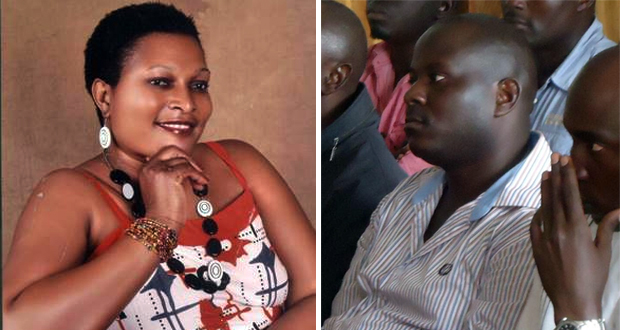
A photo montage of Betty Donah Katusabe (R-RIP) and Pine car Bond boss Muhammad Sebuwufu (R)

High Court Judge Flavia Anglin Senoga has today threatened to cancel businessman Muhamad Sebuwufu’s bail after his lawyer asked court to adjourn the hearing for two weeks.

Appearing before court this morning, lawyer Noel Nuwe said that his client, who is accused of murdering businesswoman Donah Katushabe, had petitioned the Director of Public Prosecutions (DPP) for a plea-bargaining deal, and sought the adjournment that rubbed the Judge the wrong way.

“We had not concluded the process with the DPP’s office, plea bargaining deal documents were received on Saturday and we had one day to look into them, so we ask the matter to be adjourned to two weeks,” Nuwe told Justice Senoga.

But in response Justice Senoga said: “This matter has continuously been adjourned; if we adjourn for two weeks then court will cancel the suspect’s bail to balance with other suspects still on remand.”

In 2016 Sebuwufu was granted a Shs10 million cash bail by High Court Judge Justice Musalu Musene, but his co-accused including Shaban Oduttu, Damaseni Sentongo, Godfrey Kayinza, Yoweri Kitayimbwa, Philip Mirambe and Paul Tasingika, are on remand in Luzira.

Another suspect, former Central Police Station District Police Commander (DPC) Aaron Baguma, was last month cleared of murder charges by the DPP.

Prosecution avers that in 2016 the accused tortured and killed Ms. Katushabe over a Shs9 million debt she had failed to clear after acquiring a car from Sebuwufu’s Pine Car Bond on Lumumba Road in Kampala.


Stories Continues after ad

URA, Stanbic Bank launch new tax payment digital solution

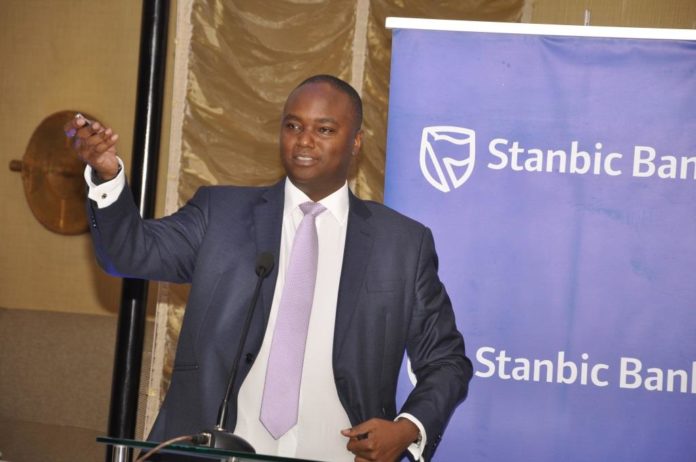
Stanbic Bank Chief Executive Patrick Mweheire

The Uganda Revenue Authority (URA) and Stanbic Bank have launched a secure, convenient and affordable online payment solution that will enable taxpayers in the country to comply with their tax obligations by making payments using VISA, MasterCard and MTN Mobile money.

The new platform was launched Monday at URA Head Office in Kampala by Stanbic Bank Chief Executive Patrick Mweheire and URA Acting Commissioner General, Patrick Mukiibi.

Mukiibi said URA strives to put in place mechanisms that will stimulate compliance by leveraging the appropriate technology to reduce the time and cost of doing business.

On his part Mweheire said: “These digital solutions are a fantastic innovation to simplify payment and collection of taxes by offering greater convenience.” He added that Stanbic collects up a third of all taxes in Uganda.

The launch of this platform heralds another first from Stanbic Bank, which was the first bank to offer mobile money payment access to URA.

The new payment platform now available on the URA website and can be accessed on the laptop, tablets, phones and other mobile devices and is available to both Stanbic and non Stanbic clients

The digital payment solution will reduce time and unnecessary costs in payment activities, eliminating obstacles to compliance.

This new payment solution is in addition to the already existing tax payment solutions namely Cash, Cheque, POS with@UBAGroup (Pay Way), Mobile money (MTN), Real Time Gross Settlement (RTGS) and Electronic Funds Transfer (EFT).

How it works

The bank debits the card or mobile money wallet, processes and posts the payments into URA account. URA is notified about the payment and an electronic receipt is sent to the taxpayer. The receipt confirming payment of the tax is presented to URA.

More


Stories Continues after ad

Bridge Academies open as gov’t threatens to close unlicensed schools

Bridge Academies Country Director Morrison Rwakakamba

Bridge Academies and Schools are open for the new term with 60 percent of the pupils reporting on the first day, the Country Director Morrison Rwakakamba said Monday, adding that management is yet to receive operating licences from Ministry of Education and Sports (MoES).

In an interview with the media in Kampala, Mr. Rwakamba said all the 63 schools spread across the country are open for the new term as per the recent statement by the education ministry Permanent Secretary Alex Kakooza who said that all schools which had submitted in registration documents would be allowed to open for the new term as the ministry processes their operating licences.

Rwakakamba said that even though there were concerns that the Academies would not be allowed to open for the new term, the fact remained that management had tendered in documents for registration, with some applications sent over a year ago.

On January 29, 2018 Mr. Daniel Nkaada, the Commissioner of Basic Education in the Ministry of Education, wrote a letter to Bridge Schools, expressing uncertainty whether the schools would be allowed to open for the new term, while accusing management of not complying with registration requirements that he failed to specify.

But Rwakamba told journalists that management tendered in files containing registration documents for 45 schools to ministry as well as sending files for registration of 21 schools in local governments. He added that management is awaiting the approval of the files as they teach 14,000 pupils, many of them from poor families who cannot afford an expensive education.

Rwakakamba said Bridge Academies have fulfilled all the requirements-including; recruiting qualified teachers (certified by MoES), but also presenting tenancy agreements, approvals from LC1s, health inspection reports, NEMA approvals, among others and sees no reason why the ministry cannot give them licences.

Rwakamba says has followed the due process of registration and has brushed off rumours that they might have skipped some procedures needed by the MoES.

According to Rwakakamba, Bridge Schools have a good working relationship with government and particularly the MoES, and as such cannot afford to disregard the ministry’s guidelines for registration.

Bridge academies, out of its own initiative, are promoting affordable/low cost education to under privileged communities. About 14,000 pupils are benefiting from this social enterprise model in underprivileged areas where Government has not been able to set up schools. Over 30,000 parents and communities in Uganda send their children to these schools.

In last year’s primary leaving examinations, Bridge Academies had all its candidates pass to join secondary education.

Stories Continues after ad

EA leads in push to meet agriculture targets

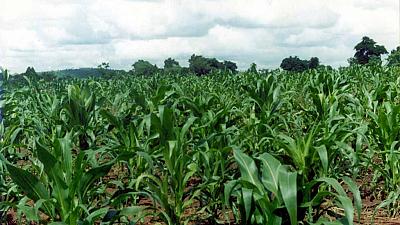
A maize garden: The EA region is leading other African regions in agriculture development.

A new Scorecard tracking the Malabo Declaration reveals that the East African countries including Uganda are leading in implementing Africa’s agricultural transformation policies that are meant to pull masses out of poverty and ensure improved livelihood by 2025.

The Malabo Declaration is a lay down of agricultural goals that Heads of State attending the African Union Summit in Malabo, Equatorial Guinea in June 2014 adopted, to be attained by 2025. The Africa Agricultural Transformation Scorecard tracks progress in commitments made by governments.

East Africa managed an average score of 4.20, which indicates it is on track to meeting its commitments when assessed against the 3.94 benchmark for 2017, with five out of the eight regional countries that submitted their progress to the AU, managing the minimum 3.92 score.

Rwanda was ranked the best agriculturally transformed country in Africa with a score of 6.1, thanks to political and institutional reforms. Burundi scored 4.7, Ethiopia 5.3, Kenya 4.8 and Uganda 4.5, to cement the region’s 4.2 score.

The Southern Africa region which scored 4.02, and Northern, Central and Western Africa which scored 3.83, 3.62 and 2.35 respectively.

As part of the recent commitments, the AU Heads of State and Government in the Malabo Declaration committed to ending hunger by 2025 and to achieve this they further resolved to halve the current levels of post-harvest losses by the year 2025.

The leaders also committed to improve nutritional status, and in particular, the elimination of child under-nutrition in Africa with a view to bringing down stunting to 10% and underweight to 5% by 2025.

The leaders also committed to give 10 percent of national budget to agriculture and support financing of investments in agriculture, among others.


Stories Continues after ad