Stanbic Bank
Stanbic Bank
20 C
Kampala
Stanbic Bank
Stanbic Bank
Home Blog Page 1670

Uganda’s ‘struggling economy’ threatens delivery of middle income status

CCEDU Cordinator Crispin Kaheru

With two years remaining to 2020 when Uganda expects to attain a middle income status, Uganda’s civil society now says the country is unlikely to achieve that milestone.

“With oscillating growth target of below 4%, the aspiration of reaching a middle-income country by 2020 may not be achieved when close to 50% of the Shs 29.274 trillion annual budget projection for FY 2018/19 is being funded by external financing and largely loans whose absorption rate is languishing below 40%,” members of the civil society say in a New Year message, titled, ‘Transcending Despair and Restoring Dignity: Ugandans on a People-Driven Path to Progress’.


The NGOs further say that institutional dysfunction and corruption have seen Crucial sectors of education and healthcare suffer the impact of funding shortages and the wanton theft of public resources.

“It is highly imperative to note that while the country boasts of robust anti-corruption laws and institutions, the gap between the form and function of these institutions remains wanting,” they say.

They add that the continued leakages in school examinations, non-action on the Auditor General’s Reports, emergence of new high profile cases of corruption and stagnation of major projects are all a manifestation of the institutional weakness that have to be fixed immediately.

They also want government to pay attention to regulation of the agricultural and livestock sector: and put up mitigation measures to curb the challenge of farmers planting infected seeds which led to low productivity and hunger.

They urge government to pay attention to climate change, saying Uganda’s weather patterns changed as reflected in the unpredictable rainfall patterns characterized by a mosaic of extended droughts and heavy storms that have led to loss of assets and livelihoods in 2017.

“In order to cope with these fast changes in the short and medium term, the Government of Uganda needs to fast track the delayed implementation of the National Climate Change Policy, advance mainstreaming of climate change in the district development planning process as well as the district environment action planning process,” they say.

Further, according to the civil society groups, in order to address the increasing vulnerability of the majority poor on one side and in line with the Paris Agreement, the country needs to expeditiously formulate the National Adaptation Plan through a multi-stakeholder consultative process.

In a related development Crispin Kaheru, the Coordinator, Citizens’ Coalition for Electoral Democracy in Uganda (CCEDU), which is one of the active civil society groups in Uganda, says the government needs to rethink its approaches and come up with innovative measures to redeem the country’s inclusive growth prospects and achieve a better life for all Ugandans.

According to Kaheru, since 2010 Uganda’s economic growth has been more unpredictable ranging from a high of 6.8% during the financial year 2010/11 to a low of 3.9% in the financial year 2016/17.

He adds that the sluggish and uneven growth resulted in government failing to meet its desired 7.2% annual growth rate which was the target for the National Development Plan I (NDP I) over the five-year period 2010/11 to 2015/16. “Growth in FY 2016/17 was only 3.9%, which is lower than the 5% growth that was initially projected,” he quotes government reports.


Stories Continues after ad
Kiir in South Africa for talks on Machar

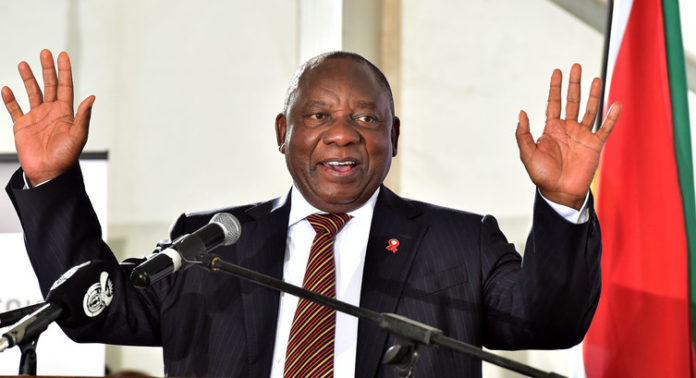
Presidents Jacob Zuma and Salva Kiir hold talks in Pretoria yesterday. Agencies Photo.

South Sudan President Salva Kiir, is currently visiting South Africa in a bid to advocate for maintaining in confinement his main political rival and the leader of the armed opposition Riek Machar and to exclude him personally from future interim arrangements.

President Kiir is accompanied on the trip by the Minister of Defence, Kuol Manyang, the Minister in the Office of the President, Mayiik Ayii Deng, and Minister of Petroleum, Ezekiel Lul.

“The president is visiting South Africa for two main reasons. One he is going to deliver a unified message of the transitional government of National Unity that Riek Machar should continue to remain outside the country during the interim period of the revitalized peace agreement,” a presidential aide said on Sunday.

The official who preferred anonymity stressed that the implementation of the peace agreement needs cooperation and this was lacking from Machar.

“Now his Excellency is cooperating well with the First Vice President Gen Taban Deng Gai and because of this cooperation, there has been a significant improvement and in the working relations and progress in the implementation of the peace agreement has been made,” he further said from Pretoria where he is part of the presidential delegation.

In October 2016 Machar left Khartoum to Pretoria officially for medical treatment. But in fact, his travel had been decided in a common agreement between the IGAD countries, South Africa and Washington was involved in the decision.

One month later, the former first vice-president successfully escaped his residence in Pretoria and reached Khartoum and Addis Abba. But he was forced to return to South Africa as the Sudanese and Ethiopian authorities refused to allow him to enter into their territories.

The South Sudanese presidential aide said the other message Kiir has delivered to President Jacob Zuma, for his government and the leadership of the African National Congress is to continue to talk to Machar to denounce violence.

He further said that President Kiir and the transitional government of national unity accept the representation of Machar’s faction in future arrangements but not himself.

In June 2017, Machar called on the UN Security Council to end an order his forced exile in South Africa and to allow him to engage in a peaceful settlement of the conflict.

Juba government believes that Machar should be kept far from the country during the reviltalization process and the end of the peace agreement implementation in a way that he can only run for the presidential election.


Stories Continues after ad
New venture deliverables put you ahead of the crowd


By Martin Zwilling

As a mentor to startups and new entrepreneurs, I continue to hear the refrain that business plans are no longer required for a new startup, since investors never read them anyway. People cite sources like this recent Inc.com article ‘5 reasons why you don’t need a Business Plan’ or my own blog discussion on this subject, ‘ Situations where a Business Plan does not add value’.

Let me be clear – business plans are never “required,” they should never be written “just for investors,” and if you sold your last startup for $800 million, most investors will not ask for a written plan for the next. On the other hand, if you are a first-time entrepreneur, the discipline of building a business plan will dramatically improve your success odds, and your odds of finding an investor.

For aspiring entrepreneurs, or if your last startup failed, it’s all about standing out above the crowd of others like you, and demonstrating your readiness. There is no crowd of successful entrepreneurs. Here is my outline of key deliverables that could convince me that you are a cut above the “average” entrepreneur that approaches me with nothing but a dream and a prayer:

Personal video introduction with elevator pitch. Successful startups are all about the right people with the right stuff. In a two-minute video clip, you can introduce yourself, show your passion and the engaging personality you need to win over customers, partners, and employees. Net out the problem and your solution in the first 30 seconds.

Executive summary glossy. For the more traditional investor, or for that chance meeting in a real elevator or meeting, you need a two-page brochure (two-sided page). The challenge here is not to see how many words you can get onto each side, but how you can make this so engaging in layout and content that an investor will ask for more.

Investor and strategic partner pitch. A perfect size is ten slides, with the right content, that can be covered in ten minutes. Even if you have an hour booked, the advice is the same. I’ve seen a lot of startup presentations, and I’ve never seen one that was too short – maybe short on content, but not short on pages. Pitch your company, not your product.

Written business plan.  Disciplining yourself to write down the plan is actually the best way to make sure you actually understand it yourself. Would you try to build a new house without a plan, if you have never done it before? In simple terms, it is a 20-page document which describes all the what, when, where, and how of your new business.

Financial model.  Most new entrepreneurs tend to avoid the financials of the business, and as a result are badly surprised by cost realities, and can’t answer investor questions. I suggest a simple Excel spread sheet loaded with your revenue, cost, and margin targets covering the first five years of your business. Investors will expect it for due diligence.

Thus you see the business plan is only one of five elements of a package that every aspiring entrepreneur needs to build to stand above the crowd, in your own level of understanding of your business. You need it for communicating to your team, finding strategic partners, or soliciting investor funding from friends and family, angel investors, VCs, and crowd funding.

The ability to communicate effectively is critical to standing above the crowd. Good communication is not talking louder and longer than others, but practicing active listening, and providing a package of other elements to effectively to back up your words. Make yourself unforgettable, in a good way. This means adding value before, during, and after every interaction.

Believe it or not, there are many people in the entrepreneur crowd with outstanding ideas, but building a business is more about execution. If you have built a successful business before, you don’t need all the components above to convince anyone, including yourself, that you can do it again.

Even including repeat entrepreneurs, statistics continue to show that the overall failure rate for startups within the first five years is greater than 50 percent. The real objective of “standing above the crowd” is to give you as an aspiring entrepreneur every chance to end up in the winning group, rather than the crowd of losers.

Starting without any written plan elements may seem easier, but is not the way to win.


Stories Continues after ad

Parliament in Shs5b drive to fundraise for Albino centre

MAIN CELEBRANT OF PARLIAMENT WEEK: Speaker of Parliament Rebecca Kadaga

Legislators in conjunction with the general public will between January 21 and 25 celebrate the Parliament Week, in a bid to harness and bridge the gap between the citizens and their representatives.

To be conducted under the theme ‘Parliament the Voice of the People’, the legislature will among other activities fundraise for the construction of a Shs5 billion Rehabilitation Centre for the Albino community in Uganda.

The Centre is projected to house a hostel, medical and training facilities.

‘Persons living with albinism are vulnerable, stigmatized and find it difficult study, find work and access to information’, a statement released by parliament spokesperson Chris Obore, states in part.

The Parliament Week will be launched tomorrow with various activities including an Ecumenical Thanksgiving Service, Civil Society Debate to reflect the voice of Ugandans, Exhibitions, and a ‘public parliament’ among other activities.

Over the years, parliament has been holding the ‘Parliament Week’ under various themes, and engaging the public in various activities including among others guided tours in and outside Parliament and, organising meetings and discussions with MPs.

Meanwhile, as part of the Parliament Week activities, the legislature has urged Ugandans to buy at least two trees worth Shs 20,000, to be planted in the Mount Moroto Forest Reserve that has been deforested.


Stories Continues after ad

Ugandans in Sweden to party next Saturday

The release by the Uganda Community in Sweden

Ugandans in Sweden will hold a fete next Saturday, January 27, to honour the accreditation of the ‘Uganda Community in Sweden’.

‘I take this opportunity to inform you that Uganda Community in Sweden has officially been registered. Yiou are therefore invited for a consultative and social evening meeting on Saturday 27th January 2018 starting 18:00 till late… Come let’s set a solid foundation for Ugandan unity and spirit in Sweden,’ a communique issued by the chairperson of the group states.

By press time it was not possible to establish whether the Uganda government will be represented at the fete by an embassy or foreign ministry official, as is usually the norm.

However, it is important to note that the registration of the community in Sweden comes at a time when the Prime Minister Dr. Ruhakana Rugunda has issued stern restrictions on foreign travel for government officials.

Stories Continues after ad

HRW accuses Ugandan security agencies over a raft of rights abuses

The Human Rights Watch has accused Ugandan security agencies for allegedly orchestrating ‘continuous violations of human rights with impunity’.

In its latest report, HRW cited among others, the 2016 military and police assault in Kasese that reportedly left over 100 people, including children, dead.

The rights body also blamed the police, saying the Force unjustifiably blocks, restricts and disperses peaceful assemblies and demonstrations by opposition groups, citing the contentious 2013 Public Order Management Act (POMA).

The report also takes issue with government on freedom of speech and expression, citing the issue of Makerere University Researcher Dr. Stella Nyanzi, who was charged with ‘cyber harassment’ and ‘offensive communication’ charges for Facebook posts challenging President Museveni and his wife, education minister Janet Museveni, for failure to fulfil a campaign pledge to provide sanitary pads to school girls.

The report further chastises the state for torture, citing the ‘illegal detention and torture of suspects at Nalufenya police facility.

‘Human Rights Watch and other organizations have documented numerous instances of mistreatment and torture, particularly in Nalufenya police post in Jinja, eastern Uganda, over several years,’ part of report states.

But contacted on the raft of accusations, police spokesperson Emilian Kayima said: “Nalufenya is a well-established police detention facility like any other police detention facility, agreeable by international standards. Red Cross and Uganda Human Rights Commission have been there; they have not raised any issues. This is a figment of imagination of those who sit in New York to write reports.”

On the cyber laws, Kayima said the laws in Uganda are tailored on the aspirations of the citizens. “These are our laws; we established them as a country. We have the Computer Misuse Act, so what is that report talking about?” he asked, before adding: “Do they want us to import their laws here?”

Further, according to Kayima, the media in “Uganda really enjoys freedom more than any other country I know; if it was a local NGO I would elaborate but this one (Human Rights Watch) I will not elaborate.”


Stories Continues after ad

Kyabazinga rallies world leaders to embrace development

African summit for cultural leaders at Centre International de Conference Abdou Diouf Dakar, Senegal.

The Isebantu Kyabazinga of Busoga, His Majesty William Gabula Nadiope IV, has asked world leaders to embrace culture as an enabler for development.

Addressing the ongoing African Summit in Dakar organised by President Macky Sall of Senegal in partnership with Universal Peace Federation, the Kyabazinga elaborated the importance of upholding our Cultural values.

Isebantu Kyabazinga with the Queen mother of Tooro Best Kemigisha after his keynote speech.

“Culture evokes emotional responses and reactions but not reason yet it’s an enabler for development. If our people are brought up in an organized environment, chances of success are paramount,” the Kyabazinga, who was a keynote speaker said, and emphasized the need to promote peaceful co-existence as a uniting factor.

Kyabazinga with the grand son of Nelson Mandela, chief Nkosi Zwelivelile Mandela

He added: “Of late we are not putting a lot of emphasis on our respective cultures yet it’s an enabler for development. I therefore, implore all of you to use your available avenues to blend culture with modernity for development to flourish.”

The summit held under the theme: “New Africa: Interdependence, Mutual Prosperity and Universal Values”, brought together several leaders.

And, addressing the leaders under the sub theme: ‘Traditional leaders, The New village movement and Sustainable Economic Development’, the Kyabazinga highlighted the need for stakeholders of development to embrace the Korean Model of Village Economic Empowerment where the family is the pivot, and adapt it to respective countries. He also emphasized the need for cultural leaders to work with government and mobilise their subjects.

The Kyabazinga was accompanied by the Isabalangira of Busoga, Chief Samuel Nkuutu Zirabamuzaale, the Minister for Kyabazinga Affairs Owek. Yudaya Babirye, the Deputy Isabalangira of Bugabula chiefdom, Prince Babalanda Gabula and his Personal Assistant Mr. John Naku.

Stories Continues after ad

Parties excluded from 2018/19 government funding

EC boss Justice Simon Byabakama Mugenyi

Uganda’s major political parties will have to find other means to fund their activities as no money has been apportioned for them in the 2018/2019 national budget.

The revelation was made by Simon Byabakama, the Chairman of Electoral Commission, while appearing before the Committee of Legal and Parliamentary Affairs to present the Commission’s budget.

Government provided Shs10 billion in 2017/2018 for political parties and organisations with representation in government, but only Shs7.50 billion was released and yet no provision has been made for 2018/2019 budget

Byabakama Mugenyi informed the Committee that government has been providing funds in the Financial Years 2014/2015 (Shs10 billion), 2015/2016 (Shs15 billion) and 2017/2018, however, during the budget preparations for 2018/2019 no provision for this purpose was made.

The commission also revealed that although Shs10 billion was approved for 2017/2018 budget, the Ministry of Finance only released Shs7 billion.

In a related development, the commission is also in need of Shs16 billion that will be used for conducting elections and operationalizing of new districts.

“The Commission proposes that its budget ceiling be revised upwards by Shs16.61Billion to enable it conduct elections in established Local Governments and operationalize offices in the new districts,” Justice Byabakama Mugenyi explained.

According to records from Parliament, the 10 new districts namely; Kagadi, Kakumiro, Omoro, and Rubanda that were operationalized in 2016/2017 and Namisindwa, Pakwach, Butebo, Rukiga, Kyotera and Bunyangabo operationalized in 2017/2018 will require Shs7.06 billion for their operationalisation including payment of salaries and wages.

Additionally, six districts of Nabilatuk, Bugweri, Kasanda, Kwania, Kapelebyong and Kikuube that are set to be operationalised in FY2018/2019 have left a funding gap of Shs2.30 billion.

The money is meant to be used to conduct elections for district chairpersons and district women representatives to Parliament in addition to Shs4.236 billion for operationalization of the said six districts.

“There are also 78 new Town Councils and 157 new Sub Counties with their attendant new parishes and new villages effective July 2018 that were created without attendant budgets. The Commission requires Shs3.014 billion to conduct elections in these Lower Local Governments,” Byabakama Mugenyi said.

Yet still, the Electoral Commission is seeking to have its budget increased by Shs13.398 billion to be used for carrying out activities ahead of the 2021 General Elections.

Among the activities lined up for the first phase of the 2021 General Elections include the demarcation of constituencies and Electoral Areas, and the re-organisation of polling stations.

Meanwhile, the construction of the Eastern route of the Standard Gauge Railway, Jinja Expressway and Kampala Flyover projects will take up the biggest part of the Commission headquarters office land, a development that has forced the Commission to consider relocating its Headquarters.

In their new proposal, the alternative office accommodation is expected to cost the Commission Shs72 billion, yet not a single coin has been availed.


Stories Continues after ad

Gov’t restricts foreign travel

Prime Minister Dr. David Livingstone Ruhakana Rugunda.

Government has issued new guidelines on foreign trips undertaken by its officials saying such travels should be restricted and limited to few most important ones.
In a letter to Ministers, State Ministers, Permanent Secretaries, head of government agencies Prime Minister, Dr. Ruhakana Rukunda says the move is aimed at reducing expenditure on foreign trips and have the money allocated for other domestic work.
“As you all aware, H.E the President has noted with great concern that a lot of government expenditure is incurred on travel abroad by public officers, he further directed that this should stop. This is therefore, to communicate to you the directive of H.E the President and to further guide on how the clearance for travel abroad will be handled henceforth.” Dr. Rukunda wrote.


Dr. Rukunda says clearance for travel abroad and authority to purchase foreign currency will be restricted to only essential travels. “You are encouraged as much as possible to use our embassies and missions abroad to represent the interests of the country in various conferences and meetings where Uganda is invited.”
In his letter, Dr. Rukunda further directed ministries and agencies to file quarterly returns to his office of the cleared trips made abroad by such ministries and agency staff including the amount of foreign exchange spent on the travels for monitoring purposes.
“It is the interest of government that excessive expenditure on travel abroad is greatly reduced and funds diverted to other national programmes. I would like to reiterate that no government official should travel abroad on official duty without clearance from the respective authority. These decisions take immediate effect.”

Stories Continues after ad

URA, IGG in joint drive to curb tax evasion by public servants

URA Commissioner General Doris Akol.

The Commissioner General of Uganda Revenue Authority (URA), Doris Akol and the Inspector General of Government (IGG), Justice Irene Mulyagonja have signed a Memorandum of Understanding (MoU)  aimed at information sharing in a bid to improve compliance and integrity of public servants.

The MoU between URA and IGG follows an earlier one signed with other government agencies and departments in a bid to fight against misappropriation of government funds and illicit trade.

Upon appending their signatures, Justice Mulyagonja implored the public to share information on public officials who own undeclared properties or properties disguised in other people’s names.

“URA is excellent in financial investigations and, therefore, we will need your assistance in investigating leaders’ assets among others,” said Justice Mulyagonja, while at the Inspectorate’s head office in Kampala.

Inspectorate of Government embraced e-services in the process of asset declaration of all government servants and leaders. “This decision has yielded great results as online declaration of assets registered 90 per cent compliance,” the IGG added.

In a brief speech, URA boss Akol warned against tax evasion, and implored Ugandans to pay property tax.

“We shall be reporting cases of suspected tax evasion, so assets and property acquisition must be done through proper channels. Also, dues in property acquisition must be paid,” Akol said.


Stories Continues after ad