Stanbic Bank
Stanbic Bank
28.3 C
Kampala
Stanbic Bank
Stanbic Bank
Home Blog Page 1678

Six RUFORUM universities among top 17 ranked in Africa

African universities ranked in 2018

Six universities that are members of the Regional Universities Forum for Capacity Building in Agriculture (RUFORUM) were among the 17 top ranked universities in Africa, according to the latest 2018 QS World Universities Rankings.

“We are pleased to note that six RUFORUM member universities were ranked among the top 17 African Universities according to the recently released 2018 QS World Universities Rankings,” RUFORUM says in the latest press release accessed by Eagle Online.

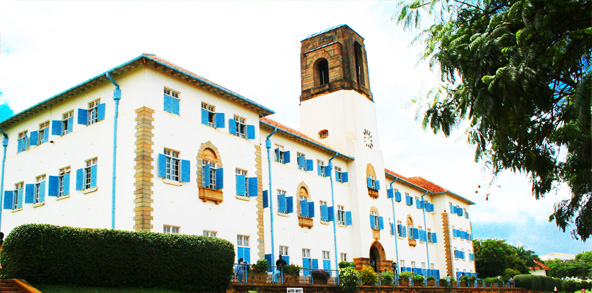
Makerere University Main Building

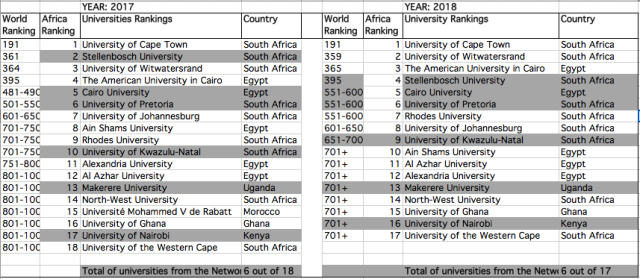
According to the rankings, the six RUFORUM member universities including Makerere University were among the top 18 African universities that made the list of 1000 top universities worldwide in 2017 and have maintained the prominence in 2018.

The University of Nairobi and University of KwaZulu-Natal improved rankings from last year whereas Stellenbosch University dropped from the 2nd to 4th position.

However, Stellenbosch University still leads the RUFORUM Network of 85 member universities followed by Cairo University and University of Pretoria which retained their positions of 5th and 6th, respectively, while the University of KwaZulu-Natal moved a position higher to 9th, as Makerere University retained its 13th position.

According to the press release, only 18 and 17 African universities were ranked in 2017 and 2018, respectively. University of Cape Town continues to dominate the top position in Africa.

The 2018 QS report lists the world’s top 959 universities and is based on  metrics such as: Academic reputation, Employer reputation, Faculty/Staff ratio, citation per faculty, International Faculty ratio and International Student Ratio. Below is a table for the comparison of rankings of RUFORUM member Universities for the top 18 in Africa for 2017 and 2018. 

University ranking, though controversial, remains the common means of informing the public where they should get the ‘best’ education. To this end, RUFORUM strives to build capacity of its member universities to deliver quality education through cutting edge research and Innovation, and academic mobility,” says the press release.

With increasing pressure from university stakeholders and beneficiaries for universities to demonstrate value for money invested in higher education, universities are consistently striving to do their best to visibly show their relevance to the public.

RUFORUM, whose mandate is to oversee graduate training and networks of specialization in the countries and universities where it works, has its head offices at Makerere University.


Stories Continues after ad

Top ‘Battle for Cash’ Clubs off to Nairobi

The flag off was presided over by Mr. William Sekabembe, dfcu Chief of Business and Executive Director.

The top twenty investment clubs in the recently concluded dfcu ‘Battle for Cash Investment Clubs Competition’ flew out late last week for a study tour in Nairobi. The flag off was presided over by Mr. William Sekabembe, dfcu Chief of Business and Executive Director.

The three-day study tour will cover areas like investment club formation, set up and management; Designing and Executing a Successful Investment Strategy; Compliance with laws and regulations; Funding your investment project and practical tips from the top four investment clubs in Kenya.

Between June and August 2017, dfcu Bank had teams going round the country carrying out regional saving and financial literacy workshops.

Some of the topics covered included; Why and how to save; where to invest money so it can grow, things to think about when thinking of investing and so much more. This was aimed at changing the perceptions and attitudes about money, savings and investments.

dfcu Bank received applications from close to 200 Investment clubs across the country. The applications were independently vetted by PwC who were able to zero down to 20 clubs that entered the TV competition.

As part of the application process, clubs were tasked to develop a business plan for an innovative investment project. So at the start of the show all shortlisted 20 clubs had to defend the business plan they wrote before a panel of judges to make it to the next show.

The clubs were trained in different aspects and assigned weekly tasks to demonstrate their ability to put into practice what they had been taught.

Geneber Outspan Organic Farmers, who were the overall winners in the competition, walked away with Shs25 million and coming in second, the Peak Investment Club won Shs15 million. The third winner Sikyomu Development Organisation got Shs10 million while the fourth and fifth clubs both got Shs5 million each.

In recognition of the role of women and youth in development there was a special category for women and youth. The best youth club prize was scooped by Plus Save Group and Soroti Women Cooperative Union were awarded in the best women club category. Both clubs walked away with Shs7.5 million each.

dfcu Bank introduced the Investment Clubs program in 2007, providing a conducive platform to foster group savings. The program has since grown with over 10,000 Investment Clubs that cut across all segments including students, the professionals, women and youth holding a savings turnover in hundreds of billions of shillings.

“It is not enough to simply save money if it is not growing so the Investment Club challenge was also about challenging the investments clubs and the public to think through how to grow and multiply their savings,” Sekabembe said.

An amount totaling to Shs100 million in prize money was set aside for the Investment Club challenge including monies spent on regional draws carried out in different parts of the country.


Stories Continues after ad

Investing in Africa: Bill & Melinda Gates, EU commit €100 million

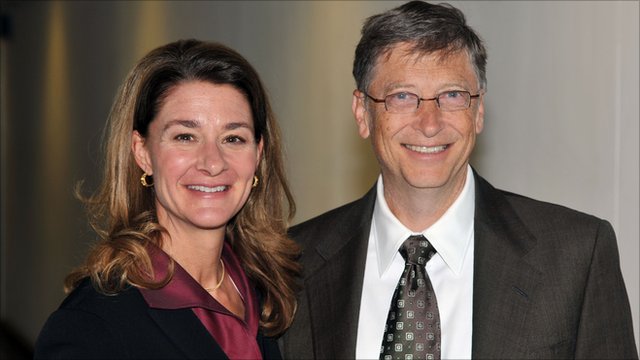
PHILANTHROPISTS: Bill and Melinda Gates

The Bill and Melinda Gates Foundation will contribute $50 million (€40.9 million) in financing, and an additional $12.5 million (€10.2 million) in technical assistance to investment projects in the health sector in Africa through the EU’s framework to improve sustainable investments in Africa, a statement from the European Union (EU) indicates.

The pooling of resources with the European Union is designed to encourage additional private investment towards achieving the Sustainable Development Goals and will allow successful projects to be scaled up more rapidly.

According to the statement, the European Commission has welcomed the support to its efforts towards sustainable development in Africa and will match the contribution with another €50 million.

‘The EU accounts for a third of foreign direct investment into Africa – this is now helping create jobs and growth on both of our continents. But we must do more to improve the business environment and provide a platform for African innovators to grow,’ EU President Jean-Claude Juncker said.

He said the effort requires the full involvement of the private and philanthropic sectors.

‘I am grateful to the Bill & Melinda Gates Foundation for their much-needed engagement. This is an investment in our shared future,’ Juncker said, adding that Europe’s partnership with Africa is one in which we support each other, help each other to prosper and make the world a safer, more stable and more sustainable place to live.

The statement also quotes Bill Gates as saying: ‘Improving health outcomes allows a society to become more prosperous and productive. There has been a lot of progress in this area in sub-Saharan Africa since 2000, but we need to do more to incentivize research and innovation that benefit the poor’. 

According to the statement, the European Commission, in partnership with African countries, is leading the way in reducing deep-seated inequities in global health. ‘This commitment will create opportunities that will help people lift themselves and their communities out of poverty’.

This new partnership on health follows a first joint initiative with the EU, announced on 12 December 2017 at the One Planet Summit in Paris, to support the development of tools and techniques to benefit smallholder farmers in developing countries.

Through that initiative, the Commission will provide €270 million, and the Bill & Melinda Gates Foundation $300 million (€244.7 million), to finance agricultural research to help the world’s poorest farmers better adapt to increasingly challenging growing conditions brought about by climate change.

France, Germany, Italy, Spain and other EU Member States will also take part in this programme.


Stories Continues after ad

‘Mbuga currently not on our radar’ – Interpol Uganda

'Tycoon' SK Mbuga with his fleet of luxurious cars

The police has dispelled reports doing rounds on social media and some news publications that socialite Sulaiman Mbuga Kabangala (SK Mbuga) had been arrested and repatriated to Sweden, where he is allegedly wanted to answer to fraud charges.
According to Vicent Sekatte, the Interpol Uganda National Central Bureau spokesperson for international relations, the police has not received any request to arrest Mbuga, who is linked to a Shs23 billion fraud case that involves his wife Vivienne Chebet Birungi aka Jalia Mbuga and a Swedish politician Sten Heinsoo.
According to Swedish media, Ms. Birungi allegedly obtained over Euros 6 million from Heinsoo, ostensibly to deliver gold to the latter in Sweden.

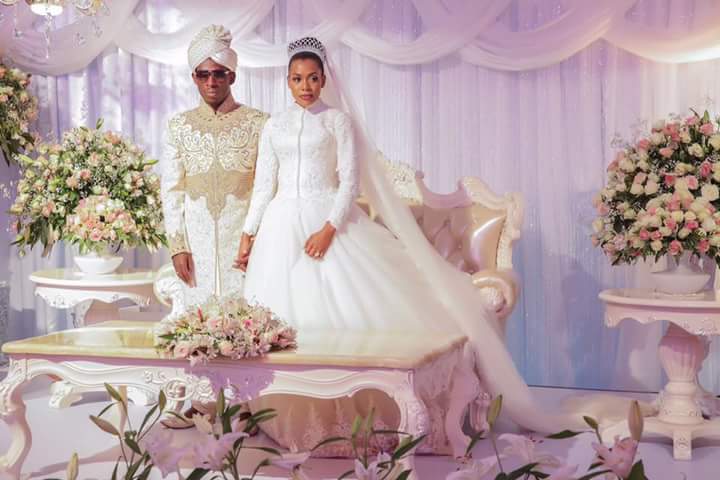
SULTAN’S WEDDING: SK Mbuga and Jalia Mbuga on their wedding day

However, it is said that on getting the money, Ms. Birungi, a former girlfriend of Heinsoo, relocated to Uganda and allegedly used part of the money to fund her lavish wedding to Mbuga.

Stories Continues after ad

Gender ministry automates external employment services

The Permanent Secretary of Labour, Gender and Social Development (MLGSD) Pius Bigirimana

In a bid to curb instances of human trafficking in the external employment services, the Ministry of Gender, Labour and Social Development has developed a digital system to host all processes involved in labour exportation.


According to the Ministry’s Permanent Secretary Mr. Pius Bigirimana, the External Employment Management Information System (EEMIS) has been designed to manage the entire application workflow ranging from submission of an application to go work abroad to approval.


“The current system largely involves the use of papers that are transited through the approval process. However with the new Information System we shall be able to do everything online including licensing of recruitment companies and handling applications for persons wishing to go and work abroad,” Mr Bigirimana revealed at a press conference held at the Ministry’s headquarters in Kampala.


He said the system will manage secure registration of users; application submission for license and job orders; managing the multi-agency vetting, inspection and approval workflows, training, monitoring, billing, user reports and auditing logging features.


The development is ongoing in stages and so far the Application Management Module that handles the initial expression of interest application, full license applications as well as processing of individual’s applications, has been completed.

“The benefits are enormous because we shall be able to electronically track every individual’s working contract, power of attorney letters, signed agreements, letter of demand and recommendation letter from the Uganda Association for Employment Recruitment Agencies (UAERA),” Bigirimana observed.

The same portal will detail a position the person is supposed to serve in, the responsible recruitment agency, category of service, salary payable, location of work station, all critical dates as well as extra benefits including medical insurance, food and accommodation, transportation, and life/accident insurance.

“The portal has provided for a possibility for applicants to monitor online the level at which their applications are and the status on whether it has been approved, rejected or pending” Mr. Bigirimana added.

He revealed that the Ministry has already signed a Memorandum of Understanding with the NITA-U to securely host the External Employment Management Information System. Another will be signed with the National Identification and Registration Authority (NIRA) to match personal details of applicants.

The Ministry will also sign a Memorandum of Understanding with the Uganda Revenue Authority (URA) to track payments that will be made in the processes. Currently payments are made at the bank and hardcopies of receipts are transited through the process which slows down the turnaround time.

The Ministry is optimistic that the entire system development will be completed by the end of February, and Mr. Bigirimana noted that the processing time had improved, bringing down the vetting period from 21 to 14 days.

“Once the system is fully operational, the vetting period will further come down to a maximum of five days from the current fourteen”  Mr Bigirimana noted.

Andrew Tumwine Kameraho, the Chairman of Uganda Association of External Recruitment Agency (UAERA), commended the Ministry of Gender for the innovation saying it would greatly facilitate monitoring.

“I would like to thank the Permanent Secretary and the Ministry at large for putting in place this system which we are optimistic will enhance monitoring and improve efficiency,” Kameraho noted.


Stories Continues after ad

Uganda not fueling South Sudan conflict – MOFA

Adama Dieng, the UN Secretary General’s Special Advisor on the Prevention of Genocide

Uganda is not fueling the conflict in South Sudan, a senior official in the Ministry of Foreign Affairs (MOFA) has said, in respect to allegations made by a top UN official who oversees the war crimes docket.

MOFA spokesperson Ambassador Alfred Nam, who was reacting to remarks by Adama Dieng, the UN Secretary General’s Special Advisor on the Prevention of Genocide, denied assertions to the effect that Uganda was a conduit for the proliferation of arms and ammunition used by South Sudan’s warring parties in a war that has seen thousands dead and over one million displaced.

“I have no comment to make since that assertion (Dieng’s) is not coming from Uganda,” Amb. Nam said, hastening to add: “Uganda in not in any way fueling conflict in South Sudan.”

Appearing VOA’s South Sudan in Focus programme on Monday, Amb. Dieng, also formerly the UN Chief Prosecutor at the Rwanda International Criminal Tribunal for Rwanda (ICTR), said that both Uganda and Kenya were complicit in the South Sudan conflict, and called for targeted sanctions against the wheeler dealers.

“International partners have to start targeting the accomplices, intermediaries of the South Sudanese parties,” Amb. Dieng was quoted as saying.

Amb. Dieng was supported by the African Union chairperson Moussa Faki Mahamat, who was quoted as saying on Sunday that ‘the time has come’ to impose sanctions on individuals blocking peace in South Sudan.

South Sudan, the world’s ‘youngest’ country gained Independence in 2011, but two years later, in 2013, descended into a civil war ignited by differences between President Salva Kiir Mayardit and his erstwhile Vice President Riek Machar.

In August 2015, Kiir and Machar, from the Dinka and Nuer tribes respectively, temporarily patched their differences after signing a ceasefire agreement in Addis Ababa, only for them to fall apart months later, culminating in the exiling of Machar in South Africa.

Meanwhile, the Intergovernmental Authority on Development, (IGAD), is to meet between February 5-16 in Addis Ababa for talks on South Sudan.

Stories Continues after ad

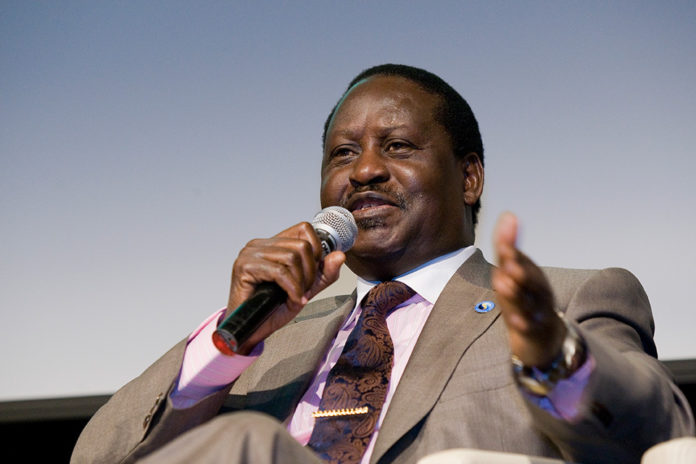
Kenya radio, TV stations shut over ‘Raila swearing in’

Raila Amollo Odinga

Kenyan authorities shut down private television and radio stations on Tuesday as thousands of supporters of opposition leader Raila Odinga gathered in a Nairobi park where he was due to take the presidential oath in an act of protest.

Odinga’s supporters insist that he, not President Uhuru Kenyatta, is Kenya’s legitimate leader, and that Kenyatta’s election was neither free nor fair.

Kenyatta’s election victory in August was nullified by the Supreme Court over irregularities, but he then won a re-run, which Odinga boycotted, and was sworn in for a second term in November.

The attorney-general had warned that Odinga could be charged with treason if the event went ahead – an offense that can carry the death penalty.

As thousands of people gathered in Uhuru Park, near Nairobi’s main business district, authorities began to force independent television and radio stations reporting on the gathering off air, several outlets said – the first such closures for about a decade.

Many of the protesters were chanting pro-Odinga slogans, waving tree branches and blowing horns and whistles.

“Odinga is the one we recognize as the president and that is why we are swearing him in,” said hairdresser Benta Akinyi, 32.

Although the police had said they would prevent any illegal assembly, there were no uniformed police in the park and no anti-riot officers or vehicles were visible. On the edge of the crowd, a single tear gas canister was fired.

Nearly 100 people were killed over the prolonged election period, mostly in clashes between Odinga supporters and police.

The local radio station Capital FM reported that Odinga’s supporters had been granted permission to use the park, but police and government spokespeople could not immediately be reached for comment.

‘We intend to hold a peaceful event’, Odinga’s NASA alliance said in a statement late on Monday.

The statemenet added: ‘We nonetheless wish to put the (ruling party) Jubilee administration on notice that we will accomplish our mission, come hell or high water. We advise our supporters to come prepared to stay until our mission is accomplished’.

By 10.20am, a number of media outlets, including the independently-owned Citizen radio and television, NTV and KTN said that authorities had forced them off air. KTN had been showing a live video stream from the park.

A Communications Authority spokeswoman said its senior managers were in a meeting and would comment later.

“The Communications Authority of Kenya has switched off Citizen Television and Radio in most parts of the country over the coverage of the NASA ‘swearing-in’ plan,” Citizen said on its website.

On Monday, Linus Kaikai, chairman of the Kenya Editors’ Guild, said editors had been summoned by the authorities and warned that they could be shut down if they covered the event.


Stories Continues after ad

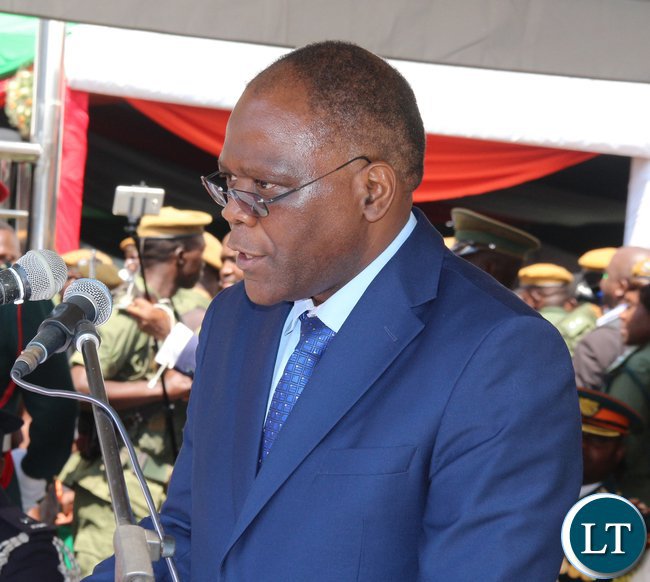
Zambia ordered to pay US$380m to Libyan investment arm for repossessing telecom

Zambian Secretary to Cabinet Dr. Ronald Msiska

The London High Court has ordered that Zambia compensates Libya $380million for nationalizing Zamtel.

This is a matter in which the Libyan Investment Authority (LIA), the investment arm of the Libyan government dragged the Zambian government to court for abruptly reversing the sale of Zamtel without compensation.

The Libyan company owned a 75 percent share of Zamtel while the Zambian government owned 25 percent.
According to the Financial Times of London, the Libyan Investment Authority reportedly pursued similar action against Chad, Rwanda and Niger.

In the report, the LIA claims that the four countries took advantage of ‘Libya’s political turmoil to nationalise assets belonging to the country’s $66 billion sovereign funds’ following the eight-month long conflict that brought a brutal end to Muammar Gaddafi’s 40-year rule.
At the beginning of 2011, LAP Green Networks, a subsidiary of LIA, held stakes in nine telecoms operators across sub-Saharan Africa, including Chad’s Sotel Tchad, Oricel in Côte d’Ivoire and Gemtel Telecom in South Sudan.

On 2 May, Niger’s parliament voted to nationalise telecoms asset Sonitel, pulling back from a privatisation agreement to sell a 51% stake to LAP Green for $62.16m.

In January, then President Michael Sata seized a 75% stake in telecoms company Zamtel that LAP Green had purchased for $257m during a privatisation exercise in 2010.

LAP Green challenged the government’s actions in court and was asking for $480m in compensation.

The Financial Times quoted Hassan Bouhadi, chairman of the LIA as saying the legal action related to technology assets in the four countries named.

“The LIA is determined to regain what was squandered from the Libyan people,” Bouhadi Mr. said recently.

On Friday, Zambian Finance Minister Felix Mutati told Parliament in a ministerial statement that the court had ruled that Zambia should compensate LAP Green for seizing Zamtel from the Libyan sovereign fund in 2012.

Mr. Mutati did not give details over which court made the order nor payment timeline.

The company was sold in 2010 by the Rupiah Banda administration for US$394 million on grounds that it had failed to recapitalise the business.

In 2012, the PF administration under President Michael Sata forcefully took over Zamtel’s operation from LapGreen Network claiming that the 75% shares the company owned were corruptly sold by the previous administration.

Lap Green Networks denied any wrongdoing in the manner it acquired the company and said it would challenge the country’s authorities in the courts of law.

LapGreen Network then took the matter to the Lusaka High Court, where the government failed to defend its decision to repossess the company.

Instead, officials decided to enter a consent judgement to compensate LapGreen Network its initial investment in Zamtel amounting to US$252 million plus interest, calculated at 8%, and other charges.

The total amount payable to LapGreen Network came to US$382 million.

According to the settlement agreement, the government was supposed to make an initial payment of US$114 million in November 2016, followed by biannual payments of US$35 million in February 2017 and August 2017 respectively.

The opposition, the Forum for Democracy and Development (FDD) issued a statement through its spokesperson Antonio Mwanza demanding the government inform Zambians why it has failed to pay LapGreen Network and how it plans to settle the issue.

Almost three years ago, a Zambian High Court allowed Lap Green Networks to take the matter to the London Court as it was considered neutral ground after the Libyan company expressed concern that it would not be given a fair hearing in Zambia.

The court’s decision came after all foreigner directors of Zamtel were deported from Zambia.

In 2012, President Sata constituted a commission of inquiry to investigate how Zamtel was sold to the Libyans.

The Zambian government has failed to make public a report by the Commission of inquiry into the sale of Zamtel.

However, a leaked copy of the Commission Report however shows irregularities in the manner in which Zamtel was sold, alleging that Lap Green and RP Capitals, which was appointed as financial advisor, bribed senior Zambian government officials.

The Zambian government has repeatedly said it can only compensate Lap Green Networks for its investment in Zamtel, but that it will never surrender back the company to the Libyans.

In 2014, the Zambian government agreed to repay the US$103 million loan that Lap Green Networks obtained from China’s ZTE in 2011 for the expansion of Zamtel network.

The loan was obtained by Lap Green Networks in 2011 from ZTE in order to implement Zambia’s Global System for Mobile Communication (GSM) phase IV and Universal Mobile Telecommunication System (UMTS) projects.

The repayment of the $103 million loan was considered to be the first step in compensating Lap Green over its investment in Zamtel.

Secretary to the Cabinet Rowland Msiska instructed the Secretary to the Treasury to secure a loan from China’s Import and Export Bank (EXIM) to pay back the loan to ZTE on behalf of Lap Green.

Dr. Msiska however, refused to discuss why the Zambian government decided to pay back the loan, and why it has decided to do so while the case was still in court.

“Government does not discuss its plans and programs in the media,” Msiska had said.

Meanwhile, the development in Zambia comes at a time when the Uganda government announced a UgShs200 billion recapitalisation of Uganda Telecom (utl), a parastatal in which a Libyan telecommunications company, Ucom, had interests.

Earlier, in March last year, finance minister Matia Kasaija announced the takeover of utl, and assured stakeholders that the government would support the company.


Stories Continues after ad

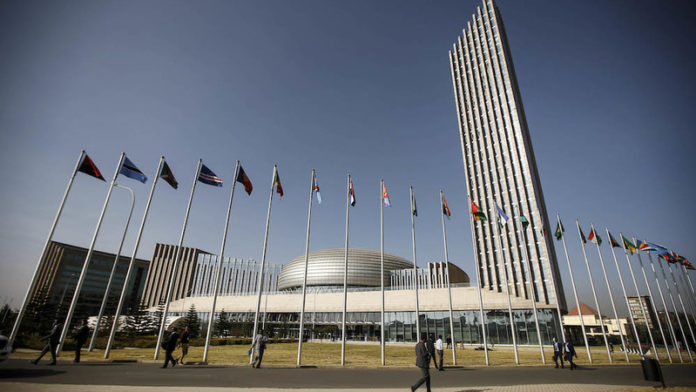
How China spied on the African Union’s computers

AU headquarters

China built and paid for the African Union’s computer network – but inserted a backdoor allowing it access to the continental organisation’s confidential information
In January 2017, the information technology unit at the African Union’s headquarters in Addis Ababa noticed something strange, according to a stunning investigation in French newspaper Le Monde.

Every night, between midnight and 2 am, there was a strange peak in data usage – even though the building was almost entirely empty. Upon further investigation, the technicians noticed something even stranger. That data – which included confidential information – was being sent to servers based in Shanghai.
The African Union’s shiny new headquarters was built and paid for by the Chinese government, as a gift to its “African friends”. But when the building was officially opened in 2012, China left a backdoor into the African Union’s computer network, allowing it to access the institution’s secrets at will.
“According to several sources within the institution, all sensitive content could be spied on by China,” wrote Le Monde. “It’s a spectacular leak of data, spread from January 2012 to January 2017.”
The Chinese mission to the AU did not respond to Le Monde’s request for comment.
Once the problem was discovered, African Union officials acted quickly to fix it. The organisation acquired its own servers, and began encrypting its communications. In July 2017, a team of experts from Algeria – a country with a notoriously efficient intelligence community – along with cybersecurity experts from Ethiopia combed the building from top to bottom, looking for hidden microphones and other potential weaknesses.
China would not be the first supposedly friendly superpower to spy on the African Union. A separate investigation in December 2016, conducted by Le Monde and The Intercept, revealed that African Union officials were targeted for surveillance by British intelligence.

Stories Continues after ad
NTV ‘The Beat’ team axed in restructure

JOIINS 'THE BEAT': Producer Sheilah Gashumba

Nation Media Group last week made changes in its two flagship companies in Uganda, naming Anthony Craig Glencross as the overall Group Managing Director, heading both the Daily Monitor and NTV.

AS Group MD for Uganda, Glencross oversees the entire NMG platform in the country, while NTV’s outgoing Managing Director Johnson Omollo was named as a General Manager in charge of television.

Both companies began restructuring last week with a couple of senior editors at Monitor being shown the exit. And now we have learnt that last week’s sword was so pointed that it stretched from Namuwongo to Serena Hotel, the home of NTV.

According to the news on our desk, the biggest victim at NTV was NTV the Beat, where almost the entire team of the show was fired.

The show’s producer Shawn Segawa has reportedly been shown the exit along with presenter Douglas Lwanga.

Sources said Lwanga is to be replaced by former T-Nation presenters Sheilah Gashumba and Chrystal Panda.


The gap left by Ssegawa has been already filled with a new producer, Isaac Kugonza.


Stories Continues after ad