In response, Reach A Hand Uganda (RAHU) has launched Back-to-School Campaign under the theme “Safe and Supported” to encourage students, particularly young mothers, to re-enrol in school.
The third-term holiday is a critical point in the school year, coinciding with the end of the academic year and exams. During this time, students may face increased pressure, leading to disengagement, especially if struggling academically due to financial challenges among others. Idleness also raises the risk of engaging in activities that hinder their return to school such as early marriages, teenage pregnancies, and poverty, which contribute to school dropouts.
The campaign is aligned with the National Sexuality Education Framework (NSEF) and the revised guidelines on the Prevention and Management of Teenage Pregnancy in School Settings, advocating for school re-entry approach for young mothers, through educational interventions while fostering a supportive environment for students, especially girls to return to school.
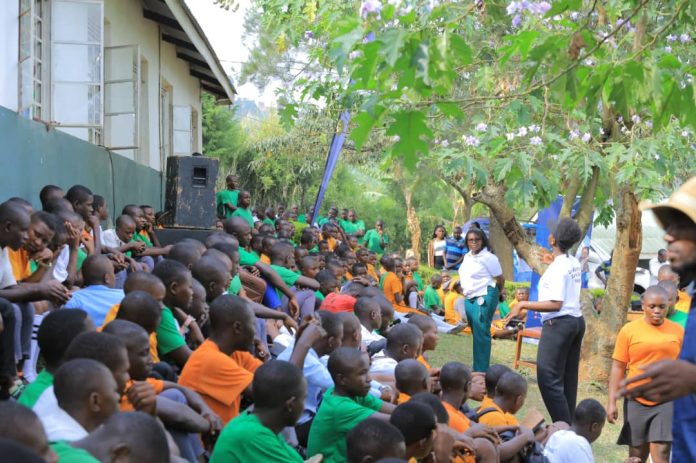
Throughout the initiative, RAHU organized various activities aimed at encouraging students to return to school despite the challenges.
A survey was also conducted as part of the campaign, and revealed that 36% of respondents attributed young mothers’ failure to return to school to stigma after childbirth, while 38% cited financial difficulties. Additionally, 14% identified a lack of childcare support, and 12% pointed to inflexible school policies as a major challenge.
The activities held included a Back-to-School Walk in Lungujja, a school outreach at St. Jannan SS in Kabalagala and Bwesumbu Peas High School in Kasese, along with digital engagements with the public.
Mr Humphrey Nabimanya, RAHU CEO, reemphasized that stigma is one of the major subtle factors driving school drop out in fear or discrimination or bullying.
‘’The campaign, along with its theme, focuses on being sensitive to students’ challenges and providing the necessary support without discrimination. This involves combating stigma, enhancing school policies, training teachers to be more supportive, and encouraging parents to act as pillars of support—all of which help students feel comfortable returning to school,’’ he said, adding that openly addressing these issues is crucial to breaking the stigma.
The campaign also provided a platform for RAHU peer educators to participate in the activities, allowing them to gain hands-on experience in creating positive change within their communities.
Masika Rinnah, one of the peer educators, shared how transformative the academy has been for her. She said that the experience has not only provided her with theoretical knowledge but has also equipped her with practical skills to make a real impact.
School dropouts remain a significant concern in Uganda. According to the Uganda Bureau of Statistics (UBOS), approximately 15% of girls aged 15-19 become pregnant, making teenage pregnancy one of the leading causes of school dropouts. Data from the Ministry of Education shows that 25,000 schoolgirls dropped out due to pregnancy in 2020, and this number increased to 35,000 in 2021.
Meanwhile, recent media reports indicate that more than 3,100 pupils drop out of primary school across the country daily, resulting in over one million learners failing to sit for the Primary Leaving Examinations (PLE) each year.
Safe and Supported: RAHU Champions Re-Enrollment for Young Mothers
Uganda Baati spur Industrial Growth at Inspire Africa’s Coffee Park
Uganda’s industrial sector continues to expand, with manufacturing growing by 7.9% and agriculture’s gross value-added increasing by 4.4% in Q3 of 2023/24, according to the Uganda Bureau of Statistics. As the country prioritizes value addition, particularly in agriculture, Uganda Baati has continued to play a key role in strengthening the industrial infrastructure.
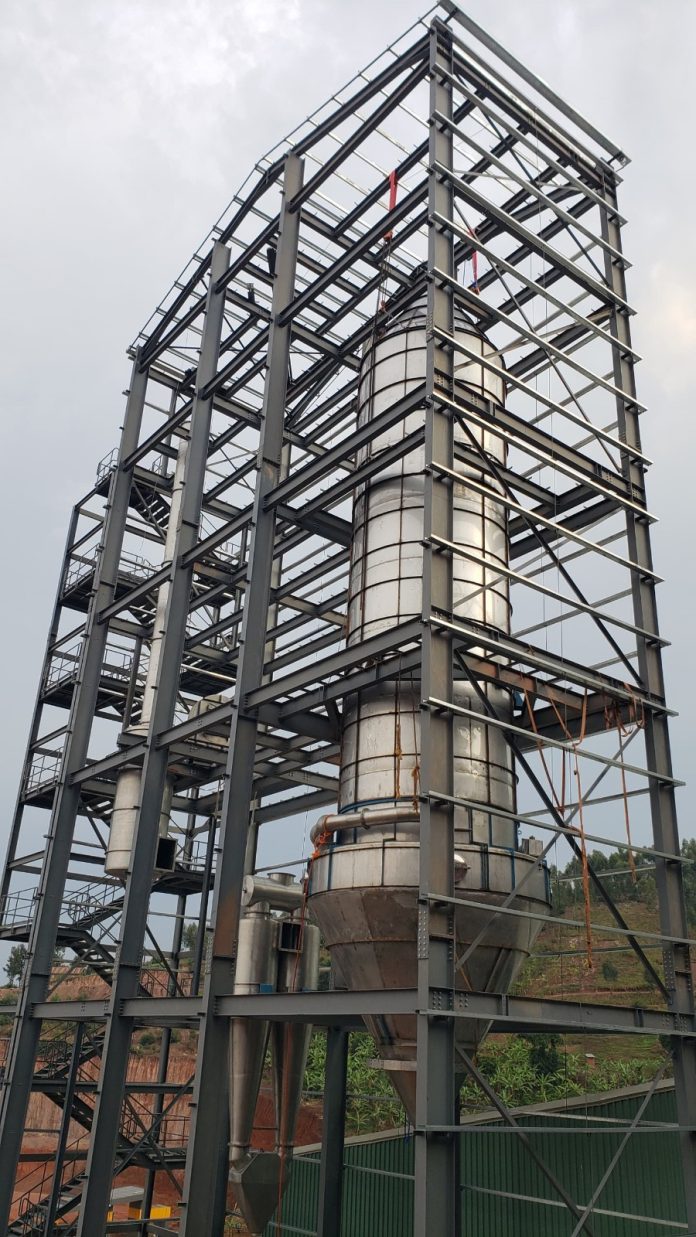
In the recent launch of the Inspire Africa’s coffee park, a transformative Agro-processing center set to redefine Uganda’s coffee value chain, Uganda Baati was key in providing all pre-engineered structures also known as SAFBUILD.
“SAFBUILD is a world-class pre-engineered steel building solution designed to provide businesses with durable, efficient, and cost-effective structures. Our buildings are pre-designed and produced from a combination of cold-formed and hot-rolled steel at our state-of-the-art manufacturing facility under highest quality control. They are easy to assemble on-site so are delivered and installed by bolting as a complete solution,” Apoorva Hemantha, the Head of Safal Building Systems at Uganda Baati explains.
“The exclusion of on-site welding reduces overall construction costs and project duration, from procurement to completion. By using optimized high-tensile galvanized CR-steel in combination with HR-steel, we ensure maximum strength and durability,” he added.
“SAFBUILD is the best and most ideal solution for a wide range of industrial applications, including warehouses, factory sheds, parking sheds, market sheds, horticultural and Agro-processing buildings, institutional buildings, workshops, and worship centers among many others,” Apoorva adds.
“We are devoted to accelerating industrialization through innovative building solutions that support key economic sectors such as Agro-processing. Our contribution to the infrastructural systems at Inspire Africa Coffee Park, is one of the many ways that Uganda Baati is supporting Uganda’s vision for value addition and economic transformation,” Ian Rumanyika, the Head of External and Corporate Affairs at Uganda Baati highlights.
The coffee industry is a key pillar of Uganda’s economy, and the Africa Coffee Park represents a significant step in adding value to the country’s coffee exports. By supplying SAFBUILD structures for this project, Uganda Baati is directly contributing to the development of modern processing facilities that will enhance production capacity, create jobs, and drive economic growth.
Inspire Africa Group CEO, Nelson Tugume says the Africa Coffee Park is an agro-processing game-changer for Uganda’s coffee industry. “By adding value at the source, we are increasing export earnings, creating jobs and empowering local farmers. Uganda Baati’s contribution to this project through their innovative SAFBUILD structures has enabled us to set up world-class facilities efficiently and cost-effectively. This partnership is evidence of what is possible when industry leaders collaborate to drive economic transformation.”
Beyond SAFBUILD, Uganda Baati offers a suite of industrial building solutions through its subsidiary, SAFAL Building Systems, including SAFSOLAR, a sustainable solar energy solution (PV-Solar tables and Water Heating), and ULTRASPAN, a light-gauge steel roofing system for housing segment that enhances construction efficiency. SAFCOO is a revolutionary cold-room solution for commercial & industrial cooling to safe-guard perishable items like vegetable, milk, meat, fish etc.
Uganda Baati’s commitment to industrial growth extends well beyond the Inspire Africa Coffee Park. The building solutions manufacturer has played a crucial role in the construction of various landmark structures across the country, including churches, factories, schools, higher institutions of learning, the new URA towers, and hospitals.
Each of these projects reflects the company’s dedication to delivering high-quality, durable building solutions that support community development and enhance Uganda’s infrastructure.
“As we continue to innovate and expand our offerings, Uganda Baati remains steadfast in our mission to empower industries and contribute to the nation’s sustainable growth and development,” Rumanyika noted.
WinWin – Your Gateway to the Best Online Casino Experience!
Looking for a casino that keeps the adrenaline pumping and the winnings rolling? Welcome to WinWin, the ultimate destination for players who want to play, win, and repeat! Whether you’re after the best online casino experience, searching for the best casino game to win money, or exploring the best casino games in Kenya, we’ve got you covered!
Why WinWin Stands Out Among the Best Online Casinos? 🎰
There are tons of online casinos out there, but WinWin plays in a league of its own. Here’s why:
- 🎯 Massive Selection of Games – Play slots, poker, blackjack, and more.
- 💰 Biggest Jackpots – Your shot at life-changing wins.
- ⚡ Fast Payouts – Withdraw your winnings quickly and securely.
- 🔥 Best Bonuses – More cash, more spins, more fun!
- 🛡 Top-Notch Security – Play with peace of mind, 100% safe and fair.
Best Casino Game to Win Money – What’s Your Best Bet? 🏆
Every player wants to hit it big, but which game gives you the best shot at winning? Check out these top picks:
| Casino Game | Winning Potential | Best Strategy |
| 🎰 Slots | Medium – High | Play high RTP slots, use free spins |
| 🃏 Blackjack | High | Use basic strategy, know when to double down |
| 🎲 Roulette | Medium | Stick to outside bets for steady wins |
| 🎯 Poker | High (Skill-Based) | Bluff smartly, learn hand rankings |
| 🎱 Baccarat | Medium – High | Bet on the banker for best odds |
Pro Tip: Always check the RTP (Return to Player) before you play! Games with an RTP of 95% and above give you better chances of winning.
The Best Casino Games in Kenya – Play Like a Pro! 🇰🇪
Kenyan players love fast-paced, thrilling action, and WinWin delivers just that! Here are some of the hottest picks:
- 🔥 Aviator – Ride the multiplier and cash out at the perfect moment.
- 🎰 Mega Moolah – Africa’s favorite progressive jackpot slot.
- ♠️ Live Blackjack – Take on real dealers in high-stakes action.
- 🎡 Dream Catcher – Spin and win big in this exciting money-wheel game.
- 💎 Starburst – A classic slot with dazzling wins.
How Safe Is Online Gambling? WinWin’s Security Features 🔒
We get it—when real money is involved, security is everything. That’s why WinWin goes the extra mile to keep you safe:
- ✅ SSL Encryption – Your personal and financial data stays protected.
- ✅ Fair Play Certification – All our games are tested for fairness.
- ✅ Responsible Gambling Tools – Set limits, take breaks, and play responsibly.
- ✅ Licensed & Regulated – Fully compliant with legal gaming authorities.
The Tech Behind the Thrill – What Makes WinWin the Best Casino Online? ⚙️
At WinWin, cutting-edge technology ensures seamless, immersive gaming:
- 📲 Mobile-Friendly Platform – Play anytime, anywhere.
- 🚀 Lightning-Fast Transactions – Instant deposits, quick withdrawals.
- 🎥 Live Casino Streaming – Play with real dealers in real time.
- 🔗 Blockchain Integration – Secure, transparent transactions.
Final Thoughts: Why WinWin is the Best Casino Site for You!
Whether you’re a rookie looking for fun or a high roller chasing big wins, WinWin is the place to be. With the best casino bonuses, top-tier security, and a huge selection of games, we’re all about giving players an unforgettable experience.
💥 So what are you waiting for? Sign up now and start winning! 💥
FDC condemns gov’t response on trials of civilians in military Court Martial
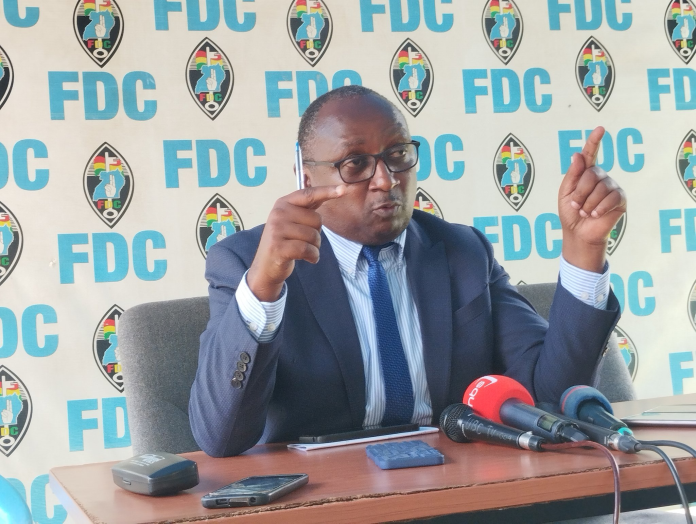
John Kikonyogo, FDC spokesperson
The Forum for Democratic Change (FDC) has lauded the Supreme Court’s recent landmark ruling that upheld the Constitutional Court’s decision in the case of Hon. Michael Andrew Kabaziguruka Vs Attorney General. The court outlawed the trial of civilian suspects in the military Court Martial, describing it as a disciplinary tribunal meant for errant army officers.
The Supreme Court further directed the transfer of all civilian cases from the Court Martial to civil courts, a move that FDC spokesperson John Kikonyogo hailed as a victory for justice and the rule of law.
“We in the Forum for Democratic Change (FDC) welcome this landmark judgment and hail the justices of the Supreme Court for upholding the rule of law and preserving justice,” Kikonyogo said.
The FDC urged the government to comply with the court ruling by immediately transferring all civilian cases to civil courts. Kikonyogo emphasized the party’s commitment to ensuring that civilian suspects are not unfairly subjected to military trials.
However, the FDC expressed concern over General Muhoozi Kainerugaba’s public criticism of the ruling during the Tarehe Sita celebrations in Kyotera, as well as plans for an NRM caucus retreat in Kyankwanzi aimed at pushing for constitutional amendments to empower the Court Martial to try civilians.
“We view this move as a direct challenge to the Supreme Court’s ruling and an attempt to undermine the independence of the judiciary,” Kikonyogo noted.
He warned that should Parliament attempt to pass such amendments, the FDC would challenge the move in the Constitutional Court.
“If Parliament succeeds in processing this amendment, we will challenge it in court because it is void. The Supreme Court ruling was not an observation but an order, which the government must enforce henceforth,” Kikonyogo asserted.
Beyond the court martial issue, the FDC called for the swift resolution of long-standing court cases, particularly those involving suspects who have been on remand for over a decade.
“This is not just a matter of justice but a humanitarian concern. Suspects who have languished in jail for extended periods without trial have essentially been denied their right to a fair and timely trial,” Kikonyogo stated.
The party also highlighted the need for expedited resolution of land cases, some of which have dragged on for over 30 years, often outliving the petitioners and respondents.
“Many land cases have stretched on without delivering justice. The petitioners die, their heirs also die, and eventually, the grandchildren are left fighting over the same cases,” Kikonyogo lamented.
To address these concerns, the FDC is advocating for judicial reforms, including increasing the number of judges, improving court infrastructure, and implementing more effective case management systems.
“Justice delayed is justice denied. The Ugandan judiciary must take steps to clear the backlog of cases and ensure that all individuals, regardless of their circumstances, have access to a fair and timely trial,” Kikonyogo concluded.
The FDC reaffirmed its commitment to defending the rule of law and upholding the principles of justice in Uganda.
Museveni mourns the passing of His Highness the Aga Khan
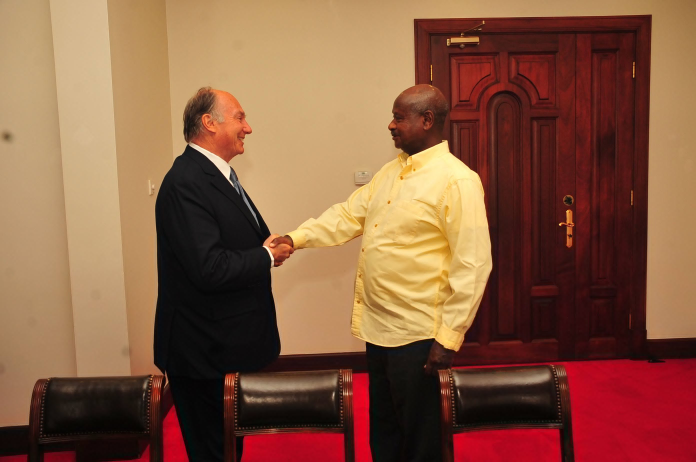
President Yoweri Kaguta Museveni has expressed deep sorrow following the death of His Highness the Aga Khan, a global spiritual leader of the Ismaili community and a champion of development across Africa and beyond.
In a heartfelt statement, President Museveni described his personal and historical connection to the late leader.
“Maama Janet and myself were sorry and very sad to learn of the death of our friend, His Highness the Aga Khan,” Museveni said.
Reflecting on his childhood in Ntungamo, the President shared memories of seeing portraits of a young Aga Khan in the homes of Indian families in the area.
“It must have been 1957-1958, when, at the age of 12, I started seeing our four Indian families at Ntungamo hanging pictures of a young man whom they told us was the new ‘King’ (Mukama) of the Indians,” he recalled. “We thought he was the King of all Indians.”
Museveni also praised the Aga Khan for his significant contributions to Uganda and East Africa.
“I remember the good buildings that the Community put up in Kampala here, Dar-es-Salaam, and maybe Nairobi. They were called IPS buildings,” he noted.
Even during times of political and economic turbulence, the Aga Khan Foundation remained a reliable partner for Uganda.
“The philosophical and ideological shifts that adversely affected the communities of the private sector did not deter the Aga Khan Foundation. In Uganda, when the NRM came into power, the Aga Khan Foundation came back in full force,” Museveni emphasized.
The President described the late Aga Khan as a valued friend and visionary leader. “At the age of 88, our friend still had value to contribute. It is sad that he had to leave us. May his soul rest in eternal peace.”
Looking to the future, Museveni extended his support and blessings to the new Aga Khan. “I welcome the new Aga Khan. May the Almighty bless his work,” he concluded.
The passing of the Aga Khan marks the end of an era, but his legacy will continue to be celebrated in Uganda and across the globe.
President Museveni Appoints Dr. Flavian Zeija as Deputy Chief Justice
President Yoweri Museveni has appointed Dr. Flavian Zeija as Uganda’s Deputy Chief Justice, replacing Justice Richard Buteera, who is set to retire in May 2025.
Dr. Zeija has served as Principal Judge since December 25, 2019. He holds a Bachelor of Laws (LLB) and a Master of Laws (LLM) from Makerere University, along with a Postgraduate Diploma in Legal Practice from the Law Development Centre (LDC) in Kampala.
Additionally, he earned a Doctor of Philosophy (PhD) in Law from the University of Dar es Salaam and a Master of Business Administration (MBA) from Uganda Martyrs University.
Dr. Zeija has extensive experience in legal practice, academia, and the judiciary:
He began his career in 1998 as a legal assistant at Kwesigabo, Bamwine, Walubiri & Company Advocates in Kampala. Later, he became the managing partner at Zeija, Mukasa & Company Advocates before joining the judiciary.
Zeija served as Manager, Legal & Recovery at Tropical Africa Bank (2002–2003) and later as Legal Counsel at FINCA Uganda Limited.
He taught law at Uganda Christian University (UCU), Makerere University, and Makerere University Business School (MUBS), where he was the founding head of the Department of Business Law.
He was appointed as a High Court Judge in 2016, serving as Resident Judge of the Mbarara High Court Circuit, the largest in Uganda. In December 2019, he was elevated to Principal Judge.
Dr. Zeija’s appointment as Deputy Chief Justice further strengthens Uganda’s judiciary, bringing both legal expertise and administrative leadership to the role.
Future-Fit Financing for African Mining Hinges on ESG
The world is rewriting its rulebook. It’s no longer just about what you produce but how you produce it. For resource-rich regions like Africa, the implications are profound: the value of its vast reserves of critical minerals is now tied not only to their abundance but also to the ethical and sustainable frameworks governing their extraction and processing.
Emerging global policy shifts and tariff measures aimed at greener trade and decarbonised supply chains will undoubtedly put African mining under significant scrutiny – and whether this weight is merited or not depends on the lens through which it’s viewed.
From one perspective, this scrutiny is justified. The global climate crisis demands urgent action, and decarbonising industries like mining is an essential part of that response.
African mining cannot be an exception to this, especially since critical minerals like cobalt, lithium, and rare earths are central to enabling the green energy transition globally. For the world to achieve net-zero goals, every link in the supply chain – including mining – must contribute.
However, the counterpoint is equally valid: this pressure comes in a context of global inequity. African nations bear minimal historical responsibility for the carbon emissions driving climate change, yet they are being asked to shoulder significant burdens in the form of decarbonisation, often without sufficient financial or technological support.
Herein lies the paradox.
While the world’s green energy future depends on African minerals, developed ESG requirements risk leaving the continent’s mining industry less competitive and more isolated. Bridging this gap requires urgent solutions – targeted financing, infrastructure investment, and collaborative frameworks that enable African mining to align with global sustainability goals without undermining its economic stability.
The greatest and most immediate hurdle to overcome is the upfront capital required to make the transition to greener operations, and today’s financiers and investors are increasingly prioritising ESG-aligned projects over pure profitability. For African mining, this means that attaining future-fit financing is contingent on demonstrating tangible commitments and progress in three areas: environmental sustainability, social responsibility, and sound governance.
But this is easier said than done.
Green bonds, for example, are often touted as a silver bullet for sustainable financing, but their utility in the mining context isn’t straightforward. For one, issuing a green bond requires not only a level of transparency, reporting capability, and project predictability—areas where many African mining companies, particularly smaller operators, are still actively building capacity—but also a demonstrable commitment to financing green activities, such as renewable energy projects. Moreover, the bond market typically favours projects with a high degree of perceived stability and lower risk, often sidelining countries or companies that need this capital the most.
Sustainability-linked loans too, which allow mining companies to finance general operations while embedding green incentives into their borrowing structure, depend on clear, measurable targets. To date, these have often been tied to carbon reduction or water use. This requires sophisticated monitoring systems and ESG frameworks, which many African companies are still developing. In regions where even baseline ESG data collection is sporadic, it is difficult to ensure that these mechanisms don’t inadvertently exclude companies that have the will but not the capacity to track and report progress.
The real issue, therefore, is not the tools themselves but the systems in which they operate. The African mining sector needs a financing ecosystem that addresses inherent risk perception, builds local capacity for compliance and reporting, and prioritises projects that deliver both sustainability and economic impact. The mechanisms are valuable, but without structural reforms to how they’re deployed, there is a risk of designing solutions for a system that doesn’t yet exist in practice.
Future-fit financing therefore means investing not just in the mines but in the broader systems that support them. For example, financing renewable energy infrastructure that powers mining operations and surrounding communities or improving transportation networks to reduce the carbon footprint of mineral exports. These systemic investments are ESG-aligned by design, creating a feedback loop where the mining sector becomes a driver of regional development and resilience.
We should acknowledge that the path to a greener future for African mining requires tailored financing models that allow for a just transition, ensuring that workers, communities, and economies don’t bear the cost of compliance alone.
It’s about creating a mutually reinforcing cycle where ESG-driven investments make African mining more competitive, sustainable, and inclusive – where African minerals power the global energy transition, and African communities thrive as equal partners in that transformation.
The writer is the Director for Coverage, Resources & Energy, Absa Securities United Kingdom and Chetan Jeeva, Head of SA Corporate Lending at Absa CIB
BoU Maintains Central Bank Rate at 9.75%
The Bank of Uganda (BoU) has kept the Central Bank Rate (CBR) at 9.75%, citing stable domestic inflation and a resilient economy.
According to BoU, inflation trends have remained in line with projections, supported by monetary policy measures and reforms in the Interbank Foreign Exchange Market. These actions have strengthened the foreign exchange market and contributed to exchange rate stability.
Favorable food and energy prices, along with relatively low global inflation, have also played a role in controlling domestic inflation. Over the twelve months leading up to January 2025, annual headline and core inflation averaged 3.4% and 3.8%, respectively. However, in January 2025, headline inflation rose to 3.6% (from 3.3% in December 2024), while core inflation increased to 4.2% (from 3.9%), mainly due to rising service costs, particularly in passenger transport.
“Despite seasonal food price increases, near-term inflation remains manageable. However, the short to medium-term outlook is uncertain, largely due to external risks. The BoU forecasts annual core inflation to range between 4.0% and 5.0% in 2025, stabilizing in the medium term,” the statement reads.
Economic activity remains strong, with business confidence holding firm despite global economic challenges and slow private sector credit growth. The Uganda Bureau of Statistics (UBOS) reported a 6.7% real GDP growth in Q1 of FY 2024/25, up from 6.2% in the previous quarter and 5.6% in the same period last year. This growth was driven by a significant rebound in industrial activity.
Looking ahead, Uganda’s GDP is projected to grow by 6.0%–6.5% in FY 2024/25 and reach 7.0% in the coming years, supported by a stable macroeconomic environment, Increased foreign direct investment (FDI) in the extractive sector, Government initiatives for wealth creation, Growth in agriculture and anticipated oil revenue
The Monetary Policy Committee (MPC) acknowledged that while inflation may rise in the short term, it is expected to return to target levels in the medium term. However, uncertainties in the global economy could accelerate inflation and impact economic activity, necessitating a cautious monetary approach.
“The CBR remains at 9.75%, with bands at +/-2 percentage points. The rediscount rate is 12.75%, and the bank rate is 13.75%,” the committee said.
The MPC believes that the current CBR level effectively balances inflation control with economic growth. Future adjustments will depend on new data and risk assessments.
Court Remands Accountant General, seven others over Shs 60 billion fraud at Bank of Uganda
The Anti-Corruption Court has remanded Accountant General Lawrence Semakula and seven officials from the Ministry of Finance and Economic Development over the alleged embezzlement of Shs 62 billion from the Bank of Uganda (BoU).
The case stems from a December 2024 revelation by Henry Musasizi, the Minister of State for Finance (General Duties), who disclosed that BoU accounts had been compromised, leading to the loss. However, Deputy Governor Michael Atingi-Ego clarified that there was no evidence of hacking into the Central Bank’s IT systems.
Details of the Fraudulent Transactions
The stolen funds were originally meant for the World Bank and the African Development Fund but were misdirected in two major transactions. On September 12, 2024: $6,134,137.75 meant for the World Bank was instead sent to Roadway Co. Limited via MUFG Bank, Japan.
September 28, 2024: $8,596,824.26 intended for the African Development Fund was wrongly transferred to MJS International, London, UK.
By December 2024, BoU had successfully recovered $8,205,133.84 from MJS International and credited it to the Consolidated Fund. Efforts are ongoing to retrieve the outstanding $391,660.45.
Charges and Court Proceedings
Appearing before Chief Magistrate Recheal Nakyazze, the accused were charged with 11 counts, including: Money laundering, Electronic fraud, Causing financial loss, Abuse of office and others.
The suspects were remanded to Luzira Prison until February 18, 2025.
A decline in Uganda’s business conditions marks beginning of 2025
There was a fall in consumer demand during January dropping the headline Stanbic Purchasing Managers’ Index (PMI) to 49.5 compared to the December reading of 53.1. Readings below 50.0 are indications of deterioration of private sector operating conditions.
Christopher Legilisho, Economist at Stanbic Bank said, “Surprisingly, the Ugandan Purchasing Managers’ Index (PMI) eased in January as new orders and output reflected subdued consumer demand. The private sector may well have lost momentum in January. Further, backlogs declined due to less consumer demand.”
The Stanbic PMI is compiled by S&P Global from responses to monthly questionnaires sent to purchasing managers. The sectors covered by the survey include agriculture, mining, manufacturing, construction, wholesale, retail and services.
The PMI is a weighted average of the following five indices: New Orders (30%), Output (25%), Employment (20%), Suppliers’ Delivery Times (15%) and Stocks of Purchases (10%).
According to the latest survey, lower new orders subsequently dampened business activity levels, which were broadly unchanged on the month in January. Unlike the fall in new business, which was largely centred on the service sector, the decline in output was broad-based by monitored segment.
Legilisho said, “However, quantities purchased increased, and inventories and supplier delivery times improved due to optimism about future output and efficiency gains by vendors. Therefore, the retreat in new orders and output may prove temporary.”
He said, “Firms reported an increase in input costs due to higher utility bills as well as a rise in purchase prices for staple products, for instance, foodstuff, stationery, cement and toiletries. Staff costs rose, with a slight uptick in the manufacturing, wholesale, and retail segments. Output prices too increased as firms passed on higher input and purchase prices to consumers. This implies a slight rise in inflationary pressures in January compared to the case in December, aligning with the inflation print that rose to 3.6% y/y. The private sector is upbeat about the business outlook for the next 12 months.”
Average input prices continued to increase at the start of 2025, following higher reported purchase and staff costs. Survey respondents noted that utility and raw material costs ticked up, with some also mentioning increased overtime payments to staff.
Ugandan businesses raised their selling prices, in response, with output charges increasing for the fifth month running. Although the uptick in total input prices was broad-based by sector, construction registered a reduction in output charges in January.
Ugandan private sector firms cut employment for the third month running in January, amid lower new orders and renewed evidence of spare capacity. Companies indicated a drop in backlogs of work, following an increase in December.
Nonetheless, private sector firms were upbeat in their expectations regarding the outlook for output over the coming year. Business confidence was positive in all sectors amid hopes of stronger demand conditions in the coming months. Finally, despite hikes in purchase costs, Ugandan businesses signaled another monthly increase in input buying in January
Finally, despite hikes in purchase costs, Ugandan businesses signaled another monthly increase in input buying in January. A fourteenth successive monthly improvement in vendor performance helped support firms’ efforts to build safety stocks, as inventories rose further.