Stanbic Bank
Stanbic Bank
24.6 C
Kampala
Stanbic Bank
Stanbic Bank
Home Blog Page 1723

Police arrests saga: Vision Editor summoned by police

The police summons to the Saturday Vision Editor

The Saturday Vision Editor has been summoned by police, in respecte to a story carried by the paper on Saturday, October 28 titled: ‘Kayihura Security Beefed Up’.

According to a letter signed by Isaac Oketcho, the Editor run the story ostensibly to ‘disturb the quiet, peace and the right of privacy of Gen. Kale Kayihura, the Inspector General of Police, the Uganda Police Force’.

The summonses, described by some journalists as ‘frivolous’ were supposed to be effective today at 3.00pm. They come at a time when the police is on the spotlight, with several senior officers including Senior Commissioner of Police (SCP) Joel Aguma and Senior Superintendent of Police (SSP) Nixon Agasirwe Karuhanga facing a raft of severe crimes ranging from subversion, murder, and kidnap.

Efforts to contact the Saturday Vision News Desk for comment were futile by press time.


Stories Continues after ad

Top officials decry low number of Engineers in Uganda

The ERB Chairman, Eng.Dr.Michael M. Odongo

The number of registered engineers in Uganda is still low compared to other countries in the East African region, top officials in the country’s engineering field have warned ahead of the second Engineers Registration Enhancement Programme that is slated for December 14-16, 2017.

According to Eng. Dr. Dorothy Okello, the President of Uganda Institute of Professional Engineers (UIPE) and Eng. Dr. Michael M.Odongo, the Chairman of the Engineers Registration Board (ERB), the failure to register as required by law has cost local engineers jobs at huge projects like the Standard Gauge Railway (SGR), Karuma and Isimba hydropower projects and the oil projects in the Albertine Graben.

“Due to the low number of registered engineers, participation by Ugandans is still low, Uganda’s top two Engineers said as they announced the enhancement programme.

The Engineers Registration Act Cap 271 provides that for an Engineer to practice in Uganda, he must be a member of UIPE and must be registered with ERB.

To register, Engineers must show evidence of two years of pupillage training and an additional two years under the guidance of a registered engineer.

“The candidates are further required to submit a career report and technical report showing they have addressed engineering challenges at work,” the two officials said.


Stories Continues after ad

NARO, Rotarians in 20m tree-planting drive

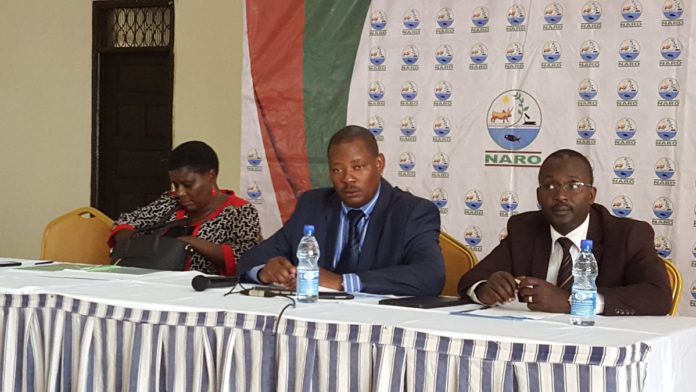
A meeting between NARO officials and the Rotarians

The National Agricultural Research Organisation (NARO) and the Rotary Clubs of Uganda and Tanzania have today signed a five-year memorandum of understanding aimed at planting 20 million trees in different parts of the country.

Speaking at the signing held at Colline Hotel in Mukono, the NARO Director General Dr. Ambrose Agona said restoring depleted forest reserves will entice the younger generations to engage in environment-saving activities.

Under the theme ‘Go Green’, the partnership involves planting trees in areas with conducive weather and soil patterns, basing on research conducted by NARO.

“Over 200,000 hectares of forests are depleted every year; we need to do a suitability map; we are not just going to plant trees anyhow and anywhere,” Dr. Agona said, adding that it is important to come up with all solutions of adaptation with focus on population growth.

In a related development, early this month the Speaker Rebecca Kadaga launched one million tree planting campaign at the National Water and Sewerage Corporation Resource Centre in Bugolobi, aimed at promoting environmental conservation and catchment protection.


Stories Continues after ad

Heathens take on Pirates in Uganda Cup final

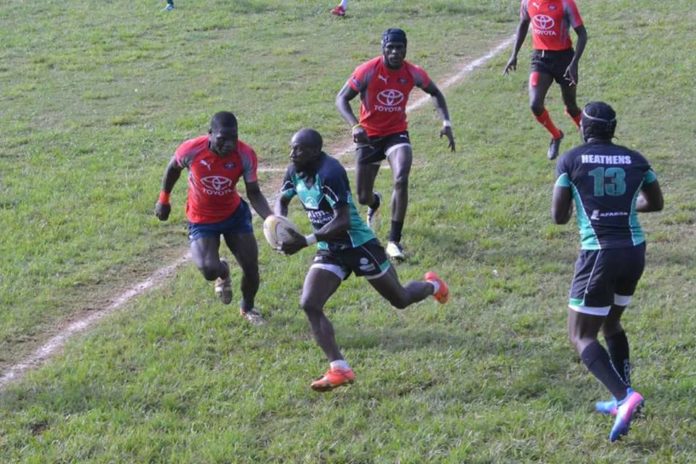
Hima Heathens in action

Hima Heathens will face Black Pirates in the final of the rugby Uganda Cup final after eliminating Buffaloes and Kobs respectively in the semifinals.

In the games which were played at Kyadondo Rugby ground, Black Pirates dumped out stubborn Betway Kobs in an entertaining game decided at the death, with captain Ivan Magomu’s penalty for a 25-23 win to book the sea robbers a place in the final.

Pirates made their second consecutive final after missing out on the title to Kobs last year. This is the first time they make back-to-back finals for the first time in almost a decade and have lost two consecutive finals, in 2011 and 2016.

Heathens defeated Toyota Buffaloes 03-00 in the second semifinal with Chris Lubanga’s early penalty remaining the only score of the game.

Heathens still maintain their record of being unbeaten by Buffaloes in the 15s aside game.

Buffaloes will face Kobs in the third-place playoff before the final.

The Uganda Cup Final will be held on Saturday 4th November 2017 at Kyadondo Rugby Club.


Main Cup

Third place playoff

Toyota Buffaloes vs Betway Kobs – 2pm

Final

Hima Cement Heathens vs Black Pirates – 4pm

Stories Continues after ad

Economic growth in Sub-Saharan Africa weak – IMF

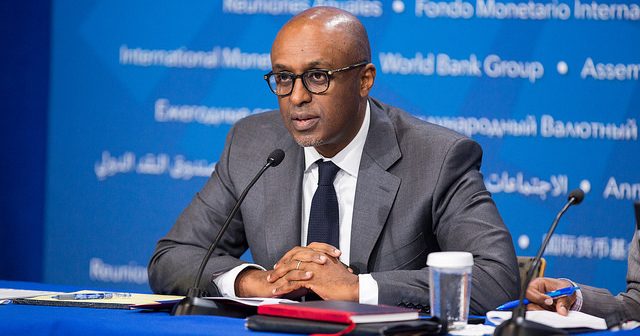
Abebe Aemro Selassie, Director of the IMF’s African Department

Growth in sub-Saharan Africa is expected to pick up to 2.6 percent in 2017 from 1.4 percent in 2016, the International Monetary Fund (IMF) has said in its latest Regional Economic Outlook for Sub-Saharan Africa report released Monday.

While growth is expected to accelerate further to 3.4 percent in 2018, momentum remains weak and growth will likely remain below past trends in 2019, the report notes.

According to the report, one third of the economies, mostly in eastern and western Africa, continue to grow at a brisk pace of 5 percent or more. “But per capita incomes are expected to decline in 12 countries, home to 40 percent of the region’s population or 400 million people,” said Abebe Aemro Selassie, Director of the IMF’s African Department.

The report says public debt has been rising in the region, especially in those economies adjusting to the substantial commodity price shock and in many fast-growing economies. “With debt now above 50 percent of GDP in half of the economies in the region, debt servicing costs have risen,” the report notes.

It says that growing exposure to the sovereign and the accumulation of domestic arrears have magnified pressures in the financial sector. Moreover, it says, while current account deficits have narrowed, international reserves are lower than desirable in many countries.

Looking ahead, Mr. Selassie stresses that “the quest for recovery rests on strong and urgent policy action to address vulnerabilities and tackle constraints to growth. Many countries face a period of fiscal consolidation.

“While this is already reflected in most sub-Saharan African countries’ medium-term strategies, experience shows that planned fiscal adjustments tend to be postponed; implementation needs to begin without delay if debt levels are not to increase sharply,” Mr. Selassie says.

He says fiscal reforms can be designed to limit the adverse effect on growth and the most vulnerable, and that experience with past fiscal consolidations in the region shows that this is best achieved through revenue mobilization as well as better prioritization of public spending.

“While there is no single path for reforms, countries such as Botswana, Rwanda, and Uganda, that have successfully diversified their economies have built on their existing strengths and tackled specific constraints,” the report notes adding that diversification strategies were supported by policies to enhance macroeconomic stability, improve education outcomes, bolster governance and transparency in regulation, and deepen financial markets.


Stories Continues after ad

South Sudan work permit raises to US$4000

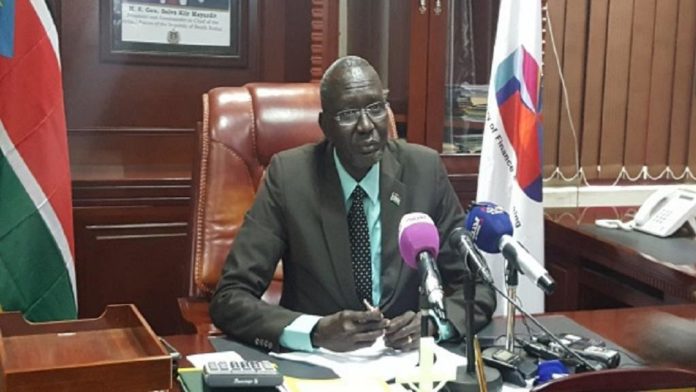
South Sudan Minister of Finance

South Sudan has resolved to charge foreign workers running businesses in the country $4,000 after an outcry over the work permit fee hike to $10,000 in March from the initial $100.

The Ministry of Finance suspended the plans to hike the fees in April after criticism from several aid organisations that are helping to revive the war-ravaged country.

The fee has been reduced to $4,000 and it will take effect in November, the ministry said in a statement that categorizes workers and the amount they will be charged.

Consultants and managers will be charged the $4,000 fee, professionals will pay $3,000, technicians will pay $2,000, skilled workers will pay $1,000 dollars, unskilled workers will pay $500, said the statement cited by local media.

“Outstanding payments with the old rate are to be cleared with the Central Bank and the ministry with immediate effect. Failure to do so will result in charges with new rate.

“Work permit forms that were taken earlier and submitted after  October 22, will be charged with the new rates,” the statement added with a warning that defaulters will pay a fine of $200.

The world’s youngest country plunged into conflict in December 2013 after a political feud between President Salva Kiir and armed opposition leader Riek Machar, who are from rival ethnic groups.

The conflict has killed thousands of people and driven more than 2 million from their homes.


Stories Continues after ad

Mobile bond boost for infrastructure

Oliver Thew

By Oliver Thew

Mobile phone penetration has reshaped financial services in sub-Saharan Africa. One country synonymous with this transformation is Kenya, widely recognised as the global epicentre for mobile banking thanks to the success of M-Pesa, the country’s mobile phone-based money transfer and financing service.

Since launching in 2007, M-Pesa has amassed 31m users – around 63% of Kenya’s population – and 50% of the country’s GDP is estimated to flow through the network. Earlier this year, Kenya again showed how the rapid adoption of mobile banking can make it a world-leader in financial innovation. In March the Kenyan Treasury issued the first mobile-only government bond, M-Akiba. The government offered the bond to investors through the M-Pesa platform.

For many emerging economies, the lack of developed financial infrastructure necessitates innovative solutions, like M-Akiba, to traditional challenges. M-Akiba differs from conventional government bonds not only because of the use of a mobile platform, but because it was designed with the goal of improving financial inclusion.

Institutional investors typically dominated Kenya’s market because only they could reasonably afford the minimum of Kes50, 000 (around $500) for government bond purchases. M-Akiba tries to address this imbalance by reducing the entry price to Kes3, 000, making the programme more accessible for less affluent retail investors.

Central bank statistics show the gross deposits in Kenyan banks amounted to around Kes2.7tn at the end of November 2016, with 95% of all accounts holding less than Kes100, 000. In comparison, banks in Spain, which has a similar population to Kenya, hold deposits of around $1.6tn, more than 60 times higher.

One reason for these small volumes is that the Kenyan banking sector has capped interest rates on savings accounts and products, meaning consumers are offered low or even negative rates of return. Traditionally, small savers have put their money in illiquid investment vehicles, such as investment clubs, where they must wait for months before being paid a lump sum, often without interest.

M-Akiba, however, is a three-year bond and provides investors with 10% tax-free interest, payable every six months. By pricing the bond at 10% the government is able to compete with the low interest rate products and savings accounts offered by banks, as well as the less formal investment clubs. Moreover, as M-Akiba does not require a formal bank account, it will attract savers from Kenya’s large unbanked population.

In addition to boosting financial inclusion, M-Akiba is intended to finance large infrastructure projects. The initial tranche was worth Kes150m and targeted 50,000 mobile money users in a two-week window in March. The pilot was a success; more than 104,000 people registered for the auction and the issue sold out two days ahead of schedule. However, the main listing of Kes1bn in June had a slower uptake, with the bond reaching only 25% of the targeted amount and the Treasury extending the deadline by seven weeks.

One explanation for this is timing, as the launch coincided with the contested presidential election. With so much political uncertainty, many Kenyans opted to hold their cash. The initial bond offering was extended to after the elections, though the Supreme Court ruling annulling the result of the election dealt another heavy blow. Protests during the poll’s re-run last Thursday, in which at least three people were killed, deepened the country’s political crisis.

There is a broader issue which explains why the main listing underperformed and remains undersubscribed. Initially there was a great deal of interest surrounding the launch of the bond. Investors in the pilot were early adopters, whereas the main issue targeted a broader population. These are different groups and demand alternative marketing strategies. A sustainable market must be in place for M-Akiba to become a recognised investment channel.

This problem is far from insurmountable. The challenges of launching a new product include marketing it correctly and educating investors to promote interest. Average Kenyans need to feel confident in M-Akiba before they begin to pay in. As Wohoro Ndohho, director general of public debt management at the Treasury, has said, this process ‘ is a marathon, not a sprint’.

Oliver Thew is Programmes Manager at Official Monetary and Financial Institutions Forum-OMFIF.


Stories Continues after ad

MUST gets new Vice Chancellor

President Museveni handing over instruments of power to Prof. Olweny.Looking on is First Lady Janet Museveni and other officials

Mbarara University of Science and Technology (MUST) has a new Vice Chancellor Prof. Charles Mark Lwanga Olweny who was installed by President Yoweri Museveni during the 28th graduation ceremony of the university at which 1,028 science and technology students graduated with degrees. Mr. Museveni attended the ceremony as Visitor of public universities in Uganda.

Prof. Olweny, the fourth Chancellor, replaces Prof. Peter Mugyenyi who served two terms of four years each.

In his speech President Museveni congratulated Olweny upon his appointment as new Chancellor of MUST, and expressed optimism that the university would greatly benefit from his wide knowledge and distinguished career.

Museveni paid tribute to the outgoing Chancellor Prof. Mugyenyi for long and good service to the institution and also treating AIDS patients at the Joint Clinic and Research Centre (JCRC). He encouraged him to continue serving the JCRC facility.

The President commended Prof. Frederick Kayanja for the good job as pioneer head of the Mbarara-based university and lauded late Cuban leader, Fidel Castro for the assistance accorded to MUST.

“I thank President Fidel Castro of Cuba who helped me to start teaching and treating people at MUST,” he said, adding that government does not support the courses that are not marketable

“Let us not start any course that has got no relevance to the job market. The Government will not fail to support you with funds for personnel and essential requirements for promoting science education,” he said.

President Museveni, who reiterated that all the universities in the country must ensure that the minimum entry requirements are maintained, expressed happiness that MUST has graduated over 1,300 medical doctors since its inception in 1989.

He observed that by the time MUST started, Uganda was graduating only 80 medical doctors a year from Makerere University.

“Africans suffered from ideological anesthesia at a small rate of 80 medical doctor graduates per annum in Uganda,” he noted.

He said that the situation that obtained at that time fell far short of the World Health Organization’s policy of the recommended ratio of one medical doctor per 500 people noting that Uganda, which has got a population of 40 million, needs a team of 80,000 medical doctors.

Museveni also called on the people of Mbarara district in particular and Uganda at large to protect the environment by planting trees and restoration of swamps.

The First Lady and Minister of Education and Sports, Janet Museveni said that Uganda has made big strides, having expanded from one university in the 1980s to the current nine public universities. She said the country has 41 private-run universities and both private and public universities in the country have a total enrollment of 160,000 students.

She thanked MUST for training high caliber personnel who meet the demand of the job market and urged the students and the university community at large to guard against the HIV/AIDS scourge.

On his part Prof. Olweny thanked Museveni for accepting the recommendation of the University Council to appoint him as Chancellor. He thanked the Government, donors and all stakeholders for their contributions to the promotion of MUST.

Stories Continues after ad

DStv slashes subscription fees

Charles Hamya (R) General Manager MultiChoice Uganda and Phoebe Nakabazzi (L) DStv Marketing Manager unveil the new pricing for DStv packages which take effect November 1

Sports lovers are all smiles as MultiChoice Uganda has announced downward adjustments on its DStv subscription prices across all bouquets, effective November 1.

The move is part of the pay TV company’s strategy to ensure DStv customers get the best international and local channels at affordable prices in addition to its recent initiative in providing La Liga games to the DStv Family package as well as added great lifestyle and kiddies programming, DStv says.

In addition, SuperSport recently secured the rights to broadcast WWE programming live for the first time ever across sub-Saharan Africa.

While addressing journalists at a press conference to announce the price reduction, Charles Hamya, General Manager MultiChoice Uganda said: “We recognise that our customers are living in tough economic times and want to reward them for their ongoing loyalty and support by providing the best local and international entertainment. We want to do our part by adjusting the price of our DStv packages through making them more affordable while adding more value at the same time.”

He added: “The majority of our input costs are in US dollars and we hope we won’t experience any further currency devaluations or other unexpected increases in costs for the remainder of the year. We will continue to review pricing from time to time, taking into account the economic conditions of our operations.”

TIMELINES

Over the last two years, MultiChoice has executed its customer promise by providing best entertainment – combining both quality and variety – at a reduced rate to ensure access to great family entertainment.

In February 2016, DStv brought two of the world’s best football leagues, the English Premier League (EPL) and La Liga to DStv Compact customers. Plus, the company added seven entertainment channels and opened up Box Office and DStv Catch Up.

In April 2016, DStv introduced a ‘no price increase’ , and in October 2016, the company reduced prices in some countries and added another six great entertainment channels to the Compact Plus bouquet.

In August 2017 the company brought all the Spanish La Liga games to DStv Family and added three new international channels (BBC Lifestyle, Food Network and Cbeebies). All countries – excluding Nigeria and Ghana – will also get Africa Magic Epic on DStv Access while Trace Mziki will be available in East African markets.

“These downwards adjustments to DStv packages reinforces our commitment to ensuring that our customers receive the best possible access to great entertainment and outstanding value, said Hamya.

“Entertainment is a powerful way to tell stories that open our minds, bring people together around shared passions, and connect us to new realities. It makes us laugh and cry. It informs, it educates and it inspires. As a Video Entertainment company our role is to enrich lives of our customers across the various territories we operate in,” Hamya added.

In addition to that DStv has announced its festive offer for customers dubbed Blue Christmas. The promotion will see numerous customers of DStv who either purchase the full kit at Shs132,500 or re-subscribe to compact, compact plus and premium win themselves exciting prizes ranging from weekend getaway trips for 2, subscription and branded items.

Additionally, customers of DStv Compact or DStv Compact Plus who pay on time will view all Sport channels available on DStv Premium for a week after December 31, 2017.

Whereas DStv Access  and DStv Family customers who pay on time will view all Sports channels available to DStv Compact for a week after 31st December 2017’ said Phoebe Nakabazzi, Marketing Manager DStv.

The new pricing:

Premium

UGX 287 250 to

UGX 280 000

2.52% drop

Compact Plus

UGX 190 700 to

UGX 180 000

5.61% drop

Compact

UGX 121 600 to

UGX 115 000

5.43% drop

Family

UGX 66 750 to

UGX 60 000

10.11% drop

Access

UGX 38 000 to

UGX 33 000

13.16% drop


Stories Continues after ad
Stanbic hosts home loans and developers forum

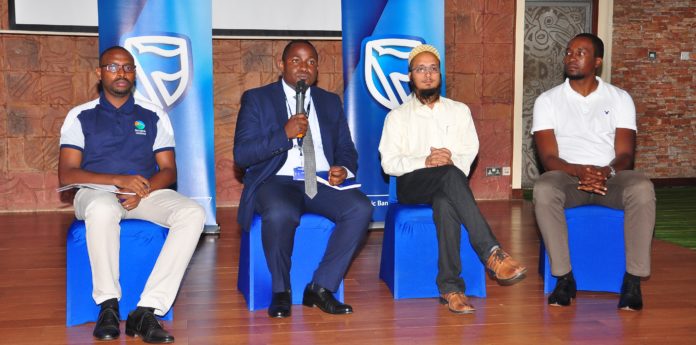
Partticipants at the Stanbic Bank-hosted forum

Stanbic Bank has partnered with leading Ugandan property developers to host a housing development forum aimed at forming partnerships to create more affordable housing options for Ugandans and enhancing knowledge awareness about home loans and mortgages.

Held under the theme ‘Stanbic Bank’s role in supporting the housing market’, the forum brought together industry stakeholders, property developers, bank customers, land surveyors and prospective property buyers.

Delivering opening remarks at the forum, Shem Kakembo, Stanbic Bank’s Head of Personal Markets noted that Uganda currently has a housing deficit of close to 1.2 million units, with over 200,000 units in Kampala alone.

Studies also indicate that by 2040 almost 60% of Uganda’s population will be living in urban areas, and the rapid urbanization is bound to put pressure on housing delivery systems which are often informal or reliant on the state.

To address this, Banks and private housing developers are finding ways to create affordable housing options to meet the high demand from this growing population.

“The goal of providing affordable housing can only be achieved by bridging the gap that has existed between access to capital and execution capability. Stanbic Bank has taken strides to bridge this gap by reducing mortgage rates and working to strengthen partnerships with the developers in a bid to reduce on the overall cost to borrow.  This will be a great benefit for the customer who is looking for value and a cost-effective financing option for their housing needs,” Mr. Kakembo added.

He however cautioned noted that while private developers and Banks can take the lead to initiate housing projects, there is a need for developers to liaise with the local authorities and government to jointly provide social infrastructure such as roads, social amenities like piped water and electricity in areas further away from the city which will make these areas attractive and accessible to the target market.

Talking about one of the new loan products the Stanbic now offers, Jackson Emanzi, Stanbic Banks Head of Home Loans said: “Due to market demand, the bank has also introduced land loans to cater for those intending to acquire land for new and additional developments. Not everyone has the capacity or wants to buy a finished house, many of our clients want to acquire now and build later or over time, this land loan product gives them this possibility.”

Analysing the current interest rate environment and efforts being made by the Central Bank to stimulate borrowing by reducing the CBR to a record low of 9.5%  Mr. Emanzi said Stanbic believes in maintaining the transparency of pricing to our clients.

“This is the reason why we have consistently matched movements of the CBR each time the Central Bank has made an adjustment. Using that principal Stanbic bank has reduced its Prime Lending Rate by 500 basis points since the beginning of the year. At 18% per annum Stanbic currently has the lowest prime lending rate of all banks,” he added.


Stories Continues after ad