Stanbic Bank
Stanbic Bank
19.8 C
Kampala
Stanbic Bank
Stanbic Bank
Home Blog Page 1725

Israel to deport 40,000 African refugees

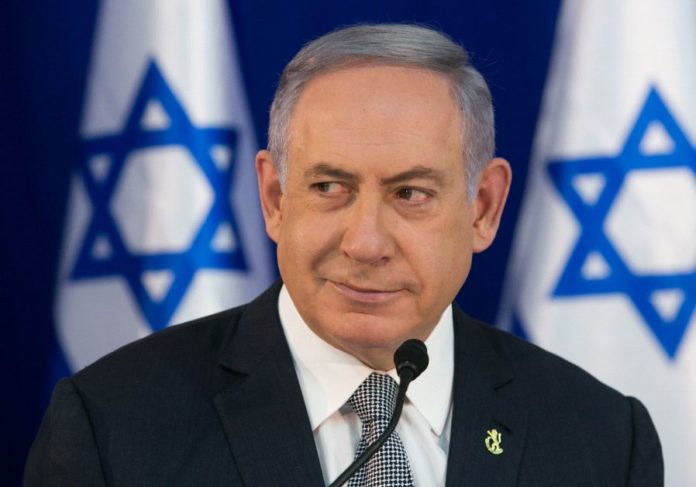
MADE ANNOUNCEMENT: Israeli Prime Minister Benjamin Netanyahu

Israeli Prime Minister Benjamin Netanyahu has announced an unspecified international deal to expel some 40,000 African asylum seekers from the country. The Israeli Cabinet also voted to shut down a migration center.

The Israeli prime minister said Sunday he had reached an “international agreement” that allowed his country to deport around 40,000 African refugees.

The asylum seekers, mainly from Sudan and Eritrea, entered Israel through Egypt’s Sinai Peninsula in the early and mid-2000s.

Prime Minister Benjamin Netanyahu’s Cabinet also approved plans to shut down the Holot migrant detention center in southern Israel and gave asylum seekers a three-month deadline to leave the country or face deportation.

Activists say that refugees from Sudan and Eritrea cannot return to their ‘dangerous’ homelands.

The Israeli government says the African migrants are “infiltrators” and not genuine refugees.

“The infiltrators will have the option to be imprisoned or leave the country,” Israel’s Public Security Ministry said in a statement.

“This removal is enabled thanks to an international agreement I achieved that enables us to remove the 40,000 remaining infiltrators without their consent. This is very important,” Netanyahu said at the start of his Cabinet meeting.

“This will enable us to close down Holot and allocate some of the large funds going there to inspectors and removing more people,” the prime minister added.

It is unclear whether the African asylum seekers would be sent back to their homelands or a third country.

In a Twitter statement, Gilad Erdan, Israel’s public security minister, said the Holot closure was conditioned on “us seeing that the policy of removing infiltrators to a third country was indeed taking place.”

Neither Erdan nor Netanyahu provided details about the third country.

Activists say that refugees from Sudan and Eritrea cannot return to their “dangerous” homelands.

“Instead of turning away refugees within its territory, Israel can and should protect asylum seekers like other countries of the world, instead of imprisoning them or deporting them to continue the journey as refugees,” a coalition of human rights organizations in Israel said.


Stories Continues after ad

Medics’ strike: Police doctors join forces’ treatment drive

SSP Emilian Kayima's statement released today.

Following industrial action by medics around the country, police doctors have joined their Uganda Peoples Defence Forces (UPDF) and Uganda Prisons Services (UPS) colleagues to treat the sick.

ISSUED STATEMENT: New Police Spokesperson SSP Emilian Kayima

The Inspector General of Police Gen. kale Kayihura on Friday gave directives to the Director Uganda Police Health Services to support the ministry alongside the others that are supporting the ministry to with, the UPDF and UPS,’ police spokesperson Senior Superintendent of Police Emilian Kayima wrote in a release issued today.

According to SSP Kayima, the police force has 94 health centres across the country, which are currently offering maternal, dental and general health care treatment to civilians, ‘totally free of charge’.

Two weeks ago doctors went on strike, demanding better pay and an improvement of their working conditions. Since then there have been various engagements between government officials and the striking doctors led by Uganda Medical Association (UMA) chairperson Dr. Ekwaro Obuku, aimed at ending the strike to no avail.

In the ensuing period the standoff prompted President Yoweri Museveni to threaten sacking the doctors, but that too has not done much to make them return to work.

The doctors’ strike comes at a time when other public sector workers like State Attorneys and Prosecutors are also on strike, demanding better working conditions.

Stories Continues after ad

ZANU-PF set to dismiss the Mugabes

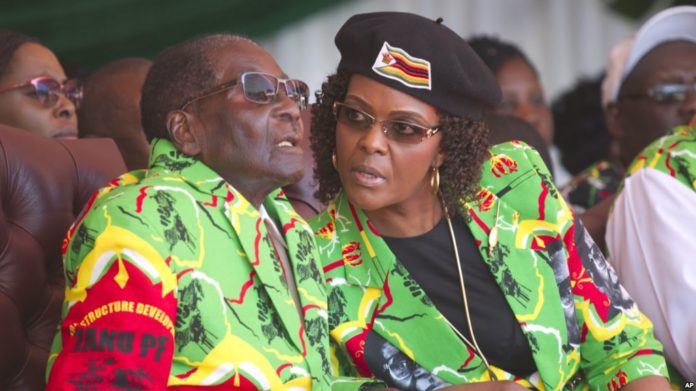
DURING THEIR HEYDAYS: Robert Mugabe and his embattled wife Grace Mugabe

Robert Mugabe’s efforts to cling to power appeared close to collapse as tens of thousands marched through Zimbabwe’s cities calling for his resignation, while the ruling party prepared to dismiss him.

The 93-year-old president is due to meet the army commanders who took power last week, a statement broadcast by the state-run TV channel said.

The face-to-face encounter is only the second since the military takeover five days ago and will take place as leaders of Zanu-PF convene to endorse a motion demanding that Mugabe resign as president and stripping the party leader of his post of first secretary. Parliament is expected to start impeachment proceedings next week.

Sources close to the military said the president had asked a Catholic priest and lifelong friend to act as an intermediary in talks with generals. Mugabe had previously rejected similar offers of mediation, suggesting that he was close to making a significant concession.

Few options are now open to the autocrat, who has ruled Zimbabwe through a mixture of ­coercion, bribery and revolutionary rhetoric for nearly four decades. Support in some branches of the security establishment – including the police – has evaporated and high-profile political supporters have been detained.

On Saturday the streets of Harare were filled with people chanting, singing and waving placards. Many embraced soldiers. The march had the approval of military authorities and will boost the inter­national image of the generals who took control last week.

However, analysts said the celebrations were also evidence of a huge desire for democracy in Zimbabwe, not just the departure of the world’s oldest leader.
The presidential motorcade left Mugabe’s sprawling residence in Harare yesterday evening, booed and jeered by protesters who had gathered outside.

Piers Pigou, an expert with the International Crisis Group, said the march was “both an opportunity and a major challenge” for the military and the still dominant Zanu-PF, Mugabe’s political vehicle. “The language being used shows that people were out not just to support Zanu-PF and the army … What we have seen on the streets suggests that ordinary Zimbabweans want an alternative to the centralising, controlling ­narrative,” he said.

The military has said its takeover was to remove “criminals” close to the president, a reference to Grace Mugabe, the first lady, and her G40 ­faction.

Most observers believe the former vice-president Emmerson Mnangagwa is likely to take charge when Mugabe finally relinquishes power. Mnangagwa, 75, is a former intelligence chief and ­veteran Zanu-PF official responsible for the repression of opposition parties in elections between 2000 and 2008. He was fired by Mugabe two weeks ago.

Opposition leaders have called for the formation of an inclusive transitional government but risk being sidelined by the army and Zanu-PF. There are also concerns that the military will maintain significant influence in the future.

Since taking power, the military has arrested about a dozen senior officials and ministers loyal to Grace Mugabe, 52. She has not been seen since the take­over. Sources said she was in her husband’s Harare residence when he was detained and has not left. Zanu-PF branches in all 10 provinces called on Friday for Mugabe to be recalled as first secretary of the party.

The motions also called for Grace Mugabe to be stripped of her post chairing the Zanu-PF women’s league. She is a divisive figure who has outraged many with her extravagance, violent outbursts and political ambitions. Mugabe could theoretically continue as president, even if he were no longer leader of Zanu-PF, but this would be difficult in practice, party insiders said.

Relatives said he and Grace were “ready to die for what is correct” and had no intention of stepping down to legitimise the military coup. ­Speaking to Reuters from a secret ­location in South Africa, Patrick Zhuwao, Mugabe’s nephew, said on Saturday that his uncle had hardly slept since the ­military ­take­over, but his health was ­otherwise good.

The coup is thought to have been prompted in part by fears among the military and its allies in the ruling party of an imminent purge of Grace Mugabe’s rivals that would have allowed her to exercise greater power. Zimbabweans abroad demonstrated against their president yesterday. Hundreds in Britain gathered outside the embassy in London calling on Mugabe to step aside. Similar rallies were held in South Africa and Namibia.

Mugabe’s downfall is likely to send shockwaves across Africa, with Uganda’s Yoweri Museveni to the Democratic Republic of Congo’s Joseph Kabila, facing pressure to step aside.

The failure of regional powers to explicitly support the military inter­vention has angered many in Zimbabwe. South Africa’s president, Jacob Zuma, said yesterday the continent was committed to supporting ‘the people of Zimbabwe’.


Stories Continues after ad

FUBA series continue as A1 Challenge is eliminated

Jam Session in an action-packed game at the MTN Lugogo Arena

Last night KCCA Leopards edged out A1 Challenge after a grueling match that ended 64 to 57, leading to the elimination of the latter after losing three of the Best of Five games.

By press time, in the other semi-final UCU Lady Canons was leading JKL Dolphins and the winner will face KCCA Leopards in the finals.

The last game of the night, Game 3 between KIU Titans and Pemba Warriors ended with a 66-61 points, giving KIU Titans a 2-1 lead in the best of five games.

Game 4 of the series continues on Sunday and more teams will be eliminated. The best female players of the night were Maureen Amoding and Susan Amito of KCCA Leopards with 15 points, while the best male players were KIU Titans’ Geoffrey Soro with 20 points and Phillip Ameny aka Big Phil with 19 points.


Stories Continues after ad

EAC targets 2024 for single currency operationalisation

The EAC flag

East African Community (EAC) leaders are aspiring for a single currency by 2024, a development they say will see the countries ease doing business as opposed to the current situation where traders have to use dollars to do business in a partner state.

Uganda, Tanzania and enya are determined to merge their respective shillings with Rwanda and Burundian Francs to form the single legal tender for the bloc in the next seven years, the latest reports from EAC indicate. South Sudan will also lose its relatively valuable pound, melting Juba’s currency into the envisaged EA currency.

Reports on the process for the proposed Monetary Union (MU) for the six EAC member states show that the envisaged MU is expected in 2024, with the introduction of the common currency to replace the national currencies and establish a regional central bank-East Africa Central Bank (EACB).

“Transition to the EA Monetary Union (EAMU) is as a two-phase process, with the initial convergence phase enabling partners to work towards achieving preconditions designed to limit the union’s exposure to internal economic strains,” says EAC Principal Communication Officer Simon Owaka.

He says the preconditions as macroeconomic convergence criteria, full implementation of the Common Market protocol, establishment of institutions to support the MU and harmonisation of policies and practices.

“Once these preconditions are satisfied, partners will enter the final conversion phase, announcing a predetermined date for the union formation.”

According to the EAMU protocol, the EAC members have agreed on four primary convergence criteria, which all partner states have to attain and maintain for at least three years before joining the MU.

But, the targets have to be achieved by 2021 and there is therefore no reason to doubt that any of EAC state will fail to achieve the convergence targets in 2024.

Central Banks in Tanzania, Kenya, Uganda, Rwanda and Burundi have agreed to converge in terms of monetary policy regimes and exchange rate policies, moving from reserve money based framework to forward-looking price based monetary policy framework by December 2018.

“The Bank of Uganda has already taken bold steps, having introduced the Inflation Targeting Lite (ITL) in July 2011 and replacing the reserve money with interest rate as operating target. Kenya has also adopted the forward-looking approach to monetary policy, with a view to move towards inflation targeting,” said the EAC officer.

Central banks in the EAC states are currently implementing legal, regulatory and supervisory amendments in their national legal instruments to harmonise banking supervision and regulatory frameworks in the region.

Two policy documents have so far been developed to guide taxharmonisation process. The EACTax Treaty Policy was developed to provide guideline framework for future treaty negotiations by EACpartner states.

The EAC Model Tax treaty is expected to further develop partner states’ economic relationship and enhance cooperation in taxissues to eliminate double taxation without creating opportunities for taxevasion or avoidance.

The partner states have developed the draft Policy Framework for Domestic Tax harmonisation, which identifies possible areas for harmonisation and coordination as well as establishing the Regional Technical Working Group (RTWG) on harmonisation of national laws. 


Stories Continues after ad

Out for a Soul

Apophia Mudduawulira

By Apophia Mudduawulira

Many things can be resisted but this other thing; an inner call to attend to the voices on the other side.

You still feel so empty not because you have not eaten enough. You have eaten so much and want to eat much more! You will feel the same way as time passes by. Broaden your thinking a little further but that may frustrate your concentration because the answer is very far from you. It’s a void that needs to be filled not by what you thought. You have wasted so much time trying to fill your emptiness and in the process affected so many. Their voices are also being heard from a distance; they are loud enough.

By trying to fill the void with what you thought, many have suffered because of what you thought. You thought that the emptiness could be filled with Money, it has not. You thought may be with Power, it has not. You thought may Be, but still it has not. It’s a pity, it’s all vanity.

That void is filled by the omnipresent – the ever present spirit being. You can not experience this unless you let Him in your life to be the Lord and Saviour by confession, to let Him take charge; that is what makes the whole difference. It’s no longer you that live but Him in you.  You will never experience what you resist. He is called the Sovereign God, through Jesus Christ by His Spirit.


Stories Continues after ad

EAC gets US$ 1m grant to finance road construction in Uganda and Tanzania

EAC Secretary General Liberat Mfumukeko

The African Development Bank East Africa Regional Resource Centre (EARC), and the East African Community (EAC) have signed a financing agreement of US$1.15 million to finance the project preparation phase of three multinational road sections between Masaka in Uganda to Kumunazi in Tanzania.

The Secretary General of the East African Community, Ambassador Liberat Mfumukeko signed on behalf of the Community while Mr. Gabriel Negatu, the Director General of the African Development Bank East Africa Regional Resource Centre (EARC), signed on behalf of African Development Bank, a statement from the EAC Secretariat says.

The key  multinational road sections covered under the grant for preparatory works include:  Masaka to Mutukula Section (89.5km) in Uganda; Mutukula to Kyaka Section (30km) in Tanzania as well as Bugene to Kasulo to Kumunazi Section (133kM) also located in Tanzania.

Present at the signing ceremony that took place in Arusha were the EAC Deputy Secretaries General in charge of Planning and Infrastructure , Eng Steven Mlote, Counsel to the Community Dr. Anthony Kafumbe, the Executive Secretary of Lake Victoria Basin Commission( LVBC), Dr. Said Ali Matano and Executive Secretary of East African Health Research Commission (EAHRC), Prof Gibson Kibiki.


Stories Continues after ad

KCCA to review US$183m infrastructure project next month

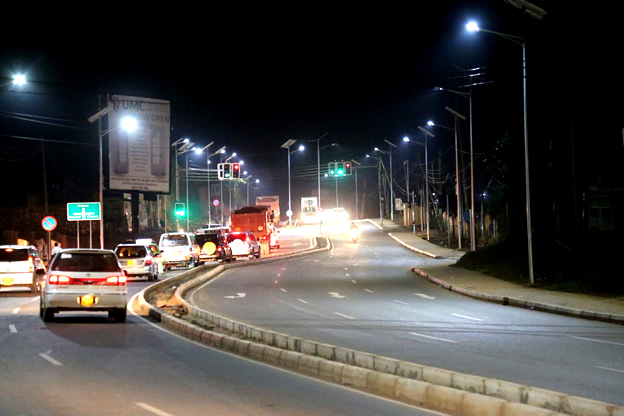
The Fairway Junction has tremendously eased the flow of cars during rush hours

The Kampala Capital City Authority (KCCA) has said it will hold a two day mid-term review for the US$183.7 million Second Kampala Institutional and Infrastructure Development Project (KIIDP II) between December 14-15, 2017.

According to a statement by KCCA, delegates at the meeting will assess progress and determine whether the project is achieving its intended objectives.

“It is only logical to stop and take stock of an activity to ascertain it is on the right path. Likewise, plans for the remaining period of the project are defined at this point,” the Authority says in a public statement.

The KCCA officials further say the outcome of the mid-term evaluation will guide future them in implementing infrastructure and institutional development programs.  “It may also result into the identification of funding gaps and opportunities,” they say.

Two reports will be presented for discussion by independent firms.  The reports scientifically assess the quality and strategic relevance of the project.

“A comparison of the results achieved so far with the objectives and milestones expressed in the original project plan will be presented to key stakeholders at the workshop. KCCA will also utilize this opportunity to engage stakeholders on key issues concerning service delivery in the City,” statement adds.

Achievements

Over the past two years, the KIIDP 2 has seen city roads and junctions were widened and constructed plus associated infrastructure at Fairway, Kira – Bukoto, Bwaise, Makerere Hill Road, and current works on Bakuli-Nankulabye-Kasubi road. Officials say a multi model Urban Transport Master Plan was developed as well as a Drainage Master Plan updated.

More so, they say, an automated register of all properties and roads in the city was established in Central and Nakawa Division.

“Revenue administration in KCCA was streamlined with projected annual income of Shs19 billion; Meanwhile, a city address system was created with streets named and buildings numbered to ease delivery of services,” the statement reads in part.

Challenges

Officials say the project encountered some challenges during its implementation such as delayed handover of road sections either because property owners are out of the country or properties have encumbrances such as mortgages and family wrangles. Other bottlenecks, according to officials, include delayed relocation of utilities, vandalism of infrastructure such as road signs, and more.


Performance Rating

Despite the challenges, officials at KCCA say the overall performance of the KIIDP 2 is rated as satisfactory by the World Bank.  The project is funded by the World Bank and the Government of Uganda.


Stories Continues after ad

Finance Minister Kasaija appoints new CMA board

Finance minister Matia Kasaija

The Minister of Finance, Planning and Economic Development, Matia Kasaija, has appointed a new Board of Directors of the Capital Markets Authority (CMA), following the expiry of the three-year term for the Board which was appointed in November 2014.

The new Board chaired by Jacqueline Kobusingye Opondo will serve for a period of five years.

While officiating at the farewell and welcome dinner for the outgoing and incoming members of the Board held at the Kampala Serena Hotel, the Minister, who was represented by his Economic Advisor, Wilson Twamuhabwa, lauded the outgoing Board for a job well done in ensuring that the institution and the industry continue to grow. He also  challenged the incoming Board to consolidate the gains and strive to build a resilient and strong institution.

“My challenge to the incoming Board which will be steered by Jacqueline Kobusingye Opondo is to consolidate the past gains but also continue to build a strong, vibrant, sound and resilient institution which is effective and efficient”, the Minister said in a speech read for him.

“As a regulator, the public – especially the investors, whom you serve, have very high expectations of you. Equally, the private sector and government which are supposed to tap into the capital markets to raise expansion capital have high expectations,” Kasaija continued.

“Therefore, I wish to take this opportunity to request you to ensure that you live to the aspirations of our country as enshrined in Uganda’s Vision 2040, the National Development Plan II and the 10-year Capital Markets Development Master Plan.”

The Minister cautioned the Board to ensure they remain accountable to the public and pledged the support of the Ministry of Finance to the growth of Uganda’s capital markets.

In her remarks, the incoming Board Chairperson Ms. Kobusingye Opondo thanked the Minister for entrusting her with the responsibility to lead the Board, adding that taking advantage of the opportunities in the capital markets will require collective effort from Government, the CMA and the industry as a whole.

“We need to go beyond increasing awareness and public education to developing innovative products and solutions that will increase access to the capital markets for both investors and issuers”, said Ms Opondo.

She added: “Our capital market has a lot of untapped potential which we are yet to fully maximise both as an industry as well as the private sector and as Government embarks on the massive infrastructure projects both at domestic and regional level, I believe the capital markets are in a good position to partly finance some of these projects.”

In his farewell remarks, the outgoing Board Chairman, Grace Jethro Kavuma commended his colleagues for the support and commitment towards the achievement of CMA’s vision over the period. He also thanked the CMA Management for the continuous efforts towards making the Board work easy and implementing the decisions of the Board.

The CEO of the CMA, Keith Kalyegira also thanked the outgoing Board for their guidance, especially during the development of the Authority’s five year strategic plan and the ten-year Capital Markets Development Master Plan, which is currently in its second year of implementation.

He noted that the capital markets in Uganda still need to grow and that is why the Authority is a strong advocate for pension reforms which aim to among other things, reform the sector and create an additional mandatory scheme or two which will increase capital raising options amongst Ugandan businesses seeking to raise patient capital for expansion, debt refinancing or seeking to reduce their shareholders’ stake in their business.

“I also wish to thank the Hon. Minister of Finance for expeditiously appointing the new Board to ensure a smooth handover and continuity of the operations of the Authority; this is a sign of commitment from Government towards building an efficient and well governed institution,” he said.

The CMA Board is comprised of eleven members including its CEO, who are appointed by the Minister of Finance, Planning and Economic Development. The members represent various institutions in the private and public sectors as prescribed in the CMA Act.

The newly appointed members of the CMA Board are: Jacqueline Kobusingye Opondo (Chairperson and representative of the Institute of Certified Public Accountants of Uganda), Saul Sseremba (Represents the Insurance Training Institute of Uganda), Fabian Kasi (represents Uganda Bankers Association) Joselyn Kateeba (represents Uganda Manufacturers Association) Irene Lugayizi (Represents the Solicitor General), Stephen Mulema (Represents the Governor Bank of Uganda) and Mr. Joseph Enyimu (Represents the Permanent Secretary/ Secretary to the Treasury).

Other members include; Donald Nyakairu (Uganda National Chamber of Commerce and Industry), Bemanya Twebaze (Registrar General) and the CEO.  The Authority still awaits the official appointment of one more member who is the representative of the Uganda Law Society.


Stories Continues after ad

City businessman ordered to pay Over Shs70million to Equity Bank

The offices of Commercial Court

The Commercial Court in Kampala has ordered a city businessman, one Amir Nsamo, to pay Equity Bank over Shs77 million.

This is after Nsamo lost and application seeking the reversal of an earlier decision by the High Court on grounds that he was never served with the summons and plaint in the suit which the High Court had ruled on.

He further argued that  he has a good defense to the suit in as far as the sums claimed in the loan facility by Equity Bank is disputed and that the loan facility was itself frustrated by an act yet the High Court had denied him the opportunity to defend himself.

In response to the application, Samson Kakooza, Equity Bank’s Recoveries Manager Debt Recovery Unit stated that Nsamo obtained a credit facility of Shs90, 000,000 from Equity for the purchase of a truck.

He was contractually obliged to settle the above credit in 36 equal monthly installments comprising of both principal and interest.

However, due to failure by him to make monthly remittances on their due dates, the loan facility was recalled and HCCSNO.190 of 2014 was instituted against him at the High Court for recovery of the entire loan balance, interest and cost of the suit thereof.

“Court summons were published in the Daily Monitor News Paper of 18th June 2014, at page 29. On the 21st day of August 2014 the applicant through his lawyers Setimba & Co. Advocates filed a Notice of Joint Instructions which was served upon the respondent’s lawyers on the 22nd day of August 2014. Subsequently, the applicant through his above mentioned lawyers made a payment proposal (of Shs77,468,000) which was never honored,” reads the response in part.

Basing on the above submissions, Commercial Court judge, Billy Kainamura upheld the decision of the High Court, dismissing Nsamo’s application with costs.

“In the result this application is dismissed with costs,” the judge ruled.


Stories Continues after ad