Stanbic Bank
Stanbic Bank
18.8 C
Kampala
Stanbic Bank
Stanbic Bank
Home Blog Page 1727

World Cup teams seeded after completion of qualification process

The FIFA World Cup Trophy

After a qualification process involving 209 national football teams and lasting for more than two years, the list of the 32 sides to take part in the FIFA World Cup 2018 in Russia has been confirmed, after Peru booked the 32nd and last place at next summer’s tournament.

Each continent is to be represented at the tournament with five teams from Africa, 13 from Europe, four from Asia, five from South America,  one from Oceania, three from North and Central America and Caribbean and the host nation.

The teams have been seeded according to the October 2017 FIFA world rankings. The seven highest-ranked teams are pot 1, the next eight in pot two, the following eight in pot three and the lowest ranked eight in pot four.

One team from each pot is drawn into a group, making eight groups of four nations. There can be no more than two teams from Europe in any one pot, and no more than one nation from any other confederation.

The Final Draw will take place on Friday 1 December at Moscow’s State Kremlin Palace in Russia.


Pot 1: Russia, Germany, Brazil, Portugal, Argentina, Belgium, Poland, France

Pot 2: Spain, Peru, Switzerland, England, Colombia, Mexico, Uruguay, Croatia

Pot 3: Denmark, Iceland, Costa Rica, Sweden, Tunisia, Egypt, Senegal, Iran

Pot 4: Serbia, Nigeria, Australia, Japan, Morocco, Panama, South Korea, Saudi Arabia

Stories Continues after ad

Cranes seeded in Pot 3 ahead of CHAN draw

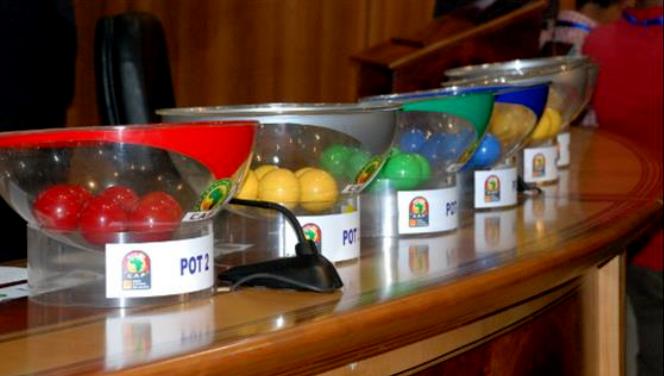
The 2018 CHAN pots during the placement of teams yesterday

Uganda has been placed in Pot 3 with Congo, Rwanda and Sudan for the 2018 Total African Nations Championship in Morocco ahead of the draw which will be held on Friday, 17 November 2017 at Sofitel Rabat.

The four Pots consisting of the 16 qualified teams were decided on the basis of a ranking established, taking into account the performances at the past editions of the final tournament designed exclusively for footballers playing in their domestic leagues.

The development means that Cranes can’t be drawn in the same group with CECAFA members Rwanda and Sudan.

Cranes CHAN Team Manager Kasana Joseph will represent Uganda at the event and will also get the chance for a guided tour of the stadiums to be used during the tournament.

The Organising Committee also approved the calendar for the final tournament which will run from 13 January to 4 February 2018 in the following cities: Casablanca (Group A), Marrakech (Group B), Tangier (Group C) and Agadir (Group D).

The opening match and the final will be played at the newly refurbished Mohamed V Complex in Casablanca, which also hosted the second leg final of the Total CAF Champions League 2017.

Meanwhile, Brian Miiro Nsubuga is the Ugandan referee who has been appointed by the Confederation of African Football (CAF) to officiate at the 2018 CHAN tournament in Morocco. He becomes the second Ugandan referee to officiate at the CHAN tournament after Mark Ssonko in Rwanda 2016.


Pot 1: Morocco (host), Angola, Cote d’Ivoire, Libya

Pot 2: Cameroon, Guinea, Nigeria, Zambia

Pot 3: Congo, Uganda, Rwanda, Sudan

Pot 4: Burkina Faso, Equatorial Guinea, Mauritania, Namibia

Stories Continues after ad

Rukungiri court defers Besigye case

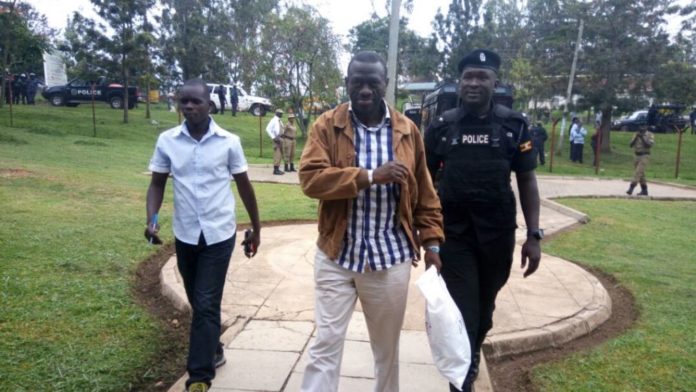
FLASHBACK: Dr. Besigye arrives at the court in Rukungiri some time back

The Rukungiri chief magistrate’s court has today deferred the case in which Dr. Kiiza Besigye, the FDC Secretary for Mobilisation Ingrid Turinawe and four other party officials are accused of murder, inciting violence and occasioning malicious damage.

Appearing before chief magistrate Julius Borore, the six that also included FDC presidential candidates Patrick Amuriat Oboi and Moses Byamukama; Rukungiri councilor Innocent Tashobya and Fred Asiimwe, were told to report back on February 20, 2018.

Details indicate the group allegedly damaged a police vehicle in Rukungiri during the scuffle between the FDC supporters and police on February 20, 2018, in which one FDC supporter called Edison Nasasira died. A postmortem report conducted at Karoli Lwanga Hospital – Nyakibale and Nurses Training Centre, indicated Nasasira was killed by a bullet.  

The group was arrested in Rukungiri where they had gone they had gone to canvass votes for Amuriat, with police claiming it was not notified. The FDC officials were later to be detained at Nagalama Police Station for over a week before being produced in court.

Meanwhile, after court adjourning the session in Rukungiri, Dr. Besigye was whisked off to Mbarara where he was arrested on Tuesday, to face other charges.

Background

Dr. Kizza Besigye and his driver Fred Kato, Ronald Mugume and FDC mobiliser Ms.Turinawe among other FDC supporters were arrested and detained at Mbarara central police station on Tuesday this week while on their way to address a rally at Kakyeka stadium in Mbarara, to canvass votes for FDC presidential candidate Amuriat Oboi.

According to Byamugisha, another FDC presidential candidate, his fellow contestant Amuriat Oboi and Kawempe South MP Mubarak Munyagwa were also arrested as they paid a visit to imprisoned Dr Besigye and Ms. Turinawe.

However, by press time today Amuriat, a former MP for Kumi, and Munyagwa had been granted Shs 5million non-cash bail by Mbarara Grade One Magistrate Sanyu Mukasa.

It should be recalled that on Tuesday, November 14 the FDC petitioned High Court, seeking it to restrain the Inspector General of Police (IGP) Kale Kayihura from disrupting the party’s presidential campaigns.

Through Sewankambo and Company Advocates, Buhweju MP Francis Mwijukye who  filed the petition said in August the FDC Secretary General Nandala Mafabi wrote a letter to the IGP notifying him about party campaigns and that Gen Kayihura responded,  imploring the FDC ‘to cooperate with police for smooth running of their activities.

“The police, under the guise of the Public Order and Management Act (POMA), is disrupting our campaigns with arguments that police was not informed about FDC rallies,”Mwijukye said on Tuesday.


Stories Continues after ad

Uganda to attend OPEC meeting in Vienna

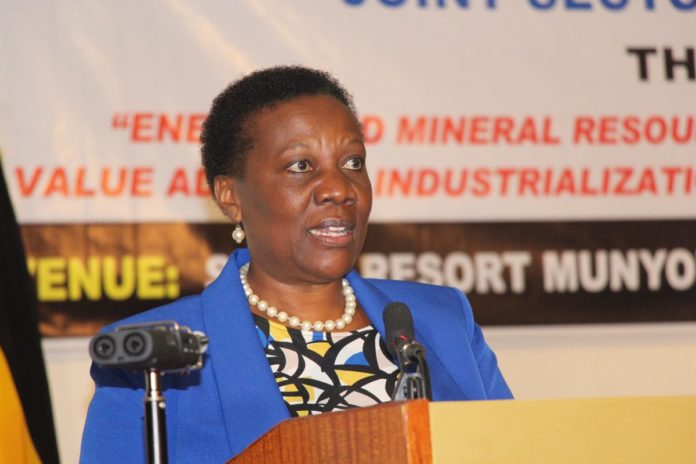
Energy and Mineral Resources Minister Eng. Irene Muloni

Uganda’s preparations to drill oil by 2020 has put it in the limelight, with the country landing an invite to attend the forthcoming OPEC meeting in Russia as an observer, the Energy minister Irene Muloni has said.

“We’ve received an invitation from OPEC to attend their meetings as observers. This is going to be the longest heated pipeline in the world,” Ms. Muloni said in Kampala at an oil and mineral stakeholders meeting.

Two weeks from now, countries that produce  more than half the world’s oil gather in Vienna, Austria  to discuss extending the production cuts that helped lift prices to two-year highs.

According to the sources, preparations for the Nov 30, 2017 meeting in the Austrian capital begin one week earlier, with a workshop to discuss the outlook for shale oil followed by the meeting of the Organization of Petroleum Exporting Countries’ Economic Commission (OPEC) Board. This panel of representatives from member countries, which discusses the market before every ministerial meeting, will focus on forecasts for demand this winter, including consideration of the International Energy Agency’s estimate for weaker-than-expected fuel consumption, another delegate said.

The invitation to Uganda to attend the OPEC meeting comes at the time when the country is in critical stages of building a refinery as well as an oil export pipeline to the Tanzania Indian Sea Port of Tanga. Uganda is estimated to have proven crude oil reserves of 6.5 billion barrels, about 2.2 billion of which is recoverable. The refinery is expected to produce 60,000 barrels of oil per day.

At the meeting, apart from playing the observer role, Ugandan delegates are expected to court other oil investors interested in taking part in its oil sub sector.

In August 2017, a new consortium led by General Electric of the United States and JK Minerals South Africa agreed to build the US$4 billion refinery and to own 50 percent and JK Minerals Africa to own 10 percent, while the government of Uganda and other investors take up the remaining 40 percent.

Other members in this new consortium are; Yaatra Ventures LLC,  Intracontinent Asset Holdings and Saipem SpA of Italy. “The firms were competitors during the initial bidding. However, the came together and formed a special purpose vehicle, the Albertine Graben Refinery Consortium (AGRC), which is expected to design, procure the necessary supplies and build the refinery,” a source says.

A report says that the government of Uganda has proposed that the remaining 40.0 percent be divided among itself, Burundi, Kenya, Rwanda, and Tanzania in equal shares except that Uganda would assume whatever ownership interests are not subscribed by the other countries.

Kenya has agreed to purchase a 2.5 percent interest in the refinery for an estimated KES5.6 billion. It has not decided whether to increase that interest to the maximum of 8.0 percent, saying that it needs to further evaluate the project’s commercial value in light of the government’s budgetary constraints.

Burundi and Rwanda have submitted letters of interest to Uganda, but the former has not decided the extent of its ownership interest, waiting on the feasibility study of the refinery and a detailed statement of anticipated costs.

Tanzania has committed to pay US$150.4 million for 8 percent ownership in the refinery.


Stories Continues after ad

Equity Bank unveils actor Mujuuka as brand ambassador

Patriko Mujuuka (centre) being unveiled as Equity Bank Brand Ambassador

Veteran comedian and media personality Patriko Mujuuka has been unveiled by Equity Bank Uganda as brand ambassador beating off competition from 18 other candidates.

While unveiling Mujuuka, Anthony Kituuka, Equity Bank’s Executive Director revealed that it wasn’t an easy job zeroing up on the actor who currently plies his trade on CBS radio.

“We spent a lot of time looking at people that can communicate to Ugandans what exactly Equity Bank is about and finally we zeroed on Patriko Mujuuka. He is a strong brand and has a strong personality,” Kituuka told the press at the Bank’s new home, Equity Bank Supreme branch, located along Buganda Road, Kampala.

Mr. Kituuka added that during their partnership, Mujuuka will be responsible for reaching out to their clients because, “he cuts across a wide range of potential customers including; lawyers, farmers and students among others”.

“We have already taken him to Nairobi to get knowledge about the group. At Equity Bank, we remain creative and innovative,” Kituuka added.

Accepting his new role, the excited Mujuuka said he was glad to have been appointed Equity Bank ambassador and was optimistic he would execute it perfectly because his new role falls in his day-to-day life.

“I’m glad Equity Bank chose me to represent them as brand ambassador. Equity bank is a big brand and it’s going to grow bigger and bigger with the new innovations coming in.”

At the time of his appointment, Equity Bank had just launched new innovations among which include an online banking application, the EazzyBanking App, which is intended to make banking easy, convenient and secure for Ugandans.

According to Equity Bank’s Managing Director Samuel Kirubi, this will also facilitate financial inclusion thus helping many mature citizens to access and afford financial services.

“Equity Bank has also started Agency Banking to extend financial services to people. We are positioning our agents in all corners in the country. And with the The EazzyBanking app, customers will not need to go to the bank to get banking services. The app will bring the whole bank on your phone. Basically people should embrace digital banking because it saves costs and time. The costs have been minimized to just buying data bundles on your phone,” Kirubi added.

Equity Bank’s WazzyBanking app allows one to transfer funds to other accounts and mobile wallets or pay utility bills like Umeme and Water, among other banking services.


Stories Continues after ad

Coverage: How inclusive is Uganda’s Social Security System?

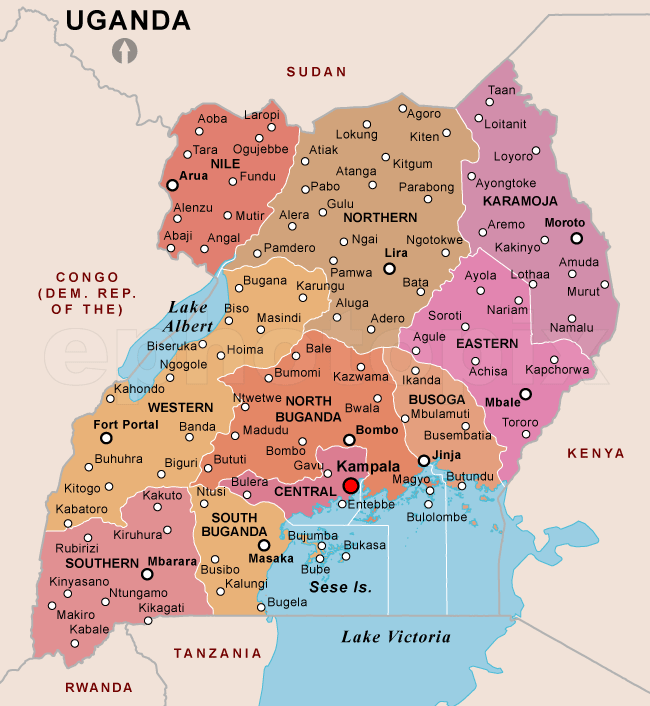
Uganda Political Map

By Miriam Katunze and Brian Sserunjogi

Globally, social protection is recognized as critical for sustained poverty reduction and inclusive growth. The extent of coverage of a country’s pension system is one of the main indicators of the effectiveness of a nation’s social security system. Coverage is the first indicator of inclusion, since a pension system that is sustainable and adequate but does not cover most of those who are supposed to be protected suffers from a serious policy failure.

Since 2011, the Uganda Retirements Benefits Regulatory Authority has been playing an oversight role in the reform process of the pension sector including the regulation of Public services pension scheme; the National Social Security Fund (NSSF) for private sector employees; and other small private schemes. Despite, the existence of a pension regulator; only 3 percent of the Ugandan population has access to formal social security.

The Public Service Pension Scheme and the NSSF schemes cover only 2.8 percent and 2.3 percent of the working population respectively. However, just how comprehensive is Uganda’s pension sector coverage? A study by the Economic Policy Research Centre (EPRC) highlights the following salient features of the extent of inclusiveness of the pension sector coverage in Uganda.

Coverage by geographical location and gender

There exists regional inequalities in pension coverage in Uganda. Overall, districts in the central and western regions of Uganda possess a higher number of the employed population covered under a retirement benefit scheme than those in the Eastern and Northern regions. The observed trend is partly explained by disparities in regional distribution of employers. Indeed, according to the census of business establishment, the central region accounted for 30 percent of business establishments, followed by the western region (18 percent) while the Northern region had only 8 percent.

In addition, as expected urban residents have a high coverage than rural residents. And while there exists hardly any gender disparity in pension coverage in Uganda, coverage among employed women is slightly lower.

Policy Implications

To improve inclusiveness of pension coverage in the private sector, the NSSF Act needs to be amended to allow contributions from all employers regardless of the number of employees.

  1. Reforms are required to bring on board new retirement benefit schemes to capture the largely neglected self-employed and informal sector employees through innovative products, which encourage flexible collection methods.
  2. Increase public awareness about the retirement benefits schemes among the rural population to encourage uptake and inclusiveness.


Stories Continues after ad

Hunger to increase in Sub Saharan Africa

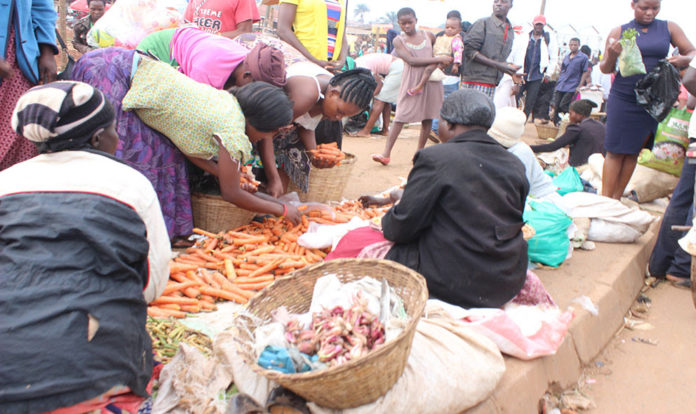
Women sell foodstuffs in Kampala

The Principal Research Fellow at the Economic Policy Research Centre (EPRC), Ibrahim Kasirye has said that food production is bound to rise while hunger is expected to continue biting in Sub Saharan Africa (SSA).

Kasirye’s assertions are contained in a paper titled ‘Policies and Programmes to End Hunger’ in which he discusses ways how leaders can end hunger in Africa. He delivered a speech at the African Union organized workshop on “Ending Hunger in the Horn of Africa: Moving from Rhetoric to Action”, held in Addis Ethiopia.

According to Kasirye, global food production- will grow by about 60 percent over 2010 levels by 2050, will grow more rapidly in developing countries, especially in SSA and within the horn of Africa (Djibouti and Somalia) largest increase in food production is likely.

“Even with population growth and climate change, per capita consumption is projected to increase by 15 percent in SSA to more than 2,700 kilo­calories per day,” Kasirye noted.

Further, he said that an additional 38 million people in SSA are projected to be at risk of hunger in 2050 as a result of climate change.

He urges governments to fund more research and development to raise pests and disease resistant crop varieties, bio fortification of staple crops, land reform and increase in land under irrigation to counter climate change.

Other solutions include; drafting and implementing policies on school feeding to spur demand for local food products as it is with Brazil where 30 percent of schools’ feeding requirements are procured from local small-scale farmers.

Setting up food reserves as mechanism for rapid responses in line with Pillar 3 of the CAADP framework.

Guaranteeing food subsidies to mitigate the expected impacts of high food prices during economic crises and ensure affordability of a basic diet for all, as it is with Egypt.

And effecting crops and livestock insurance and agricultural input subsidies


Stories Continues after ad

Stanbic donates Shs10m towards improvement of sanitation at Bbira PS

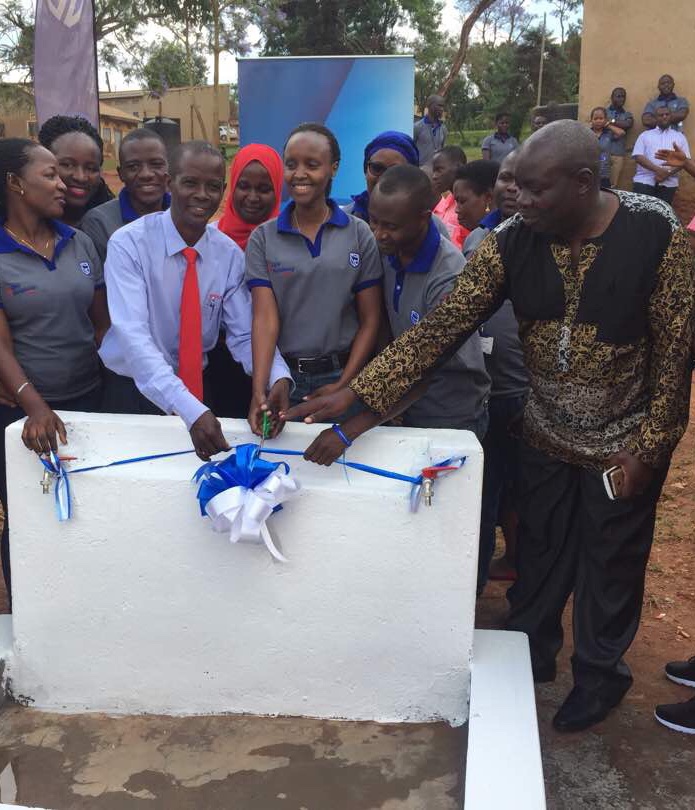
Stanbic Bank staff and those of Bbira PS

Staff of Stanbic Bank Uganda Operations Division have visited the government-aided Bbira Primary School in Wakiso District and made a Ushs10 million donation towards the construction of a tank to improve water sanitation.

Part of the money will also be used for necessities such as clothes and shoes to improve the welfare of the children, and Patricia Nshemereirwe Musiime, Stanbic Banks Head of Operations, saying education is a pillar in the bank’s Corporate Social Initiative programme.

“A good education can only be achieved through a better and friendly learning environment, sanitation being one of the core elements,” she said, adding: “We believe a fully supported education ecosystem in our communities is enabled not only through the class room but also elements such as safe water and health sanitation which contribute to empowerment and prosperity.”

According to Ms. Musiime, supporting education enables achievement of a universal primary education and in the long run leads to development of the community.

Commenting on the contribution, the schools headmaster, George William Mubiru Salongo said as a government-funded school that receives approximately Shs10 million annually, additional financial support is always welcome.

“We appreciate Stanbic Bank for taking the initiative to support education in all possible aspects, more importantly as we seek to ensure a wholesome education for children,” Mr. Mubiru Salongo said.

He added: We are confident that this contribution will make an extremely huge impact on the schools sanitation by providing easy access to clean water which has been one of our challenges for some time now, he said.

Established in 1930, Bbira Primary School is a government-funded school with a population of 1,054 pupils and a teaching and non-teaching staff of 20.

In 2012, the Water and Sanitation Programme reported that the impact resulting from poor sanitation and hygiene cost the economy of Uganda Shs380 billion (US$ 177 million) per year, or the equivalent of 1.1% of annual Gross Domestic Product (GDP).


Stories Continues after ad

Ways that creating a new business helps your career

If you are one of the many professionals still trapped between jobs by circumstances outside your control, or are about to dump the loser job you have now, you should be actively defining and starting your own business, in parallel with looking for that ideal job. Let me explain why this is a win-win deal, no matter what the outcome.

You have probably secretly always wanted to run your own show, but with an existing job, never took the time to consider a startup. Then there was always the risk of failure, which of course doesn’t apply once your real job is gone. Also, for most of us, not having done it before, we have no idea where or how to start.

Here are my top recommendations on how and why initiating a startup while looking, or about to be looking for a job, is the right thing to do:

No gap in your resume. Instead of an embarrassing gap in your resume for your period out of work, you have an entry for your startup business, showing initiative, leadership, and breadth of experience.

Fun learning experience. It’s more fun tackling the challenges of a startup in between job search activities, than sitting around feeling sorry for yourself and waiting for status callbacks on interviews (which seem to have gone out of style).

Explore finding a business partner. Unless you are a true loner, you need someone like-minded but complementary in skills to help you with the startup plans. It’s always good to have someone to test your ideas, keep your spirits up, and hone your business skills. Now you have a reason for talking to people who may become lifelong friends.

Learn how to incorporate a business. First, pick a name for your company and do the paperwork on starting a Limited Liability Corporation (LLC). Almost anyone can handle this without professional help, and the cost is less than $100 in many states. It shows everyone you are serious, and limits your liability on any mistakes.

Practice developing a business plan. Pick a startup business that you can do for minimal cost, like a services business with the skills you have. With simple software available today, find a domain name and implement your own website. Use social networking and blogging to get your message out. You don’t even need an investor.

Get business cards made. Nothing says you are serious about a business like handing out professional business cards at local events and Chamber of Commerce meetings. Do them on your home computer for a few dollars. Offer to help a couple of customers free, just to get your act together and your presence known.

Have startup efforts to highlight in job interviews. Work your startup efforts into every job interview and application. It will definitely show off your energy and vision, and will make you a more competitive candidate for any role.

Give yourself a choice – job or your own business. Obviously, at some point you will need to decide whether your startup business is better than the job opportunities. That’s good because it’s always nice to have an alternative, rather than feeling that you just have to take the first dead-end job offered.

There are other startup related points I could make here, like joining an existing startup as a “volunteer” for a time, just to learn more about what is required. Also, in most geographies, there are organizations springing up, and university workshops, to mentor people out of work and contemplating a startup. Get some help from them if you need it.

Just remember that problems are really often opportunities in disguise. Don’t miss out on what may be the best opportunity you will have in your lifetime for a new career. Start up now.


Stories Continues after ad

Uganda elected to serve on World Heritage Committee

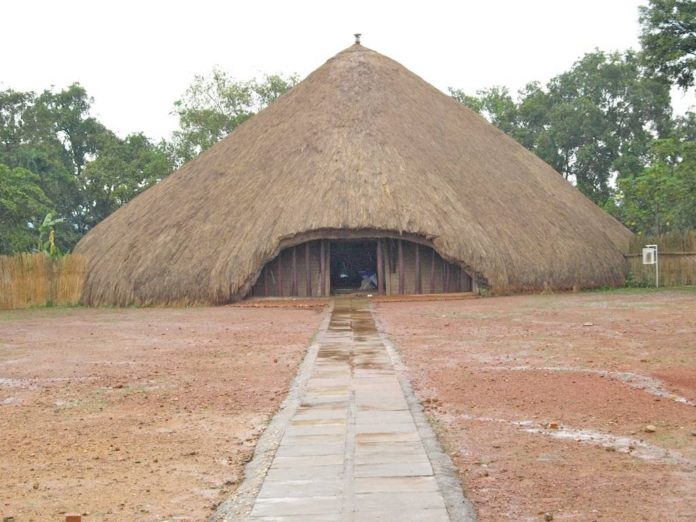
Kasubi_Tombs. Photo/FHI

Uganda has been elected to serve on the World Heritage Committee at the 21st General Assembly of the State Parties to the World Heritage Convention at the UNESCO Headquarters in Paris.

It is the first time Uganda will be serving as a member of the World Heritage Committee after the assembly of the 193 States Parties to the World Heritage Convention cast their votes in a hotly contested election that saw 12 new members elected on November 14.

The World Heritage Committee is responsible for the implementation of the World Heritage Convention, defines the use of the World Heritage Fund and allocates financial assistance upon requests from States Parties. It has the final say on whether a property is inscribed on the World Heritage List. It examines reports on the state of conservation of inscribed properties and asks States Parties to take action when properties are not being properly managed. It also decides on the inscription or deletion of properties on the List of World Heritage in danger.

There are three UNESCO World Heritage Sites in Uganda, two of them are National Parks, Bwindi Impenetrable Forest National Park and Rwenzori Mountains National Park, the other is a cultural site, Kasubi Tombs (Amasiro), which is presently under reconstruction following a 2013 fire.

The election of the members of the World Heritage Committee are conducted on the basis of the composition of the electoral groups of UNESCO, as determined by the UNESCO General Conference. The groups are composed as follows; Group I is made up of Western European and North American States, Group II comprises of Eastern European States, Group III has the Latin-American and Caribbean States, Group IV comprises of Asian and Pacific States, Group V(a) gathers the African States and Group V(b) for the Arab States.

During this assembly’s session, twelve (12) vacant seats were open for election with two (2) seats for Group I, one (1) seat for Group II, two (2) seats for Group III, two (2) seats for Group IV, zero (0) seats for Group V(a), and zero (0) seats for Group V(b). In addition to those allocated seats, 5 remaining seats were also to be filled through a ballot open to any candidate of any electoral group. Unsuccessful candidates in the ballots for the allocated seats are automatically eligible to stand for election in the ballot for the 5 remaining seats, unless they declare otherwise.

However critical to note, is that there were no vacant seats for group V(a) where Uganda belongs. Uganda therefore was competing for the 5 open seats for any candidate world over, which is more difficult than the electoral group seats.

Uganda went ahead to succeed in the elections in which the following were candidates for the electoral groups; Australia, Bahrain, Bosnia, Herzegovina, Brazil, China, Guatemala, Hungary, Kyrgyzstan, Norway, Saint Kitts and Nevis, and Spain.

The Uganda delegation led by John Chrysostom Miyingo, the Minister of State for Higher Education included the Ambassador of Uganda to France Dr. Richard Nduuhura and officials of the Uganda Embassy in Paris.


Stories Continues after ad