Stanbic Bank
Stanbic Bank
16.9 C
Kampala
Stanbic Bank
Stanbic Bank
Home Blog Page 1731

Makerere science centres get US$12m WB funding

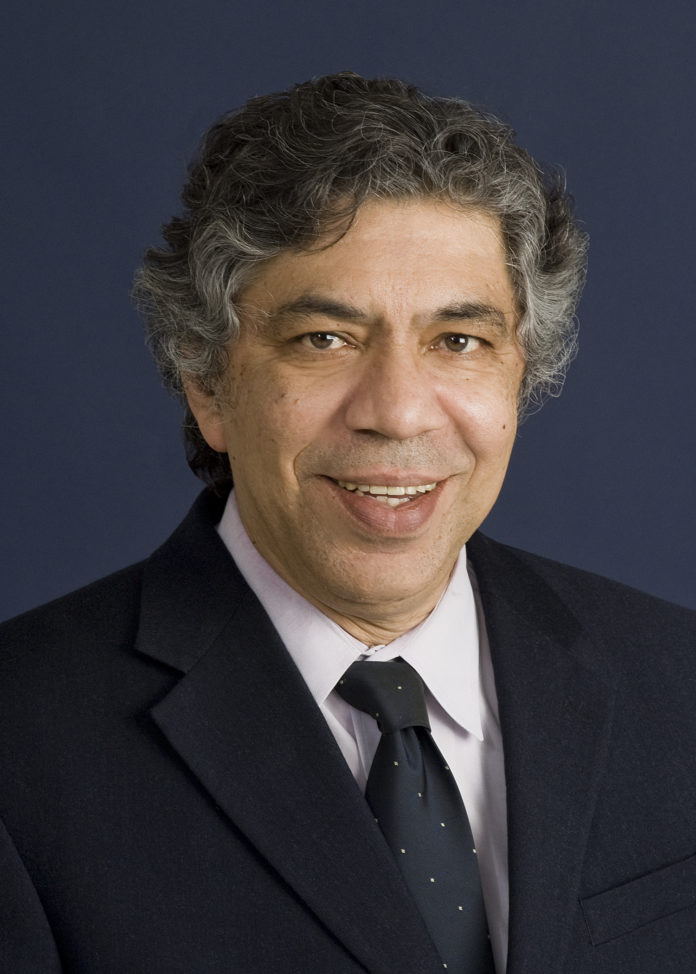
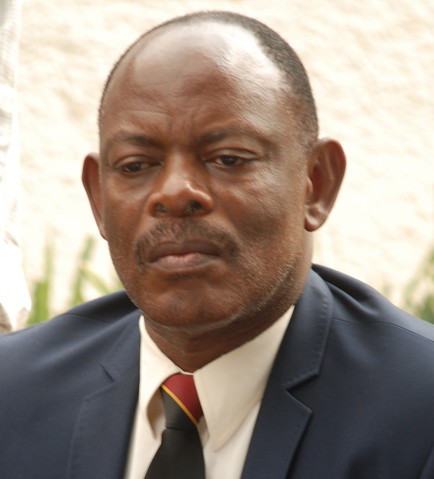
Wrote Suspension Letter: Makerere University VC Prof. Barnabas Nawangwe

Science-based colleges of Makerere University received US$12 million in twin grants from the World Bank to spearhead  two African Centres of Excellence to be launched this week, aimed at strengthening training and research in two critical areas of science – nanotechnology and crop improvement.

A Centre of Excellence in Materials, Product Development and Nanotechnology, to be known as MAPRONANO, will be set up at the university’s College of Engineering, Design, Art and Technology (CEDAT), while the Regional Centre for Crop Improvement (MaRCCI), will be hosted at the university’s College of Agricultural and Environmental Sciences. The latter aims to be the premier postgraduate training centre for crop improvement in Africa.

The African Centre of Excellence grants are part of a larger World Bank initiative that supports the development of African Centres of Excellence (ACEs) for higher education in Eastern and Southern Africa, and each of the two centres at Makerere University will get US$6 million from the World Bank over a five-year period.

Professor Barnabas Nawangwe, vice-chancellor of Makerere University, said the centres will support high-quality research and innovation aimed at addressing pertinent issues in Africa. Among those, he cited finding solutions to challenges like food security, disease outbreaks and epidemics.

MaRCCI will be launched on November 13, 2017. It will be an expansion of the already successful regional graduate programme in plant breeding at Makerere University’s College of Agricultural and Environmental Sciences.

Makerere University officials said MaRCCI will bring regional plant breeding expertise together in one place to improve sustainability and excellence.

Dr Richard Edema, the director of MaRCCI, said the main goal of the regional centre will be to expand, strengthen and transform the programme’s PhD in plant breeding and biotechnology, the MSc in plant breeding and seed systems, applied research in various crops, and outreach activities.

Over the grant period, the MaRCCI programme will train 30 new PhD and 40 MSc-level plant breeders from the Eastern and Southern African region. While some students will benefit from full funding, others will have partial funding.

Edema said that MaRCCI would provide the region with “industry-ready plant breeders” who are equipped to use cutting-edge science to develop and deliver new varieties of food crops, thereby improving food security, nutrition and rural incomes throughout the region.

The World Bank grant will also provide for additional scientific and support staff as well as for enhancement of facilities and equipment, with the goal of modernising and expanding the teaching, research and service activities of MaRCCI in a sustainable manner.

Dr Michael Lubwama, a lecturer at the university’s College of Engineering, Design, Art and Technology, said the MAPRONANO ACE, to be launched on November 16, 2017, will enhance teaching and training in nanotechnology and nanomedicine. It will produce well-trained technicians and engineers in materials science, product design and nano-enabled technologies.

MAPRONANO ACE will also offer highly specialised short courses in welding technology, health safety engineering, oil and gas, monoclonal and nanobodies generation, bioinformatics and next generation sequencing techniques.

The main objective of the overall centres of excellence project is to meet the demand for skills required for Africa’s development in areas such as agriculture, energy and extractive industries, while strengthening the innovative capacity of the best African institutions for higher education in science, technology, engineering, mathematics and other relevant disciplines.
 

Stories Continues after ad

Sudan’s Bashir to visit

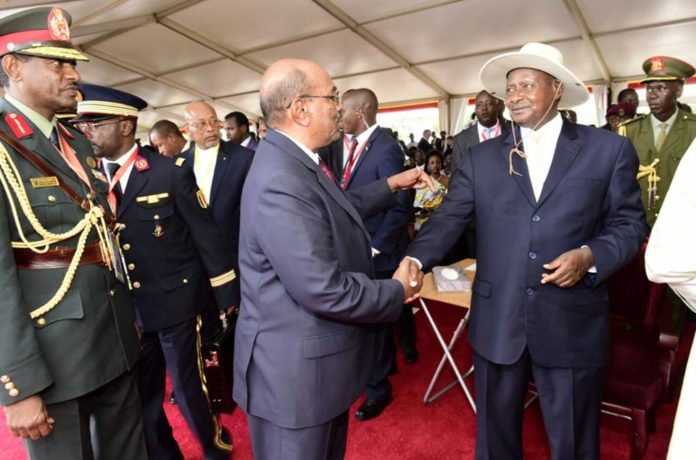
TO VISIT: President Omar Al Bashir shakes hands with his host President Yoweri Museveni at the latter's swearing in in Kampala

President Omar Al-Bashir of Sudan will pay a state visit to Uganda from November 14-15, 2017, the second since attending the swearing-in ceremony of President Yoweri Museveni on May 12, 2016.

During the upcoming visit by President Bashir, a number of areas of cooperation will be discussed including trade and investment, agriculture, regional peace and security as well as international matters of mutual interest.

In September 2015 President Museveni paid a 2-day working visit to Sudan during which he delivered a lecture on the theme “The Challenges of Economic Development and Peace Building” to the Cabinet Ministers, Diplomatic Corps, Academicians and Civil Society.

President Museveni again visited Khartoum in 2016, to witness the closure of the National Dialogue Conference; and also held a discussion with President Bashir on further improvement of bilateral relations.

On the other hand the Sudanese Undersecretary/Permanent Secretary of Ministry of Foreign Affairs visited Uganda from October 5-6, 2017 and met his counterpart Amb. Patrick Mugoya, during which the two sides agreed on steps to implement the decisions taken by the 5th session of the Joint Ministerial Commission which was held in Khartoum.  Among the issues they discussed were opportunities for trade and investment, immigration, air transport, regional issues and security matters. Uganda will be hosting the 6th Session of the Joint Ministerial Commission (JMC) by March 2018.

Sudan imports 20% of Uganda coffee and is the single biggest export market for the product from which about US $ 100 million is earned. A delegation from the Sudanese Standards and Metrology Organization visited Uganda from November 5-8, 2017 to inspect the coffee testing/quality assurance facilities of Uganda Coffee Development Authority, Uganda National Bureau of Standards (UNBS) and private coffee processors.

They also held a meeting with respective Ministries and stakeholders to discuss ways of improving the Coffee trade with Sudan.

President Al-Bashir will be accompanied by Ministers, Senior Officials and a business delegation in various sectors who will be seeking opportunities to carry out trade, investments and business partnerships. During the visit, a Sudan-Uganda Business Forum is expected to be held.

A joint communiqué will be issued at the end of the visit.


Stories Continues after ad

Mbarara resident collects over Shs1m in Airtel’s ‘Yolla Amajja’

Patience Tukundane, one of the lucky 'Yoola Amajja' winners

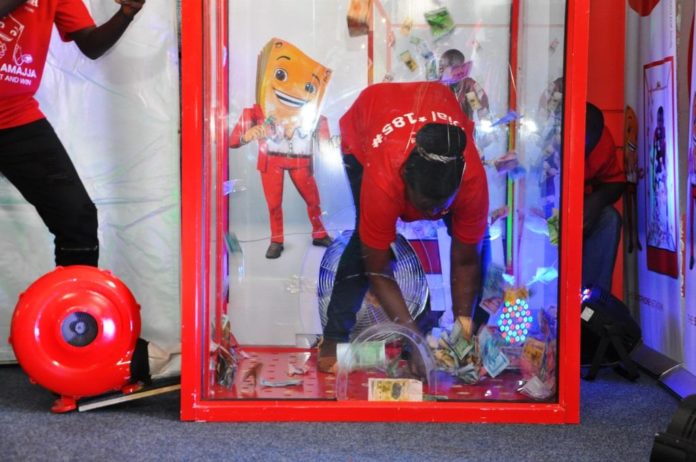
A resident of Mbarara’, Patience Tukundane, left fellow winners in awe Friday when she grabbed over a million shillings in the first draw of Airtel Uganda’s ongoing Yoola Amajja promotion.

Other winners – Ronald Walulumba, William Tumukunde and Abed Bironse Kwiri took home Shs762,000, Shs962,000 and Shs955,000 respectively as part of the promotion that requires lucky winners to enter a booth and grab money.

Launched at the beginning of November, Yoola Amajja, now in its second year, is a cash promotion that rewards customers who are actively using the Airtel Money platform to carry out their daily transactions.

Speaking during the cash handover, Airtel Uganda Chief Commercial Officer, Deepak Bhatia congratulated the winners and encouraged all Ugandans to continue using this platform and also stand a chance to win.

“I am excited to be handing over cash to our subscribers today. Anyone can be a winner – simply transact a minimum of three times on the Airtel Money platform and next time it might be you standing,” he said, adding that the only number that will be used to contact winners is 0752 600222.

To take part in the Yoola Amajja promotion, Airtel Money customers should dial *185# on their phones and carry out any three of these transactions weekly; send money, pay bills including among others utilities and school fees.

Purchase a data or voice bundle through Airtel Money Top up a minimum of Shs500 airtime through Airtel money.


Make a mobile banking transaction Wewole lucky winners will be allowed into the cash box to grab up to Shs2 million.


Stories Continues after ad

NSSF boss tips SME operators on business skills

NSSF MD Richard Byarugaba makes the keynote address at the SME forum

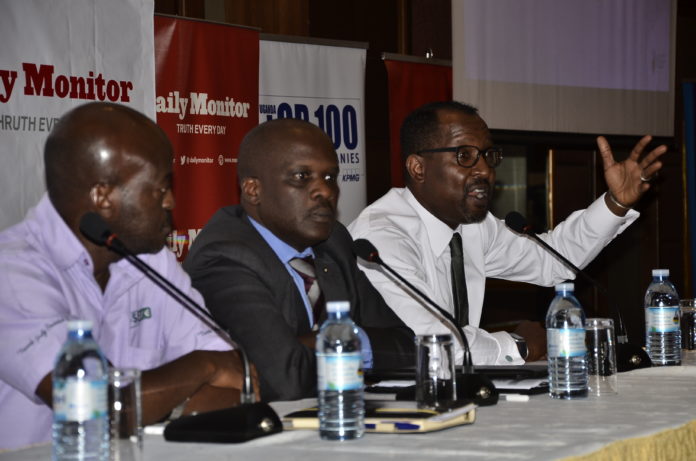
Global audit firm KPMG in partnership with Monitor Publications Ltd hosted a panel discussion of renowned business management experts to analyse the Top 100 Mid- Sized companies’ survey report 2017 at the Sheraton Hotel in Kampala.

Keynote speaker Richard Byarugaba, the Managing Director of  the National Social Security Fund (NSSF) noted that raising capital and cashflow management are some of the challenges that fail SMEs in the first 5 years of existence.

“Lay a strong foundation for your business by developing good cash management practices and increase your revenue to increase profits,” Mr. Byarugaba advised.

Harry Mugisha, the head of SME’s at Vodafone, exposed SMEs to connectivity solutions answering today’s business challenges of affordability, scalability and reliability.

He recommended the ‘Group Pooled Accounts’ which enables sharing of data of 4 to 16 people across different routers; “Dedicated Internet Access(DIA)”, which offers a high quality internet service with equal upload and download speed on a fully dedicated bandwidth for business; and “Affordable Portable Hotspots” which connect multiple devices via WiFi.

“Mobile applications have enhanced customer experience but also enabled businesses to take advantage of internet-enabled options like Safe Boda, Jumia, OLX which have lowered operational and fleet management costs. Big data and insights for product development and marketing have set tech-driven SMEs apart, and Customer experience options are not immense and yet offer cheap real-time feedback on product and services,” Mugisha emphasized.

SMEs were also encouraged to adopt a saving culture in order to grow their businesses.

Top 100 Mid-sized companies’ survey is an initiative by Monitor Publications Limited and KPMG aimed at identifying Uganda’s fastest growing medium sized companies in order to show case business excellence and highlight some of the country’s most successful entrepreneurship stories.


Stories Continues after ad

City Oilers prevail over Betway Power

City Oilers team poses for a group photo last year.

Temperatures were high last night as City Oilers claimed Game One of the five semi-final basketball series against Betway Power at Lugogo Indoor Stadium.

Oilers were in the lead in the first two quarters; 20-15 and 20-17, before Betway claimed the third quarter with a 22-12 win.

In the fourth quarter Oilers hyped the game and finished with 28-16, a total of 80-70 points.

In other games that were played KCCA Leopards beat A1 Challenge 63:57, while Pemba Warriors won over KIU Titans with 76-72 points.

Stories Continues after ad

Uganda readies to host high-level Exim Bank conclave

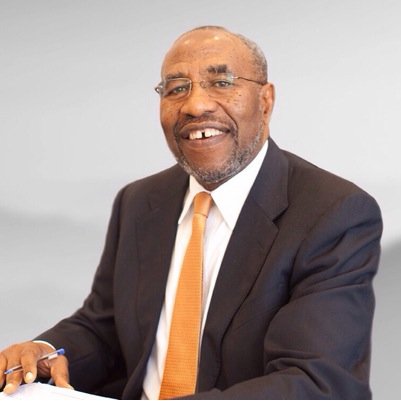
Dr Ruhakana Rugunda is expected to be the guest of honour

Uganda is left with just over a week to host the CII Exim Bank Conclave on India and East Africa in Kampala, making the country the first in the region to host the event.

A source who talked to Eagle Online said the Office of the Prime Minister in collaboration with Uganda’s High Commission in New Delhi are coordinating the preparations that will see Indian investors, led by Commercial Secretary Ms Rita Teaotia, arrive for a two-day event scheduled for November 20-21,2017.

Premier Dr Ruhakana Rugunda requested for Uganda to host the event when he participated in the March 2017 Conclave in New Delhi, and countries from eastern and central Africa are expected to send delegates including ministers and CEOs to the event that will also host delegates from countries outside Africa such as Japan UAE, UK, among others.

Delegates at the gathering will focus on business deliberations, Business to Government (B2Gs) and Business to Business (B2Bs) engagements. It will be an opportunity for the Indian and African industry to identify priority areas and key projects for Indian investment and partnership, with a long-term commitment to the East African region.

The government of India and East African Business Council are some of the partners organising the event that will see 42 Indian delegates attend the event. They will represent sectors such as automobile, finance, and healthcare, among others.

The project opportunities presented by East African companies and organisations would form an important component of the B2B discussions. The conclave will also serve as a critical platform for key dialogues between the Indian and East African business leaders, as well as between Governments from the two regions.

The focus will be in sectors such as agriculture, infrastructure, manufacturing, mining, healthcare and pharmaceuticals, power and energy, tourism among others.

Representatives from international organisations like United Nations Commission for Africa, International Trade Centre, African Development Bank, East African Community and East African Business Council will attend the meeting.

Uganda and East African region general is of direct interest to India, both politically and economically. India has enjoyed historically enjoyed close economic ties with Eastern African countries and much of it is through investment-led trade.

“Even though Indian companies have an established footprint in these countries, huge potential exists in increasing Indian project exports to the region,” reads part of the statement by Exim Bank.

Some of the reasons for the Indian investors to choose the region are: The region has Market access to more than 145.5 million people and combined GDP size of about US$ 147.5 billion and it is the world’s fastest reforming region in terms of business regulation.

Despite being the most promising trading partners for India on the African continent, the eastern Africa region has abundant labour force – educated, trained, mobile, skilled and enterprising.


Stories Continues after ad

Ways of thinking to put your innovation into Orbit

By Martin Zwilling

Real innovation in the business world is still rare. As I’ve said before, everyone talks about innovation, but the majority of new business plans I see still reflect linear thinking – one more social network with more features, another smartphone app for marketing, or one more platform for faster e-commerce. Historic changes and great successes don’t come from linear thinking.

What does it take for more dynamic transformations? I like the recommendations in the classic book ‘Orbit Shifting Innovation’ by Rajiv Narang and Devika Devaiah. They summarize twenty years of breakthrough research initiatives and innovation strategy they have led with many of the most dynamic global organizations large and small, including Unilever, Walt Disney, and Intel.

They define ‘orbit-shifting’ innovation as something that happens when an area that is ripe for transformation meets an innovator with the will and the desire to create history, not follow it. The breakthrough innovation creates a new orbit. Beginning with the Macintosh, Apple succeeded in doing this time and time again, transforming the lives of millions, with Steve Jobs at the helm.

Every entrepreneur and every company I know has orbit-shifting intentions. But there is a big difference between orbit-shifting intentions and orbit shifting results. According to Narang and Devaiah, the people who accomplish real innovation results seem to exhibit a higher set of attitudes and motivation:

Personal growth relates to the size of the challenge, not the size of the kingdom. What motivates real innovators is the more exciting challenge, not the number of people reporting to them. The ‘size of the difference’ they will make is more inspiring than the ‘size of the business.’ They relish getting out of their comfort zone, and into the unknown.

The new direction is the challenge, not the destination. The challenge is the transformation vehicle for true innovators, and not a performance goal. They focus on legacy creation, not legacy protection. They ignore failures and are constantly looking at the progress made. They treat innovations reviews like performance reviews.

Be an attacker of forces holding people back, not a defender. Real innovators start by questioning the world order rather than conforming to it. They begin by confronting the forces holding everyone back, rather than living with it. The forces include mindset gravity, organization gravity, industry gravity, country gravity, and cultural gravity.

New insights come from a quest for questions, not a quest for answers. This discovery mindset searching for new questions drives real innovators away from more of the same. They fundamentally become value seekers; they look for value in every experience, in every conversation. They don’t seek prescriptions, they seek possibilities.

Stakeholders must be connected into the new reality, not convinced. True innovators tip stakeholders into adopting and even co-owning the orbit-shifting idea. They go about tipping the heart first, assuming the mind will follow. They seek smart people, who openly express their doubts, and then collaborate to overcome them.

Work from the challenge backward, rather than capability forward. Overcoming execution obstacles is combating dilution, not compromising, for these innovators. Their mindset is not ‘if-then’ but ‘how and how else?’ They convert problems to opportunities, and often the original idea grows far bigger than the starting promise.

Overall, what is different about these innovators is their mental model of romanticism in vision and realism in execution. They expect challenges, and when problems do arise, they are not surprised or let down or disappointed. They face them head on, handle them and move on. Most of the rest of us are the reverse; realistic about the vision and romantic about execution.

Entrepreneurs and startups are in the best position to find and run with orbit-shifting rather than linear innovations. They don’t have to start by overcoming the choking gravities of an existing organization and product set. That’s why most large business and government entities are resigned to buying innovation, rather than birthing it. Is your best startup idea and mindset really orbit-shifting, or just linear thinking that stakeholders won’t buy?


Stories Continues after ad

Filling the infrastructure financing gap

Otaviano Canuto

By Otaviano Canuto

There is a sizeable gap between the world economy’s infrastructure needs and available financing. The shortfall is especially pronounced in emerging markets.

Infrastructure investment has fallen short of what is needed to support potential growth. At the same time, financial resources in world markets have contended with low long-term interest rates, while opportunities for greater returns from potential infrastructure assets are missed.

The development of properly structured projects, with risks and returns distributed in accordance with stakeholders’ incentives, will help to close the gap between private sector financing and infrastructure. Worldwide infrastructure investment, including from international financial institutions, public investment and public-private partnerships, amounts to around US$1.7 trillion per year. This leaves a funding gap of more than US$1trillion.

Global infrastructure financing has fallen short of its potential. Institutional investors and other private sector players could increase allocations under appropriate conditions. Private sector investment and institutional investor capital are often raised as possible solutions for filling the infrastructure funding gap. According to data from the World Economic Forum, institutional investors managed assets exceeding US$50 trillion in 2015, compared to US$30 trillion in 2007.

Institutional investors must consider their own incentives, constraints and objectives when it comes to selecting countries, types of projects and at what stage of the investment project cycle to invest in. Inadequate coverage of risks is one of the most common reasons projects do not reach financial close. Defining attractive investment opportunities and matching investors to these prospects in a more systematic manner is one key way in which the shortfall in infrastructure funding should be addressed.

Heterogeneity in the set-up of projects is often named as a key barrier to pushing greater allocations of capital towards infrastructure investment. A lack of data, varied contractual structures and differing regulatory environments are all part of this puzzle. However, focusing on improving the breadth of products tailored specifically for different types of institutional investors is likely to reap greater near-term rewards.

Currency risk is a major factor which international investors face in emerging markets. Export credit agencies can help with that challenge, although often only at great expense. Other challenges frequently named are the scarcity and complexity of financial instruments and their high cost. Fixed income instruments such as bonds – including project bonds, sub-sovereign bonds, green bonds and sukuk – as well as loans are likely to be a better fit for the appetite of a broad range of institutional investors in emerging economies.

Development finance institutions are important catalysts for investment. They can draw private capital to long-term projects in countries and sectors in which, although the market may perceive higher risks, significant development results can be expected. Those institutions contribute their own funding and guarantees, providing improved creditor status. Bringing partners into specific deals through syndications can likewise generate additional financing. Furthermore, development finance institutions can support the advancement of longer pipelines of investable projects. Non-banking financial institutions frequently highlight the scarcity of such pipelines as an impediment to greater infrastructure investment.

Development banks are trialling various mechanisms which can distribute risk among third parties through risk transfer and credit enhancement instruments. These include guarantees, insurance policies and hedging mechanisms under which, for a fee, the provider will agree to compensate the concessionaire in case of default or loss due to some specified circumstance.

The contrast between the dearth of investments in infrastructure and the savings-liquidity glut in the global economy must be confronted. Lowering legal, regulatory and policy risks are essential steps. Improving the availability of sophisticated, developed financial markets and instruments will help facilitate partnerships between different financial agents. Increasing private investor involvement and designing rational financing structures will both boost funding and improve the efficiency of infrastructure projects. Building such bridges is well within reach for resourceful financial actors.

Otaviano Canuto is an Executive Director of the World Bank


Stories Continues after ad

Uber loses employment case in UK

Using Uber on the phone handset

Taxi service provider, Uber, with an affiliate in Uganda, has lost a major case in the UK after it failed to overturn a tribunal ruling that it should treat its drivers as ‘workers’ who are entitled to the minimum wage and holiday pay. The decision by the employment tribunal in London to uphold the original judgment is another blow to San Francisco-based Uber, which has been embroiled in several battles in the UK, its most important European market.

The ride-hailing app is also fighting to keep its licence to operate in London after Transport for London, the city’s transport regulator, threatened to remove it. “I am satisfied the employment tribunal did not error either in its approach or in its conclusions” by rejecting Uber’s argument that it was simply connecting independent drivers with customers, the appeal judge Jennifer Eady wrote.

However, her judgment is unlikely to be the end of the story. Uber is able to appeal again to the Court of Appeal and possibly to the Supreme Court. Lawyers say it could take years for the process to be exhausted. Tom Elvidge, Uber UK’s acting general manager, said: “Almost all taxi and private hire drivers have been self-employed for decades, long before our app existed.

The main reason why drivers use Uber is because they value the freedom to choose if, when and where they drive and so we intend to appeal.” The ultimate outcome of the case is critical for Uber: if it was forced to treat its 40,000 UK drivers as “workers”, it would have to guarantee them minimum wage and holiday pay. Uber says this would probably mean it would have to schedule drivers for shifts rather than allowing them to “log on” to work when they wanted to.

Uber could also face a substantially higher tax bill, because it may then have to pay employers’ national insurance contributions and value added tax. There are also wider implications for the so-called gig economy. The Uber case is the most high-profile test in the UK of the premise that people who work on “gig” apps are independent and not employed by anyone. James Farrar, one of the two Uber drivers who brought the case, said: “Uber cannot go on flouting UK law with impunity and depriving people of their minimum wage rights.”

Paul Jennings, a partner at Bates Wells Braithwaite, which acted for the drivers, said: “We are delighted with today’s judgment, which is ethically and legally the right outcome.” Mr Jennings said he now expected tens of thousands of drivers to seek backdated claims. Deliveroo, a food delivery gig platform, is also facing a legal challenge from a group of couriers who say they are not truly self-employed.

The “contractor” model is being challenged in other sectors too, with cases going through the courts against Pimlico Plumbers, taxi firm Addison Lee and courier company CitySprint. Speaking before the judgment, the chief executive of one gig economy app said that it would “be tough for the on-demand economy as a whole”, if Uber lost.

“I think it would be a shame if the politicians and courts together ignore what is the will of the hundreds of thousands of people who sign up for this kind of work, which is increasing week on week on week, all around the world,” said the chief executive, who declined to be named. The original tribunal found in October last year that Uber drivers were its “workers” because the company exerted too much control over their work to class them as truly independent. But Dinah Rose QC, the barrister who acted for Uber in the appeal hearing this September, had argued that the gig company was not doing anything unusual by treating drivers as independent contractors. She said many traditional minicab companies also acted as the intermediary connecting self-employed drivers to customers.


Stories Continues after ad

Goods cleared at Mutukula customs hit Shs617bn

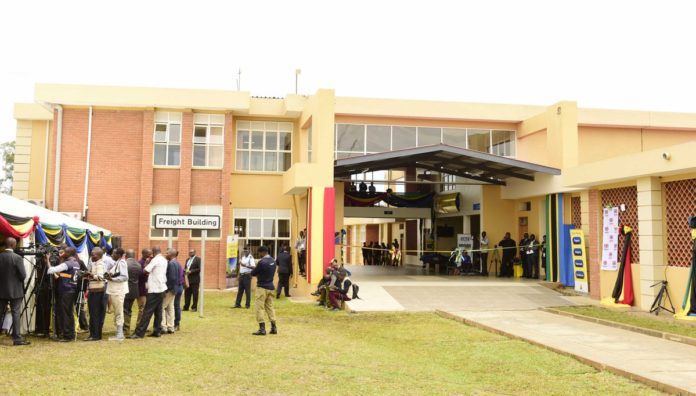
The Mutukula One Stop Border Post facility

Customs initiatives like the One Stop Border Post (OSBP) and the Single Customs Territory (SCT) have catapulted growth in volumes of goods cleared through Mutukula from sh384 billion in 2013 to sh617 billion in 2017.

Over the same period, exports through Mutukula have shot up from sh93 billion to sh251 billion, the Uganda Revenue Authority (URA) Assistant Commissioner for Public and Corporate Affairs, Ian Rumanyika, has said.

Presidents Yoweri Museveni and John Pombe Magufuli launched the Shs19.1 billion facility yesterday, and Rumanyika says Tanzania collected US$12 million in revenue from August 2016 to June 2017, the time during which the Mutukula OSBP has been operational, compared to the 2014/2015 when US$8.1 million was collected.

“Customs initiatives like OSBP, SCT, Regional Electronic Cargo Tracking System (RECTS) and the Uganda Electronic Single Window have increased revenue collection and earned Uganda international recognition,” Mr. Rumanyika says.

According to Rumanyika, OSBP is an integrated border system that leads to improved efficiencies through streamlined, coordinated and harmonised procedures under one roof/structure.

“In Mutukula, Uganda Revenue Authority (URA) and Tanzania Revenue Authority (TRA) officials jointly serve importers, exporters and travellers. This facilitates trade and quick movement of passengers,” he says.

Already, the Mutukula OSBP has reduced transit time by more than 50%. Records show that an average of 542 vehicles (310 of those cargo trucks) pass through Mutukula border every month, showing how important the border post is in handling cargo.

And Rumanyika says as a result of the initiatives, Uganda won a bid to host the Fourth World Customs Organisation Global Authorized Economic Operator (AEO) conference scheduled for March 2018, the first to be held in Africa.

In a related development, speaking at the launch of the Mutukula facility Museveni urged East Africa Community member states to put emphasis on agriculture, industrialisation, information communication technology and public service as tools of economic growth. Trade facilitation, he said, would lead to prosperity for all by enabling border communities to do business. President Magufuli concurred.

“The centre is expected to enhance efficiency of customs service and ensure increased trade between our two countries, ultimately making our people more prosperous,” Museveni said.

Other OSBPs in Uganda are Mirama Hills connecting Uganda to Rwanda and, Busia and Malaba connecting Uganda to Kenya, with TradeMark East Africa, a not-for-profit agency injecting over $117m OSBPs in the region.


Stories Continues after ad