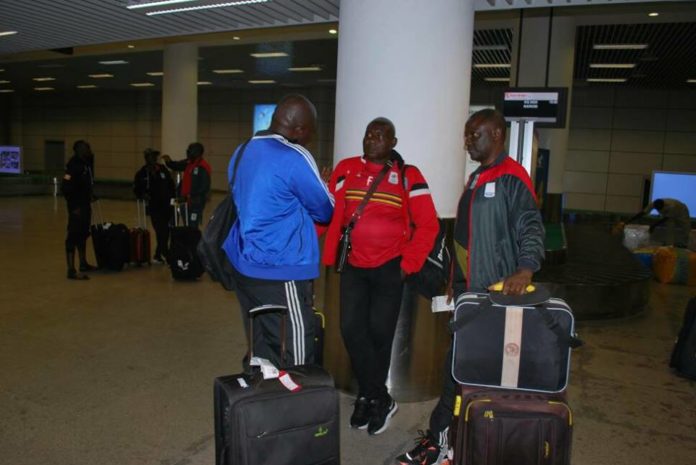
Uganda Cranes delegation of 20 players and 13 officials arrived safely in Brazzaville ahead of Sunday’s FIFA World Cup Qualifier with Congo on Sunday and the team will be accommodated at Hotel Saphir.
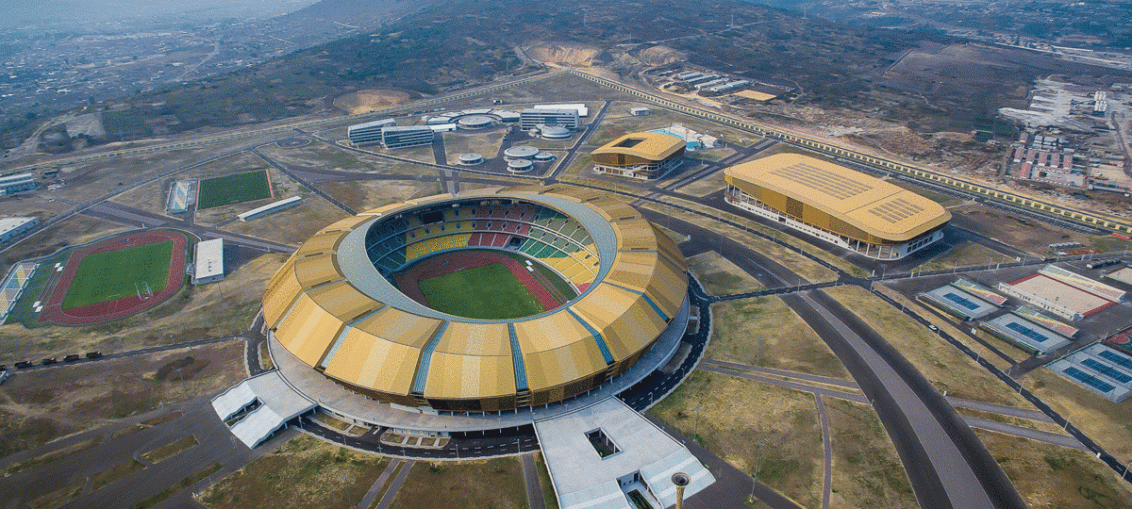
Brazzaville_Kintele-stadium
The team is consisted of mainly local based players and will hold their training session at the venue tomorrow.
More locally based players will be given a chance to boost their confidence ahead of the upcoming CECAFA Senior Challenge Cup to start later this month in Kenya and CHAN tournament is for early next year in Morocco.
Uganda are second of Group E with 8 points, four points behind leaders Egypt and two above Ghana who are in third, Congo are bottom of the log with just one point.
Mohammed Hussein El Fadhil from Sudan will be the referee and will be assisted by Ibrahim Mohammed Abdallah and Egueh Yacin Hassan from Djibouti. Ismail Mahmood Ali Mahmood will be the fourth official.
The game which will be played at Unite de Kintele in Brazaville at 5:50 pm Ugandan time.
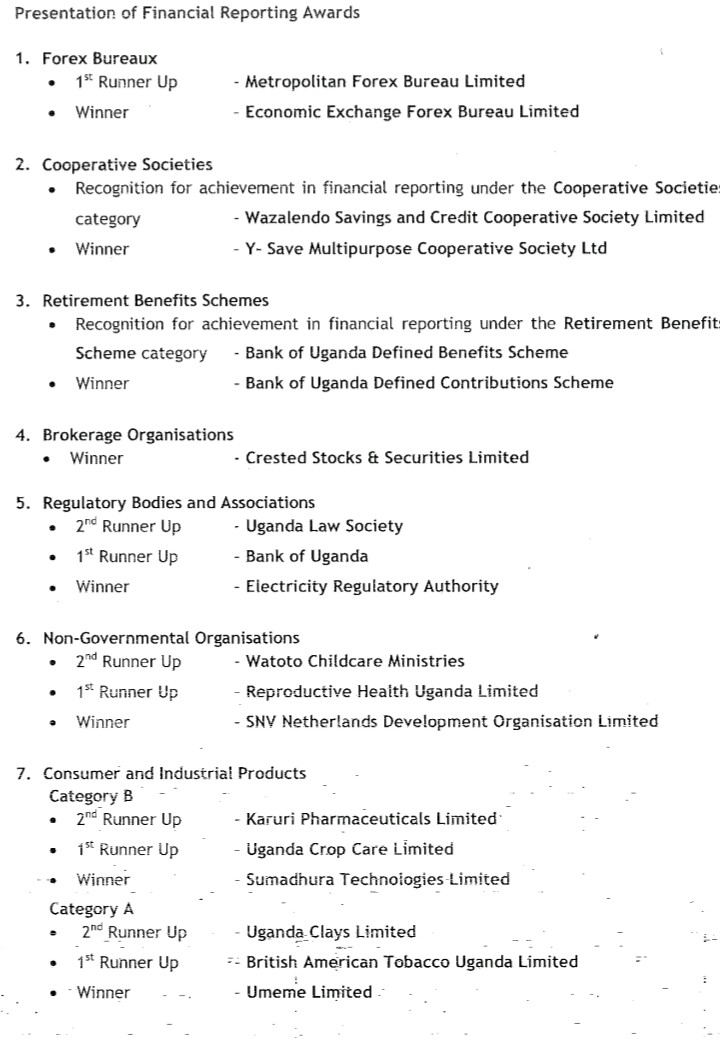
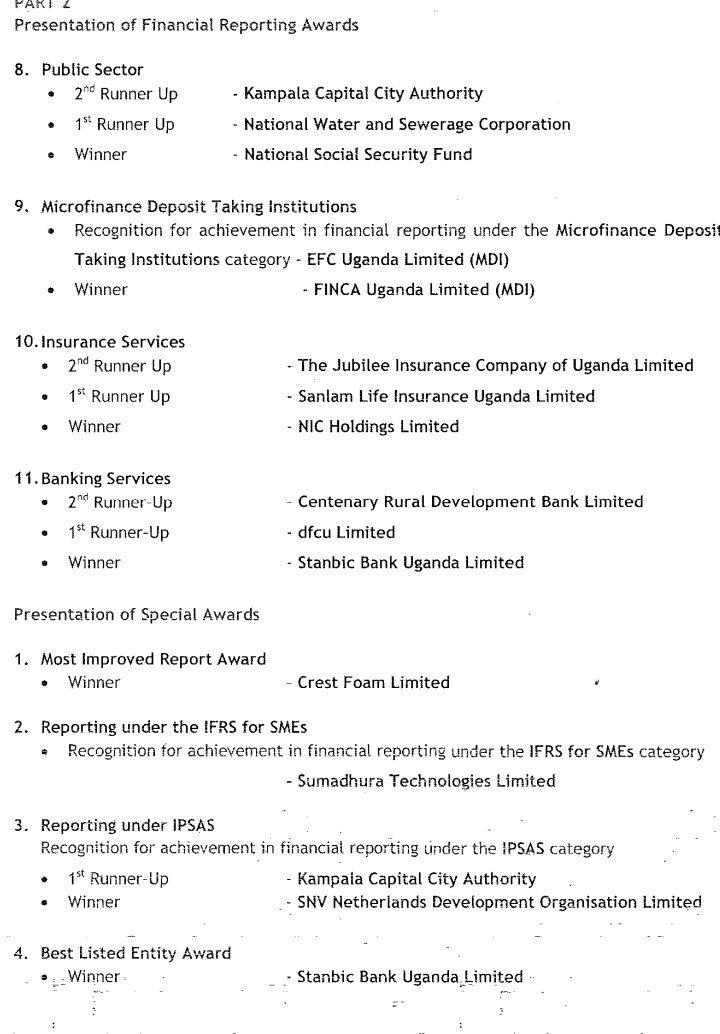
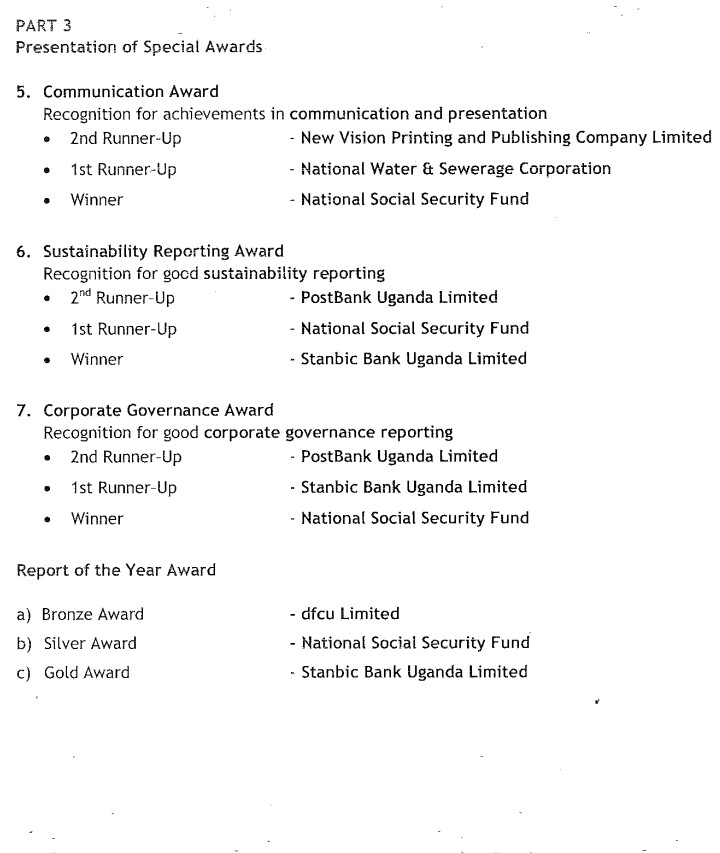
Stanbic Bank and the National Social Security Fund (NSSF) dominated this year’s Financial Reporting (FiRe) Awards held Thursday at Serena Hotel.
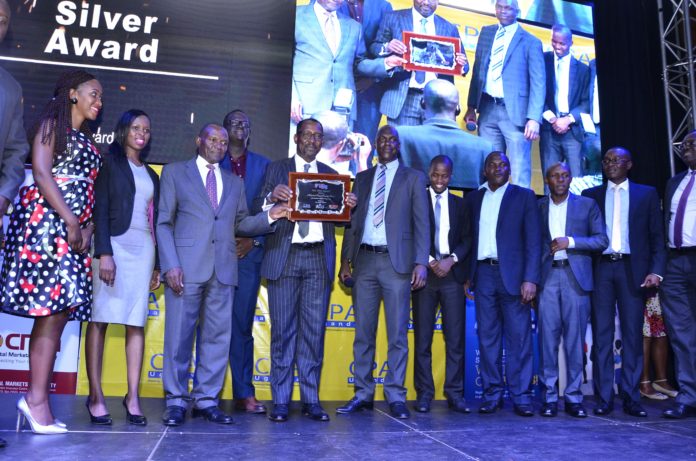
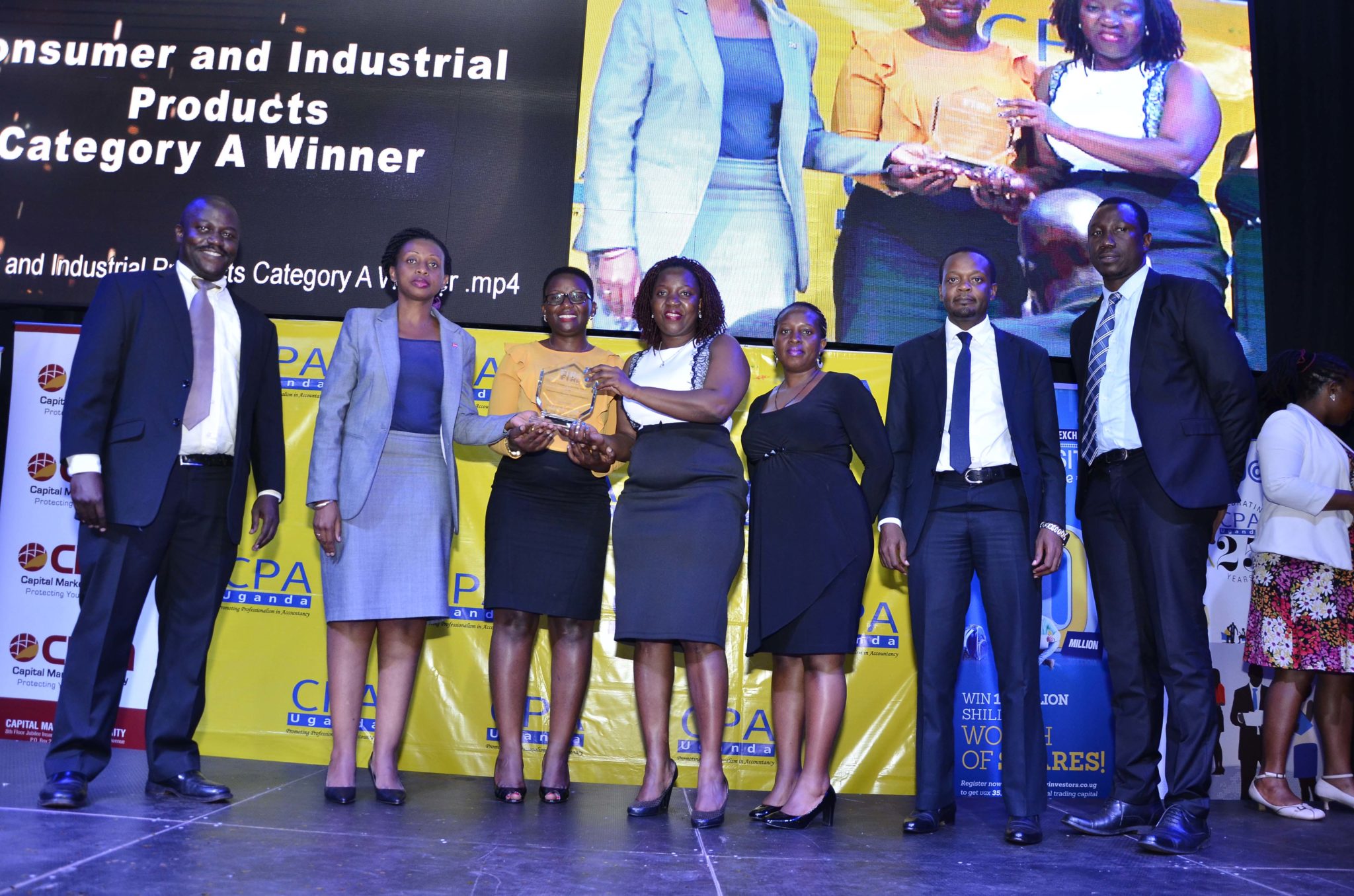
The Stanbic team at the awards ceremony
Held under the theme, ‘Moving beyond numbers: Unlocking the value through reporting’ the night saw different institutions awarded in 13 categories, with Stanbic Bank winning the Annual Report of the Year, for the second time in a row. Stanbic Bank also won the Best Banking services category, Best Listed Entity award and Sustainability Reporting of the Year award.
NSSF, the other big winner at the awards, won the Best Corporate Governance award, Best Communication award and Best Public Sector award.
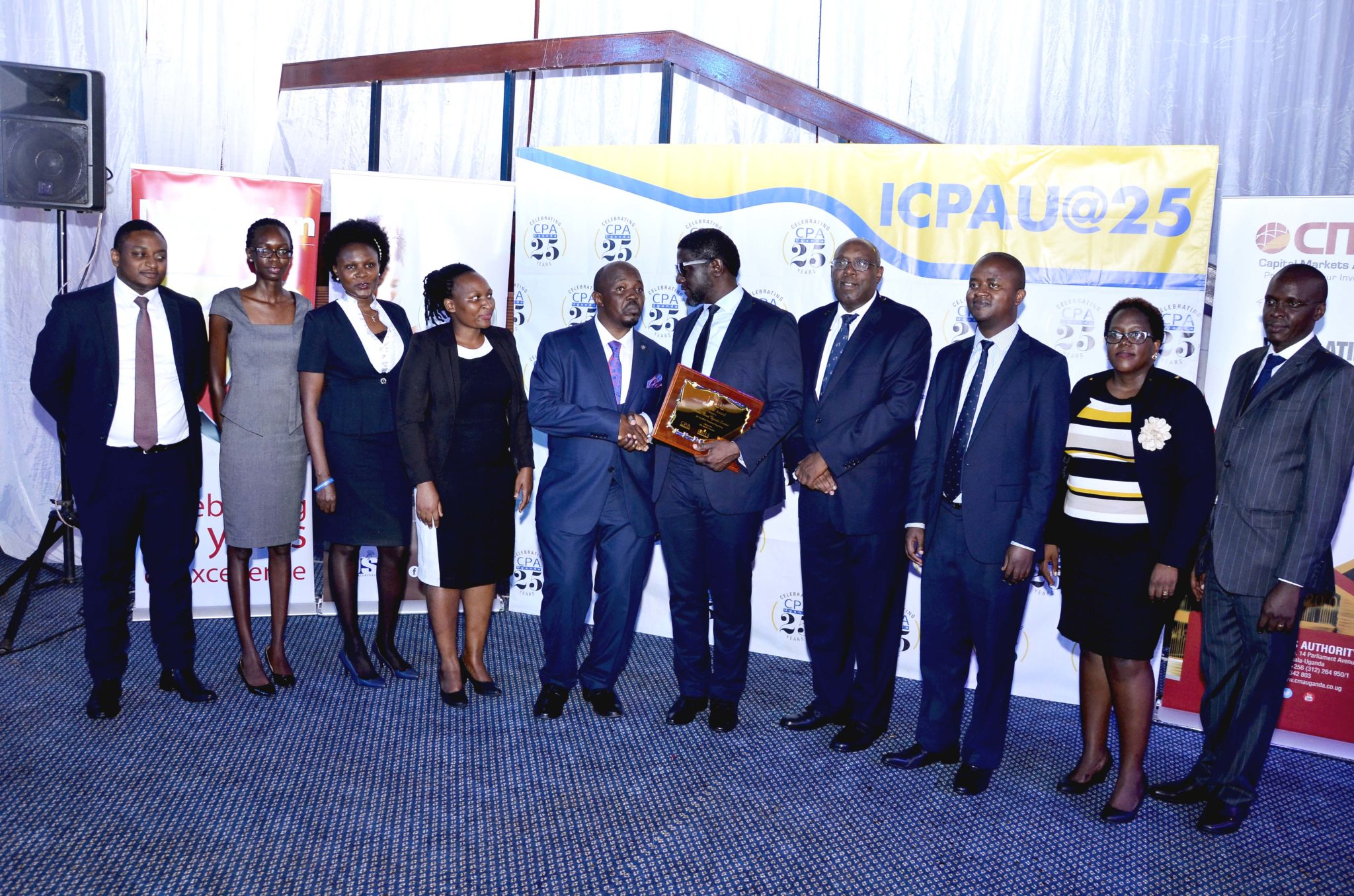
The UMEME team at the awards ceremony
The other winners included UMEME, KCCA, Bank of Uganda, NIC Holdings LTD and FINCA, and speaking at the event, the Deputy Governor Bank of Uganda, Louis Kasekende noted that a lot of Small and Medium Enterprises (SMEs) never expand to become large firms due to limited capital.
Other winners
However, he advised that for firms seeking to mobilise capital by issuing equity or corporate bonds on the capital market, a history of financial reports is a prerequisite because the institutional investors, who are the main customers for corporate stocks and bonds, rely heavily on financial reports to evaluate prospective investments.
Other winners
“To maximise the benefit of financial reports for all stakeholders, it is essential that they be prepared according to international best practise, such as the IFRS 9, which will become mandatory in Uganda, as in the rest of the world, from the beginning of 2018. A common set of internationally recognised standards for financial reports allows everyone to understand precisely what the information contained in them means,” Dr. Kasekende said.
He added: “We also require high calibre professional accountants with the requisite expertise to prepare financial accounts to the highest standards. In this regard, I would like to commend the Institute of Certified Public Accountants of Uganda for their efforts to uphold the highest standards of accountancy and financial reporting in this country.”
In his remarks, the president of Institute of Certified Public Accountants of Uganda (ICPAU), Protazio Begumisa said that they had received 19 new entrants this year “and to us, every new entrant is celebrated for the growing usage of International Financial Reporting Standards in our country”.
“We note that a number of entities skip subsequent years after their first participation. We encourage such organisations to always stay in touch as a way of learning better ways on how to implement the evaluator’s report which is given to each participant,” Mr. Begumisa said.
“The Institute of Certified Public Accountants of Uganda (ICPAU) being the national professional accountancy organisation in Uganda pledges its continued promotion and support of good financial reporting for the growth of businesses in particular and Uganda’s economy in general. We therefore call upon more organisations to embrace the drive to improve financial reporting and unlock the value beyond numbers for the development of our nation,” he added.
Uganda has undergone a series of debt repayment challenges before. In 2000, shortly after having been declared eligible for substantial sup-port under the Enhanced HIPC Initiative, Uganda experienced a sharp and unexpected rise in its Net Present Value (NPV) of debt-to-exports ratio, exceeding the HIPC threshold of 150% by some 50 percentage points (IMF, 2003). While this did not necessitate Uganda’s debt being un-sustainable, due to relatively low debt service ratios, it demonstrated the fragility of the country’s debt dynamics. This was at a time when the country was accessing highly concessional loan (cheaper loans).
Uganda’s NPV of debt-to-exports ratio
According to the IMF study in 2003, indicated that although Uganda had been receiving aid and Foreign Direct Investments (FDI) of nearly 12% of GDP, its residual financing gap of about 3½ percent of GDP contributed some 10 percent-age points annually to its NPV of debt-to-exports ratio.
In addition, when export earnings fell by more than 11% in 1999/00 (which is just one-third of the standard deviation over the past 10 years), the endogenous debt dynamics added an-other 20 percentage points to Uganda’s NPV of debt-to-exports ratio in that year.
While these developments clearly illustrated the volatility of Uganda’s NPV of debt-to-exports ratio, they did not suggest a worsening debt position, since the effective average interest rate of less than one percent. Uganda’s debt ratio was trending downwards from the high levels in 1999/00, since the aver-age export growth did not fall much below 7% compared with a 10-year historical average of nearly 17%.
Divergence between debt and growth
In the recent past borrowing decisions especially to finance infrastructure projects in the NDP were premised on returns on growth, although this has not materialized, due to their longer term nature to register significant economic re-turns. Some of the specific factors explaining the divergence between debt and growth have been;
(i) vulnerability to exogenous shocks, such as adverse terms of trade or weather;
(ii) waste of resources due to policy deficiencies, poor governance, and weak institutions (iii) inadequate debt management reflected in unrestrained borrowing at unfavorable terms (on less concessional terms
(iv) refinancing policies of creditors.
The temporary increase in borrowing is intended to finance public investment, with an objective of enhancing economic growth. However, risks to debt sustainability have increased, as the temporary breach under an export shock scenario illustrates.
To mitigate these risks, it is important to ensure efficient project selection and implementation to achieve growth dividends, and improve domestic revenue mobilization. Significant vulnerabilities related to fiscal policy are a source of concern for the overall risk of debt distress. Sticking to the fiscal charter targets remains fundamental in minimizing risks of debt distress.
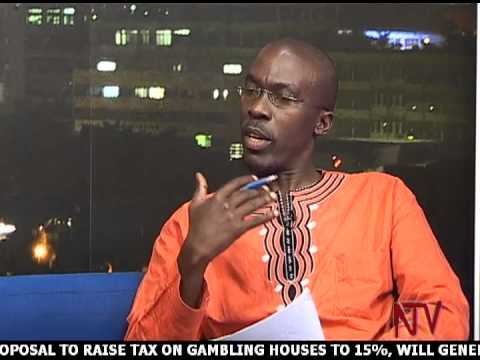
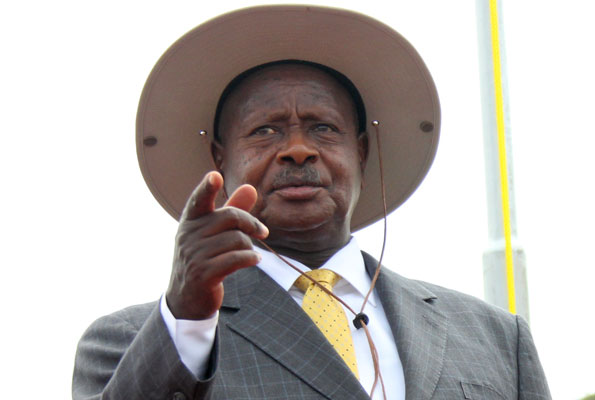
President Yoweri Museveni has directed the Resident District Commissioners (RDCs) to monitor all health centres and report doctors absent from duty effective today, sources have indicated. The presidential directive follows four days of industrial action by the medics, who want their salaries raised and working conditions improved.
The Uganda Medical Association President Dr. E.A Obuku
On Monday medics under their umbrella body of Uganda Medical Workers Association led by Dr. Ekwaro Obuku went on strike following government’s failure to heed to their pleas of better pay and favorable working conditions.
Minister of Health Dr. Jane Ruth Aceng
According to health minister Jane Ruth Aceng, on November 7 the ministry of health wrote to the Solicitor General seeking for advice about the doctors’ industrial action, and in response the SG advised the ministry to negotiate with the striking doctors as government waits for the finalization of the bill that is aimed at the harmonisation of salaries across the board.
The SG however, noted that the striking medical workers did not follow that right procedures before withdrawing their labour, saying they had to notify the ministry 90 days before going on strike.
On Wednesday Dr. Aceng convened a press conference at Uganda Media Centre and urged the medical workers to resume work, promising that government would respond to their concerns in late November.
And yesterday, Dr. Aceng warned Uganda Medical Workers Association to ‘stay away from government business’, adding that those calling for continuation of the strike should be treated as trespassers.
“Uganda Medical Workers Association is registered as a company and not an association therefore it is not legally mandated to negotiate for health workers remuneration. Therefore, all medical workers, interns who were misled to join the illegal strike must resume duty with immediate effect and all interns who will not adhere to this directive shall forfeit their internship and be required to reapply for reconsideration”, Dr. Aceng said at a press briefing held at the health ministry headquarters last night.
She added: “Health workers who resume duty shall be provided adequate protection by government and all ring leaders of this illegal strike must desist from interfering with the smooth provision of medical services in the country.”
According to the Minister, the UMWA is not a registered association and does not enjoy rights, immunities and privileges provided under Labor Union Act.
However, UMWA chairperson Dr. Obuku insisted that the industrial action will go on and vowed to call Dr. Aceng for ‘disciplinary action’, saying she subscribes to the association.
Meanwhile, in the latest development the doctors, at a press briefing at Kampala Club, say they are considering taking the strike a notch higher, with threats to immediately withdraw the provision of emergency services offered to pregnant mothers and accident victims.
“We are going to maintain the industrial strike over poor pay and are going to scale up emergencies until our concerns are addressed to with appropriate measures,” Dr. Obuku said, adding: “The chief organizer of all strikes in the medical fraternity is the government itself which does not bother about improving standards of its employees.”
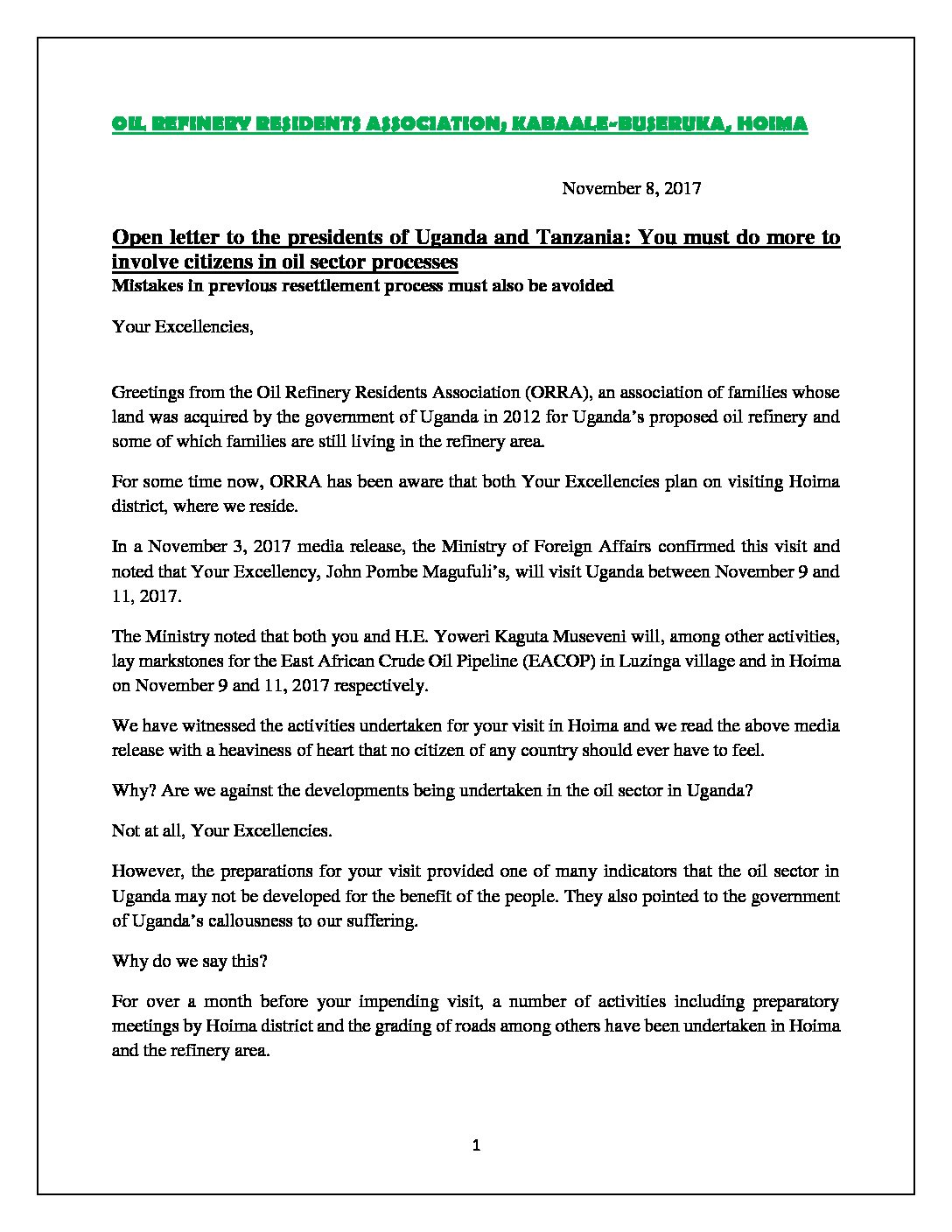
'Open Letter to presidents Yoweri Museveni and John Magufuli by the residents of Hoima
As Uganda’s President Yoweri Museveni and his Tanzanian counterpart John Pombe Magufuli prepare to lay a markstone at the starting point in Kabaale, Hoima District for the construction of the East African Crude Oil Pipeline (EACOP) tomorrow, area residents have written an ‘open letter’ to the two leaders imploring them to address their concerns, poignantly the delayed compensation of over 20 families.
The residents, under the umbrella organization, the Oil Refinery Residents Association (ORRA), in their November 8 letter to the two leaders ‘You must do more to involve citizens in oil sector processes’, say that a lot of activities have taken place without their participation, despite being key stakeholders as owners of the land on which an oil refinery and the oil pipeline are to be built.
“For over a month before your impending visit, a number of activities including preparatory meetings by Hoima district and the grading of roads among others have been undertaken in Hoima and the refinery area. While the above activities were ongoing, no formal communication was made to us (ORRA) about what the activities were for,” the three-page letter signed by ORRA Chairperson Innocent Tumwebaze reads in part.
The members say they were only able to find out about the visit of the two presidents through their informal networks. “We hear that television notices were run regarding the visit but with many of us lacking television sets, we, who are key stakeholders in the oil sector, were left (out),” the letter continues.
In their letter they say they were further burdened with heavy police deployment in the refinery area, making them to live in fear. “These police officers created such fear in us! Without adequate information on what was happening in our area and with a high presence of police officers, children, mothers and indeed some men thought that we were going to be unconstitutionally evicted as has happened elsewhere including in Rwamutonga, Hoima,” they say.
The residents in the oil refinery area are concerned that over 20 families are yet to be compensated while over 70 others are waiting for the government of Uganda to fulfill promises made to them in the 2012 Resettlement Action Plan for the Refinery Project in order to be relocated.
“The promises made to us include providing us with land bought built on a case-by-case basis, land titles and houses for our families. The government of Uganda backtracked on all these promises and is planning on resettling us in a terribly squeezed camp in Hoima that is unsuitable to our lifestyles,” the letter continues.
Other commitments, they say include constructing good murram roads to enable economic activities, building a nursery school ‘to give their children a good start in life’ and providing them with water, electricity and other social services to enable them ‘live like other human beings’. The government of Uganda, they say, is yet to fulfill these promises too.
“Your Excellencies, as we have waited, families have broken down with financially poor fathers who were refused from growing perennial cash crops by the Ministry of Energy since 2012 abandoning their children and wives,” they say, arguing that Parliament should not pass the Land Amendment Bill before their concerns are addressed.
By press time it was not possible to establish whether the letter had been received by the addressees.
Thank God it’s Friday, that is everyone’s thought when they make it to the end of a long work week and are looking to unwind. Some people prefer to stay indoors all weekend and rest, catch up on TV shows, visit family or host friends over while grabbing a few drinks while others prefer to go out and party with work colleagues or even friends.
Margarita
Margarita
For cocktail lovers this a very popular and almost go to choice for many in Kampala. Very easy to make, a Margarita consists of tequila, triple sec and lime or lemon chasers or actual fresh juice. Usually served with sugar or salt at the rim of the glass. A Margarita could have ice added to it or not, sometimes the ice is actually blended into the cocktail.
Cosmopolitan Cocktail
Cosmopolitan
Commonly known as a Cosmo, this is another popular cocktail that you will find many people ordering in several bars around Kampala. A cosmo consists of fresh lime juice, you can also use lemon chasers, cranberry juice, with the main ingredient being Vodka.
Bloody Mary
Bloody Mary
A bloody Mary is a very spicy drink also commonly ordered by only those that can handle it. Its main ingredient is Vodka, with an addition of tomato juice, hot sauce and several other spices based on preference.
Draaanks-Dirty-Martini
Martini
Martinis are very easy and quick to make and for many are the perfect cocktail after a long day. Comprised of gin and vermouth, and is usually garnished with an olive or a lemon twist.
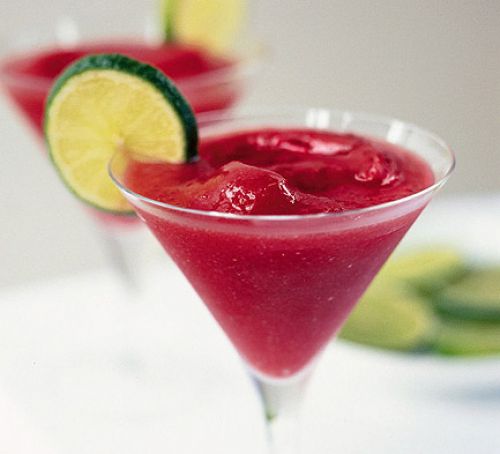
Daquiri
Daquiri
Daquiri is another popular cocktail in Kampala especially with the ladies because of its sweet nature. A daiquiri easily goes down and if not drank with caution just like wine can get you drunk extremely fast. Its main ingredients are rum, citrus juice, and sugar or any other sweetener.
So as we usher in the weekend, you might be wondering which of these cocktails you want to have, give them a try at home first and see how you like them. You can get all the different alcohol you need on Jumia Party which is an online bar part of Jumia Food that can deliver these drinks to you. All you have to do is just sit back and and get ready to party!
The author is the PR Manager Jumia Food and Travel
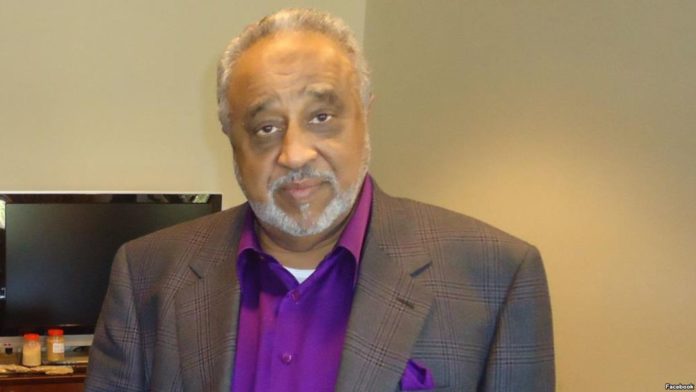
Sheikh Mohammed Hussein al-Amoudi, an Ethiopian-born Saudi billionaire worth about US$10 billion, who wanted to buy the Sheraton Kampala Hotel through his Muhammad Investment Development Research Organisation Company (MIDROC) consortium, has been arrested in the midst of an anti-corruption sweep in the rich Middle East kingdom.
In 2000, Al-Amoudi’s MIDROC Ethiopia Private Company Limited won a US$18 million bid for the Sheraton Hotel’s 100 per cent government shares held under Appollo Hotel Corporation, and conditions then issued by the Privatisation Unit stipulated that the money had to be paid within a period of three months.
Also, at the time MIDROC said it would inject US$15 million in refurbishing the Sheraton, and maintain the Starwoods management contract of the 250-room hotel that is located just a few metres from the State House in the leafy Nakasero area.
In an earlier bid in 1998, Ugandan-born Indian tycoon Karim Hirji had won the bid through his Grand Imperial Hotel consortium, but the development was reversed by the Inspectorate of Government (IGG).
It is not clear what happened to the Al-Amoudi Sheraton deal but what is not in doubt now is that the billionaire, who was arrested last Saturday, is one of dozens of elite detainees sleeping on mattresses on the floor of a well-guarded ballroom at the Ritz-Carlton, Riyadh, awaiting the next steps by Saudi authorities.
And early this week the Saudi government released a statement aimed at reassuring investors with ties to any of the individuals arrested. It said that only personal bank accounts have been frozen, and related businesses would not be affected.
Origins
Al-Amoudi was born in Dessie, Ethiopia, in 1946 to an Ethiopian mother and a Saudi father. He immigrated to Saudi Arabia in the mid-1960s and made his first billion two decades later with a construction contract to build an underground oil storage facility.
Since then, his empire has grown across Europe, the Middle East and Africa, and it includes Sweden’s largest petroleum refiner.
His Highness Sheikh Ahmed bin Saeed Al Maktoum, Chairman & Chief Executive, Emirates Airline and Group
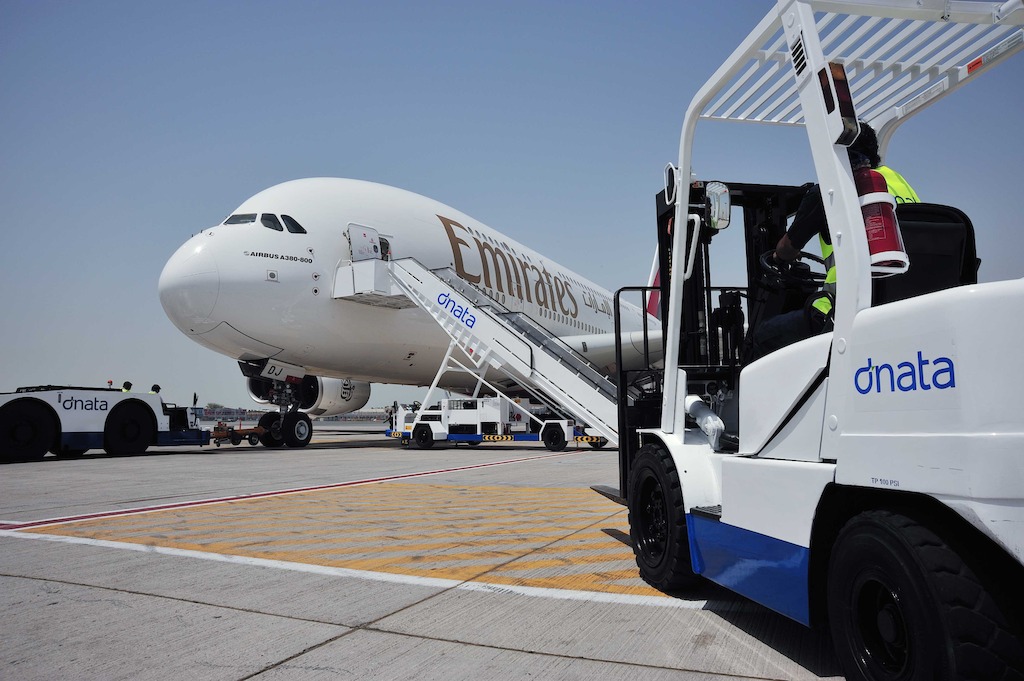
The Emirates Group has announced its half-year results for 2017-18, with revenue posted at US$ 13.5 billion for the first six months, up 6% from US$ 12.7 billion during the same period last year.
The Emirates Group, comprising Emirates and dnata, announced its half-year results for 2017-18.
The Group saw steady revenue growth and a rebound on profitability compared to the same period last year, in spite of the continuing downward pressure on margins, a rise in oil prices, and other challenges for the airline and travel industry.
Profitability rebounded after a low during the same period last year, with the Group reporting a 2017-18 half-year net profit of US$ 631 million, up 77%.
This result was driven by capacity optimisation and efficiency initiatives across the company, steady business growth, and a more favorable foreign exchange situation compared to the same period last year.
The Group’s cash position on September 30, 2017 was at US$ 5.2 billion, compared to US$ 5.2 billion as at March 31, 2017.
His Highness Sheikh Ahmed bin Saeed Al Maktoum, Chairman and Chief Executive, Emirates Airline and Group said: “A lot of the credit for our 2017-18 half-year results goes to our talented workforce who have worked hard to improve our business performance, and address our challenges without compromising on quality and service.
“Our margins continue to face strong downward pressure from increased competition, oil prices have risen, and we still face weak economic and uncertain political realities in many parts of the world. Yet, the Group has improved revenue and profit performance. This speaks to the resilience of our business model, and the agility of our people.
“The easing of the strong US dollar against other major currencies helped our profitability. We are also seeing the benefit from various initiatives across the company to enhance our capability and efficiency with new technologies and new ways of working. Moving forward, we will continue to keep a careful eye on costs while investing to grow our business and provide our customers with world-class products and services.”
In the past six months, the Group’s employee base reduced by 3% compared to 31 March 2017, from an overall staff count of 105,746 to 102,669.
This was largely a result of natural attrition together with a slower pace of recruitment, as various parts of the business adopted new technologies, streamlined business processes and re-allocated resources.
Emirates continues to invest in the most advanced wide-body aircraft to improve overall efficiency and provide better customer experience. During the first six months of 2017-18, Emirates received 10 wide-body aircraft – 4 Airbus A380s, and 6 Boeing 777s, with 9 more new aircraft scheduled to be delivered before the end of the financial year.
As of September 30, Emirates’ global network spanned 156 destinations in 84 countries, and its fleet stood at 264 aircraft including freighters.
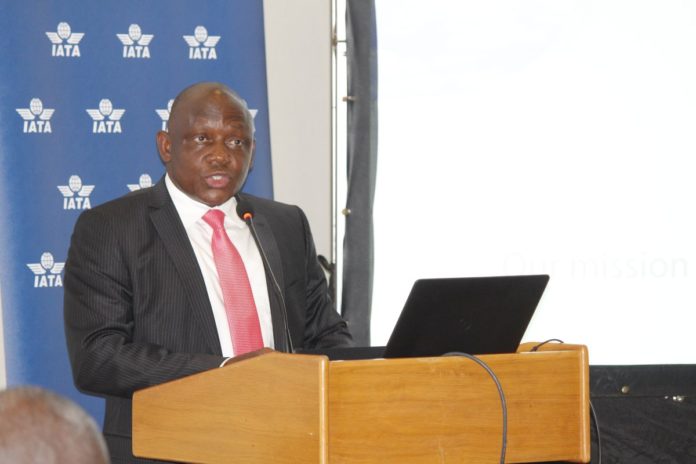
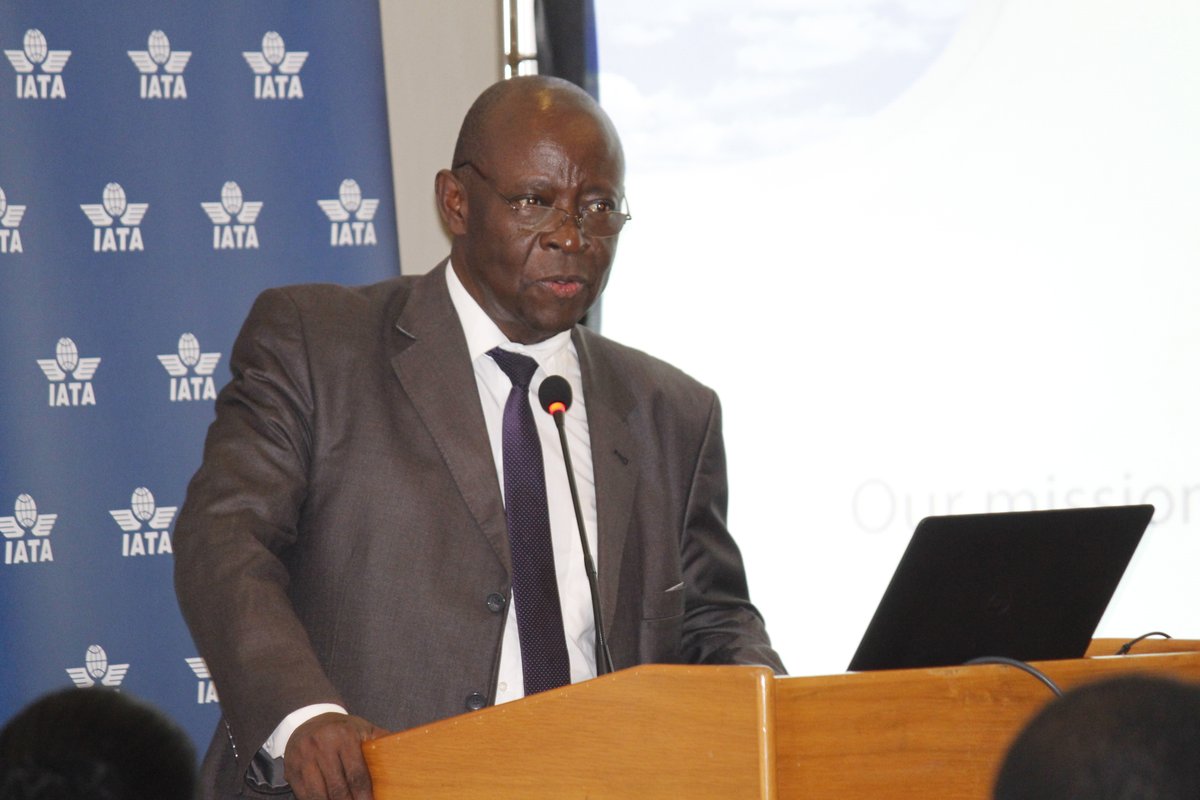
The vice president of International Air Transport Association (IATA) in Africa Raphael Kuuchi has said that protectionism has constricted air traffic growth in Africa, and called for capacity development to increase the market share of air transport in Africa and other continents.
Speaking to IATA delegates at stakeholders’ forum at Serena Hotel in Kampala, Mr. Kuuchi also noted that once airlines are empowered, thousands of jobs will be created and movement of people will increase.
On the mooted revival of Uganda Airlines, Mr. Kuuchi said Uganda would enjoy an advantageous position in the African air industry.
“Uganda has taken bold steps to improve aviation however the African aviation market remains underdeveloped especially in connectivity and that’s why air transport reform is important in Africa,” Mr Kuuchi said, adding: “Some African airlines that are making profits in a liberalized environment, therefore, it is possible for the coming Uganda Airline to make money.”
He also told the delegates that national carriers are important, with non-monetary but economic benefits.
“The benefits of aviation go beyond accounts, it’s not simply a profit centre, if you quantify the benefits to the economy, you realise why airlines are not closing despite making losses,” he said.
The Managing Director of Civil Aviation Authority (CAA) Dr. David Kakuba
On his part the Managing Director of Civil Aviation Authority (CAA) Dr. David Kakuba said that government is ready to work with IATA in developing safe and efficient aviation, favourable for investors.
“Because Uganda is rated above the global average in aviation safety according to the latest audit, it has the most potential for growth out of all global regions. The country fully embraced the liberalization of air transport services in the region and this will play a significant role in boosting it,” Dr. Kakuba said.
Dr. Kakuba also said that in an effort to boost air transport, Uganda had embarked on the expansion of Entebbe Airport and other smaller aerodromes and, building an airport in Hoima.
Multichoice has announced that it will be broadcasting live the All Africa Music Awards (AFRIMA) in which Eddy Kenzo is nominated.
The Awards will be screened on DStv channel 198 to Premium, Compact, Compact +, Family and Access customers; and also on GOtv Max and GOtv Plus Channel 29 (129 in Ghana).
AFRIMA is one of the biggest music awards in Africa with participation of over 700 artistes across the continent.
The awards, which are in their 4th year, will be held in Nigeria, which has been the host city since 2014 and will be co-hosted by multi-award winning artist and composer, Akon and one of Cameroon’s biggest entertainment personality and host Sophy.
“This is the first time that we have screened these spectacular awards live on our platforms. We hope to be able to keep showcasing these awards in the future, so that we are part of celebrating the amazing musical talent that we have in our continent,” said Charles Hamya, General Manager MultiChoice Uganda.
Nominees in over 33 regional and continental categories are battling it out for the coveted AFRIMA 23.9 karat gold-plated trophy.
These include the AFRIMA Legend Award and Music/Entertainment Journalist of the Year award. Well-known sensational African music names on the AFRIMA nominees list include Becca ft Patoranking (Ghana), Yemi Alade and Tiwa Savage (Nigeria) in the Best Female in West AfricaCategory; Eddy Kenzo (Uganda), Davido (Nigeria), Fally Ipupa (DRC) in the Artiste of the Year Category; Darassa (Tanzania), Ebony (Ghana), The Dogg (Namibia) and Nyashiki (Kenya) in the African Fans Favourite Category.
Artists vying for Album of the Year include Angola’s Anselmo Ralph, Dark suburb (Ghana), Wizkid (Nigeria), Hugh Masekela (South Africa). Other categories include Best African jazz, Best African Pop, Best African Reggae, Ragga Dancehall, Most Promising Artist of the Year, Songwriter of the Year, and Video of the Year.
Past winners have included Sally Boss madam (Namibia) – Best Female in Southern Africa, Kuseim (Uganda) Producer of the Year, VVIP (Ghana) – Video of the Year, Flavour (Nigeria) – Best Male in West Africa and Diamond Platinumz (Tanzania) for Best Male in East Africa.
Who will take home a gold AFRIMA trophy this year? Tune in to DStv and GOtv Plus to find out! The channels will go live with content from Friday 10 November at 23:00 CAT until Sunday, November 13, at 21:00 CAT.