Stanbic Bank
Stanbic Bank
26.7 C
Kampala
Stanbic Bank
Stanbic Bank
Home Blog Page 1741

Police arrest woman for draping goat with ‘Red Ribbon’

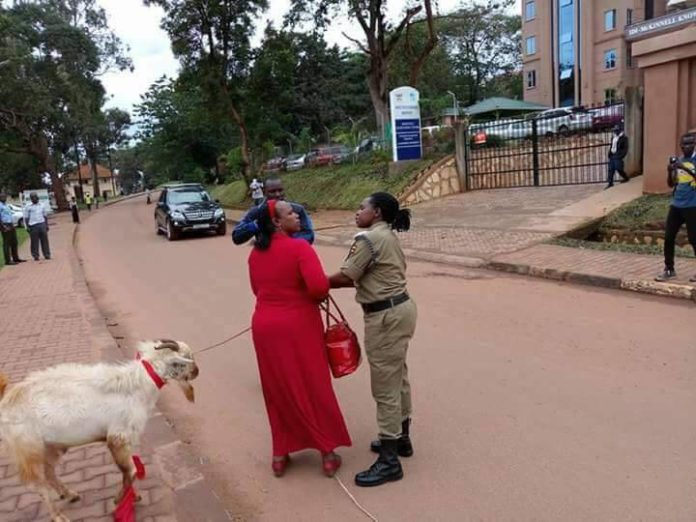
Police arrest the woman dressed in Red. In the background is the goat draped with Red Ribbons around the legs.

The ‘Red Ribbin’ campaign against lifting the age limit cap of 75 years to allow a Ugandan contest for presidency has gained notoriety, with police today arresting a woman dressed in red, who many said was opposition Forum for Democratic Change (FDC) activist Ingrid Turinawe, who had also draped ‘her’ goat with red ribbons around the two front legs.

By press time it was not possible to ascertain what charges would be preferred against her.

The ‘Red Ribbon’ campaign has been popularised by opposition Members of Parliament (MP) who are opposed to changing Article 102 (b) of the 1995 Constitution that bars someone aged above 75 to contest for presidency.

However, National Resistance Movement (NRM) MPs are in favour of lifting the age limit, ostensibly to allow President Yoweri Museveni, who is 73 years now, to contest for presidency when he is 77, two years above the constitutional cap.

Stories Continues after ad

Bebe Cool goes diverse with ‘One More Touch’ hit

HOT COLLABO: Bebe Cool and Tay Grin

There is beauty in diversity and this is what the viewers and listeners in East and Southern Africa, and indeed across the continent should expect to enjoy in One More Touch, a new single by Uganda’s music legend Moses Ssali aka Bebe Cool and Malawian superstar ‘Tay Grin’.

The new single is a celebration of diversity, creativity, class and of course shared philosophy by the two artistes eyeing to expand the market for their music, making ‘One More Touch’ such a perfect opportunity.

“Bebe Cool is someone I have looked up to and admired musically. Getting to know him has proven we are like minded and very serious about our music. We share common philosophy. I enjoyed working on this song with Bebe Cool and I can’t wait for the fans to listen to the song and watch the video,” Tay Grin said.

Appreciating his fellow artiste’s talent, Bebe Cool is equally impressed with the new single and video.

“Tay Grin is a big hip-hop star not only in Malawi but Africa as well. I was amazed by his dynamism in blending the Afro beat sound on this sweet melodious single. No matter the genre, music is universal in every sense,” he said.

The video and audio will be available on You Tube and will air on different radios and TV stations in Uganda and Malawi as well as selected platforms across the world.


Stories Continues after ad

KCCA ‘threatens’ to bar ‘Gravity Omutujju’s from performing in Kampala

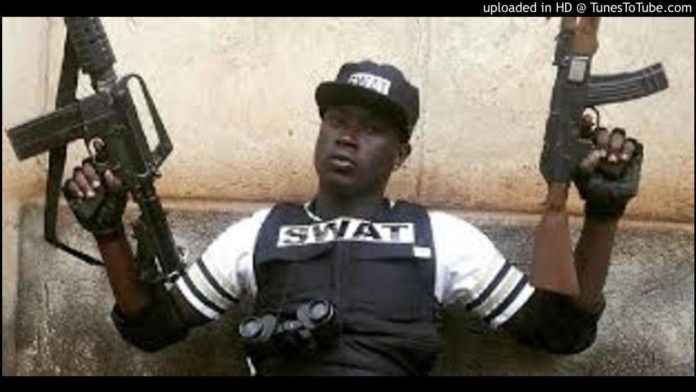
Singer Gravity Omutujju

The ‘war’ between rapper Gravity Omutujju and KCCA is not about to end, with the city authorities reportedly threatening to bar him from performing in Kampala.

And, to reinforce his arsenal, after bashing KCCA at Kololo, where Tanzanian crooner Diamond Platnumz was the lead performer, Gravity has now taken the ‘war’ to social media, pouring out fury over what he calls ‘degrading local artistes’.

“On Friday night I aired my dissatisfaction at Kololo airstrip when I complained about the little pay given to Ugandan artists in a way of despising the local artists.

I am a Ugandan rapper entertainer and well-wisher to Ugandan music. I believe we have matured musically as a country especially to our local fans we give them Hit after Hit day after day but guess what the promoters of this country, whenever they think of having a massive show, they think of upcoming African artistes who have 3 songs to come and perform here in my country,” he ranted.

“As if that is not enough these Bu so called stars from TZ and West Africa are given a lot of money to come here and bore us on our own soil. As we commemorate this Independence I kindly ask you dear promoters to always consider us first and pay as dearly as you pay those bu boys.”

He advised that had KCCA distributed the Shs165m among local artistes like; Chameleone Shs15m, Bebe cool Shs15m, Bobi Wine 15m “and gave 5 million to other artistes and provide them with good sound, better lighting like it was when you brought that boy and promote it massively, Ugandans would fill up Kololo”.

“Legends like Maddox , Afrigo Band, Golden Band ,can kill those bu boys you bring here bu one hit wonder butuboye ekimala.”

On the reported imminent ban from performing in Kampala, Gravity said he doesn’t care about whatever measure KCCA takes against him. “Whatever I said, I was expressing myself. Secondly, I was giving them (KCCA) a piece of advice. But still, if they ban me from performing in Kampala, I will perform in villages,” Gravity ranted, his outburst coming on the heels of a similar rant by singer Dr Hilderman.

He said he was so disappointed with KCCA that it can spend the whole year taxing them but when it comes to a time of the Carnival, where it ought to give back to them, it gives the money to foreigners.

Diamond Platnumz from Tanzania was paid Shs165million while local artistes including Gravity and Bobi Wine were left to share just Shs20 million.


Stories Continues after ad

Uganda’s trade balance down 37pc in July

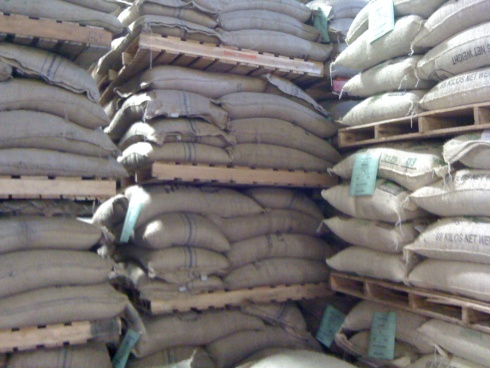
Bags of coffee beans for export

Uganda`s merchandise trade deficit narrowed both on a monthly and annual basis, according to the latest Performance of the Economy Report for the month of August, released by the Ministry of Finance.

The comparison shows that the trade deficit narrowed by 37.3 percent to US$ 98.4 million in July 2017 when compared to June figures. The lower deficit is attributed to US$65.2 million reduction in the value of merchandise imports, compared to US$ 6.8 million value of exports.

Compared to the same period last year, the trade deficit decreased by 31.4 percent due to a higher increase in exports that offset the increase in the import bill, the report that tracks the monthly performs of the Ugandan economy says.

Merchandise Exports

The report shows that Uganda’s export earnings in July dropped by 2.4 percent compared with June 2017 following declines in commodities like coffee, fish and its products, gold, beans, cotton and tea. The report mainly attributes the decline in exports to the fall in their volumes while the fall in gold is due to the drop in the price on the world market.

On an annual basis, export receipts grew to US$270.87 million in July 2017 from US$ 222.54 million in July 2016. The report attributes the improved performance mainly to the export value of coffee and beans by 82.9 percent and 224.1 percent, respectively.

The value of coffee exports improved following an increase in both the volume and price by 59.1 percent and 15 percent, respectively, the report adds. Further, the increase in the volume of coffee is on account of newly planted coffee that has started.

Destination of exports

The report shows that the East African Community remained the major destination for Uganda’s exports, followed by the Rest of Africa, and the European Union. A comparison between July 2016 and July 2017 shows that exports to the EAC increased by US$ 26.18 million, with Kenya recording the largest increase. However, exports to Rwanda and Tanzania fell by 8.1 percent and 76.4 percent respectively.


Merchandise Imports

During the month of July 2017 merchandise imports amounted to US$ 369.29 million, a 15 percent decrease compared with June 2017. This came on account of a decrease in government and non-oil formal private sector imports by 51.5 percent and 12.2 percent respectively.

However, the report shows that oil imports grew by 0.6 percent. The report attributes the decrease in non-oil private sector imports to a fall in the import volumes, while the increase in oil imports is due to an increase in the prices. Compared to the same period the previous year, merchandise imports  grew by 0.9 percent, driven by an increase in oil imports which is attributed to an increase in both the price and volume of oil imports.

Origin of Uganda’s imports

The report shows that in July 2017, Asia was the largest source of imports, contributing 37.5 percent of the total imports. Middle East and EAC contributed 21.6 percent and 15.4 percent respectively, making them the second and third largest sources.

Imports from Asia were mainly from China (39.9 percent), India (26.2 percent) and Japan (14.3 percent). Kenya and Tanzania contributed of 69.9 percent and 21.4 percent of the total imports from EAC respectively.


Stories Continues after ad

DPP officers resume strike

ANNOUNCED RESUMPTION OF STRIKE: UAP-President-Baxter-Bakibinga

Prosecutors have today resumed their strike after the elapse of three months when they voted to suspend the industrial action following government’s pledge to increase their salaries and improve on their working conditions.

Under their umbrella Uganda Association of Prosecutors (UAP), they in July agreed to suspend the strike for a period of 90 days after the government agreed to sort out their grievances.

According to the UAP President David Baxter Bakibinga, they had to go on strike again till government address their concerns.

“In a fortnight to the elapsing of the 90 days ultimatum, the Association reminded government about similar issue however till now we have not received feedback,” Mr. Bakibinga said.

Bakibinga noted that their salary  is too little given the fact that State Attorneys handle complicated cases like terrorism and murder yet their ‘salary is less than what a tea girl at KCCA earns’.

He added: “To a gain suspend this strike, we shall petition the general assembly to vote on either to suspend or continue with the strike after receiving government response.”

Under the current salary structures, the lowest ranking state prosecutor earns a gross salary of Shs644, 963 a month with the highest paid prosecutor at the rank of Senior Principal State Attorney taking a gross monthly pay of Shs2.1 million. The Deputy DPP is paid Shs2.9 million while Assistant DPP earns Shs2.4 million.

Last month judicial officers also suspended their strike till December 11, after government pledged to provide them with security, transport and office equipment as it tries to effect salary enhancement and harmonisation across the board.


Stories Continues after ad
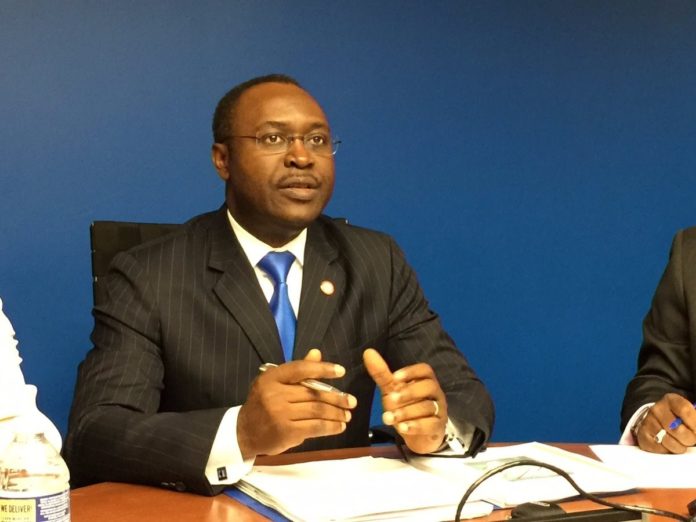
WB to launch Africa’s Pulse in Kampala tomorrow

Mr.-Albert-Zeufack-World-Bank’s-Chief-Economist-for-Africa

The World Bank (WB) will tomorrow launch the latest edition of the Africa’s Pulse, a biannual analysis of the state of African economies, which will highlight skills gaps and what governments need do to address the gaps..

According to an October 10 release, the 16th volume to be launched in Kampala by the World Bank Chief Economist for Africa, Albert Zeufack, and Lead Economist, Punam Chuhan, will also address recent economic developments and trends, as well as ways countries can meet the skills challenge of 21st century Africa.

The last report, volume 15, launched in April focused on infrastructure and showed Sub-Saharan Africa lags other developing regions in virtually all dimensions of infrastructure performance, although trends vary across key sectors.

Progress had been inadequate in the power sector, where electricity-generating capacity per capita changed little over 20 years, and although access to electricity more than doubled during  1990-2014, only 35 percent of the population had access. Sub-Saharan Africa also had the lowest road and railroad densities among developing regions, and road density declined during 1990-2011.

By contrast, the last report showed that telecommunications infrastructure had improved dramatically: the number of fixed and mobile phone lines per 1,000 people increased from three in 1990 to 736 in 2014, and the number of Internet users per 100 people increased from 1.3 in 2005 to 16.7 in 2015. Access to safe water has also   risen, from 51 percent of the population in 1990 to 77 percent in 2015.

Eagle Online will bring you details of the latest report to be launched at World Bank Uganda office in Kampala.


Stories Continues after ad
Rwanda military accused of torture

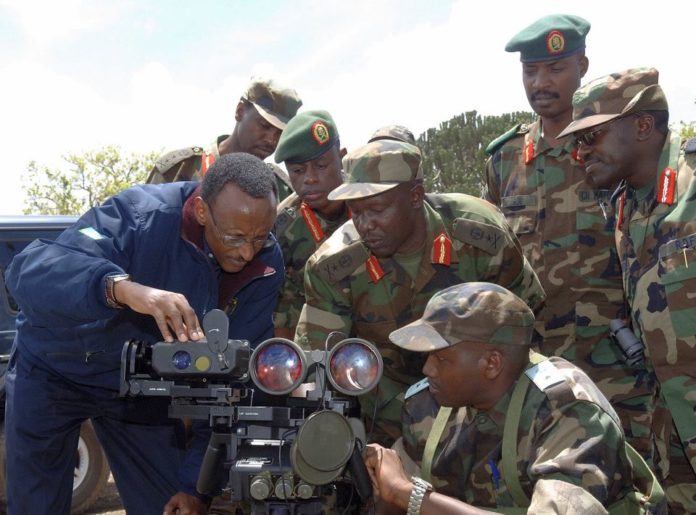
RDF ACCUSED OF TORTURE: President Paul Kagame and his commanders examine military equipment

Rwanda’s military has routinely unlawfully detained and tortured detainees with beatings, asphyxiations, mock executions, and electric shocks, Human Rights Watch (HRW) said in a  report released today.

The organisation found that judges and prosecutors ignored complaints from current and former detainees about the unlawful detention and ill-treatment, creating an environment of total impunity. It called on Rwandan authorities and UN to investigate immediately.

“Research over a number of years demonstrates that military officials in Rwanda can use torture whenever they please,” said Ida Sawyer, Central Africa director at HRW.

“Impunity for unlawful detention and the systematic use of torture has led many victims to give up all hope for justice.”

The group’s research found that most victims were detained on suspicion of being members of the FDLR – a predominantly Hutu rebel group based in eastern Democratic Republic of Congo – with some of its members suspected of participating in the 1994 genocide.

The Rwandan government did not reply to numerous letters from Human Rights Watch presenting the findings and requesting a response to specific questions.

Many of the detainees, including civilians, were arrested in Rwanda by Rwandan soldiers, sometimes assisted by police, intelligence, or local government officials.

Others were arrested and ill-treated in neighbouring Burundi or the Democratic Republic of Congo, some while being processed through the demobilisation and repatriation programme supported by the UN peacekeeping mission in the DRC. They were then illegally transferred to Rwanda, where they were abused, the report said.

Many said that torture sessions began immediately after they arrived at a military detention centre.

If the suspect failed to give the soldiers the answers they wanted, the were beaten, sometimes several times a day. Other detainees described asphyxiation, electric shocks, mock executions, and tying objects to men’s genitals.

Some detainees’ hands were reportedly handcuffed to their legs for months on end, with soldiers only taking the handcuffs off so the men could use the toilet.

Many former detainees said they had signed false statements because they could not stand the torture or believed they would die, the HRW report said

On June 30, 2015, Rwanda ratified the Optional Protocol to the Convention against Torture, which requires governments set up a national mechanism to prevent torture at the domestic level.

However, the government is yet to do so.


Stories Continues after ad

Africa air passengers account for 2pc of global travel -IATA

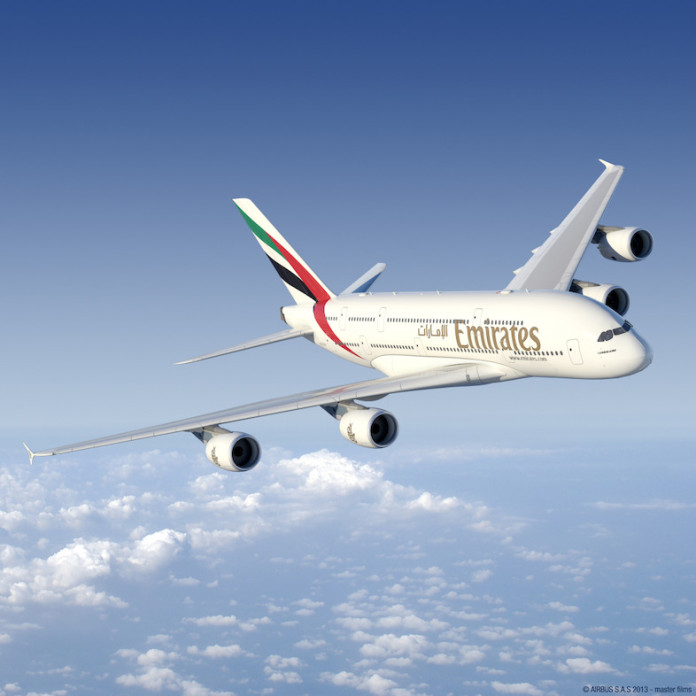
Emirates-A380-Aircraft

African passenger numbers account for only two per cent of the global travel market, despite a 6 percent rise to 84 million African travellers, the latest edition of industry yearbook, IATA World Air Transport Statistics, indicates.

Globally, according to IATA, airlines saw a 7 per cent increase in passengers to 3.8 billion, with the Middle East air passenger traffic increasing 9.1 per cent to 206.1 million passengers in 2016.

Emirates airline carried 2.5 million tonnes of air freight on scheduled services, making it the world’s third biggest scheduled cargo airline after FedEx Express and United Parcel Service.

Asia-Pacific remained the dominant region for air travel, with 35 percent of the world market. The region’s 1.3 billion passengers in 2016 represented an 11.3 per cent rise on 2015.

Europe grew slower, with numbers of passengers up 6.1 per cent to 992.4 million, representing 26 per cent of the global market, with North America close behind, its 911.5 million passengers (a 3 percent increase) representing 24 per cent of the global market.

Latin America took 7 per cent of the market share, with 275.1 million passengers, a year-on-year increase of 1.8 per cent. The Middle East had 5 per cent of the global market.

US airlines held the top three places for scheduled domestic and international passengers, with China Southern and Ryanair of Ireland in fourth and fifth places, respectively.

Americans were the most-travelled, both internationally and domestically, with 810 million people travelling on US passports — 26 per cent of the total number of passengers worldwide.


Stories Continues after ad

Liberian football icon George Weah in race to replace Sirleaf Johnson

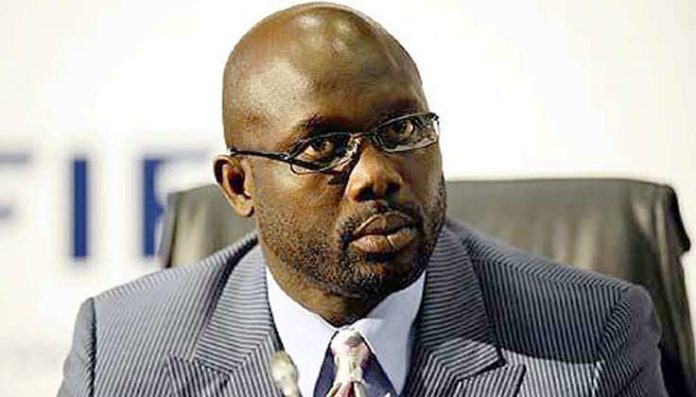
THIRD TIME LUCKY? Liberian presidential candidate George-Weah

Liberians are going to the polls to choose a successor to Africa’s first elected female president and Nobel Peace laureate Ellen Johnson Sirleaf, with former FIFA World Player of the Year 1995 George Weah and Vice-President Joseph Boakai the main contenders in the race to succeed her.

Liberia, founded by freed US slaves in the 19th Century, has not had a smooth transfer of power in 73 years, and Ms Sirleaf Johnson urged people to vote peacefully in a nation still recovering from a 14-year civil war.

“Your vote is about you and your family – not party, ethnicity,” she said in an address to the nation.

A total of 20 presidential candidates are running to succeed Ms Sirleaf. They include Alex Cummings, a former Coca-Cola executive, and MacDella Cooper, an ex-model and girlfriend of Mr Weah.

Ms Sirleaf, 78, who took office in 2006 after her predecessor Charles Taylor was forced out of office by rebels in 2003, is stepping down at the end of her two terms.

Taylor is currently serving a 50-year prison sentence in the UK for war crimes related to the conflict in neighbouring Sierra Leone.

Mr Weah, 51, has chosen Taylor’s ex-wife Jewel Howard Taylor as his running mate.

Named African Player of the Year in 1989, 1994 and 1995, Mr. Weah is trying out his third attemnpt at becoming Liberian President.

Ms Sirleaf has failed to campaign for Mr Boakai, fuelling speculation that the two have fallen out.

Almost 2.2 million people are registered to vote in the election.

Parliamentary elections are also being held at the same time.

Campaigning has been dominated by promises to tackle poverty, corruption, and guarantee stability in the West African state.

Liberia is one of the poorest countries in the world, with more than 50% of people living in poverty.

It was also one of three West African states badly hit by the 2014-15 Ebola outbreak which left more than 11,300 people dead.


Stories Continues after ad

CMA boss appointed chair of continental securities body

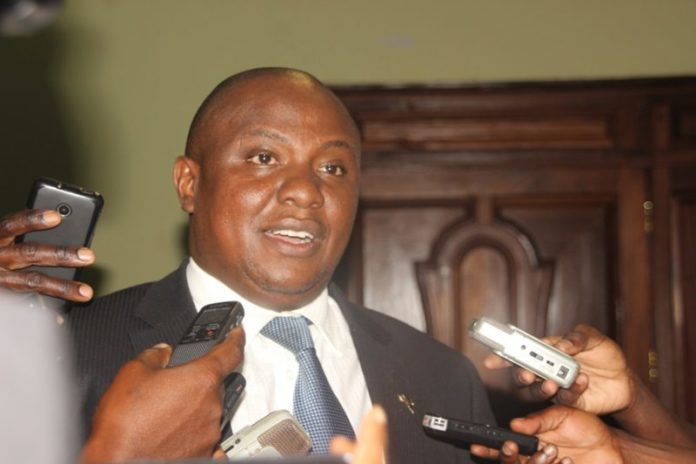
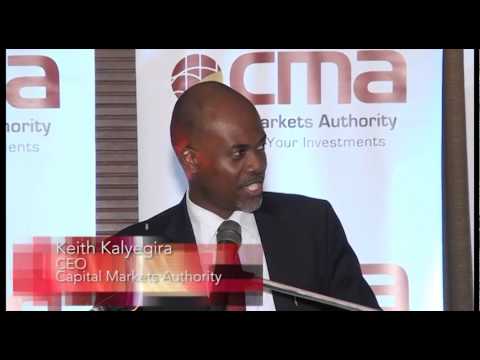
CMA CEO Keith Kalyegira

The Chief Executive Office of Uganda’s Capital Markets Authority (CMA), Keith Kalyegira has been appointed to chair the Listing Working Group (LWG) of the Africa and Middle-East Regional Committee (AMERC).

AMERC is one of four regional committees constituted by the International Organization of Securities Commissions (IOSCO) to focus on regional issues relating to securities market regulation and market development in the Africa and Middle-East region.

Kalyegira replaces Alexander Williams, former acting Director General of the Securities and Exchange Commission (SEC) of Ghana, who has been chair of LWG since its establishment.

His appointment follows the recent admission of Uganda as a member of Appendix A of the IOSCO Multi-lateral Memorandum of Understanding, which elevated Uganda to full membership in the international securities standard body.

Kalyegira said his additional role is a great opportunity for our capital markets and Uganda in general.

He said one of the biggest challenges is the need to make capital markets more relevant to the real economy, which he said is largely comprised of small and medium sized enterprises. Currently, Uganda has only eight domestic listings, seven of which were Government divestitures.

“Our capital market has not been as vibrant because we have few listings on the stock exchange, a problem that is also identified in our ten-year Capital Markets Development Master Plan,” Kalyegira said.

“We are aware that other countries have similar challenges and our engagement with them at this level will be an opportunity to address similar challenges in Africa and the Middle East and develop strategies which we can implement as a country to grow our capital markets,” he added.

He added that the lessons picked from other countries will also be applied to drive growth in other areas in the capital markets including listings by introduction, private placements for debt and equity as well as new products such as Real Estate Investment Trusts and Exchange Traded Funds.

AMERC comprises of 25 capital markets regulators from 25 member states with full voting rights, and regulators from twelve associate member states in Africa and the Middle East.

The LWG was established during the 38thAMERC meeting held in Abu Dhabi, UAE in February 2017.


Stories Continues after ad