Why digital banking services are vital to reduce poverty in the developing world
Commercial banks facilitate one-third of trade in Africa – AfDB
The African Development Bank (AfDB) has released its second Trade Finance in Africa survey report, which indicates that commercial banks support about one third of total trade in Africa.
Dubbed ‘Trade Finance in Africa: Overcoming Challenges’, the report builds on the findings of the maiden 2013 survey, covering the period 2013–2014, to gauge other aspects of bank-intermediated trade finance, such as the challenges encountered by SMEs and first time trade finance clients.
With combined data findings of 2013 and 2015, the survey shows that the value of bank-intermediated trade finance in Africa in 2013 and 2014 was estimated at US$430 billion and US$362 billion, respectively.
Further, the report states that the share of bank-intermediated trade finance devoted to intra-African trade is still modest, with only 20% of bank-intermediated trade finance devoted to intra-African trade in 2014
In the report, banks in East and Southern Africa reported the highest share (25%) while those in North and Central Africa reported the lowest, around 5% and 4%, respectively.
But it warns that the value of the bank-intermediated trade finance gap in Africa remains significant at an estimated US$91 billion in 2014, although it has gone down slightly from an estimated US$94 billion in 2013.
According to the report, trade finance continues to be a relatively low-risk activity for commercial banks in Africa. “The estimated default rate on trade finance transactions in 2011 and 2014 were 4 and 5%, respectively, compared to 9 and 12% Non-Performing Loan (NPL) ratios for all bank asset classes,” it says adding that the trade finance default rates are lower for banks in Southern (2%), East (3%), and North (4%) Africa compared to banks in Central (9%) and West (7%) Africa.
In the report SMEs performed poorly as they only account for only 28% of banks’ total trade finance portfolio. “The relatively low share could be attributed to the higher risk perception associated with this client segment,” it says. The average trade finance default rate of SMEs was 14% in 2014, far higher than the overall trade finance default rate of 5% for the same period.
First time applicants face significant challenges in accessing trade finance facilities from banks. Only 15% of banks’ trade finance portfolio is composed of new applicants, although the default rate attributed to these clients was only 3% in 2014.
The report also reveals that the major reasons why banks reject trade finance demands include poor creditworthiness and lack of adequate collateral.
The report recommends that a win-win partnership and a collaborative approach involving development partners is needed to overcome the challenges of access to trade finance faced by financial institutions and the private sector in Africa.
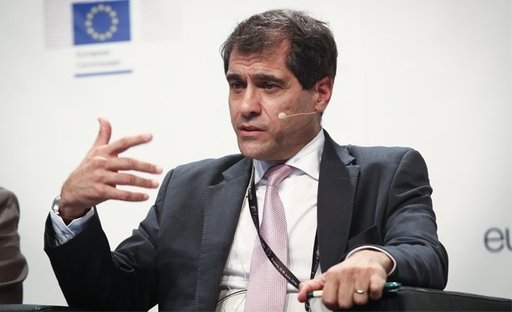
Commenting on the report, AfDB Director of Financial Sector Development, Stefan Nalletamby said the Bank has so far supported more than US$5 billion of trade involving 90 banks in 25 African countries. The key sectors supported are agriculture (22%) and manufacturing (25%). Intra-African trade represented at least 20% of total trade supported.
These achievements, he concluded, “are clear indications that trade finance can be an effective vehicle for driving the Bank’s High 5 priority goals such as ‘Feed Africa’, ‘Industrialise Africa’ and ‘Integrate Africa’, respectively.”
Mubajje calls for unity ahead of 55th Independence anniversary
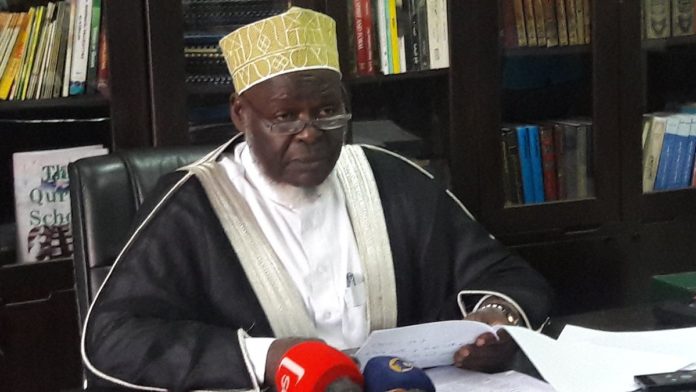
The Chairman of the Inter-religious Council of Uganda (IRCU), Sheikh Shaban Ramadhan Mubajje has called for unity as the country prepares to celebrate the 55th Dndependence Day on October 9.
Mubajje, who is the Mufti, urged Ugandans to reflect on the promise and commitment of the country’s past and present leaders have made since Independence.
“We as religious leaders have endeavored to envision our contribution in the realm of nation building; there are many tangible achievements and missed opportunities,” he said. Sheikh Mubajje implored Ugandans to resist the temptation of indulging in social evil like moral decadence, political polarization, chronic corruption, unemployment and poor service delivery.
“It need not to be over-stated that Parliament is an inviolable, autonomous pillar of democratic governance,” Sheikh Mubajje wrote in a statement relayed by the IRCU Communication and Public Relations Officer Eunice Nankwanga Kasirye.
This year’s Independence Day comes at a time when Ugandans are trying to come to grips with last week’s regrettable events that led to the suspension of 25 opposition MPs and the State Minister for Water Resources Ronald Kibuule, a National Resistance Movement (NRM) stalwart who allegedly sneaked a gun into Parliament, in contravention of the parliamentary rules.
In the ensuing chaos plain-clothed officers of the Special Forces Command (SFC), the elite unit that guards the President, stormed the parliamentary chambers and evicted the opposition MPs, in the process injuring legislators Angeline Osegge and Francis Butebi.
Producer Danz Kumapeesa dead
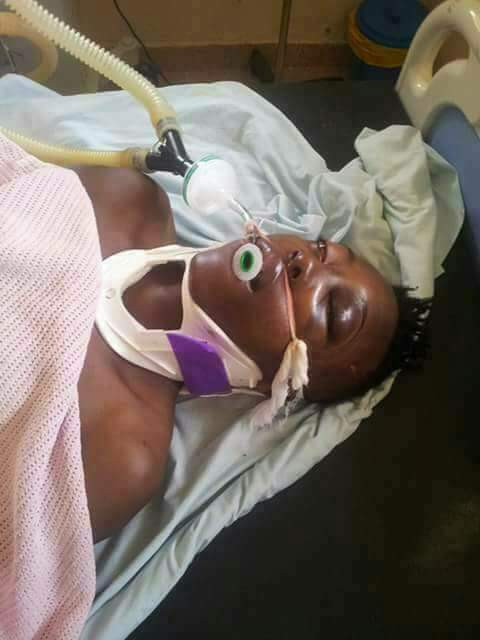
Jahlive music producer Danz Kumapeesa has this morning passed on following an attack by thugs at his home in Makindye, a Kampala suburb.
Dan Kumapeesa, who was recently discharged, had been battling for life for the past five months at Nsambya Hospital.
Last month, the management of Calendar Hotel organised a ‘Danz Kumapeesa charity concert’ at Laftaz Lounge, to raise money to help offset his medical bills that had accumulated.
At the concert several artistes including Bebe Cool, Jazminie, Geosteady, Rema Namakula, Ykee Benda, Bobi Wine, Jose Chameleone and Eddy Kenzo, performed.
Danz Kumapeesa was the producer behind hits like Mbozi Za Malwa by Bebe Cool, Musaawo and magic by Winnie Nwagi, Yo Sweet by Rema and Munakampala by Ykee Benda.
Improving healthcare requires collective effort
By Dr Anzo William Adiga
Discussions about Uganda’s journey towards attaining middle income status by 2020 have been common in the recent past. Calls have been made for more economic, political and social actions to be taken if that target is to be achieved. For the medical fraternity, collectively maintaining the health of Ugandans who are key in contributing towards the attainment of the middle income status target, should be paramount.
As a build up to middle income status, there are several key decisions which if well taken care of, can accelerate our economic development. It can’t be ignored that government of Uganda has made efforts to ensure accessible and affordable healthcare for Ugandans. However, more still needs to be done.
The World Health Organisation lists six building blocks for health system strengthening, namely; Improve Service Delivery, Health Financing, Health Infrastructure, Human Resource for Health, Access to Medicines, and Good Healthcare Leadership/Governance.
I’ll limit my argument to two key areas of human resource for health and access to medicine and supplies, as key contributors to a healthy population and strong healthcare sector that Uganda needs to attain its dream of middle income status.
First, it is not news that there is rampant stock out of live-saving medical supplies and drugs in government health facilities. It’s not in doubt that there is some degree of theft of drugs being reported by the Health Monitoring Unit of State House. However, it’s important to note that the leading hindrance to emergency surgical care is lack of medical supplies. This traumatises the health care giver who sees life going but cannot do much to save it.
Personally, I experienced such trauma in the past when a mother’s uterus raptured while I waited for the relatives to buy supplies such as sutures and IV fluids. If the hospital had the supply, such incident would have been avoided. It’s not enough though to have free access to healthcare, free medical supplies should match the demand on the ground. This is not the case in Uganda.
The government should increase supply of essential medicines and supplies required for live saving interventions. Adequate medical supplies should be accompanied by accountability and monitoring mechanisms to avoid theft and reckless use.
Another bitter fact is that the healthcare demand of Ugandans is higher than what government can provide without cost sharing, especially for the non-emergency conditions. It would be wise to reserve the current supplies for emergency interventions while elective or non-emergency interventions are cost shared transparently using a Ministry of Health recommended rate. This strategy would ensure the emergency reserve is not depleted and Ugandans would be prepared that if I go for non-emergency treatment, I have to share costs and demand receipt for it. It will also eliminate the wrong elements who ask for “under the table” payment or extortion as it is happening now.
Secondly, there is limited, demotivated and ill-equipped health workforce in Uganda. Despite going through a strenuous, lengthy and difficult training, health workers are not well placed to save the life of Ugandans due to poor and few equipment and supplies, let alone other motivation like housing and working environment. To motivate the young medics who have trained for six years with some paying over Shs70 million in private universities, there are several approaches Uganda can adopt to keep medical workers motivated. I’ll highlight just five:
First, the Uganda Medical Association (UMA) wrote to the Parliament of Uganda in August 2016, petitioning it for allowances for long working hours, medical risk allowances, among others. The allowances UMA asked for are really justified since the nature of medical work requires health workers to work past the recommended eight hours a day; including weekends and public holidays. The Parliament of Uganda needs to pay attention urgent to “The Mungherera Petition” and implement the duty facilitation allowance.
Secondly, there is need for tax exemption on imported cars for medical workers. It’s known that medical workers spend most of their time in health facilities. Very few use their vehicles, and if they do, it’s to dash for a medical emergency, or even to transport patients who need urgent care. The government should exempt tax on imported vehicles for each medic once every five to eight years with specific number plates to avoid cheap resale and abuse of such offer.
Thirdly, there’s need to regularise medical internship with proper terms and conditions. Medical internship has been undergoing challenges with irregular pay and unclear regulations. A proper internship policy needs to be developed with full involvement of key stakeholders such as the Ministry of Health, UMA, the Pharmaceutical Society of Uganda and Nurses and Midwives Union, etc.
Fourthly, there is increasing need amongst Ugandan medical graduates to specialise in given fields and yet the cost of training a specialist is very high, hindering others from enrolling. A deliberate effort should be made by government to pay these master students who will be key in managing the healthcare in Mulago National Referral Hospital and other teaching hospitals across the country.
Finally, there’s need for affordable housing for medical workers. This can take many angles. First, ensure medical staff get accommodated near health facilities during their working years which will address the issue of absenteeism. Another approach would be Value Added Tax exemption for medical workers to allow construction of affordable houses just like it is for military officers in the UPDF and police officers. This will motivate them to serve Ugandans with full interest and energy.
A well implemented reform in human resource for health will go a long way in reducing both external and internal brain drain of health workers.
Dr Adiga is a medical practitioner and Branch Chair for Uganda Medical Association (West Nile Branch)
GMO law to streamline activities-minister
The National Biosafety Act 2017 has been passed into law in a bid to streamline biotechnology activities in Uganda.
According to Dr. Elioda Tumwesigye , the Minister of Science, Technology and Innovation, the Act enacted on Wednesday will facilitate the safe development and application of modern biotechnology.
Biotechnology refers to any technique that uses living organisms or substances from living organisms to make or modify a product, improve plant, animal breeds or micro-organisms for specific purposes. Biosafety on the other hand means the safe development, transfer, application and utilization of biotechnology and its products.
The Act establishes institutions that shall regulate and promote the safe development and use of biotechnology in Uganda in order to exploit and promote the use of biotechnology and science in modernizing agriculture, environmental protection, enhancing public health and industrialization
“The Act will make it possible for Uganda to derive maximum benefit from the potential that modern biotechnology has to offer, while minimizing the risks to the environment and to human health. The Act provides mechanisms to regulate research, development and general release of genetically modified organisms and for related matters,” Dr. Tumwesigye says.
The Act designates the Ministry of Science Tecnology and Innovation as the National Focal Point and Competent Authority on matters related to Biosafety.
The Act also establishes an Inter-Ministerial Policy Committee on Biotechnology and Biosafety chaired by the Prime Minister, and has the Ministers responsible for Science, Technology and Innovation, Health, Agriculture, Trade and Industry, Environment, Education, Lands, Security, Energy and Defence, as members. The Committee will provide strategic guidance on matters of Biotechnology and Biosafety as well as consider other matters of national interest in relation to Biotechnology and Biosafety.
The Act also establishes the National Biosafety Committee (NBC) that consists experts with at least ten years experience in breeding and genetics, Agronomy, pathology, Molecular Biology, Food Science, toxicology, Ecology, Microbiology, Pharmacology, Soil science, Industrial chemistry, Veterinary Medicine, Human Medicine and consumer rights.
According to the minister, the Act will help protect Uganda from unauthorised entry of GMOs as well as protect people from consuming unsafe biotechnology products.
The Act, according to its writers, will also help alleviate farmers from the devastation and impoverishment often caused by crop diseases, animal diseases, uncontrolled use of expensive pesticides and unpredictable weather and drought occasioned by climate change.
“Give the country opportunities to use all science and technological options including modern biotechnology tools to handle crop and animal diseases and other stresses that cannot be effectively handled by conventional tools,” he says.
It will also support our scientists to fully and safely utilize their advanced knowledge and capabilities in biotechnology to help us solve contemporary challenges especially in health, agriculture, industry and environment and unlock the full potential of our economy to create wealth and jobs for our young people as well as shared prosperity for all using all facets of the bio-economy.
The enactment of this law follows consultation with stakeholder groups such as scientists, farmers, civil society, religious leaders, and policy makers among others.
The enactment of the law, ends years of governmental debate over whether Uganda’s farmers will be able to access GMOs and other tools of genetic engineering.
The National Biosafety Act 2017 will now be forwarded to President Yoweri Museveni to sign it into the law and become operational immediately.
Those who have been waiting for the law are celebrating. Patricia Nanteza who works with the national banana program at Kawanda research station said: “It’s exciting, though it feels almost unreal after all the setbacks. “But finally, banana farmers will be able to access varieties of banana resistant to bacterial wilt, and the people, especially children, can finally eat bananas and other foods rich in Vitamin A.”
Peter Wamboga-Mugirya is an Alliance for Science Fellow who has been instrumental in educating both the grassroots and policy-makers to help them understand the process of biotechnology and why the biosafety law was needed.
Mugirya, the director for communication and partnerships at the Science Foundation for Livelihoods and Development (SCIFODE) said the long process that started before 2008, when the Biotechnology and Biosafety Policy was first approved by Parliament has finally bore fruit. The newly approved national biosafety law will now operationalize the policy.
Despite its enactment, there still remains a section of Ugandans and leaders including members of parliament who say bitechnology is not good for Uganda.
Uganda first passed the Biotechnology and the Biosafety Policy in 2008 after it had ratified the Cartagena protocol on Biosafety in 2002. GMO field trials in Uganda currently are being conducted under the National Council of Science and Technology (UNCST) Act.
Under the UNCST Act, Uganda established the National Biosafety Committee (NBC) with a mandate of supervising GMO activities up to the Confined Field Trial (CFT) stage. The current bill, when enacted, gives the UNCST authority to decide whether to approve new GM crop varieties that will be made available to Ugandan farmers, taking the recommendation of the NBC into account.
KCCA pay to Diamond Platnumz irks local musicians
Tanzanian singer, Diamond Platnumz is in the country for the KCCA carnival, but all is not well with local musicians who claim he has been given money that is 9 times what they will collectively get.
According to the released budget, the Tanzanian will earn Shs165 while a paltry Shs20million will be shared by all other local artistes including Bobi Wine. This has left a section of local artistes furious. Among those is Dr Hilderman.
“This is for you KCCA. Always learn to appreciate. We started the city carnival with you guys and your bargaining power was not having sponsors for the event, you humbly asked us to associate with you and promised to revise artistes’ budgets if sponsors came on board. Now that Ugandan artists have built the day for you and sponsors are flooding your offices you decide to drop them,” he shared his disappointment on social media.
“Question; When do international artists contribute to KCCA revenue? If carnivals are meant for giving back to the locals like you say, how have u given back to Ugandan artists who pay for performance permit fees, whom you take their security fees and even pay revenue for different services around town?
“Why are you so mean when it comes to your own? I bet if you have ever spent even half the money you gonna spend on Ugandan artistes. All u do is to cry (kukaaba that mwe bafe) language.”
He proposed to the authority to instead use such money by engaging all artists to compose songs about the city and its challenges and artistically giving solutions to make the city better and the winner goes home big.
“Would it have an impact if Ugandan musicians were paid well and each asked to perform with his band for a good period of time? Pay Ugandan musicians more, if you love your country and city more. Kampalans are those in Kampala not outsiders. The event is not for tourists not foreigners but us who contribute to the city.
“If it is really for charity, don’t u think Ugandan musicians would spread the message to their fans more than you have done on media platforms? Charity with expensivity doesn’t match. If it is for charity we would instead use our own to safe guard that money for a cause, but what is gonna happen is that our tax payers money has been wasted and that concert cannot fetch any profits for the intention, therefore is the purpose worth or the project designers just feel happy to see their wallets fat.
“Ugandans wake up, lets go ugandan, institutions value uganda and improve Uganda. KCCA BUILD YOUR OWN, CONTRIBUTE TO MAKING YOUR OWN. If Nairobi or Dara salama city festivals employ ugandan artists then u will copy too. Love our own, For God and My Country.”
Bringing Africa’s policymakers together to turn extractives into development outcomes
By Pietro Toigo and Nana Boateng
Turning extractive resources (mining, oil and gas) into development outcomes has proven to be a challenge for African governments and developing countries in general. The channels linking minerals in the ground with higher living standards are complex. This article sets out some thoughts that the authors would like to share and also, initiatives taken by the African Development Bank and the Collaborative African Budget Reform Initiative (CABRI) to help African governments on the issue.
Managing risks
The first step for developing countries is to mitigate the economic risks presented by extractive resources. The finiteness of resources, and the volatility of commodity prices in global markets are threats to resource-rich countries. To avoid dangerous cliff-edges, they need to embed, in their budgetary policies and processes, mechanisms to protect spending programs from sudden drops in revenues. Governments also need to ensure that resource wealth is preserved for future generations after the actual resource in the ground is exhausted.
Second, extractive industries are capital intensive, utilizing complex machinery and advanced skills as inputs into the extraction process rather than a large workforce. Governments have to contend with the gap between citizens’ heightened expectations of economic opportunities and the limited amount of direct jobs created.
Third, government are often in an informational disadvantage vis-à-vis extractive companies, having limited knowledge of the value of mineral assets on the ground, the cost of extraction, the flow of revenues that can be expected to be generated and the impact of extraction on the surrounding communities. Asymmetric information reduces the effectiveness of government action and government’s capacity to design the fiscal and regulatory tools that can maximize the value of resources for its citizens.
Applying a policy framework
If the list of risks to manage is long, the opportunities to link mining, oil and gas to development outcomes are also complex and multilayered, as outlined in analysis by the African Natural Resource Center of the African Development Bank. These opportunities include the “fiscal channel” where governments tax proceeds from extractives to invest them through the national budget, and direct channels which harness expenditure directly undertaken by extractive companies when running their operations – mostly by stimulating the participation of local companies in the supply and value chains of the extractive industries and by fostering skills and technology transfers. The importance of a comprehensive policy framework that comprises these channels was the topic of a policy workshop convened by CABRI in Accra in 2016, attended by policymakers from eight African governments.
In order to implement this framework, African policymakers need to sharpen specific policy tools to support each step of the extractive resources policy cycle outlined in the figure below.
Reaching a good deal
Firstly, African countries need to appropriate a fair share of benefits from extractive resources. Mineral and petroleum deposits in Africa are usually owned by the nation but are extracted by commercial enterprises under contractual lease arrangements. In light of the experience of the African Legal Support Facility (ALSF), an international organization hosted by the African Development Bank which provides legal advice and technical assistance on complex transactions, African governments need to bridge informational and technical asymmetries when negotiating with international extractive companies.
Reaching a good deal with the private sector requires governments to have a clear vision of what they want to achieve out of their resource endowment. It is critical that governments have a clear roadmap of how to achieve a good deal prior to sitting at the negotiating table. African governments must ensure that the basic legal and regulatory framework is in place; and that their negotiating team has a broad composition reflecting the multifaceted skills required for a successful negotiation. Tools such as the African Mining Legislation Atlas, a free online resource for African mining legislation and regulation, and ResourceContracts.org, repository of publicly available investment contracts for oil, gas and mining projects have been designed with a view to benchmark regulatory and contractual approaches against experiences elsewhere, and help redress informational disadvantages.
Using financial models
Secondly, good policy making, including negotiation strategies, needs to be grounded in robust analytics and a sound understanding of the economic and fiscal impact of different options. Financial models, which are basically a linked system of variables where a user can change a range of inputs to see the impact it has on outputs, can help to:simulate the impact of changes in fiscal terms on extractive activities, inform government’s negotiating position for resource contracts, leases and production sharing agreements, inform tax collection by providing a baseline against which to assess actual revenue collected (“tax gap analysis”).
Extractive companies and investors use financial models intensively to assess the financial feasibility of projects under a range of technical, operational, market and regulatory scenarios. African governments are increasingly adopting financial models to guide decisions in managing extractive resources. A report of the African Development Bank, soon to be published, argues that a larger investment in capacity for financial modelling, and an approach that links the use of models to decision making across all phases of the policy value chain would greatly strengthen policy effectiveness.
Managing the revenues
Finally, revenue derived from the extractives sector, if managed well, has the potential to transform a country’s economy. In the past, many resource-dependent countries have exacerbated instabilities by implementing fiscal policies in a pro-cyclical manner, spending recklessly in boom periods and having to introduce severe austerity as prices trend downwards, which damages confidence and retards growth. The implications of extractive industries for Public Financial Management (PFM) practitioners start well before the onset of direct revenue accruing from the sale of resources. As such, public finances will be affected by various planning decisions that are made prior to the accrual of revenue, such as local content and industrial policy decisions.
Once revenues begin to flow, a critical early issue would be the decision regarding the balance between spending and saving. Policy-makers also need to find innovative ways of allocating expenditures that promote long-term fiscal sustainability, while avoiding the deterioration of the non-resource economy. Ideally, extractives revenue should be integrated within the existing PFM system to maintain the integrity of the budget process.
The writers have keen interest in public finance and budgeting
Ugandan-developed health apps impress investors
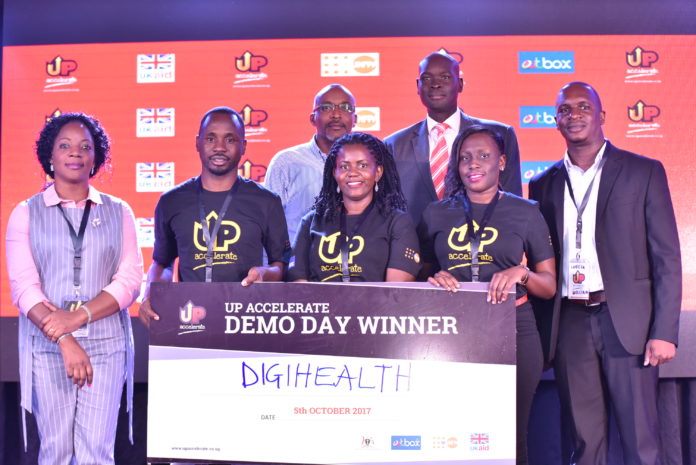
‘DigiHealth’, a mobile application for data collection emerged overall winners at the second cycle of the Up Accelerate programme.
DigiHealth solved the problem of manual patient data collection that is currently being used in most clinics and hospitals especially in the rural areas.
They developed a web-based platform and a mobile application that will digitize the manual data collection for the users most especially the medical professionals who conduct outreaches so that the data collected can be accurate, secure and easily transferable from one hospital to another.
The initiative was funded by the United Nations Population Fund (UNFPA) in partnership with Outbox and UKaid, an initiative which supports young Ugandan entrepreneurs who are building social businesses to address sexual and reproductive health issues.

Through this programme, young innovators are provided with seed funding, business training, mentorship and technical guidance to turn their innovative ideas into reality.
Phyllis Kyomuhendo, team member of Mobile Scan Solutions (mscan), a low-cost mobile ultrasound device to support health workers diagnose pregnancy progress in low-resource settings, was among the four teams presenting their solutions at the event.
“Up Accelerate has enabled us to improve our product development and financial management processes,” ms. Kyomuhendo said.
This means M-Scan will soon be ready to go to market, providing a low-cost and effective means of following up the unborn baby’s development inside the mothers’ womb in resource scarce environments.
For Noella Aryanyijuka, working on EcoSmart Pads, her team’s dream to provide environmentally sustainable and affordable sanitary pads for women and girls from low-income backgrounds, is close to becoming a reality.
“We have transformed tremendously not only as a startup, but as a team. We have learnt how to run a company, manage finances, how to network and improve our product development process. We are much closer to launching than we were early this year,” Ms. Aryanyijuka said.
EcoSmart Pads are made of bagasse, the absorptive matter that remains after sugarcane is processed.
The use of sugarcane bagasse reduces EcoSmart Pads production costs and makes them more affordable to the consumer.
The iDrain startup lead, Julius Ssebaketta also presented their solutions at the closure event.
Their business proposal to the over 150 representatives from the private sector, development partners, academia and young people sitting in the hall was a low-cost chest drainage system to remove excess fluid accumulations in the lungs and a mobile and web solution to support collection and real-time data analysis during health outreaches.
The event provided the young entrepreneurs with the opportunity to raise follow-on funding and explore new partnerships that can enable their products access the market.

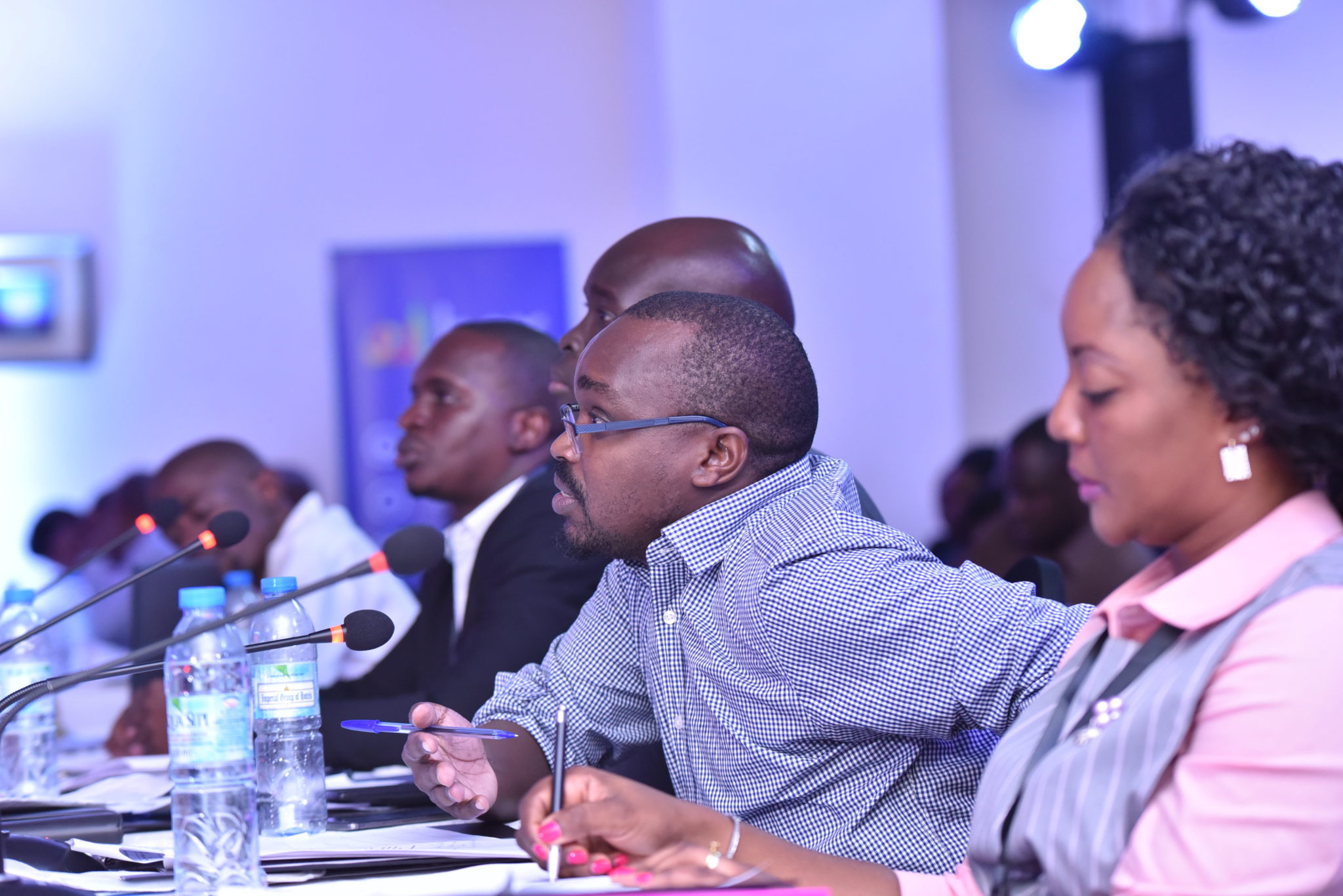
Dr. William Lubega, co-founder of The Medical Concierge Group and one of the judges at the event, highlighted: “These startup teams are showing the way to other young Ugandans. Through their businesses they are contributing to Uganda’s growth and coming up with new, more effective ways of doing things.”
The young startup teams in the Up Accelerate programme have benefited from the expertise of a wide range of institutional partners, including Deloitte, Makerere University, Clinton Health Access Initiative, Medic Mobile, UNFPA and the Uganda Health Marketing Group.
“The programme provides young startups with the unique opportunity to tap into a diverse network of individuals and institutions across Uganda, who have volunteered their time and expertise because they believe the innovative solutions developed by these young entrepreneurs will make a real difference to the reproductive health of Ugandans,” shares Richard Zulu, team leader at Outbox.
Since September 2016, the Up Accelerate programme has reached over one million young Ugandans through online and offline platforms and supported seven teams of 26 entrepreneurs to develop their ideas in the area of sexual and reproductive health into market-ready products.
Diamond Platnumz here for KCCA charity concert
Celebrated Tanzanian crooner Naseeb Abdul Juma aka Diamond Platnumz and husband to city socialite Zari Hassan Tlale, is in Uganda and will perform at a charity concert at Kololo Airstrip this evening.
The concert is aimed at raising Shs4 billion to fully renovate all the 79 Kampala Capital City Authority (KCCA) schools and facilities in the city.
“I am privileged to be part of Kampala City Festival and charity concert, Platinumz, who jetted into the country aboard a Rwandair flight, said during a press briefing at Serena Hotel this morning.
According to Platnumz, who visited Nakivubo and Nakasero Primary schools, this will be his best performance ever.
Platnumz also lauded Ugandan musicians Jose Chameleone and Eddy Kenzo, adding that he would love to have a collabo with Ugandan artistes.
Speaking about the concert, KCCA Executive Director Jenifer Musisi Semakula said it is growing from a one day event to three day festival. “In future we shall be having it for week,” she added. According to Ms. Musisi, the festival will add value to the quality of education in Kampala more so to the KCCA schools.
Meanwhile, fees for the charity concert stand at Shs20,000, Shs40,000 and three million for a table.