Stanbic Bank
Stanbic Bank
18.5 C
Kampala
Stanbic Bank
Stanbic Bank
Home Blog Page 1745

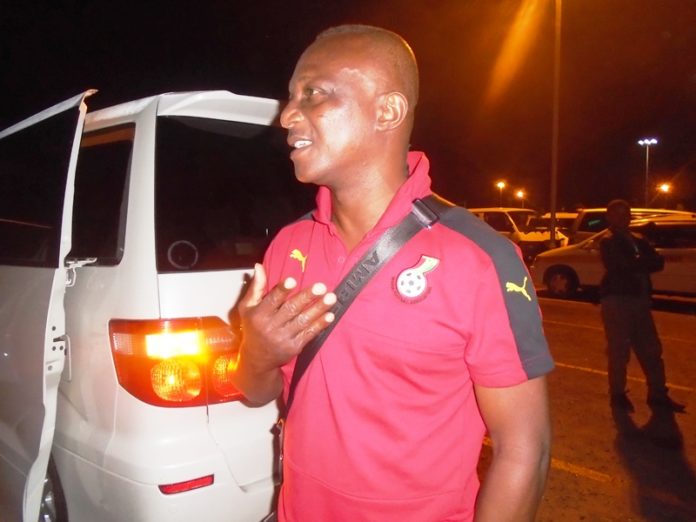
Ghana Black Stars here for the 2018 World Cup qualifier

Balck Stars Coach Kwesi Appiah on arrival

The Ghana national team, the Black Stars arrived in Uganda yesterday night amidst tight security ahead of the 2018 World Cup qualification match against the Uganda Cranes on Saturday.

The delegation of 30 people at Entebbe International Airport and were driven to Serena Hotel where they will reside.

The Ghanaians were in the Kenya where they had their three-day camp from Monday to Wednesday, and are expected to conduct their final session on Friday evening at Mandela National Stadium, 4 pm shortly after the hosts Uganda at 2:30 pm.

Group mates Egypt will host Congo Brazzaville on Sunday 8 at the Borg El Arab Stadium.

Egypt still tops the group with nine points, while Uganda is second with seven points, Ghana are third with five points while Congo are bottom with one point.


Ghana Team in Uganda:

Goalkeepers: Richard Ofori, Lawrence Ati, Joseph Addo

Defenders: Daniel Opare, Agbenyenu Lumor, Abass Mohammed, Kasim Nuhu, Daniel Amartey, Jonathan Mensah, Nicholas Opoku, Vincent Atinga

Midfielders: Thomas Partey, Joseph Attamah, Kingsley Sarfo, Alfred Duncan, Ebenezer Ofori, Thomas Agyepong, Isaac Twum, Patrick Twumasi

Forwards: Raphael Dwamena, John Antwi, Richmond Boakye Yiadom


2018 World Cup qualifiers,

Uganda vs Egypt

October 7, 2017

Namboole Stadium (4 pm)

Stories Continues after ad

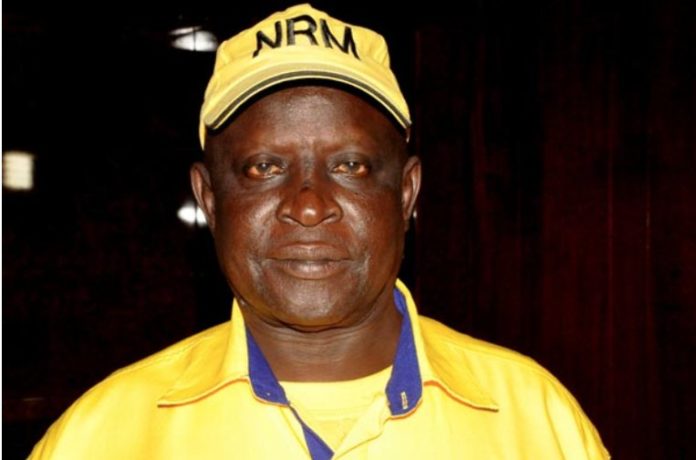
Abiriga ‘urinating’ case postponed

Col. Ibrahim Abiriga

The Kampala Capital City Authority (KCCA) court Grade One Magistrate Moses Nabeda has today forwarded the criminal summons that were served against Arua Municipality legislator Colonel (rtd) Ibrahim Abiriga to October 25.

This was after Col. Abiriga’s  lawyer Usaama Sebuufu told court that his client was unable to turn up for the hearing because he was served with the summons late.

On September 27 Abiriga was summoned by the KCCA court to answer to ‘public nuisance’ charges after admitting to easing himself on the ministry of finance fence on September 25.

Col. Abiriga came into the spotlight for wearing yellow attire while pushing for the removal of presidential age limit that is capped at 75 years.

Yellow is the colour of the National Resistance Movement (NRM) party that is chaired by President Yoweri Museveni, and to which Col. Abiriga subscribes to.

Col. Abiriga, alongside State Minister for Investment Evelyn Anite and Igara West MP Raphael Magyezi are the principal protagonists for expunging Article 102 (b) of the Constitution, a development that could pave the way for Mr. Museveni to contest for presidency in 2021 while aged 77, two years above the current constitutional cap.


Stories Continues after ad

Bunyoro MPs urge ‘oil-affected locals’ to resist government relocation plans

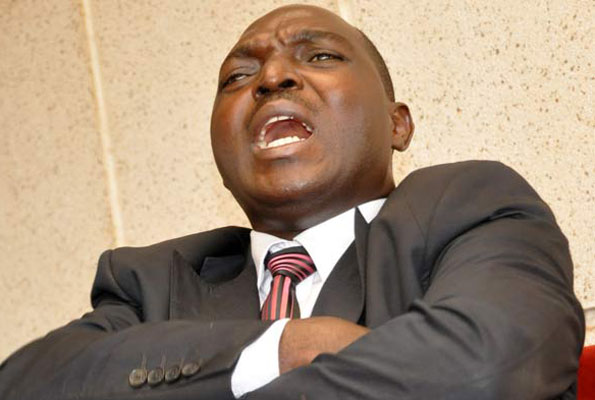
Barnabas Tinkamisimire, the Buyaga West MP

Legislators from oil-rich Bunyoro sub region have urged the ‘oil refinery affected people’ in the area not to give way for oil activities until government compensates them fully as early agreed.

“It is good that you refused to be relocated by government. You should continue to protest against the relocation until government fulfills all the promises made to you [in the 2012 RAP report for the refinery project],” Barnabas Tinkamisimire, the Buyaga West MP said as he addressed residents of Kabaale parish, Buseruka sub-county in Hoima district.

Tinkasimire, who is also the Chairperson of the Bunyoro Parliamentary Caucus, was leading other members of parliament from the region on the fact-finding mission in the hotly contested area where some of the local people have resisted government pleas to vacate the area earmarked for the establishment of the oil refinery.

He said the confusion in the area has subjected the residents to food insecurity, and also argued that the future of the region’s youth and children affected by oil and gas developments is bleak if the matter is not handled well by government.

“We as Bunyoro MPs are not happy with the situation of our people in Kabaale,” Tinkasimire said of the parish that is earmarked by government for the construction of an airport to facilitate quick transportation for personnel and machinery for oil production.

He also vowed that his caucus would cause the summoning of the Minister of Energy, Irene Muloni before Parliament to answer for the mismanagement of the refinery resettlement process and address the challenges of the refinery-affected people.

He said legislators from the region would not government’s proposal to amend Article 26 of the Constitution, saying it is aimed at ‘stealing’ people’s land.

Norah Bigirwa Nyendwoha, the Buliisa district woman MP, expressed concern that oil development projects Bunyoro have resulted in human rights violations due to delayed compensation, among other issues.

Ms. Nyendwoha also noted that if compensation is not well managed other districts such as Buliisa affected by oil developments are most likely to face similar challenges.

She reiterated that it was high time leaders amplified community voices to ensure that human rights are protected.

Hellen Kahunde, the Woman MP of Kiryandongo district, said that the women and youth affected by oil projects have not benefitted from government’s development initiatives and funds such as the Women Fund, the Youth Livelihood Programme and Operation Wealth Creation.

“If government goes ahead with the proposal to acquire citizens’ land before compensation in case of disputes, it will further compromise its own development programmes,” she said, adding that government must compensate the refinery-affected people for the over five years they have waited for relocation or compensation.

Tophace Kaahwa Byagira, the Hoima District Woman MP, decried the living conditions of the refinery-affected people and pledged to  seek for audience with the President to address the issues.

Mr Innocent Tumwebaze, the chairperson of Oil Refinery Residents Association, a local civil society, told the MPs that since government earmarked over 29 sq. kms of land for the refinery project in their area the people have experienced a number of problems including low valuation of property and compensation, and delayed relocation.

“We were wondering how government would wish to relocate us before fulfilling all the promises in the RAP report. We therefore refused to be relocated until the above are fulfilled and we implore you (MPs) to help us have the promises fulfilled. If they are not, government will make us very poor,” Tumwebaze said.

Ms. Esther Abigaba, an area resident said that women were affected by low compensation on top of the discrimination exhibited in the valuation of property. She said that an acre of land in Nyahaira and Kyapaloni villages was valued at a higher price than that in Kitegwa village yet all the villages are in the same sub-county.

Ms. Abigaba also castigated government for disorganising their children’s education, saying that it puts them at a disadvantage. “Our children will be excluded from jobs in the oil sector because of lack of education qualifications,” Ms. Abigaba said.


Stories Continues after ad

US poised to lift sanctions on Sudan

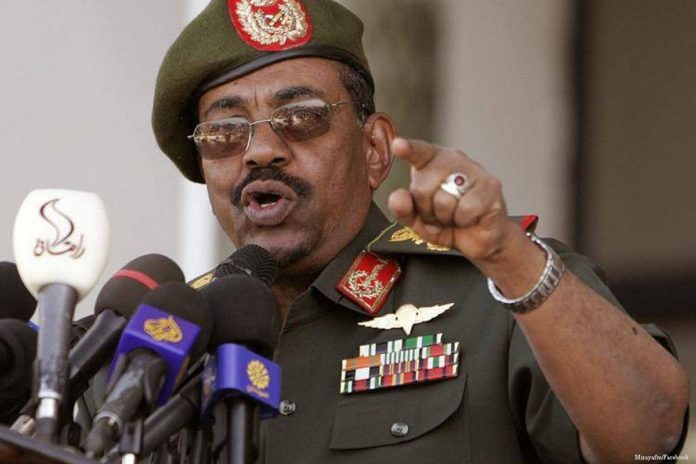
Former Sudan President Omar Al Bashir

The United States is preparing to lift decades-old economic sanctions against Sudan, citing improvement on human rights and progress on counter-terrorism, a US official said on Thursday.

President Donald Trump’s administration is expected to announce its decision today, the official said, speaking on condition of anonymity.

Shortly before leaving office, former President Barack Obama temporarily eased penalties that had been in place for 20 years against the Sudan. In July, the Trump administration postponed for three months a decision on whether to remove the sanctions completely, setting up an October 12 deadline.

Lifting the sanctions, which is opposed by some human rights advocates, will suspend a trade embargo, unfreeze assets and remove financial restrictions that have hobbled the Sudanese economy.

It will also mark a major turnaround for the government of President Omar Hassan al-Bashir, who once played host to Osama bin Laden and is wanted by the International Criminal Court on charges of orchestrating genocide in Darfur.

Sudan will remain, for now, on the US list of state sponsors of terrorism – alongside Iran and Syria – which carries a ban on weapons sales and restrictions on US aid.

But the sanctions decision reflects a US assessment that Sudan has made progress in meeting Washington’s demands, including cooperation on counter-terrorism, working to resolve internal conflicts and allowing more humanitarian aid into Darfur and other rebellious border areas, the official said.

US officials also made clear in July their concern about Sudan’s suspected ties to North Korea. The planned sanctions relief suggests that Khartoum has provided assurances it will abide by international sanctions against North Korea over its missile and nuclear programs, as Washington had urged.

The White House declined comment. There was no immediate comment from the State Department.

Sudan’s State Minister for Foreign Affairs Hamed Momtaz told Reuters on Wednesday in Khartoum: “Sudan has fulfilled all the necessary conditions relating to the roadmap, and the US administration is a witness to that and therefore we expect the sanctions to be lifted.”

Rights groups raised concerns that it would be premature to remove sanctions.

“It’s a serious mistake for these sanctions to be lifted permanently when Sudan has made no progress on human rights,” said Andrea Prasow, deputy director of the Washington office of Human Rights Watch. “A government that continues to indiscriminately bomb its own population and imprison human rights activists shouldn’t be rewarded.”

Speaking before word of the US decision, Al-Buraq al-Nazir al-Warraq, executive manager of the Sudanese Observatory for Human Rights, a group suspended by the government, said taking away sanctions could ‘pave the way’ for further rights abuse by Sudan’s government.

The United States first imposed sanctions on Sudan in 1997, including a trade embargo and blocking the government’s assets, for human rights violations and terrorism concerns.


Stories Continues after ad
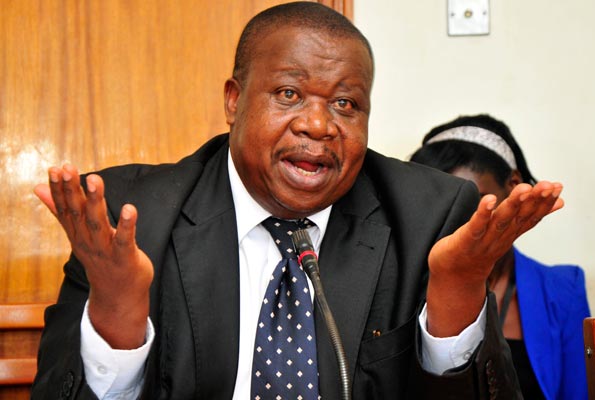
Otafiire calls for protection of ‘traditional knowledge’

Maj Gen Kahinda Otafiire.

The Minister of Justice and Constitutional Affairs Major General (rtd) Kahinda Otafiire, has told the 2017 General Assembly of the World Intellectual Property Organization (WIPO) that protection of traditional knowledge and the country’s genetic resources from misappropriation is a key ingredient of Uganda’s  National Intellectual Property strategy for promoting creativity and innovation.

Minister Otafiire, who is leading a Ugandan delegation at the Assembly, said the two major components are aimed at promoting access to alternative health care, food security, preservation of biodiversity and sustainable development.

The WIPO member states and decision-making bodies are meeting this week in Geneva, Switzerland from October 2-11, 2017 hoping to reach a decision to convene a high-level meeting to conclude a potential international instrument(s) or Treaty in 2019 aimed at preventing the misappropriation of genetic resources, traditional knowledge and traditional cultural expressions.

African countries are primary beneficiaries of this treaty because the modern intellectual property system does not adequately protect traditional knowledge systems or local inventions based on genetic resources/traditional cultural artifacts/materials.

In his statement, Otafiire told the Assembly that a potential treaty to protect genetic resources, traditional knowledge and folklore, at the international level is a priority issue for Uganda in the WIPO. “Traditional knowledge systems in Uganda have long been used to ensure access to alternative medicines, promote sustainable agricultural production and conserve the environment,” he said.

The WIPO has been a key development partner for Uganda in the field of intellectual property undertaking technical assistance activities to encourage innovation and protection of intellectual property including; technical support to Uganda in upgrading and maintenance of the Intellectual Property Automated System (IPAS); training and capacity building for human resources; support in the form a regional workshop on intellectual property and traditional knowledge for economic development.

WIPO member states have a task to negotiate the renewal of the mandate of the Intergovernmental Committee on Intellectual Property and Genetic Resources, Traditional Knowledge and Folklore (IGC), which expired in June 2017. The IGC has always held a renewable two-year mandate since it commenced text based negotiations in 2009.  It will be particularly important for African countries, as key demanders for protection of genetic resources and traditional knowledge to ensure that the General Assembly agrees to convene a diplomatic conference to conclude a treaty in 2019.

The WIPO General Assembly will also decide, among other things, the approval of the program and budget of the organization for the 2018/2019 biennium; furthering discussions for potential treaties to protect broadcasting organizations (the Broadcast Treaty) and simplifying the international applications for industrial designs – the Design Law Treaty (DLT).

In other discussions, the WIPO General Assembly will discuss reports from various committees. At the WIPO General Assembly each committee reports on its activities over the past year. Of particular importance to Uganda and other developing countries is the Committee on Development and Intellectual Property (CDIP) as well as the Committee on the Law of Patents.

In a related development, on Monday, several officers were elected to various offices. Uganda’s Mr. Bemanya Twebaze, the Registrar General of Uganda Registration Service Bureau, was elected the President of the Paris Union Assembly, and Ambassador Christopher Onyanga Aparr, the Permanent Representative of Uganda to the United Nations Office in Geneva, is serving as the Second Vice Chairman of the Coordination Committee.


Stories Continues after ad
Horticulture firms to invest US$17m in flower sector

ROSES: Some of the flowers Uganda exports on the international market.

To meet the global demand of Uganda’s flower exports, local investors have decided to invest an extra US$17 million in the sector over the next four years.

Local firms Wagagai Ltd, Ugarose Flowers Ltd and Jambo Rose said in Kampala that they cannot meet the demand of flowers on the international market due to limited production attributed to high costs and shortage of land to establish greenhouses.

During the four-year period, Wagagai Ltd will invest extra US$14.1 million between 2017 and 2021. Jambo Roses said it would inject US$1.8million while Ugarose Flowers would raise US$1.9 million.

The Jambo Roses Ltd Chief Executive Officer Daniel Kiryango said the extra investment would be used to procure more land for greenhouses expansion and also to buy inputs and machinery.

“The target is to see that, we increase production capacity by using modern technology and expanding the farming acreage. By 2021, we shall be in position to compete with our counterparts in other countries like Kenya and Ethiopia,” Kiryango said.

The Managing Director of Ugarose Limited, Stanley Musiime, urged government to create flower growing zones as it has done with the development of industrial parks across the country. “The same should be done to flower sector,” he said.

Juliet Musoke, the Executive Director of Uganda Flowers Exporters Association said Uganda exports only 8,000 tons annually in light of the challenges of cold rooms at Entebbe Airport, high cost of electricity and inadequate land for flower farmers.

She said if the challenges can be addressed Uganda has the capacity to export 20,000 tonnes of flowers.

“We appeal to the government to enter into joint partnerships where we can pull resources and construct modern storage facilities at the airport to ease the problem of poor storage,” said Musoke.


Stories Continues after ad

Private sector credit ‘sluggish’ – BOU

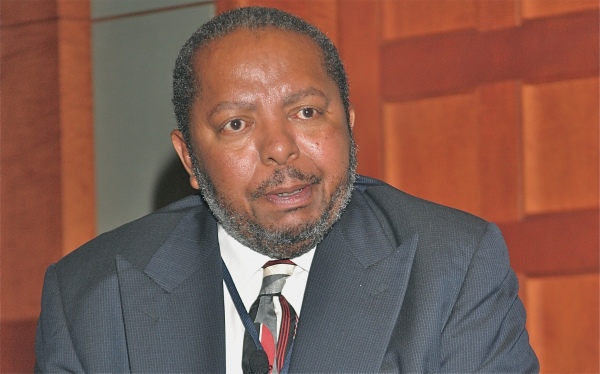
THERE IS NEED FOR PRUDENTIAL EXPENDITURE: BoU Governor Emmanuel Tumusime -Mutebile

Bank of Uganda has described the growth of private sector credit as ‘sluggish’, forcing the bank to cut its central bank rate (CBR) to 9.5 percent in October, down from 10 percent in September in a bid to boost commercial lending in the country.

According to the BOU Governor Emmanuel Tumusiime-Mutebile, the cut in the CBR among other objectives is meant to encourage commercial banks in the country to lower their prime lending rates (PLR) downwards.

Mutebile says commercial bank interest rates have continued to ease, in response to the ‘accommodative’ monetary policy stance.

In July 2017, the average lending rate on shilling denominated loans declined to 20.9 percent from 21.1 percent in June 2017.

Lending rates on shilling loans have declined gradually from 25.2 percent in February 2017 although slight increases were observed in May and June 2017 owing to elevated rates on loans to the agriculture and trade sectors.

Currently, a few commercial banks in the country have their PLR tagged at below 20 percent, sending away majority of the would-be borrowers who want the cash for production.

According to BOU, growth in private sector credit remains relatively subdued, despite the protracted monetary policy easing. It grew by a dismal 4.3 percent in financial year 2016/17, which is much lower than 15.2 percent in the previous financial year. Average annual growth declined in the quarter ended June 2017 to 5.5 percent, from 6.5 percent in the quarter ended April 2017 driven by shilling denominated loans.

Commercial banks have continued to tighten credit to the private sector in light of past high default rates as well as slow gross domestic product growth which ended at 3.9 percent in financial year 2016/17. Meanwhile, demand for credit as shown by the number and value of loan applications remains robust while supply as shown by the number and value of loan approvals remains subdued.

“Given that annual core inflation is forecast to remain around the mediumterm target of 5 percent and economic activity is slowly gaining momentum, a cautious easing of monetary policy is warranted to boost private sector credit growth and to strengthen the economic growth momentum. The BoU has therefore decided to reduce the Central Bank Rate  by 0.5 percentage points to 9.5 percent,” Mutebile says in the latest Monetary statement for October.

BOU records show that since January 2017, value of loan applications has averaged about Shs. 1,536 billion, while value of approvals has averaged Shs753 billion per month.

“The significant disparity between value of loan applications and approvals is in part a reflection of the supply-side constraints to growth in private sector credit,” BOU says.

Analysts say all is not lost as far as private sector credit growth is concerned as non-performing loans (NPLs) go down. For instance, the ratio of NPLs to total loans declined to 6.2 percent in second quarter of 2017, from 6.3 percent in first quarter.

The latest quarterly GDP data released at end September 2017 by UBOS indicates that growth recovered in the second half of 2016/17. Quarterly growth rates of only 0.6 percent and 1.1 percent were recorded in the first two quarters of 2016/17, mainly because of bad weather that affected the agricultural sector. But growth rates accelerated to 1.8 percent and 1.9 percent, respectively, in the third and fourth quarters of the financial year.


Stories Continues after ad

September business conditions ‘good’ for Stanbic Bank

Jibran Qureshi, Standard Banks regional economist for East Africa

Stanbic Bank has released its Purchase Managers Index (PMI) for September which indicates that there has been a slight decline in the headline index.

Announcing the results at a press briefing in Kampala Jibran Qureshi, Standard Banks regional economist for East Africa, noted however, that even  though  the  headline  PMI  fell  to  53.8  from 54.1 in  August,  the  average  of  54.1  in  the  three months  to  September  was  still  higher  than  the average of 51.6 in the first half of the year.

A strong performance  from  the  coffee  sector has supported growth but  the  recent armyworm infestation could still pose as a threat to food crops prices and agricultural  productivity  towards  the back  end  of the  year.  That  said,  a  gradual improvement  in private  sector  credit  growth should  bode  well  for domestic demand.

The Ugandan private sector is being encouraged to increase its interest for credit in a bid to boost economic activity.

In the recent monetary policy statement for October, the Central Bank announced a further downward revision of the Central Bank Rate (CBR), the fifth in the past nine months. At just 9.5% the CBR now stands at its lowest level since the introduction of the CBR in 2011.

The BOU Governor Emmanuel Mutebile explained the reasons behind the rate cut. “Given that annual  core inflation is forecast to remain around the  medium term  target  of  5% and  economic  activity  is  slowly  gaining momentum,  a  cautious  easing  of  monetary  policy  is  warranted  to  boost private  sector  credit  growth  and  to  strengthen  economic growth,” he said.

Analysing the performance of the various business sectors Stanbic monitors to conduct the PMI research, Jibran revealed, that agricultural, industry, services and wholesale and retail sectors  continued  to  register  growth  of  output  and  new business  inflows  in  September. Meanwhile, construction output decreased as the sector saw no change in new orders. Overall input costs however rose across each sector, he said.

Looking at employment where workforce numbers increased on the back of new projects and heightened demand, Jibran noted Overall job creation is a trend we have witnessed since the inception of the survey 16 months ago.

He noted that bigger new orders had also led Ugandan private sector firms to increase their quantities of purchases for the fourth month running.

Inventories grew as a consequence. Meanwhile, firms  were  able  to  work  through  their backlogs of  work,  with  the  latest  decline  in  outstanding business the sixteenth in as many months.

The Stanbic PMI is a composite index, calculated as a weighted average of five individual sub-components: New Orders (30%), Output (25%), Employment (20%), Suppliers Delivery Times (15%) and Stocks of Purchases (10%).

Readings above 50.0 signal an improvement in business conditions on the previous month, while readings below 50.0 show deterioration.


Stories Continues after ad

Uganda’s ambassador presents credentials to Turkish President

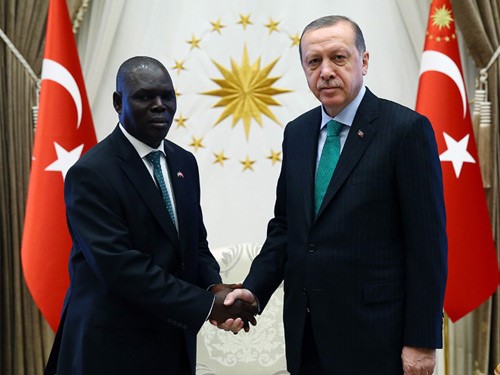
Ambassador Stephen Mubiru presented his credentials to the President of Turkey Recep Tayyip Erdogan at the Presidential Complex in Ankara.

Ambassador Stephen Mubiru recently presented his credentials to the President of Turkey Recep Tayyip Erdogan at the Presidential Complex in Ankara.

In his speech Erdogan stated that Uganda and Turkey, with a joint population of 125m, are a viable markets for the sister countries. He emphasized that the cooperation between Turkey and Uganda in trade and economic diplomacy should increase, mentioning that Turkish investors and businessmen have a growing interest in East Africa with a specific focus is on Uganda.

In this regard he extended appreciation to the Government of Uganda for the land allocation to ASB  Special Economic Zone in Kaweweta stating that this will increase business between two countries, whilst creating job opportunities and contributing to Uganda’s economic development.

President Erdogan stated that the Turkish Technical Cooperation Agency (TIKA) is extending its works in Uganda and would set up its offices at the earliest opportunity in Kampala. He took the opportunity to extend an invitation to President Yoweri Museveni to visit Turkey in the near future.

In response Amb Mubiru informed President Erdogan that Uganda’s focus is on Economic and Commercial diplomacy promotion and so the two countries agreed to strengthen the economic ties between the two sister countries.

Amb Mubiru, who was previously Uganda’s High Commissioner to Malaysia, was accompanied by officials of the Uganda Embassy in Ankara.

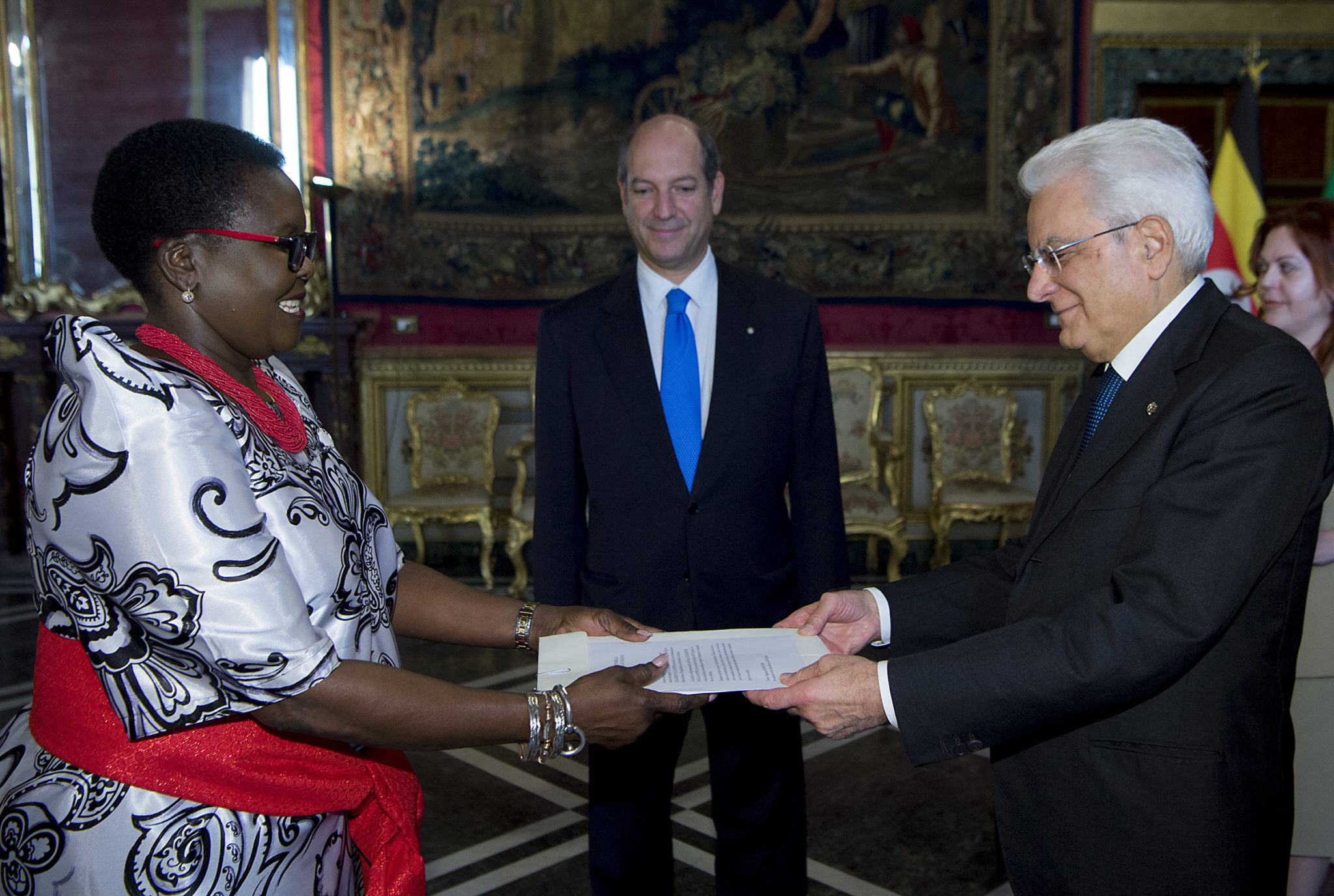
Uganda’s Ambassador Extraordinary and Plenipotentiary Elizabeth Napeyok presented her credentials to Sergio Mattarella, President of the Republic of Italy at the Quirinale Palace, the official residence of the Italian President.Photo credit: Quirinale Palace Press Office, Italy.

Meanwhile, in a related development Uganda’s Ambassador Extraordinary and Plenipotentiary Elizabeth Napeyok presented her credentials to Sergio Mattarella, President of the Republic of Italy at the Quirinale Palace, the official residence of the Italian President.

President Mattarella and Amb Napeyok talked about development programs existing between the two countries and the need to foster further cooperation.

Ambassador Napeyok emphasized the fact that Uganda is currently focusing on Commercial Diplomacy and the two principals pledged their full support in deepening economic ties between the two countries

Ambassador Napeyok, who previously served as High Commissioner of Uganda to India and Ambassador to Paris was accompanied by Ambassador Mumtaz Kassam, Deputy Head of Mission, Mr Victor Acellam, First Secretary and Mr Ronald Basiimwa, the Third Secretary.


Stories Continues after ad

The Aga Khan to be honoured on Independence Day

His Highness Shah Karim Al- Hussain, the Aga Khan IV,

President Yoweri Museveni is set to preside over Uganda’s 55th Independence Day celebrations that will be held in Bushenyi Municipal Grounds on October 9, at which His Highness Shah Karim Al- Hussain, the Aga Khan IV, will be honoured.

The Aga Khan is the 49th hereditary Imam of the Shia Ismail Muslims, and through his endowment, the Aga Khan Group, he has for over 60 years invested in several multi- million ventures in Uganda. He is also the founder and the chairperson of the Aga Khan Development Network (AKDN).

“His Highness Aga Khan is expected to be a special guest and receive an honor for the immense economic contributions he has made to the country,” presidency minister Esther Mbayo wrote in a release delivered at the Media Centre earlier today..

This year’s celebrations will be held under the theme: ‘Uganda’s freedom must be anchored in the spirit of hard work, resilience and commitment’ and according to the Minister, Ugandans should among others also honour people like Benedict Kiwanuka and Ignatius Musaazi, who mounted pressure on the colonialists to grant the country Independence.

Musaazi formed the first political party the Uganda National Congress (UNC) in March 1952.


Stories Continues after ad