Stanbic Bank
Stanbic Bank
21 C
Kampala
Stanbic Bank
Stanbic Bank
Home Blog Page 1747

The Arena Mall: Understanding the secret behind East Africa’s biggest shopping centre

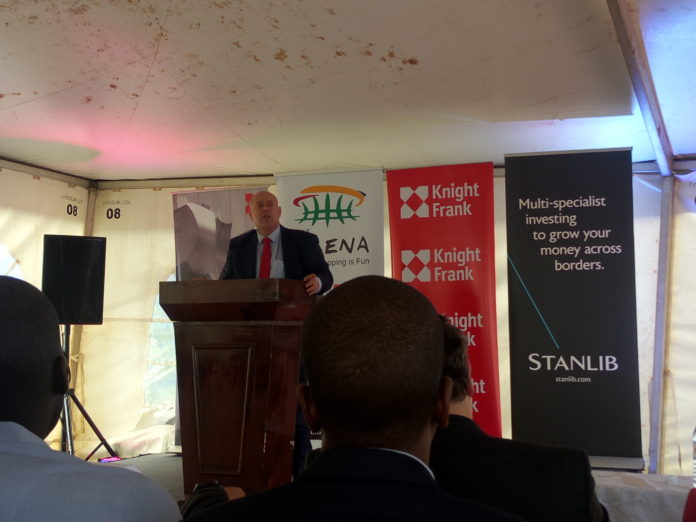
An official of the STANLIB at the launch

Representatives from STANLIB Asset Management Limited, South Africa, gathered in Kampala for the ground-breaking ceremony of East Africa’s biggest mall, the 14, 000 square metre The Arena Mall.

Located at the intersection of two major thoroughfares – Kibuli and Nsambya Roads, the mall is STANLIB’s first property development venture in Uganda, and is designed with two levels of enclosed shopping space and a rooftop cinema, entertainment and restaurant space atop two levels of structured basement parking.

Situated barely three kilometres south of the city’s central business district, on a steeply rising slope, The Arena Mall will offer breath-taking panoramic views of the city scape and surrounding Nakasero.

The Arena Mall site is easily accessible from the CBD through Kibuli Road on the north, Nsambya Road to the west, and Gaba Road from various southern suburbs.

In close proximity of the site are the American embassy, Nsambya Hospital, the Kampala International University, Uganda Military Police Barracks, and a number of prominent schools, public offices, shopping and entertainment centres.

The Mall should be a welcome addition to the south-east suburbs, which are largely underserved by formal retail and leisure facilities.

Over 87,000 households and 334,000 people reside within a 1km radius of the site, but there exists a dearth of quality, formal retail offerings in the catchment area, despite the annual population growth rate of 3.6% and a concentration of middle income households in this region.

The Arena Mall will be anchored by Shoprite, and will have a wide variety of shops such as Cafesserie, Aristoc Booklex, Timberland, and Century Cinemax.

Knight Frank Uganda is leading the leasing efforts, with over 50% of the lettable space in the Mall pre-let. The Mall opening is expected by September 2019.

“Today is an exciting and historic day for our organization as a whole, marking STANLIB’s first property development project in Uganda,” said Byrd, Principal at STANLIB.

STANLIB believes The Arena Mall offers a chance for good investment return, geographical diversification for the Fund, as well as an opportunity to contribute to the economic development and viability of a key urban node.

The primary objective of STANLIB’s Fund is to achieve long-term capital appreciation through investments in a diversified portfolio of quality property developments projects.

The Arena Mall will be Kampala’s first environmentally sustainable building, and will have a 4-Star rating by the Green Building Council South Africa (GBCSA)-Uganda.

STANLIB is pleased to be investing in a project that provides benefits for the tenants, environment and investors, and is also a proponent of innovation and learnings in the market.

STANLIB is working in partnership with a local partner, Charles Odere of Chestnut Uganda Limited, and reputable local and international development professionals.

Seyani Brothers (Uganda) Limited is the main contractor, and the development and construction will be managed by Betts Townsend.


 

Stories Continues after ad

dfcu to fund Uganda’s co-operative unions

Representatives from dfcu Bank, The Agriculture Development Center in Lira District during the announcment of the partnership with Rabobank which will support Farmer Based Organisations across the country

dfcu Bank has announced a partnership with the Agriculture Development Centre and Rabobank in an effort to support farmer -based organisations and cooperative unions across the country become self-sufficient, an effective tool to transform the agricultural sector in Uganda.

The announcement was made at an event in Lira that was attended by various stakeholders and farmers from the region.

Speaking at the event, dfcu Bank’s Head of Corporate and Institutional Banking, Godfrey Mundua said the partnership between ADC, Rabobank and dfcu Bank is aimed at supporting farmer organizations become profitable, sustainable and ultimately bankable.

“The agricultural sector of Uganda is the backbone of our country. By proving employment for millions of Ugandans, it directly grows our economy.

“dfcu Bank has always committed to the empowerment and growth of the agricultural sector in Uganda. Besides providing financial banking to our farmer clients, we have developed products that are tailor-made to meet the needs of their businesses- both as individuals and groups,” Mr. Mundua said.

The Agriculture Development Center will equip Cooperatives and Farmer Based Organizations (FBOs) with agribusiness skills through trainings in governance, financial management, financial literacy and marketing skills.

Mundua also emphasized the value of the partnership. “By partnering with The Agriculture Development Center and Rabobank, we will provide farmer based organizations in the region with the necessary skills that will eventually make them eligible for credit financing from commercial banks.

“By providing training skills in governance, financial management, financial literacy and marketing, we believe that the Farmer Based Operations will continue to grow their operations in ways that are of benefit to both them and the wider communities,” he added.

The Executive Director of The Agriculture Development Centre Anja de Feijter commented on the positive impact the partnership will have on farming communities across the country.

“ADC envisions promoting self-sufficiency as an effective tool to transform the agricultural sector in Uganda. This can be achieved by strengthening Farmer Based Organizations in respect of efficiency and creating economies of scale, in order to make them profitable, sustainable and bankable enterprises that are able to provide efficient and effective services to their farmers,” he said.

The Agriculture Development Center started its operations in October 2017 in Eastern, Western, and Northern Uganda.

Lira is the first district whose Farmer Based Organizations received a two-day training on various agribusiness skills including; governance, financial management, financial literacy and marketing expertise.


Stories Continues after ad

NGO urges gov’t to expand tax base

Finance minister Matia Kasaija

The Uganda Debt Network (UDN) has urged the government to establish simpler registration procedures to formalise the informal sector, expand the country’s revenue base and reduce public debt.

According to UDN, a national civil society organization which tracks how government manages the public debt wants the government to balance between public investment especially infrastructure and macroeconomic stability in light of increased domestic borrowing on exchange rate and debt.

“Increase linkages between public infrastructural investment and rapid growth areas like Agriculture to expand productive capacity of Uganda’s economy,” UDN says, and adds that the Ministry of Finance has so far released sh4.1 trillion for debt repayment for the first half of the financial year.

To reduce debt accumulation, UDN wants government to scale down annual budget sizes for instance by slashing recurrent sector budgets, reversal of wasteful expenditure and rationalization of the  run-away cost of public administration.

The NGO says that much as government is committed to paying debts, the country’s debt levels still remain high.

‘In March 2011, Uganda’s debt was US$4.29bn and it is expected to increase beyond US$ 13bn in FY 2017/18 hence raising debt costs,’ it says.

A report by Bank of Uganda in June, 2016, UDN says, showed that public debt stock stood at Shs46.1 trillion (US$13billion) by April 2016, which was about 52% of GDP, already beyond the 50% threshold and is pushing the country into another debt trap. UDN warns the level of sustainability notwithstanding is unhealthy for an economy aspiring to reach mid-income status by 2020 with a debt position that is more than half of its GDP.

UDN is one of the civil society organizations that have over the years called upon the government to have a more transparent approach to budget policies, public particularly have urged the Finance ministry to improve access to the details entailed in the national budget document.

The NGO has urged the public to pay more attention to the money that has been allocated to various entities and ensure its properly utilized. “The public should also demand for accountability since close to 70% of the National Budget is funded domestically and mainly by taxes that citizen’s pay,” it says.

Meanwhile, in an attempt to simplify the details of the national budget for ordinary Ugandans as way of promoting transparency and accountability, the finance ministry mid-October published a guide that the various stakeholders can use to follow the budget.

The guide, known as ‘Know Your Budget citizen’s guide to the 2017/18 budget’ was launched by Finance minister Matia Kasaija in Kampala.

The booklet spells out the country’s economic performance and outlook, revenue and tax measures, expenditures and interventions in key sectors like agriculture, energy and mineral development, works and transport, education, health, water and environment, social development, security and policy initiatives.

The citizens’ guide aims to enrich and enable government clients, civil society organisations, development partners and the general public to understand government plans by highlighting the strategic objectivities of the FY2017/18 Budget and provide understanding of new tax measures and reasons behind the resource allocations to key sectors.


Stories Continues after ad

Age limit debate: UCC closes Masindi radio

Outgoing UCC ED Executive Director Godfrey Mutabazi.

The Uganda Communications Commission has closed Radio Kitara in Masindi ahead of today’s planned live coverage of the Masindi District Council, which allegedly wants to pass a resolution not to amend Article 102 (b) of the Constitution.

Annet Najemba, the programs director at Radio Kitara, said she received a call from a one Medi Kagwa, who said he was a UCC official, telling her the Commission switched off the radio due to ‘some technical issues’.

“The relay of the district council meeting was halted due to the switched off station. We may not relay the council meeting because we need prior preparation; our earlier preparation has been affected by UCC,” Ms. Najjemba said.

She emphasized that switching off the radio station without prior notice had greatly affected their listeners and advertisers, a development which will compel the station to refund money to their clients.

She however, said the management of the station is sorting out ‘technical issues with UCC and immediately they are done, the station will be on air’.

Of recent the UCC has taken to shutting down media outlets it deems might air programmes that are contrary to government’s position regarding the age limit removal, attracting blame from some quarters including the US embassy.

On October 21, UCC shut down a private radio station, Kanungu Broadcasting Services Ltd. (KBS) on allegations it had breached the ‘minimum broadcasting standards’.

The KBS Radio Director, Mr. Charles Byaruhanga at the time said UCC give them the exact reason for the closure.

Also, two weeks ago, UCC banned live coverage of events in Parliament after MPs engaged in fistfights that ended up with the Speaker Rebecca Kadaga suspending 25 legislators including State Minister for Water Resources Ronald Kibuule, who allegedly sneaked a gun into the parliamentary chambers.


Stories Continues after ad

LC 1 elections: compilation of village registers starts tomorrow

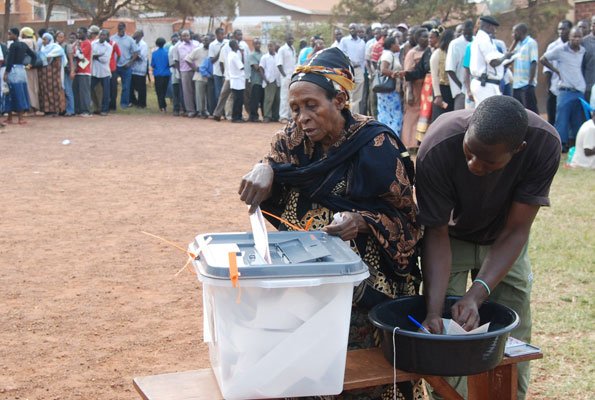
Voters line up to cast their ballot

For the first time in 16 years Ugandans are going to elect their village council representatives in an exercise that will see voters line up behind their preferred candidates on November 21.

LC I elections were last conducted in 2001 and since then the government failed to conduct three electoral cycles in 2006, 2011 and 2016, reportedly due to lack of funds.

And, updating the media about the Local Council elections today, the Chairman of the Independent Electoral Commission Justice Simon Byabakama said the exercise will cover about 59,200 villages in Uganda.

Justice Mugenyi disclosed that the compilation will be followed by two days of voter register display, and urged voters to turn up in big numbers, with the relevant documents entitling them to participate in the exercise.

“The registration, display of voter’s registers, nomination and registration of voters are aimed at enabling all willing village residents have a chance to participate in the elections,” Justice Mugenyi said at the Commission headquarters today.

In August this year the IEC received Shs 15.7 billion from the ministry of finance to organise the LC 1, 2 and Women Council elections all over Uganda.

However, the exercise that entails lining up has been criticised by political activists, who say it is against the principles of liberal democracy.


Stories Continues after ad

Uganda, Iran to strengthen business cooperation

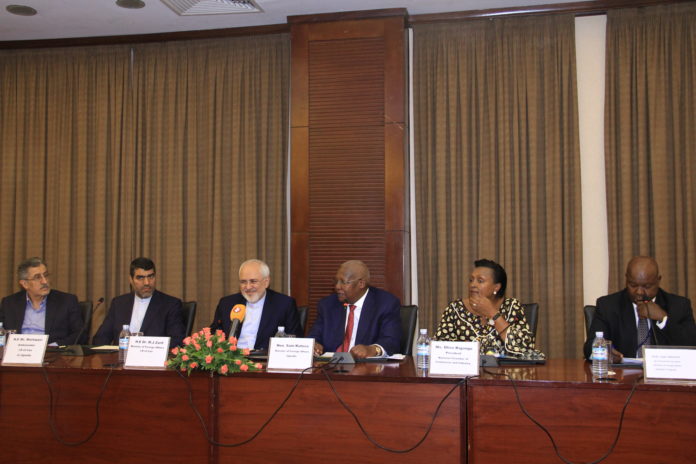
L-R: Mr. Gholam Hossein Shafeie, Head of Iran Chamber of Commerce, Mr Seyed Morteza Mortazavi Amb. of Iran to Uganda, Hon Dr. Mohammad Javad Zarif, Minister of Foreign Affairs of Iran, Hon Sam Kutesa Minister of Foreign Affairs of Uganda, Mrs Olive Kigongo, President of the Uganda National Chamber of Commerce, Amb Isaac Sebulime, Director of International and regional Economic Affairs, MOFA

The Minister of Foreign Affairs Sam Kutesa has said that the private sector is the key driver for sustained economic growth in Uganda.

Speaking at the Uganda-Iran Economic forum which took place at the Conference Centre in Kampala this morning, Kutesa, who is leading the Uganda delegation, said the East African country will pursue both domestic and foreign direct investment for increased productivity, job creation and improvement of livelihoods.

The economic forum comprises of business delegations from both Government and the Private Sector of Uganda and Iran, the latter led by foreign minister Dr. Mohammad Javad Zarif.

“Iranian companies and individuals should take advantage of the numerous opportunities available in Uganda, especially in agriculture and agro-processing, oil and gas, minerals, ICT, human resource development, energy, Tourism, and infrastructure development”, he said.  He hailed the Economic Forum as a strong first step that he hoped would yield tangible benefits and help attain the objectives set out in the MoUs signed under the Uganda-Iran Cooperation framework over the years.

On his part Dr Zarif, who is accompanied by  seven of  Iran’s top businessmen, noted that his delegation includes representatives of every sector of business in Iran at their highest level, with investment companies focusing on high-tech agricultural production including nano-fertilizers, pharmaceuticals, bio-tech and manufacturing.

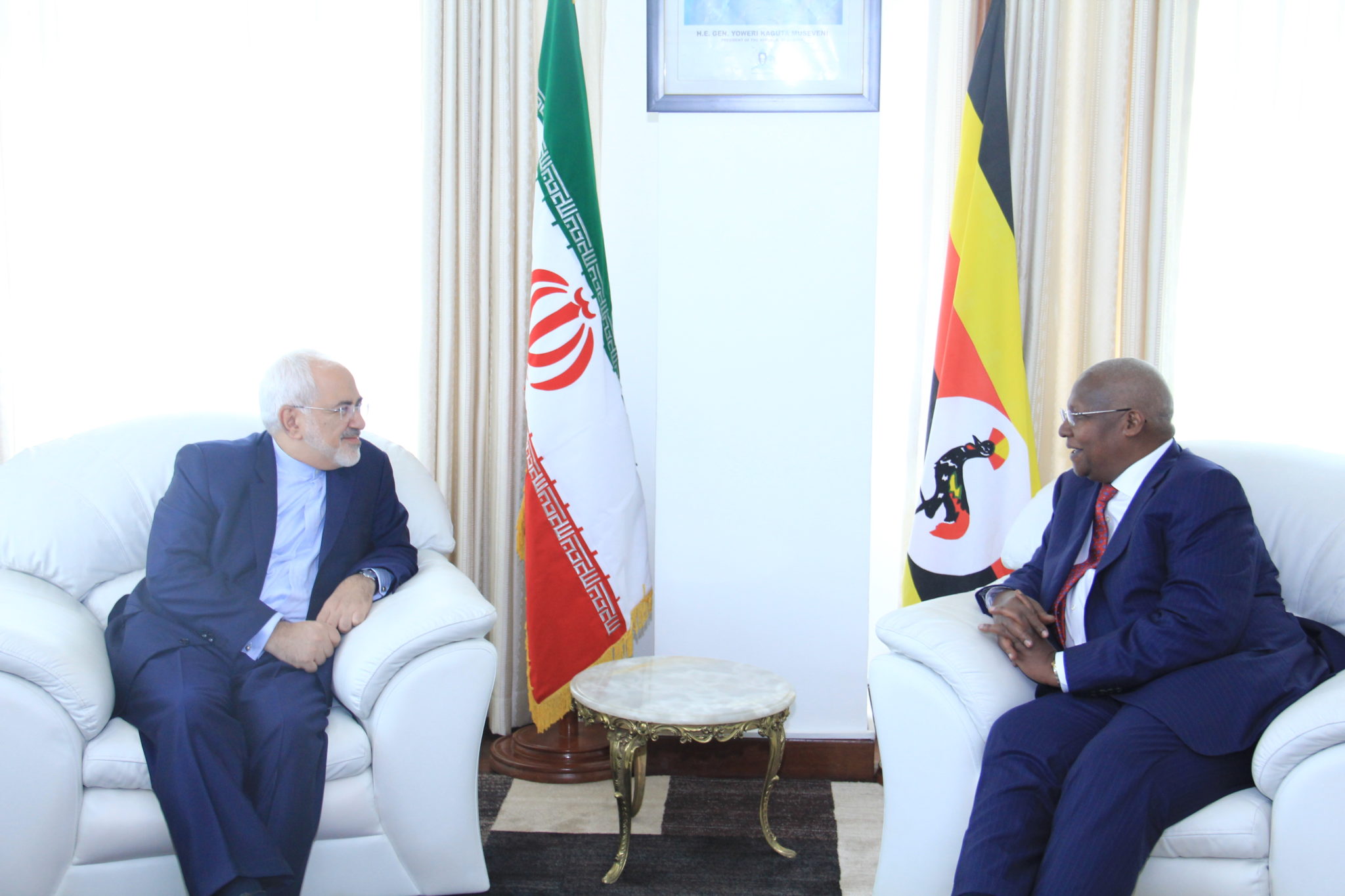
Hon Kutesa meets Hon Zarif of Iran

Later, during a bi-lateral meeting between the two ministers held at the Ministry of Foreign Affairs, Dr Zarif emphasized that science-based Iranian companies are prepared to export their products to Uganda, and to also to transfer the technologies for use in Uganda and the EAC, which has a combined population of over 170 million people. 

In response minister Kutesa informed his Iranian counterpart that the same regions were also working on a Tripartite EAC-COMESA-SADC Free Trade Area which comprises of 26 countries with a total of 600 million people and combined GDP of nearly 1 trillion US Dollars, giving Iranian foreign Direct Investments access to a big regional market with Uganda at its center.

Dr. Zarif accompanied is scheduled to meet President Yoweri Museveni this afternoon and the two will preside over the opening of phase one of the Iran-Uganda Clinic in Naguru. 

Stories Continues after ad

Home-based players dominate Cranes squad for last WC qualifier

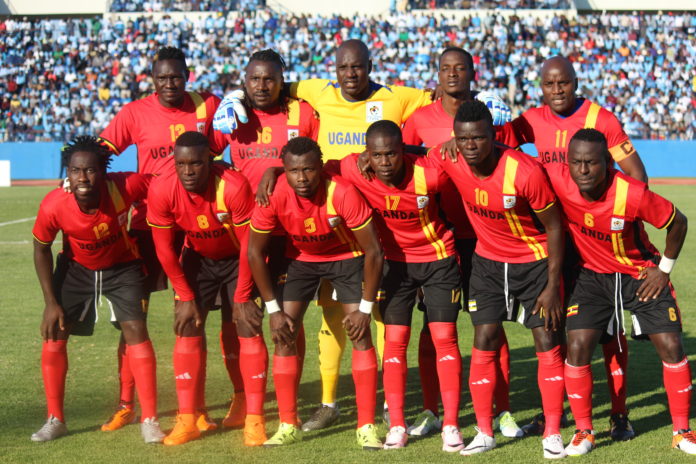
The Cranes squad

Interim Uganda Cranes coach Moses Basena has released a 32-man squad from which he will select the final team to travel to Congo Brazzaville for the final game of their 2018 FIFA World Cup Qualification campaign.

The squad is mainly dominated by players featuring in the Azam Uganda Premier League (home-based players), with only 8 foreign based stars on the list.

Captain Denis Onyango, Godfrey Walusimbi, Isaac Isinde, Denis Iguma, Murushid Jjuko, Hassan Wasswa, Emmanuel Okwi and Geoffrey Serunkuma are the foreign-based players named.

“We shall use the match to fine tune players for forthcoming international fixtures for the CECAFA Senior Challenge Cup, CHAN in Morocco and the 2019 Nations Cup Qualifiers. The door is not closed for other players” said Basena.

Cranes travel to Congo Brazzaville on November 12 to complete their Group E matches matches on the same day Ghana will be hosting the World Cup bound Egyptian Pharaohs.

“We want to finish on a high in this campaign as positive results create a good attitude from the players and within the camp” Basena told the Fufa website.

The training programme for preparations will be released before the end of this week.

There are five groups of four teams for the African qualification, and Egypt and Nigeria have already qualified. Only one team qualifies from each group.

The Squad:

Goalkeepers; Denis Onyango, Isma Watenga, Ochan Benjamin, Ikara Thomas

Outfield palyers:  Wadada Nicholas, Nsubuga Joseph, Muleme Isaac, Walusimbi Godfrey, Iguma Denis, Isaac Isinde, Jjuko Murushid, Kabugo Savio, Kiyemba Ibrahim, Awanyi Timothy, Muwanga Bernard, Hassan Wasswa, Masiko Tom, Shafiq Kagimu, Gardinho Ghadafi, Mutyaba Muzamiru, Mucuurezi Paul, Waisswa Moses, Owori David, Kyambadde Allan, Mugisa Albert, Kaweesa Hood, Ddumba Sadala, Okwi Emmanuel, Serunkuma Geofrey, Senkatuka Nelson, Karisa Milton, Nsibambi Derick.

Stories Continues after ad

MTN increases innovation awards cash to US$3000

MTN Uganda will host an exhibition for the 45 selected submissions for the MTN Innovation Awards 2017, scheduled for Saturday, October 28th 2017 at the Shoprite Lugogo Mall parking area.

According to a release by the telecom giant, on display will be the 45 finalist entries that have made it to the next phase of the MTN Innovation Awards 2017, with the category winners taking home an improved package of US$3000, up from US$1000 in 2015.

The nominees were selected from over 200 applicants that responded to the call for entries for the 2017 MTN Innovation Awards 2017. The call for entries closed on October 6th 2017 and since then, an independent auditor has been reviewing the entries to come up with a finalist list of 45 entries.

The purpose of the exhibition of the public to view the amazing work done by technology innovators, especially the impact they are creating in society. The exhibition will take place all day starting at 9am. The interaction with the nominees will provide insight into the development and operation of the innovations.

Additionally, the panel of five judges will review each of the nominees in order to make a decision on the eventual winners of the 9 categories.

MTN is seeking to recognize both Mobile and Web-based applications developed by Ugandans. The choice of categories like Finance, Agriculture and Health lays emphasis on MTN Uganda’s commitment to scale sectors critical to the improvement of lives and communities through digital innovations. The awards are in line with MTN Uganda’s mission to make the lives of Ugandans brighter.

The MTN Innovation Awards 2017 will also recognize the Outstanding Woman in Innovation, Innovation Achiever of the Year and Most innovative Mobile App. The winners will be recognized at an Awards Gala to be held on November 8 2017.

In 2015, the winners included, ClinicMaster, BrainShare, Yo! Payments Gateway, Intelligent Works, Outbox, Fezah, Lyndsay Handler of ReadyPay – Outstanding Woman in Innovation and Solomon King of FundiBots – Innovation achiever of the year.


Stories Continues after ad

Panic in police as two more senior officers arrested

Police Chief Okoth Ochola

The crackdown on police officers allegedly involved in a raft of crimes is intensifying, with the Commander of Flying Squad in the Kampala Metropolitan Police Abel Tumukunde now arrested.

Similarly, sources told the EagleOnline that the Entebbe Airport Deputy Commandant has also been arrested, following accusations that he held a former senior Democratic Republic of Congo (DRC) politician Mbusa Nyamwisi incommunicado without authorization from his superiors.

Over the past few days, the Chieftaincy of Military Intelligence has carried out over a dozen arrests of senior police officers, among them Commissioner of Police CP Joel Aguma, head Professional Standards Unit (PSU) and Senior Superintendent of Police (SSP) Nixon Agasirwe of the Special Operations unit.

Sources within security say the ongoing investigations into the activities of some senior police officers were ordered by President Yoweri Museveni upon receiving several damaging intelligence reports against the said individuals.

On Monday, the EagleOnline broke the story of 12 police officers who were arrested, and yesterday the sources said more officers were reportedly handed over to CMI in a procedural manner by Deputy Inspector General of Police, Martin Okoth Ochola.

Meanwhile, some of the areas that are of interest to the investigators are that two heads of departments who were picked yesterday were reportedly ‘agents’ of two governments in the region.

One officer, who sources say used his dreaded unit for personal gain, is accused of kidnapping foreigners and incarcerating them in safe houses without the knowledge of the authorities.


Stories Continues after ad

Opposition MPs return ‘age limit removal cash’

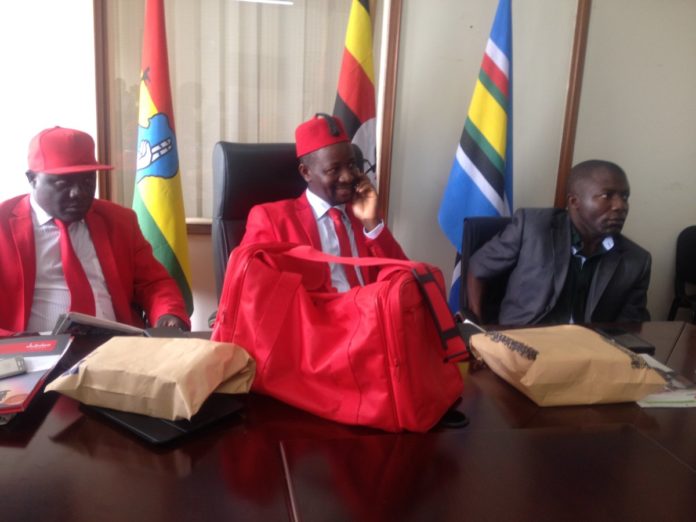
The money the MPs have returned so far

Six ‘anti-age limit removal’ legislators have today returned the Shs29 million that was credited to their accounts yesterday, ostensibly to facilitate ‘consultative meetings’ in respect to Igara West MP Raphael Magyezi’s private members bill that is aimed at expunging Article 102 (b) that caps presidential eligibility age at 75 years.

So far opposition MPs Muwanga Kivumbi (Butambala), Medard Lubega Sssegona, William Nzoghu (Busongora) Moses Kasibante (Lubaga North),  Robinah Ssentongo (Kyotera Woman) and Opposition Chief Whip Ibrahim Semujju Nganda (Kira Municipality), have collectively returned 174 million, while Gulu Woman MP Betty Ocan Aol said she ‘is divided’ and will consult her voters on what to do with the money.

And, in a press briefing held at Parliament this morning, opposition chief whip Ssemuju Nganda said that opposition legislators had agreed to return the money to authorities in parliament ‘for onward transmission’ to whoever credited it to their accounts.

“This money is what you and me will be asked to pay through different taxes both direct and indirect, therefore we as opposition MPs are taking  it back,” Semujju Nganda, the outspoken Kira Municipality MP said.

Yesterday, Chris Obore, the Director of Communications and Public Affairs at the Ugandan Parliament confirmed Shs13 billion had been received from the Ministry of Finance, adding that each of the MPs would get Shs29 million for the two-week exercise.

But according to Semujju, the IGG and Auditor General should investigate the source of the money, since it was not budgeted for by Parliament.

“You are aware on October 13 Mr. Museveni was coaching NRM legislators on how to use it, specifically some MPs told him they don’t want to be taught how they will consult instead they want the money,” he added.

According the MPs opposed to the age limit removal, President Museveni  is trying to bribe and influence their thinking to accept and support age limit bill which is currently under scrutiny before the legal and parliament affairs committee, headed by Jacob Oboth Oboth.

In his reaction to the Shs29 million, Butambala legislator and shadow internal affairs minister Muwanga  Kivumbi, said: “a good leader must bring hard-earned money not dirty money.”

Developing story

Stories Continues after ad