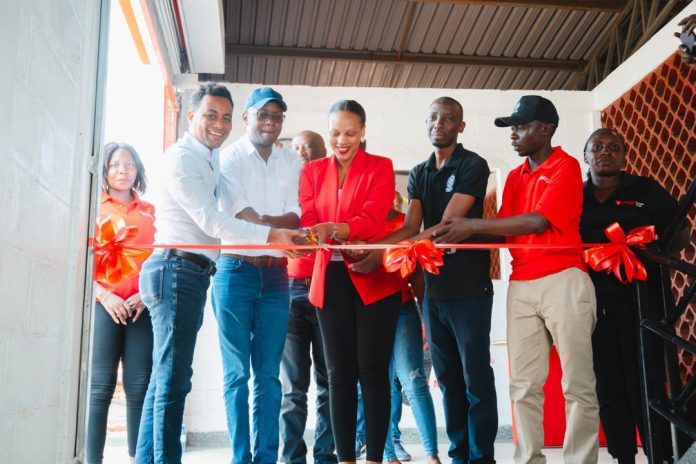
One of Coca-Cola Beverages Uganda’s (CCBU) Official Coca-Cola Distributors (OCCDs) marked its significant growth as a business partner by inaugurating new premises.
Bronze Logistics, an OCCD based in Kazo, Bwaise, has moved from a rented 116m 2 warehouse to a self-owned 500m 2 facility.
“Our partnership with Bronze Logistics shows what can be achieved when vision meets opportunity. This new warehouse sets the stage for greater efficiency and allows Bronze Logistics to meet growing customer demand,” said CCBU General Manager Melkamu Abebe during the ribbon-cutting ceremony.
“At CCBU we aim to create value for all our stakeholders – communities, consumers, customers, suppliers, employees, government and shareholders.
“Our goal is to help our partners grow sustainably while delivering excellent service that ensures product availability. Our Route-to-Market strategy is all about ensuring a smooth flow of products from production to final consumption,” said Abebe.
Bronze Logistics became an OCCD in late 2023 and has quickly demonstrated exceptional growth while maintaining CCBU’s world-class standards.
This transformation was made possible through CCBU's ongoing support. The company facilitated access to credit, provided training for sales staff and accelerated the distributor’s digital capabilities that enable real-time tracking and operational data.
“What started as a small operation has grown beyond our expectations. The support and capacity-building from CCBU have allowed us to dream bigger. With this new warehouse and advanced digital tools, we are ready to serve more customers and become a leading distributor in the region,” said Geoffrey Kisitu, proprietor of Bronze Logistics.
Bronze Logistics is on track to surpass its 2024 targets. Its improved capacity and digital readiness reflect how modern warehousing can unlock greater business potential.
“With over 96 OCCDs across Uganda, CCBU’s focus remains on empowering partners to reach new heights. Through continuous capability building, operational support and an unwavering commitment to customer-centricity, CCBU strives to partner for growth with all our distributors,” said Abebe.
CCBA is the 8th largest Coca-Cola bottling partner in the world by revenue, and the largest on the continent. It accounts for over 40% of all Coca-Cola products sold in Africa by volume. With over 18,000 employees in Africa, CCBA services more than 720,000 customers with a host of international and local brands. The group was formed in July 2016 after the successful combination of the southern and east Africa bottling operations of the non-alcoholic ready-to-drink beverages businesses of The Coca-Cola Company, SABMiller plc and Gutsche Family Investments. CCBA shareholders are currently: The Coca-Cola Company 66.5% and Gutsche Family Investments 33.5%. CCBA operates in 15 countries, including its six key markets of South Africa, Kenya, Ethiopia, Uganda, Mozambique and Namibia, as well as Tanzania, Botswana, Ghana, Zambia, the islands of Comoros and Mayotte, Eswatini, Lesotho, and Malawi.
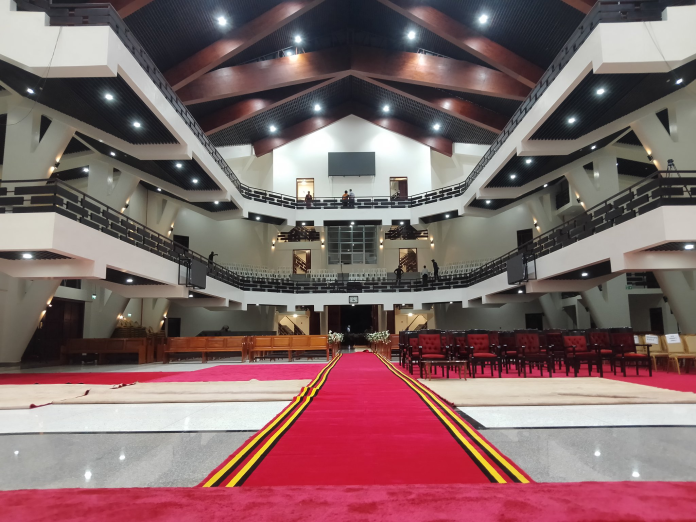
President Yoweri Museveni has pledged Shs1 billion towards the completion of the All Saints Cathedral Nakasero. Museveni said while consecrating the All Saints Cathedral.
In 2011, Christian embarked on the construction of the 5,000-seat cathedral to accommodate the increasing numbers of believers in Kampala.
The multi-billion-dollar project includes four chapels, a 45-meter bell tower, offices for the Bishop of Kampala Diocese and the Parish, two-level underground parking, a coffee centre, and a library.
Archbishop Samuels Stephen Kaziimba Mugalu estimates that the project will cost more than Shs26 billion. Last month, Kaziimba said they still need Shs6 billion to fully complete the cathedral, particularly for the exterior, after they sunk in Shs18 billion.
“I discussed with Mama Janet Museveni, and we asked ourselves, what have we done towards the construction of this church? We have resolved that from our cows, not from the government budget, we contribute Shs100 million. That is our own money,” he said.
“Since I was elected as the president, I will use that authority in the coming budget to contribute Shs1 billion,” he said.
He congratulated the church for being part of the interreligious council, an association that brings together all religious organisations in Uganda.
“I want this to percolate down to the whole society so that you judge people by what they do, not denominations, that is to say, where they worship, “he said.
Museveni also offered a brand-new car to the newly concreted 5th Assistant Bishop of the Diocese of Kampala, Rev. Fredrick Jackson Baalwa.
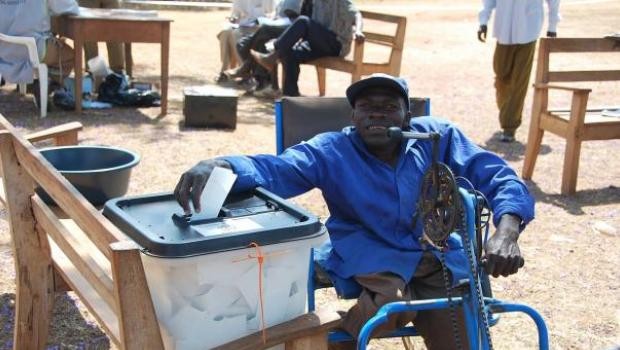
The Electoral Commission (EC) of Uganda has initiated a nationwide identification and mapping exercise for Persons with Disabilities (PWDs) on the National Voters Register (NVR).
The exercise is set to run from November 4 to November 13, 2024 with an aim of inclusive participation of PWDs in the upcoming 2025/2026 general elections.
Justice Byabakama Mugenyi Simon, Chairperson EC has emphasized the necessity of the exercise stating, “Our mandate under the Constitution is to ensure that every Ugandan, including those with disabilities, has equal and unhindered access to participate in the electoral process.”
Byabakama said that the exercise aims to address ongoing challenges faced by the EC in adequately capturing data about the PWD community across Uganda, including information on their locations, types of disabilities, and literacy levels.
“Unfortunately, in previous elections, we have lacked adequate information on PWDs in terms of their numbers, locations, and the types of disabilities. This gap has impacted our ability to create inclusive voting facilities and processes,” Byabakama noted.
According to him, this comprehensive identification exercise is vital for ensuring that the Commission can tailor the electoral process to meet the needs of PWDs.
The identification process will categorize PWDs based on various types of disabilities, including physical, visual, hearing, mental, and multiple disabilities.
Byabakama explained, “These categories are essential for us to understand the specific needs of each group. For example, those with visual or hearing impairments may require customized voter education materials to participate effectively in the elections.”
The Commission will work alongside Local Council 1 (LC1) representatives at the village level to conduct this exercise.
“Our Parish Supervisors will collaborate with LC1 Chairpersons to ensure accurate identification and verification. This will include holding village meetings where PWDs can confirm or update their details on the Voters Register. During these meetings, any complaints or issues regarding registration will be documented for follow-up action,” he said.
Justice Byabakama urged PWDs to take full advantage of this exercise, particularly those who recently applied for National Identification Registration Authority (NIRA) registration.
“This is a unique opportunity for all PWDs who wish to vote in the upcoming elections to confirm their inclusion on the National Voters Register,” he stated.
He also called upon the general public to support the exercise, stressing the importance of community involvement.
The exercise will produce a verified PWD register, which the EC will use to plan accessible polling stations and develop inclusive voter education materials.
“By the end of this exercise, we aim to have a credible register that reflects every village and parish across Uganda,” Byabakama said.
He added that this register will enable the Commission to plan more accessible polling locations, particularly for those with physical disabilities.
Byabakama appealed to all stakeholders and communities to support the initiative, urging, “Identifying PWDs at the village level is a fundamental step toward inclusivity and fairness in our democratic process. We encourage all citizens to assist in creating a reliable register to ensure that no one is left behind.”
The EC urges all Ugandans to support the effort, ensuring that every eligible citizen can exercise their right to vote in an environment that respects their needs.
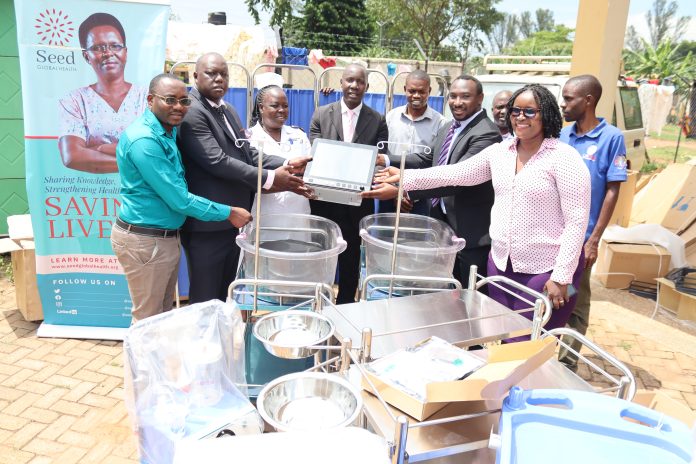
Seed Global Health donated medical equipment valued at Shs346 million to Arua, Lira, and Mbale Regional Referral Hospitals (RRHs) as well as Busitema University.
The donation includes essential tools such as patient monitors, blood pressure machines, suction machines, airway equipment, phototherapy machines, baby warmers, foetal dopplers, oxygen concentrators, and more. This equipment will significantly enhance service delivery in maternity and pediatrics departments and support clinical skills training at the university.
Despite recent progress, Uganda’s maternal and neonatal mortality rates remain high. According to the 2022/2023 National Annual Maternal and Perinatal Death Surveillance and Response (MPDSR) report, the maternal mortality ratio has improved from 336 deaths per 100,000 live births (UDHS, 2016) to 189 per 100,000 live births (UDHS, 2022). Neonatal mortality has also decreased from 27 to 22 deaths per 1,000 live births over the same period.
However, too many women and newborns are still dying, with hemorrhage identified as the leading cause of maternal deaths. The donated equipment is expected to help in addressing these critical gaps in care, directly contributing to the prevention of avoidable maternal and child deaths.
Arua, Lira, and Mbale (RRHs) serve over 10.6 million Ugandans, along with patients from neighbouring countries such as the Democratic Republic of Congo (DRC) and South Sudan.
Dr. Andrew Twineamatsiko, program manager at Seed Global Health, who led the handover to the partners, said, “Providing essential equipment ensures that health workers have what they need to deliver quality care and meet the needs of their patients.”
Dr. Mulowoza Jude, head of obstetrics and gynecology at Mbale RRH, added, “This donation will allow us to apply our skills more effectively and deliver higher quality care to mothers. We are confident it will lead to better patient outcomes.”
Dr. Andrew Odur, head of obstetrics and gynecology at Lira RRH, highlighted that the much-needed baby warmers and phototherapy machines arrived at a crucial time for the hospital.
“This equipment will help our health workers perform better. We value the continued partnership with Seed Global Health and will work as a team to improve outcomes in all our maternal and newborn units,” he noted.
Dr. Alex Andema, Director of Arua RRH, appreciated the donation and said, “We will ensure that the equipment is distributed to the maternity, pediatrics, and emergency wards and put to good use to enhance service delivery to patients.”
Meanwhile, Busitema University received simulation lab equipment to support the practical training of students. Joshua Epuitai from the university’s nursing department praised the value of simulation in healthcare education: “Simulation is key to training healthcare workers. Students can touch, feel, and relate to real-world clinical practice. The equipment we have received will greatly enhance their learning experience.”
Professor Dan Kibuule, the Dean of the faculty of health sciences at Busitema reflected on the importance of collaboration.
“In today’s world, collaboration is key, and as a university we are keen on building strategic partnerships. Collaborations like the one we have with Seed Global Health enable us to train health professionals who will provide excellent service to the community,” he said.
Seed Global Health partners with hospitals and universities to educate healthcare workers, improve quality of care, and strengthen health systems. To date, over 9,000 health workers have been trained across nine sites, contributing to the reduction of Uganda’s healthcare workforce shortage and enhancement of the capacity of the health system to meet the needs of the population.
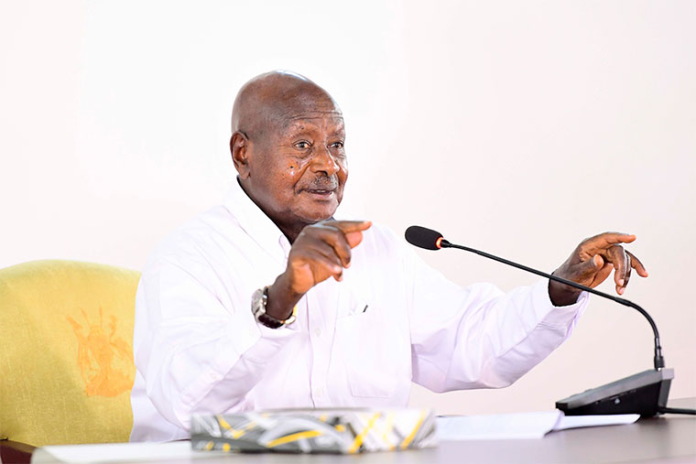
President Yoweri Museveni voiced serious concerns about the inefficiency and high expenditure by government agencies and authorities.
Museveni expressed frustration over what he termed “parasitic” government bodies, revealing that their costs had become alarmingly disproportionate to their output.
“I had given you the figures of money spent on ministries compared to the money spent on the agencies and authorities,” he noted.
Museveni revealed that by 2016, there was Shs2 trillion for the ministries and Shs2.2 trillion for the agencies and authorities but despite this heavy spending, the agencies employed only 3,905 people, while ministries excluding the soldiers had 18,532 employees. These numbers led him to call for a thorough examination of Uganda’s spending priorities.
The President also reflected on the growth of Uganda’s army over the years. “Our army was the smallest in number in 1991 after the reduction in force (RIF) of that time. At that time, it was 41,000. By 2016, when these figures were captured, it was more in numbers,” he explained.
Despite these changes, he noted that public servants continued to receive meager salaries, which, he argued, stemmed from an unbalanced allocation of government resources.
Addressing the inefficiencies in tax collection, Museveni criticized the Uganda Revenue Authority (URA) for its low performance.
“Our wonderful URA, on which we are spending so much, has, all this time, been collecting only about 11% of GDP as tax. There is a lot of tax evasion. We are insisting that they must collect, at least, 20% of GDP in taxes. If the URA collected 25% of GDP, Uganda’s financial position would drastically improve,” he said.
Concerning the complex public service budget, he noted that significant funds bypassed ministries and were channeled through local governments
“By 2016, these were getting Shs3.35 trillion,” Museveni revealed, explaining that this money supported critical roles, such as government teachers, health workers, and local government employees, totaling 192,160 individuals. He described this budget structure as “madness,” and that it hindered essential infrastructure and development initiatives.
He also expressed desire to see public servants emulate the discipline and efficiency of the Uganda People’s Defence Forces (UPDF).
“With improved pay, the Public Service will be as efficient as UPDF. That is why I do not accept the concept of contracts for our Public Servants. They should remain permanent and pensionable but the Standing Orders, like those of UPDF, should make them fully and promptly accountable. You do not work, you will be dismissed or worse, promptly,” he expressed.
He described a model for effective agricultural management, noting, “If you take agriculture, there will be a vet and an agricultural officer per sub-county or even more.” Recalling areas like Gombe, Kapeeka, and Ssemuto, he illustrated how these regions could thrive with proper support and resources.
“How can one vet and one agricultural officer fail to monitor crops and livestock in that area if they are equipped with a pikipiki (motorbike) each, with enough fuel?” he questioned.”
Museveni pledged to reform Uganda’s government structures, unifying Ministries, Departments, and Local Governments under revised Standard Operating Procedures (SOPs). He assured Ugandans that these changes would enhance accountability, reduce unnecessary spending, and ultimately support Uganda’s development goals.
“With such a public service, we shall not kwefuuza (regret losing something),” he declared, confident that these reforms would set Uganda on a path toward sustainable growth and efficient governance.
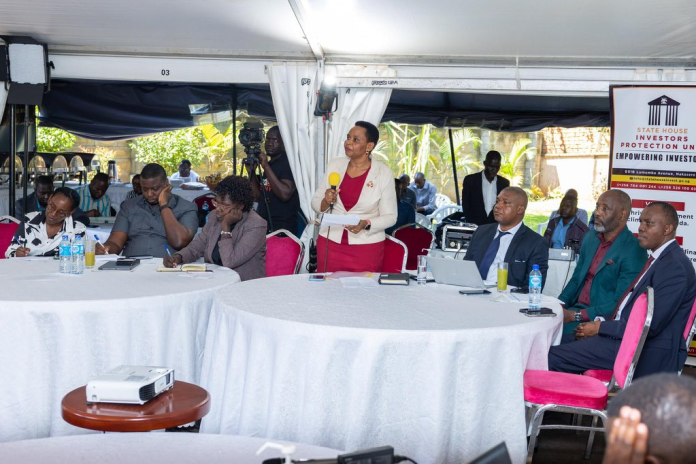
Col. Edith Nakalema, Head of the State House Investors Protection Unit (SHIPU), have urged stakeholders in the mining sector to focus on protecting investors in order to unlock Uganda’s mineral wealth.
Nakalema cited numerous complaints of fraud and other challenges faced by investors, highlighting the need for collective action.
“Today’s meeting is pivotal for Uganda’s mining sector. We must address challenges, seize opportunities, and promote responsible mineral sourcing practices,” Nakalema said.
SHIPU has registered several complaints related to fraud in gold trade and is working with anti-corruption agencies to address these concerns. Nakalema proposed government incentives for responsible mineral sourcing practices, investor protection, and elevating Artisanal and Small-Scale Mining.
Moses Kaggwa, Director Economic Affairs, revealed plans to grow Uganda’s economy ten-fold to $500 billion in 10-15 years, with minerals playing a key role.
“We have identified areas that will propel this growth, including Agro-industrialisation, Tourism, Minerals and Gas, and Science/Knowledge Economy,” Kaggwa said.
The government has established the Uganda Mining Company to act as the country’s investment arm in the mining sector.
“A law has been passed to ensure orderly exploitation of our resources,” Kaggwa assured.
Dr. Joseph Muvawala, Executive Director of the National Planning Authority, emphasized the need for Uganda to do things differently to achieve ten-fold economic growth.
“We must add value to our products, have technology and a leading plan,” Muvawala said.
Commissioner Mining Agnes Alaba noted Uganda’s rich mineral potential and the need for increased exploration. “We are prioritizing policies, regulations, and laws to regulate the mining sector,” Alaba said.
Prof. Gerald Karyeija, a Government Policy Analyst, advocated for a mining school to train technical skills and expertise. “Ugandans want their lives changed and jobs increased,” Karyeija said. “Mineral wealth should be public wealth, not personal wealth.”
CP James Ruhweza, Deputy Director of Operations Services, Uganda Police, pledged continued cooperation to protect the sector. ACP Tusingirwe Julius Caesar, Commander Police Mineral Protection Unit, noted concerns over fraud cases, particularly in gold trade.
Fred Sapong, CEO of Ghana’s Oheneba Poku Foundation, advised Uganda to adopt strict regulations, similar to Ghana’s, to prevent fraud and ensure transparency. “In Ghana, gold traders are registered, transactions are through banks, and everyone in the value chain is covered,” Sapong said.
Patricia Gulyetonda, Bank of Uganda Reserves and Investment Management Head, assured stakeholders of the Central Bank’s dedication to regulating the sector.
Humfrey Asiimwe, CEO Uganda Chamber of Mines and Petroleum, thanked Nakalema for organizing the meeting. “This is a step in the right direction,” Asiimwe said.
The High Court of Justice and Business courts of England and Walesking’s bench division commercial court (KBD)
Court in London has dismissed a petition in which DFCU Bank Limited and 14 others [defendants] were calling for provision of security of their costs and case management conference by Crane Bank Limited [CBL] as CBL and six others [claimants] lodged a case against them following the Bank of Uganda [BoU] transfer of assets and liabilities of CBL in 2017 through fraudulently, to DFCU Bank Limited.
CBL and other claimants, including Sudhir Ruparelia, the Chairman and a major shareholder of CBL, allege that senior Ugandan government officials and officials of the BoU on October 20, 20216, engaged in a corrupt scheme to take control of CBL, making improper use of statutory and regulatory powers to do so, and then to sell its assets for the benefit of the parties to the scheme. The claimants allege that DFCU Bank Limited, the first defendant joined the corrupt scheme as purchaser of its assets from the BoU, acting as the first claimant’s receiver, the purchase being, it is alleged, at a gross undervalue [as only Shs200 billion was agreed between BoU and DFCU Bank Limited]. The other defendants [including DFCU Limited and Jimmy Mugerwa who was the chairman of DFCU Bank Limited among others] are also alleged to have joined the scheme.
Therefore, CBL and other claimants would later drag the DFCU Bank and other defendants to court in London seeking for compensation, although DFCU Limited is adamant to concede.
However, DFCU Bank and other defendants in their application to the London court reasoned that CBL will be unable to pay its costs if ordered to do so, if it lost the case, although court said Sudhir was very rich to pay the said costs in instance the case went against the claimants, thus dismissing their application for security of the case costs. “For the reasons I have given, the applications for security are dismissed. I would be grateful if counsel could draw up an appropriate order which will need to include the undertakings by the Second Claimant (Ruparelia) to the Court to discharge any costs orders made against the Claimants and to give a written personal guarantee covering such liabilities.”
“There are now before me six applications made by various groups of defendants pursuant to CPR 25.13(1)(a) and CPR 25.13(2)(c) for orders that the first claimant provide security for their costs up to and including the case management conference. The applications are made on the grounds that the first claimant is a company, that there is reason to believe that it will be unable to pay its costs if ordered to do so, and that it is just in all the circumstances of the case for security to be ordered,” explained Stephen Hofmeyr sitting as Judge of High Court in London in London, UK.
“The power of the court to order security for costs derives from CPR 25.13: In the exercise of its discretion, the court may make an order – (a) if it is satisfied, having regard to all the circumstances of the case, that it is just to make such an order; and (b) the claimant is a company and there is reason to believe that it will be unable to pay the defendant’s costs if ordered to do so, said the judge.
“The court may also make an order for security for costs where the claimant is resident abroad, but not resident in a state bound by the 2005 Hague Convention as defined in section 1(3) of the Civil Jurisdiction and Judgments Act 1982. As Uganda is not a party to the 2005 Hague Convention, the defendants could have sought orders against the second to seventh claimants but they have chosen not to do so.”
CBL, the first claimant concedes that it is unable to show that it will be able to pay the defendants’ costs if ordered to do so, given the relatively low bar for making out that proposition, but contends that, having regard to all the circumstances of the case, it would not be just to make such an order. “The first claimant also accepts, as it must, that because the threshold is met, it would normally be appropriate for the court to order security. Nevertheless, it contends that there are unusually powerful factors which militate against the court making an order for security in this case.”
The claimants relied on three factors in particular to argue their case. First, and most significantly, the second claimant Dr. Ruparelia, who is said to be one of the richest men in East Africa, is a co-claimant with the first claimant, and the claimants accept that costs orders should be made against all the claimants as they have been to date in these proceedings, not solely against the first claimant.
Second, in addition, Dr. Ruparelia offered an undertaking to the court to discharge any costs orders made against the first claimant and, should the applicants consider it adds anything, a personal guarantee to cover such liabilities as well. There is extensive and essentially unchallenged evidence that he is most certainly – adopting a phrase which appears to have been coined by Murphy J in the Irish High Court in Bula Ltd (in receivership) v Tara Mines Ltd [1987] 1 IR 494 – a “good mark” for such costs. That, as I say, is the claimants’ submission. In these circumstances, it is said that there is simply no justification for an order for security for costs.
“Thirdly, there is said to be another unusual discretionary consideration which applies to certain of the defendants seeking security. They are indemnified (directly or indirectly) by the Bank of Uganda for their costs. Whilst the claimants do not ask the court to delve into the merits of the current claim against the defendants, there is cast-iron evidence that the Bank of Uganda targeted the first claimant as part of a corrupt scheme and that it has been going to extraordinary lengths to prevent the first claimant’s rightful owners, that is the other claimants, regaining control of it and pursuing this claim. On Friday November 13, 2020, the letter before claim for this claim was sent to all the defendants.
“On Monday November 16, 2020, the Bank of Uganda issued a public notice that it had placed the first claimant into liquidation, and subsequently argued that the liquidation meant that this claim could not be brought. That was despite the Ugandan High Court and the Court of Appeal having previously decided that control of the first claimant had been returned to its directors and shareholders in January 2018. The ensuing litigation in the Ugandan courts resulted in the Ugandan Supreme Court finding the Bank of Uganda’s conduct to have been in “manifestly bad faith”, “contempt of court” and aimed at “impeding or preventing the course of justice”.
Despite this, the Bank of Uganda is still impeding practical control of the first claimant being returned to its shareholders. As a consequence, the claimants are disabled from being able properly to contest the applicability of CPR 25.13(2)(c) by reason of the Bank of Uganda’s continuing campaign of wrongdoing; and the effect of granting security to those that are indemnified by the Bank of Uganda will be to protect not those indemnified parties (who do not need protection) but an undoubted wrong-doer who has been harmed and who is continuing to interfere with the first claimant.
Second, the second claimant [Sudhir] is a person of very considerable wealth. In 2019, the second claimant’s wealth was estimated by Forbes to be some $1.2 billion. His substantial wealth includes Ugandan assets in the region of $279 million, including unencumbered land and buildings of about $47 million and bank deposits of over $7 million, and property in the United Kingdom owned with his family valued at between £4.5 million and £5.5 million.
Third, the defendants do not seek to challenge the up-to-date valuations of the second claimant’s assets, which show that his assets have increased substantially since 2019, and indeed since the commencement of these proceedings. The second claimant’s assets include (a) unencumbered property in London owned by the second claimant and his family, with an estimated value of between £4.5 million and £5.5 million, (b) Ugandan assets recently valued at more than $27 million, an increase of about $50 million since these applications were made. These assets comprise unencumbered land and buildings with a market value of approaching $50 million, shares in listed companies with a market price of about $6.8 million, shares in private companies on a net book value basis at $113 million, related party loan receivables from companies which are part of the Ruparelia Group of over $100 million, fixed deposits and bank balances of more than $7 million.
The judge said defendants’ failure to challenge the extent of the second claimant’s assets is not insignificant. “Rather than challenge the valuations of the second claimant’s assets, the defendants challenge the legal relevance of the second claimant’s assets; they contend that these assets do not provide satisfactory evidence of an ability to pay a costs order within the timeframe that will be ordered by the court; and they contend that there is no certainly that the identified assets will remain available to meet a costs order at the end of the trial. These are all points which I will come to address in a moment.”
“Subject to these points, there can be no doubt that the claimant has sufficient assets from which to pay a costs order made against him and/or the first claimant. It was also pointed out by the defendants that the court is not in a position to know under what personal liabilities the second claimant may be, particularly outside of Uganda. This is true and is a factor to which I must have regard. However, based on the evidence before me as to the second claimant’s personal wealth, I consider it unlikely that any personal liability he may be under is not dwarfed by the size of his personal wealth,” the Judge said. “He would not be reported to be a person of such wealth if there was a major question mark regarding his personal liabilities.”
The Judge said the defendants have not brought an application for security against the second claimant, notwithstanding that the court would have jurisdiction to make such an order if it were sought. “If the defendants had been of the view that an application against the second claimant would succeed, the likelihood is that such an application would have been pursued.”
The judge in his ruling said all costs orders which have been made in these proceedings against the claimants have been made against the claimants without distinction between them and each order has been paid promptly. “To date the claimants have made payments of £1,355,956 to the defendants to satisfy adverse costs orders, although some of those have had to be repaid. As regards any costs orders in the future, the judge’s discretion in costs at the conclusion of the trial is very wide.”
I would regard it as extremely unlikely, indeed inconceivable, that any judge would think it fair to the defendants to make an order only against the first claimant at the end of trial or indeed at any intermediate stage of the proceedings, and I am reassured by the words of Bingham LJ (as he then) was to similar effect in The Sea speed Dora [1998] WLR 221, at [227], he said.
He continued: “Enforcement of a costs order in Uganda, were it to become necessary, is a relatively straightforward and simple procedure. This is not seriously in dispute. The real dispute between the parties concerns the time it would take to enforce a judgment. The claimants’ evidence is to the effect that the process should take approximately 40 days, or possibly 54 days. The defendants’ evidence is that it would take between six and 12 months. This is a timing issue. There is no suggestion that there is a real risk that enforcement in Uganda will not be possible. Further, it is instructive to note that the time it would take to enforce a costs order in Uganda is not relied upon by the defendants as against the second defendant as a reason why he should be required to post security.”
The risk which appears to be of most concern to the defendants is the risk of delay in the enforcement in Uganda of any costs order made at the end of a trial in these proceedings, and the risk of associated expenses, he said.
“The defendants are not contending that the enforcement of a costs order in Uganda will be impossible or impractical, just that the process of enforcement may take between six and 12 months from start to finish. Nor are the defendants saying that they will not recover the costs and expenses of any enforcement process in Uganda. Nor are they saying that they will not ultimately be able to recover interest on costs in Uganda. It is to protect them against the risk of a delay in the payment of any costs order, a delay which they say will be caused by the length of time it will take to enforce any costs order in Uganda, that the defendants are seeking an order for security.”
In principle, the Judge said that might justify security reflecting the “extra burden of enforcement”; and I note that at an early stage the claimants made clear that they would consider offering security in relation to such costs if details were provided.
However, the defendants did not take up or even pursue that offer. “In my view, whilst it is likely that, if the defendants in due course have to enforce a costs order in Uganda, there will be some irrecoverable cost, expense or interest, the irrecoverable amount is likely to be relatively small, and it will certainly be dwarfed in comparison to the amount which the defendants are seeking in security by the applications before the court.”
“The totality of the evidence therefore, leaves me in no doubt that if a costs order were to be made in these proceedings against the claimants, the second claimant would be able to pay it promptly. And even if I were not so satisfied and formed the view that there would likely be some delay in enforcing a cost order in Uganda, I would have been of the view that the defendants would likely not be significantly prejudiced by such delay.”
There remains a handful of additional points raised by the defendants which I need to address. First, the offer made by the second claimant, and other claimants, of an undertaking to the court, or a personal guarantee to the defendants, was not a tacit acceptance that an order for security should be made. The purpose of the offer made by the claimants was to counter and respond to the contention that the second claimant might not be liable for a costs order against the first claimant.
The offer of an undertaking or a guarantee was made for this purpose. Second, in the absence of evidence of a real risk of dissipation, the contention that a party with significant assets should nevertheless put up security because there is no certainty that it will retain them at the end of trial has no force.
Similarly, the Judge said there is no real-world force in the contention that there is no certainty that the second claimant’s assets will still have the same or a similar value at the end of trial. “Whilst it is theoretically true that there is no certainty as to the future value of his assets, the same could be said of any party and any asset.”
“Further, given the extent of the second claimant’s wealth, it would only be in extraordinary circumstances that his assets would be so depleted by the end of these proceedings that he would not be in position promptly to pay any costs order made against him at the end of a trial.”
“The defendants’ contention that the existence of significant assets raises the question as to why conventional security in the form of a bank guarantee is not being offered against these assets is flawed because it elides the owner of the assets, the second claimant, and the separate party being asked to provide security, the first claimant.”
This is my open statement as to why Zimbabwe sanctions facilitated by USA ZDERA Act of 2001 must be challenged in ICJ. We have therefore, with the help of two state parties moved to court to challenge the USA and European Union Sanctions.
Statement
There have been several discussions and reports about changes in the sanctions landscape, including the potential repeal of certain executive orders. However, the specifics about ZDERA and how it operates remain crucial:
I want the world and the people of Zimbabwe to know that East or West the Status of ZDERA will always fluctuate between removal and Additional mechanisms of sanctions .While some executive orders may have been repealed, ZDERA itself continues to exist as a legislative framework, allowing the U.S. government to impose sanctions without needing to go through Congress every time.
The flexibility of sanctions that the USA operates is dangerous for Zimbabwe . Even if some executive orders are repealed, ZDERA retains the authority for sanctions to be applied at any time. This means that the underlying ability to enact sanctions remains, allowing for rapid action based on the current situation in Zimbabwe. This again is dangerous for Zimbabwe.
The most obnoxious thing about ZDERA Act 2001 is the Legislative verses Executive Actions USA that keep on exchanging roles while Zimbabweans are dying that the distinction between executive orders and congressional acts is important. Even if certain executive sanctions are lifted, ZDERA can still enable the president to impose new sanctions if deemed necessary.
The imposition of sanctions on Zimbabwe has had profound repercussions, deeply affecting the socio-economic fabric of the nation. Economic restrictions, initially intended to penalize governmental actions, have inadvertently inflicted widespread hardship on the civilian population, exacerbating poverty levels and limiting access to essential services such as healthcare and education.
The sanctions, which have targeted key sectors such as finance and trade, create a paradox where the intended political outcomes often adversely impact the very demographics they aim to support. Furthermore, the erosion of public trust in state institutions and international actors contributes to an environment of instability, fueling discontent among the masses.
As the situation continues to deteriorate and as new goal posts are placed on Zimbabwe there is an urgent need for intervention, with institutions like the International Court of Justice (ICJ) playing a pivotal role in mediating grievances and advocating for human rights, thereby facilitating a pathway toward resolution and restoration of normalcy in Zimbabwe.
Overview
My overview of Zimbabwe’s political and economic landscape and the imposition of sanctions leads to one solution left – the ICJ. Zimbabwe’s political and economic landscape has been marred by decades of instability, characterized by a decline in democratic governance and rampant corruption.
Since the early 2000s, the nation has experienced hyperinflation, leading to severe economic hardships for the majority of its citizens. This decline has been exacerbated by the imposition of international sanctions, which were originally designed to pressure the ruling government to restore what USA alleged human rights abuses and democratic processes.
However, these sanctions have disproportionately affected the ordinary Zimbabwean, leading to increased poverty and a deteriorating standard of living. The impact is reminiscent of other regions facing conflicts, where external interventions often fail to consider the social and economic realities of the affected populations, leading to unintended consequences
I have been at the forefront since 1998 telling Zimbabwe to the question of sanctions. But addressing these issues requires a comprehensive strategy that not only reevaluates the effectiveness of sanctions but also promotes dialogue and meaningful engagement through organizations like the International Court of Justice (ICJ), which can advocate for removal of sanctions and return of social justice in Zimbabwe.
The Impact of sanctions on the Zimbabwean Population is huge. Millions have been affected in 26 years of American sanctions. The imposition of sanctions on Zimbabwe has had profound repercussions on its populace, exacerbating already dire socio-economic conditions. These sanctions, initially intended to penalize government officials for human rights abuses, have inadvertently led to widespread suffering among ordinary citizens.
The truth is that with restricted access to international markets and financial institutions, the economy has stagnated, resulting in soaring unemployment and inflation rates, which has rendered basic necessities unaffordable for many. Furthermore, the internal political instability created by some groups and accelerated by these sanctions has impeded efforts to foster stability , as noted in research on similar concerns in Africa .
I have studied all documents of the African Commission on Human and Peoples’ Rights highlighted, when national legal frameworks are weakened, the capacity to protect human rights diminishes, which is exemplified in Zimbabwe’s deteriorating environment for civil liberties ((Commission A on Human and Peoples’ Rights)
Thus, it is crucial for international bodies like the International Court of Justice (ICJ) to intervene, aiming to provide avenues for relief and facilitate a pathway towards national reconciliation.
The economic consequences caused by inflation, unemployment, have caused inadequate access to basic services. In Zimbabwe, the harsh economic consequences stemming from international sanctions have manifested profoundly in inflation, unemployment, and diminished access to basic services.
The hyperinflation experienced in the country has not only eroded savings but also significantly impacted the purchasing power of citizens, making essential goods and services increasingly unaffordable. Coupled with skyrocketing inflation rates, the sanctions have exacerbated unemployment, as businesses struggle to operate amid limited resources and investment.
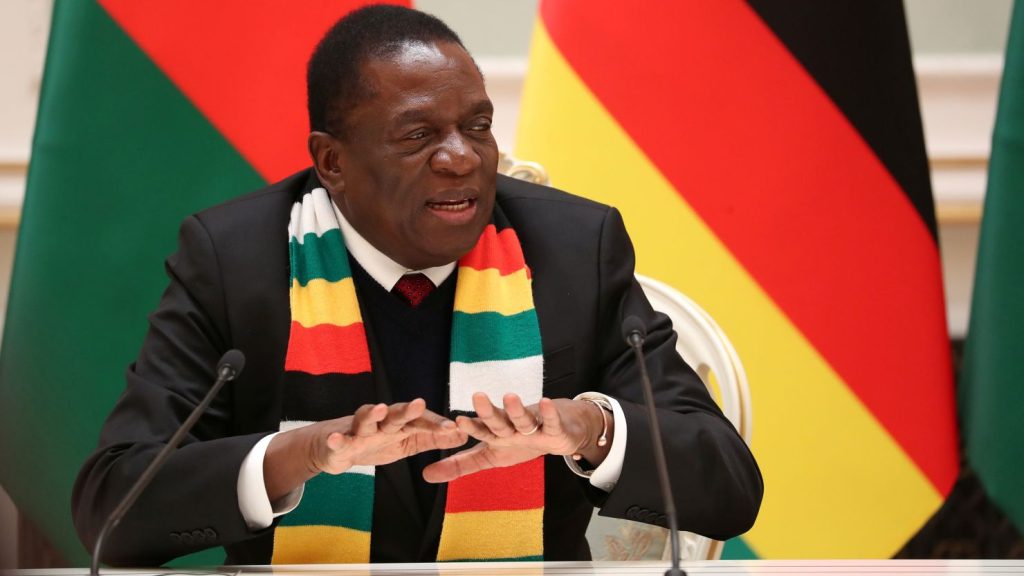
Zimbabwe President Emmerson Mnangagwa.
This labor market instability has left countless families without a reliable income, further complicating their ability to secure basic necessities. As noted in existing literature, these economic disruptions can lead to adverse effects on health and health systems, ultimately affecting the most vulnerable populations.
I believe that by additionally, addressing systemic USA sanctions that shall have added value to educational and healthcare systems in Zimbabwe that remain a foundational step toward sustainable economic recovery
I believe that the Role of the International Court of Justice (ICJ in addressing the multifaceted crisis in Zimbabwe, the International Court of Justice (ICJ) would play a pivotal role in upholding international law and mediating disputes that arise from state-sanctioned actions.
The USA sanctions often exacerbate humanitarian crises, the ICJ has the authority to adjudicate on matters of state responsibility, potentially providing a platform for Zimbabwean citizens to seek redress against unlawful economic measures. The USA must explain as to why the put sanctions and to why they did think of the suffering of the women and children in Zimbabwe.
Given that countries under sanction frequently face accusations of human rights violations, the ICJ can intervene by offering legal frameworks that promote accountability and transparency. For instance, its rulings could help clarify the obligations of states concerning the welfare of their populations, thus ensuring that punitive measures do not unduly harm the civilian populace.
To me such a legal approach emphasizes fairness, which is essential in resolving political disputes and broader societal grievances as highlighted in discussions around procedural justice. Ultimately, the ICJs involvement could foster dialogue and contribute to stability in a region affected by widespread trauma and conflict
The is enough evidence that the matter of ZDERA Act 2001 can be resolved mechanisms which the ICJ has used elsewhere to mediate and resolve international political disputes. In addressing international disputes, the International Court of Justice (ICJ) employs several mechanisms that facilitate mediation and resolution. Central to its function is the opportunity for states to submit cases involving issues of international law, allowing the ICJ to render binding decisions that can promote compliance.
The Court also encourages diplomatic dialogue and negotiations between disputing parties, often facilitating preliminary discussions to foster a collaborative atmosphere. Furthermore, the ICJs advisory opinions offer legal clarity on contentious issues, which can guide states in their bilateral or multilateral relations.
These mechanisms are particularly relevant to situations like the crisis in Zimbabwe, where international disputes may arise from sanctions and humanitarian challenges. Ultimately, through its adjudicative and advisory roles, the ICJ possesses the potential to influence policy changes that address the underlying causes of conflicts and foster peaceful resolutions.
In my Conclusion I have contemplated the ramifications of sanctions imposed on Zimbabwe, it has become evident that their detrimental effects extend far beyond the political elite, deeply impacting the everyday lives of ordinary citizens.
The economic collapse that ensued after sanctions has led to widespread poverty, rampant inflation, and diminished access to essential services, ultimately exacerbating the humanitarian crisis that could plague the nation of Zimbabwe. Moreover, the sanctions have inadvertently created wrong narrative, portraying Zimbabwe as a country you can’t invest in.
The adversaries stifle dissent domestically have used sanctions to create bad image for Zimbabwe. Such dynamics create a cycle of suffering and repression that proves difficult to break. Addressing these complexities requires a multifaceted approach, where international law mechanisms, such as the jurisdiction of the International Court of Justice (ICJ), can play a pivotal role.
I believe that by establishing legal avenues for addressing grievances and promoting dialogue, the petition at ICJ presents an opportunity to facilitate both accountability and the eventual a healing process of a fractured society ( UN Publications)
Ultimately, re-evaluating the sanctions and engaging in constructive international dialogue may pave the way for sustainable solutions, ensuring that the voices of Zimbabwe’s masses are not only heard but also prioritized in the quest for justice and recovery.
The implementation of such holistic strategies could significantly contribute to the restoration of Zimbabwe’s dignity, allowing Zimbabweans to reclaim their future without the overshadowing specter of punitive measures that have historically perpetuated their suffering.
I give my position that the effects of sanctions and the potential for ICJ intervention to alleviate the crisis in Zimbabwe are real . The imposition of sanctions against Zimbabwe has had far-reaching effects, exacerbating existing economic challenges and intensifying social dislocation. Instead being effective as claimed by USA, these measures often disenfranchise ordinary citizens, limiting their access to essential goods and services.
Over the years, inflation has surged, unemployment rates have soared, and public health systems have deteriorated, leaving the masses to bear the brunt of geopolitical conflicts especially the suffering of Zimbabweans in South Africa. The potential for intervention by the International Court of Justice (ICJ) offers a glimmer of hope in addressing these multifaceted crises.
I am of the opinion that by calling for dialogue and legal accountability both internally and externally , the ICJ could advocate for a more balanced approach that considers the human rights implications of sanctions and make determination with USA trying to just impose sanctions without good reasons.
Finally I would like to say that this is my last attempt voluntary Act as volunteer for Zimbabwe and person who has defended Zimbabwe since 1998 . Therefore these are the options that can help to remove all obnoxious ZDERA ACT 2001 OUT Zimbabwe.
It is up to some of the people from Zimbabwe that were targeted by the USA to take this opportunity to enjoin me in this petition and clear their names by using this chance at the ICJ so that we uproot the main obstacle that is has been used on Zimbabwe year in year out .
Our intervention could facilitate a pathway toward sustainable governance, providing a framework through which Zimbabwe can recuperate economically and socially while removing the obstacles stood in between because of imposed sanctions .
Officials from the Private Sector Foundation of Uganda (PSFU) and Uganda Manufacturers Association have asked the Government of Uganda to harmonize the costs of Digital Tracking Solutions, also known as Digital Tax Stamps (DTS), with their East African Community counterparts to ensure fair competition.
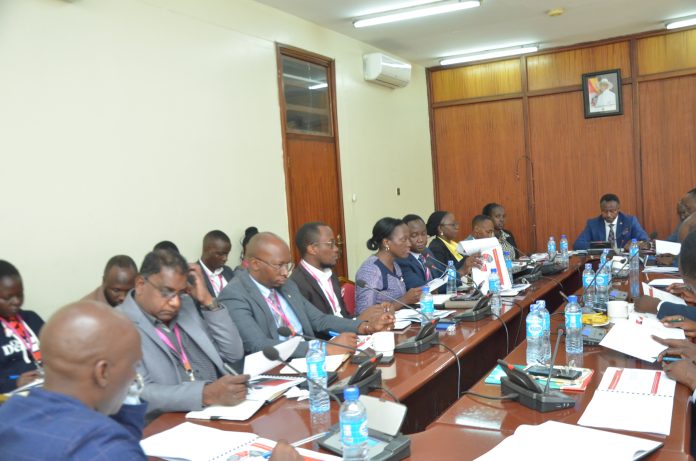
They said this during an interface with MPs on the Parliamentary Committee on Finance on October 30, 2024.
According to Dr. Julius Byaruhanga, the Director of Policy and Business Development at PSFU, on average, Uganda’s stamp prices are 38% higher than those in similar regions such as Kenya and Tanzania, where prices are 40% and 35% higher, respectively, yet they have a similar supplier, SICPA Uganda.
“Members of the manufacturing sector have consistently expressed their support for the government’s efforts in implementing DTS. However, it is evident that the current fees associated with DTS are excessively high, leading to elevated operational costs for the sector,” he stated.
He said high DTS charges are likely to make the final price of goods and services expensive, leading to an increase in illicit trade because Uganda is a price-sensitive market.
“Our market is highly price sensitive. If you visit any small local bar, you will find that 95% of the alcoholic drinks can’t be traced; they aren’t tax compliance and don’t have labels of alcoholic content.”
Allan Ssenyondwa, the director of advocacy at the Uganda Manufacturers Association (UMA), said that having different DTS rates in the EAC common market has created competitiveness challenges.
“Can we try and either harmonize across the region or reduce the cost so that the entire region has similar prices? It’s better that way because we are in one common market.”
On what can be done to bring down the cost of DTS, Ssenyondwa said the government should bring on board companies that offer similar solutions at cheaper prices.
“Can we revise the way these solutions work so that it helps in reducing the challenge of illicit trade and manufacturing? How can we increase industries to be more productive; these issues of DTS, albeit they are good, you should make them cheap so that the rest of the country can invest in the manufacturing sector?”
Juliet Nagginda, Senior Manager at Tax Services at PwC Uganda, who presented a report on the impact of DTS on the manufacturing sector, said one of the key challenges that the manufacturers have highlighted is that “for every Shs100 exercise duty they pay, they incur about Shs16 to comply, and this is the cost that they are bearing because many of them can’t pass the price to the consumers because of the sensitivity of the goods.”
According to the report, over 30 manufacturers have ceased operations due to various reasons; most of these manufacturers had initiated their businesses before the introduction of DTS but had to close during its implementation.
In Uganda, the use of DTS was rolled out in the Financial Year 2019/20 following the launch of the Domestic Revenue Mobilization Strategy by the Finance Ministry. DTS was also aimed at addressing revenue leakages.
The Chairman of the Parliament Finance Committee, Amos Kankunda, while responding to officials from PSFU and UMA, said that the committee will look at the issues raised and discuss them with the government to ensure more productivity of the manufacturers.
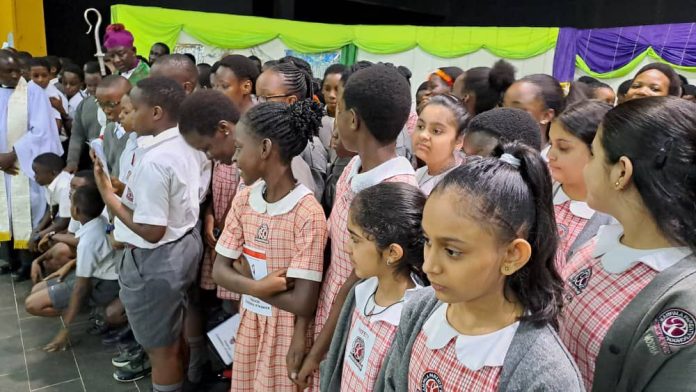
Kampala Parents Pupils at the dedication service presided over by Archbishop Church of Uganda Rev. Dr. Stephen Kaziimba Mugalu.
The Archbishop of Church of Uganda, Most Rev. Dr. Stephen Kaziimba Mugalu has blessed Primary Seven candidates of Kampala Parents School ahead of the PLE exams.
Primary Living Examination start next week across the country.
Quoting the Bible verse of Deuteronomy 31:8-9,’The lord himself goes before you and will be with you”. He wished the candidates success but also implored them to remember God as they go for exams.
Parents gathered at school to join pupils in prayer as they dedicate P7 candidates who are expected to sit their Examinations next week. The event was filled with joy, prayer and happiness as it was being presided over by the Archbishop of the Church of Uganda.
Kampala Parents School boosts of a rich heritage as a top performing school in PLE for several years as it has many times emerged the best.
Fresh Kid gets success card
Meanwhile singer Fresh Kid who is also a candidate this year received a success card from former Minister for Children Affairs and now Senior Presidential Advisor on same docket Florence Nakiwala Kiyingi ahead of the exams.
Fresh Kid was award a scholarship by city tycoon and proprietor of the Kampala Parents School Sudhir Ruparelia.