Stanbic Bank
Stanbic Bank
18.3 C
Kampala
Stanbic Bank
Stanbic Bank
Home Blog Page 1750

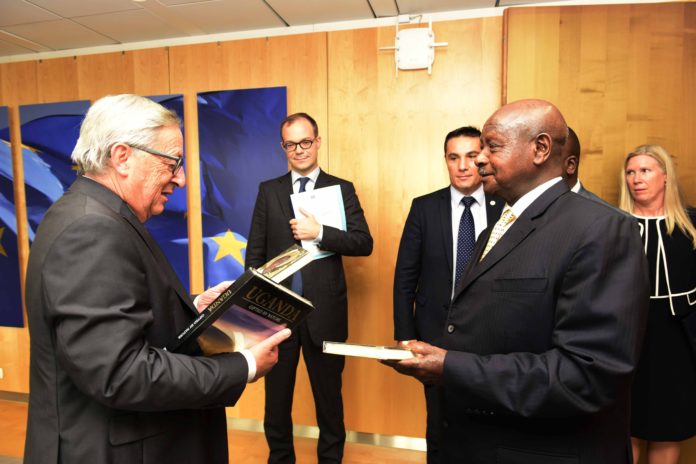
Museveni, EU Commission boss, discuss EPAs

Museveni in Brussels

President Yoweri Museveni has met the European Union (EU) Commission President Jean-Claude Juncker and presented a draft of concerns raised by East African Community member states on the Economic Partnership Agreements (EPAs).

Leading a delegation of EA trade ministers to the meeting at the EU headquarters in Brussels, Museveni, who is also Chairperson of the EAC, noted that the bloc sought several clarifications before making a final decision on the EPAs.

Key among the concerns is the question of strategic industrial development, the denunciation process, development agenda, the rendezvous, joint declaration and domestic support.

On strategic industrial development, Museveni noted that once the trade pact is signed, up-to 65% of imports (mainly machinery and raw materials for industrialization) from the EU to EAC will come in at zero rate, similar to the current policy position East Africa already has with the EU. “What happens when EAC partner states start producing these items and now need to protect them after signing the EPAs?” Museveni asked.

Another concern for East Africa, noted Museveni, is the fact that the EPAs does not allow individual countries to exit. “The denunciation clause should allow individual signatory states to withdraw from the agreement,” said Museveni.

As far as the development agenda is concerned, President Museveni said the EPAs clauses on the European Union supporting structural and infrastructural development in East Africa are non-binding yet these are crucial for leveling the ground for equitable trade.

EAC states also raised issue with the fact that the EPAs direct that negotiations must be concluded within five years after entry into force of the agreement. This rendezvous clause, said President Museveni, imposes unlimited pressure on negotiators “rather than paying attention to substance of the negotiations.”

On joint declaration, the EAC wants clarification on an annex that obliges the community to negotiate with countries that the EU has Free Trade Agreements with.

“This is far beyond what is politically tenable in the EAC and should be removed,” President Museveni told Mr Juncker.

Also of concern to EAC, said Mr Museveni, is the clause that commits the EU to remove export subsidies on EAC-destined exports only but does not address other forms of domestic support that equally distort the market.

“This makes EU products competitive in the EAC market,” said President Museveni. “But EAC products cannot be competitive in the EU market due to other domestic support provided by the EU.”

He added: “Moreover, with regard to these export subsidies, the prohibition is not permanent and will be reviewed after 48 months.”

The President also made the case that Kenya, which had already signed these pacts, should not be disadvantaged in terms of trade, “nor should EU stampede EAC into hurried conclusions which would result into dissensions and possibly split the EAC”.

Mr Juncker, promised to review all issues raised by the EAC and offer a comprehensive response.

On the team was Uganda’s trade minister Amelia Kyambadde and her colleagues Adan Mohamad (Kenya), Prof Palamagamba Kabudi (Tanzania) and Alain Nyamitwe, the Burundian Minister for External Relations. Rwanda and South Sudan sent high-level government bureaucrats.


Upon receipt of a response from the EU, President Museveni will again convene the meeting of the trade ministers to trash out the key issues before preparing a final document for the EAC heads of state.

The EAC heads of state summit will then take a final and binding position on the EPAs whose text was first initialed in 2014.


Stories Continues after ad

Defence minister disputes government poverty report

Clerk to Parliament, Adolf Mwesige.

Defence Minister Adolf Mwesige has disputed a government-owned report which revealed that more Ugandans are dipping into poverty with the number of poor people rising to 10 million in 2016/17, up from 6.6 million in 2012/13.

“I live in this country and I know that poverty levels have come down,” Mwesige said as he responded to a question as to why government was rushing to delete Article 102(b) of the Constitution instead of addressing social and economic challenges like poverty.

Mwesige was appearing on a night television programme discussing the current age limit circus that has put the ruling NRM party on spotlight.

Minister Mwesige’s counterpart, the state minister for finance, David Bahati concurred with the report’s authors, saying that it was not surprising that poverty levels had gone up given the economic slowdown in the country. He said government would intervene through intensification of irrigation to support agriculture in the countryside, among other measures aimed at bringing poverty levels down.

Meanwhile, when Eagleonline sought for comments from statisticians at the Uganda Bureau of Statistics (Ubos) in response to minister Mwesige’s assertion, one of the officials at the agency said: “We are professionals and we stand by the report. The minister is a politician and obviously he has to portray a positive image of the poverty situation. But the truth is that when you go deep into Uganda, some households don’t have what to eat,” the source said.

“When we publish such research reports we help politicians to allocate resources to critical areas such as fighting poverty. We see no value in us not telling the truth on the ground. It doesn’t help when we tell lies. Ours is to help politicians and policy makers come with strategies to address socio-economic challenges that the country faces,” another one said.

Ubos-a government department that manages national statistics, carried out the survey that came up with that figure which showed that poverty levels, despite government interventions over the recent past, rose to 27 percent in 2016/17 from 19.7 percent in 2012/13. Currently, Uganda’s population is estimated at 41 million people. Irony is that government wants all these people to enjoy middle income status by 2020, a target that some analysts say wont to be achieved given the current economic hardships.

According to the report dubbed the ‘National Household Survey 2016/17’, those who are hit by poverty are a fraction of Ugandans whose personal income lies below the poverty line, which stands at US1.25 (about 4500) a day. According to economists, that proportion of people lack access to basic needs, particularly, they cannot afford three meals a day.

Mr James Muwonge, the Ubos director of social economic surveys, while presenting the findings said poverty hit the eastern region most at 42 percent. He said the number of poor people in both rural and urban areas of that region increased to 4.2 million from 2.4 million. The northern region had a reduction as the number of poor people reduced to 2.4 million from 3.1 million.

Muwonge attributed the high poverty levels in eastern region to the prolonged drought, sharp increases in the prices of goods and services, animal diseases, pests, storms, floods and power outages.

Other analysts say Uganda’s increasing poverty levels can be attributed to the growth domestic product (GDP) which has been slowing down, reducing from 4.8 percent in financial year 2015/16 to 3.9 percent in 2016/17 and is expected to finish at 5 percent in 2017/18. GDP is the total value of goods and services produced domestically in a given period.


Stories Continues after ad

NSSF gives 11 percent interest to its members

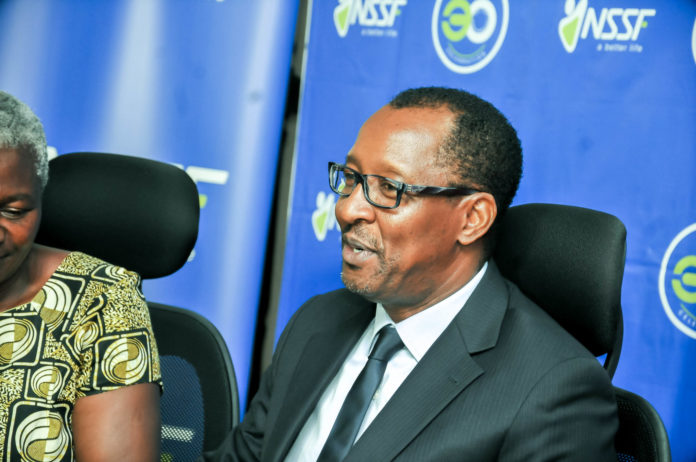
Mr. Richard Byarugaba, NSSF Managing Director who is credited for the smooth running of the fund.

Uganda’s largest retirement benefits Fund, The National Social Security Fund (NSSF), will pay an 11.23 per cent interest rate on members’ savings for the financial year 2016/2017, Ajedra Gabriel Aridru, Minister of State, General Duties in the Ministry of Finance, announced Thursday at the 5th NSSF Annual Members’ Meeting.

This is on the back of a good financial performance that saw the earnings grow by 35 per cent from to Shs912 billion in 2017 from Shs674 billion in 2016, boosted by a 19 per cent growth in interest income to Shs781 billion to Shs659 billion and a 39 per cent growth in dividend income from Shs38 billion in 2016 to Shs52 billion in 2017.

The Fund’s total contributions grew by 17 per cent from Shs785.5 billion in 2016 to Shs917billion in 2017 (monthly contributions grew by 18.5 per cent from Shs65 billion to Shs77 billion) as compliance improved from 77 per cent to 80 per cent and the number of employers and members registered, grew by 14 per cent and 9 per cent respectively.

As a result, there was a 20 per cent growth in the Fund’s Assets Under Management, from Shs6.586 billion in 2016 to Shs7.924 billion, keeping NSSF as Uganda’s largest financial institution.

The Minister applauded NSSF for yet again growing the contributors’ savings in real terms.

“Although there has been a reduction in interest paid from 12.3 per cent in 2016 to 11.23 per cent in 2017, this is still 2.6 per cent above the 10-year average inflation rate of 8.678 per cent, which is well within the Fund’s strategic target of paying interest rate, that is 2 per cent above the 10-year average inflation rate,” said Ajedra, adding:

“The interest rate paid this year is also 2 percentage points above the 9.31 per cent average interest rate on fixed deposits (7-12 months) paid by commercial banks and 8 percentage points above the average 3.44 per cent interest rate paid by commercial banks on normal savings deposits.”

NSSF Managing Director, Richard Byarugaba, attributed the Fund’s good performance to its aggressive but prudent investment strategy and improved compliance levels from members.

“We have once again outperformed the economy, meeting and in many instances surpassing our targets. This performance is also above-industry performance, demonstrating that we are delivering value to members, clearly distinguishing the Fund as a preferred savings vehicle”, he said. “This performance is above industry performance meaning that we are delivering value to the members making the Fund a distinguished savings vehicle,” he said.

He said this year, there has been a 12 per cent increment in money allocated to paying interest to members, from Shs606 billion to Shs681 billion. ‘over the last 6 years that we have been in charge of the Fund, there has been a 246 per cent increase (three and a half times) in interest paid from Shs197 billion in 2011 to Shs681 billion in 2017,” he said adding: “With an income of Shs912 billion on Shs7.924 trillion, NSSF’s Return on Assets (11.51 per cent) is above the industry average of 8 per cent.”

“The fact that more and more workers are entrusting their money with us shows that we have earned their trust. It is therefore our obligation to continuously improve our processes through automation and provide our members with a great customer experience. We will also continue to seek more competitive investment opportunities both in and outside the country to strengthen our financial performance and ensure adequate and satisfactory returns to our members,” Byarugaba said.

The Fund’s investment portfolio is in three major asset classes; of Fixed Income, Equity and Real Estate.  New real estate investments include, the Shs15.5 billion Mbuya Housing Project, the Shs3.3 billion Jinja commercial complex, the upcoming Mbarara commercial complex, Pension Towers and the US$400 million Lubowa Housing Estate commissioned early this week.

The NSSF Board Chairman Patrick Kaberenge said that the Fund is steadily progressing towards achieving a total Fund value of Shs 20 trillion in 2025 because of an effective corporate governance framework that is delivering tangible benefits to the Fund, as well as a strong leadership team.

Byarugaba said that the Ugandan economy is projected to rebound on the back of increased investment and productivity in key sectors of Agriculture, Tourism and Minerals, Oil and Gas, as well as the informal sector and that the Fund is well positioned to take advantage of the growth opportunities.

NSSF is making progress at the time when government has emabrked on plans to open up the local pension sector.


Stories Continues after ad

Age limit circus: CSOs urge Museveni not to stand for re-election

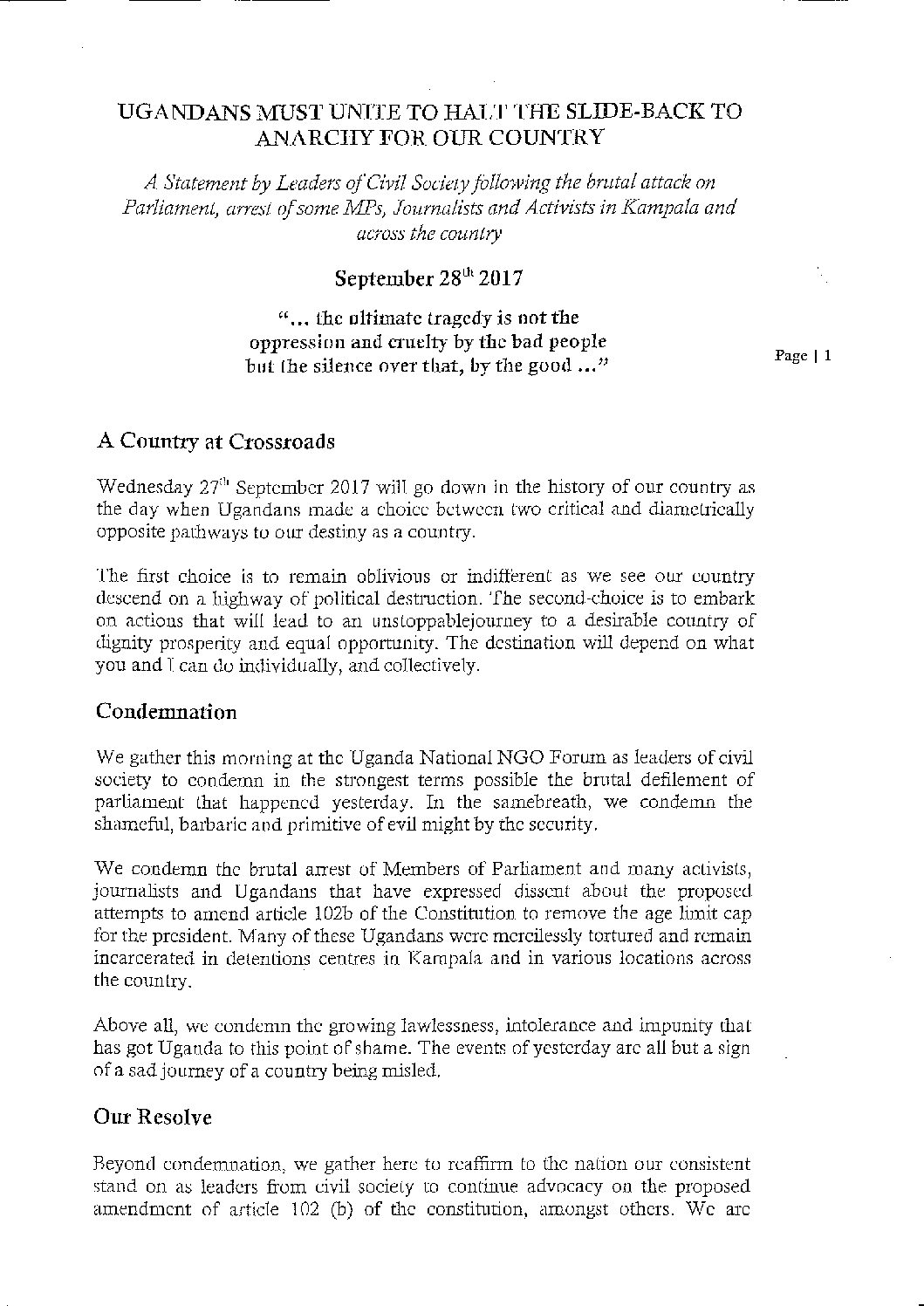
Civil-Society-Leaders-Statement-on-Post-Parliament-Siege

Civil Society Organisations in Uganda have Thursday urged President Yoweri Museveni to reaffirm his position he made in a television interview in 2012 that he would not seek another term as President after he clocks 75 years.

“The President should come out and reaffirm his position made in 2012 that he will not seek another term as president after he clocks 75 years,” they said in a statement released today in Kampala.

The CSO leaders also condemned the arrest of journalists, Members of Parliament and activists following debates on lifting the presidential age limit from the Constitution.

In a statement signed by 18 civil society organisations on September 28, 2017, the leaders stated: We…condemn in the strongest terms possible the brutal defilement of Parliament that happened yesterday. In the same breath, we condemn the shameful, barbaric and primitive of evil might by the security.”

A big section of Ugandans think that the proposal to removal the presidential age limit in the Constitution is meant to benefit President Museveni.


Stories Continues after ad

Uganda registers poor performance in competitiveness

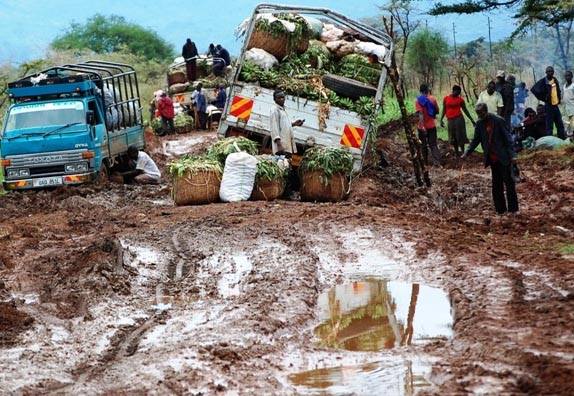
BAD ROADS: Vehicles stuck in muddy road. The report implores government to improve infrastructure such as roads

Uganda’s performance in the Global Competitiveness Report is a cataclysm as the country could only come at a distant 114 out of the 129 countries ranked in 2017/18 index.

The report published by the World Economic Forum (WEF) puts Mauritius, Uganda’s neighbour Rwanda, and South Africa as the best performers in Africa.

Mauritius came first in Africa but placed 45th globally, while Rwanda emerged in position 58 globally and maintained its position as East Africa’s most competitive economy alongside Kenya which was rated in 91st position. Tanzania, at position 113 and Burundi at 129 were the other worst performers.

Meanwhile, through interviews with top executives in Uganda, the report indicates that the country faces challenges such as tax rates, corruption, access to financing inadequate supply of infrastructure, inflation inefficient government bureaucracy, poor work ethic in national labor force.

Other challenges are tax regulations, inadequately educated workforce policy instability, foreign currency regulations, crime and theft, poor public health, insufficient capacity to innovate and government instability.

The report is an annual assessment of the factors driving countries’ productivity and prosperity. The WEF defines competitiveness as the set of institutions, policies and factors that determine the level of productivity of a country.

The report assessed countries on twelve pillars such as: institutions, macroeconomic environment, health and primary education, higher education and training, labour market efficiency, financial market development, technology readiness and market size. Other pillars the report based on are business sophistication, innovation and infrastructure.

The report shows that Uganda came in 30th position globally in labour market officially, compared to the rest of the pillars where the country scored above 75.

Richard Samans, head of Centre for Global Agenda and a member of the Board of World Economic Forum, said that despite recovery in the global economy, prevailing growth strategies and models of economic progress are increasingly being called into question.

The Global Competitiveness Report seeks to provoke constructive policy dialogue among policy-makers, business leaders and members of the civil society.

The report provides a comprehensive assessment of national competitiveness worldwide, providing a platform for dialogue between government, business and civil society about the actions required to improve economic prosperity.

Stories Continues after ad

Kayihura admits SFC presence during Parliamentary chaos

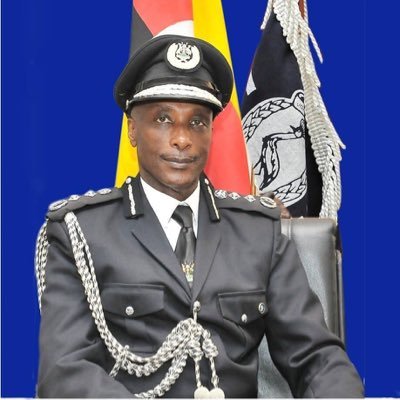
Being Investigated: Former IGP Gen. Kale Kayihura

The Inspector General of Police General Kale Kayihura has today acknowledged the presence of Special Forces Command (SFC) soldiers and ‘other security agencies’ during yesterday’s chaotic scenes at Parliament.

Addressing the press at Entebbe, the IGP said that intelligence established that opposition MPs had planned to cause chaos during yesterday’s session, prompting the SFC to go on standby in a bid to restore peace.

According to Kayihura, he invited the SFC and other security agencies to reinforce the police. “If it is to blame, it is me who invited a sister security organ to assist police, that is why you saw them in civilian attire at in Parliament,” Gen. Kayihura said.

He faulted opposition legislators, saying they started the chaos that led to the intervention of the SFC, and also lauded the soldiers for ‘bringing order and calmness in parliamentary chambers’. “Good work done,” Kayihura said.

Interestingly, Kayihura’s acknowledgement comes as the SFC spokesperson Capt. Jimmy Denis Omara was quoted by media denying the presence at Parliament of the elite soldiers that guard the President, his family and sensitive installations in the country.

It should be recalled that yesterday, Parliament descended into the second day of chaos after the Speaker Rebecca Kadaga suspended 24 opposition MPs and one National Resistance Movement (NRM) legislator, the State Minister for Water Resources Ronald Kibuule, for three sittings, citing indiscipline.

The Speaker’s decision followed allegations made on Monday by Kira Municipality MP Ssemujju Nganda that Minister Kibuule had sneaked in the parliamentary chambers with a gun, and threatened him.


Stories Continues after ad

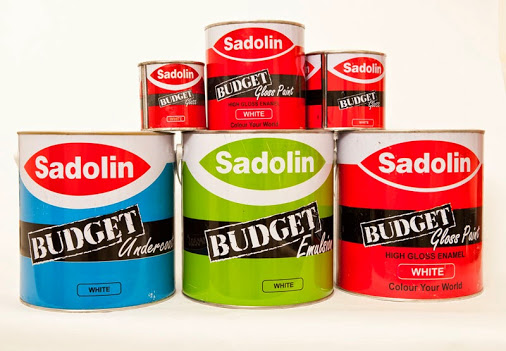
Plascon challenged as Sadolin re-enters Ugandan market

MARKET LEADER: Sadolin Paints products

All is not well with Kansai Plascon, the producers of Plascon paint after AkzoNobel, the original makers of Sadolin paint under Sadolin Uganda Limited, said recently that they would soon re-start producing their flagship paint brand and other products for the Ugandan market.

In a release AkzoNobel accuses Kansai Plascon of violating a legal arrangement agreed upon and instead turning around to claim that Sadolin paint had been replaced by Plascon paint on the market.

“Recent media reports by Kansai Plascon Uganda refer to the migration of brands from Sadolin to Plascon. However, this is not the case as the Sadolin brand is owned by AkzoNobel and is still available to the market,” says Johann Smidt, Director for AkzoNobel Decorative Paints in Sub-Saharan Africa.

We remove all doubt in the minds of our partners and all the consumers that love Sadolin paint. I can assure you that Sadolin paint is still available to the market and we are committed to continue supplying this household brand to the East African region,” Smidt added.

According to Smidt, AkzoNobel is in the final stages of signing sales, manufacturing and distribution agreement with a local partner to ensure supply to the market once the current licensee agreement has ended.

“With this agreement, we hope to invest in manufacturing plants which will result in jobs created and will in turn stimulate the economy in East Africa,” Smidt said, adding: “I would like to further emphasize that Sadolin will stay in the East African region and will continue to serve the market that has been so loyal to the brand for over 50 years. I would also like to thank our partners and customers for their continued support in growing the brand,” says Smidt.

By press time efforts to get Kansai Plascon managers give their side of the story were futile as their known telephone lines were unavailable.


Stories Continues after ad

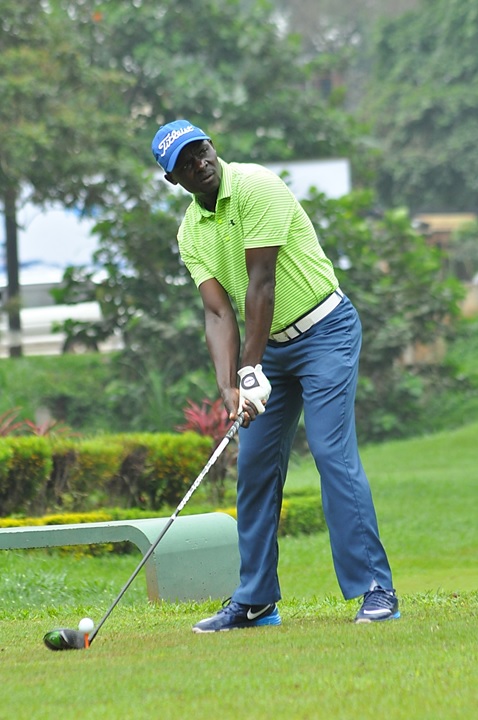
Akope leads on Day One of Uganda Open Pros Championship

Ugandan golfing sensation Deo Akope in action

Day One of the Tusker Malt Uganda Open Pros Championship has put Deo Akope, a former two-time winner in the lead alongside Kenya’s Indiza Dismas.

Both players returned a score of 69 at the 72-par Kitante Golf Course and despite some rain earlier in the day, the players braced the course conditions to play out all the 18 holes.

In third place is Uganda’s Brian Mwesigwa and Philip Kasozi, both with 71, while Kenya’s Giddie Ganeev and Portugal’s Ferreira Stephen lie in fourth place both with 72.

There are still four more days of thrilling golf to be played, with defending champion Joshua Seale ending the day on 76 with 4 over par and hoping to improve his game going into day two.

The tournament has attracted players from other countries such as; Portugal, Zimbabwe, Zamiba, Namibia, Rwanda and Tanzania, with over 80 pro-golfers playing for a prize money of Shs145 million.

Tusker Malt Lager injected over Shs500 million into this year’s tournament as assurance to show its support for the development of the game golf in Uganda.

There has been an increase in the cash sponsorship from Shs230million to Shs250million.


Stories Continues after ad

USE in drive to encourage investment trading among students

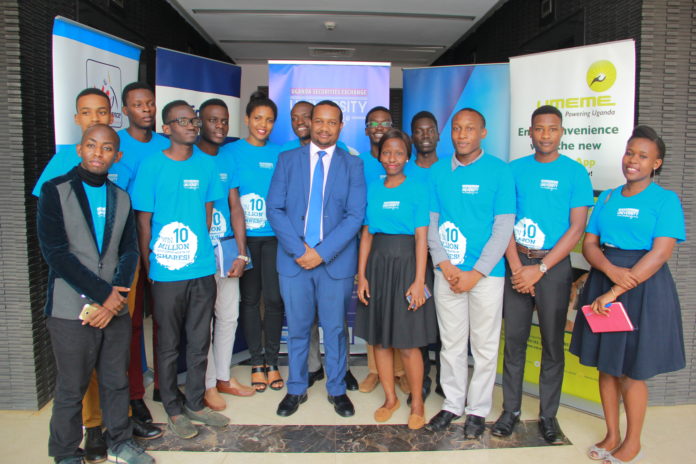
Officials of the USE and sponsors at the launch

Uganda Securities Exchange (USE) has launched an initiative aimed at inculcating an investment culture among students in universities across the country.

Dubbed the USE University Challenge, the initiative seeks to give the youth a platform to trade and understand how to invest in shares and bonds listed on the bourse.

About 1,000 university students, with each getting Shs35, 000,000 worth of ‘virtual capital’ are expected to take part in the first of its kind trading and investment competition across the country. The student who will have the highest portfolio at the end of the three months’ competition will receive Shs10 million worth of shares or bonds to start investing.

Speaking during the launch, the USE CEO Paul Bwiso noted that the investment challenge will be central in raising awareness among the younger generation in investing on the stock market and how the students can create wealth through the exchange.

“This platform will be critical in demystifying what securities and trading is all about while giving an opportunity to students to learn how to make informed investment decisions early on in their lives,” said Mr. Bwiso.

He also noted that the virtual capital will be used to buy and sell virtual shares and corporate or government bonds listed on the Securities Exchange or invest in fixed deposits or swings.

“The USE Investment Challenge is our way of encouraging the youth to develop a culture of savings and investments by demonstrating in a practical way how to buy and sell securities listed on the Uganda Securities Exchange and as a result, create financial inclusion for the youth,” Mr. Bwiso said.

Catherine Gitonga, the Founder and CEO of Smart Youth Investments, said participants will have access to the USE real time information. “The online platform will be an assimilation of the real market,” Miss Gitonga said.

“This is an entry point for students to learn how to invest through the Uganda Securities Exchange,” Ms. Gitonga said of the challenge that is being sponsored by dfcu Bank, Stanbic Bank, NIC, Uganda Clays and Umeme.

HOW TO PLAY
The USE University Challenge is hosted on
Go to the Register link and complete registration details.
Go to the Log In link and log on to your account
Participants should have access to the internet to participate in the UIC. Mobile phones can also be used.
The USE University Challenge 100% web and mobile based. It will be fast to play even on slower sites.
Each participant shall have their own user name and password to access their account.
The password will have already been sent via email to the participant after registration.
Transaction fees will be charged per transaction; the same way as they happen on the market. The fee is 2.1 % of the transaction value.
The trading prices will be the most current prices of the USE.
Real-time USE prices of all listed companies shall be provided by a USE official who will stream the prices and volume quantities of companies
being traded to the UIC website and we shall avail this information to participants so that they can buy or sell shares.


Stories Continues after ad

Age limit removal: Suspended MPs summoned by police

Chaos in the Uganda Parliament

Following two days of chaos at Parliament prompted by the imminent tabling of a private members bill to lift the presidential age limit that is capped at 75 years, police has summoned 24 legislators for interrogation at the CID headquarters in Kibuli.

Yesterday, the Speaker of Parliament Rebecca Kadaga suspended 25 opponents of the bill on the grounds of indiscipline, which they objected to, prompting a scuffle which left Soroti Woman MP Angelina Osege and Mityana Municipality MP Zaake Francis Butebi, injured and a lot of property damaged.

Among the MPs summoned by police today, the majority from the opposition include Allan Ssewanyana, Robert Kyagulanyi, Monica Amoding, Sam Lyomoki, Moses Kasibante, Betty Nambooze, Francis Zaake, Ibrahim Kasozi, Nzaavu, Gilbert Olanya, Muhammad Nsereko, Odonga Otto, and Winfred Nuwagaba and Nandala Mafabi. Amog others are Medard Lubega Seggona, Gerald Karuhanga, Gaffa Mbwatekamwa, Florence Nmayanja, Theodore Sekikubo, Barnabas Tinkasimire and Angelina Osege.

Interestingly, the State Minister for Water and Resources Ronald Kibuule, who reportedly sneaked a gun into the chambers on the first day of the chaos in contravention of the parliamentary rules, has not been summoned.

Incidentally, the chaos on the first day was sparked off following allegations that Kibuule had threatened Kira Municipality MP Ibrahim Ssemujju Nganda, with the said gun.

Meanwhile, the chaotic circumstances on the second day prompted allegations that members of the Special Forces Command (SFC), an elite force that guards the President, stormed the chambers to throw out the defiant MPs, who have today received the police summons. However, it has been reported that the SFC, through its spokesperson Capt. Jimmy Omara, has since refuted the allegations.

In a related development, after the eviction of the defiant MPs, Igara West legislator Raphael Magyezi, who is peddling the private members bill that is aimed at removing presidential age limit, was granted 40 days leave to table it for debate.

This development has since caused anger amongst the population, with many accusing the government of being high-handed, and the police of being partisan.


Stories Continues after ad