Stanbic Bank
Stanbic Bank
28.6 C
Kampala
Stanbic Bank
Stanbic Bank
Home Blog Page 177

Kyambogo University suspends guild elections amidst EC internal conflicts

Kyambogo University main building.

Kyambogo University has announced the suspension of the 2024/2025 Guild elections due to internal conflicts and unresolved issues within the electoral process.

The suspension was revealed in a letter issued by the Vice Chancellor, Prof. Eli Katunguka Rwakishaya, dated October 25, 2024, following a management meeting held on October 23.

In the letter addressed to all students, the Vice Chancellor explained that the decision to suspend the elections was based on several factors raised by the Dean of Students and the Chief Security Officer.

Prof. Katunguka stated that the Office of the Dean of Students had received petitions from candidates challenging the electoral process. However, “these petitions had not yet been addressed,” creating dissatisfaction among the candidates.

Katunguka said that there were serious internal conflicts within the Electoral Commission and that these conflicts led to the dismissal of “the Secretary to the Electoral Commission and one (1) Commissioner a few days to the general elections further complicating the electoral process.

Prof. Katunguka also highlighted the disqualification of three presidential candidates just three days before the elections, which resulted into legal challenges.

“Three (3) Presidential Candidates were disqualified three (3) days to the general elections,” the letter noted, which led the candidates to file a Miscellaneous Cause in the High Court.

Katunguka stressed that this legal action meant the university could not proceed with the elections as planned.

The Electoral Commission faced further administrative shortcomings, particularly with the failure to submit required documents in a timely manner.

“There was a delay in the submission of information relating to details of aspiring candidates to facilitate the printing of the ballot papers,” Katunguka stated in the letter.

Therefore, the university management decided to suspend the 2024/2025 Guild elections.

The Vice Chancellor announced that an Ad Hoc Committee would be established to “investigate and review the conduct of the 2024/2025 Guild electoral process.”

The University will institute an Interim Caretaker Government, as per Article 7, Clause 4 of the Guild Constitution to ensure the smooth running of Guild activities during the suspension.

Despite the suspension of the elections, the Vice Chancellor assured students that the academic calendar remains unaffected.

“The Academic Calendar remains the same and examinations will commence as scheduled,” Prof. Katunguka wrote, urging students to continue preparing for their upcoming exams.

Katunguka urged the students to remain calm during this period. “I implore you to remain calm as Management finds a solution for your governance organ,” he wrote.


Stories Continues after ad

Court sentences former LRA commander Thomas Kwoyelo to 40 years in prison

Kwoyelo in the dock.

The International Crimes Division sitting in Gulu has sentenced former Lord’s Resistance Army (LRA) Commander, Thomas Kwoyelo, to 40 years in jail.

The court found Kwoyelo guilty and convicted him of 44 crimes against humanity. Kwoyelo was grappling with 78 of the 93 counts of murder, aggravated robbery, extensive destruction of property, causing serious injury to body or health, and inhumane treatment, rape, and torture, among others, that he is alleged to have committed against the civilian population of northern Uganda, southern Sudan, and the northeastern regions of the Democratic Republic of the Congo (DRC).

Appearing before a panel of judges led by Andrew Bashaija, Stephen Mubiru, Michael Elubu, and Duncan Gaswaga Kwoyelo was found guilty and convicted on charges of charges of murder, attempted murder, pillage, cruel treatment, inhuman acts, outrages, kidnapping, kidnapping with intent to murder, imprisonment, aggravated robbery, outrage, outrages upon personal dignity, enslavement, rape, torture, and violence to life.

In a ruling delivered by Justice Michael Elubu, court acquitted him of three charges of murder and dismissed 31 charges of murder, attempted murder, aggravated robbery, and pillage.

Kwoyelo’s trial resumed on April 17, 2023, at the International Crimes Division of the High Court (ICD) sitting at Gulu High Court in Gulu City, Northern Uganda; however, it stalled due to a lack of funds.

Having commenced the trial on September 24, 2018, the court had its first prosecution witnesses testify in March 2019, and since then, trial sessions have been held periodically between Kampala and Gulu.

Kwoyelo was abducted by the LRA on his way to school in 1987, remained in captivity, and later became a colonel. The worst attack of the paramilitary group that was under the leadership of Joseph Kony occurred in Haute-Hele Province (DRC) in December 2008, the so-called Christmas massacre, where over 200 people were killed and over 800 houses razed down.

The rebels split up into groups to attack the villages of Faradje, Batande, Duru, Bangadi, and Burgi. They waited until people had gathered for Christmas festivities, then surrounded and killed them with axes, machetes, and clubs.

In 2009, Kwoyelo was captured in the neighbouring DRC during a raid by regional forces.

In March 2009, Kwoyelo was injured during hostilities between the Ugandan army and the LRA in the DRC and brought into Uganda for medical treatment and subsequently into custody.

His trial, however, commenced in July 2011. Before ICD, a division of Uganda’s High Court. Constitutional Court resolved that the suspect’s trial should stop as it found grounds for the failure by the DPP and the Amnesty Commission to act on Kwoyelo’s application. In 2015, the Supreme Court decided that Kwoyelo’s trial should resume.

Stories Continues after ad

EU announces Shs673b to revamp Nalubaale power dam

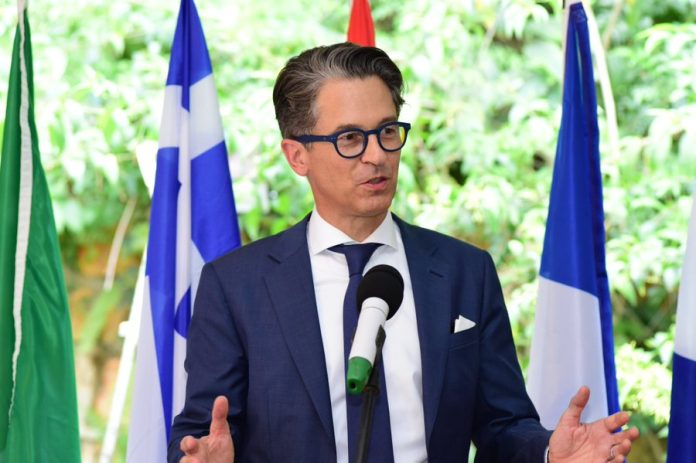
H.E. Jan Sadek, head of EU delegation to Uganda.

The European Union (EU) has announced 170 million euros (Shs673.2 billion) in financing towards the revamping of Nalubaale power dam.

The financing was announced by Ambassador Jan Sadek, the EU head of mission to Uganda.

According to Ambassador Sadek, out of the 170 million euros, 30 million euros (Shs118.8 billion) will be a grant, with the rest being a line of credit from the European Investment Bank and the French Development Agency.

“Nalubaale and Kiira power plants are critical infrastructure in Uganda’s energy sector. This support will help stabilise the national grid and ensure a reliable power supply,” he said.

Officials estimate that the dam will operate for another 30 years after operating for about 70 years.

Nalubaale Power Station, formerly known as Owen Falls Dam, is a hydroelectric power station across the White Nile near to its source at Lake Victoria in Jinja district.

It is the oldest hydropower station in Uganda, commissioned in 1954. Originally, Owen Falls Dam was designed to generate 150 megawatts. In the 1990s, the station was refurbished to repair the accumulated wear from a decade of civil disorder and hence increased its generation capacity to 180 megawatts.

Stories Continues after ad

Uganda Baati introduces regional trainings to equip fundis with latest market knowledge and trends in construction

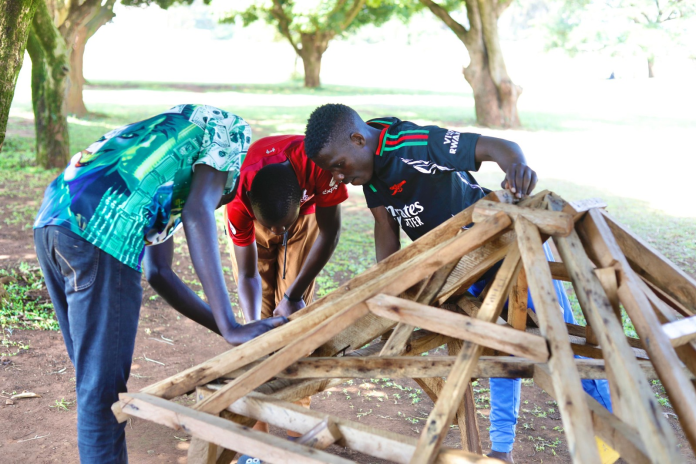
Uganda Baati Limited, a trusted building solutions provider has set out on regional trainings, targeting fundis, with the aim to equip them with the current market trends and knowledge that will enable them offer value to their customers during construction.

These trainings, which target over 2,500 fundis across the country, are part of the company’s ongoing initiative to educate, support, and equip fundis with knowledge whilst offering customers tailored construction needs with the current market trends.

During the training session in Bulindo, Patrick Katende, the Head of Service Centers at Uganda Baati Limited commended the fundis for their dedication to ensuring high-quality service, emphasizing the importance of these sessions in equipping fundis with the necessary skills they need to offer customer satisfaction.

“Fundis interact directly with customers, helping them make decisions in selecting products to use during the construction phase. Sessions like these, bring them up to update the latest products, insights, knowledge and market trends enabling them to grow, succeed, and deliver exceptional service whilst developing the housing landscape in their different regions,” he said.

“During the training engagements, we focus on disseminating roofing solutions, and after-sales support processes. We also encourage the fundis to exchange insights about the challenges faced in the field and share feedback on customer preferences. This then enables us to curate building solutions skewed towards the customers’ needs,” Katende said.

“Previously my customers used to import roof sheets from South Africa for their houses. This caused a delay in my work. From the time I introduced them to quality products from Uganda Baati, and others made from Uganda, they have since switched with ease and my work is made easier and faster,” Daniel Serunkuma, a fundi based in Kira commented.

“With building projects continuing through the year-end, we understand the need to keep these professionals equipped and motivated. We place great trust in this network of professionals and recommend them with confidence whenever customers require expert assistance. So far we have conducted these trainings in Hoima, Fort Portal, Mbarara and other showrooms across Kampala. We are set to continue with additional engagements in other locations such as Gulu, Arua, and Masaka,” Katende remarked.

Uganda Baati under the Safal Uganda Baati Foundation also launched the second phase of its Economic Empowerment Skilling Program targeting out-of-school youth in Tororo District. The initiative aims to address pressing social issues, including high youth unemployment and teenage pregnancies, by equipping young people with practical, employable skills.

Following the outbreak of COVID-19, Tororo District, with its young population of nearly 373,317 individuals aged 15-30, continues to face significant challenges. Youth unemployment stands at an alarming 62%, and teenage pregnancies are 29.5%, higher than the national average of 25%.

The initiative, which began this month, will run for three months and reach over 260 young people aged 16-25. Through this program, participants will receive free access to employable skills, designed to not only provide immediate solutions to unemployment but also empower youth to take control of their economic futures.

George Arodi, the Business Head of Uganda Baati, emphasizes the broader mission behind the skilling program, “This program is not just about imparting technical skills, it’s about nurturing a generation of self-reliant young people who can contribute positively to society. We are providing the youth with tools to build their own futures, economically and socially.”

Participants will engage in four key training programs which include Backyard Gardening, Fundi Roofing,

Liquid Detergent Making, and Hairdressing, aligned with the Safal Uganda Baati Foundation’s development pillars. Alongside technical skills, the curriculum also integrates essential life skills such as financial literacy, sexual and reproductive health, branding, marketing, and business management.

“We believe that skilling young people holistically prepares them for the dynamic demands of today’s economy. Our goal is to give them not just the skills but the confidence to succeed,” adds Aroodi.

As Uganda Baati celebrates its 60th anniversary, initiatives like these highlight the company’s commitment to social responsibility and community empowerment, making a meaningful difference in the lives of Uganda’s youth.

Stories Continues after ad

Corruption, tax evasion named as biggest sources of illicit funds in Uganda

State Minister for Finance in charge of General Duties, Henry Musasizi,Executive Director of FIA, Were Wandera and other guests at Sheraton Hotel.

A new report by the Financial Intelligence Authority (FIA) has revealed that tax crimes are the second-largest source of illicit funds for money laundering in Uganda, second only to corruption.

The Tax Crimes and Proceeds Risk Assessment Report, which was released at Kampala Sheraton Hotel on Thursday, highlights serious risks, including smuggling, undervaluation of goods, false declarations, and non-filing of tax returns.

“These activities undermine our tax system and damage our economy. To address these issues, we must increase our capacity to investigate tax-related money laundering and work closely across agencies and borders,” the Executive Director of FIA, Were Wandera, said at the release.

“The findings provided in this report will help us develop better policies and enforcement strategies. They will also guide our risk-based approach to supervision, ensuring that resources are allocated where they are most needed, in line with international standards

Mr Wandera urged URA to build momentum in prosecuting tax crimes with Money Laundering added on the charge sheet as a separate offence.

Speaking at the launch of the report, Mr Henry Musasizi, the State Minister for Finance (General Duties), encouraged all agencies responsible for implementing the respective measures in the action plan of the report to do so within the agreed timelines.

“Let me remind you that tax crimes and money laundering techniques are changing as criminals employ new technology tools,” said the minister, adding that Uganda should stay up-to-date with technological developments that are leading to the emergence of new risks.

Stories Continues after ad

Equity Bank’s Managing Director in Dubai to Engage and Serve Customers

#EquityInDubai#EquityBankUganda

Equity Bank’s Managing Director Anthony Kituuka is making a special trip to Dubai to personally connect with customers and showcase the bank’s commitment to serving its global members.

The visit follows weeks of dedicated service by Equity staff in Dubai. Kituuka will join the team to continue strengthening the bank’s relationship with its customers abroad.

“We have heard your call,” said Kituuka, speaking ahead of his departure on Thursday. 

“Equity is not just about banking, it is about understanding and supporting our customers wherever they are. I am joining the team that has already been on the ground, working closely with our customers in the UAE.”  

For the past two weeks, the Equity Bank team in Dubai has been offering personalised services to Ugandan expatriates and other UAE customers. The staff has been addressing customer queries, reactivating accounts, opening accounts, and issuing ATM cards. The team also links customers to mobile and online banking as they open their accounts.

“The feedback has been incredibly positive,” said Laura Bahemuka, Equity Bank’s Head of Micro Segment currently stationed in Dubai. “Our customers have expressed appreciation for getting one-on-one support and resolving long-standing issues.”

Kituuka’s visit will start with a keynote address at the Smart Minds Business Conference, scheduled for Friday October 25, 2024, at the prestigious Dubai Royal Pillar Events Auditorium. His address, eagerly anticipated by business leaders and entrepreneurs, will focus on building successful businesses back home. He will also speak on how strategic partnerships can drive growth.

“Equity Bank exists to champion the socio-economic prosperity of the people of Africa and for this reason being a keynote speaker at such an event is not just a professional duty for me, it is a personal duty,” said Kituuka.

Adding, “Equity Bank’s DNA is driving financial inclusion and fostering business growth, and I am looking forward to sharing insights on how we can be a catalyst for the expansion of wealth.”

Kituuka will also speak at the 3rd annual Uganda-UAE business forum on Thursday October 31, 2024, engaging with both the public and private investors, and Ugandans doing business in Dubai.

Beyond the conference, Kituuka will host informal sessions with Ugandans, particularly Equity Bank’s customers living in Dubai, offering them an opportunity to interact with him directly.

“Equity is your listening, caring partner, we believe in listening to our customers and responding to their needs. This session is about deepening those personal connections and hearing what more we can do to support them,” he said.

The Dubai engagement comes a day after Equity Bank hosted the India-Uganda trade mission, which attracted investors from India. The two-day mission saw Ugandan businesses hold discussions with counterparts from India and has resulted in substantial undertakings. 

Equity teams continued effort is an example of how financial institutions can serve customers across borders, ensuring that no one feels far from home.

In September, the bank interacted with its customers in the UK and the US, offering them financial services.

Stories Continues after ad

Rajin tailors locked up in Luzira for debt defaulting

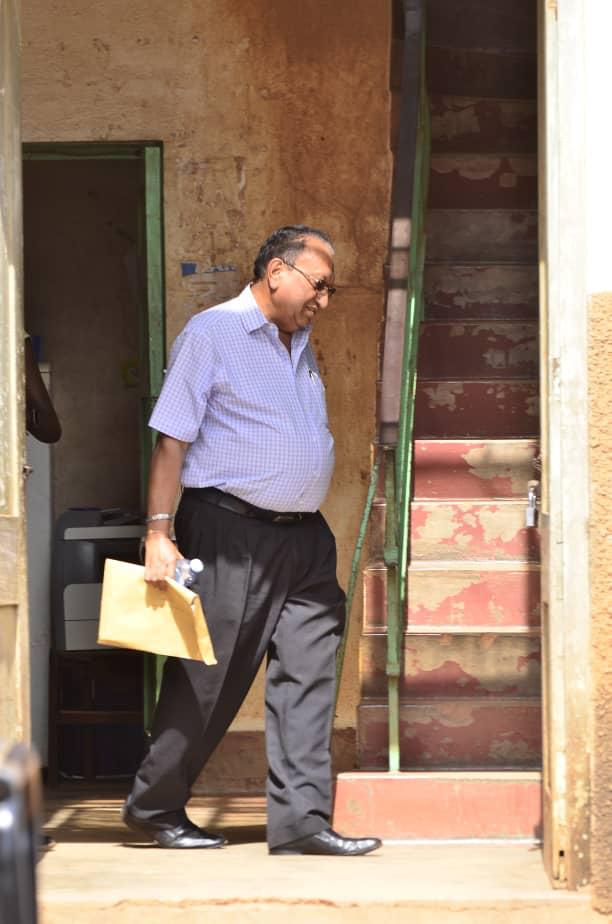
Mr Rajin.

Former Buganda kingdom State Minister for Economic Planning Rajni Tailor – Minister of State for Economic Planning and Economic Development Rajni Tailor has been arrested and locked at Luzira prison.

It is reported that this time, Rajin defaulted Madhwani. “He took $5000 and failed to honour the payment terms”

His tricks got exposed after several Indian community members dragged him to police for failure to pay back hundreds of dollars which the community members have been lending to him.

Stories Continues after ad

DDP withdraws charges against one of suspects in the murder of Ndiga clan leader

Ms Milly Naluwenda.

The Director of Public Prosecution (DPP), Jane Francis Abodo, has withdrawn murder charges against Milly Naluwenda.

Naluwenda was one of the suspects implicated in the assassination of Ndiga clan leader Eng Denis Bbosa.

According to the withdrawal form presented by state attorney Lillian Omara Abodo, she informed Mwanga II Grade One Magistrate Adams Byarugaba that Naluwenda is set free.

“I have instructions to discontinue proceedings against Milly Naluwenda,” Omara said.

In August, Tabula Bbosa Lujja confessed to orchestrating the killing of the former head of the Ndiga clan, Eng Daniel Bbosa.

Lujja claimed that he hired the killers, and it was an act of vengeance that aimed at reclaiming his ancestral inheritance. Conversely, he said his father was killed over the leadership of the Ndiga clan.

“I do not regret hiring two killers, Serunkuma and Noah Lujja. I know it is wrong to murder, but I was securing my ancestors’ rightful ownership of the Luwomwa.” Tabula said at Muwanga II Court.

He is charged alongside the five suspects, who include Noah Lugya, Harriet Nakabale Nakiguli, Ezra Mayanja Ezra, and Joseph Nakabale.

Bbosa was fatally shot on February 25, 2024, by assailants as he was approaching his residence in Kikandwa Zone, Lungujja Parish, Lubaga Division. The assailants, riding on a motorcycle, opened fire at Bbosa’s motor vehicle, bearing registration number UAH 637X, resulting in his immediate demise.

During the heinous act, a vigilant resident bravely intervened, knocking down the assailants’ motorcycle and alerting the community. Swiftly, members of the community mobilised, leading to a confrontation with the assailants. Mob justice ensued, resulting in the death of one assailant at the scene, while the other remains in critical condition.

Police recovered the firearm allegedly used in the murder incident, along with the motorcycle registration number UEX 754E, used by the assailants during the attack.

Stories Continues after ad

Older persons cite inaccuracy in national census results  

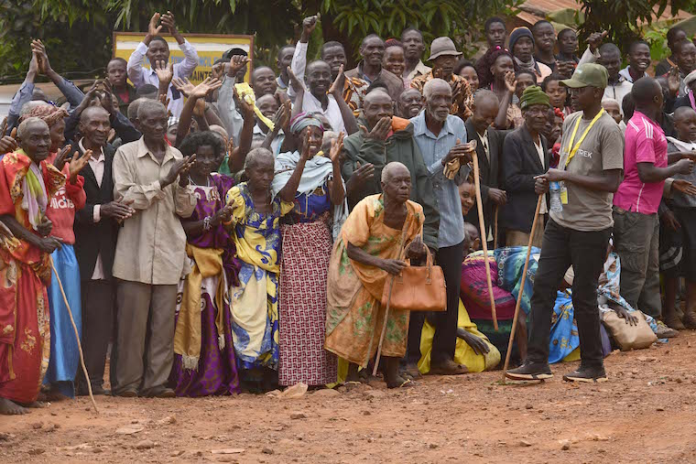
Older persons.

Older persons in Uganda have raised concerns about the accuracy of the recently concluded 2024 Housing and Population Census.

Speaking to journalists on Wednesday at Piato Restaurant in Kampala, Arthur Namara, chairman of the HelpAge Advocacy Network Uganda (HANU), acknowledged improvements in demographic data collection but highlighted significant errors in the reported figures.

Namara expressed dissatisfaction with the census findings, particularly regarding data on older persons. “While we appreciate that the final report was produced in record four months, there are substantial anomalies in the data concerning older persons,” he said.

Namara noted that of the 298,000 older persons benefiting from the Social Assistance Grants for Empowerment (SAGE) payroll, only 28% around 80,000 were counted in the census, leaving a staggering 220,000 unaccounted for. He also noted that a house-to-house registration effort had recorded an additional 43,000 older persons above 80 years without identification cards, bringing the total to 350,000. Despite this, only 80,000 individuals in this age group were reflected in the census data.

“Under the findings section of the census, out of the 298,000 older persons benefiting from SAGE payroll, only 28% were counted (about 80,000), leaving 220,000 older persons above 80 years not counted. In addition to the above exclusion, there was a house-to-house registration done among older persons above 80 years without IDs, and these added up to 43,000 older persons. This means we have 307, 000 plus 43,000 totaling to 350,000 older persons above 80 years, but only about 80,000 were counted.”

Charles Isabirye, the chairman of the National Council for Older Persons (NCOP) said the UBOS figures don’t add up with the data they already have, especially in regards those who receive cash for elderly.

“We are refuting these figures since they are not backed up by any evidence. There must be a problem somewhere. These numbers are just presumed,” Isabirye said.

Isabirye further warned that if the government relies on the flawed data from UBOS, many elderly persons risk being excluded from essential services and programs.

He noted that any correction of these figures might take another decade, delaying much-needed support for the elderly.

“If these figures are to go by, it means the older persons will miss out on several programs since statistics show there has been a reduction in the number of elderly. In this case, it will take another 10 years for these figures to be corrected,” Isabirye said.

The representatives of older persons are urging UBOS to rectify the errors and have announced plans to petition Parliament to address the matter.

Stories Continues after ad

LoP Ssenyonyi calls for thorough audit of Shs553.1b investment in Atiak Sugar Factory

LoP Joel Ssenyonyi.

The Leader of the Opposition, Joel Ssenyonyi has tasked government to conduct a thorough audit of the operations of Atiak Sugar Factory in Amuru District, in which the Uganda Development Corporation (UDC) has invested over Shs553.71 billion, before more resources are allocated

According to the LoP, the factory is non-operational without any sugar production, despite government’s intervention between financial years 2017/2018 and 2022/2023, where government purchased and acquired equity shares from the factory.

“Despite the factory being non-operational for a couple of years, it spends 200 litres of diesel on a daily basis, running turbines to prevent machines from rusting and malfunctioning. This regular expenditure is disturbing given that there is no production going on,” said Ssenyonyi.

This was one of the concerns contained in a report on an oversight visit by opposition Members of Parliament to Atiak Sugar Factory, presented by the LoP during a plenary sitting held on Wednesday October 23, 2024.

Ssenyonyi further noted that there is limited or no presence of UDC in the operations of the factory, whereas it is meant to oversee the project on behalf of government.

According to the report, the factory management abandoned the agreed model of planting 60,000 acres of sugarcane through farmer cooperatives and resorted to planting 25,000 acres of sugarcane on land owned by the factory.

“Management told us that the factory’s sugarcane plantation totaling 7,900 acres had been burnt down in December 2020, which affected the operations. However, the cause of the fire was unclear,” Ssenyonyi said.

He urged government to fast-track the conversion of its preferential shares into ordinary shares so as to increase its negotiating and voting powers, as well as strong decision making in the company.

To ensure improved oversight and management of the factory’s operations, Ssenyonyi also urged UDC to ensure efficient management and transparency of the resources invested by government.

“We need government to update Parliament on its stake in this project, the plans to see that the Shs553.71 billion injected by the taxpayer does not go to waste and how Northern Uganda and Uganda at large can rip the promised benefits from this project,” he added.

Speaker Anita Among, gave the finance minister three weeks within which to present a statement on matters arising from the LoP’s report.

However, parliamentary documents show that between FY 2017/18 and FY 2019/20, the government, through the Uganda Development Corporation (UDC), acquired equity shares worth Shs81 billion in Horyal Investments Holding Company Ltd, the entity behind Atiak Sugar Factory.

In FY 2017/18, the UDC provided two shareholder loans totaling Shs20 billion. Additionally, in FY 2019/20, the government, through NAADS, released Shs54.68 billion to support sugarcane out growers in Amuru and Lamwo districts to sustain cane supply to the factory. The government also provided a transport subsidy of Shs16 billion to transport sugarcane from Busoga to Atiak.

Despite this investment, there are concerns over the government’s actual ownership percentage in the factory, as it has continued injecting funds into Horyal Investments. The factory was initially envisioned as a milestone in Northern Uganda’s economic recovery, promising jobs and women’s empowerment by supporting female sugarcane suppliers.

However, Horyal Investments reportedly took on expensive short-term loans to set up the factory and later sought government support to avoid financial collapse, arguing that the project was strategic for the region’s recovery.

Stories Continues after ad