Stanbic Bank
Stanbic Bank
21.6 C
Kampala
Stanbic Bank
Stanbic Bank
Home Blog Page 1787

Okello Oryem calls for increased funding in technology, research

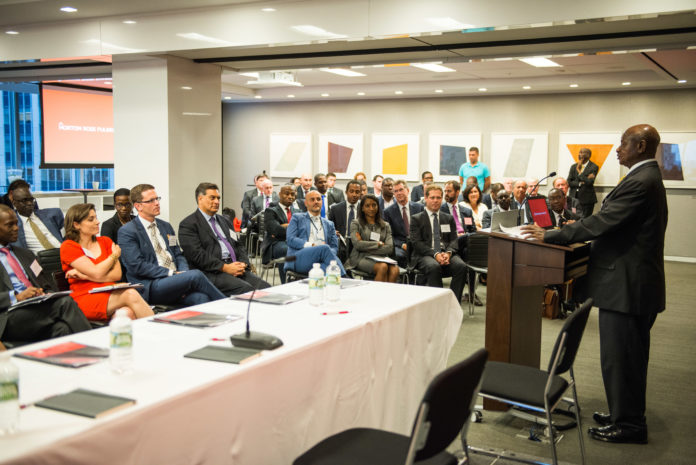
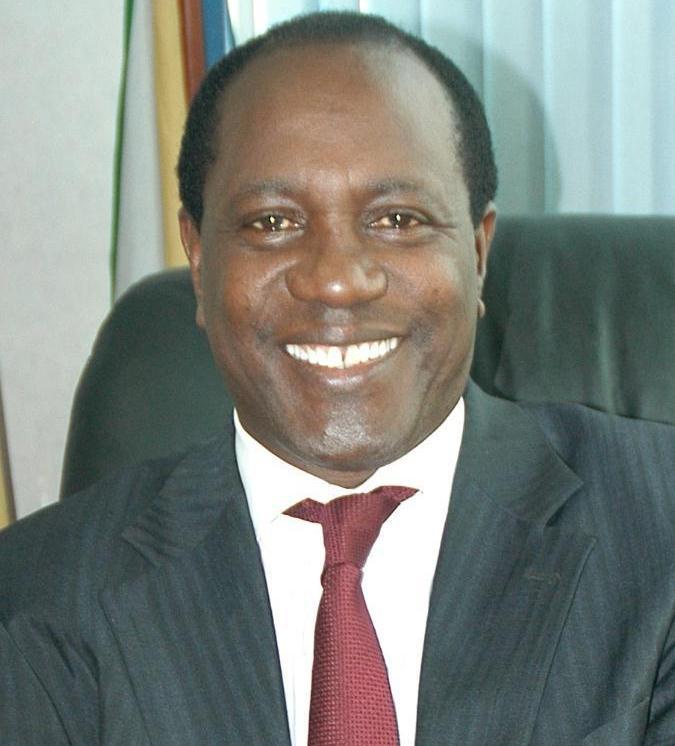
Henry Okello Oryem MSFA/IA. Photo Credit: MoFA Uganda

Minister of State for Foreign Affairs in charge of International Affairs, Henry Oryem Okello, has called upon the OIC Summit on Science and Technology to increase funding in Science and Technology Research and Development in Universities and Institutions funded by the Organization of Islamic Cooperation (OIC), including Islamic University in Uganda.

Oryem who is leading a 9-person delegation is attending the First Summit of the Organisation of Islamic Conference on Science and Technology which runs from September 9-11th, 2017 in Astana, Kazakhstan. He made the remarks during the inaugural and first working session during which heads of high-level foreign delegations and international organizations delivered their statements.

The Astana Summit has been described by various quarters as a historic event for the entire Islamic world and, which will help to establish a framework to hold Science and Technology Summits on the regular basis. The Astana Summit is meant to ensure a clear understanding of the necessity to completely reduce scientific and technological gaps between Muslim Ummah and developed countries and it will also contribute to the earliest implementation of the UN Sustainable Development Goals (SDGs) and promote the principles of cooperation and solidarity among all OIC Member States.

It is envisioned that it will mark beginning of a new process aimed at rethinking the historical role of the Muslim Ummah in the area of scientific and technology modernization of the world community and, as a practical step. The outcome of the Summit is expected to be the adoption of an OIC Science, Technology and Innovation Agenda 2026 and the Astana Declaration.

Mr. Oryem who was accompanied by EliodaTumwesigye, Minister of Science and Technology and officials from the Ministries of Science, Technology and Innovation and Foreign Affairs expressed concern to the Summit that there was a need to reduce scientific and technological gaps in the member states. He informed the Summit that Uganda’s challenge, which was not much different from others in the developing world, was in the current education system, which emphasizes theoretical academic work with little depth on applied science, engineering and technical skills which are central to technological innovations.

Uganda’s Delegation to the Summit.

He emphasized that the government of Uganda had given high priority support to the Science, Technology and Innovation sector in its overall development strategy by establishing the Uganda National Council for Science and Technology (UNCST) as the overall sector coordination agency. He said that the UNCST has developed and reviewed that National Science, Technology and Innovation policy which the government formally adopted. To implement this policy the government later created a fully-fledged Ministry of Science and Technology.

The second and final day of the Summit, (September 11), will be devoted solely to searching new methods and tools to develop science and cross-sector international cooperation, in order to strengthen the technological capacity of the OIC member states.

The Astana Declaration is a political document, the adoption of which will be a clear sign of determination of the OIC member states to support science and technology as a priority, including in the framework of the OIC 2025: Programme of Action and the Outcome Document of the Astana Summit.

The Declaration will reflect the importance of developing and implementing initiatives and programs, as well as inferential research in the field of education, professional skills, basic and applied sciences, primarily aimed at resolving urgent social problems.


Stories Continues after ad

Zimbabwe: The state, the security forces, and a decade of disappearing diamonds

EMBATTLED AND IN TROUBLE? Former Zimbabwe President Robert Mugabe

Global Witness has uncovered and published on September 11, new evidence linking Zimbabwe’s state and partisan security forces to a decade of disappearing diamond wealth.

Despite offering early promise and hope, diamonds have failed to benefit the Zimbabwean people. Instead, they have provided secret off-budget funding for state security forces consistently implicated in their oppression. As elections and a divisive presidential succession struggle loom, this has serious implications for Zimbabwe’s democratic future, and casts serious doubt on President Mugabe’s claim that private investors are solely to blame for billions of dollars of missing diamond revenues.

“We have not received much from the diamond industry at all (…) I don’t think we’ve exceeded US$2 billion or so, and yet we think that well over US$15 billion has been earned in that area. (…) There has been quite a lot of secrecy (…) and lots of swindling, smuggling (…). The companies that have been mining have virtually robbed us, I want to say, of our wealth (…). You cannot trust a private company in that area. None at all,” – President Robert Mugabe, interview with Zimbabwe Broadcasting Corporation on the occasion of his 92nd birthday.

Mismanagement of the diamond sector has also had devastating consequences for Zimbabwe’s development. With nearly three quarters of the population living beneath the poverty line and an estimated four million people in need of food aid in 2017, the need for a complete overhaul of the industry has never been greater.

An Inside Job’ examines five of the major mining companies that have recently operated in the Marange diamond fields and so continue to hold a stake in its future: Kusena, Anjin, Jinan, Diamond Mining Corporation (DMC), and Mbada. It details the steps companies have taken, in some cases, to conceal their finances, shield their operations from public scrutiny, and hide their ultimate beneficiaries and owners.

Global Witness’s key findings include:

  • Secret documents indicating that Zimbabwe’s feared spying agency, the Central Intelligence Organisation (CIO), may hold a stake in a Marange diamond mining company, Kusena Diamonds. The company’s diamonds have been traded in Antwerp and Dubai, circulating freely on international markets, despite the risk they may have funded human rights violations. This risk is set to continue, with the company now reportedly folded into the new government-led Zimbabwe Consolidated Diamond Company (ZCDC).
  • Significant links between another Marange diamond company, Anjin, which was set up with a private Chinese investor, and Zimbabwe’s highly partisan and oppressive military. Evidence indicates Anjin’s diamonds were sold in Antwerp on at least three occasions, likely in violation of EU sanctions against the military company that holds a significant stake in Anjin.
  • Mbada Diamonds held the largest concession in Marange, yet the identity of the owner of a 25 per cent stake in this lucrative asset has remained a closely guarded secret. Global Witness has found mounting evidence to suggest that Robert Mhlanga, a retired member of Zimbabwe’s security forces, ally of the ruling party, and alleged former Presidential pilot, stands behind the hidden share.
  • Diamond Mining Corporation (DMC) was formed as joint venture by the Government of Zimbabwe with a private investor. This is despite evidence suggesting that the individuals behind the company were involved in extensive smuggling of Marange diamonds for several years before diamonds could be legally exported under the Kimberley Process.


Stories Continues after ad

UNDP calls for heightened efforts against environment degradation

Ms. Rosa Malango Resident Coordinator and UNDP Resident Representative addresses delegates at ISNC

A three-day Inclusive and Sustainable New Communities (ISNC) Implementation Workshop and Global Project Meeting has commenced today, with the UN Resident Coordinator and Resident Representative (RCRR) Rosa Malango calling on partners to strengthen efforts against environmental degradation.

According to the RCRR, the UNDP partners with people at all levels of society to help build nations that can withstand crisis, and jointly generate local solutions to help empower lives and build resilient nations.

The South Korean Ambasador to Uganda Park Jong-Dae  addresses the delegates to the ISNC

With funding from the UNDP, the Korean and Ugandan governments, the ISNC project promotes community-based local development through the Saemaul Undong (SMU) model, largely used in Korea.

‘At the UN, we believe development should not be at the expense of development. Sustainable Development Goal 13 (Climate Action) enjoins us to protect the environment and natural resources. We need to support the restoration of these vital wetlands, educate the communities and help the encroachers find alternative livelihoods. The consequence of all these is droughts, hunger, disease and displacement’ the RCRR said.

He said that the pilot phase of the ISNC project ends this year, and that over the next three days, delegates will share success stories, best practices, knowledge products, and challenges from the implementation.

‘… These examples to show you how ISNC project is helping reverse this onslaught on the environment. You have taught communities the importance of protecting the environment, hygiene, saving and working together. You have encouraged beneficiaries to use energy saving cook stoves and the sustainable briquettes,’ Ms. Malango said.

The meeting has drawn delegates from Bolivia in Central America; Myanmar, Vietnam and Lao People’s Democratic Republic all in South east Asia and from East Africa, hosts Uganda and neighbouring Rwanda.


Stories Continues after ad

Tanzanian star Eaton Angel wins Uganda Ladies Golf Open

UBL-Marketing-Director-Mark-Ocitti-right-hands-over-the-trophy-to-Eaton-Angel-C-with-Uganda-Ladies-Golf-Union-president-Maxi-Byenkya

Tanzanian golfing sensation Eaton Angel put up a hard fought battle to win her third Uganda Ladies Golf Open at the Kitante Golf Course.

Eaton Angel being congratulated by her team manager and fellow Tanzanians

Eaton returned a score of 235 gross (76, 81, 78) to win the Ladies Open after three days of grueling challenge. She had previously won the 2012 and 2013 Uganda Ladies Open titles.

Uganda’s Irene Nakalembe, who plays with the Entebbe Golf Club, came in second with a gross of 237 (78, 80, 79).

In third place was Iddy Madina also from Tanzania who had a score of 238 (77, 80, 81). Iddy had gone into the final day of the Ladies Open as the leader but was unable to maintain her lead as Eaton and Nakalembe piled up the pressure to go on top.

Having been unable to keep up the pressure on day two, Kenya’s Agnes Nyakio had slipped into fifth place but was able to pull back and return a score of 239 (77, 82, 80) to end the Open in fourth position.

The 2017 Tusker Malt Uganda Ladies Open gave way to one of the future bright stars to come in Babirye Martha, who surprised many on her debut as she battled with experienced golfers and was able to maintain her position in the pressure group. Although she cracked under pressure, Babirye managed to finish in seventh position with a gross score of 243 (77, 81, 85).

Commenting on her win, Eaton Angel said: “This has been a tough competition for me and the challengers were even tougher. But I thank God for having been able to help me pull through and play well.”

The Tusker Malt Uganda Open attracted golfers from countries such as; Nigeria, Zimbabwe, Kenya and Tanzania. 64 ladies played in this year’s open at the par-72 Kitante course.

Speaking during the prize giving ceremony, Mark Ocitti, the Marketing Director of Uganda Breweries Limited, said: “We congratulate all the ladies that took part in this year’s Open and we would like to thank the Uganda Golf Union for having prepared and managed a successful Ladies tournament. As Uganda Breweries, we believe that Tusker Malt Lager embodies the spirit of the game of golf and we shall continue to support the sport.”

The Tusker Malt Uganda Open will resume this week on September 13 for the amateurs’ category at the Kitante Golf Course.

Tusker Malt Lager has injected over Shs500 million into this year’s tournament as assurance to show its support for the development of the game golf in Uganda. There has been an increase in the cash sponsorship from UGX 230 million to Shs250 million.

Tusker Malt Lager embodies the spirit of the game of golf.


Stories Continues after ad

Azam Uganda Premier League starts tomorrow

KCCA-FC-celebrate after winning the-title last season

The 2017/18 Azam Uganda Premier League season officially kicks off tomorrow and it is set to be an exciting campaign with more competition and interesting matches.

The move to start the league was rescheduled because the Uganda Cranes had a busy schedule in late August for the World Cup qualifiers against Egypt.

A total of sixteen teams are registered to participate. Among are the three newly promoted clubs, Maroons FC, Mbarara City and Masavu FC.

The matches will be played on Tuesdays, Wednesdays and Saturdays and some of them will be aired live on Azam TV.

Vipers at St Mary’s Stadium, SC Villa and KCCA are the main challengers for this season’s title.

KCCA FC will start the defence of their league title against newly promoted side Maroons FC in Lugogo.

SC Villa will be at home to Soana FC in Masaka, Vipers play away to Bright Stars in Matugga whilst URA host UPDF at their new home – Mandela National stadium, Namboole.

Meanwhile, KCCA FC will represent Uganda in the 2018 CAF championships.


Fixtures for Matchday 1:

Tuesday, 12 September 2017:


Bright Stars FC vs Vipers SC, Champions Stadium – Mwererwe 4:30pm

BUL FC vs Mbarara City FC, Kakindu Stadium – Jinja 4:30pm

KCCA FC vs Maroons FC, StarTimes Stadium – Lugogo 4:30pm

Masavu FC vs Police FC, Fisheries Training Institute – Entebbe 4:30pm

Onduparaka FC vs Proline FC, Green Light Stadium – Arua 4:30pm

SC Villa vs Soana FC, Masaka Recreation Ground – 4:30pm


Wednesday, 13 September 2017:


Express FC vs Kirinya Jinja SSS FC, Muteesa II Stadium – Wankulukuku 4:30pm

URA FC vs UPDF FC– Namboole stadium 4:30pm

Stories Continues after ad

Dolphin Suites: Kampala’s exotic and affordable hotel

IN BUSINESS: Dolphin Suites in the leafy Bugolobi

Kampala, Uganda’s capital city has good hotels but if you are looking for an exotic hotel with a serene, quiet and green environment, then you make no mistake if you choose Dolphin Suites.

Located on Princess Anne Drive in Bugolobi, just 5 kilometres from the city centre, the hotel is 35 kilometres from Entebbe International Airport, Uganda’s major gateway.

Dolphin Suites, which offers luxurious rooms with individual balconies and a swimming pool, overlooks the hilly Bugolobi suburb, one of the high-end places in Kampala that is characterised with the presence of Uganda’s middle class.

The affordable hotel not only offers an exotic setting and the best amenities, but while there a guest can also breathe in the coolest air from Lake Victoria, which is not far away. The quietness of the environment implies one can pick up a book to read or plan for any project in a conducive atmosphere.

A combination of services powered by a dedicated, trained and motivated staff will make your stay comfortable here, leaving you feeling home-away-from-home. Members, residents and guests can also take time out to relax and de-stress with a little pampering from the ever-caring staff, dressed smartly in uniforms.

The hotel offers an array of beauty and relaxation treatments for guests to enjoy—from a massage to ease any worries, to a relaxing facial or an invigorating body exfoliation treatment.

The hotel also has an excellent bar, restaurant and outstanding banqueting facilities where one may relax, meet friends or even discuss business ideas.

When at this hotel, visitors can also keep their bodies active in the gym or swimming pool. There is also steam and sauna services. The amenities are spacious and kept clean with a dedicated team of staff at your service.

Here people of all ages and different fitness levels are catered for, whether extremely athletic or just need a little exercise. A team of professional trainers who are always alert to take you through your routine workouts, guiding you every step of the way, as well as ensuring you are not harmed. But don’t forget that massage mentioned earlier is also available.

The well-kept spacious gardens at the hotel are suitable for occasions like weddings, introductions, corporate parties, media events, graduation parties and cocktail dinners as well as retreats and team building activities.

Take a break from your to-do list and let us help with the details. At Dolphin Suites, we will work with you to coordinate your entire event, whether you are reserving a conference room or planning a wedding.

The well-equipped spacious halls at the hotel are ever ready for conferences, meetings and workshops. The hotel provides public address systems, including projectors, microphones, with a standby generator just in case power goes off. There is also We  computer stations with internet, email and fax facilities, together with photocopying services.

Airport shuttle buses, executive car hire services and 4×4 safari car hire can be organised. The hotel’s hospitality desk at the airport will welcome you and take care of all your transport to the hotel.

Security at this hotel is manned 24/7 just to protect visitors and their properties like vehicles parked in ample area. The security here comprises men and CCTVs. The location of the hotel itself scares the would-be petty thieves and fraudsters.

The hotel provides services in form of accommodation that goes hand-in-hand with room service, restaurant and dining, laundry and housekeeping.

In as far as dining is concerned; the guests have the pleasure to sit at the restaurant or in the garden area.

The restaurant offers breakfast, lunch, and dinner as well as a breakfast buffet, featuring ‘made-to-order eggs’ of the guest’s choice. And as is custom, the guest will also find a delicious selection of hearty or light fare for lunch and dinner!

The restaurant is multi-cuisine and serves famous and mouth-watering local, continental and authentic Indian dishes and instantenous charcoal grilled ‘Muchomo’. The hotel also serves world-class drinks and cocktails as per the guests’ liking.

Rooms

The hotel has both Single Deluxe Rooms and Double Twin Deluxe rooms. Single Deluxe Rooms feature a king size bed,  made with premium linens and feature exquisite duvets for absolute comfort.

All the beds are fitted with mosquito nets and are in large spacious rooms with added special touches. So you wont catch malaria while here. The guest also enjoys the spacious balcony overlooking the hillside of Bugolobi and the view of the city of Kampala, a particular sight not miss at night.

The hotel’s Double/Twin Deluxe rooms feature two single beds in a large spacious area. The rooms feature high ceilings with beautiful lights and well-designed beds. All the beds are made with premium linens and feature exquisite duvets for your supreme comfort. Equipped with modern guest amenities, these rooms are an ideal choice for the discerning business traveler.

Booking  for services at Dolphin Suites can be done online, saving time for clients to do other things. Clients can also use Visa, Mastercard, MTN Mobile Money, Airtel Mobile Money, e-wallet pesapal, to pay up.

Dolphin Suites is part of The Ruparelia Group of Companies, which includes other hotels like Kabira Country Club in the leafy Bukoto suburb.

Contact Information:

Tel:       +256 414 505 652

Mobile: +256 752 711 277

Fax:      +256 414 505 653

P.O. Box 7036

info@dolphinsuites.co.ug

manager@dolphinsuites.co.ug


Stories Continues after ad

Museveni condemns ‘exorbitant land compensation claims’

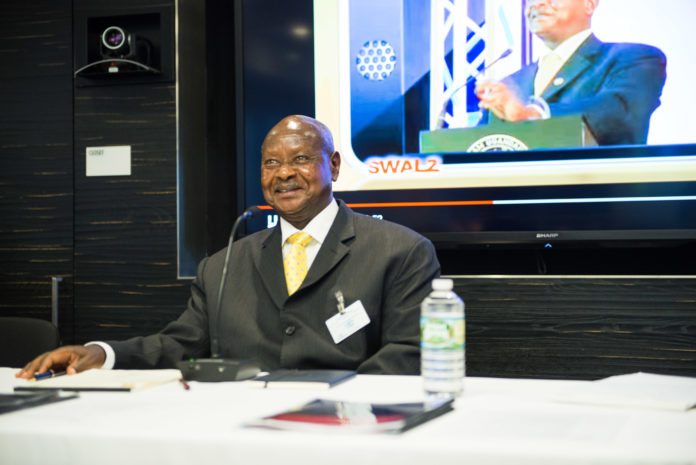
Gen. Yoweri Kaguta Museveni

President Yoweri Museveni has condemned people who make fake and exorbitant claims as compensation for their pieces of land that government wants to acquire to pave way for infrastructure development in the country.

The President made the comments when he featured in a 2-hour live talk show on Point FM radio station in Mubende Municipality, Mubende district.

According to the President, he is currently on a countrywide tour to ‘demystify the lies that have been spread by looters and Government opponents over the issue of fair land compensation’.

“Most of the countries, especially those in Africa, do not address land ownership in their constitutions. The NRM Government planned for the people to ensure that they get fair treatment in land matters because the Movement looks ahead and cares for wananchi. Government has got the right to take over land for public utility such as roads and electricity supply. All this has to be done through fair and correct compensation,” he said.

He said that Government does not under estimate the value of land in question because professionals determine the value.

Museveni observed that there are some ‘selfish and greedy people’ who exaggerate their claims in order to fleece Government of money. He cited a one Kahirwa of Ntungamo district in South Western Uganda as an example, who demanded for Shs.1.2 billion for one acre of land as compensation during the planned building of an electricity transmission line. He noted that if the claim had been honored, the taxpayer would be compelled to pay Shs. 787 billion in that power project. He observed the high figure is sufficient to extend the power grid to all the Sub- Counties in the country that have no electricity supply yet.

In an another example of ‘greed’, the President talked of a person in Kyegegwa district in the Rwenzori Sub-Region in Western Uganda, who has been demanding for Shs. 100 million for an acre of land when in actual sense the real value per acre in the district is only Shs. 3.5 million. He said people in that district have suffered lack of water due to such greedy person.

He, therefore, vowed that Government will not allow this state of affairs to continue and assured Ugandans of Government full commitment to compensating all genuine claimants. He said people who choose to go to the tribunal would be assured of getting their additional approved funds as soon as the process has been completed.

Mr. Museveni also castigated radio stations for failing to put to task people who ‘spread lies’ and attempt to glorify fake claims. He warned that such people would not be allowed to continue ‘spreading lies’ among the population through radio stations.  He said that the NRM Government gave people the powers to elect their leaders and as such wananchi should use those powers to report those who make fake claims, to authorities

Regarding people who had been evicted from Bukwiya in Mubende where they were involved in gold mining activities, the President, while criticizing security personnel for using harsh eviction methods, observed that the claimants in the area were not genuine. He, however, assured people who are licensed to do gold mining that they would be allowed to proceed with their business. He also said the same arrangement would be observed in Busia, Kaabong and Buhweju districts.

Mr. Museveni said the Government would not allow landlords to evict ‘bibanja’ holders and advised bibanja holders to pay their land dues to their landlords. He promised a visit to Butologo in Mubende district and other areas affected by illegal land evictions. He revealed that Government would cancel all the illegal land titles and that those perpetrating and harassing people, would be arrested.

While disclosing that the Government has donated 250 land titles to people in Kibaale district, Mr. Museveni pledged Government assistance to bibanja holders to pay off their landlords in order to secure land titles.

The President called on the people of Mubende district in particular and the country at large to protect wetlands that he referred to as water granaries. He observed that wetlands are the source of water to facilitate irrigation. He said plans are underway to spread irrigation to all corners of the country to ensure harvests all the year round. He lauded the successful irrigation projects in Mubuku in Western Uganda and Doho Rice Scheme in Eastern Region.


Stories Continues after ad

The Battle for African trade pits US against China

A map of the US

If the U.S. and China have their way, Africa could soon begin to reach its potential as the next great frontier for apparel and textile sourcing.

While there are determined efforts by the U.S. government and some key companies, the Chinese plan being implemented seems more comprehensive and likely to create a longer-lasting influence on the continent.

The recent Sourcing at Magic trade show featured an African pavilion sponsored by the USAID East Africa Trade & Investment Hub. The Hub boosts trade and investment with and within Africa by deepening regional integration, increasing the competitiveness of regional agricultural value chains, promoting two-way trade with the U.S. under the African Growth & Opportunity Act, and facilitating investment and technology.

The program, initiated in the Obama administration, covers the East African Community countries of Burundi, Kenya, Rwanda, Tanzania and Uganda, as well as Ethiopia, Madagascar and Mauritius. A spokeswoman for the program explained that since its launch in September 2014, it has supported $226 million in exports through AGOA, driven $51.2 million in private sector investment, helped more than 1,200 firms with capacity building assistance and helped create more than 33,000 full or part-time jobs.

At the end of the project’s five-year mission, the goal is to facilitate $100 million in new investments in the EAC, increase non-oil AGOA exports to the U.S. by 40 percent, create 10,000 more jobs and double the value of intra-regionatl trade in the EAC.

While AGOA was renewed in 2015 through to 2025, President Trump doesn’t seems to be a fan of the country’s existing free trade programs, leaving U.S. support for the agreement and USAID program in a tenuous state.

Eugene Havemann, chief executive officer of Madagascar Garments, said, “We need America’s help to truly establish an industry in the country and the region. USAID is helping us, but we have a lot of poverty and have to improve our infrastructure.”

Havemann feels Madagascar and the EAC have potential to attract foreign investment and business, especially with the duty-free status and low wages as lures, as well as a nucleus of skilled workers. His company exports to companies in U.S., China, Vietnam, Mexico and Bangladesh.

“The clothing industry is low-hanging fruit, however,” Havemann added. “We’re at a tipping point and we need to achieve a certain level to really be a global player.”

Charles Smith, chief business development officer at Velocity Apparels Companies in Ethiopia, agreed that now is the time for these African countries to seize the opportunity created by shifting trade winds.

Companies are looking for alternative supply chain destinations to Asia, where prices and wages are going up, Smith noted. He cited the Ethiopian government’s recent lifting of a state of emergency as labor tensions eased as a positive sign that developments can gain momentum.

“The government is pro-business, but there’s a definite learning curve,” Smith said. “There is a trained worked force and compliance is a big thing. We do have the duty-free trade status with the U.S. and Europe, but we need stability and continued investment.”

Focus on Ethiopia

If Africa is going to establish itself as a manufacturing center, Ethiopia seems to be the nexus.

According to a study by the African Centre for Economic Transformation, Ethiopia’s manufacturing industry has been by some measures a success, exhibiting continuous growth over the years.

The study, entitled “Promoting Manufacturing in Africa,” showed that Ethiopia’s manufacturing sector has been growing thanks to cheap hydropower, government commitment to a strategy of transformation from an agriculture-led economy to industrial, massive growth in infrastructure development and foreign direct investment, plus steps taken in deploying the necessary human power for the sector.

Employment in the manufacturing sector has grown from less than 40,000 workers to a little over 200,000 from 2002 to 2014.

Ethiopia’s Hawassa eco-industrial park has attracted 18 global apparel and textile companies. Construction of the park cost more than $250 million and was built in less than a year. Covering an area of 1.3 million square meters, the addition of the park is expected to bring Ethiopia’s revenue derived from textiles and garments to $1 billion over the long term from the current $150 million annually, according to the Ethiopian Investment Commission.

Consistent with the Ethiopian government’s commitment to build a green-economy, Hawassa industrial park is designed, constructed and operated as an eco-friendly park. It has a water and waste treatment plant that uses the latest technology for treating and recycling about 90 percent of the water used in the park. To this end, a zero-liquid discharge facility has already been set up with a daily processing capacity of 11 million liters of effluent.

PVH Corp. is among the companies already establishing operations there, and six local companies are ready to start operations there, too. When fully operational, industries within the park are expected to create 60,000 jobs.

The Ethiopian government plans to construct 10 industrial parks across the country to enhance job opportunities, bring in revenue and promote technology transfer.

“We continue to invest significantly in creating a responsible, best-in-class manufacturing operation at Hawassa Industrial Park in Ethiopia, where we have supported a group of our top suppliers in establishing factories and a fabric mill, and formed a joint venture in a woven shirt factory,” Melanie Steiner, PVH senior vice president and chief risk officer, said in the company’s Corporate Responsibility report released in late July. “We have sought to create positive impacts for workers, the environment and the wider Hawassa community from the outset, drawing on the lessons we have learned in other sourcing countries.”

Texas-based Trybus Group is expanding with a new factory in Ethiopia’s Kombolch Industrial Zone. Since opening, the $90 million facility has attracted apparel companies from Italy, South Korea and the U.S for its close proximity to Port Djibouti. The hub is anticipated to create more than 15,000 jobs in the area.

China’s Long Road

With the interest and investment from U.S. companies and government programs, China also has its eyes on the country and region.

Chinese companies have invested around $4 billion during the last two decades in Ethiopia, employing 111,000 Ethiopians on permanent and temporary basis, according to the Ethiopian Foreign Ministry.

A report from McKinsey & Co., “Dance of the Lions and Dragons,” said, “In a mere two decades, China has become Africa’s biggest economic partner. Across trade, investment, infrastructure financing and aid, there is no other country with such depth and breadth of engagement in Africa. The Chinese ‘dragons’—firms of all sizes and sectors—are bringing capital investment, management know-how and entrepreneurial energy to every corner of the continent—and in so doing, they are helping to accelerate the progress of Africa’s ‘lions,’ as its economies are often referred.”

Since 2001, Africa-China trade has been growing at about 20 percent a year, with FDI growing at an annual rate of 40 percent. China is also a large and fast-growing source of aid and the largest source of construction financing.

There are more than 10,000 Chinese-owned firms operating in Africa today. Around 90 percent are privately owned—calling into question the notion of a monolithic, state-coordinated investment drive by “China Inc.”

Chinese firms operate across many sectors of the African economy. Nearly a third are involved in manufacturing, a quarter in services, and around a fifth in trade and in construction and real estate. In manufacturing, about 12 percent of Africa’s industrial production—valued at some $500 billion a year—is already handled by Chinese firms. In infrastructure, Chinese firms’ dominance is even more pronounced, and they claim nearly 50 percent of Africa’s internationally contracted construction market.

On balance, McKinsey believes that China’s growing involvement is a strong net positive for Africa’s economies, government and workers. But there are areas that need significant improvement, including more sourcing from local firms, more African managers, and better labor rights and environmental adherence.

Ethiopia and South Africa have a clear strategic posture toward China, along with a high degree of economic engagement in the form of investment, trade, loans and aid, the study said. These countries have also created a strong platform for continued Chinese engagement through prominent participation in such forums as the Belt and Road initiative, also known as One Belt, One Road and they can therefore expect to see ongoing rapid growth in Chinese investment.

Belt and Road is aimed at shifting the power balance geopolitically and economically in the world, away from the West and to China. It consists of more than 65 countries and 40 percent of the world’s gross domestic product, connecting countries across Asia, Europe and Africa with physical and digital infrastructure.

“China sees it can shift the balance of power by changing the pulse of gravity by investing in building deeper alliances across Asia with investments in infrastructure projects throughout Southeast Asia and East Africa,” said Ron Klein, director of retail and consumer management at PricewaterhouseCoopers. “One Belt, One Road puts China in a position to help build those economies and support its state-owned enterprises.”

Ethiopia has drawn on Chinese investment and expertise in several major aspects of its industrialization and broader economic development. It has engaged the Chinese government to finance key infrastructure, helping to add 66,000 kilometers of new roads since 2000 and increase power supply by 15 percent between 2010 and 2014. Chinese firms built and now co-manage the Ethiopia-Djibouti Railway, a $3.4 billion project opened in late 2016.

McKinsey predicted the relatively scattered African manufacturing sector will consolidate into a few megaclusters and will be globally competitive. There will be a race between countries to win with such clusters, for those that emerge will likely preclude their neighbors from doing the same.

“As Chinese economic growth slows, investment flows to Africa will accelerate,” the study concluded. “China’s decelerating economic growth represents a force pushing increased Chinese investment toward Africa, as Chinese investors seek higher returns abroad.”


Stories Continues after ad

Kampala among Africa’s top dynamic commercial cities

View of Hoima Road on a typically busy day, Kampala, Uganda, Africa. Photo Credit/Alamy

Uganda’s capital city Kampala is among Africa’s top ten dynamic business cities, according to a recent report dubbed ‘Into Africa: The continent’s Cities of Opportunity’ authored by PricewaterhouseCoopers (PwC).

The report concentrates on the continent’s 20 cities which were judged as ‘most dynamic and future focused’, placing  Kampala in ninth position behind other East African cities of Dar es Salaam (1st), Nairobi (3rd) and Kigali (7th). Dar es Salaam also tops Lusaka, Nairobi, Lagos and Accra on opportunity index.

Others on top ten list are Abidjan, Addis Ababa and Cairo. The report was structured around the critical issues of the business community, as well as those of the office holders and other public authorities who are responsible for improving the collective life of each city examined here.

The report indicates that when infrastructure, human capital and security are in place, culture and society starts to flourish. It further shows when investing in Africa, investors consider current vis-à-vis potential development, location, nature of opportunity among others.

“African cities when being assessed need to be looked at through a different lens, as current standings and future potential tell different city stories,” the report indicates in part. The cities were contested around economic opportunities which are driven by demands of the emerging middle class— consumers, technology, infrastructure, tourism, and financial services.

Meanwhile, despite topping the opportunity index, Dar es Salaam was not featured in top ten overall index after being placed at position 15. Nairobi, Kampala and Addis Ababa featured in both top ten indices—opportunity and overall.

Others are Accra, Lagos, and Cairo. Also Dar es Salaam city was not in the top ten attractive Foreign Direct Investment FDIs. Nairobi leads as the best city in Africa that attracted most FDIs followed by Accra and Lagos.

Others are Johannesburg, Cairo, Casablanca, Abidjan, Tunis, Algiers and Lusaka, and analysts say the report is an eye-opener to policy makers especially for countries to develop adequate infrastructure and human capital investment.

“This can limit the economic potential of a city,” the report says of the inadequate infrastructure in most cities of Africa.

The role of the public sector policy makers and related development of institutions in guiding a city is important to the private sector, it adds.


Stories Continues after ad

East Africa’s payments boom as trade flows rise

Swift head of Sub-Sahara Africa, Denis Kruger. Photo Credit/ The Banker

Despite a seeming slump in economic activities, traffic on the global payments network Swift has grown by 20.1% in East Africa over the past year, indicating an increase in  trade flows in Uganda, Kenya, Tanzania and Rwanda.

East Africa

East Africa is one Africa’s fastest growing economies and is a significant growth area for Swift, and according to its head of Sub-Sahara Africa, Denis Kruger, the major growth in Swift traffic volumes could indicate an increase in  trade flows, both within the East African region and between East Africa and other countries.

According to Swift, East Africa has outperformed the total growth for Swift globally, which amounts to 8.2%.

The figures released late last week also show that intra-regional traffic in the region is up by 19.8% compared to 2015, now accounting for 69% of payments traffic in East Africa.

“We are committed to supporting the community in the region, including through the East African Payments System, which is delivering more efficient payments across East Africa,” Kruger says.

Since 2013, the average number of daily messages in the region has almost doubled, from 15,234 to 27,907 in 2016.

Swift research has shown that its traffic data is closely correlated to economic activity. A rise in traffic volumes in therefore a sign of a long-term growth trajectory for East Africa, despite challenging global conditions, the company says.

The figures, Swift notes, reflect the success of the East African Payment System (EAPS), which was established by the East African Community in 2013 with the aim to reduce transaction time and lower the cost of doing business in the region.

The multi-currency system, which operates on the Swift network, links domestic payments systems in Kenya, Tanzania, Uganda and Rwanda, making cross-border fund transfers within the countries easier, was supporting the free movement of goods, labour and services.

The rest of the African continent similarly saw a good level of growth, with total message traffic volumes up 15.4% over the past year. In comparison, Americas grew at 7.8% and Asia Pacific at 5.4%.


Stories Continues after ad