Stanbic Bank
Stanbic Bank
18.5 C
Kampala
Stanbic Bank
Stanbic Bank
Home Blog Page 1792

Ugandan manufacturers urged to embrace e-commerce

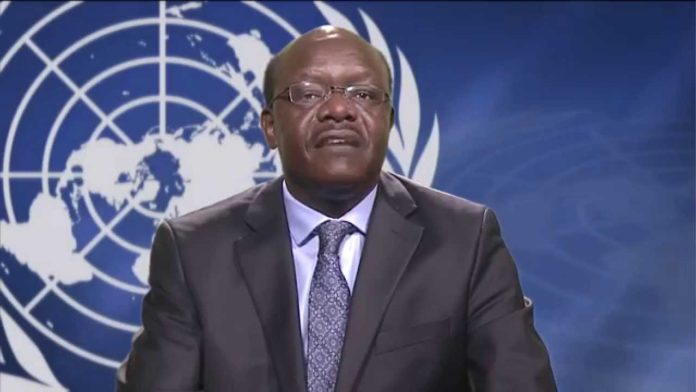
Dr Mukhisa Kituyi, the United Nations Conference on Trade and Development (UNCTAD) Secretary-General

Ugandan and other East African Community (EAC) bloc industrialists have been urged to embrace e-commerce platforms to boost their market reach and beat off competition by manufacturers from other regional blocs.

The Uganda Manufacturing Association (UMA) logo

The experts say embracing such innovations will help reduce the cost of production and enhance the sector profitability.

According to Dr Mukhisa Kituyi, the United Nations Conference on Trade and Development (UNCTAD) Secretary-General, e-commerce is a vital and innovative tool for promoting industrialisation and trade across the EAC region.

Dr. Kituyi made the remarks recently during the EAC Manufacturing Business Summit and Exhibition in Kigali Rwanda. The three-day summit brought together more than 500 participants such as business leaders, experts and policy-makers, to discuss mechanisms to bolster regional industrialisation.

Wire Mesh manufactured in the EAC region

The UNCTAD boss said manufacturers should take advantage of the immense opportunities presented by e-commerce platforms to enter new markets, create awareness about their products and drive sales to improve profits.

He observed that the economy today is being driven by digitisation, which makes it imperative for regional manufacturers to embrace e-commerce and tap into the untapped markets. This way the sector will be able to create more jobs and foster inclusive economic growth, he added.

Matthias Wachter, the in charge of the Federation of German Industries department of security and raw materials, also urged manufacturers to use technology and e-commerce in the processes to increase production and tap new customers, adding that will help them penetrate markets and sell products at competitive prices.

Reducing cost of production

Meanwhile, the business community has called on regional governments to invest more resources in areas that will further improve the business environment for manufacturers and other players in the regional economy.

Manufacturers across the region have been complaining of high electricity and water charges, and poor infrastructure, which they say were eating into their profits and making the sector less competitive.

Lilian Awinja, the East African Business Council chief executive, said though the EAC region has been registering significant economic growth averaging 6 per cent over the past few years, the performance of the manufacturing sector is discouraging.

“The EAC manufacturing sector has been registering modest growth of 4.7 per cent and its contribution to the regional GDP has continued to shrink to less than 10 per cent,” she noted.

Buy-East Africa Build East Africa drive

The industrialists urged regional governments to prioritise EAC companies in public and private procurement, arguing that this will create necessary demand for locally-manufactured products.

It could also help support technology-based start-ups and boost the firms’ financial capacity.

Many of the participants advocated for the Buy-East Africa, Build-East Africa campaign to strengthen the local content initiative.

They said this would ensure EAC industries thrive, creating more jobs as well as help increase households incomes and reduce poverty.

 

Stories Continues after ad

Brig. Ggwanga summoned by police for burning tractor

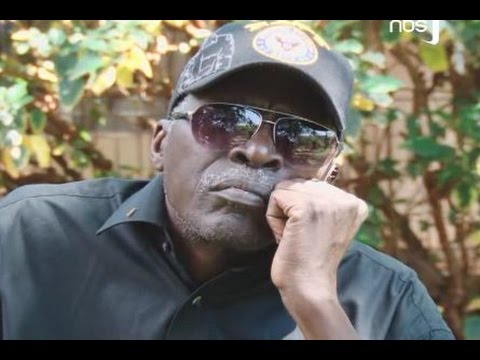
MADE STATEMENT TO POLICE: Brig. Kasirye Gwanga

Police has summoned Brig Kasirye Ggwanga over torching a tractor that had allegedly been hired to level land the retired army officer says belongs to his daughter.

Police spokesperson Emilian Kayima said that the no-nonsense One-Star General was needed to record a statement.

The case was against Brig. Ggwanga, entered as SD 27/12/08/2017 was lodged by one Denis Wakabi, who accused the former of burning his tractor.

The incident took place on Saturday in Lubowa, Entebbe Road. According to reports, on arrival at the spot where the tractor was, Brig. Ggwanga, armed with a rifle and jerrycan of petrol,  sprinkled the tractor before setting it ablaze.

In an interview with a local daily, Brig. Ggwanga said that’s ‘the best solution’ for what he called land grabbers.

Stories Continues after ad

Zimbabwe VP hospitalized in South Africa

FRONT RUNNER: Zimbabwean President Emerson Mnangagwa

Zimbabwe’s Vice President Emmerson Mnangagwa, a possible successor to 93-year-old President Robert Mugabe, is recovering in a South African hospital after he fell ill and was airlifted from Zimbabwe.

Mnangagwa, 74, was absent from celebrations on Monday to mark Heroes Day in the capital Harare.

“He is not back yet from hospital in Johannesburg,” Mugabe said during his speech at the national Heroes Acre, announcing that Mnangagwa was unwell. He did not give details.

Health Minister David Parirenyatwa told reporters after the speech that Mnangagwa was feeling “much better”. Asked whether Mnangagwa would be discharged soon, he said “yes, he is well, I spoke to him this morning.”

Mnangagwa and Pelekezela Mphoko are Mugabe’s vice presidents in the ruling ZANU-PF party and government but the former is seen as the likely successor following elevation to the post in 2014.

The issue of who will succeed Mugabe has deeply divided the ruling party into two factions — one supporting Mnangagwa, the other Mugabe’s wife Grace.

Parirenyatwa said Mnangagwa had severe vomiting and diarrhoea and several tests had been conducted in Zimbabwe before he was airlifted to South Africa, which has better medical facilities.

“He preferred to go there for his doctors. Some of his doctors are in South Africa, so we sent him there,” he said.

Local private media reported that Mnangagwa had suffered suspected food poisoning.

Nicknamed ‘Crocodile’ in the Shona language, Mnangagwa was appointed after the sacking of Joice Mujuru, who had held the position for 10 years.

Mujuru has since formed a party that is part of a coalition to challenge Mugabe.


Stories Continues after ad

Gen. Muntu vows to make FDC ‘more coercive’

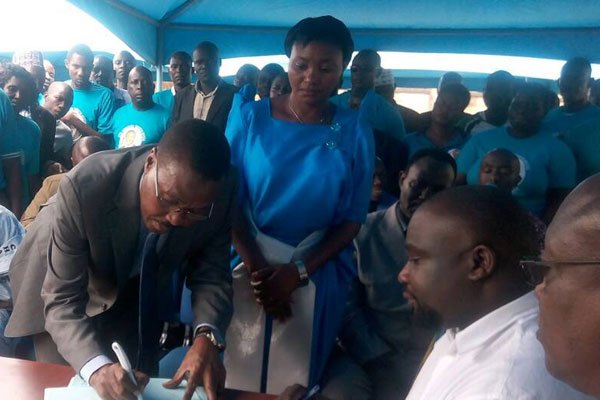
NOMINATED: Major General John Gregory Mugisha Muntu signing the EC register after being nominated. Looking on is LoP Winnie Kiiza

Soft-spoken Major General John Gregory Mugisha Muntu has been nominated for the second and last time to stand for the presidency the Forum for Democratic Change (FDC), vowing to make the party more ‘stable and coercive’.

Accompanied by the Leader of Opposition in Parliament Winnie Kizza, together with other delegates from different regions of the country, Mugisha Muntu was received by FDC spokesperson Ibrahim Ssemujju Nganda who led him to chairman of FDC Electoral Commission Dan Mugarura. Mugarura later nominated Gen. Muntu at 2:00 pm following the fulfillment of the prior requirements to contest for the topmost seat in the party.

Upon his nomination, Gen Muntu lauded the FDC supporters for always standing with him in the building of party structures ‘in a hostile and dynamic political environment that has been put up by the NRM government for the past 20 years’.

‘’In these five years, I want to make FDC more stable and coercive for it to be become a vehicle that will deliver us all from poverty and unemployment among other challenges that have become part of our culture since Independence,’’ Muntu, branded by many as ‘an officer and gentleman’ said, adding that, “the country has never had time to change this culture.”

He noted that the FDC has term limits for every position of the party, adding that serving the party for ten years is not such a long time.

“The country is sitting on a time bomb, we need an organized team to diffuse it in order to overcome barriers of peace that are  enshrined in land wrangles in the areas of Amuru, Bunyoro region, Tororo and Kasese,” Muntu, a former Army Commander, said.

So far four candidates have been nominated to vie for the FDC presidency among them Gen. Muntu, Dan Matsiko, Moses Byamugisha and Moses Bakubi Lukubira.

Those to be nominated tomorrow include Patrick Oboi Amuriat and Mubarak Munyagwa.


Stories Continues after ad

Zuena’s fifth pregnancy sets social media ‘ablaze’

Bebe Cool's wife Zuena Kirema with her friends at Lugogo yesterday

Presumably in her late 30s or early 40s, Zari Hassan has five children, with her last two kids with Tanzanian crooner Diamond Platnumz coming in a space of only two years.

Undoubtedly, this is the reason why the public has been ‘on her case’ over the rate at which she gives birth.

Well, Zari can take a seat; it is like she has been dethroned by her best friend Zuena Kirema, wife to Ugandan singer Moses Ssali aka Bebe Cool.

Three months after celebrating her 30th birthday, Zuena is expecting and soon, she will be welcoming her fifth child.

This is after confirmation of what has always been mere speculation since the funeral of Zari’s ex, Ivan Ssemwanga, where Zuena turned up in a hijab but a bulge could still be seen.

That said, the pregnancy was confirmed yesterday when she turned up at Lugogo grounds; her top exposed the baby bump, leaving nothing to doubt and now social media is on fire!

Nicholas Uganda: He is competing to beat Prof Mukiibi’s number of children, forgetting the late Mukiibi set his record with the help of more than one wife.

Kabz Abby: Too much. Alhajji Nadduli should award this family as he pledged.

However, a large section of Zuena’s fans were delighted by the news and have since come to her defence.

Emilly Belize: Seriously pipo oba be how! What you mean having many kids is a problem?…. Has Zuena or Bebe Cool asked for your help? Guys come on..


Stories Continues after ad

Uganda’s annual exports rise by 16 pc

Uganda’s annual exports jumped 16 percent to US$3,121.9 million in May this year, up from US$2,690.2 million realized in May 2016, the Bank of Uganda has said in its latest State of the Uganda Economy update.

On the other hand, the BoU report notes that the country had annual imports of goods decline by 1.8 percent from US$4,611.2 million to US$4,527.4 million, over the same period.

Further, the report attributes the increase export receipts to an increase in both coffee and non-coffee export receipts.

“Total non-coffee export (excluding non-monetary gold) and net exports of non-monetary gold receipts increased by 3.9 per cent and 97.3 per cent to US$1,872 million and US$79.1 million, respectively,” the report notes.

According to the report, receipts from coffee exports increased by 29.5 percent to US$467.4 million, from US$ 360.8 million, an increase attributed to the volume and price of the coffee exported. The country increased coffee exports by 395.2 (60kg) bags to 4,023.9 (60kg) bags, while the price increased to US$1.92 from US$1.65 per kg.

However, the report shows that during the twelve months to May 2017, the country’s total import bill decreased by 1.8 per cent to US$4,527.3 million, largely on account of a decline in imports by government.

“Government expenditure on import of goods decreased by 43.0 per cent to US$280.2 million from US$491.9 million in the twelve months to May 2016,” it says, showing that expenditure on private sector imports of goods (excluding non-monetary gold) decreased only marginally by 0.3 per cent to US$3,913.1 million, driven by decreased expenditure on non-oil imports.

“Non-oil import expenditure decreased by 1.5 per cent to US$3,217.6 million. Oil import expenditure increased by 5.9 per cent to US$695.0 million,” it shows.

According to the BoU report, the activities above helped Uganda’s current account balance (CAB) to improve by 29.8per cent to US$1,094.7 million in May 2017 from US$1,559.9 million it achieved in May 2016.

“Trade balance improved by 26.8 per cent from a deficit of US$1,921 million to US$1,405.4 million in the same period,” it adds.


Stories Continues after ad

Rugby Cranes players named in Africa Gold Cup ‘team of the tournament’

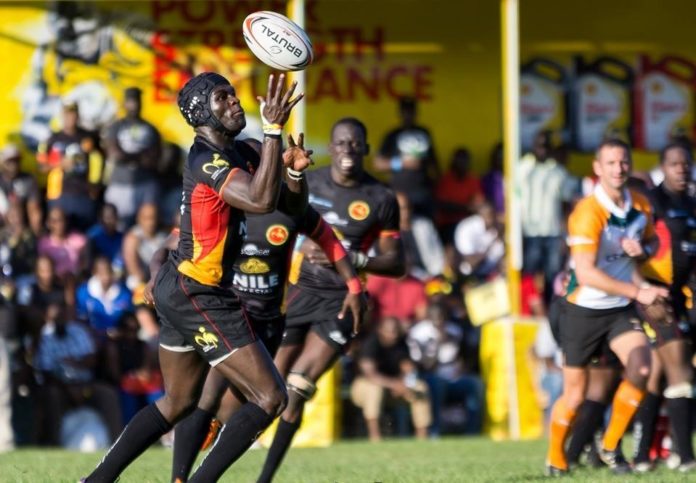
UTILITY PLAYER: Phillip Wokorach who was named to the Team of the Tournament.

The 2017 Africa Gold Cup team of the tournament has been announced after the six-week tournament came to an end, with organisers naming three Ugandan utility players to the ‘Team of the Tournament’.

The six-nation tournament that had teams from Namibia, Zimbabwe, Tunisia, Uganda, Kenya and Senegal participating, played home and away matches, with Rugby Cranes’ captain Brian Odongo, and playing brothers Phillip Wokorach and Michael Wokorach being named in the 2017 Africa Rugby Gold Cup team of the tournament. Phillip Wokorach was also named man of the match on two occasions, against Kenya and Tunisia.

The Rugby Cranes lost one game, drew one and won the rest of their games in the 2017 Rugby Africa Gold Cup competition, ending the campaign with a 38-12 victory over Zimbabwe in Kampala.

­­Champions Namibia dominate the ‘select’ team with eight players, Kenya with three while Zimbabwe got one player on the team. Tunisia and Senegal didn’t get any slot on the team.

Namibia were crowned champions after defeating Kenya 45-7 in Windhoek, going unbeaten in the competition and retaining the title for the fourth year in a row.

Uganda finished on level with Kenya Simbas in the third place on 16 points and will a have a chance to qualify for the 2019 World Cup in Japan when the Gold Cup returns next year in shape of the World Cup Qualifiers.


Gold Cup Team of the tournament:

Casper Viviers (Namibia), Louis van der Westhuizen (Namibia), Brian Odongo (Uganda) , Mahepisa Tjeriko (Namibia), Ruan Ludick (Namibia), Rohan Kitshoff (Namibia), Connor Pritchard (Zimbabwe), Joshua Chisanga (Kenya), Hilton Mudariki (Zimbabwe), Cliven Loubser (Namibia), David Philander (Namibia), JC Greyling (Namibia), Michael Wokorach (Uganda), Darwin Mukidza (Kenya), Philip Wokorach (Uganda)


Stories Continues after ad

DStv to sponsor Express FC for second season

Minister Florence Nakiwala Kiyingi_ the Express FC Chairperson with DStv Marketing Manager Phoebe Nakabazzi

As the countdown to the 2017/2018 Azam Premier League (APL) season nears, DStv Uganda has reaffirmed its continued partnership as title sponsorship holders of Express FC.

Addressing journalists at a press conference, DStv Uganda Marketing Manager Phoebe Nakabazzi, said the sponsorship contract between the two parties is still active.

“We still have an active, running contract with Express FC following our sponsorship announcement last year in October,” Ms. Nakabazzi said, adding: “These first few months of the sponsorship have yielded so much fruit and opportunity for us as a brand. We are excited to continue on this journey with Express FC in boosting the team’s performance in the league”.

Since Express’ inception in 1957, DStv was the first brand name to sponsor Uganda’s oldest team, and the DStv partnership has attracted more sponsors to the club over the last few weeks.

Speaking at the function Steven Musoke, MultiChoice Uganda Chairman said: “We were very clear with what our set objectives towards this sponsorship entailed. We are like-minded brands, with shared values to grow in the various sectors.”

Mr. Musoke added: “As DStv, our commitment to the development of sports in this country is unquestionable. We aim to make a contribution in nurturing talent and the growth of sports. The continuation and reiteration that we are still one with Express is important to us to solidify our confidence in Express as a team.”

Express FC Chairperson Florence Nakiwala Kiyingi thanked DStv Uganda for the kitty provided in the first season of the sponsorship.

“I don’t take this partnership for granted and I would like to acknowledge your contribution in making Express a more amplified team. Without you we wouldn’t be where we are today,” Ms Nakiwala, who is also the State Minister for Youth, said.

Nakiwala handed over a certificate of appreciation to the brand for the first season of sponsorship.

Stories Continues after ad

BUBU policy to improve standards of Ugandan products

VISITED: New York State Judge Frank J. LaBuda

The Buy Uganda Build Uganda (BUBU) policy launched in March this year will improve the standard of goods and services produced in the country, Trade Minister Amelia Kyambadde has said.

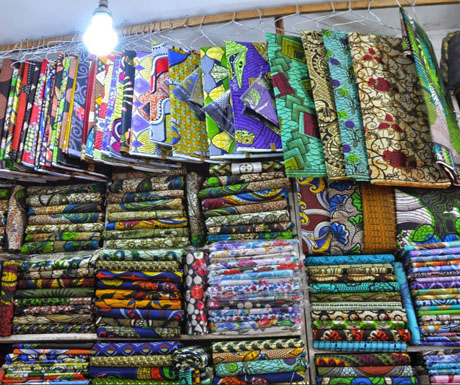
Ugandan fabrics

The minister made the remarks as she hosted the New York State Judge Frank J. LaBuda at her offices in Kampala to discuss issues pertaining to development of trade related legal and regulatory framework.

“We want Ugandans to stop referring to Ugandan brands as the inferior brands. We agree that some of them are not yet there when it comes to meeting the required standards, and as Government in partnership with the private sector, we are working towards ensuring that the standards of our products and services improve,” said Kyambadde.

Ugandan made energy efficient stoves

The Minister said that the ultimate goal for BUBU is to change the mindset and attitude of Ugandans towards locally produced goods and services. “Trade starts at home before it goes regional and international, and it is the reason why Government is promoting domestic consumption,” she added.

Government hopes to create jobs through this policy as the economy grows by way of Ugandans consuming the goods and services produced in the country. President Museveni has always argued that buying foreign goods gives the exporting countries chance to create jobs for their people at the expense of Ugandans.

According to the minister, the BUBU policy supports the production, purchase, supply and consumption of local goods and services but also supports the private sector in the development and marketing of Ugandan brands and creating awareness.

Judge LaBudda said that Uganda was on the right track in implementing the BUBU policy which is similar to USA’s campaign ‘Buy American Hire America’.

“The Buy American Hire American campaign has helped US to address the problem of companies that were outsourcing only foreign workers, rendering many Americans jobless,” said Justice LaBuda.

The Buy American Hire American campaign is an executive order that was signed by President Donald Trump with an aim of cracking down on skilled worker visa abuse and forcing US government agencies to buy more domestically produced products.

The two officials also discussed issues on policy formulation, specifically on the management of local content policies and shared experiences on the procedures of developing Government policies, with Justice LaBuda urging the Ugandan bureaucrats to formulate policies within the shortest time possible. She also noted that ‘longer processes kill business’.

Justice LaBuda was in Uganda to undertake a number of judicial related activities and to monitor the activities of Incredible Youth International, an NGO affiliated to Victoria University that is owned by billionaire businessman Sudhir Ruparelia.


Stories Continues after ad

Prof Nawangwe pledges to transform Makerere University

MUK Vice Chancellor Prof. Barnabas Nawangwe.

The newly appointed Makerere University Vice Chancellor Professor Barnabas Nawangwe has said he will hard work to ensure the university becomes the leading institution for academic excellence and innovation in Africa.

Prof. Nawangwe has also pledged to increase the number of graduate students to 30 percent of the total enrolment, up from the current 16 percent, while at the same time strengthening graduate training and research.

The Makerere University Administration Block

In a recent media interview, Prof. Nawangwe said once he takes office next month, he will ensure that the university provides innovative teaching, learning and research services that align well to national and global needs.

The immediate Deputy Vice Chancellor of Fianance and Administration, Prof. Nawangwe says he helped initiate 10 new programmes at graduate and undergraduate levels, increased student enrolment from 800 to more than 3,000 in five years and presided over the formation of the College of Engineering, Design, Art and Technology (CEDAT).

Prof. Nawangwe says that to create flexible teaching and learning programmes at the university, he intends to increase the number of programmes in open, distance and eLearning (ODeL). The university currently has only four programmes using ODeL. He will also increase joint research, technology and innovation transfer initiatives.

According to Prof. Nawangwe, during his tenure as vice-chancellor, he expects to establish at least three satellite and two on-shore branch campuses.

“I will make this possible through a review of academic programmes for relevance and duplication through strategic linkages with professional bodies and other stakeholders,” said Nawangwe adding that he will focus on streamlining and rationalising programmes, such as the internship completed by all second-year students.

He says that he will put in place a tracer study for the college of humanities and social sciences and reduce the number of undergraduate programmes from 400 to 160.

Currently, he said, pedagogical training is only carried out in three colleges and as vice-chancellor he will ensure that he establishes a learner-centred pedagogy and andragogy by increasing the number of staff trained for this purpose.

“My ultimate aim is to achieve a brand name and a great history for the university with the help of a high quality academic staff and … a top quality student body,” said Nawangwe.

Prof. Nawangwe says the university has challenges such as inadequately motivated staff, frequent strikes by students and staff, amorphous administrative structures, and undesirably high staff-student ratios in some units – all of which he will address.

He says Makerere University has a big opportunity as a result of the growing secondary school population in the country and the hunger for tertiary education in Uganda and the region. It also stands to benefit from the growing confidence of the government in Makerere’s capability and the support from the distinguished alumni of the university.

Other proposed academic reforms include the devolution of academic processes to colleges in some cases, and the enforcement of marking deadlines.

However, Prof. Nawangwe knows that being vice-chancellor will not be smooth sailing and he expects to face challenges such as competition from the increasing number of universities and political interference in the university management.

The 62-year-old Nawangwe is a professor of architecture, the only one in Africa, and has served in various high-profile academic positions. He is currently the deputy vice-chancellor for finance and administration at Makerere University. He is also a leading researcher in vernacular architecture and social housing.

He was elected by the 22-member Council to replace outgoing vice-chancellor Professor John Ddumba Ssentamu, whose term expires on August 30.

Prof. Nawangwe was the best out of the three candidates endorsed by the university Senate on June 28, the others being professors Edward K Kirumira and Venansius Baryamureeba.


Stories Continues after ad