Stanbic Bank
Stanbic Bank
24.6 C
Kampala
Stanbic Bank
Stanbic Bank
Home Blog Page 1793

URSB to deregister over 700 expired trademarks

Sheraton Kampala Hotel trademark is one of those that have expired

The Uganda Registration Services Bureau (URSB) has said it will strike off the list 702 expired trademarks owned by various companies if they are not renewedĀ within one month.

Bemanya Twebaze, the URSB Registrar General, who has had the list of expired trademarks published, said that the owners of the trademarks stand to lose if they are removed from the register since they can be availed to other entities for use in business.

According to Twebaze, the owners of the trademarks which have expired can renew their registration within a month, and only have to pay the renewal fee and ā€˜any additional fee as may be applicable’.

He said a registered trademark has duration of 7 years, renewable for every ten years after the first registration. He adds that URSB derives its powers from Trademarks Act 2010, to register trademarks.

“Trademarks struck off the register become available for any other members of the public to use,” Twebaze warned, and listed the expired trademarks prominent among them Airtel’s ā€˜Pakalast’, ā€˜Sheraton’- owned by Sheraton International, ā€˜NTV’- owned by Kenya’s Nation Media Group and ā€˜M-Sente’, owned by Uganda Telecom now under receivership.

Other familiar trademarks that face delisting from the URSB list are ā€˜Nile Lager’- owned by Nile Breweries and ā€˜Bell’ -owned by the East African Breweries. The other is ā€˜Movit’-owned by beauty products maker-Movit Products. ā€˜Imperial Bank Ltd’- owned by Imperial Bank Uganda is another trademark under threat.

According to the list of defaulting companies, some last renewed their trademarks in 2008 while others first registered in 2010.

Sources at URSB say very few companies and other entities in Uganda have their trademarks renewed, though they add they have received inquiries about the availability of some of the affected trademarks.


Stories Continues after ad
Cranes upbeat ahead of crucial tie against Pharaohs of Egypt

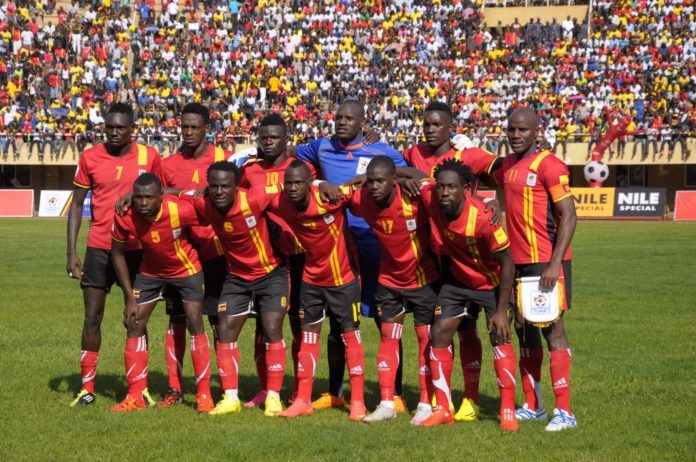
The Uganda Cranes after arrival in Egypt

The Uganda Cranes team arrived in Egypt yesterday ahead of their return leg fixture of the 2018 World Cup qualifiers against the Pharaohs.

In an interview with FUFA after arrival, interim coach Moses Basena expressed confidence in his charges, and said the team was ready for the task.

ā€œWe picked up a good result against Egypt. We need to build on that on Tuesday. It is this group that will do the job and I believe you know the reasons why we are here,ā€ Basena said.

The team held its first training session for one and half hours at the football pitch owned by the Radisson Blue Hotel Management and will train from the Borg El Arab stadium, the venue for Tuesday’s match on Monday evening.

Emmanuel Okwi’s goal helped Cranes secure a crucial victory over the Pharaohs of Egypt in the first leg in a race for a spot in next year’s World Cup that will be held in Russia.

Uganda leads Group E with 7 points, Egypt remain 2nd with 6 points while Ghana and Congo who settled for a 1-1 draw, are 3rd and 4th with 2 points and 1 point respectively.

Meanwhile, Egypt captain and goalkeeper Essam El-Hadary has been eliminated from team to face Uganda in the crucial clash on Tuesday due to the injury he picked up at Namboole stadium.

34-year-old South African Victor Gomes will be the centre referee in tomorrow’s match.

The match will be played at Borg El Arab Stadium, Alexandria at 8:45 pm Ugandan time.

The Uganda team in Egypt:

Goalkeepers: Denis Onyango, Ismail Watenga, Benjamin Ochan

Outfield players: Nico Wakiro Wadada, Godfrey Walusimbi, Isaac Isinde, Murushid Juuko, Wasswa Hassan Mawanda, Khalid Aucho, Emmanuel Arnold Okwi, Faruku Miya, Derrick Nsibambi,Ā  Joseph Benson Ochaya, Bernard Muwanga, Ivan Ntege, Muzamiru Mutyaba, William Luwagga Kizito, Milton Karisa, Isaac Muleme and Geoffrey Serunkuma

2018 FIFA World Cup Qualifier Russia

Egypt vs Uganda

Borg El Arab Stadium, Alexandria

Stories Continues after ad

UN investigators want ICC to open up case against Burundi leaders

Burundi president Pierre Nkurunziza.

UN investigators have accused Burundi’s government of crimes against humanity, including executions and torture, and urged the International Criminal Court to open a case ā€˜as soon as possible’.

The United Nations Commission of Inquiry on Burundi said it had ‘reasonable grounds to believe that crimes against humanity have been committed and continue to be committed in Burundi’, pointing a finger at ā€˜the highest level of the state’.

The three investigators, appointed by the Human Rights Council last September, described a ā€˜climate of fear’ in the crisis-hit east African country. The report detailed widespread and systematic abuses including extrajudicial executions, forced disappearances, torture and sexual violence.

ā€œWe are struck by the scale and the brutality of the violations,ā€ commission president Fatsah Ouguergouz said in a statement.

Decrying impunity in Burundi and the ā€˜strong likelihood that the perpetrators of these crimes will remain unpunished’, the investigators asked ā€˜the International Criminal Court to open an investigation … as soon as possible’. Burundi formally announced that it was withdrawing from the court, with the move set to take effect on October 27.

Burundi was thrown into a political crisis in April 2015 when President Pierre Nkurunziza decided to run for a third term that his opponents said was unconstitutional. He won elections in July that year which were boycotted by the opposition.

Between 500 and 2,000 people have been killed in clashes in the country, according to UN and NGO sources. More than 400,000 people have fled and dozens of opposition activists have been forced into exile.

In its report published today, the commission put blame for the likely crimes against humanity in Burundi at ā€˜the highest level of the state’.

The perpetrators included members of Burundi’s National Intelligence Service, including high-ranking officers, the national police, military officials and members of the ruling party’s youth league, the Imbonerakure, investigators said.

Nkurunziza himself, surrounded by a close-knit circle of ā€˜generals’, was behind ā€˜big decisions, including ones that led to serious human rights violations’, it said.

Armed opposition groups were also responsible for rights violations in Burundi, the report said, noting that these abuses had been more difficult to document.


Stories Continues after ad
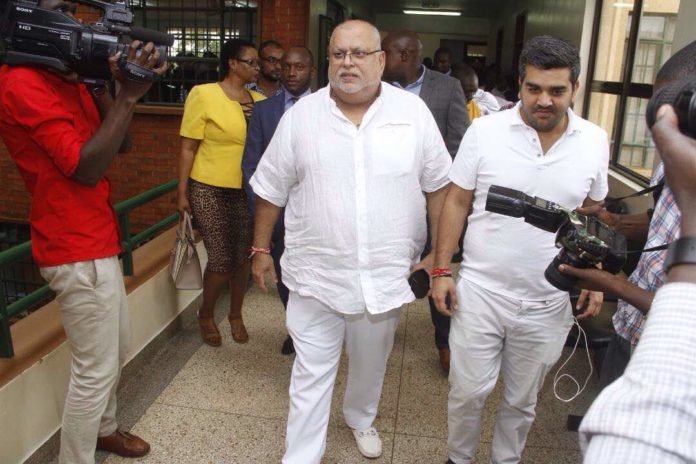
Lands ministry introduces new land system for Diaspora

The Minister of Lands, Amongi Betty, making a presentation on Lands at the UNAA Convention in Miami, Florida

The Minister of Lands, Housing and Urban Development Betty Amongi has introduced a lands management system adopted by her ministry for Ugandans living in the Diaspora.

Addressing the land and housing forum at the Ugandan North American Association (UNAA) Convention on Saturday, September 2, 2017 in Miami, Florida, minister Amongi said the new system that includes an upgraded record keeping system of land titles, is aimed at minimizing land grabbing and any fraudulent related land dealings.

ā€œWe know you have issues related to purchasing genuine land, some of you have been cheated or given bad deals on land. We are working on verifying the right real estate dealers,ā€ she said adding ā€œWe are establishing for you a Diaspora Desk in the Ministry on any land issues, whether buying property including verification of land.ā€

The Permanent Secretary in the Ministry of Lands, Housing and Urban Development, Dorcas Okalany echoed the Minister’s statements, noting that in a country where only 18 percent of land owners have registered title or certificate and with most land holders not having documentary evidence of their property rights, an integrated lands management system is key.

ā€œThe land information system is meant to digitize land that has been titled. This helps in minimizing fraudulent land deals. The process of digitizing all land in Uganda will go on until 2019,ā€ Okalany noted.

She added that they have provided a systematic land demarcation system where land can be owned communally or through clans. Okalany said that the land around the country is going to be separated into regions referred to as zones.

Present at the meeting were the Government Chief Whip Ruth Nankabirwa, who represented the Prime Minister Dr. Ruhakana Rugunda; the Minister of Public Service Wilson Muruli Mukasa, the Minister for Presidency Esther Mbayo, the Minister for Kampala Beti Kamya and the Minister of State for Internal Affairs Obiga Kania.


Stories Continues after ad
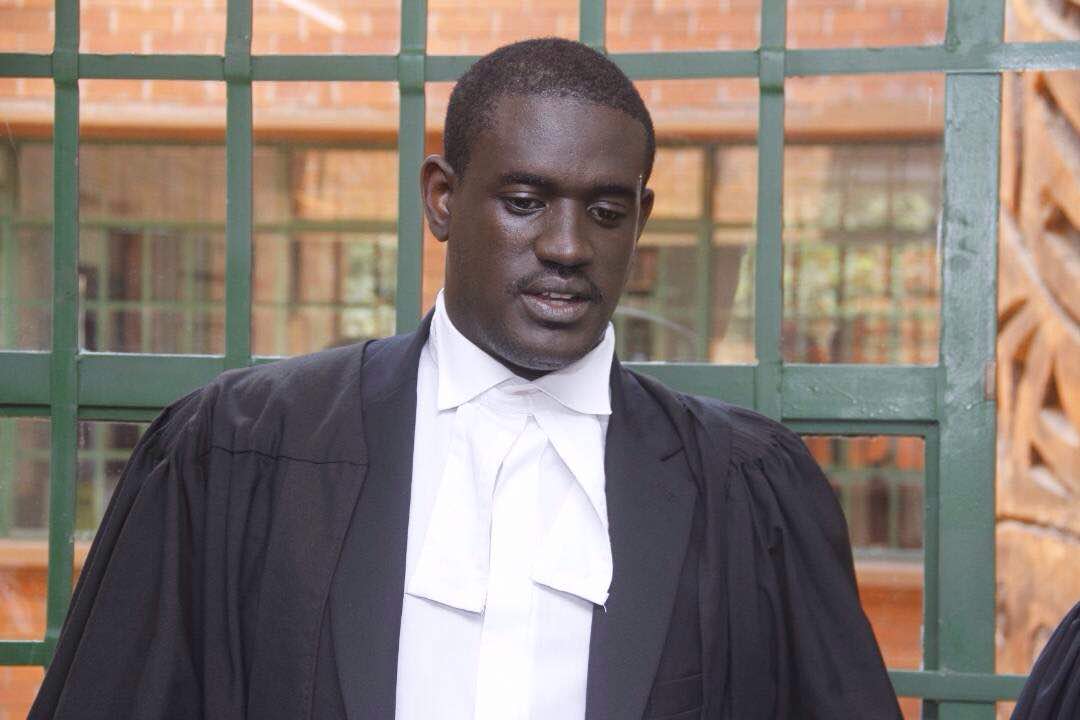
US$1m raised for Soroti fistula hospital

Speaker Rebecca Kadaga addressing attendees at the UNAA17

The Speaker of Parliament Rebecca Kadaga has said that over US$1 million has been raised to actualize plans to set up a specialized hospital in Uganda to treat the increasing number of women who succumb to fistula.

The Terrewode Hospital and Rehabilitation Center will also serve as a centre of excellence and a demonstration facility for surgical training programmes that will offer psychosocial rehabilitation for fistula survivors.

Addressing Ugandans in the Diaspora who are attending the Ugandan North American Association (UNAA) Convention on Saturday, September 2, 2017 in Miami, Florida, Kadaga said that Parliament with support from partners, the fistula hospital that will be built in Soroti in 2018 would be the first of its kind on the African continent.

ā€œIn Kampala there are people who don’t understand our work and complain about us (legislators) coming to UNAA. We have been working with partners since 2013 and we are going to build a fistula hospital in Soroti,ā€ she said adding that ā€œover a million dollars has been raised and all this is coming out of the work of UNAA and the Uganda Parliament.ā€

Kadaga explained that fistula, if not managed well leads to death during childbirth. She added that the complication is also shrouded in stigma and most of the sufferers are isolated by the community.

According to UNFPA, Obstetric fistula is one of the most serious and tragic childbirth injuries. It is a hole between the birth canal and bladder or rectum caused by prolonged, obstructed labour, without access to timely, high-quality medical treatment or a caesarean section. It leaves women leaking urine, faeces or both, and often leads to chronic medical problems.

ā€œRecently, I saw a man who has been with his wife who had fistula for 18 years. I nominated this man for an award of a hero because if he could look after his wife for 18 years, without abandoning her, he is a hero in the year of the family in Uganda,ā€ Kadaga said.

It is hoped that the Terrewode Hospital will increase the number of surgeries to 1,000 per year, almost double Uganda’s current treatment capacity. Currently, a surgical operation to treat fistula is estimated at Ushs 2 million.

Besides offering cutting-edge treatment to sufferers, the hospital will rebuild the lives of fistula survivors through counselling, health education and training in income generating activities.


Ā 

Ā 

Stories Continues after ad
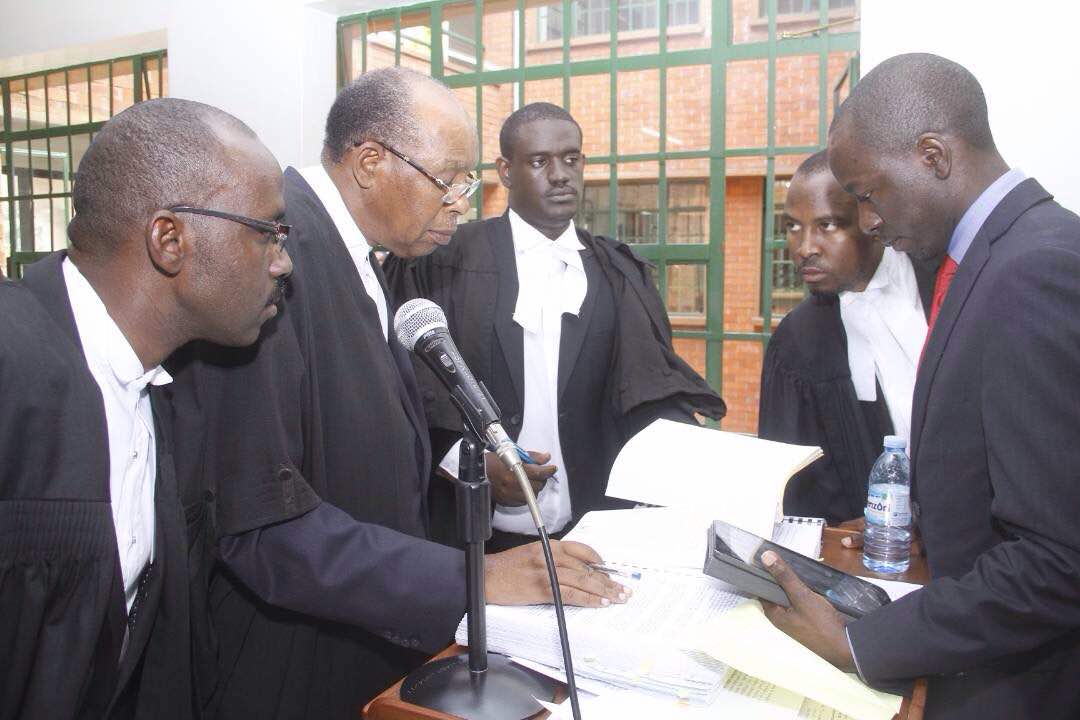
African airlines earn less from foreign tourists as they fight over open skies

Uganda Airlines is expected to fly in tourists when it resumes operations

With positive targets to attract more tourists from the United States, Europe, and Asia to visit Africa, most African countries are lacking airline services oriented from the continent.

Most African countries with best tourist attractions have given up their skies to the Middle East and European-registered air carriers to fly there with full domination of the continent’s airspace.

Airline and tourism experts discussing the trends shaping travel and tourism in the ongoing Africa Travel Association’s 41st Annual World Tourism Conference in Kigali, Rwanda, said only a small percentage of African carriers fly international routes.

Foreign airlines had captured two-thirds of the capacity going in and out of Africa. They include Qater Aiways, Turkish Airways, British Airways among others.

ForwardKeys latest report, shows that bookings for flights to Africa are currently at 16.8 percent ahead of July 2016. However, it is notable that consumer demand and airline investment is greater in travel to African countries from outside the continent than it is between African countries,ā€ said Olivier Jager, CEO of ForwardKeys.

On the other hand, African airline executives are pushing back against government intrusions, red tape, high taxes, and political meddling which all made African-registered airlines fail to grow under stiff competition over the African skies, experts noted.

Ethiopian Airways, Kenya Airways, and South African Airways were the only three top airlines registered on the continent with good performance on their flights outside the continent last year.

The three airlines connect the African continent to other key tourist markets in the United States, South America, Southeast Asia, and Europe. It is estimated that the 3 airlines have sold two-thirds of the estimated 9.2 million seats purchased for travel within sub-Saharan Africa, taking advantage of their direct connections outside the continent.

To make the air travel industry profitable, African countries need to liberalize air traffic, according to IATA and the African Union, aviation experts said.

Industry experts often criticize African countries for having more bilateral open sky agreements with partners outside the continent than with African partners.

The African Airlines Association (AFRAA), noted at the Aviation Africa conference in Kigali in February this year that airport passenger charges in Africa are 2 to 5 times higher than the global US$25 average. Aviation fuel is also 2.5 times more expensive in Africa than on other continents.

If African governments reduce charges and taxes, airlines and the aviation industry would bring more prosperity, creating jobs, contributing more to Gross Domestic Products and trade that would overcompensate for the reduction in charges.

Politically-motivated appointments at management levels at the expense of proven competence, a recurrent problem for state-owned enterprises, also plagues most national airlines.

AFRAA has declared Ethiopian Airlines the best in Africa for the fifth consecutive time last year, recognizing, in part, its ā€œexemplaryā€ cooperation with other African carriers.

Ethiopian Airlines’ successes appear to be showing the way forward for the entire aviation industry on the continent. While wholly owned by the government, the airline has an independent management team. It has embarked on an ambitious development program, which includes promoting travel hubs in East and West Africa with African partners.


Stories Continues after ad
Decades of trade opportunities at risk

Ben Robinson

By Ben Robinson

After years of low growth, world trade volumes are recovering and expected to increase throughout the third quarter of 2017, according to latest data from the World Trade Organisation.

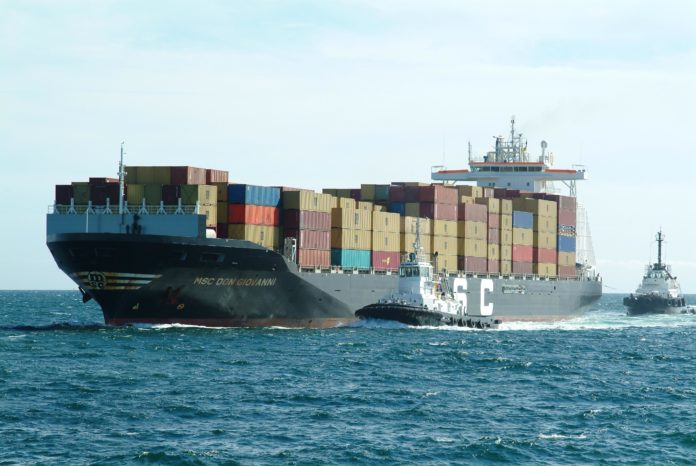
Containers at a yard ready for shipment

Air freight and container port volumes, good measures of overall demand, have seen year-on-year growth of around 10% and 7%, respectively. Trade in electronic components and agricultural raw materials is expanding after a period of below-trend growth, indicating strengthening activity in downstream industries that use these inputs to create more complex final products.

The increase in the WTO forecast is encouraging, but policy uncertainty and structural changes in the world economy hamper trade prospects. Countries facing problems from the trade slowdown need to adapt by changing their policy focus towards creating supportive domestic environments for developing competitive service industries and attracting foreign direct investment. This includes strengthening intellectual property protection and reforming education and skills training. The international framework for services trade, too, requires unprecedented modernisation to facilitate cross-border flows.

Last year was the first timeĀ in 15 years – and only the second time since 1982 – that trade grew below world GDP, at 1.3% against global output of 2.3%. That trade-to-GDP ratio of 0.6:1 is a marked reduction from the more than 2:1 averaged between the 1990s and mid-2000s.

Since the 2008 financial crisis world trade has grown at the same pace as world output. Low trade growth impacts overall demand, economic development, export prices, foreign reserves, government budgets and employment, among other issues.

The 1:1 ratio is partly the result of cyclical factors. These include the slow post-crisis recovery and a large fall in investment spending, which is the most trade-intensive component of import demand.

Another significant cause is structural change resulting from China. It has rapidly increased its productive capacity in everything from steel to semiconductors. Rather than simply assemble components made elsewhere, as in the past, China is drawing more of the value chain into its domestic economy and shifting production further into its interior provinces.

As a result, China is exporting goods with a higher portion of domestic value-added, which is impacting the amount of intermediate goods it imports from elsewhere and then re-exports as part of the production process. The expansion of trade in such intermediates as supply chains developed during the 1990s was a key cause of the earlier trade-GDP expansion.

Politicians are struggling to devise effective measures to deal with these challenges. The current focus on trade protection and economic nationalism in many leading economies fails to address the most important causes for these shifts.

Since the 1970s services have grown to over 70% of global GDP from 53%, and are still rising. In developed economies services contribute up to 85% of GDP. The manufacturing sector, meanwhile, has fallen as a share of global GDP to 16% from around 27%, and is still declining.

Despite these shifts, the amount of services in global trade has remained stable over the last few decades, at between 20%-25%. Manufacturing and goods trade still accounts for around 70% of total trade, despite contributing a declining share of global GDP. The result is a growing disconnect between GDP growth and trade expansion.

Unlike goods trade, services have yet to see a successful large liberalisation agreement at the multilateral level, in part because of the deep behind-the-border issues that services depend on. Moreover, some services are inherently non-tradable or require face-to-face interactions. Others are ’embedded’ in manufactured exports and are not captured by traditional trade statistics.

Crucially, many services are delivered directly into other countries by establishing a presence through foreign direct investment, which acts as a substitute for trade in these cases. Over 60% of the global stock of FDI is in services, according to statistics from the United Nations, with the value of foreign affiliate trade in services outweighing the value of cross-border service trade by more than 3:1.

All these factors suggest the global trade-to-GDP ratio is unlikely to reach previous highs, even if global growth starts to accelerate. Leading economies need to refocus on polices to facilitate higher trade growth. If they do not, the world faces decades of lost opportunities.

Ben Robinson is Economist at OMFIF.


Stories Continues after ad

Uganda to host continental summit on entrepreneurship

Ugandan youthful entrepreneurs and innovators will attend the summit

Uganda will host the African Summit on Entrepreneurship and Innovation (ASENTI) and an exhibition fromĀ October 24-26.

According to the statement by Asenti, the event to be held under the theme ā€˜Rethinking Innovation Africa’ will take place at the International University of East Africa (IUEA) and is expected to attract over 2000 delegates including 40 speakers from across the globe.

The summit that will attract over 100 exhibitors from across Africa will also be attended mostly by students, startups, micro enterprises, SMEs, representatives from the national chambers of commerce and professionals from across different industries in Uganda and other countries to focus on different pillars such youth empowerment through employability skills, energy, agribusiness, finance, media, science and mobile technology and new technology trends.

During the event, awards will be given to some of the best business ideas and startups in Uganda and other African countries.

The Summit’s main goals are to create a platform which enhances idea sharing and interaction among sectors in order for the entrepreneurs to be a catalyst for innovation and economic growth in Africa, organisers say.

ASENTI partners with brands and governmental ministries, and has previously partnered with Safaricom, KPMG East Africa and Communication Authority of Kenya among others, to execute its mandate.


Stories Continues after ad

Museveni takes land awareness campaign to radio stations

TO ANSWER QUERIES ON LAND: President Yoweri Museveni

President Yoweri Museveni today will appear on the Voice of Kigezi as he kicks off a country-wide campaign to sensitise Ugandans on land issues, sources from State House say.

For this week, the sources say President Museveni will appear on other radio stations in Mbarara, Masaka, Mubende, Hoima and Fort Portal, among them Radio West, Voice of Tooro, Spice FM, Point FM and Radio Buddu.

Among the issues he will talk about as he appears on radio stations in Western and Central Uganda is the proposed Land Amendment Bill 2017 that has raised eyebrows within the Ugandan public, including Members of Parliament.

The President, according to the sources, is also expected to respond to queries from members of the public who will call direct into the studios.

In July the Deputy Attorney General Mwesigwa Rukutana, presented the Bill for its First Reading during a session chaired by the Speaker of Parliament,Ā Rebecca Kadaga.

The Constitution (Amendment) Bill, 2017 intends to amend Article 26 of the Constitution which provides for the right of persons to own property and how it can be acquired by government.

The Amendment Bill, 2017 also provides for how government can acquire disputed land for infrastructural development and investment projects.

ā€œThe Bill seeks to enable government, or a local government to deposit with court, compensation awarded by the government for any property declared for compulsory acquisition,ā€ said Rukutana as he presented the bill to Parliament in July.

At the time he stated that the purpose of the bill is to resolve the current problem of delayed implementation of government infrastructure and investment projects due to disputes arising out of the compulsory land acquisition process.

In 2014, eighty six refinery affected people in Hoima district moved to mount legal action against government for inadequate compensation rates and violations of basic land rights as guaranteed by the 1995 Constitution, the Land Act 1998, the Land Acquisition Act 1965 and other international treaties and policies applicable to Uganda.

The residents, supported by Africa Institute for Energy Governance and other local organizations, fault the government for moving ahead to acquire 29.34 square kilometers of their land in Hoima district to build an oil refinery without adequate compensation for land and other properties. They are also unhappy with the government’s delay in resettling those who asked for resettlement.

In the north residents of Amuru district are faulting government for wanting to give Madhvani group land measuring 10,000 hectares without their consent. The company wants to grow for sugarcane growing. Government says the project will give residents in the area jobs but also help the country boost sugar production.

In May this year, a 10-member Commission appointed by Museveni and chaired by Justice Catherine Bamugemereire kicked off its work to query into the efficiency of the laws, policies and the whole processes of land registration, acquisition, administration and management in Uganda.

The Commission will also investigate and inquire the effectiveness of the Uganda Land Commission (ULC) in administering public land and relevant bodies in the reservation of wetlands, forests, road reserves, national parks among other gazetted spaces.

The Commission is yet to finish its assignment from which it will write a report to be presented to President Museveni.


Stories Continues after ad

ā€˜Uganda for All’: a pressure group that believes in promoting democracy

Mr. Michael Woira

On August 16, 2017, a group of youth, members of some Civil Society Organisation (CSOs), local and national leaders joined us at Hotel Triangle to launch ā€˜Uganda for All’ discussions, a platform whose major aim is to make sure that all Ugandans share the national cake equally and to also allow them have the freedom to fully express themselves as per the Constitution.

It turns out most Ugandans are not aware of their rights and responsibilities as citizens of this country.Ā  We therefore organize dialogues in which we host members of the public and speakers from different sections of our society to freely share ideas and information on the different social, economic and political issues at hand in the country.

Part of the importance of our platform is giving the electorate information that allows it to exercise its political choice. “If voters are to make an informed choice at the polling station, then an active exercise of the freedom[of expression] is essential …,’ the UN Technical Team on the Malawi Referendum of 1993, which chose between a single and multi-party system, stated.

So, freedom of speech is no doubt the very foundation of every democratic society, for without free discussion, particularly on political issues, no public education or enlightenment, an ingredient so essential for the proper functioning and execution of the processes of responsible government, is possible.

Indeed, as youth under the umbrella of Uganda for All, we understand that real democracy and freedom of speech are tightly intertwined; freedom of speech enables each individual to crystallize his or her autonomous opinion in the decision-making process, something vital in a democratic state and Uganda for All is acting as a platform for Ugandans to freely express themselves and also to showcase great knowledge on how to transform the country.

On our very first day, we hosted the State Minister of Finance (General Duties) David Bahati and other discussants representing various forums and just last week we hosted Professor Augustus Nuwagaba and in his submission democracy was the main point of discussion though a very good number of media houses and social media have now totally changed his message to suit their agendas.

As organizers of these dialogues, we strongly disregard the social media hearsay alleging that Prof. Nuwagaba said that it’s only dictatorship that can change Uganda economically and lead to its development.

Michael Woira

Media Relations

Uganda for All


Stories Continues after ad