Stanbic Bank
Stanbic Bank
16.6 C
Kampala
Stanbic Bank
Stanbic Bank
Home Blog Page 1795

Energy ministry, NGO in row over resettlement of oil refinery affected villagers

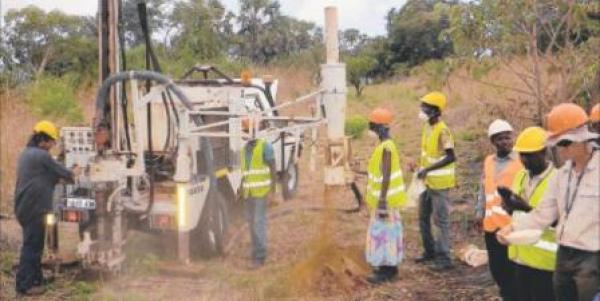
Oil exploration workers in Albertine region of Uganda

The Ministry of Energy and the Africa Institute for Energy Governance (AFEIGO), a non-governmental organisation based in Kampala are involved in counter accusations as the ministry today commissions the relocation of oil refinery affected families from Kabaaale-Buseruka to Kyakaboga, Hoima District.

Yesterday The Eagle Online published a story in which the General Secretary of the Oil Residents Refinery Association (ORRA), Christopher Opio and AFIEGO’s Senior Communications Officer Diana Nabiruma, confirmed that the refinery affected households in Hoima district had told government officials on Tuesday that they wouldn’t move from the area unless government fulfills all its pledges it made to them in October 2012 Resettlement Action Plan (RAP) Report for the oil refinery project.

Some of the families whose land was part of the over 29 square kilometres that was acquired by government in 2012 for Uganda’s proposed oil refinery were set to be relocated today from Kabaale-Buseruka to Kyakaboga village in an operation led by officials  from ministries of Energy and Lands alongside other government agencies.
“In a meeting held today August 8, 2017 at Nyahaira P/S in Hoima district the over 80 families unanimously  resolved that unless government provides them with land titles, electricity, water sources and access roads as promised in the RAP report, they will not allow to be relocated to Kyakaboga on Thursday,” Opio was quoted as saying in a press release published by AFIEGO two days ago.

However, going by the latest communication from the Ministry of Energy Permanent Secretary Dr Stephen Isabalija the relocation will go on today as planned.
“On Thursday 10th August 2017, the Ministry will commission the relocation process which involves agreeing with the PAPs (project affected people) on a programme for each household to be resettled. it is therefore not true that they are all expected to relocate on the day of the commissioning. Some households are already cultivating their land and would therefore be better off once relocated,” Dr Isabalija says.

Dr Isabalija says leaders of the affected familes during the August 8 meeting barred the locals from airing out their views, yet on the other hand, Opio and Nabiruma in a letter to the media accuse the ministry officials of trying to engage only representatives of the people, which they say almost resulted into chaos.

“The ministry and subcounty chiefs were interested in hearing the views and concerns from PAPs, however some of their leaders barred them from speaking,” Dr Isabalija says.

The meeting on Tuesday 8 was attended by Ms Maureen Wadiyo (Community Liaison Officer Oil and Gas in the Ministry of Health), Mr Stephen Enachi (Petroleum Exploration Directorate, LC3 Chairperon for Buseruka Subcounty Ali Tinkamanyire and representatives from AFIEGO.

Despite AFIEGO’s that government has not prepared the relocation areas, Dr Isabalija says government is providing seedlings and food for the next six months, including bringing the skills development programme expected to run for six months to one year.
“Individual land titles are being processed,” says the Permanent Secretary, confirming that the consolidated land title of the relocation area has been obtained. One of the issues the families are said to have raised for not wanting to relocate was the issue of individual land titles to guarantee security of tenancy for their households.

Dr Isabalija says government says the relocation area is not isolated as claimed by AFIEGO and leaders of the affected families, saying other communities exist nearby. Government he says, has provided each household to be relocated a with 500-litre water tank, wired houses as it prepares to connect them to electricity, with further promise that it would build more infrastructure to ease the lives of the new occupants Kyakaboga village.
The PS has castigated AFIEGO, saying the NGO doesn’t represent the views of the families to be relocated. He further accused the organisation of trying earlier on to relocate residents to Kyakaboga “amid allegations of delays by government” and wonders why AFIEGO is now inciting people not to relocate.

“We would also wish to confirm that PAPs are willing and eager to be relocated and the commissioning programme is going on as scheduled at the resettlement area,” he says of the 73 households much as AFIEGO in a press release says they are over 80 families to be relocated.

However, it should be noted that the Land  Acquisition  and Resettlement Framework (LARF) exists which is supposed to provide a guide to land acquisition in the Albertine Graben for Oil and Gas  activities.
LARF emphasizes that land acquisition may result into displacement of people and as a result it is important for authorities to prepare adequately to address the issues of relocation and compensation of the affected peoples.

The cost of the refinery is estimated to be US$4.3 billion, with 70 percent of that amount to be borrowed and the remaining 30 percent coming from shareholders.
With the capacity to process 30,000 barrels per day, the refinery is planned for commissioning in 2020, with government sure it will bring many economic opportunities to the country.
 

Stories Continues after ad

PAP MPs want land vested in women

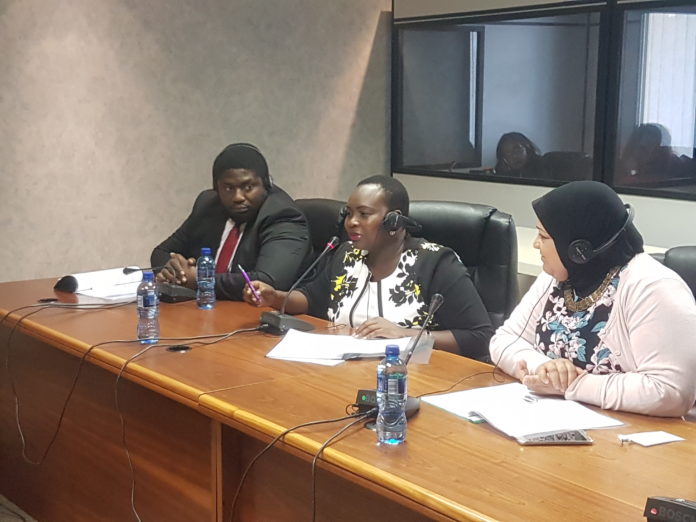
Hon. Jacqueline Amongin addresses PAP MPs

Women legislators on the African continent have decried the persistent marginalization of women in the control of productive resources. The legislators say that despite being the majority population on the continent accounting for 80 percent of food production in Africa, they continue to be sidelined in the ownership of land in the legal, customary and social spheres.

They argued that the current large scale investments on land on the continent are a big threat to women accessing land resulting in the loss of livelihoods and displacement.

In a workshop on strengthening women’s access to land in Africa held at the Pan African Parliament in Midrand, South Africa on Wednesday 09th August 2017, legislators explored avenues to close the gender gap for economic development through agriculture.

“Women need land because it is the vehicle for growth and economic development. When people have access to productive resources like land, they also realize their human rights,” Dr. Gaynor Paradza, a land governance expert told legislators, adding that “there is also evidence that points to the fact that women’s lack of access to land contributes to their vulnerability to violence.”

Gaynor observed that while on paper there are international legal instruments, national statutory laws and other customary practices, in a continent where 75 percent of land is customary, women’s rights to land are the most insecure because they are not registered.

“Women face challenges in securing land. There is discriminatory land registration and titling; women lack information and empirical evidence to argue their case,” she said.

She commended Rwanda for tackling women’s land inheritance rights where both sexes have equal rights. Uganda was commended for decentralizing land administration to make it more accessible.

Gaynor recommended that nation states domesticate international laws and conventions advocating for women’s land rights, rationalize and amend discriminatory land practices.

Hon. Anifa Kawooya (Uganda) was dismayed that the issue of land rights has been topical in many conferences but nothing much had happened in addressing the problem.

“In Uganda, seven percent of women own land and I am not happy with this,” Kawooya said.

She sought to know the progress by the African Union and the African Development Bank in their campaign to ensure that 30 percent of African women own land by 2025.

She observed that many African states had not ratified the Maputo Protocol citing Uganda which ratified the protocol with reservations on Article 19.

Mboni Mohamed (Tanzania) attributed the land gender gap to low levels of education and low representation of women in positions of leadership.

“Once a woman has access to education, we have more activists, more presenters, and more women in leadership,” adding that “the moment we have minority of women in Parliament, we should forget about the laws changing.”

She explained that while customs are what Africa is made of, with many women in Parliament, the retrogressive customary laws would be history.

Hon. Jacqueline Amongin (Uganda) said that in most countries where less than 10 percent of land is in the purview of land management institutions, it presents a challenge to planning and makes access, tenure and security problematic.

At the national legislative level, the Parliament of Uganda through the Uganda Women Parliamentary Association (UWOPA) is building capacity of rural women and women leaders to be at the forefront of advocating against the issues impinging on their rights to land, especially land inheritance and succession rights.

UWOPA has interfaced with women in the Greater North, in the districts of Lamwo, Kitgum (Acholi region) Kaabong and Kotido (Karamoja region) and Nebbi and Arua (West Nile region).

Uganda’s representatives to the Pan African Parliament include Hon. Jacqueline Amongin (NRM, Ngora); Prof. Morris Ogenga-Latigo (FDC, Agago North); Hon. Anifa Bangirana Kawooya (NRM, Sembabule); Hon. Felix Okot Ogong (NRM, Dokolo South) and Hon. Babirye Kadogo (Ind. Buyende).


Stories Continues after ad

Former Minister Kabafunzaki bribery case adjourned

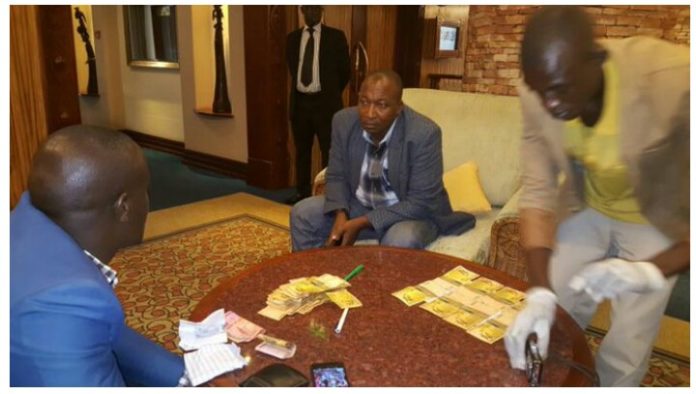
FORMER MINISTER: Herbert Kabafunzaki with the 'bribe' money

Anti-corruption court judge Margaret Tibulya has adjourned to August 14, the hearing of a case in which the former Minister of State for Labour Herbert Kabafumzaki is accused of corruption. The case was then scheduled for Monday next weekafter Kabafunzaki’s lawyer MacDusman Kabega failed to turn up.

Minister Kabafunzaki was arrested on April 1 with his assistants Bruce Lubowa and Brian Mugabo, for allegedly soliciting a five million shilling bribe from AYA Group Chairman Muhammad Hamid.

During an earlier hearing Kabafunzaki denied the charges but Mugabo said he hid the money on the orders of the minister.

On April 12 Kabafunzaki was granted cash and non-cash bail of Shs50 million by the anti-corruption court chief magistrate Agnes Alum, ordered to deposit his passport with court and told to report to court whenever he is required.

Stories Continues after ad

Airtel Uganda gets new Managing Director

RESIGNED: Airtel Uganda outgoing Managing Director Anwar Soussa

Airtel Uganda Managing Director Anwar Soussa has resigned from his job after just one year in office, and will be replaced by Mr. VG Somasekhar, who is currently serving in the role of Director – Special Projects, Airtel Africa.

Somasekhar is especially remembered for leading Airtel Uganda from December 2010 to February 2014, during which period he oversaw the Airtel-Warid merger – the first telecom merger in Uganda and the most successful one across Africa.
Somasekhar began his career in Modi Xerox and in his eleven-year tenure he held various responsibilities across many geographies in India.

His career highlights include running telecoms in emerging markets across India, Africa and exposure to Middle East.

Somasekhar holds a graduate degree in Commerce from University of Madras, Executive Education Program from Harvard Business School and Thunderbird University – Arizona.

His predecessor Soussa joined Airtel Uganda in June 2016 and under his leadership, the telecom company has won a number of accolades, but says his departure is a result of a personal decision to take up ‘a new and exciting opportunity outside Airtel’.


Stories Continues after ad

Government wants street vendors to operate in markets

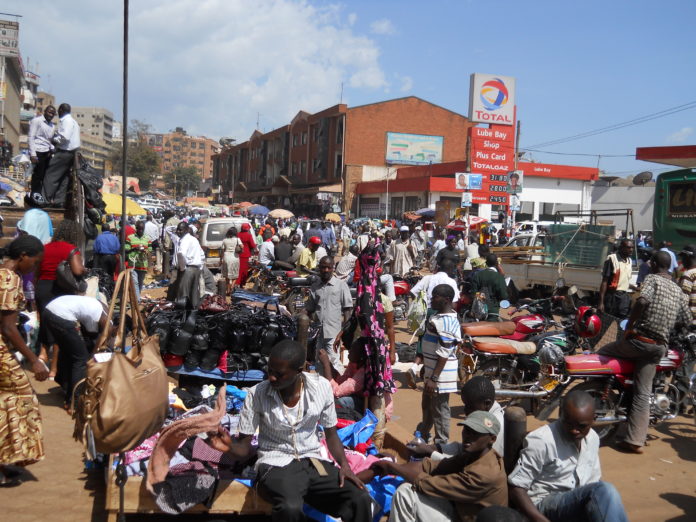
CONFUSION: Shoppers mingle with street vendors on a Kampala street

Even as Wandegeya and Usafi markets have unoccupied stalls due to the unavailability of customers, the government has said it is finalising plans to have street vendors operate in specific markets.

Late last year, the Government resolved that vendors should be evicted from Kampala streets and  relocate to the gazetted markets like Usafi Market, arguing that they disadvantage licensed traders who pay rent and taxes.

“We want buyers to look for sellers in one place not the other way round where sellers look for buyers,” the State Minister for Kampala, Benny Namugwanya,  told the media in Kampala, adding: “We want vendors to sell their goods in an organised way.”
The minister’s statement comes after an incident where a woman who was being pursued by KCCA law enforcement officers drowned in the Nakivubo sewerage channel last week. KCCA does not allow street vendors, most of them women and the youth to do business on Kampala streets during day.

In May this year, after spending a day with female vendors on the streets of Kampala, trade minister Amelia Kyambadde announced plans to register and help them form an association so they can improve their working conditions.

And vendors this reporter talked to say they don’t have enough capital to operate in gazetted markets thus opting do hawking business on Kampala streets. They add that they target clients who don’t have time to visit markets or shops.
“Some people don’t have time to enter shops or go to the markets and we are here to help them,” says Paul Kazibwe who operates along Entebbe Road, one of the busiest in Kampala.
“For me I sell bogoya (yellow bananas) and there is no shop here selling them. So why should KCCA chase me,” complains Hadija Nalumansi, who vends her goods on Nkrumah Road.

Kampala City Traders Association (Kacita) spokesperson, Issa Sekitto has always blamed government and KCCA for allowing vendors to operate on the streets.

“Traders pay licences to operate. We have written to all security agencies and relevant government authorities to have vendors removed from the streets but without success,” said Sekitto says.
Some of the vendors on Kampala’s streets come from neighbouring districts like Wakiso, Mpigi and Mukono which have high numbers of unemployed youth and women. They hawk items including foodstuffs, jewelry, footwear and clothing, among others, selling them at relatively cheap prices.


Stories Continues after ad

Kyuma kya Yesu jailed for 10 more days

Activist William Ntege aka Kyuma kya Yesu has once again been denied bail by Mubende Chief Magistrates’ Court on flimsy grounds that he is nonresident of Mubende magisterial jurisdiction.

Ntege appeared before Mubende Chief Magistrate, Hellen Ajiro who slammed charges of assault on Ntege for allegedly assaulting Kasanda South Member of Parliament, Simeo Nsubuga.

Last week on Wednesday Ntege was remanded to ten days in Kaweeri prison in the same district.Ntege was arrested on Saturday July 31, during Kabaka’s 24th coronation ceremony that was held at Kaweeri Mityana district where he is accused of physically attacking Nsubuga who was on his way to prostrate before Kabaka Ronald Mubende Mutebi II.

Mr. Ntege accused Simeo of spearheading the lifting of the presidential age limit that was set at the age of 75 as per the constitution of Uganda.

Through his layers led by Ladislaus Rwakafuzi, Ntege applied for bail but Ms. Ajiro shunned it claiming that he has presented affidavits that are based in Mubende yet he is not of Mubende.

Among the attendees was the Deputy Minister for Kampala Benny Namugwanya whom supporters of Ntege say was in court to block his releaseothers were legislator Allan Sewanyana and Democratic Party leaders who appreciated Ntege’s move towards the campaign.


Stories Continues after ad

Guvnor Ace’s 70-year old wife hooks ‘grandson’

Singer Guvnor Ace’s 70-year old Swedish wife Mona-Lisa Larsson has hooked up an upcoming musician after the couple broke up.

And unlike the former case where Guvnor Ace was 28 years, her new lover this time is just 18 years!

Speaking to the media, one Aziz Mawanda who was in company of his lover, Mona-Lisa vowed never to bow to public pressure like Guvnor and leave his woman. He said he has higher expectations in Mona-Lisa including helping him get on to a plane for the first time in his life.

Mona-Lisa and Guvnor Ace got married in 2015 at the High Court. The couple subsequently flew to Sweden, Mona-Lisa’s home country. This was Guvnor Ace’s first time on a plane. But just after five months, Guvnor Ace hooked a Ugandan lady living in Sweden and he disappeared from Mona-Lisa’s home.

The 70-year old ‘grandma’ publicly bemoaned all of her pension she had invested in the musician, attracting sympathy from Ugandans.

On the other hand, Guvnor Ace said he broke up with Mona-Lisa after he realised she can’t give birth and yet he is interested in having kids.

Mona-Lisa has since been flying in and out of Uganda and many are asking whether her new found love will last.


Stories Continues after ad

FIFA president congratulates Magogo upon being re-elected

FIFA President Infantino and Eng. Moses Magogo of FUFA

Engineer Moses Magogo was re-elected for another term as the President of the Federation of Uganda Football Associations (FUFA) during the 93rd FUFA Ordinary Assembly. The event was held in Masindi over the weekend.

According to the FUFA website, the Federation of International Football Associations (FIFA) President, Gianni Infantino has sent a congratulatory message to Eng. Magogo and his newly elected working Executive Committee.

Magogo will lead Ugandan for another four-year term after he was unopposed in his position. Magogo required 51% majority votes from the delegates.

Seventy two delegates cast their votes via secret ballot and Magogo tallied 69 votes. One vote was against and 2 were invalid.

The letter directly was addressed to the FUFA president to ‘warmly congratulate him upon his re-election for the second successive term in office for the period 2017-2021’.


Part of the letter reads:


This is a clear vote of confidence in your abilities from the Uganda Football community and we look forward to continuing our corporation with you in the years to come.

I have no doubt that your rich experience, knowledge and personal qualities will continue to have a positive impact on the stable development of our beloved game in your country.

Please, also convey my congragulations to all of your colleagues, who were elected with you and in particular, to Florence Nakiwala Kiyingi, the state minister for Youth and Children Affairs of Uganda, elected as the 3rd Vice President.

I wish you and your team the best of luck, strength ad every success for all the challenges that lie ahead.

I look forward to seeing you soon to congragulate you in person.


Full FUFA Executive Committee 2017-2021:


President: Moses Magogo Hassim

1st Vice President: Justus Mugisha

2nd Vice President: Darius Mugoye

3rd Vice President: Florence Nakiwala Kiyingi


Executive Committee members:


Rogers Byamukama (Kitara Region Football Association)

Rasoul Ariga (West Nile Football Association)

Hajji Abdul Lukooya (Buganda Region Football Association)

Issa Magoola (Eastern Region Football Association)

Kalyebala Mukiidi (Northern Region Football Association)

Kirizesitom Kalibala (Western Region Football Association)

Richard Ochom (North East Region Football Association)

Hamid Juma (Kampala Region Football Association)

Agnes Mugena (North East Region Football Association)

Stories Continues after ad

UNBS denies okaying vehicle inspection equipment

The SGS Automotive vehicle inspection centre at Kawanda along Bombo Road.

The Uganda National Bureau of Standards (UNBS) has denied ever issuing a certificate, certifying the equipment used by Societe General Desurveillance (SGS), a Swiss-based company contracted to inspect vehicles in Uganda.

The revelation was made this morning by Patricia Bageine Ejalu, the Deputy Executive Director of UNBS, while appearing before the Parliament Physical Infrastructure Committee that is investigating circumstances surrounding the contract drawn between the Uganda Government and the Swiss company.

And Ms. Bageine told Parliament that the Ministry of Works and Transport invited the standards body in November 2015 to draft the regulations for vehicle inspection, yet the contract had already been signed in March 2015, meaning the equipment wasn’t certified before contract signing.

Interestingly, Ms. Bageine made the statement after being grilled by MPs on the inspection of SGS equipment, after she had earlier presented a statement saying the standards body had inspected the equipment. Indeed, she had earlier insisted that the equipment satisfies international standards and is traceable to the International Systems of Units but she was forced to change her statement and apologize to the members for giving false information.

Additionally, the Standards body boss informed the Committee that when a team of experts was sent to the SGS site, they discovered that the company has only one set of equipment used to inspect all types of vehicles in the country irrespective of the manufacturer.

As if that wasn’t enough, the equipment found on site was only capable of inspecting old vehicles, not new ones, they said.

Ms. Bageine however admitted that UNBS also falls short of its mandate, given the fact that the entity has no capacity to inspect all the equipment brought in the country for different roles.

She also decried the continued sidelining of UNBS by government entities when it comes to procurement of equipment, arguing that their input isn’t sought before the contracts are signed.

She also called on Parliament to put in place mechanisms to ensure that UNBS is involved during the purchase so that the right Ugandan standards are enhanced.


Stories Continues after ad

Oil refinery-affected people refuse to relocate

Some of the oil refinery affected people in Kibaale

Over 80 families affected by the oil refinery project who were set to be relocated tomorrow have resolved not to leave until government fulfills promises it made to them in the October 2012 Resettlement Action Plan (RAP) Report for the oil refinery project.

The families, whose land was part of the over 29 square kilometres that was acquired by government in 2012 for Uganda’s proposed oil refinery, were set to be relocated from Kabaale-Buseruka to Kyakaboga, Hoima district.

The function was to be presided over by high-level officials from the Ministries of Energy, Lands and other government agencies, but in a meeting held yesterday at Nyahaira Primary School in Hoima district, the affected families unanimously resolved not to relocate to Kyakaboga unless they are given land titles, and provided with electricity, water sources and access roads as promised in the RAP report.
The meeting was also attended by Ministry of Energy officials including a representative from the Directorate of Petroleum, the sub-county leadership, police and the refinery-affected people. Pleas by the Energy ministry officials to have residents reconsider the above conditions fell on deaf ears, and the meeting turned riotous when the officials insisted on having a separate meeting with the group leaders.
The families said they no longer trusted government and particularly the Ministry of Energy as it has broken promises on several occasions and ignored calls to include the local people’s input into the relocation exercise.
In the RAP report, the Ministry committed that it would provide each of the persons who opted for physical relocation with land identified and houses  on a case-by-case basis in the neighbourhood of the refinery area.
“The Ministry further committed that it would conduct a livelihood restoration exercise that would involve supporting families with grants for farming and business,” Mr. Christopher Opio, the Secretary to the Oil Residents Refinery Association (ORRA), says while quoting commitments listed in the refinery project’s 2012 RAP report.
He adds: “Only 46, out of 83 families are getting houses contrary to commitments in the RAP. In addition, land was not identified on a case-by-case basis and a special settlement, which the [refinery-affected] people have consistently rejected because it does not meet their socio-economic and cultural needs, was set up. Families are also yet to get their land titles. Without land titles, they cannot be assured that the property government wants to hand over this Thursday is theirs.”
At a May 25, 2017 meeting with the Uganda Human Rights Commission (UHRC), the affected families said that while the UHRC had taken the initiative to address their concerns by organising the meeting with the Ministry of Energy , it was tipped in favour of the latter.
“We presented our grievances and pointed out how best they could be addressed in a manner that taxpayers’ money would be saved. However, at their own discretion and with little regard for our requests, the Ministry of Energy directed on how it would address our concerns. This angered us,” Mr. Opio notes.
Some of concerns the affected people say were not addressed by government include; failure to buy land on a case-by-case basis, failure to provide land titles for all the families, failure to provide houses for over 47 families then that opted for physical and failure to compensate the over 20 families that rejected low compensation.
The Ministry of Energy officials said that they would process and provide the land titles in two months from tomorrow, the day of resettlement but the group has refused to listen to the officials’ promises.
The meeting ended with the families vowing that they will not participate in the handover ceremony of the houses. They also said that they would not relocate until government fulfills its promises as captured in the refinery project’s RAP report.

Stories Continues after ad