Stanbic Bank
Stanbic Bank
16.6 C
Kampala
Stanbic Bank
Stanbic Bank
Home Blog Page 1796

Protests break out in Kenya, Kisumu under cordon

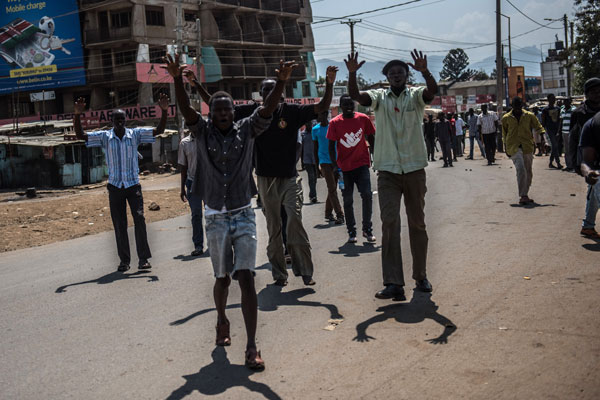
Following the rejection of the provisional elections’ results released by the IEBC, there are reports of protests in the opposition strongholds of Kisumu in the Nyanza region and in Mathare, a slum area just on the outskirts of the Kenyan capital, Nairobi.

The elections yesterday pitted President Uhuru Kenyatta against six other candidates including the National Super Alliance (NASA) presidential aspirant Raila Amollo Odinga.

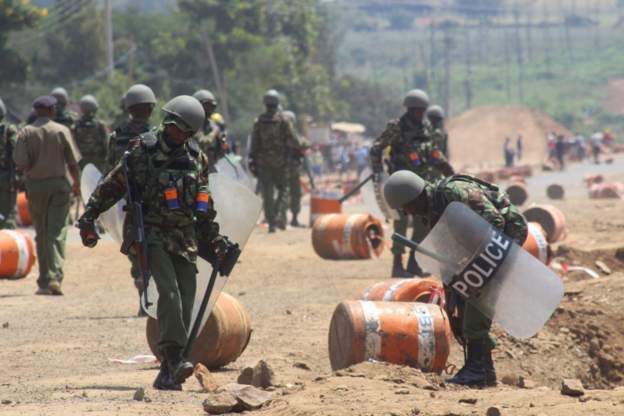
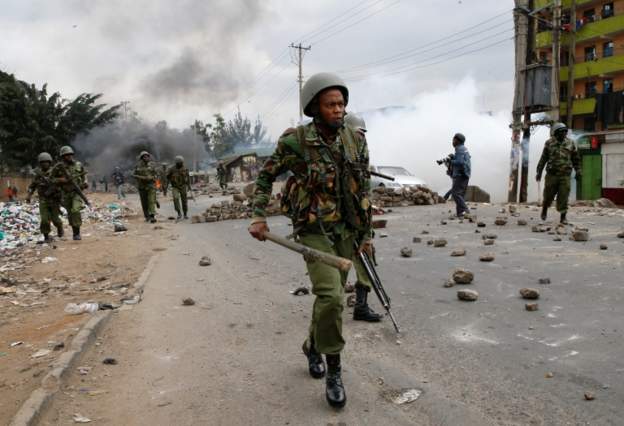
Indeed, graphic photos by several news agencies have shown riot police engaging the protesters after opposition candidate Raila Amollo Odinga said the elections were massively rigged.

Mr. Odinga, who has rejected the results, has urged his supporters to maintain calm.

“We are telling our people not to accept results, stay calm as we get deep into this. I don’t control the people but I am asking them to remain calm,” Mr. Odinga said.

Mr. Odinga’s running mate, Stephen Kalonzo Musyoka, also tongue-in-cheek, called for calm.

“Kenyans must remain calm. Return to your offices but there will be a time when we’ll call you to action,” Mr. Musyoka was quoted as saying.

However, the government through the acting interior minister Fred Matiang’i, has denied any outbreaks of violence, as is emerging on social media.

‘Social media claims that we are experiencing riots in some parts of the country are not true,” Mr. Matiang’i said.

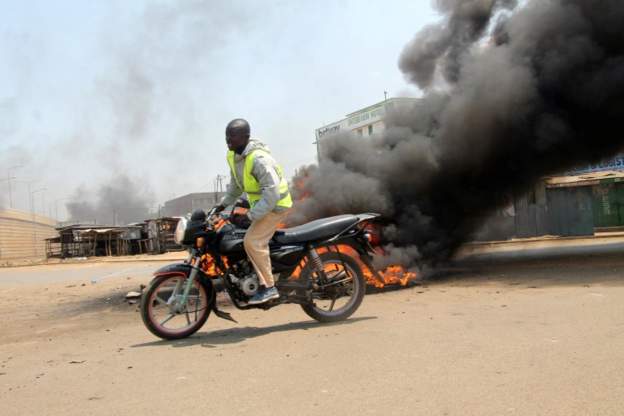
Meanwhile, reports indicate that Police fired tear gas as several hundred protesters in the neighbourhood of Kondele — an epicentre of violence after disputed 2007 polls — set fire to barricades and tyres and placed rocks in the streets.

Also, a police helicopter was reported hovering overhead as riot police wielding shields, assault rifles and batons deployed two water trucks to put out the fires.


Stories Continues after ad

Former UBC boss sent back to Luzira

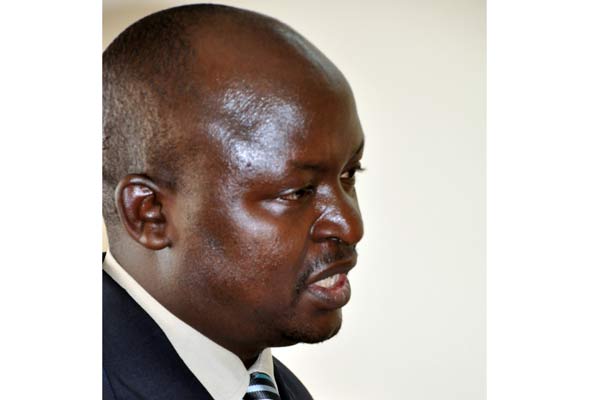
SENT ON REMAND AGAIN! Paul Kihika, the former UBC Managing Director

The former Uganda Broadcasting Corporation (UBC) Managing Director Paul Kihika has been remanded to Luzira prison till August 16 by Nakawa Grade One Magistrate Christine Nantege.

According to prosecution, Mr. Kihika lied to a police detective at Jinja Road Police Station when he recorded a statement claiming that another police officer, Emmanuel Mbonimpa, had stolen his phone.

But police and prosecution say Kihika’s phone was taken to ease investigations surrounding a now-contentious Shs3.6 billion sponsorship deal he negotiated with Airtel on behalf of UBC between 2013 and 2014, to air the 2014 World Cup finals in Brazil.

However, Mr Kihika denied all the charges leveled against him, at one time even telling Magistrate Nantege that he doesn’t understand English and needed an interpreter, a seemingly strange demand that prompted the Magistrate to remand him to Luzira prison for one week.

On Monday this week Mr. Kihika was granted bail by the Anti-Corruption Court Grade One Magistrate Pamela Lamunu, where he faces another charge of embezzling Shs33 million that was meant to facilitate him for an official trip to China, which trip he did not make.

Stories Continues after ad

Singer A Pass demands apology from Bebe Cool over ‘poor interpretation of English’

Singer A-Pass

Dancehall singer A Pass has demanded for an apology from fellow musician Moses Ssali aka Bebe Cool, following a barrage of insults the former suffered Tuesday night from the ‘Kabulangane’ hit maker and his fans.

It all began with Bebe Cool accusing the media of pulling him down, and commenting on the outcry, A Pass wrote: “Is the respect not earned yet? It’s a shame.”

In a space of less than ten minutes, a seemingly furious Bebe Cool had already responded with a rather bitter remark on A Pass.

“It depends on your brain as A Pass,” he began his attack. “Don’t forget seeking too much attention might expose your weaknesses.” Bebe Cool was joined by his fans in further insulting of A Pass.

However, some stood by A Pass, maintaining he hadn’t committed any wrong. Among them was comedian Patrick Idringi popularly known as Salvador. “Actually A Pass comment is legit, he was wondering hasn’t Bebe got the respect he deserves yet for them to keep trashing him like that? It’s all about interpretation and unfortunately Bebe interpreted it in another way,” he wrote.

Also, A Pass joined to clear the air. “…I think you misunderstood me so let me explain. To your comment in regards to your post, I was only there to support. I took time to read your post and I offered my support as a fellow artiste, I didn’t diss you. My sincere apologies 🙏🏾 now it’s your turn to apologize,” he clarified on his comment.

Ironically, the brain which Bebe Cool was thrashing wrote him three songs on his most successful album dubbed Go Mama. One of the songs was ‘Everywhere I go’.

Stories Continues after ad

Kenyan musician ‘Jaguar’ wins parliamentary seat

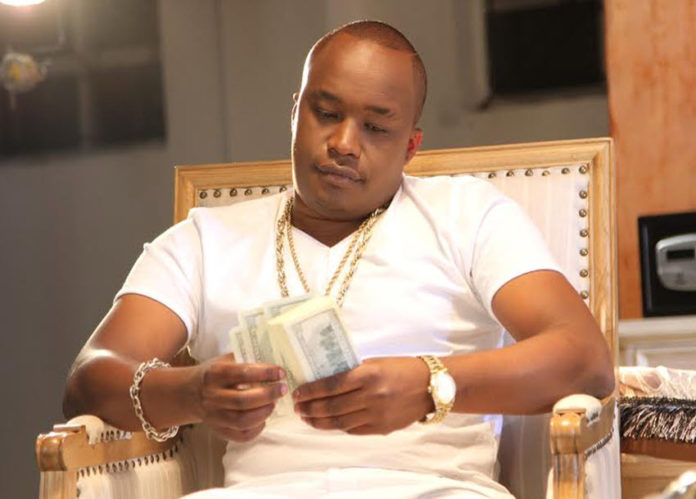
FLASHY: Kenyan musician Charles Njagua aka Jaguar

Less than a month after Ugandan singer Bobi Wine won a decisive victory for Kyadondo East and was sworn in as MP, another musician from the East African region has joined Parliament.

Renowned Kenyan musician Charles Njagua, popularly known as Jaguar, is a few inches away from being declared the new MP for Starehe County.

According to results that have so far been recorded by Kenya’s Independent Electoral and Boundaries Commission (IEBC), Jaguar is already in the lead, with over 51 percent.

In fact his opponent rights activist Boniface Mwangi has already conceded defeat.

“The people of Starehe have spoken and l respect their decision. To the Starehe MP-elect, l wish you all the best. God bless you and God bless Kenya,” reads part of the statement Mwangi shared on social media.

The ‘One Centimetre’ and ‘kigeugeu’ hit maker joins a list of celebrated musicians in the region who have become Members of Parliament.

In Uganda musician Judith Babirye won the Buikwe Woman slot in the 2016 elections, while Tanzanian rapper Joseph Haule popularly known as Professor Jay won the Mikumi Constituency parliamentary seat in 2015.

Professor Jay was encouraged to join politics by his close ally and outstanding rapper Jospeh Mbilinyi, aka Mr Sugu, himself is also an MP for Mbeya town.

Stories Continues after ad

UIA meets 300 investors

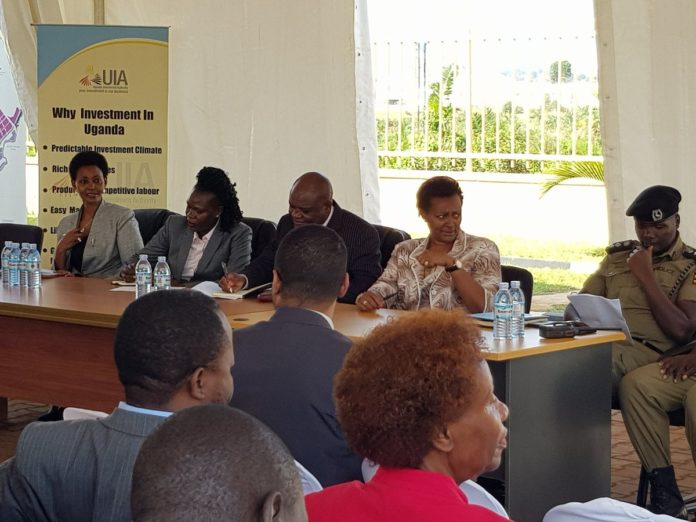
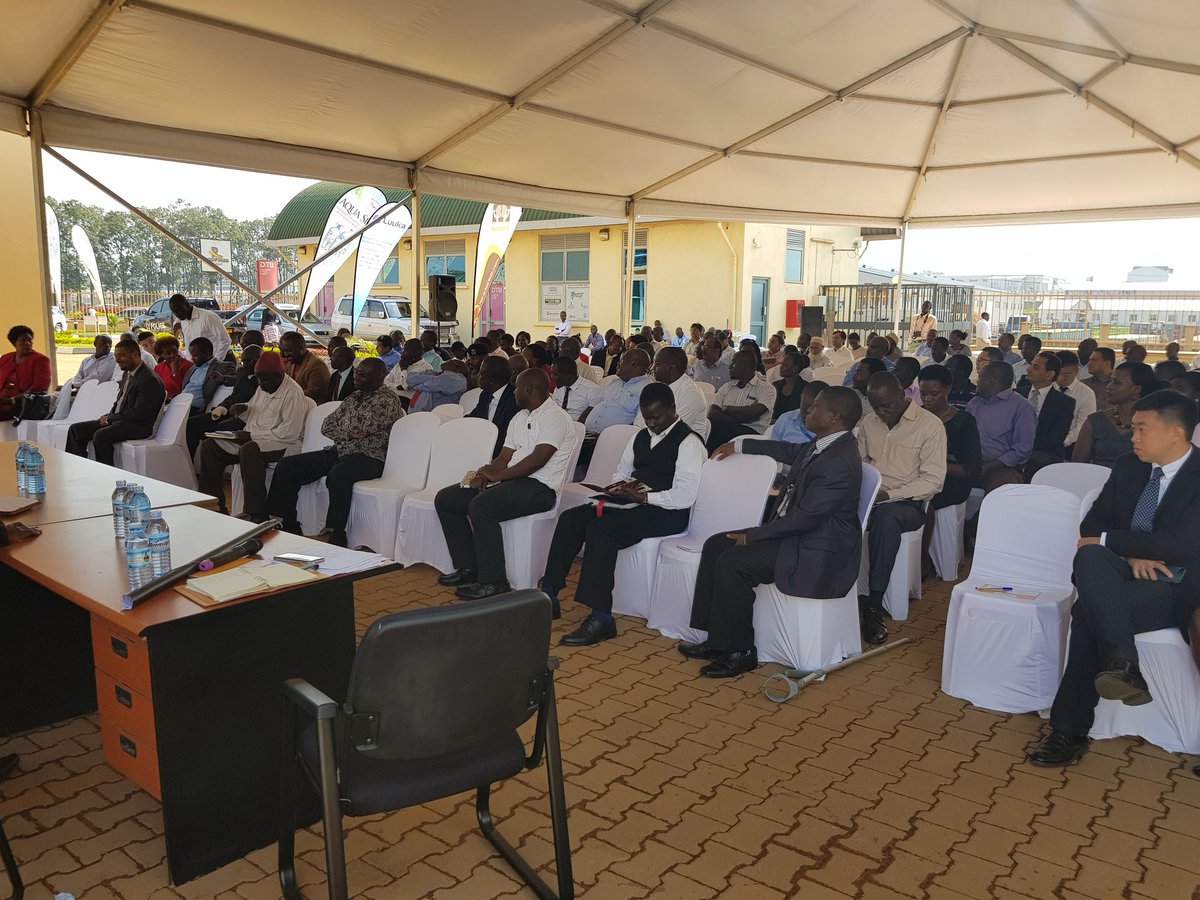
UIA Executive Director Jolly K Kaguhangire and State Minister for investments Evelyn Anite during the meeting

The Uganda Investment Authority (UIA) has this morning held the Third Annual Uganda Investors’ Meeting, where its officials held discussions with over 300 members of the investor community.

Investors listen attentively during the meeting with UIA officials

The meeting was held at the Kampala Industrial and Business Park (KIBP) at Namanve and focused on key issues that affect investors in the country.
UIA officials said such a gathering enables them get investors’ feedback in turn helping the Authority improve on the promotion and attraction of investments into the country.

Among the issues being discussed include progress of the current industrial developments within the three industrial parks located within the Kampala Metropolitan Area. These are KIBP, Luzira Industrial and Business Park and Bweyogerere Industrial Estate.
“Feedback from our dear investors is a very important aspect UIA considers in decision making,” said UIA’s Executive Director, Jolly Kaguhangire.

Security was also an issue under discussion and Ms. Kaguhangire said the Authority had set up a police station at KIPB to keep away the would-be criminals. She further said UIA has extended a two kilometre water line to serve industries in KIBP such as Mukwano Industries as well as improving the drainage of River Namanve.
During the discussions investors also raised the challenges they face such as power outages and ‘unfavourable tax regimes’.

In response Ms. Kaguhangire promised she would seek solutions to the challenges.
UIA is Uganda’s investment promotion agency that provides support, serviced land and advice to investors in Uganda.

Stories Continues after ad

Raila Odinga rejects provisional results, as Kenyatta leads

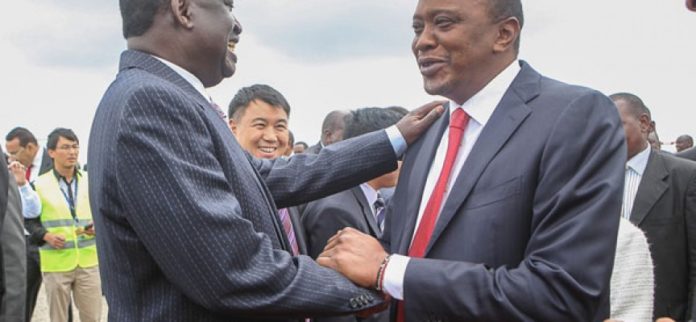
FRIENDS? Kenyan President Uhuru Kenyatta and Raila Odinga

Kenya opposition presidential candidate Raila Odinga has rejected early results indicating a strong lead for his rival, President Uhuru Kenyatta.

Mr Odinga told journalists the details were ‘fake’, because the authorities had failed to present documents verifying the results.

Electoral officials say that with 91% of results in Mr Kenyatta is leading with about 54.5%, to Mr Odinga’s 44.6%.

Many fear a repeat of the violence after a disputed election 10 years ago.

More than 1,100 Kenyans died and 600,000 were displaced following the 2007 vote.

Mr Kenyatta’s lead could mean that he is elected outright. There were eight candidates in all, but apart from Mr Kenyatta and Mr Odinga, none polled more than 0.3% of the vote.

The opposition has described the results being released online as a ‘fraud’ because they were not accompanied by original result forms 34A and 34B from the polling stations.

“They are fictitious, they are fake,” said Mr Odinga.

He said that the results were “the work of a computer” and did not reflect the will of voters.

“We have our projections from our agents which show we are ahead by far,” he added.

Opposition officials have said that, despite assurances from the electoral commission, they still have not received the result forms.

The electoral commission has been urging people to wait calmly for the full results of Tuesday’s vote.

“During this critical phase, we urge all Kenyans to exercise restraint as we await official results from the polling stations and indeed as they start trickling in,” the commission said.

However, it admitted that a lack of mobile data coverage had delayed the delivery of the supporting documents, forms 34A and 34B.

There had been reports on Election Day of the failure of some voter-identification equipment. Also, one in four polling stations was apparently without mobile phone coverage, meaning that officials were asked to drive to the nearest town to send results.

The presidential candidates’ agents would have ‘special access’ to the forms, though, the electoral commission said.

The Daily Nation newspaper quoted commission head Ezra Chiloba as saying only results supported by the forms had been published.

Voting passed off largely peacefully and some polling stations remained open after the scheduled 17:00 (14:00 GMT) closing time.

People started queuing early to ensure they could cast their vote. Long queues could be seen, and video footage at one polling station showed people injured after an apparent stampede.

There were reports that one man had been killed in clashes in the Kilifi area.

But there was one heartening moment when a woman gave birth to a baby girl as she queued in West Pokot to cast her ballot. New mother Pauline Chemanang called the circumstances of the birth a ‘blessing’ and called her baby Kura, Swahili for “ballot”, according to local radio.

However, in the run-up to election day, a top election official was murdered, there were claims of vote-rigging and hate speech flyers and rhetorical text messages began circulating.

Some nervous Kenyans stockpiled food and water, while police prepared emergency first aid kits in the event of violence.

Mr Kenyatta is hoping for a second term in office.

To win outright, a candidate needs more than 50% of the vote, and at least 25% in 24 of Kenya’s 47 counties. If that threshold is not met, a run-off vote between the top two candidates will be triggered.

Voting for the national and local assemblies has also been taking place.

Mr Odinga, 72, has run for president three times and lost each time. President Kenyatta, the 55-year-old son of Kenya’s founding president, beat him in the last election in 2013, but their rivalry is generations old – their fathers were political opponents in the 1960s.

Mr Kenyatta and his running-mate William Ruto were indicted by the International Criminal Court for their alleged roles in the bloodshed a decade ago. The case ultimately cpollapsed due to lack of evidence, and after key witnesses died or disappeared.


TIDBITS: Kenya elections 2017; ‘Six-piece’ vote explained

  • Six separate ballot papers: For president, national assembly, female representatives, governors, senate and county assemblies
  • 47 parliamentary seatsand 16 senate seats reserved for women
  • Eight presidential candidates: President Uhuru Kenyatta and opposition leader Raila Odinga are favourites
  • Kenyatta beat Odinga in 2013 – their fathers were also political rivals in the 1960s
  • A candidate needs 50% plus one vote for first-round victory
  • More than 14,000 candidates running across the six elections
  • More than 45% of registered voters under 35
  • Some 180,000 security officers on duty nationwide in case of trouble
Stories Continues after ad

Government to contain measles outbreak in Kampala, says health ministry

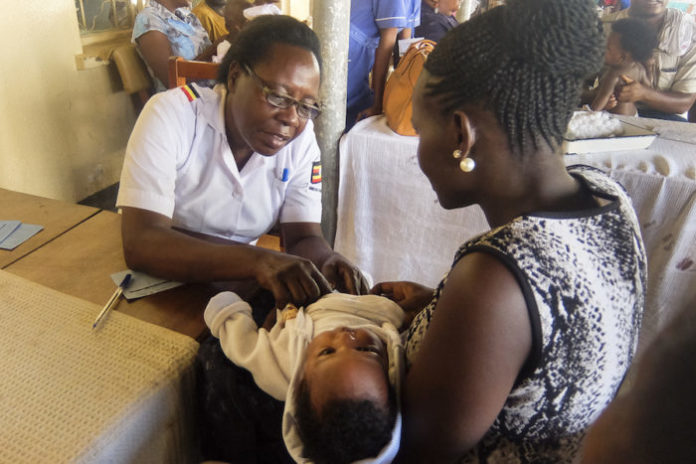
A nurse vaccinates a child

Government has intensified measures to contain the spread of measles, whose outbreak in Kampala and Wakiso districts was confirmed late July.

The Director General of Health Services Prof. Anthony Mbonye, said those most affected are children under one year, and that the health ministry is investigating the extent of the spread within Kampala and Wakiso, and conducting sensitization to educate the public on the early symptoms and dangers.

“All the 5 Divisions of Kampala as well as several suburbs in Wakiso are affected,” Dr. Mbonye, says in the press statement, adding that the Ministry’s surveillance and case finding reports had identified a total of 67 cases, of which seven were confirmed by laboratory tests.
The Ministry also intends to roll out immunization programs for children and manage suspected cases, Mbonye says, and also urged people to avoid getting into direct contact with children infected or suspected to be infected with the disease.
Measles is an airborne disease that mainly affects children aged between 6 to 10 months, but can also affect adults. The mode of transmission of the measles virus is through air and physical contact with an affected person.
Early symptoms of measles include high fever, whooping cough, red swelling eye lids, muscle and body aches, irritability, running nose, eagerly eyes and rashes.
These early symptoms often last 3 to 4 days and the most effective way of prevention is through the measles vaccine which has resulted in a 75 percent decrease in deaths from measles between 2000 and 2013.
The dense population in the highly urbanized districts of Kampala and Wakiso coupled with the fact that several people move in and outside the capital city could put the risk of transmission very high both within and in the countryside.
Measles attacks about 20 million people a year, mostly in Africa and Asia. Health experts say the disease accounts for an estimated 777,000 childhood deaths per year worldwide, with over half of these deaths occurring in Africa. Apart from death, children who are affected by measles may suffer from life-long disability including brain damage, blindness and deafness.
As part of a global effort to reduce measles deaths, the United Nations Children’s Fund in Uganda launched a massive immunization campaign in the year 2001 with the goal of reaching 1 million children under the age of five in hard-to-reach communities.
However, the World Health Organization and UN Children’s Fund (UNICEF) report that Uganda’s national measles immunization coverage declined from 71 percent in 2006 to 55 percent in 2010.
They said inadequate funding, a shortage of health staff and poor adherence to vaccination schedules are some of the reasons for declining immunization levels in Uganda, which experts say threatens efforts to reduce preventable deaths among children.

Stories Continues after ad
Rwandan protection troops arrive in Juba

David Shearer, the Special Representative of the Secretary General (SRSG) of the United Nations Mission in South Sudan (UNMISS

About 120 Rwandan peacekeepers have arrived in South Sudan, United Nations said, the first detachment of 4,000 extra troops approved by the UN last year to help protect the capital of Africa’s newest country.

The UN approved the deployment in August after days of heavy fighting in Juba between troops loyal to President Salva Kiir and those backing former Vice President Riek Machar. There are already 13,000 UN peacekeepers in South Sudan.

South Sudan four-year civil war was triggered by Kiir’s sacking of Machar as his deputy. The men come from rival ethnic groups and the fighting, which has uprooted a quarter of the country’s 12 million people, has been largely along tribal lines.

The UN Secretary General’s special representative in South Sudan, David Shearer, told a news conference that the recruits, who arrived this weekend, would join a battalion from Nepal and Bangladesh attached to the Regional Protection Force (RPF).

The arrival of this contingent … marks the beginning of the phased deployment of the RPF,” Shearer said. More troops were also expected to be deployed from Ethiopia, he said.

The RPF is mandated to enforce peace in Juba and protect the capital’s sole international airport and other important facilities as well as stopping anyone ‘preparing attacks, or engages in attacks’ against UN sites, aid workers or civilians and would confront South Sudanese government troops if needed.

“Having additional troops means we can carry out more tasks related to our mandate to protecting civilian and build a durable peace,” Shearer said.


Stories Continues after ad
Chinese protest to gov’t over oil refinery procurement process

IN SPOTLIGHT: Energy and Mineral Development Minister Irene Muloni

A consortium of Chinese contractors has written to the Minister of Energy and Mineral Development (MEMD) Irene Muloni, complaining about flaws in the bidders’ selection process for the construction of the multi-billion dollar oil refinery in Uganda.

View the protest letter below

Winner of Refinery Project to Sue Government (2)

The letter dated August 8, 2017 and signed by Lv Weidong, on behalf of Guangzhou DongSong Energy Group Co.Ltd., refers to press reports in Ugandan media indicating that the DongSong-CPPEC consortium comprising five Chinese companies had written to MEMD indicating that it had pulled out of the Uganda Refinery project.

Last week The Independent, a weekly magazine and The Daily Monitor newspaper carried reports about the withdrawal of the CPPEC consortium that includes Guangzhou DongSong Energy Group Co.Ltd; Guangdong Silk Road Fund; China Africa Fund for Industrial Cooperation; China Petroleum Engineering and Construction Company and East China Design Institute, allegedly due to misunderstandings in the Consortium.

‘We refer to press statements in “The Independent” newspaper of July 28 and “The Daily Monitor” newspaper of August 07, 2017, wherein it is claimed that (i) Guangzhou DongSong Energy Group Co.Ltd; (ii) Guangdong Silk Road Fund; (iii) China Africa Fund for Industrial Cooperation; (iv) China Petroleum Engineering and (v) Construction Company and East China Design Institute (the DongSong-CPPEC consortium) pulled out of the Uganda Refinery project,’ Weidong wrote to Minister Muloni.

He added: ‘The authors of the above press reports claim they are privy to information from the Ministry of Energy and Mineral Development (MEMD) that the DongSong-CPPEC Consortium’s withdrawal from the Uganda Refinery process was due to a letter by CPPEC withdrawing from the selection process due to disagreements in the Consortium’.

The ‘protest and clarification’ by Weidong letter is copied to among others the Prime Minister, the Attorney General, the State Minister for Energy and Mineral Development, the MEMD Permanent Secretary and the Managing Director of the National Oil Company.

Further, Weidong referred Eng. Muloni to a June 8, 2017 letter in which the consortium sought clarification from the ministry as to whether the Government of Uganda (GoU) had ‘a preferred and alternate bidder for the Refinery Project’, following reports the GoU had ‘selected’ a rival competitor to effect the project.

In the letter Weidong, who said the reports indicate the DongSong-CPPEC Consortium was the best appraised bidder with 88.3%, added that the consortium is disturbed by the press reports which indicate that the GoU had ‘selected’ a group, the Albertine Graben  Refinery Consortium to develop the refinery project.

Mr. Weidong further blamed government for engaging in ‘parallel negotiations’ with other consortia, and also makes reference to the due diligence process, saying his consortium satisfied all the criteria asked for by government, including the US$100 million ‘pre-FID funds’ obtained from the Industrial and Commercial Bank of China.

‘We are surprised and disturbed by the reports claiming that the DongSong CPPEC consortium withdrew from the selection process due to disagreements in the consortium. These claims are not true. None of our letters indicated the withdrawal of CPPEC or the Consortium from the selection process,’ Weidong wrote.

In conclusion, Weidong says should the press reports turn out to be true, the DongSong-CPPEC consortium would seek redress.

‘Please note that the Consortium reserves the to challenge the procurement process leading to the selection of any other Consortium, given that it is now clear that the DongSong-CPPEC consortium was appraised as the best bidder’ Weidong added.


Stories Continues after ad
MP accuses State House staff of hiding Museveni’s letters

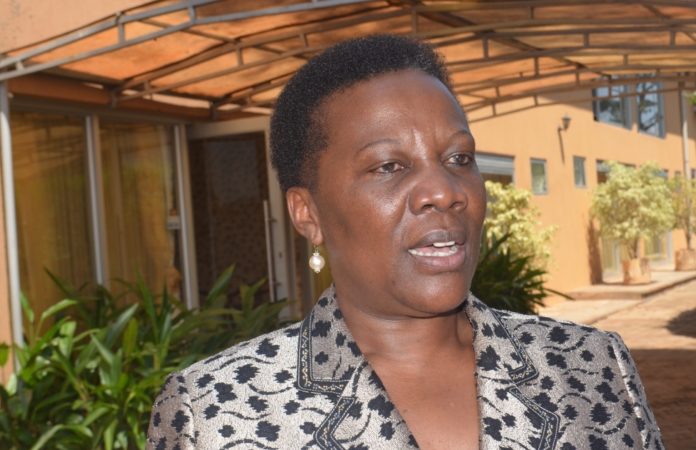
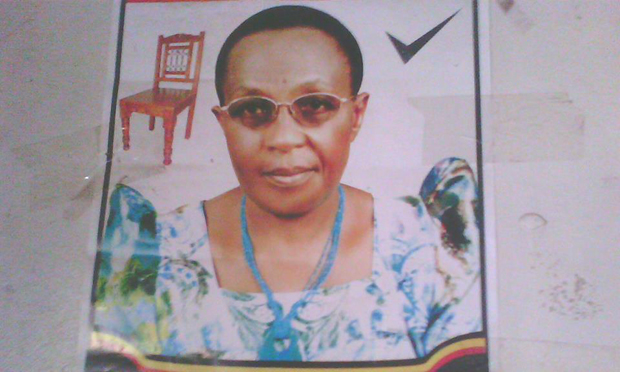
ACCUSED STATE HOUSE OFFICERS OF HIDING LETTERS; Bubulo MP Rose Mutonyi

Rose Mutonyi, the Bubulo West MP has accused staff at State House Entebbe of hiding letters, even official ones addressed to President Yoweri Museveni, for their selfish interests.

The legislator made the revelation this morning while interfacing with officials from Ministry of Foreign Affairs led by State Minister Okello Oryem.

Mutonyi, who also doubles as Chairperson of Parliament Foreign Affairs Committee, noted that the MPs have authored numerous letters requesting to meet the President, but that the Committee has received no response.

She disclosed that on Monday night President Museveni called her, only for him to express shock over the fact that the Committee has been writing to him, “but he hasn’t seen any letter on his desk.”

“You write letters to State House, they never reach him (President). Last night (Monday), His Excellency called me and he asked, ‘where have you been?’ I said your Excellency, I am an MP. He said yes, but you disappeared. I told him that I have been writing letters and once upon a time we were together and now, am I out. Later on he called me and told me that nobody has ever told him about the letters,” Mutonyi said.

She added: “The letters get stuck from somewhere. I think some people think I am going to bother him. I am an MP; I don’t need anything from him.”

According to Mutonyi, the MPs had tried seeking audience with the President to discuss his continued appointment of non-career diplomats as ambassadors, an action the legislators argue needs to be stopped as it affects Uganda’s image abroad.

But Oryem noted that the matter is beyond his office, having attempted to advise the President on the issue of appointing career diplomats since 2004, to no avail.

Meanwhile, the MPs also expressed concern over outstanding arrears on contributions to international organisations, with the debt hitting Shs49b as of April 2017.

Among the organisations that Uganda is indebted to through subscriptions is the African Union, UN Organisations, Common Wealth, IGAD and ICGLR.

The ministry acknowledged the debts, revealing that they had shot to Shs60b by June 2017, but that only Shs9.1b has been provided for in the 2017/2018 national budget to partially clear the debt.


Stories Continues after ad