Stanbic Bank
Stanbic Bank
25.4 C
Kampala
Stanbic Bank
Stanbic Bank
Home Blog Page 1809

Insurance lessons Ugandans can learn from the ‘Great Fire of London’

Joel Muhumuza

By Joel Muhumuza

On September 2, 1666, a fire broke out at Thomas Farriner’s Bakery in Pudding Lane in London. What could have been an isolated incident of fire destroying property, eventually led to four days of destruction across the narrow streets of London. The only reprieve came in the form of large scale demolitions of property to prevent the fire from spreading any further.

Subsequently, in the plans for the rebuilding of the city, the architect Sir Christopher Wren, included a site for an insurance office and this reflected the change in opinion of insurance no longer being a matter of convenience but one of urgency. More than 13,000 houses had been destroyed, and an unknown number of lives lost.

That kind of unpleasant imagery seems like the kind of anecdote delivered by an insurance peddler trying to scare you into buying a policy. I apologise for opening with it; I raise it only to make a few observations about our view of insurance.

If we consider the conditions that led to the 1666 fire, we can see that they were not very difficult to identify with the benefit of 20-20 hindsight.

According to reports, many wooden buildings as far as the eye could see had been rendered tinder dry. Narrow streets meant a fair wind could blow a spark from one flammable structure to another. However, people went about their business without a care.

This shows how the human mind is usually focused only on the task at hand. It’s not natural for us to respond with urgency to dangers that might never even happen.

Not only is it not a matter of urgency, it’s upsetting to think about losing property, falling sick or even worse, losing one’s life. We tend to hope for the best and find it difficult to plan for the worst.

The second lesson we can learn from this is risk management. One of the reasons the fire burnt for so long and grew as much as it did is hesitation on the part of the authorities. Prompt action is the surest way to mitigate effects of risk.

Translated to our own lives, perhaps you have already experienced a startling loss, a robbery, a health scare for which you had no insurance cover. Perhaps it’s been a few months and this is behind you but you worry that it might happen again. The best way to manage this is to act now. Speak to an insurer, consult as many as possible and treat it as a means of preventing any further fires from spreading.

The last lesson we learn from the great fire is that prevention is better than cure. Oft used as a cliché’ by doctors and teachers encouraging us to be prepared, this has lasted in our cultural lexicon for a reason.

While insurance companies make advances to raise the insurance penetration in the country from 0.85 per cent to 3 per cent by 2025, the duty to educate comes together with the responsibility to teach people how to minimise the probability of loss.

Many people see insurance as a costly endeavor covering something that might not happen and see that money in opportunity cost terms for instance a car or land  they could have bought. Further complicating this, a KPMG survey conducted in 2016 shows that fraud is a big concern for many insurers in East Africa and Uganda in particular. I think we need to look closely at fraudulent claims. Is it a matter of dubious individuals seeking to gain from the system or a misunderstanding of the basic concepts of insurable interest, utmost good faith, accidental loss, calculable loss and proximate cause?

Unlike credit and savings, insurance’ more easily understood and appreciated financial cousins, insurance doesn’t proffer an immediate benefit, it doesn’t put money in the hands of the user. It is supposed to be a fall back, the way to ensure that when disaster strikes, you’re not taken back to the drawing board. It’s therefore imperative that we talk about it as much as possible, and equip ourselves with the information we need so that all we’ve worked for doesn’t go up in flames and we are left with nothing to start with.

Mr Joel Muhumuza is a Partner Support Specialist, Financial Sector Deepening Uganda. 

Stories Continues after ad

Gov’t to register local gold miners in Mubende district

TO REGISTER MINERS: Minerals Development PS Dr Stephen Isabalija

In a bid to regulate gold mining activities in Kitumbi and Bukuya sub counties in Mubende district, the government is to register all local artisans operating there, the Permanent Secretary in the Ministry of Energy and Mineral Development, Dr Stephen Isabalija, has said.

According to Dr Isabalija, the three-month exercise that will help his ministry to re-organise the mining activities in Mubende and the country at large, comes in the wake of an influx of foreigners sneaking in to extract iron ore and gold.

The PS said that to effectively manage the exercise the ministry will work in partnership with security agencies such as the Uganda Police, the Uganda Peoples Defence Forces as well as the Directorate of Citizenship and Immigration Control under the the Ministry of Internal Affairs.

“Government has established the presence of an influx of people amongst which are foreigners from neighbouring countries and beyond that are involved in illegal mining in Kitumbi and Bukuya sub counties in Mubende district,” Dr Isabalija said in a recent statement.

According to Dr Isabalija, the unregulated activities of the miners negatively affecting the environment, safety and health of the people in the mining areas.

“In addition the presence of foreigners in these areas can result into a security threat to the people of the area and the country at large,” he says.


Stories Continues after ad

ICPAU warns against privatization of the pension industry

Members of the ICPAU at their 25th anniversary celebrations

The Institute of Certified Public Accountants of Uganda (ICPAU), the umbrella organization that brings together professional accountants in Uganda has warned against opening up the pension industry.

Speaking at their 25th anniversary, ICPAU President, Protais Begumisa warned that allowing more players into the pension industry might not be beneficial to the country.

“We don’t entirely support those who think that bringing many more players is going to be beneficial to us. For example, the way it’s stated; if a player comes and doesn’t do well, who suffers; is it the investor or us the savers?” he asked.

“For example you have a certain scheme and its asset base was Shs100billion and by the end of the financial year its tax base has gone down to Shs90billion, so who suffers this loss? … Of course the private player,” he added.

According to Mr. Begumisa, it is better to make amendments to the NSSF Act than allow more players join the industry.

“We think instead of opening up the space and having people who say they can do these things better..we’ve seen it happen in other countries… We had better change the NSSF Act then we can all benefit from this liberalisation.

“The NSSF act needs to be amended so that when we eventually retire, we are sure that there will be adequate cash flow that will cater for all claims that will come to the institution.”

On ICPAU’s Silver Jubilee celebrations, Begumisa unveiled new offices for the institute as well as taking journalists through the 25 year journey of the institute.

He revealed that when they had just began in 1992, the institute registered only ten members annually in its first years. However, the trend changed with time and currently they register hundreds of new members every year.

“We’ve grown as a member based institution from 79 to over 2,800 CPA members today,” Mr Begumisa said.


Stories Continues after ad

Bebe Cool finally has something to smile about

NEAR COMPLETION: Bebe Cool's house

Forget the celebrations that followed musician Bobi Wine’s maverick election to Parliament, finally Gagamel fans of Moses Ssali aka Bebe Cool also have a reason to celebrate!

After close to 20 years of construction, Bebe Cool’s house is near completion, and visiting over the place over the weekend, snoops found the house has already been painted and it’s only inserting doors and designing of the compound left.

Sources say that having been in charge of musicians that performed at President Yoweri Museveni’s campaign rallies last year, Bebe Cool pocketed close to Shs500million. If he did, then he put it to good use.

Meanwhile, in addition to the developments at his house, Bebe Cool has also managed to secure a collabo with US popstar Jason Derulo. He has also collaborated with Kenya’s multi-award winning music group, Sauti Sol. He invested heavily in both projects.

Congs Bebe Cool!


Stories Continues after ad
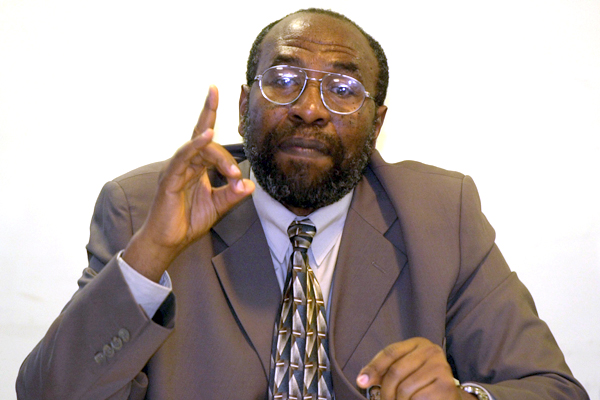
Former SPLA commander under house arrest, says wife

EXILED: Former SPLA Commander Gen. Paul Malong

The wife of the former head of South Sudan’s army says her husband has been under house arrest for months on the direct orders of President Salva Kiir.

In an exclusive interview, Lucy Ayak Malong, the wife of General Paul Malong Awan, said that her husband has not been allowed to leave Juba since May, when the president fired him.

Malong’s health has deteriorated steadily since she last saw him in the capital two months ago, according to Ayak, who is living in Nairobi, Kenya. She refused to disclose her husband’s medical history, but said she is deeply concerned about his health under government-ordered confinement.

Ayak wrote an open letter last week to President Kiir requesting he release her husband.

“I cannot lie about the health of my husband because I am the one who knows him very well. He is not feeling well; that is why I have written that letter to the president,” Ayak said.

On May 9, Malong left Juba under cover of darkness with bodyguards and a fleet of vehicles. He was headed to his home village in Aweil state via the town of Yirol in Lakes state after hearing he was fired. Days later, Malong returned to Juba after community leaders from Aweil convinced him that he would be safe if he returned to the capital.

The government of South Sudan has denied reports that Malong was placed under house arrest.

Presidential spokesman Ateny Wek Ateny told a local radio station in Juba last week that Malong’s wife is simply seeking international attention. Ayak said Ateny is not telling the truth.

“Ateny just wants to cover up what they have done. He [doesn’t] want the world to know that General Malong has been under house arrest for almost three months and they denied him access to medical checkups,” Ayak said.

Ayak said government officials have denied her husband permission to see his family in Kenya, adding, “He has to be with his family and kids; his kids need him.”

Ayak said their home in Juba is surrounded by soldiers. Ayak said she questions why the government deployed soldiers if her husband is not being confined.

She said community leaders from Aweil state where Malong once served as governor have appealed to Kiir to release him on medical grounds, but said the president has yet to respond.

“We have tried all our best and we are leaving it to the hands of the president to decide because all attempts have failed,” Ayak said.

President Kiir appointed Malong as chief of general staff of the military in April 2014, one year after violence erupted in the capital following a disagreement between Kiir and then-deputy, Riek Machar. Malong then become the real power behind the scenes in Juba, according to multiple sources close to Kiir.

Malong was fired after several generals resigned, citing a lack of leadership in the army. They accused Malong of forming tribal militias fighting alongside the government against rebels allied with Machar.

The power struggle that started in Juba led to fighting in the capital and other parts of the country. The fighting continues despite efforts by the regional bloc IGAD to broker a truce.


Stories Continues after ad

Former UBC boss Kihika released on bail

SENT ON REMAND AGAIN! Paul Kihika, the former UBC Managing Director

The former Uganda Broadcasting Corporation (UBC) Managing Director Paul Kihika has today been granted a non-cash bail of shs 3.5 million by Ms. Pamela Lamunu, the Grade One Magistrate of the Anti-corruption Court.

On July 3 Mr. Kihika was remanded to Luzira prison for lack of substantial sureties, after he was accused of among other crimes, stealing Shs33 million between May and August 2014, meant to facilitate him for an official trip to China. But he did not travel to China, the prosecution led by Mr. Peter Mugisha avers.

And granting him bail today, Mr. Kihika, who is also facing embezzlement and abuse of office charges, was ordered to deposit his passport with the anti-corruption court and told to appear before the same court on September 4, 2017.

Earlier, Mr. Kihika had been granted police bond but re-was arrested after failure to report to police as instructed.

Meanwhile, there are ongoing investigations by police about negotiations of a sponsorship deal between UBC TV and Airtel, in which Mr. Kihika is accused of complicity in the Shs.3.6 billion deal carried out between 2013 and 2014, to air the 2014 World Cup finals that took place in Brazil.

Over the past years the UBC has been bedeviled by corruption scandals, one of them being the 2014 conviction of Fred Kavuma, a former Programmes Producer who was sentenced to three years imprisonment in Luzira Prison for embezzling over Shs30 million in 2005.


.

Stories Continues after ad
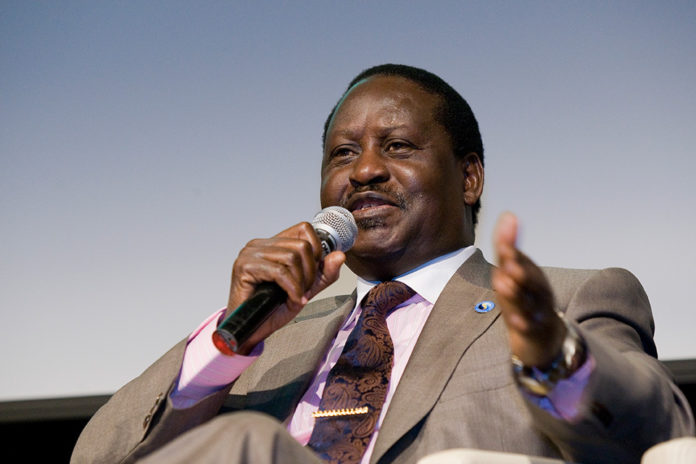
KCB to pay shareholders Shs104bn

KCB Board Chairman N'geny Biwott with the bank MD Joshua Oigara

The Kenya Commercial Bank (KCB) has announced it will pay its investors an interim dividend of three billion Kenya shillings (UgShs104.3b).

This follows the half year financial results which saw the lender post Shs356.8billion net profit for the first half ending June 2017. This, the bank, says, was buoyed by a strong performance of its core retail and corporate business, non- interest income and lower interest expense.

“Following these results, the Board of Directors considered and approved payment of an interim dividend of Shs34.78 per share to be paid in the next 90 days,” KCB said in a statement, adding that every shareholder will get Shs34.78 for each share they hold with the bank.

The KCB said the Retail and Corporate loan book growth momentum that started late last year carried into the first half of 2017, adding that coupled with effective management of interest expense, had cushioned the expected impact of interest rate capping in Kenya.

KCB Group CEO and MD Joshua Oigara said the business however remained resilient, showing strong momentum for growth into the second half of the year, adding that the management has put up strategies to boost earnings largely through digital channels.

“The business fundamentals remain strong and we are optimistic of a stronger performance in the remaining part of the year. We are continually pursuing a sustainable business model and excellence in customer experience to enable us play a more catalytic role in East Africa’s economic journey,” said Oigara.

“The banking sector continues to undergo numerous challenges and as a Bank, our continuous innovation and customer centric orientation ensures that we remain focused on acting as an enabler for progress to our customers. That is what drives us to excellence,” he added.

KCB has over the past three years pursued a strategy which departs from the traditional bricks and mortar banking channels to non-branch channels, particularly digital platforms, including internet, agency, mobile banking, and cards.

“This strategy focuses on growing digital banking so as to enhance the experience of our esteemed customers whenever they interact with us and at the same time spread our network in KCB,” said Oigara.

Stories Continues after ad
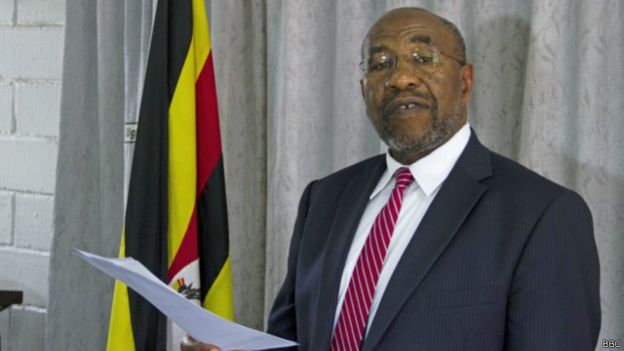
BOU denies ‘hiding’ Shs10.8 billion in foreign bank

DENIED HIDING MONEY IN FOREIGN BANK: BoU Director of Communications Christine Alupo

As financial scandals seemingly dog the Bank of Uganda (BOU), the institution has come out to deny local media reports that it ‘hid’ about Shs10.8 billion in GeDeutsche Bank in Germany.
The BOU Communications Director, Christine Alupo says that bank did not ‘hide’ cash in a foreign bank account as alleged in the media.

“These stories misrepresent some of the information that was provided in testimony by the Bank of Uganda before the Parliamentary Committee on Commissions, Statutory Authorities and State Enterprises (COSASE) on August 2, 2017,” says Alupo.
Last week, officials of the Central Bank appeared before COSASE to respond to issues that had been raised by the Auditor General arising from routine end of financial year audits covering three financial years starting from 2013/14.

One of the issues that had been raised by the MPs pertained to a dormant trust account held in Deutsche Bank that had not been reflected in the books of the Bank of Uganda.

But according to Alupo, the Central Bank opens and executes authorized transactions on government accounts both domestically and internationally.

The account in the Deutche Bank Germany bank, Alupo says, was opened on December 17, 2003 on the instructions of Ministry of Finance, Planning and Economic Development, with the purpose to receive proceeds from the sale of shares in DFCU Bank by Deutsche Entwicklungs Gesellaschaft (DEG), a German company, which was a shareholder in DFCU.

“During the process of preparing the annual statements for the financial year 2013/14, Bank of Uganda classified the DEG account as dormant, and accordingly informed the Accountant General in September 2013. From the time the matter of dormancy was raised, it was handled between the BoU and MoFPED in line with procedure related to dormant accounts,” Alupo says.

Alupo further says the authorization to close the account was given by the Accountant General, and that in February 2015, funds worth 10.799 billion (Euro 3.354 million) were transferred to the Consolidated Fund.
“It is, therefore, erroneous and misleading to claim that the Bank of Uganda ‘hid’ the funds in a ‘secret’ foreign account,” she says.

Stories Continues after ad
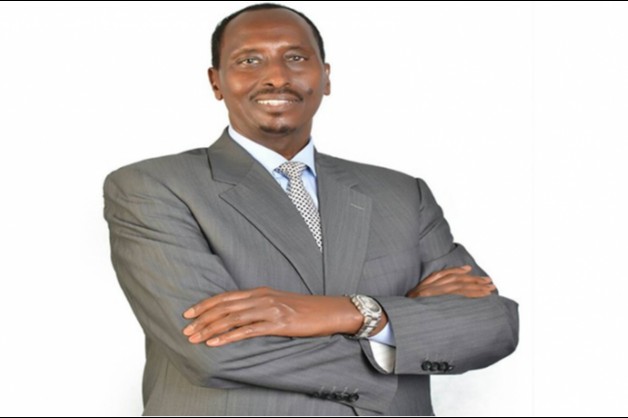
Crane Bank saga: Court summons BoU

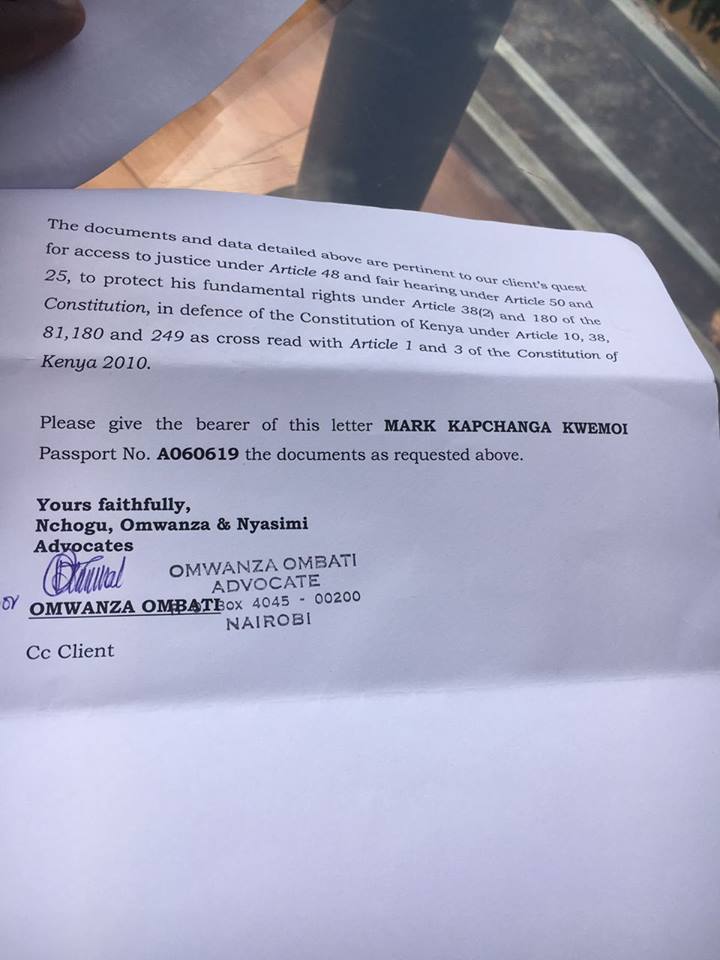
The letter businessman Sudhir Ruparelia wrote to lawyers Timothy Masembe Kanyerezi and David mpanga, reminding the duo of the Settlement and Release Agreement.

The High Court has given the Bank of Uganda (BoU) 15 days to file a defence in a case brought against it by businessman Sudhir Ruperalia, a shareholder in the now-defunct Crane Bank, who was sued for the recovery of US$80 million, allegedly taken from Crane Bank.

Last week Mr. Ruparelia filed a case, in which he accused the central bank of reneging on an agreement agreed upon in a tripartite meeting involving the lawyers representing the Crane Bank and BoU, Messrs David Mpanga of AF Mpanga and Company Advocates; Timothy Masembe Kanyerezi of MMAKS Advocates, respectively, and the businessman himself.

In the agreement dubbed the Settlement and Release Agreement agreed upon on March 20 this year, Mr. Ruparelia and the opposite side agreed to a raft of settlement proposals, bound by confidentiality clauses.

In one of the proposals the two sides agreed to halt all proceedings, both civil and criminal, against Mr. Ruparelia, if he fulfilled all the conditions as agreed in the March 20 meeting. ‘This confidential Settlement and Release Agreement is in full, complete and each of the BoU and CBL hereby fully and fiunally releases and forever discharges and shall refrain from instituting, directing, procuring, instigating or maintain any actions, sanctions whether administrative, civil or criminal in nature,’ the agreement states in part.

In respect to the March 20 agreement, on July 7, Mr. Ruparelia wrote to lawyers Masembe Kanyerezi and David Mpanga, informing them of his decision to put three multi-billion properties as security/guarantee as he seeks to offset any would-be liabilities accruing from the case lodged in court by the BoU, in six months.

In his letter, Mr. Ruparelia said his securities/guarantees included all land titles for the Speke Resort Munyonyo Limited; all his interests and properties in the Commonwealth Resort Munyonyo and, all his interests in Baumann House on Parliament Avenue. ‘In the spirit of the Settlement and Release Agreement, this is to confirm that I am committed to fulfilling my obligations in the interest of an amicable resolution of all claims surrounding my shareholding, control and management and capitalization of the Crane Bank (‘CBL’) from incorporation to the date of takeover by the Bank of Uganda, including other current and former shareholders, Directors and employees of the CBL, associates and affiliates’.

Mr. Ruparelia added: ‘Accordingly, I hereby confirm as a guarantee and security for the performance of my obligations under the ‘Settlement and Release Agreement’ I am ready to immediately hand over the certificates of title for the following properties’. The BoU-Crane Bank-Sudhir issue has caused divided opinion among those involved, with reports indicating that top officials at the BoU are reportedly divided over the procedures undertaken by the Central Bank that led to the court case. According to sources, some top managers argue that the BoU, through its Bank Supervision Directorate headed by Ms. Justine Bagyenda, failed to execute its supervision mandate.

The protagonists also argued that the BoU had not exhausted all avenues that could lead to a negotiated settlement of the stand-off.

Stories Continues after ad
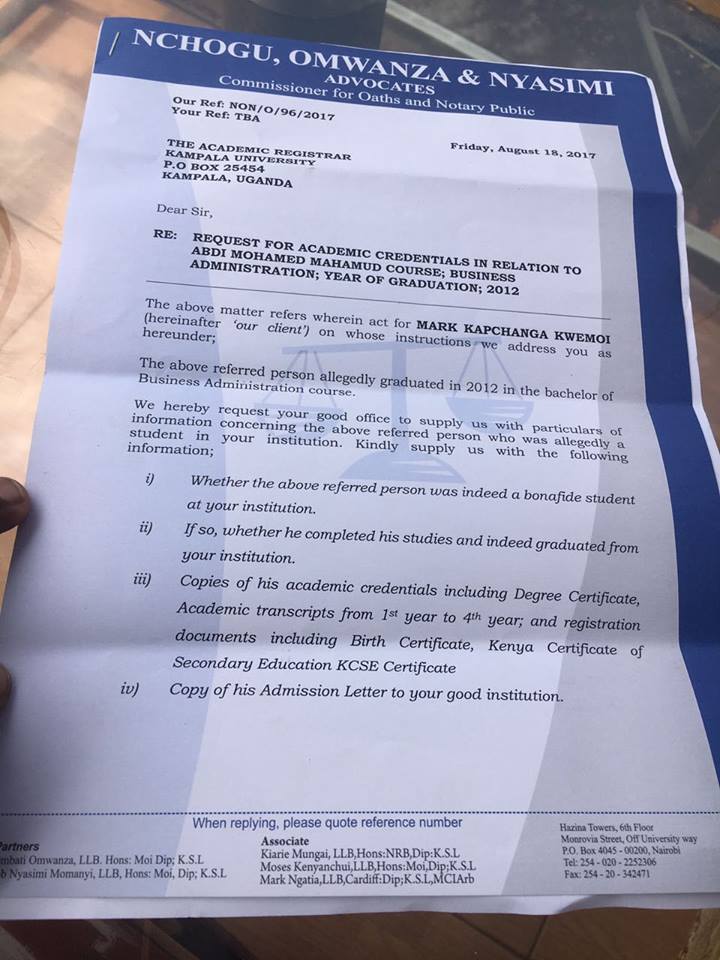
SA Speaker okays secret vote of no confidence against Zuma

NOT IMMUNE FROM PROSECUTION: Troubled SA President Jacob Zuma.

A parliamentary vote of no confidence in South African President Jacob Zuma will be held by secret ballot, the national assembly Speaker said Monday.

Some say the move, announced by Baleka Mbete, could encourage some members of the ruling African National Congress (ANC) party to oust the president who has been in power since 2009.

The vote is seen as a test of the ANC’s unity as senior party figures become increasingly critical of their leader, who has been implicated in multiple corruption scandals.

Meanwhile the country’s economy has fallen into recession and unemployment has risen to record levels.

The 75-year-old is due to step down as head of the ANC in December and as president before the 2019 general election – lessening pressure for his party to seek imminent change.

Parliamentary Speaker Baleka Mbete today announced the news which opposition parties had wanted.The ruling has been subject to a long legal battle, and the vote on Tuesday evening could be delayed by further court appeals.Protests by pro- and anti-Zuma groups are planned in Cape Town, home of the South African parliament, later on Monday and on Tuesday.

The main opposition Democratic Alliance party said the vote was ‘an opportunity for us all to stand up to corruption and get rid of President Zuma and his cabinet.’

A group of ANC veterans from the anti-apartheid struggle also called for MPs to vote against Zuma, who was himself imprisoned with Nelson Mandela on Robben Island under white-minority rule.

South Africa is ‘witness to larceny on a grand scale, leaving the country not only impoverished, but also increasingly in the hands of criminalised and compromised governance,’ the veterans said in a statement.

‘The motion of no-confidence in President Jacob Zuma is an inevitable outcome of the myriad scandals in which he has regrettably embroiled himself and his office,’ they added.

The ANC has fought back, saying it expects its lawmakers to back the president.

Party chief whip Jackson Mthembu said ousting Zuma would ‘have disastrous consequences that can only have a negative impact on the people of South Africa’.

But he acknowledged recent criticism of the ANC, and the impact of a cabinet reshuffle in March when respected finance minister Pravin Gordhan was replaced with a Zuma loyalist.

Gordhan’s sacking led to a string of downgrades to South Africa’s credit rating as well as causing the rand currency to tumble.

Public support for the ANC, which swept to power under Mandela in the first non-racial elections in 1994, slipped to 55 percent in last year’s local polls – its worst-ever election result.

But Zuma has easily survived several previous parliamentary votes attempting to oust him, due to the ANC holding 249 seats in the 400-seat parliament.

Nomura analyst Peter Attard Montalto said in a note to investors last week that he did not expect the vote to succeed, even if there was a secret ballot.

‘There is a higher probability of the vote being passed under a secret ballot (but) ultimately we think most anti-Zuma MPs worry a secret ballot will not be secret because of the involvement of the security services and numbered ballot papers,’ he wrote.


Stories Continues after ad