Stanbic Bank
Stanbic Bank
17.4 C
Kampala
Stanbic Bank
Stanbic Bank
Home Blog Page 1830

Constraints the Marriage and Divorce Bill brings

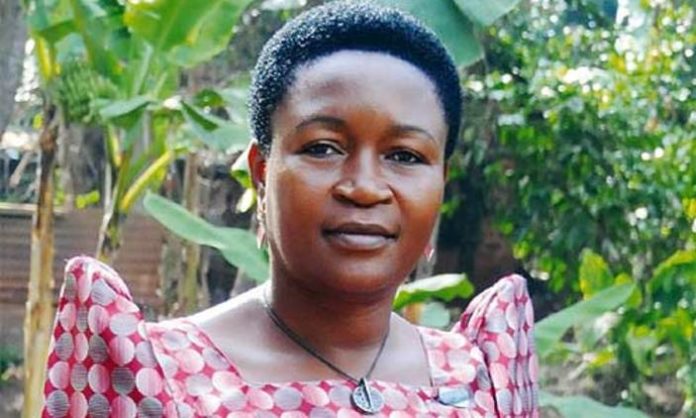
STRONG PROPONENT: Dokolo District Woman Member Parliament Cecilia Ogwal

Parliament has re-introduced the Marriage and Divorce Bill for debate and once passed into law, it will govern the institution of marriage, going deeper to regulate the sex activity in the bedrooms of Uganda’s households.

The Bill recognizes the civil, Christian, Hindu, Bahai and customary marriages, but is silent on marriage under the Islam faith.

Dokolo District Woman Member Parliament Cecilia Ogwal says the Bill addresses most of the concerns that were raised to oppose the earlier attempts.

“We have held workshops with different stakeholders, seeking for inputs. “We want this bill to be passed to save women,” she says. 

What the Bill says on… 

Marriages outside Uganda

The Bill recognizes marriages conducted outside of Uganda except where the marriage is between people of the same sex.

Marriage gifts

The Bill outlaws demands for return of marriage gifts given as bride price/bride wealth, in case of a breakdown of the marriage. It says marriage gifts are not an essential requirement for parties to marry, but under subsection 14 (3) punishes those who demand back the gifts with a fine of Shs480,000 or imprisonment not exceeding one year or both.

Same sex marriages

Despite calls from human rights activists and western donors, the Bill criminalizes same sex marriages and should Parliament enact the law, Uganda is likely to see lesbians and homosexuals migrate to favorable countries where they can officially marry.

Inheriting widows

The Bill forbids men from inheriting widows. “A man shall not marry a widow through the custom or practice of widow inheritance,” Section 13 (2) reads. Those who already inherited widows will have to drop them or else they pay a fine not exceeding Shs480, 000 or one year imprisonment or both.

But government under the same Section 13 (3) opens a window for men to marry widows under recognized types of marriage, probably with the knowledge that young widows despite the loss of their husbands still need to exercise their conjugal rights, more so, for procreation purposes.

Cohabitation

The Bill provides for the rights of cohabitees in sharing property after the termination of cohabitation, much as it is not considered a form of marriage recognized in Uganda. But some MPs and members of the public say cohabitation is an immoral practice which is contrary to customary law and a challenge to the marriage institution. Others think cohabitation should be recognized as a form of marriage.

Conjugal rights

Section 114(1) of the Bill grants spouses in marriage conjugal rights but under (2) it outlines circumstances under which a spouse may deny a partner sexual intercourse. These include poor health, surgery, child birth and the controversial one, when a spouse has reasonable fear that engaging in sexual intercourse is likely to cause physical or psychological injury or harm.

Forced sex

Subsection (3) forbids a spouse to have sex with partners without their consent. Should this happen the offender faces both criminal and civil charges, which on conviction the defendant is fined one hundred and twenty currency notes or gets a jail term of not more than five years or both (criminal liability).

Under Subsection 3(b), if the case turns out to be of civil nature, the offender faces restrictions orders, separation from the spouse and suspension of conjugal rights and but also he/she can be asked to compensate a spouse for the wrong done on her/him.

Subsection (3) is of particular concern to the men. They argue that in marriage the issue of forced sex doesn’t exist and they seem to have the support of religious leaders, who preside over religious marriages.

Evidence of breakdown of marriage

The Bill allows court to administer the irretrievable breakdown of marriage if the respondent is caught in adultery, defilement and sexual perversion which includes bestiality, sodomy, homosexuality and pornography. A change of religion by the respondent is also good ground for court to dissolve the marriage, if the petitioner thinks she/he can’t tolerate it.
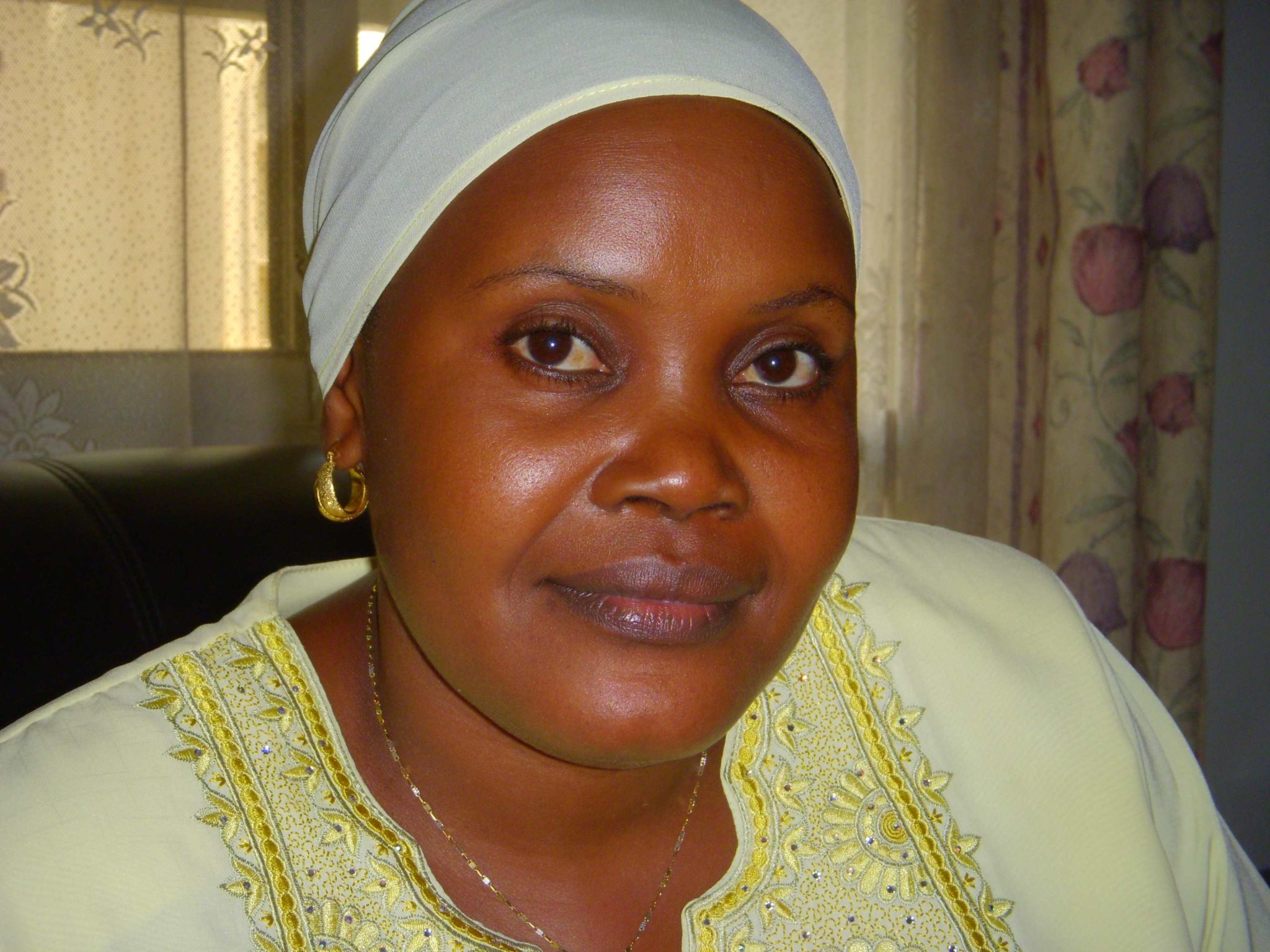
 

first MOVED ORIGINAL BILL: Former State Minister for Gender Lukia Isanga Nakadama

Jactitation of marriage

The Bill punishes any person who falsely claims that he/she is married to a particular person. The lie, on conviction, comes with a fine of Shs480, 000 or a jail sentence not exceeding one year or both. The Bill also allows court to make an order for an injunction against the respondent restraining him/her from making further claims but can also, under Section 165(4), award any other remedy in consideration of the consequences of the offence.

Marriage with person previously married

Section 168 of the Bill slaps a fine of Shs2.4 million on a person who knowingly marries a married person. He/she, on top of paying the fine, can receive a jail sentence not exceeding five years, if court deems so.

Making false declarations for marriage

The Bill doesn’t spare those who falsify documents and statements to benefit from the advantages/services of married people. On conviction the culprit pays Shs2.4 million as fine or imprisonment not exceeding five years or can serve both penalties.

False pretence of impediment to marriage

The Bill also warns people not to make false claims so as to prevent a marriage, stating that on conviction, the offender pays Shs2.4 million or a jail sentence not exceeding five years, or court can make the culprit to serve both penalties.

Personation in marriage

The Bill under Section 173 forbids people to marry under false names. Should this offence occur, the culprit on conviction pays a fine of Shs2.4 million shillings or serves a prison sentence not exceeding five year or both.

Fictitious marriage

To protect individuals, the Bill outlaws fictitious marriages in Uganda. “Any person who undergoes a ceremony of marriage…knowing that the marriage is void on any ground…commits an offence and is liable on conviction to a fine not exceeding one hundred and twenty currency points or imprisonment not exceeding five years or both.”

The Bill introduces new regulations on how marital assets would be distributed after a couple divorces.

Government says the Bill if passed into law will help uphold societal and religious values that form the basis of the institution of marriage.

 

Stories Continues after ad

One million school-going children registered in national identification exercise

PUPILS REGISTERED: Rose Seninde, State Minister for Primary Education.

Over one million pupils and students have been registered by the National Identification and Registration Authority (NIRA), with 13, 479 schools receiving registration forms.

The exercise which targets over 10 million pupils and students in government and private schools kicked off on May 29, and all school going children above the age of five are to be availed with National Identity Cards upon the conclusion of registration process.

‘’In the regions where we started first, registration is almost done so we will get all manpower to regions that are yet to start’’ the State Minister for primary Education Rosemary Seninde said in a media briefing at Uganda media Centre.

She said that NIRA teams will combine all schools including those in hard to reach places through outreaches, and emphasized that ‘the registration is free of charge’.

“It’s sufficient for the registration process if only one parent has provided a copy of his or her national ID,” Minister Seninde said, adding that the exercise will also help eradicate ghost learners in schools and ensure effective implementation of government projects.

The Minister also advised all parents to go for registration so as to ease the registration exercise of their children.

Stories Continues after ad

Sebbaana Kizito’s legacy is DP’s gift to Uganda-Nobert Mao

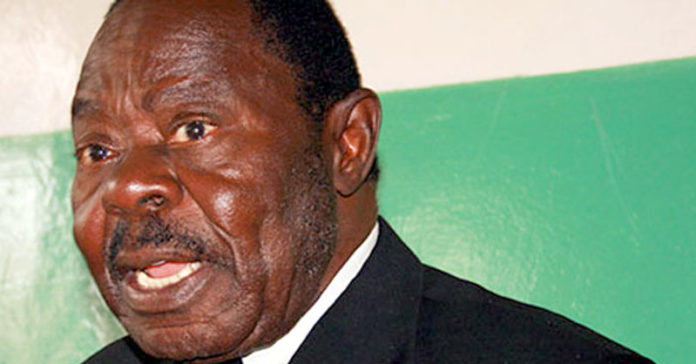
DEAD: Former DP President John Ssebaana Kizito

Veteran Democratic Party (DP) politician, John Ssebaana Kizito breathed his last today aged 83, sending shock waves to those who cherished his life and works.

Commenting on his death, the DP President Nobert Mao said Ssebaana’s legacy was ‘DP’s gift to Uganda’ and that he was a pillar of democracy in the country and the DP in particular.

“In DP, he managed a difficult but peaceful transition of power from his generation to the young generation,” Mao, who said he was saddened by the death of his former mentor, said.

Mao, a trained Economist, said Ssebaana “believed strongly in truth and justice.” He added that Sebaana was a ‘solid’ leader of Kampala who wanted inclusive development of the city where the low class would also participate.

“Mzee Sebaana’s death is a big loss to the country, said Mohamed Baswale Kesaala former DP Chairman, when contacted by EagleOnline to commend briefly about the late’s life as a family man, politician and businessman.

“We have lost an entrepreneur and humble politician who mentored the young people especially the Young Democrats. “He was our patron and always reached out to us despite his advanced age,” says Kezaala.

Kezaala praised the late Ssebaana for work smartly over the years to acquire his wealth. ‘Today young people want to acquire wealth in the shortest time possible. Mzee Sebaana accumulated his wealth over many years,” Kezaala said, urging the young generation to emulate the late.

Kezaala commended the late Ssebaana who he said stuck with the party during the turbulent times of the 1970s and 1980s. “As others crossed, Mzee Sebaana remained in parliament representing the DP,” Kezaala said of the late.

Kezaala said Sebaana resisted calls from the DP old guard not hand power to the young generation. “He handed the leadership of DP to Nobert Mao against the wishes of those who wanted the old generation,” Kezaala said, adding that Ssebaana was a true nationalist who contributed to Uganda’s development.

Kezaala also talked of his former boss and mentor, saying he loved people and always helped. “On the personal note he has been my friend dating back to my wedding 17 years ago. Until his passing on, he always referred to my wife as ‘Mugole’ (bride).”

He said the late Sebaana was hard working. “He was a down to earth man. Can you imagine that he would move in a wheel chair to go and work?” “I encourage Ugandans to emulate his work ethics,” Kezaala said.

Kezaala said Ssebaana, being a Muganda, loved Buganda and took its culture in high regard. “He was a darling of Mengo and attended meetings there.”

Kezaala said that Ugandans should emulate the late Ssebaana by working hard and sacrificing for the country. Above all, Kezaala says: “Mentoring the young ones is an obligation of the elders. If he had not mentored us, the country wouldn’t be benefiting from our services,” Kezaala said.

The Deputy Executive Director of the Uganda Media Centre Colonel Shaban Bantariza, when contacted, said Sebaana was a senior political leader in the country but said he was not qualified enough on the side of government to talk about the late, whose political career spans from the 1960s.

Stories Continues after ad

Museveni in Addis for AU Summit

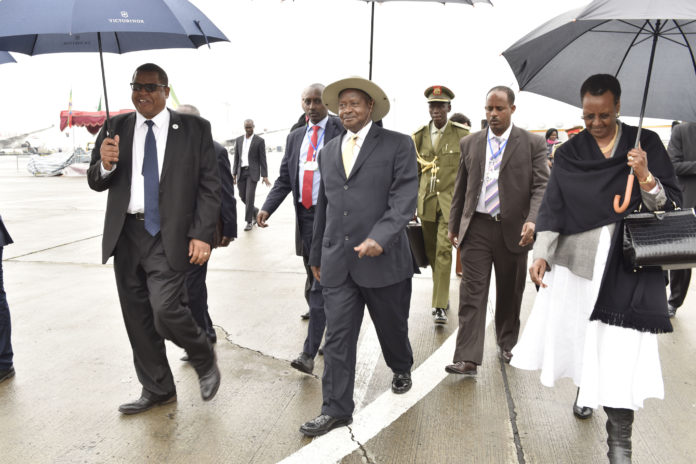
President Museveni on arrival at the Bole International Airport in Addis Ababa

President Yoweri Museveni has today arrived in the Ethiopian Capital Addis Ababa for the 29th Ordinary Session of the assembly of Heads of State and Government of the African Union.

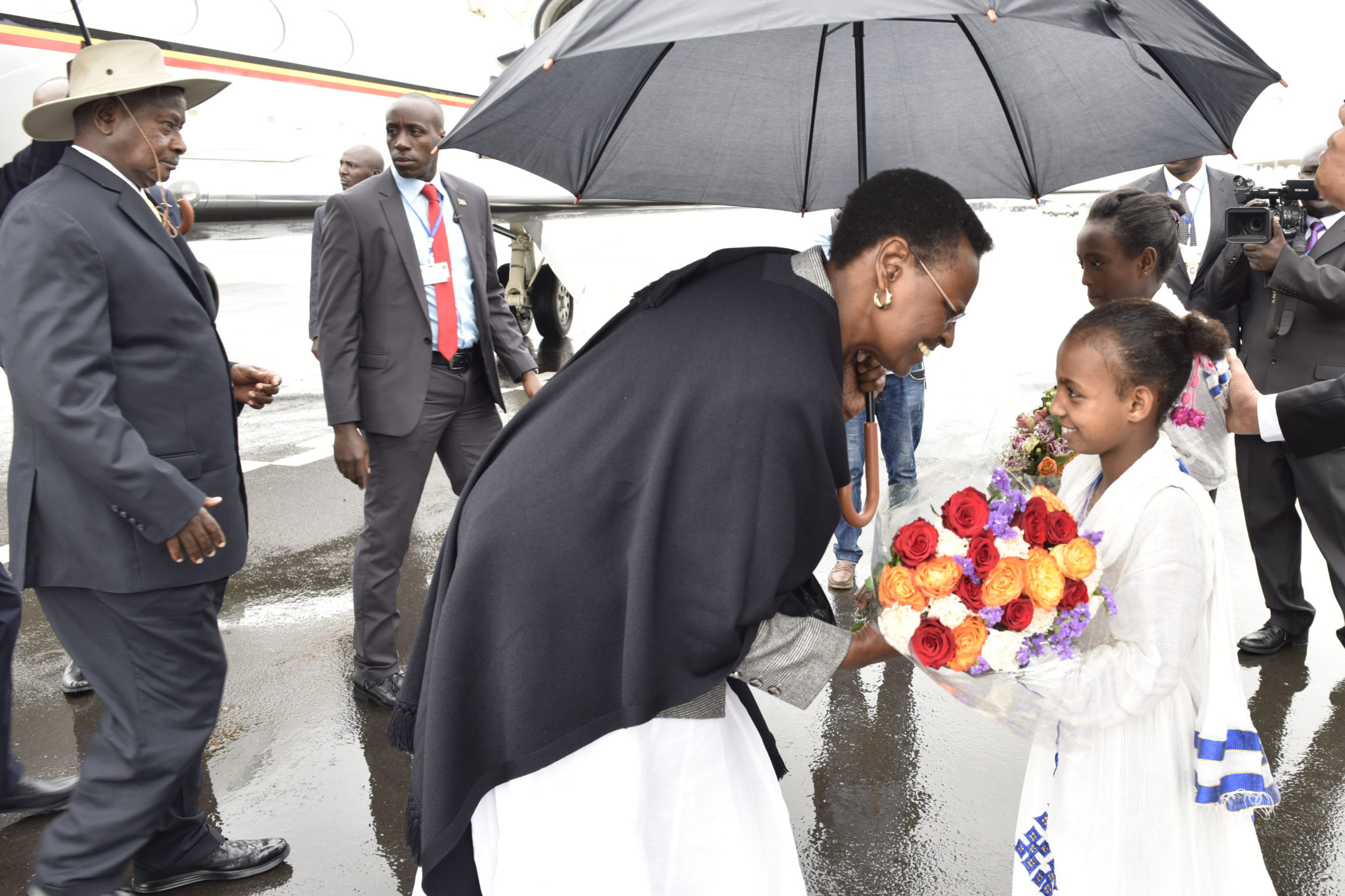
President Museveni and his wife Janet on arrival at Bole Airport in Addis Ababa

The President, who is accompanied by the First Lady and Minister of Education and Sports Janet Kataha Museveni, were received at Bole International airport by Ethiopia’s Chief of Protocol Esayas Gotta, the Permanent Secretary of Uganda’s Ministry of Foreign Affairs Patrick Mugoya, Uganda’s Charge d’Affairs in Ethiopia and the African Union, Ambassador Idule Amoko and other senior government and embassy officials.

The two-day assembly chaired by The President of Guinea H.E Alpha Conde, is being held under the theme, ‘Harnessing the Demographic Dividend through Investment in Youth’.

Later President Museveni is expected to address a meeting on Aids Watch Africa (AWA) on the Presidential Leadership: ‘Fast Track to End HIV/AIDS, TB and Malaria’.

The President is expected to speak alongside his counterparts including, the President of Guinea, Prof. Alpha Conde; the Prime Minister of Ethiopia, Hailemariam Desalagn; the President of South Africa, Jacob Zuma and the King of Swaziland Mswati III.

Among other things, the assembly is expected to discuss reports of the Peace and Security Council on the state of peace in Africa and the implementation of the master roadmap of practical steps to silence guns in Africa by the year 2020.

Rwandan President Paul Kagame is also expected to table a report on institutional reforms of the Africa Union.

The assembly is expected to appoint two commissioners of the Africa Union Commission; the Commissioner for Human Resources, Science and Technology to which Uganda is fronting its own, Dr. John Kabayo and that of Economic Affairs. The assembly is also expected to appoint four members of the advisory board on Corruption.

The AU is a continental organization consisting of all the 55 countries on the African continent, launched in July 2002 in Durban South Africa, replacing the Organization of African Union (OAU).


Stories Continues after ad

Ensemble to hold concert in commemoration of US Independence Day

TO PERFORM: The wings of Dixie ensemble

To help celebrate the 241st anniversary of the independence of the United States, the US Mission to Uganda will be hosting the American musical ensemble Wings of Dixie on July 5 and 6 for special appearances in Kampala.

In addition to performing at the Mission’s Independence Day party on July 5, the band will play a free concert to students and parents at Kitante Primary School on Thursday, July 6, from 2:00pm to 4:00pm.

Wings of Dixie is an eight-member ensemble that epitomizes ‘Americana’ at every performance. The group’s music covers the full spectrum of American music, ranging from the early days of traditional jazz all the way to classic popular and rock and roll hits.

Consisting of members from the United States Air Forces in Europe, Wings of Dixie has entertained audiences around the world for more than a decade.


Stories Continues after ad

Video Assistant Referees to be used in World Cup after ‘a shambles’ in Confederations Cup

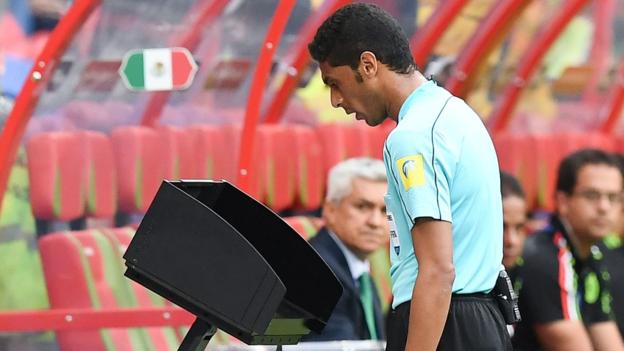
TO BE USED IN RUSSIA 2018:r A referee watching video footage

FIFA president Gianni Infantino confirmed that the Video assistant referees will be used at next year’s World Cup in Russia.

The video assistant referee (VAR) is an associate football assistant referee that reviews decisions made by the head referee with the use of video footage and a headset for communication to review the play in question.

The referees can decide whether they want help from VAR before they take decisions on some incidents during the game.

However, if the VAR believes there has been a potential clear error, it will contact the referee with that judgment so that the referee can change the call on the advice of the VAR or conduct an on-field review to the pitchside monitor by going to a designated spot on the sideline.

There are 4 types of calls that can be reviewed:

  • Goals and whether there was a violation during the build up
  • Penalty decisions
  • Red card decisions (note that second yellow cards are not reversible)
  • Mistaken identity in awarding a red or yellow card


This video footage technology has been tested in the concluded 2017 Confederations Cup that was won by Germany defeating Chile 1-0 on July 2.

There have been countless instances of VAR being used too slowly, too late or incorrectly, and it clearly needs efficient time to become a success and a reliable feature of the game.

The Confederations Cup was not a good experiment for VAR because it created confusion in the following scenarios:

  • Chile defender Gonzalo Jara appeared to elbow Germany’s Timo Werner in the face during the Cup final on Sunday, but got only a yellow card, even after the video assistant referee (VAR) system was used.


  • In Chile’s semi-final win, when Portugal defender Jose Fonte appeared to foul Francisco Silva in the box, the referee did not award a penalty – or ask to see the incident again.


  • In the group game between Germany and Cameroon, the referee sent off the wrong player after watching a replay, before correcting the mistake after a second viewing.


  • In Mexico’s group game against New Zealand, there was a long delay late in the game as the referee watched back a melee between players. He initially booked one player, before stopping the game again and booking two more.


However, there were few occasions where the technology proved beneficial:


  • Pepe thought he had given Portugal the lead in their opening game with Mexico, but the referee ruled it out correctly for offside after consulting with VAR.


  • Chile’s Eduardo Vargas had a goal ruled out – for a marginal, but correct offside decision – against Cameroon. He later scored a goal in the same game – which again went to VAR, but this time it was allowed.


Fifa president Infantino believes the system has been a great success with positive results and nothing will stop it from being used in the 2018 World Cup in Russia.

Stories Continues after ad

UCU to graduate 1,136 on Friday

TO AUDIT BoU: Auditor General John Muwanga

Uganda Christian University (UCU) will hold its third graduation ceremony this year on Friday at the main campus in Mukono.

According to a statement issued by the University on Monday, a total of 1,136 students will graduate with bachelor’s degrees, diplomas, postgraduate diplomas and master’s degrees. Of these, 50.1 per cent (569) are male while 49.9 (567) are female.

“Of these, forty three (43) got first class degrees. At 24 (56 per cent), most of the graduands with first class degrees are females compared to 19 (44 per cent) males. The best performing student has an overall GPA of 4.82,” the statement reads.

The Guest of Honor at the graduation ceremony will be the Auditor General Mr. John Muwanga.

The graduation ceremony will be preceded with the Commissioning Service, a formal sendoff session at UCU during which graduands are blessed and prayed for before their graduation.


Stories Continues after ad

Stanbic Bank cuts lending rate to 18 per cent

REDUCED LENDING RATES: The headquarters of Stanbic Bank

Stanbic Bank, the biggest commercial bank in Uganda, has cut its prime lending rate to 18 per cent from 19 per cent per annum, making the bank the cheapest commercial lender in Uganda so far.

“We are pleased to announce that Stanbic Bank is reducing its prime lending rate in line with prevailing marketing conditions,” the bank says in the latest statement.

The new lending rate, Stanbic Bank said, would become operational effective August 1, 2017, and apply to both existing and new customers.

Stanbic’s move to cut down the lending rate is expected to force its competitors to revise their rates downwards as the players struggle to capture customers in the narrow market, where most target salaried workers and organised businesses.

Stanbic’s lowering of the lending rate follows the Bank of Uganda’s reduction of the Central Bank Rate (CBR) to 10 per cent in June from 11 per cent in April. When BoU reduces its CBR, it expects commercial banks to lower their lending rates to attract investors to borrow.

The BOU governor Prof. Emmanuel Tumusiime-Mutebile has always said he wants wants commercial banks to cut their lending rates so as to reflect the market conditions.

Latest industry figures show that on average Ugandan commercial banks charge 22.5 per cent interest on loans absorbed.

Housing Finance Bank, Bank of India and United Bank of Africa are the other cheap commercial lenders on the Ugandan market, lending at 19 and 20 percent, respectively.

On the other hand, according to BOU, NIC Bank and Commercial Bank of Africa are the most expensive, lending at 25 percent and 23 percent, respectively.


Stories Continues after ad

Fort Portal most expensive town, as June inflation lowers to 6.4 percent

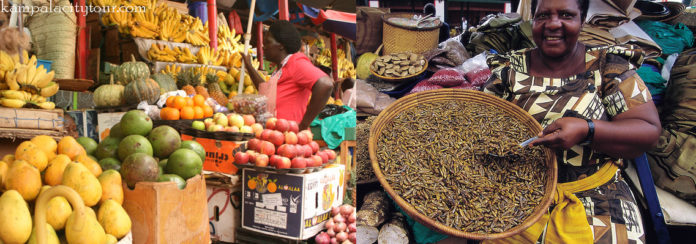
Foodstuffs at Nakasero Market. The prices of foods have remained relatively high in the rural areas like Fort Portal due to inflation

The annual headline inflation for June 2017 lowered to 6.4 percent compared to the 7.2 percent recorded in May 2017, mainly caused by decline in the prices of food stuffs in the markets of major towns, the Uganda National Bureau of Statistics (UBOS), says in the latest report for the month of June.

UBOS, which manages national statistics says Fort Portal registered the highest annual inflation of 9.6 percent for the year ending June 2017 compared to the 8.7 percent recorded for the year ended May 2017.

According to UBOS, Fort portal experienced low supply of food and nonalcoholic beverages which caused inflation to increase to 18.9 percent for the year ending June 2017 compared to the 15.7 percent recorded for the year ended May 2017.

In addition, the annual inflation for clothing and footwear rose to 10.0 percent for the year ending June 2017 compared to the 5.1 percent registered during the year ended May 2017, the report says.

The second highest inflation, Ubos says, was registered in Arua at 9.1 percent for the year ending June 2017 compared to 7.8 percent recorded for the year ended May 2017. The main driver was the high prices for food and nonalcoholic beverages that registered 18.8 percent for the year ending June 2017 compared to the 16.3 percent for the year ended May 2017.

Further,  the cost of furnishings, household equipment and routine household maintenance went up in Arua as increases came to  6.5 percent for the year ending June 2017 compared to the 5.6 percent registered for the year ended May 2017.

Gulu registered the third highest annual inflation of 8.0 percent for the year ending June 2017 the same rate registered for the year ended May 2017. This was driven by increase in the cost of educational items and fees  that stood at 6.6 percent for the year ending June 2017 compared to the 3.3 percent that was recorded during the year ended May 2017.

In addition, a low supply led to price increases for clothing and tootwear  in Gulu registered 5.6 percent for the year ending June 2017 compared to the 4.5 percent recorded during the year ended May 2017.

Mbale and Mbarara are the other areas that saw high prices of goods and services rise in June. Inflation in Mbale reduced to 7.9 percent in June from 9.1percent in May while in Mbarara it reduced to 7.1 percent from 8.6 percent.

The average prices of goods and services were cheapest in Jinja, Kampala and Masaka in the month of June compared to May. Jinja’s inflation reduced to 6.2% in June from the 6.8% registered in May. Kampala saw average inflation rededuce to 6.3% from 7.1%. Masaka’s inflation lowered to 6.5% in June compared to 7.8 in May.

Stories Continues after ad

‘No confidence motion’ date against Zuma changed

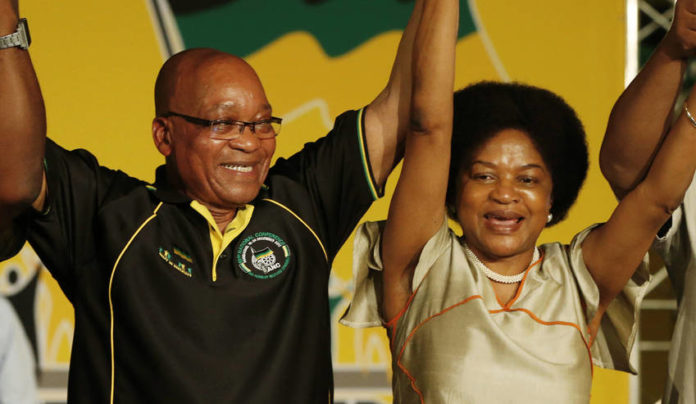
President Jacob Zuma with National Assembly Speaker Baleka Mbete

The date for a motion of no confidence in President Jacob Zuma has been pushed back by a few days.

Last week, Parliament scheduled the vote to take place on August 3 2017 but according to a statement, there was an oversight during the initial consultations and determination of the originally announced date, which overlooked the fact that a Cabinet ‘Lekgotla’ had already been set for that week.

Political parties still have until July 14 to submit their views on whether the vote should happen in secret.

Speaker Baleka Mbete will make her decision regarding the appropriate voting procedure before the scheduled debate on  August 8.

Last month, the Constitutional Court ruled that the Speaker was empowered by parliamentary rules to allow for a secret ballot.

Chief Justice Mogoeng Mogoeng said: “The Speaker says that neither the Constitution nor the rules of the National Assembly allow her to authorise a vote by secret ballot. To this extent, she was mistaken. Our interpretation of the relevant provisions of the Constitution and the rules make it clear, that the Speaker does have the power to authorise a vote by a secret ballot in a motion of no confidence in the president in appropriate circumstances was invalid and must be set aside.”

The United Democratic Movement (UDM) and other opposition parties approached the court in May to give Parliament a go-ahead to vote in secret.

Mogoeng also made it clear the court can’t decide for Mbete what decision to take, whatever it is must be rational and Mbete must take it in the spirit of ensuring accountability of the executive.

The Chief Justice said Speaker Mbete should use the existing parliamentary rules to decide on whether to have a motion of no confidence against the president in secret or not.

“Rules 103 and 104 do empower the Speaker to have a motion of no confidence in the president voted on by secret ballot.”


Stories Continues after ad