Paris Saint-Germain (PSG) has today unveiled Neymar Junior after activating the €222million (£199million) release clause in his contract, making the Brazilian forward the most expensive player in football history.
Neymar’s world-record transfer is reported to be worth about £450m in total, taking into account fees and wages, which will see the forward earn around £540,000 a week after tax.
Formerly with Barcelona, Neymar Jr will be officially presented to fans on Saturday and is committed to PSG for 5 years until June 2022.
The 25-year-old, who joined Barcelona for £48.6m from Brazilian club Santos in 2013 leaves after winning 1 champions league, 2 La liga titles, 3 Copa Del Rey titles, 1 uefa supercup winner, 1 spanish super cup winner and 1 Fifa club world cup winner.
The Parisian club’s official website also announced that Neymar will wear the No.10 jersey at the Parc de Princes. Javier Pastore has given up his shirt number in order to welcome Neymar to the club.
La Liga had rejected an attempt by Neymar’s representatives to pay the sum that would trigger his release clause at Barcelona but the money was later accepted by the club at Camp Nou.
Televangelist Gilbert Deya of the ‘miracle babies’ infamy has been deported from United Kingdom to Kenya.
Mr. Deya, who was arrested in London by the Metropolitan Police on December 13, 2006 and faces child abduction and trafficking charges, arrived at the Jomo Kenyatta International Airport at 4.40 am on Friday August 4, aboard a Kenya Airways flight.
A police spokesman said Mr. Deya was detained under an arrest warrant issued by Kenyan authorities, and was ordered by a court on November 8, 2007, to be extradited from the UK to Kenya to face five counts of child trafficking.
He is set to face child trafficking charges after being handed over to the Kenyan authorities following accusations that he coordinated the trafficking of children, who his church would later present as ‘miracles’ for barren mothers. Police also alleged that Deya stole five children between May 1999 and December 2004 from Pumwani Hospital to facilitate his ‘miracle babies’ project.
Earlier in 2005, Mr. Deya’s wife Mary Deya was handed a three-year jail term after she was found guilty of stealing a child from the Kenyatta National Hospital in Nairobi. Mary falsely claimed that the baby was hers, but it was later confirmed that she had stolen it.
Deya was ordained by the United Evangelical Church of Kenya and styles himself ‘Archbishop’. He was an evangelist in Kenya in the late 1980s to early 1990s, but moved to the UK, establishing Gilbert Deya Ministries in 1997.
DEMO: Parents and pupils of Bridge International Academies protest the closure of their schools outside Parliament. Photo/nbstv.
A coalition of 174 civil society organisations has called on international donors, including the UK government, to drop support for the Bridge International Academies (BIA), a private school company operating in Africa including Uganda.
BIA provides technology-driven education in more than 500 primary and nursery schools in Uganda, Kenya, Nigeria, Liberia and India, and Bill Gates and Mark Zuckerberg are among the high-profile philanthropists from whom the American startup has received funding.
Pupils of the Bridge International Academies (BIA) in Uganda
But late last year Uganda’s high court ordered the closure of 63 Bridge schools last year, ruling that they provided unsanitary learning conditions, used unqualified teachers and were not properly licensed. No schools have been closed and Bridge is in dialogue with a government team, that includes among other stakeholders the Minister of Education Janet Museveni, who has previously expressed skeptism about the operations of Bridge schools in Uganda.
And in a statement, ‘anti-Bridge’ campaign groups said the firm charges prohibitively high fees and that teachers are poorly paid, receive little training, and are given inflexible, scripted lessons to read from tablets. The organisations also accused BIA of intimidating its critics, a claim the company has denied.
The statement, signed by organisations from 50 different countries including Global Justice Now and Amnesty International, cited research suggesting that the poorest students cannot afford to attend Bridge schools.
“BIA’s model is neither effective for the poorest children nor sustainable against the educational challenges found in developing countries,” said the campaigners, who alluded to “mounting institutional and independent evidence that raises serious concerns about BIA” and warned of “significant legal and ethical risks associated with investments” in the company.
In Kenya, sending three children to a Bridge school is estimated to represent almost a third of the monthly income of families living on $1.25 (94p) a day, according to a joint study by Kenya National Union of Teachers and Education International, a federation representing 32 million teachers and support staff. The researchers noted that teachers are required to work between 59 and 65 hours a week for a monthly salary of $100.
In April, following an inquiry into UK aid spending on education, the chairman of the UK parliament’s international development committee questioned whether grant funding should have been provided to Bridge.
“The evidence received during this inquiry raises serious questions about Bridge’s relationships with governments, transparency and sustainability,” Stephen Twigg wrote in a letter to the international development secretary, Priti Patel.
But Bridge’s model, under which teachers are given electronic tablets containing lesson plans, is seen by some as an answer to improving access to education in low-income countries.
And responding to the criticism from civil society groups, BIA said it provides high-quality education to marginalised and remote communities across Africa. The company pointed out that it costs an average of just under $7 (£5) a month to send a child to Bridge, and that 10% of students are on scholarships. BIA added that teachers work about 54 hours a week and are given high-quality training before and during their careers, with salaries – between $95 and $116 a month in Kenya – higher than in other non-formal schools.
“Our pupils are outperforming their peers in national exams over consecutive years. Our model means that we’re able to attract new investment towards solving one of the world’s most pressing problems: hundreds of millions of children who are not learning,” the Bridge statement said.
“Public schools and Bridge schools can and do operate side by side to serve communities in countries where there are major shortages of nurseries and primary schools. We help governments quickly address the gap between how many schools they have and how many they need.”
The UK Department for International Development said: “We have supported over 11 million children in primary and lower-secondary education from 2011-15, including over 5.3 million girls.
“Many of the world’s poorest countries rely on privately run schools to provide an education where state provision is failing. Without privately-run schools, millions of children would be denied an education.”
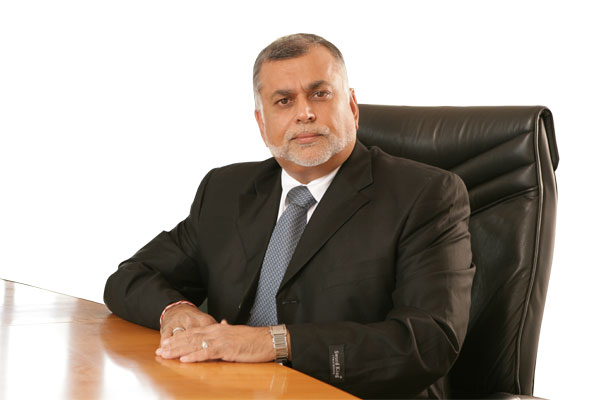
Billionaire businessman Sudhir Ruparelia has filed his defence against charges of ‘extracting US$80 million (about Shs400 billion) from Crane Bank, brought against him by the Bank of Uganda and the latter, now in receivership, about two months ago.
Mr Ruparelia, who is the 1st defendant in Civil Case 493 of 2016, was one of the Non-Executive Directors and shareholders of the defunct Crane Bank, and through his lawyers Ms. Kampala Associated Advocates (KAA), contends that at no time did he breach his obligations while serving the Crane Bank in both capacities. The second respondent in the case, Meera Investments, is another company where Mr. Ruparelia is a shareholder.
In a 62-page defence filed in the High Court Commercial Division on August 3, Ms. KAA also indicate that by representing Crane Bank, opposite counsel, Ms. MMAKS Advocates, acted in ‘conflict’ of their client, Mr. Ruparelia’s interests, since the law firm was previously retained by Crane Bank, where he was one of the Non-Executive Directors.
In Section 90 of the defence, KAA aver their client Mr. Ruparelia, while non-executive director, participated in overseeing a buoyant Crane Bank which grew from one branch in 1995 to 46 branches at the BoU took over Crane Bank in 2016. At the time, the lawyers further aver, the Crane Bank had a customer base of over 600.000 customers, with the bank acquiring assets worth over Shs1.8 trillion, a development confirmed through an annual audit report carried out by international audit firm Klynveld Peat Marwick Goerdeler (KPMG).
Further, in Section 92 KAA avers that since the takeover of Crane Bank by the Receiver, in this case the BoU, their client Mr. Ruparelia and his other shareholders have not been given any accountability by the Receiver, ‘in total violation of the Receiver’s fiduciary obligations’. The KAA lawyers also contend Mr. Ruparelia will ‘at the earliest opportunity seek disclosure of all documents relating to the Agreement between the Receiver and DFCU bank and in particular the purchase price of the Plaintiff’s (Crane Bank) assets’.
Further, in the filed defence KAA lawyers contend that in January this year Mr. Ruparelia’s representatives, Mr. Kakembo Katende and Azam Tharani attended a meeting with lawyers Masembe Kanyerezi and David Mpanga at the chambers of MMAKS, ostensibly to share the contents of ‘an alleged PWC forensic report indicating the alleged extraction of US$80 million’.
‘The Plaint contains excerpts of the report and from those excerpts the 1st Defendant (Mr. Ruparelia) has been able to establish that the alleged report is actually a draft document created by PWC on 13th November 2014
KAA also says it will line up over 20 witnesses to testify in favour of their client Mr. Sudhir Ruparelia, among them Mr. Ruparelia himself and his wife Jyostna Ruparelia; the Bank of Uganda Governor Prof. Emmanuel Tumusiime Mutebile and his deputy Louis Kasekende; the BOU Director of Bank Supervision Ms. Justine Bagyenda. Other witnesses include officials the BoU, former Crane Bank Directors and shareholders, lawyers Timothy Masembe Kanyerezi from MMAKS and David Mpanga from AF Mpanga Advocates; and officials from the audit firms of PriceWaterhouseCoopers (PwC); Deliotte and Touche and KPMG.
Other witnesses include Godfrey Yiga Masajja and Susan Wasagali Kanyemibwa from BoU; Francis Kamulegeya and Uthman Mayanja from PwC; George Opio from Deliotte and Touche and, Benson Ndungu of KPMG.
The BoU-Crane Bank- Sudhir Ruparelia standoff comes in the wake of reports indicating that top officials at the Central Bank are divided over the procedures undertaken by the BoU that led to the filing of the court case.
According to sources, some top managers argue that the BoU, through its Bank Supervision Directorate headed by Ms. Justine Bagyenda, failed to execute its mandate. The protagonists further argue that before filing the case the BoU did not exhaust all avenues that could lead to a negotiated settlement of the stand-off.
Meanwhile, other reports indicate that the BoU/Crane Bank lawyers, Ms MMAKS Advocates and AF Mpanga Advocates, have allegedly refused to share information from a PwC forensic audit that had been requested for by Mr. Ruparelia’s lawyers, Ms. KAA law firm.
By press time efforts to contact opposite counsel were futile.
When BBS TV went on air last year, many people rushed to occupy the then virgin posts.
Many of the ‘deserters’ were from already existing TV stations and included Joe Kigozi from NBS, Juma Kirya, one Barry and Simon Paul Etiang from NTV.
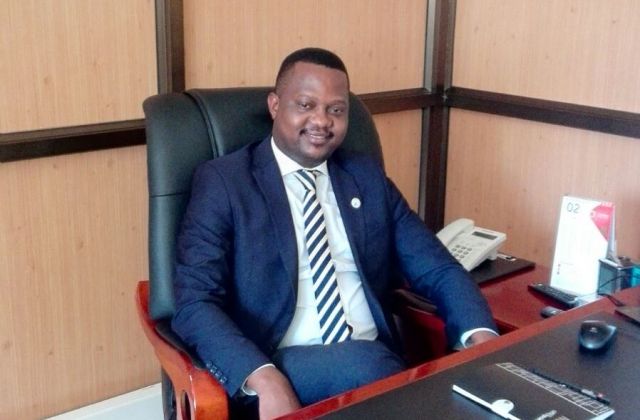
But we have since learnt that after ‘things failed to work out at BBS TV’ some of them have started running back to their former work stations.
According to information on our desk, Etiang, Barry and Kirya resigned from their posts at BBS TV last week and have since gone back to NTV.
Though none is willing to reveal the reasons as to why they left, a reliable source tells us that the trio resigned over unpaid salaries.
Apparently, workers at the station have gone months without salary the reason why the BBS TV CEO, Joe Kigozi was sent on forced leave in June.
Following his return last month, some of their salaries were cleared but only up to May; they haven’t received their salaries for June and July and this has left many employees aggrieved.
Meanwhile, we have learnt that the station also fired some employees over performance, though some of them who preferred to remain anonymous insist their firing is based on the demand for their salaries.
Those fired after hasty meeting where newsroom employees were called and compelled to pledge allegiance to the station include Hadija Mwanje and Farouk Namatiti.
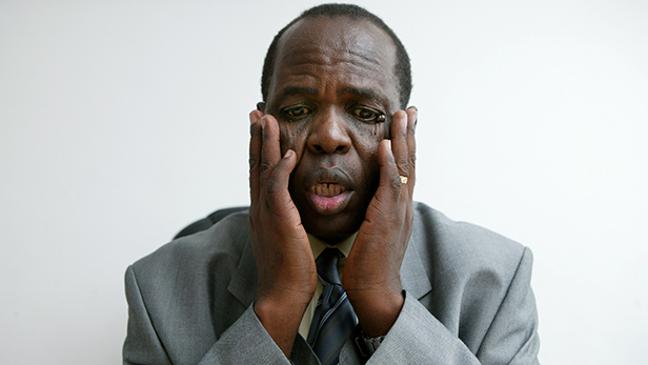
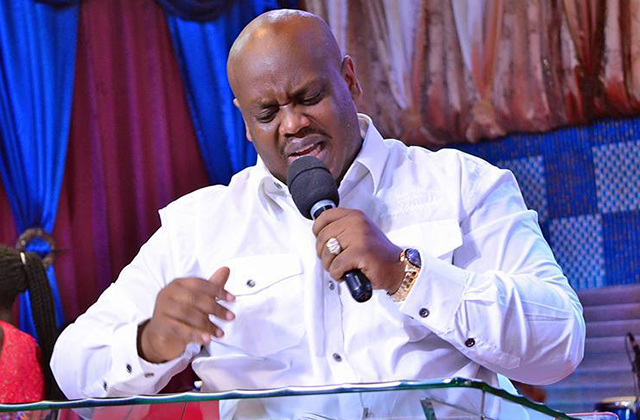
Renowned city ‘Pastor’Franklin Mondo Mugisha is currently enmeshed in a child neglect misunderstanding with a one Sarah Naigaga, who says she is the mother of his six-year old child.
Ms. Nagaiga says for a while, Mondo had been looking after the child till recently when he stopped and even refused picking her calls. Apparently, Mondo had pledged to provide for the child as long as she never took it to his church. “He told me he never wanted the kid to be seen by his flock but he would be providing for him and it was okay with me…….” she said.
And left with no other option, Naigaga says she went to the church but that unlike the previous times, this time Mondo started beating her up with the help of his bouncers.
“He no longer wants to pick my calls… He blocked all of my phones. Even when I try calling him using other people’s phones, he picks but ends the call as soon as he hears my voice on the other end. Now, how else can I hear from him other than going to (his) church?” Naigaga wondered.
After the alleged beating, Naigaga said police from Wankulukuku was called in and she was arrested on allegations of threatening to burn Mondo’s church.
Naigaga said when she went to report an assault case to Katwe Police Station, she found that a parallel case had already opened up against her by Mondo. He had even expressed doubts about being the father of Naigaga’s child. “If the child is not his, then why did he name the child (after himself)”?
She is now demanding for a DNA test if Mondo insists he is not responsible for fathering the child.
When reached for a comment, Mondo did not pick our calls neither has he returned our message on Facebook where he has been active all day.
Mondo is not the first pastor to be accused of neglecting his children.
‘Pastor’ Augustine Yiga was also taken to court in 2015 when he refused to remit monthly maintenance fee of Shs150,000 to a woman he allegedly raped and fathered a child with as she sought to be prayed for at his church.
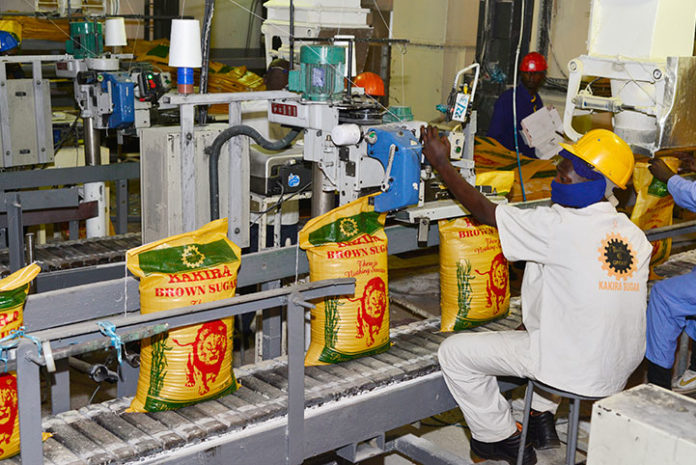
SUGAR PRODUCTION: Workers at Kakira Sugar Works in Jinja, Eastern Uganda
A proposal by government to slap a fine of Shs10m on individuals who establish sugar mills within a 25km radius of another firm has been rejected by sugar manufacturers, who argue that the charge is ‘very low’.
The companies under their umbrella association, the Uganda Sugar Manufacturers Association (USMA), raised the objection while appearing before MPs of the Parliament Committee of Trade, Tourism and Industry.
The team had appeared before Parliament to present their views on the Sugar Bill 2016, which is aimed at regulating activities of the sugar industry that has been bogged by unstable pries for quite some years.
In their argument, the sugar manufacturers argued that the said penalty is small and want parliament to hike the fine to Shs500m, instead of the Shs10m being proposed in the bill.
Jim Mwine Kabeho, the USMA chairman, who also doubles as Director Madhvani Group, fronted the idea while commenting on Section 13 (2) of the Bill that stipulates that no sugar mill should be set up 25km radius within each other.
According to Mwine, the low supply of sugarcane to companies has left the manufacturers grappling with shortages, limiting their exports.
He has cited out the low harvest from an acre that was initially 35tonnes, but this has since dropped to just 20tons.
Mwine also told MPs that putting sugarcane mills next to each other has created fierce competition among the players, who buy sugarcane at 12 months, yet the required maturity period for sugarcane is 18 months. Due to the practice of harvesting immature sugarcane, Mr. Mwine said, farmers are now losing an average of 4 tonnes of sugar per hectare monthly.
He also revealed that although Ugandans are exposed to the risk of consuming sugar processed from immature sugarcane, which is also the of low yield.
Deliberating about the high sugar prices, Mwine noted that Uganda has the highest price of sugar in the whole world, a trend he blamed on the high sugarcane price charged by the farmers which, at the moment, is Shs175 for each sugarcane.
Once adopted by Parliament, no one will be allowed to establish or operate a sugar mill, jaggery mill or a plant to process the by-products of sugar-cane without a valid license granted for that purpose by the Board.
If found acting in contravention of this particular section, the culprit will be fined Shs10m.
The bill also proposes for the immediate closure of the sugar mill that was established and was operating illegally.
The prosecution of a person under this section doesn’t prevent the Board from licensing the person in accordance with this Act.
The Bill also provides for the establishment of a National Sugar Research Institute that will be mandated with breeding of sugarcane varieties suited for various agro-ecological zones of Uganda.
The Institute will also take on the responsibility of conducting research and nutritional requirements of sugarcane in order to provide recommendations on the appropriate fertilizers.
Cars in transit to Uganda. Most cars imported into the country are second hand
In an effort to strengthen the inspection procedures of secondhand motor vehicles for road worthiness, the Uganda National Bureau of Standards (UNBS) has issued new standards to be followed.
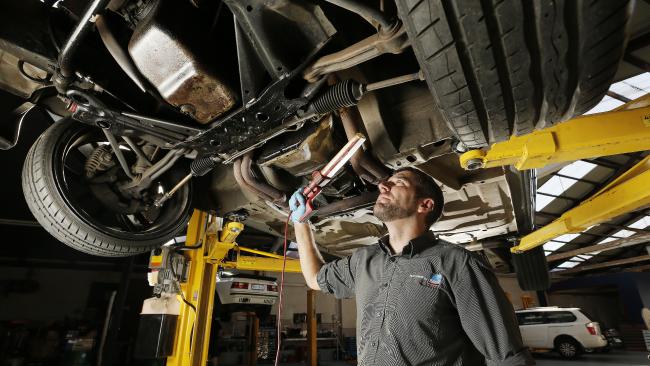
A technician testing a vehicle for road worthiness
The standard, developed by the agency’s technical committee on transport and communications, specifies safety related performance characteristics.
UNBS Executive Director Dr Ben Manyindo, said the Standard dubbed US845, comes as a response to the growing demand for standard procedures in the inspection of used motor vehicles in Uganda.
He added that the standard now awaits public review for comments until September 5, 2017, after which it will be approved and declared as a national standard by the National Standards Council.
Dr Manyindo said the new standard requires that second hand vehicles are inspected for conformity to Uganda Standards before being exported from the country of origin in what is known as Pre-Export Verification of Conformity (PVoC). As such, cars are issued with a certificate of roadworthiness to allow them in the country. The certificate is valid for a period of one year, thereby requiring routine inspection for road worthiness on annual basis.
According to Dr Manyindo, the standards provide guidelines to streamline processes and procedures used in inspection of motor vehicles. “Motor vehicle inspectors, garages, and mechanics will find the standards useful for carrying out routine check and inspections of second hand motor vehicles,” Dr. Manyindo said.
Last financial year, the UNBS developed 357 standards which were approved by the National Standards Council.
UNBS manages the processes of standard development and enforcement to ensure consumer protection and to encourage fair trade.
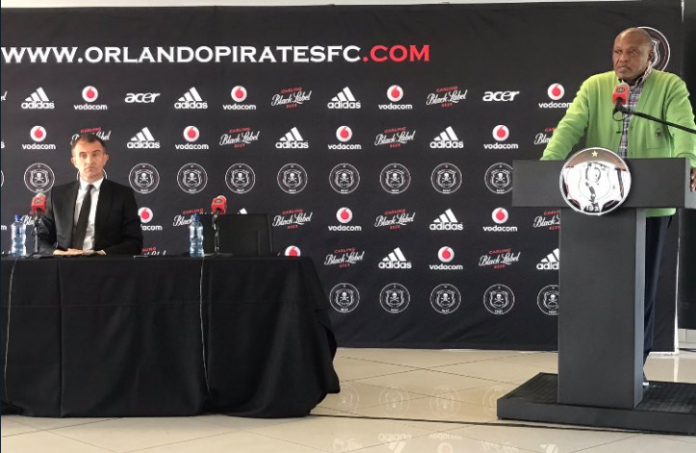
Serbian Sredjovic 'Micho' at the South African club Orlando Pirates
South African club Orlando Pirates have today unveiled former Uganda Cranes Coach Milutin ‘Micho’ Sredojevic as their new head manager.
The Serbian coach replaces Kjell Jonevret who resigned yesterday after failing to turn fortunes around for the six months he had been managing the club.
This is Micho’s second stint at Orlando Pirates, having initially joined in 2006 where he handled 23 games before being shown the door.
He guided the club the 2006 Caf Champions League semifinals, but resigned on the back of a bad domestic record.
In Uganda Micho has been widely praised for making Uganda qualify for the 2017 Africa Cup of Nations in Gabon, the first time in 38 years.
Coffee farmers in Uganda are fetching between 70 and 75 per cent on the international market price occasioned by malpractices in the sector, the agriculture minister Vincent Ssempijja has said. According to the minister, the coffee sector in Uganda faces problems of quality deterioration, poor marketing, a challenging regulatory framework and poor infrastructure mainly in the rural areas.
“Due to unscrupulous elements operating at various levels of the coffee value chain, coffee quality malpractices have also increased. This is a danger to our coffee industry both internally and at international level,” Minister Ssempijja says.
The minister fears that the international market could reject Uganda’s coffee if the malpractices are not addressed.” We do not want to face the danger of the international community rejecting Uganda coffee as it did to fish a few years ago,” he said.
The Minister said his ministry will work to improve post-harvest practices including hygiene and sanitary conditions to have Uganda coffee regain its premium quality. Further, the minister says Uganda needs to export high grade premium coffee as well as entering specialty markets by adding value.
“We will continue to sensitize the stakeholders especially the farmers, traders and coffee factory processors to appreciate the benefits of good post-harvest handling, good quality coffee. We will only close the factories, when all other avenues have been exhausted,” he says
The minister said the Uganda Coffee Development Authority (UCDA) recently closed coffee factories in Masaka sub region due to deteriorating standards in handling .
“From Masaka, the exercise will continue to Busoga, Luwero, Mubende as the harvest season proceeds in these sub regions,” he added.
According to UCDA Executive Director, Dr Emmanuel Lyamulemye, the coffee quality has improved as a result of factory closures in Masaka sub region, with farmers now getting better prices for dried coffee rather than the wet coffee which fetches lower prices.
Minister Ssempijja says farmers and traders in districts of Bushenyi, Sheema, Ibanda and Mount Egon districts of Mbale, Bulambuli and Sironko, have employed good harvesting and drying practices. “Most of the coffee cherry is harvested when red ripe and dried on tarpaulins and clean local mats,” Minister Ssempijja notes, calling upon the farmers in those districts to maintain high quality standards.
The minister encourages farmers to employ good husbandry practices in the coffee gardens , by weeding, pruning, mulching and uprooting and burning on spot trees affected by the coffee wilt.
As one of the measure to boost coffee quality farmers must harvest only the red ripe cherry, unripe cherry spoils quality. “It is the farmer’s responsibility to dry the coffee up to the required Moisture Content level before selling,” he says.
Further coffee regulations do not allow trade in coffee that is not yet well dried as it affects quality.
Since 2014, Government has intensified campaigns to give coffee seedlings to farmers increasing from 20 million to the current 200 million seedlings per annum. The minister says government targets to have 300 million seedlings planted per year up to 2018/19 coffee year.
Uganda grows both Arabica and Robusta coffee, mainly through smallholder farmers.
Uganda follows Ethiopia as Africa’s top coffee producers. But Ethiopia consumes most of her coffee domestically, making Uganda Africa’s number one coffee exporter.