Stanbic Bank
Stanbic Bank
20.5 C
Kampala
Stanbic Bank
Stanbic Bank
Home Blog Page 1830

CSOs urge government to increase funding for malaria

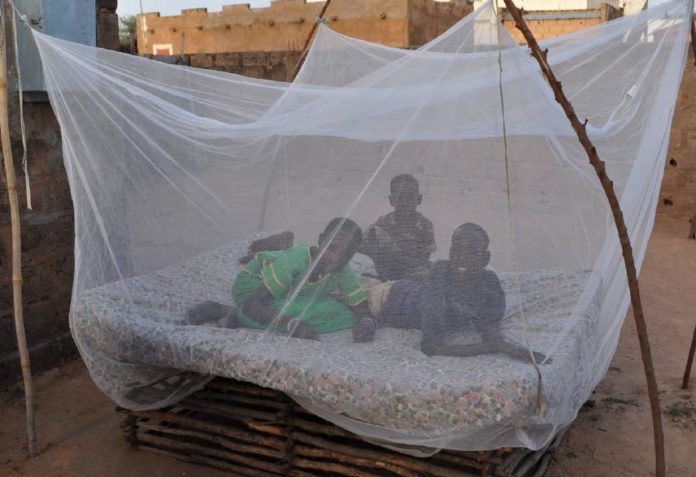
Children take shelter in a mosquito net as a means of avoiding malaria

A group of Civil Society Organisations (CSOs) in Kampala has urged the government to increase funding to the malaria control programme.
The CSOs say the Malaria Control Program being implemented as part of the Global Fund initiative, has not received sufficient funds from government as outlined in the Uganda Malaria Reduction Strategic Plan, making the objectives of the plan unrealistic.
Records, according to CSOs, show that over 16 million malaria cases were reported at Uganda’s health facilities in 2013 alone, forcing government to launch the Uganda Malaria Reduction Strategy 2014-2020 with specific objectives to fight the malaria pandemic to the lowest levels possible.

Clinically diagnosed malaria is the leading cause of morbidity and mortality in Uganda, accounting for 30-50 percent of outpatient visits at health facilities, 15-20 percent of all hospital admissions, and up to 20 percent of all hospital deaths. 27.2 percent of inpatient deaths among children under five years of age are due to malaria.
Among the objectives to prop the programme, the government intended by the year 2017 to achieve and sustain protection of at least 85 percent of the population through malaria prevention measures, among them the on-going distribution of the insecticide-treated nets (ITNs).
Under the programme, by the year 2018, government also wants to achieve and sustain at least 90 percent of malaria cases in the public and private sectors and community level, with patients receiving prompt treatment according to national guidelines.
However, with the slow pace government is implementing the strategic plan, and the little money it is allocating to the programme, CSOs say not much will be achieved.
To achieve the above targets the strategic plan requires a total funding estimated at US$1.361 billion over the six year period, implying that Uganda needed to invest US$ 226.6 million (Shs793.9 billion) per year, which the CSOs say is almost the entire budget for the Ministry of Health.
The CSOs say the direct costs of malaria in Uganda include a combination of personal and public expenditures on both prevention and treatment of the disease. Personal expenditures, they say, include individual or family spending on ITNs, doctors’ fees, antimalarial drugs, transport to health facilities, and support for the patient and sometimes an accompanying family member during hospital stays.
Public expenditures include spending by government on maintaining health facilities and health care infrastructure, publicly managed vector control, education and research.
The CSOs say that a significant percentage of deaths occur at home and are not reported by any system. According to official reports, Uganda’s high rates of malaria affect young children and pregnant women in rural areas who experience extreme poverty, limited access to healthcare services, and lack of education.
A recent study shows that Uganda spends almost Shs1,200 billion on diagnosing and treating malaria annually, or about Sh40,000 per person. This includes the money spent by the Government, donors, NGOs and private patients.
The Government alone spends sh63 billion per year on fighting malaria, 10 percent of the total health budget.
“Malaria is a preventable disease associated with slow socio-economic development and poverty. The determinants of malaria have roots beyond the health sector and the roles of other sectors need to be harnessed to prevent and control malaria in this country,” the CSOs urge government.
They say that malaria prevention and control programs need to have a multi-sectorial dimension. “The slow pace in reducing the malaria burden in Uganda and the renewed international call for a multi-sectorial action necessitates reforms in Uganda’s efforts to reduce malaria,’ the agitate.
According to Word health Organization , annual economic growth in countries with high malaria transmission has historically been lower than in countries without malaria. Economists believe that malaria is responsible for a growth penalty of up to 1.3 percent per year in some African countries.
According to Ministry of Health, maleria is a major public health problem associated with slow socio-economic development and poverty and the most frequently reported disease at both public and private health facilities in Uganda.
“Malaria has negative health and economic effects, and restricts the productivity of our population. Increased ITN coverage and education, improved access to and delivery of treatment, and emergency control of malaria are essential to control malaria in Uganda,” health officials recommend.

Stories Continues after ad

Archbishop Welby prays with South Sudan refugees in Moyo

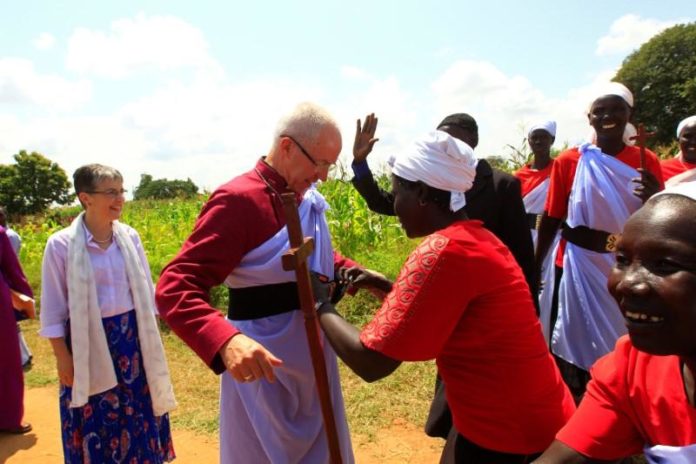
A woman wraps Archbishop of Canterbury Justin Welby in a piece of cloth upon his arrival at Mirieyi settlement camp in Adjumani district during his visit to South Sudanese refugees, Uganda August 2, 2017. REUTERS/James Akena

Archbishop of Canterbury Justin Welby, spiritual leader of the world’s Anglicans, prayed on Wednesday with South Sudanese refugees in northern Uganda, home to a nearly million people fleeing a four-year civil war in the world’s youngest nation.

Around 1.8 million people have fled South Sudan since fighting broke out in December 2013, sparking what has become the world’s fastest growing refugee crisis and largest cross-border exodus in Africa since the 1994 Rwandan genocide.

Most have fled south to Uganda, whose open-door refugee policy is now creaking under the sheer weight of numbers in sprawling camps carved out of the bush.

“The Bible tells us that the refugee is specially loved by God,” Welby, leader of the 85-million strong Anglican Communion, said as he joined in prayers in a camp in the northern district of Moyo.

The Archbishop added: “Which means you who are refugees are specially loved by God, that Jesus himself was a refugee and he loves you and he stands with you and the suffering that you have is the suffering that he knows. So I pray for you, I will advocate for you.”

Officials from the United Nations UNHCR refugee agency say $674 million is needed to pay for the basic needs of the refugees this year, but so far only 21 percent of those funds have been secured.

The total number of refugees is due to pass a million in the next week, UNHCR officials said. Nor is there any sign of a let-up in the stream of desperate civilians.

Some days it is only hundreds. On others, it is thousands.

In the camps, refugees are already on half their standard food rations of 12kg of maize a month, and now critical services such as health and education are facing cut-backs, UNHCR officials said.

In Bidi-Bidi, the largest of the refugee camps, 180 South Sudanese died in the first six months of the year, nearly half of them small children.

“We came here to hide ourselves from death,” said 31-year-old Moro Bullen, standing next to a row of 16 freshly dug graves, mounds of rust-red earth arranged in three neat rows. Half of the graves were only a meter long. “We did not come here to die. We came here to be rescued.”

Although the roots of the war lie in the animosity between President Salva Kiir, who hails from South Sudan’s powerful Dinka ethnic group, and his former deputy, Riek Machar, a Nuer, it has splintered into a patchwork of overlapping conflicts.

Machar is under house arrest in South Africa, having fled there last year to seek medical attention, but there has been little let-up in the levels of conflict, especially in the Equatoria region abutting Uganda.

Refugees have told Reuters of towns and villages emptied by government forces, dominated by the Dinka, with men, women and children summarily executed, and their bodies mutilated.

Rights groups have also reported widespread rape and looting that the United Nations says indicates ethnic cleansing. It has also warned of a possible genocide in a country that only came into being in 2011, when South Sudan split from Sudan.

The government has denied the reports, and said its troops are merely conducting operations against rebel militiamen.


Stories Continues after ad

Six killed in Juba-Nimule highway ambush

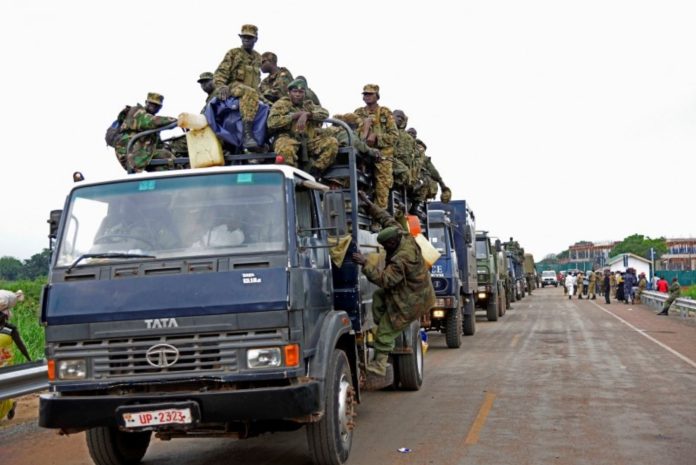
Uganda troops on the Nimule-Juba highway, getting ready to cross into South Sudan to rescue Ugandans there during the civil war. Photo credit/todayonline.com

At least six people were killed in an attack on a bus convoy traveling between Juba, the capital, and Nimule, on the country’s southern border with Uganda.

Four civilians and two national security service members escorting the convoy were killed, a spokesman for the Sudan People’s Liberation Army (SPLA) said.

The Juba-Nimule road is a major lifeline linking the South Sudanese capital with the East Africa region, via Uganda. The road carries most goods that South Sudanese traders import from Uganda.

Wednesday’s incident was the fifth deadly attack this year along the 200-kilometer stretch of road between Nimule, on the banks of the Nile River, and Juba.

​The SPLA spokesman, Brigadier General Lul Ruai Koang, said one of the buses was hit by a rocket-propelled grenade, and that the attackers also had heavy weapons. He blamed rebels loyal to former First Vice President Riek Machar for the raid, but a spokesman for Machar’s SPLA-In Opposition group denied any involvement.

“The attackers were repulsed,” Koang said. He indicated government forces inflicted an equal number of casualties on the raiders who opened fire on the buses, but details were unclear.

A passenger aboard one of the two buses heading for Juba said ‘a very serious ambush’ broke out after the convoy passed Moli town in Eastern Equatoria province, less than halfway along the route to Juba.

The passenger said he saw three people who had been shot to death, one woman and two men, before the buses turned around and headed back to Moli. Several people with gunshot wounds were taken for treatment to Nimule.

Brig. Koang told VOA he was convinced that rebels loyal to Machar were responsible for the attack. However, the deputy military spokesman for Machar’s SPLA-IO, Colonel Lam Paul Gabriel, was equally certain that his fighters were not involved.

“We do not know exactly who is responsible for that, but we have sent an MI [military intelligence] team in search for the culprit,” Gabriel told South Sudan in Focus. “We are advising our civilians to be careful while traveling on this road.”

He said SPLA-IO forces had received ‘strict orders’ from Machar, making it ‘very clear that civilian vehicles should not be attacked’.

Before Wednesday’s ambush, the most recent attack on the Nimule-Juba road was in June, when 10 people including two senior army officers were killed in a raid on another convoy. That assault was believed to have been carried out by Machar loyalists.

South Sudan has been mired in civil war since the young nation’s first president, Salva Kiir, dismissed his deputy Riek Machar four years ago. After a peace accord was signed in April 2016 and backed by the United States and other Western nations, Machar returned to the capital to share power with Kiir, but the deal fell apart less than three months later, and Machar and his supporters left Juba.

Nearly 2 million residents have fled South Sudan since 2013, in Africa’s largest cross-border flood of refugees since the 1994 Rwandan genocide. The exodus from South Sudan has become one of the world’s worst humanitarian crises, according to aid groups.


Stories Continues after ad

Slain UPDF soldiers’ bodies returned from Somalia

The hearse of the bodies of 12 UPDF soldiers killed in an ambush by Al-Shabaab militants in Somalia on Sunday

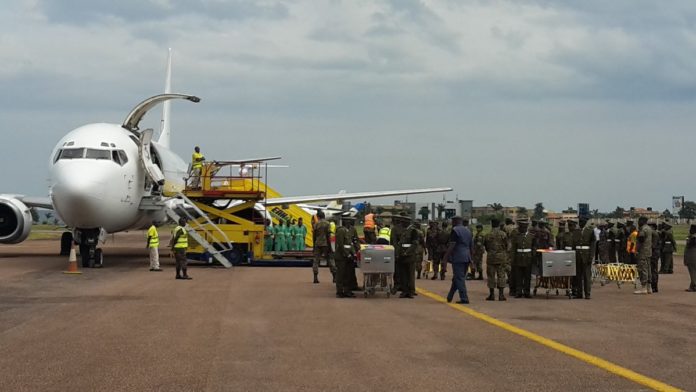
A somber mood has engulfed the Entebbe Old Airport this afternoon after the plane carrying the bodies of 12 UPDF soldiers killed in an ambush by Al-Shabaab militants in Somalia on Sunday, touched the ground.

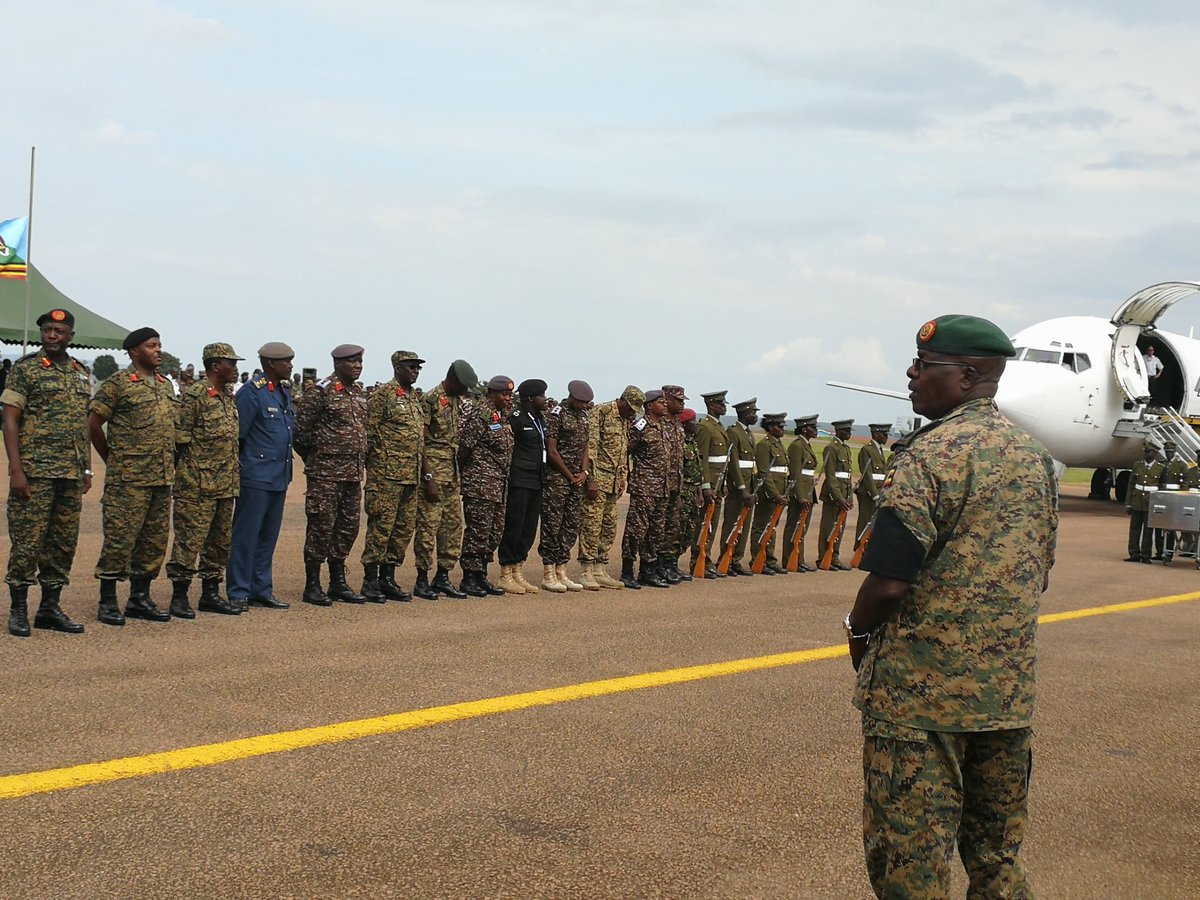
The bodies were received by several UPDF senior officers led by the Deputy Chief of Defence Forces (D/CDF) Lieutenant General Wilson Mbadi and the UPDF Commander of Land Forces (CLF) Major General Peter Elweru.

The bodies were received by several UPDF senior officers that were led by the Deputy Chief of Defence Forces (D/CDF) Lieutenant General Wilson Mbadi and the UPDF Commander of Land Forces (CLF) Major General Peter Elweru.

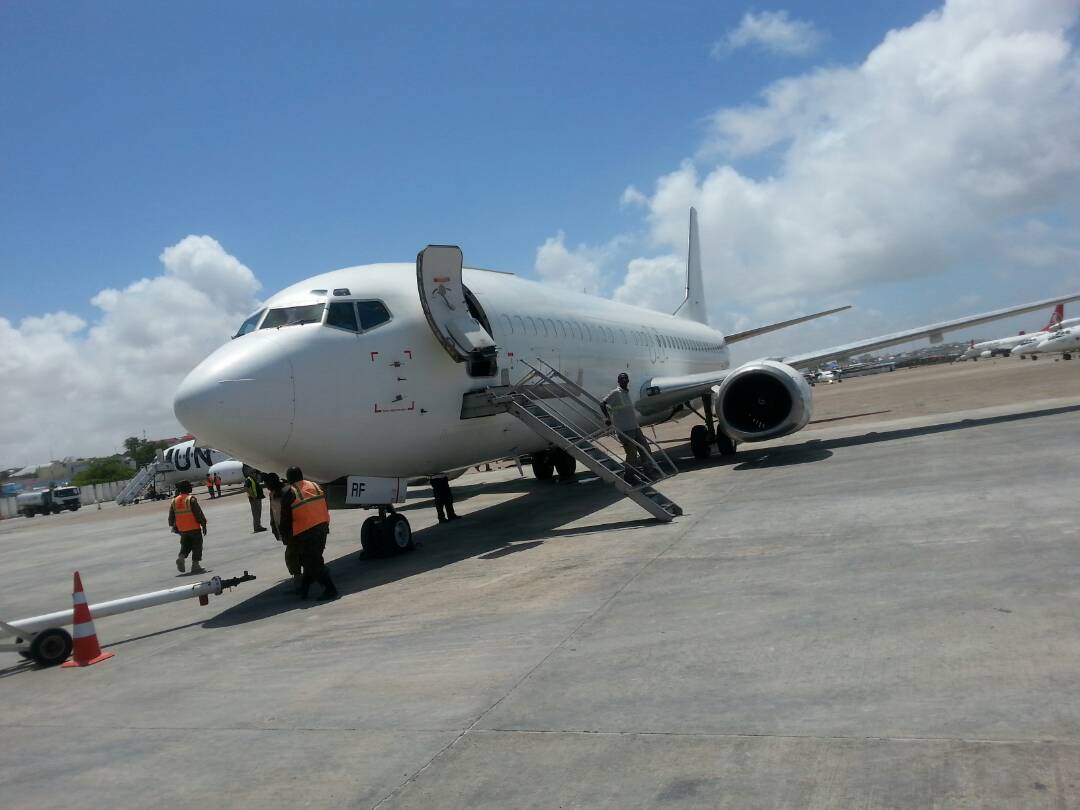
The plane that returned the 12 bodies of the slain UPDF soldiers

Before being flown back home, the bodies of the fallen soldiers had been at the Mogadishu Level II hospital for management and treatment.

On Monday UPDF spokesperson Brigadier Richard Karemire confirmed that the 12 soldiers were killed, while seven others sustained injuries in an attack at Gorowen between Balumaler and Beladamini in lower Shabelle region, south west of Mogadishu.

Meanwhile, earlier today Brig. Karemire said the remains will be taken to the hospital at army headquarters after which they will be transported to their ancestral homes for burial.

“Our comrades will be flown in today, the remains will be taken to our headquarters and then will be transported to their families,” Brig. Karemire was quoted as saying by local media, adding that the deceased will be accorded burials with full military honours.

Further, Brig. Karemire said the deaths will not deter the UPDF from seeking to accomplish its pacification mission in Somalia.

“We are pan-Africans; when we went in Somalia, we knew this would happen; this is the price we are paying but we don’t need to lose hope,” he said, adding that the Al Shabaab militants had lost ground to launch devastating attacks the peacekeepers.

“We broke the back of al-Shabaab and no doubt about that; when we deployed in Somalia, they were everywhere. Now all the key towns in Somalia were recaptured and they are now under the government of Somali,” Brig, Karemire said.


Stories Continues after ad

Car dealers want SGS contract cancelled over ‘procurement irregularities’

Gordon Wavamunno.

Car dealers under their umbrella association have asked Parliament to immediately terminate a contract awarded to Societe General du Surveillance (SGS) to inspect cars, if it is established the contract award flouted public procurement procedures.

Through the Uganda Motor Industry Association (UMIA), the group that comprised of Spear Motors proprietor Gordon Wavamuno, Victoria Motors director Sam Kibuka and UMIA lawyer Chris Bwanika, said SGS was given the contract without any competitive bidding, and asked the MPs to take tough action against the company, in case of any breach.

In March 2015, the Swiss firm signed a contract with government to carry out routine vehicle inspection aimed at ensuring those in poor mechanical condition are taken off the road in order reduce accidents.

However, recently, queries were raised as to how SGS was awarded the contract, a development which led to the parliamentary probe into the circumstances surrounding the issuance of the contract.

The UMIA team argued that giving the vehicle inspection contract to the Swiss firm without competition undermined government’s position to give preferential treatment to local companies before considering foreign firms.

Further, the group said that their respective companies had the capacity to create more vehicle inspection service stations than those of SGS “without subjecting Ugandans to inconveniences they are suffering at the hands of SGS.”

According to UMIA,  SGS has established two vehicle inspection service stations in Kawanda and Nabbingo, and that even plans to construct seven more stations will not help  the Swiss firm get the desired presence across the country.

Additionally, the team also challenged the way the mandatory vehicle inspection exercise of cars that are more than one year old is being managed, in total disregard of   manufacturer’s warranties. This, they argued, raises contractual issues after SGS interferes with such vehicles.

Earlier, the Committee grilled the former Commissioner in charge of Transport Inspection and Regulation Eng. Denis Sabiiti over his role in awarding a contract to SGS.

The MPs put Sabiiti to task to explain why he witnessed the signing of a contract which had irregularities especially on the validity of the contract given to SGS.

However, Eng. Sabiiti, who is currently the Rubanda South MP, denied having been part of the team that approved the evaluation report of the project, but admitted to having witnessed the signing of the contract.

He also told the committee that if Parliament is to recommend for termination the contract, there should also be thorough investigations to establish if officials at Ministry of Works and Transport that are charged with supervision of the private contractor carried out their duties diligently.


Stories Continues after ad

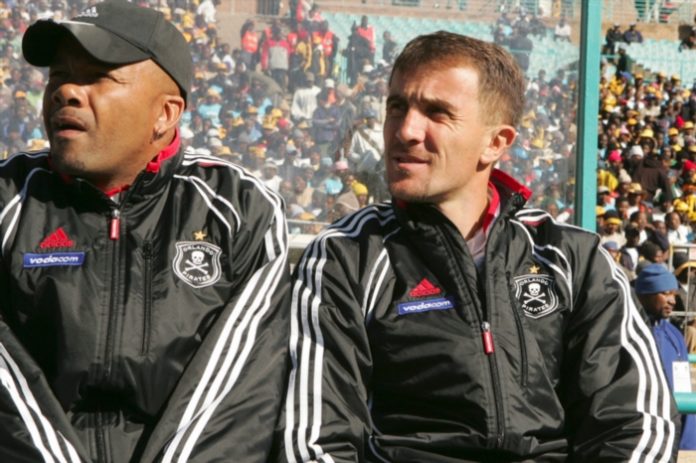
Micho ‘headed’ for Pirates’ coaching job after Jonevret resigns

Micho during his earlier days at Orlando Pirates

Orlando Pirates coach Kjell Jonevret has today resigned after failing to turn fortunes around for the six months he has been managing the South African club.

The club confirmed following a statement that was released on Wednesday afternoon that the Swede has permanently resigned from his job.

Pirates were beaten 4-1 by SuperSport in the final of the Nedbank Cup United and finished 11th in the league, their worst position in 30 years.

Jonevret is expected to be replaced with former Uganda Cranes coach Mulitin ‘Micho’ Sredojevich within a few days who terminated his contract over the weekend citing unpaid salary.

However, Micho insists he has not yet signed for a new team, yet revealed he is on his way to his new destination, in favour of club football over country football.

Micho initially joined the Pirates in 2006 in his first spell where he oversaw 23 games before being shown the door.


Pirates released a statement, which reads:

‘‘Orlando Pirates Football Club Head Coach, Kjell Jonevret, has tendered his resignation.

Mr Jonevret has thanked the Chairman of Orlando Pirates, Dr Irvin Khoza, the Club and its supporters for giving him an opportunity to coach the Club.

Mr Jonevret said: “I would like to thank the Club for the opportunity. Unfortunately it didn’t work out as planned. I wish the Club and its supporters all the best for the future.”

In accepting Kjell Jonevret’s resignation, Dr Khoza expressed his understanding of the enormity of expectation; the Head Coach of a big Club like Orlando Pirates is put under from day one.

Dr Khoza said: “I wish Kjell Jonevret well in his future endeavours.”


Stories Continues after ad

EC gets 16b for LCI, II elections

EC boss Justice Simon Byabakama Mugenyi

The Independent Electoral Commission has received Shs15.7 billion from the ministry of finance to organize local council (LC) elections, an exercise that has been in abeyance for the last 15 years.

Appearing before parliamentary and legal affairs committee this morning, EC Chairperson Justice Simon Byabakama Mugenyi acknowledged receiving the money and said it would enable the electoral body to organize the LC I, II and women council elections.

Further, he said, the commission has embarked on the program and will inform Ugandans how the elections will be conducted.

Last week, while appearing before parliamentary legal and affairs committee chaired by Jacob Oboth, the minister of finance, planning and economic development, Matia Kasaijja assured the committee members that the government had sourced funds for EC to conduct LC I and II elections in the next quarter of this financial year.

LC I elections were last conducted in 2001 and since then the government failed to conduct them for the three electoral cycles in 2006, 2011 and 2016 reportedly due to lack of funds.

In a related development, early this year the EC requested for over Shs37 billion to organize LC I and II elections but the ministry of finance allocated them Shs15 billion, with the argument that there is no need to ballot papers for the lower level kind of elections.

However, at the time the same funds were diverted to the ministry of disaster preparedness to cater for food in areas that were affected by famine and drought.


Stories Continues after ad

Sserunkuuma set to make Buildcon debut today

FUFA MVP Geoffrey Sserunkuuma now at Buildcon in Zambia

Former KCCA FC top scorer Geoffrey SSerunkuuma is expected to make his Buildcon debut today against Green Buffaloes in Zambia.

Sserunkuuma, who is also the FUFA Most Valuable Player (MVP) 2017 joined Buildcon on a free transfer after his contract at KCCA expired and looks set to start his mark at the club today five days after completing his transfer.

The 34-year-old penned a one-and-a-half-year deal with an option of contract renewal at the end.

Buildcon, who are 12th in the league travel away to 3rd placed Green Buffaloes on 33 points as the second round of the Zambian Super League starts.

Sserukuuma and other newly signed players Boban Zirintusa, Gift Sakuwaha and Akakulubelwa Mwachiaba have all been training and have traveled with the team.

The prolific striker scored 31 goals in all competitions for KCCA FC last season and helped the team win their first ever domestic double.

He has also featured in Ethiopia with St George and in South Africa with Bloemfontein Celtic, Bidvest Wits and Vasco da Gama.


Stories Continues after ad

Museveni calls for increased trade in the Commonwealth

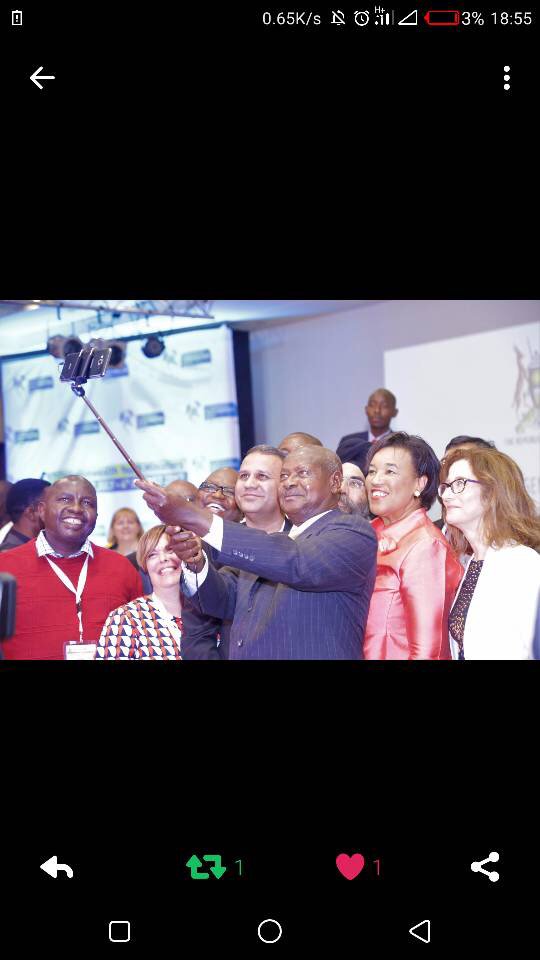
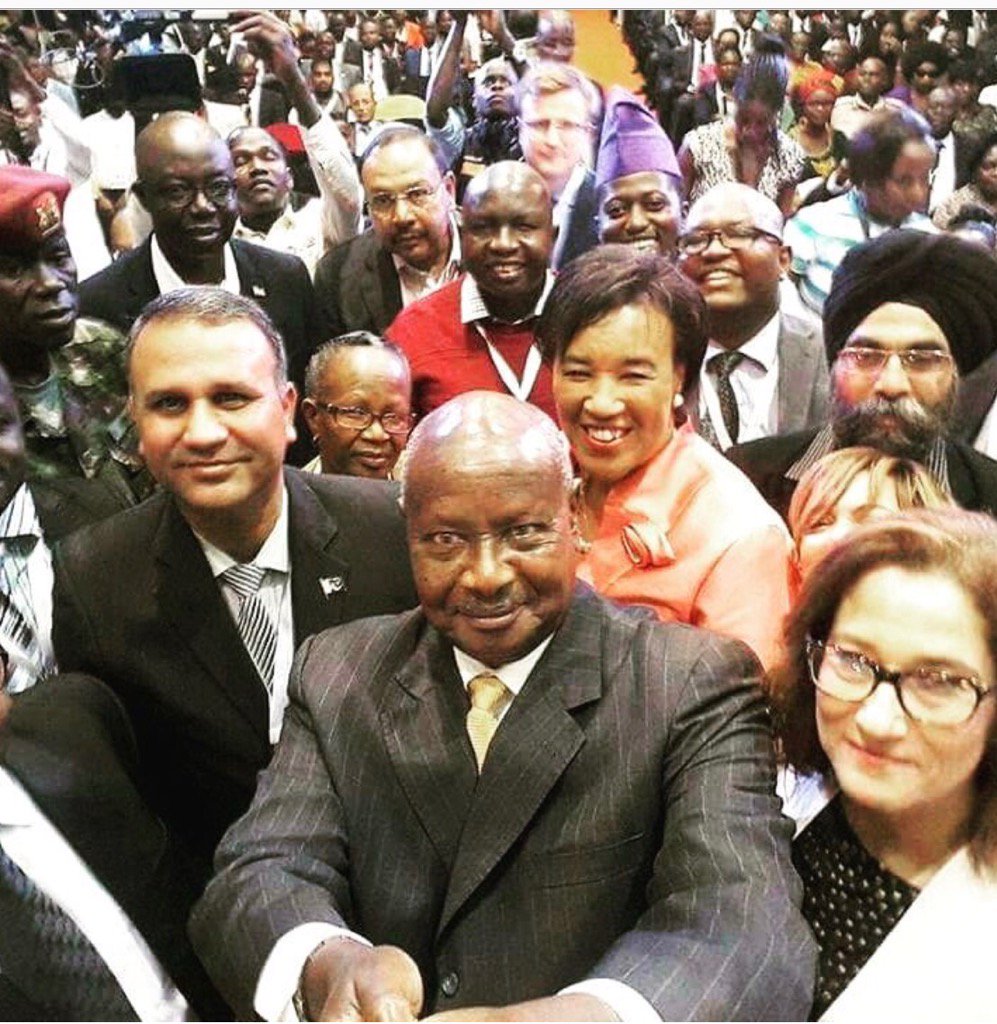
President Museveni takes a 'selfie' photo as he opened CYM conference

President Yoweri Museveni has today opened the 9th Commonwealth Youth Ministers’ meeting at the Munyonyo Commonwealth Resort Hotel in Kampala, with a call for increased trade between the Commonwealth member countries. The 4-day meeting is being held under the theme: ‘Resourcing and Financing Youth Development and Empowering the Youth.’

President Yoweri Museveni at the opening of the 9th Commonwealth Youth Ministers’ meeting at the Munyonyo Commonwealth Resort Hotel in Kampala

The President, who also launched the consortium of Higher Education that is set to strengthen higher education between Commonwealth member countries, said the 53-member organisation support one another for prosperity through trade and investment.
“What can unite people in the world is working for common prosperity. When we talk about prosperity, we do not mean donations but trade and business. If the Commonwealth member states with surplus capital invest in those with low capital, the purchasing power would raise through increased trade,” he said.

Mr. Museveni said the youth should focus on fundamental issues and urged them to be disciplined in order to achieve their goals. He cited the example of the United States of America that was built by disciplined groups like the Puritans who ran away from Europe due to religious persecution.

“You the youth should not meet here to talk about small things. The world is about big things like fair trade and investment. The youth should be talking about issues such as regional integration,” he said, and advised the youth not to ‘confuse youthfulness’ with indiscipline.

“Be disciplined to achieve the minimum of what you set out to do,” he counseled adding that the youth need positive ideology to fight indiscipline.
Mr. Museveni said lack of ideology has caused youthful terrorists such as Al Shabaab in Somalia and the Islamic State in Iraq and Syria (ISIL), and urged parents to teach their children good manners.
“Parents abandon their children yet they are the people with accumulated wisdom of society. When children grow up like wild plants, they cause trouble,” he noted.
The Secretary General of the Commonwealth, Ms. Patricia Scotland, implored the youth to bring their ideas forward to policy makers, noting that it is through the youth that the world sets the gateway of commerce.
“The one way we can ensure change, is by empowering the youth to address the challenges. We need to move from talking to investing, to achieve this realization,” Ms. Scotland said.
She commended Uganda’s policy of having five youth Members of Parliament from different regions of the country contributing to the legislation and policy making. She urged other countries to emulate the Ugandan way.
Mr. Kishva Ambigapathy, Chairman of the Commonwealth Youth Council, urged the youth to work with government leaders and non-governmental partners, to ensure more development.
Lillian Aber of the Uganda National Youth Council said investing in young people is the surest way of protecting the world for the future.


Stories Continues after ad

KCCA digitalises land records to speed up service delivery

TURNEB AROUND CITY: KCCA former Executive Director Jennifer Musisi Semakula

The Kampala Capital City Authority (KCCA) has started the process of digitalising land records as way of improving service delivery.

The records have over the decades been kept in manual files, with some rotting away due to poor storage, but according to Maureen Atwebembeire, the Head of Client Care at KCCA, the new system which started mid-July captures the land records electronically, enabling easy retrieval.

“Developers that seek to submit their building plans proposals to KCCA for consideration will be in position to acquire a search statement in just a day,” Ms Atwebembeire said, adding: “This exercise will eliminate 95 percent of the factors that previously caused delays in processing documentation. Our ultimate objective is to give our clients timely and quality services.”
With the new system, she said, KCCA hopes to enjoy an improved ‘turnaround time’ in processing land related applications, with the computerized system also helping in curbing any loopholes that may give room to unethical practices.

“It is anticipated that there may be some delays clients may experience during the next two months while the computerization process uploads backlog files.  However, this inconvenience will be outweighed by the benefits the system brings once the computerization exercise is completed,” Ms Atwebembeire said.

Recently, the Ministry of Lands, Housing and Urban Development beefed up KCCA with 35 more officers including land registrars, data entry clerks and records officers, to among others implement the computerization of  land and building records.
Meanwhile, officers at KCCA say they will continue receiving land and building plan applications.  “A dedicated team is in place to action transactions amidst this demanding computerization exercise,” a KCCA statement reads in part.

Stories Continues after ad