Stanbic Bank
Stanbic Bank
25 C
Kampala
Stanbic Bank
Stanbic Bank
Home Blog Page 1828

You are the face of Uganda – PS tells immigration officers

NEW; Official steps out of one of the shuttles

The Permanent Secretary in the Ministry of Internal Affairs, Dr. Benon Mutambi has urged the staff at the Directorate of Citizenship and Immigration Control (DCIC) to exhibit high standards of service, saying they are the ‘face’ of Uganda.

Dr Mutambi made the call last Friday as he handed over shuttles to the DCIC staff at Entebbe International Airport. The vehicles, according to Dr Mutambi, will ease the transportation of staff.

“Our Staff will be able to arrive together and in time, and start work without any glitches arising from either too much traffic causing them to come late or any other unforeseen occurrence,” the Commissioner Immigration Control Anthony Namara, said.

The Principal Immigration Officer in charge of the Airport, Robert Kanuma expressed gratitude on behalf of the staff, pledging they would deliver quality services and ensure utmost levels of professionalism.

Top officials from sister agencies such as the Civil Aviation Authority (CAA), Uganda Revenue Authority, Aviation Police, Chieftaincy of Military Intelligence, Internal Security Organisation and External Security Organisation also attended the function.

Among the services DCIC offers are border management, issuance of passports and other travel documents like permits, visas and passes.

DCIC has upcountry regional offices in major towns like Mbarara, Gulu, Mbale, Fort Portal among others.


Stories Continues after ad

Singer David Lutalo is a ‘villager’ – events organiser

KICKED OFF 2017: Singer David Lutalo

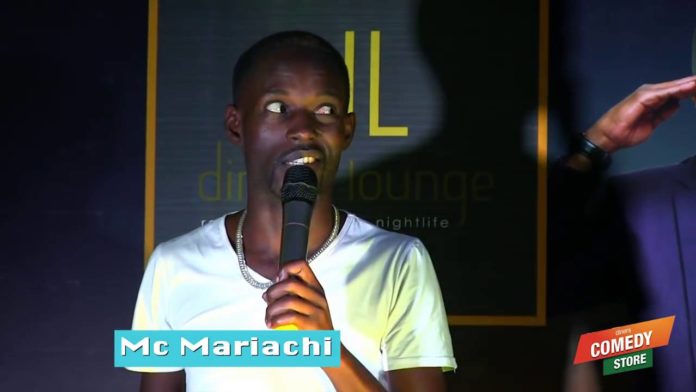
Comedy Files boss Alex Muhangi has rapped local Kadongokamu singer, David Lutalo over refusing to perform at last week’s comedy show at Diners Lounge.

Sources said Lutalo, who was reportedly advanced Shs2m and had been lined up among the night’s performers, refused to sing at the last minute, saying he only performs for a big crowd.

Now Muhangi has called this lack of exposure.

“The artiste (David Lutalo) we had lined up to perform let us down at last minute claiming he only performs before ‘crowds’. His reasons were just that. Reasons I found rather unprofessional and petty for an artiste of his caliber,” says Muhangi.

“Artistes have held concerts that filled stadia, made tours and graced prestigious events but none of these same artistes has pulled such a low and egoistic stunt when they came to Comedy Store. I guess it all comes down to management and exposure,” Muhangi wrote.

He further adds that for the time he has been into entertainment, there is not a music star in the Ugandan industry that hasn’t headlined on the show but none has set conditions beyond payment.

Lutalo had been lined up to perform alongside comedians Godi Godi, Buuza, Snake and Zoro, and Kalela.


Stories Continues after ad

Crane Bank owes NSSF only Shs7bn

SOLD: The former Crane Bank headquarters on Kampala Road.

The Crane Bank has an outstanding debt of seven billion shillings, accruing from unremitted contributions to the National Social Security Fund (NSSF).

According to a ‘comprehensive audit’ by agents of the NSSF, the said money described as ‘Standard Contribution’ was to be paid in the period between January 2010 and 2016.

The media had reported today that Crane Bank had an outstanding Shs32 billion it owes NSSF as contribution for its former workers.

Other costs in the comprehensive audit that Crane bank allegedly owes NSSF include: Special Contribution of Shs930, 737, 042; Penalty Shs38, 846, 019, 750 and Interest of Shs4, 543, 264, 843, bringing the total amount to Shs52, 910, 054, 024.

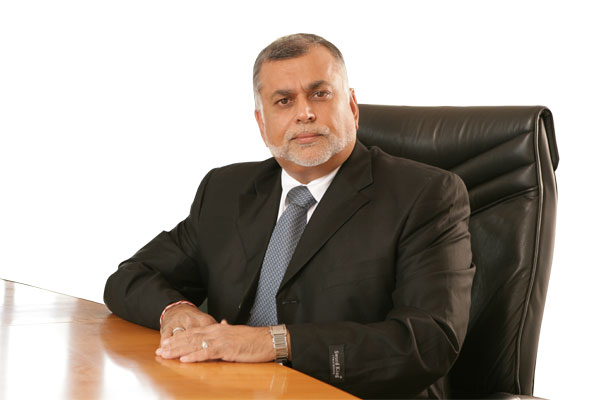
The Crane Bank was majorly owned by businessman Sudhir Ruparelia, but was early this year sold off to dfcu after the Bank of Uganda (BOU) sanctioned the deal.

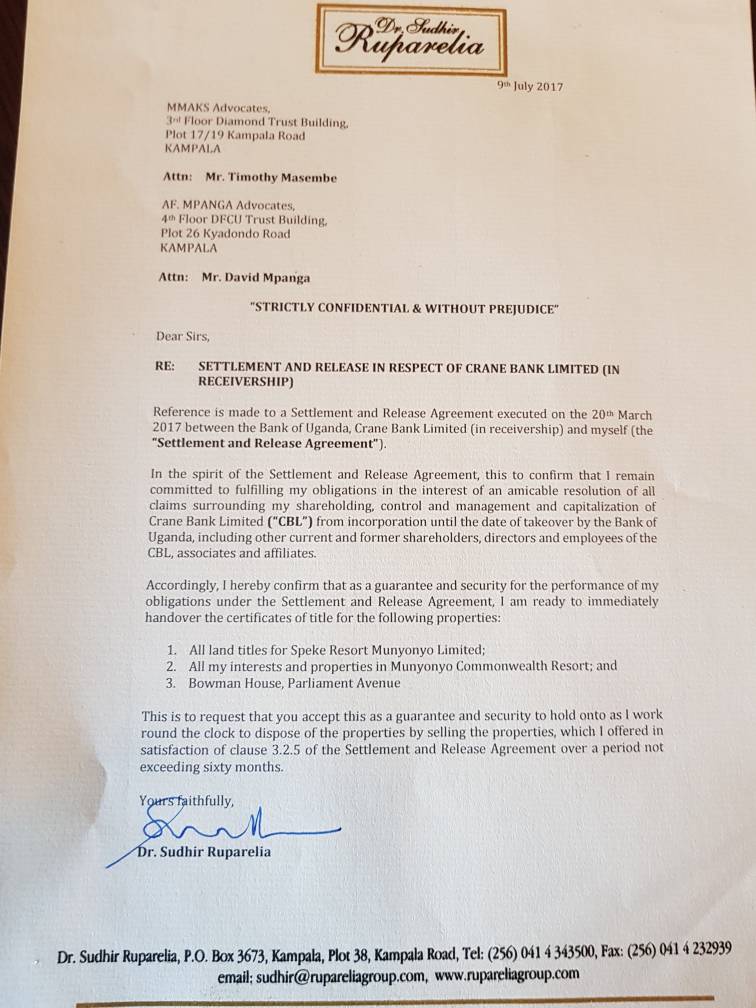
Since then the BOU and other creditors including have sought to recover the monies owed to their institutions, with Mr. Ruparelia now reportedly in talks to amicably resolve the discrepancies.

Efforts to contact Mr. Ruparelia for comment on the matter were fruitless by press time.

Stories Continues after ad

Follow up implementation of gov’t projects, Kadaga tells African MPs

The Speaker of Parliament Rebecca Kadaga in Sudan

The Speaker of Parliament, Rebecca Kadaga, has urged African parliamentarians to ensure proper implementation of government projects instead of waiting for ‘postmortem reports’ from accountability committees.

Kadaga made these remarks while addressing the 3rd Annual General Meeting of African Parliamentarians on Development Evaluation in Khartoum, Sudan.

Kadaga said that accountability committees do not take off time to follow-up on the implementation of government projects but quickly get involved when government projects are already messed up.

“Parliaments must develop strategies to constantly keep Members informed on progress being made. Not much will be achieved with just policies. Actual implementation must be seen to be done,” she said.

The Speaker called upon African Parliaments to ensure Sustainable Development Goals (SDGs) are maintained, mainstreamed and implemented for the benefit of all sectors of the communities.

“In Uganda, it’s a must to present a certificate of Gender and Equity Compliance for all Bills and Budgets brought to Parliament. We approach all policies to see how compliant they are with the principles of gender equity,” said Kadaga.

Kadaga added that if the principle were adopted throughout the African continent, it would help to ensure proper budgets are made that relate to all sectors of society.

Kadaga tasked MPs from the 20 African countries attending the conference to always ensure that governments are doing what they say since at times they do the contrary.

The Network of African Parliamentarians on Development meeting is chaired by the Speaker of the Sudan Parliament, Professor Ibrahim Ahmed Omer. Its membership includes parliamentarians from Benin, Cameroon, Cote D’Ivoire, Ethiopia, Gabon, Ghana, Kenya, Lesotho, Liberia, Madagascar, Mali, Mauritania, Namibia, Nigeria, Somalia, Tanzania, Togo, Sudan, Uganda and Zimbabwe.

The African Development Bank, United Nations Development Programme, and UN Women are also part of the network.

Stories Continues after ad

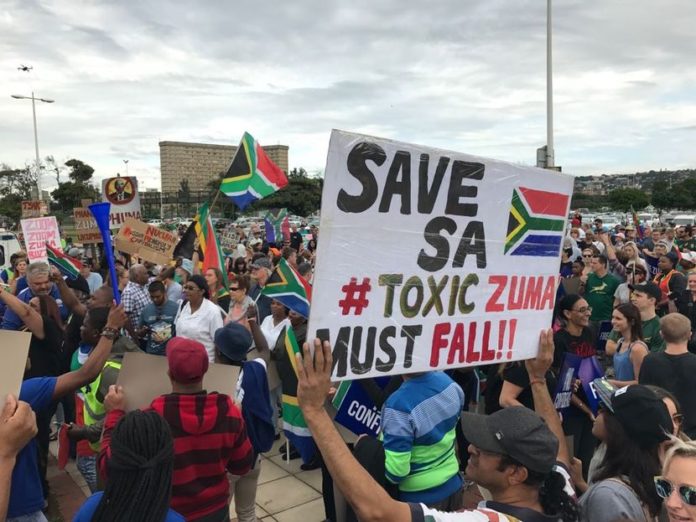
Walter Sisulu kin joins ANC race, as SACP mulls fielding presidential candidate

CALLED FOR DISCIPLINARY ACTION AGAINST ZUMA: South Africa's human settlements minister Lindiwe Sisulu

South Africa’s human settlements minister Lindiwe Sisulu accepted the nomination of some African National Congress (ANC) branches to lead the ruling party, she told local media.

Sisulu, a veteran cabinet minister and a member of the Walter Sisulu family that along with the Mandelas were among the most prominent in the struggle against apartheid, joins a crowded race to succeed scandal-plagued President Jacob Zuma as ANC leader in December.

At least six branches of the ANC have nominated Sisulu as leader and she has publicly accepted.

“I have agreed,” Sisulu said an interview on Sunday, adding that she had a daunting task ahead to return the ‘dignity’ of the ruling party and securing a majority in the 2019 general election.

Sisulu and the ANC could not be reached for comment.

Zuma’s government has been dogged by allegations of corruption and influence peddling and media reports about a trove of leaked emails has heaped pressure on him to allow a judicial commission to investigate graft claims.

Members of the ANC have pushed for the president to step down as have alliance partners trade union federation Cosatu and the South African Communist Party (SACP).

Zuma has denied wrongdoing.

With campaigning yet to start, Zuma has openly backed former African Union president Nkosazana Dlamini-Zuma, to whom he had once been married, while Cosatu and the SACP have voiced support for deputy-president Cyril Ramaphosa.

The SACP at the weekend said it was mulling contesting the next general election on its own – a first for the party, whose leaders have been included in ANC-led cabinets since the end of white minority rule in 1994.


Stories Continues after ad

Tumwebaze takes on Airtel for firing Ugandan engineers

WROTE TO AIRTEl: ICT Minister Frank Tumwebaze.

The Minister of Information and Communication Technology (ICT), Frank Tumwebaze has written to Airtel Uganda over the firing all of its local engineers who have instead been replaced with expatriates.

In a letter dated July 14, 2017, Tumwebaze says his office had received several complaints suggesting that Airtel Uganda has outsourced the entire Engineering Department works, rendering the Ugandan engineers jobless.

“I would like, therefore, to establish if the terms and conditions of licensing do not have a requirement to maintain local content specifically for local professionals. If this is lacking in our policy and regulatory framework, please advise on the necessary interventions,” the Minister wrote.

By press time efforts to get a comment from the management of Airtel were fruitless.

Stories Continues after ad

Pension reform will save Ugandans from old age poverty – expert

PENSION SAVINGS: Such workers need to save for their future (1)

Uganda’s new pension reform which partly wants to pay savers monthly will help retirees avoid sinking into old age poverty a few years into retirement due to unwise investments undertaken, Isaac Sekitoleko, the Research and Market Development Officer at Capital Markets Authority (CMA), has said.

According to Sekitoleko, the new pension reforms introduce the aspect of receiving a portion of savings made during active employment as a lump-sum, with the remaining savings paid out monthly as a pension into perpetuity.
He adds that the increased competition among pension fund managers is expected to lower administration costs and earn savers higher investment returns.

“With a pension regulator already in place to oversee the safety of members’ savings …savers should be allowed to choose their preferred fund managers,” Sekitoleko says, adding that new innovative ways of tapping into the unserved populace in Uganda’s pension industry will bring in more savers faster than when the sector is operated by one entity.

“One only has to recall how the liberalization of the telecommunications industry led to increased competition, improved service delivery, and the introduction of innovative products like mobile money which has significantly increased financial inclusion levels in Uganda,” he says.

Sekitoleko adds that new and innovative pension funds, coupled with the proliferation of mobile money, will spur an increase in the number of Ugandans saving for retirement. This, he says will ultimately save millions of Ugandans from the dilemma of old age poverty.
The 2014 national census results indicate that Uganda has a labour force of 16 million people. By the end of 2015, only 757,179 Ugandans were actively saving with the National Social Security Fund (NSSF) – a mandatory savings scheme for all employees in full time employment other than civil servants.

The 2015 estimates indicate that there were 307,000 active civil servants and this, coupled with the active NSSF savers, translates into slightly over one million Ugandans having some form of retirement benefit.

“This means that only about 6% of Uganda’s labor force is actively saving for retirement, the rest face the risk of old age poverty,” he warns.
The NSSF Act requires formal sector employers with five or more employees to pay mandatory NSSF contributions for their employees. However, this provision has been excluding most Ugandans employed in the informal sector or those working for small firms, prompting the NSSF to introduce the Voluntary Membership Scheme.
The proposed pension reforms, whose bill awaits parliament’s approval, are geared at having all workers and employers in both the formal and informal sector contribute to pension schemes of their choice.

The reforms will enable more pension service providers to operate within Uganda and tap into the wide market.
The NSSF has already a scheme for voluntary monthly contributions, targeting workers employed boda boda riders, barbers, farmers, mechanics and welders among others.

Stories Continues after ad

Prices of Irish Potatoes drop in eastern region

Business people sorting out Irish Potatoes

Prices of Irish Potatoes have fallen sharply in the eastern region, a kilogramme trading at an average price of Shs900 on wholesale and Shs1050 on retail, the latest market report shows.

The ‘Commodity Market Analysis Report’ attributes the low price of Irish Potatoes in the region to increased supply of the same in the markets, with supplies coming mainly from Mbale and Kapchorwa districts.

The central region which includes Kampala, Wakiso and Mukono, registered the second lowest average per kilogramme of Irish Potatoes, selling at Shs1200 for  wholesale and Shs1500 on retail.

Western region registered an average of Shs1300 on wholesale and Shs 1550 on retail while Northern region registered the highest price at an average of Shs 1800 on wholesale and Shs2000 on retail.

Reports indicate that the reason for the high price of Irish Potatoes in the northern region was mainly because most of the people there consume other foods like millet, sorghum, maize flour among others.

Meanwhile, the average price of a bunch of Matooke shot up by Shs3000 and Shs4000 on wholesale and retail respectively, the report shows.

The report attributes the rise in the price of bananas to low supply of the commodity in the markets. Uganda’s markets, mostly those in the city get their Matooke supplies mainly from the western region of the country.

Kalerwe market that is located in the east of Kampala and is known for offering cheap foodstuffs, registered an increase in the price a bunch of Matooke at an average of Shs1000 on wholesale and Shs2000 on retail.

Meanwhile, the report it is anticipated that the prices of foodstuffs will drop in a few weeks’ time.

Stories Continues after ad

Spain revives war crimes indictment against 40 Rwandan army officers

RPA RENEGADE: Lieutenant General Faustin Kayumba Nyamwasa

Three years after Spain’s conservative government drastically watered down its universal jurisdiction laws, a Spanish court has revived an investigation into 40 Rwandan military officials including the renegade former Rwanda Patriotic Army (RPA) Chief of Staff Lieutenant General Faustin Kayumba Nyamwasa, accused of committing terrorism against Spanish citizens.

RPF/A Leader: Rwanda President Paul Kagame.

The decision by three judges on Spain’s national court was issued on June 29, 2017, and will be sent to investigating magistrate Fernando Andreu Merelles for approval, said Jordi Palou Loverdos, a lawyer for families of Spanish victims, in an interview.

In 2008, Judge Andreu gained international acclaim when he indicted 40 military officials of the ruling Rwandan Patriotic Front (RPF) on charges of genocide, crimes against humanity, and terrorism dating from the 1990s. The case initially stemmed from the murder of nine Spanish citizens in Rwanda and neighboring Democratic Republic of Congo, but widened in scope to prosecute RPF military officials for more serious war crimes against Rwandan and Congolese civilians.

In 2014, in a bid to improve economic relations with China and the United States, the Spanish People’s Party eroded the country’s doctrine of universal jurisdiction, which had long sought to investigate crimes beyond its borders and hold abusive leaders accountable. The changes in legislation restricted the courts’ ability to prosecute atrocities committed abroad because they required that defendants be Spanish or be residing on Spanish territory.

Human rights defenders slammed the legislation, and lawyers contested the amendments in constitutional court.

Palou Loverdos said the national court’s decision to reopen the investigation into Rwandan military officials was made possible by two legal provisions: (1) the principle of “passive personality” which enables Spain to assert jurisdiction in cases when terrorism is committed against Spanish citizens abroad, and (2) the possibility of extraditing a leading suspect in the murders of the nine Spanish nationals.

The decision will allow Judge Andreu to issue international arrest warrants against at least 22 RPF officials indicted in 2008 on charges of terrorism in relation to the murders of Spanish citizens, according to Palou Loverdos.

While there is no new change in Spain’s laws, the decision is a new interpretation of universal jurisdiction, he explained.

“This is a new interpretation of international and national law. This means that we still hope for justice. We began this case on behalf of Spanish citizens, then worked for Rwandan and Congolese victims as well. We are still on the same path,” Palou Loverdos said.

The decision by Spain’s national court was issued after Palou Loverdos submitted a new request involving General Kayumba Nyamwasa, Rwanda’s former defense chief who was indicted by Spain for his leading role in ordering the killing of Spanish citizens. Nyamwasa fled to South Africa in 2010 after falling out with Kagame. In June, South Africa’s Supreme Court withdrew his refugee status and gave the South African government six months to reconsider his status. Nyamwasa has faced three attempts on his life while residing in South Africa, allegedly at the hands of Kagame’s operatives.

“We hope to have an active extradition of Kayumba Nyamwasa at last. South Africa is a state party to the European Extradition Convention so theoretically there is an international obligation of South Africa to deliver General Nyamwasa to the Spanish authorities or prosecute and judge him there for the same crimes.”

The Spanish legal team faces major judicial hurdles. No government in Europe, North America, or Africa was willing to extradite any of the 40 Rwandans indicted in 2008 on war crimes. Kagame has benefited from widespread international support despite well-documented human rights abuses committed by his military intelligence apparatus for 27 years in Rwanda and two decades in neighboring Congo. He and his commanders have enjoyed de-facto immunity from prosecution at the International Criminal Tribunal for Rwanda and the International Criminal Court (ICC).

Former spy chief Lt. Gen. Karenzi-Karake.

Yet in a surprise move, Emmanuel Karenzi Karake, Kagame’s former spy chief, was arrested in London in June 2015 on the basis of a European Arrest Warrant issued by Spain. The Spanish indictment alleged that Karake worked with Nyamwasa in ordering the killing of three Spanish nationals for the NGO Doctors of the World and was ultimately responsible for the murder of Canadian Priest Guy Pinard in northwestern Rwanda in 1997. Defectors of Kagame’s Tutsi-led regime have testified to the court that Pinard and the Spanish citizens were targeted because they were aware of RPF killings of Hutu civilians at the time.

Cherie Blair, the wife of Britain’s former Prime Minister Tony Blair, defended Karake against the charges. Two months later, a London court dismissed the case on a technicality and Karake returned home where he officially advises Kagame on defense and security policies.


Stories Continues after ad

MP Kyagulanyi takes on Museveni over ‘ideology’

'EXCHANGED MISSIVES: President Yoweri Museveni greets 'Ghetto President' Robert Kyagulanyi aka Bobi Wine

The recently-elected Member of Parliament for Kyadondo East has started off his duties by ‘punching some holes’ in President Yoweri Museveni’s 30-year public service record.

In a largely low-toned but bare-knuckled response to Museveni’s recent multi-faceted missive on the Kyadondo East by-election that has since gone viral, Kyagulanyi told the President that his victory was determined by the will of the people after the MP promised to address their concerns.

In Museveni missive of July 10 he had written about among other issues, unemployment; corruption; crime and the disconnect between public officials and the populace, issues which the MP lurched onto to counter the President.

In the missive Mr. Museveni had also particularly castigated the media including the government-owned The New Vision, for the coverage accorded the by-elections, insinuating there was biased reporting that favoured MP Kyagulanyi.

But MP Kyagulanyi would hear nothing of the President’s complaints, so he responded and posted his missive on social media, where at a certain point he also advised the President not to amend the Constitution to seek ruling beyond the mandatory 75-year age cap.

‘Mr. President, I have read your article dated 10th July, 2017 on the recent by-elections. I thank you for congratulating me on my victory in the Kyadondo East polls. For emphasis, it is not me who won but rather the ideas which I presented to the electorate. It was especially a victory of a people determined to get involved in how they are governed,’ MP Kyagulanyi wrote.

He added: ‘What happened in Kyadondo East was not a reflection that the media had been ‘freed’. It was partly because of the extra ordinary nature of that election that print and digital, local and international media widely covered it. Our campaign inspired the people, even beyond the constituency, because we correctly diagnosed the problems of our society, understood people’s frustrations and identified with their struggles.

In the process we were able to effectively suggest practical solutions to improve the conditions of our people. Although you would have wished to see the NRM and its candidate dominate headlines, the media should be balanced while reflecting the wishes and aspirations of the people, which is what our campaign offered. The press could not be expected to headline stale ideas which people had rejected. I therefore applaud them for rejecting intimidation and other machinations to fulfil their duty to society’.

MP Kyagulanyi’s full letter below.

Mr. President, I have read your article dated 10th July, 2017 on the recent by-elections. I thank you for congratulating me on my victory in the Kyadondo East polls. For emphasis, it is not me who won but rather the ideas which I presented to the electorate. It was especially a victory of a people determined to get involved in how they are governed.

While I agree with some aspects of your article, I don’t agree with many of the conclusions you draw. For example, I agree that unemployment, corruption, increased levels of crime and leaders not connecting with the population are serious issues. These are not mere gaps but are grave questions of national importance which must be addressed. I am constrained to respond to some of your points, mainly three.

Firstly Mr. President, you castigate the media for covering our campaigns very widely and accuse them of not being happy when the NRM wins by-elections. In this regard you single out the New Vision. Anyone who has been to Uganda or who has followed our politics knows that this is not an accurate analysis. Rather than focus on the recent by-election, it is better for one to consider our electioneering process and politics in general.

It is on record that due to direct and indirect pressure from the government, in most cases media coverage favours the NRM. Only last year, the European Union Observation Mission said this of the 2016 elections; “…the overall reporting environment was conducive to self-censorship and yielded coverage overwhelmingly in favour of the incumbent and the NRM. Thus, despite the fact that more than 300 media outlets operate in Uganda, the variety of information available across the media landscape was constrained, limiting voters’ ability to make an informed choice.”
On its part, the Supreme Court while noting that this issue has been recurrent, held that state owned media failed to give balanced coverage to all presidential candidates as required by law.

Therefore, despite the progress made with regards to media freedom, the NRM gets more coverage on a daily.
What happened in Kyadondo East was not a reflection that the media had been ‘freed’. It was partly because of the extra ordinary nature of that election that print and digital, local and international media widely covered it. Our campaign inspired the people, even beyond the constituency, because we correctly diagnosed the problems of our society, understood people’s frustrations and identified with their struggles.

In the process we were able to effectively suggest practical solutions to improve the conditions of our people. Although you would have wished to see the NRM and its candidate dominate headlines, the media should be balanced while reflecting the wishes and aspirations of the people, which is what our campaign offered. The press could not be expected to headline stale ideas which people had rejected. I therefore applaud them for rejecting intimidation and other machinations to fulfil their duty to society.

Secondly, Mr. President, in your article, you talk about the question of ideology versus biology and the role of youth in politics.
In sum, your argument is that the solution to society’s problems lies in ideas and not in the physical/ biological state of the actors. This is indeed true but my point of departure lies in so far as you seem to think that the present young people lack in ideology. You seem to suggest that the NRA/M ideology is superior and forget that as society evolves better ideas crop up and they should be given opportunity to flourish.

Even then, the NRM hasn’t fared very well with what you identify as the core principles of your ideology- patriotism, Pan-Africanism, social-economic metamorphosis and democracy. Many would agree that these are noble ideals, the problem being that the NRM prefers to constantly talk and sing about them and not practice them. Had you fully implemented them no doubt our society would be much better.

You have laboured to point out leaders who rose to positions of responsibility in their youthful years and did great harm to society. You give examples of Ssekabaka Mwanga, Ssekabaka Mutesa II, Obote, Ibingira, Amin and John Kakonge. I definitely DISAGREE on your conclusion here.
As a student of Uganda’s constitutional history, I know that the crises our society went through in the past years were caused by many factors beyond the leaders of the times. Because of constraints in time and space I will not discuss them here.

However, while it is true that correct ideology overrides biology, the biggest question is ‘WHAT IDEOLOGY?’ You rightly point out that the electorate is losing interest in issues of identity of religion or tribes as basis for electing leaders. Again, rather than look at it as an achievement of your government, I think of it more as a natural result of our population demographics and their struggles. Our society is more blended today as a result of intermarriages between people from different backgrounds(I am an example). You note that 78% of our population comprises of youth.

Many of them are unemployed or underemployed. The hustle for them is real. They have to make ends meet and are definitely uninterested in chauvinism of any kind. I do not want to say that you do not fully understand this but it is rather troubling how you choose to downplay it.

Our society has moved on and new issues are emerging. The generation of the 1960s and 1970s had to respond to challenges of that time and we are grateful to those of you who rose to the occasion and played a role. However, the challenges of our time require a new kind of ideology and approach.
We are talking about a generation where technology is evolving at a terrific speed. A generation which must struggle with the effects of climate change! Today’s generation has to deal with complex issues in science and technology. Young Africans must find out what economic models work best for their times and work hard to improve the living conditions of our people.

As someone who has interacted with so many of these young Ugandans, I know that they have great ideas on how to get there or at least have some idea which simply needs an enabling environment for it to blossom. I do not think that Ugandan youth or Africans generally have a gene for slowness or stupidity.
As someone who has led an African country for over three decades, you might be better placed to explain why youth on other continents are inventing and innovating useful products every day, for which we pay a lot of money.

Part of the problem has been that the NRM views money as the solution to everything in itself. Only God knows how many funds you have put in place for innovation, prosperity, etc. only for them to fail flat. In any case most of that money is lost through corruption.
We must rethink our education system. Those UPE and USE schools might not help the situation in their current state.
Now, almost all these young people were born when you were President and they unfortunately have to put up with a system which tries to respond to challenges of the 21st century using the approaches of the 20th century! Their ideas are viewed as disruptive and discomforting. They are not understood by the leaders most of whom are out of touch with the world reality.

This is why we have been saying that the government is not in touch with the people who they claim to work for. For example, every day I interact with those ‘slum dweller’ youth you talk about. (I prefer to call them GHETTO YOUTH).

Despite lack of advanced education for most of them, these are people with great ideas. They have ideas for innovation and transformation. They have a proper ideology!
But they have been left out completely.

No one listens to them. In supporting me massively, those people were just yearning for a microphone (obwogelero/obugambiro) so that they could also be heard.
They could no longer afford to see government only through its officials who drive through the ghetto in their expensive, guarded vehicles with tinted glasses, moreover paid for by tax payers.
They need a leadership which works for them.

My humble view Mr. President is that those who govern us today should first of all appreciate the fact that the TIMES HAVE CHANGED and involve young people in making decisions for their country.
This ‘lack of proper ideology argument’ has been used far too long to keep them outside.

This is a contradiction given that in the initial years of your government, most people in leadership were just over 30 years of age. Key government positions were occupied by young men and women who in their prime were able to do a lot of good things for the country.

Most Ugandans would find it unbelievable that at only 36 Suleiman Kuggundu (RIP) was Governor Bank of Uganda, Gen. Mugisha Muntu was Army Commander at 31, Dr. Kiiza Besigye was deputy minister for internal affairs and national political commissar at 30, Dr. Crispus Kiyonga was minister for finance at 34, etc.

I am mindful of the contribution of those who were slightly older and society needs both the old and the young.
Elders are capable of providing wise counsel. However, younger people with vigour and fresh ideas should be given opportunity to take the lead. Therefore rest assured that many young Ugandans are able and in fact ready to steer their country forward.
It would be better if they are given the opportunity, PEACEFULLY, and without requiring the country to go through turmoil whenever one generation has to pave way for another.
It is for this reason that I join most Ugandans to request that you stick to your promise and not tamper with the Constitution to remove the age-limit provision for presidency. The country will be grateful for your service when you retire peacefully and let a new breed of leaders with generation-relevant skills and ideas take charge of the affairs of our mother land.

I might understand that your frustration with the generation is born out of the nature of leaders you mostly interact with. Our society is unfortunately dominated by two kinds of leaders.
The first category is the hardliners whose stance is that everything about Uganda is wrong. I do not subscribe to that notion because in seeking a way forward for a better country, we must be willing to talk to each other, being aware that all of us have our failings.

The other category are those leaders who come to you only for monetary favours, whether they belong to the ruling NRM or the opposition.
As a result, many politicians are viewed as buyable and unprincipled.

Uganda today does not need these two kinds of leaders. It simply needs principled leaders who engage with respect for each other and only for the good of the country and not for their own benefit. There are very many such Ugandans. We should only give them opportunity.

Finally on the question of our supporters heckling you at Zirobwe Road junction, I hope you are aware of the events of that day. Whereas I do not condone violence or bad politics, many times our people are provoked by state agencies.
On that day my supporters were charged because we were supposed to hold our rally in Kasangati and the police decided to unlawfully block me from holding it there because you were expected in the area.

That said, Mr. President, you must also note that some of this conduct comes out of deep seated frustration and anger by the people about how they are governed. A powerless, suppressed people may heckle a Head of State simply because that’s the only opportunity they ever got to have their leader listen to them since the government is very far from them.

Many years ago you justified your going to the bush thus, “If you have a government has closed off all other channels of peaceful change, what else could we do, except to surrender, to resign ourselves to slavery? And we couldn’t do that as long as people were willing to fight.”

I think that is the message you should read in those people who heckled you. Today they have no guns but many feel as oppressed as you felt in 1981. A tired people using whatever tool with in their power to express their discontent.
Hopefully we can rethink these things and all of us strive to build a better country.
As it has been put before, it’s time to focus not on the NEXT GENERAL-ELECTION but rather on the NEXT GENERATION.


Stories Continues after ad