Stanbic Bank
Stanbic Bank
18.5 C
Kampala
Stanbic Bank
Stanbic Bank
Home Blog Page 1832

Kabila ‘dodges’ annual Independence Day military parade over security fears

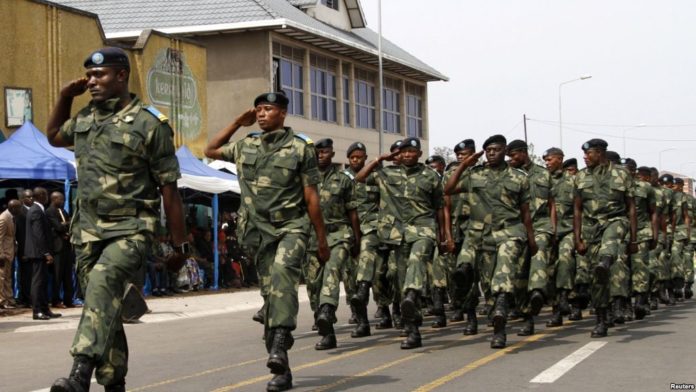
NO PARADE: Members of the DRC forces at a past Independence Day parade.

Democratic Republic of Congo will not hold its annual Independence Day military parade because of security concerns, an adviser to President Joseph Kabila said.

Congo’s independence day parades, held each of the last three years, are usually festive events that mark the end of Belgian colonial rule in 1960 and have been used to show off the Central African country’s latest arms acquisitions.

Kabila’s deputy chief of staff, Jean-Pierre Kambila, said on Thursday that there would be no military parade on June 30 ‘for security reasons’, but did not elaborate. He said Kabila would likely still give a televised speech.

The parade was also cancelled in 2012 and 2013 during the country’s war with the M23 rebel group.

Rising violence, a growing humanitarian crisis and a spate of prison breaks have unsettled Africa’s largest copper producer in recent months, adding to an already tense political climate.

President Kabila refused to step down at the end of his mandate in December, increasing instability and raising fears of a backslide to the civil wars of the turn of the century that killed millions.

Thousands of inmates have escaped from jails this year, including about 4,000 from the capital Kinshasa’s main high-security prison last month. In response, police and army have set up night-time checkpoints in Kinshasa’s business district of Gombe.

Meanwhile, fighting between government forces and a local militia group in the central Kasai region has killed more than 3,300 people and forced 1.3 million to flee their homes since August.

Opponents accuse Kabila, in power since 2001, of deliberately delaying the next presidential election in order to cling to power, but the government says the delays are due to a slow voter registration process and financing shortfalls.


Stories Continues after ad

DRC Catholic Bishops demand free elections

LISTEN: Pope Francis I meets with DRC President Joseph Kabila. The Catholic Bishops in the country have demanded that elections be held

Catholic bishops in Democratic Republic of Congo (DRC) have accused their government of suppressing civil liberties and demanded free elections envisaged under a church-brokered New Year accord.

“The miserable situation we’re living in reflects the persistent social-economic crisis, which is due to the failure to organise elections,” the bishops’ conference said. “Although our republic’s constitution guarantees every citizen the right to enjoy their freedoms, we’re seeing a growing restriction on freedom of expression and the barring of peaceful demonstrations, alongside an excessive use of force.”

In a 24-point message after their June 19 – 23 plenary in Kinshasa, the bishops said they were ‘profoundly alarmed’ by deteriorating economic, security and humanitarian conditions, as well as by rampant corruption and fiscal abuses.

They added that 60 Catholic parishes had been ‘profaned and closed’ during nationwide violence, along with 31 Catholic health centres and 141 church-run schools, while 20 Catholic villages and thousands of private homes had been ‘completely destroyed’.

“The massive, uncontrolled and permanent presence of foreign armed groups is sowing desolation,” the bishops’ conference said.

“Defenders of human rights, and political and social actors whose views differ from those in power are regularly threatened or arbitrarily arrested, while those responsible for these violations are not pursued by the judicial system.”

The Catholic Church makes up about half the 67.5 million inhabitants of the mineral-rich DRC, formerly Zaire, and helped broker the 31 December accord between supporters and opponents of President Joseph Kabila. Under the accord, Kabila was to remain in office, despite ending his final constitutional term, pending late-2017 elections.

However, in March, the bishops’ conference abandoned attempts at a power-sharing settlement, citing “intransigence” on both sides over the choice of a provisional government.

In their message, the bishops said living conditions were now “more than precarious” for most Congolese, as “a minority of fellow citizens take the lives of millions hostage.”

They added that government forces and UN peacekeepers had been unable to end the violence, including nine months of fighting with rebel militias in Grand Kasai province that left nearly 3,400 dead and more than a million displaced.

“The political accord contained solution pathways for a peaceful exit from this crisis, but its integral implementation has been insignificant because of a lack of political will,” the bishops’ conference said.

“The political actors are piling up strategies for emptying the accord of its contents, thus mortgaging any prospect for free, democratic and peaceful elections. The pretended solutions now in place are hastening our country’s implosion rather than contributing to national cohesion.”

Addressing local officials in Lubumbashi, DRC,on 26 June, Kabila accused the bishops of ‘seeking to create disorder’, and threatening his government by insisting ‘it’s December or nothing’.


Stories Continues after ad

MP Tayebwa scoffs at Baryamureeba’s snide remarks over VC job loss

BARYA NOT FIT TO RUN MAKERERE: Ruhinda MP Thomas Tayebwa, who is also a member of the Makerere University Council

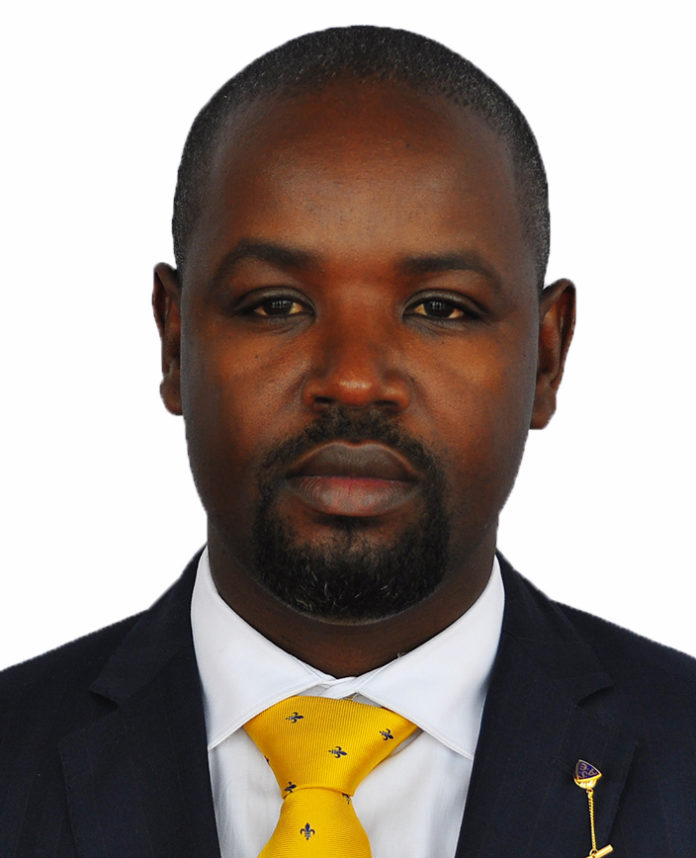
Ruhindi North Member of Parliament Thomas Tayebwa has scoffed at Prof. Venansius Baryamureeba, who lost the Makerere University Vice Chancellor race, saying he is not fit to run Uganda’s most prestigious institution of higher learning.

Mr. Tayebwa, who doubles as Makerere University Council Member, was reacting to an earlier accusation by Prof. Baryamureeba, who claimed that the former had played a big role in his failure to become the VC.

“How could he say that I influenced the process when I don’t sit on the search committee and Senate? How can he ridicule Council members who are of high integrity?” Tayebwa wondered.

Tayebwa acknowledged his support for Prof. Barnabas Nawangwe, the eventual winner of the race, saying Nawangwe stood with Makerere university “unlike Baryamureeba who after serving as Vice Chancellor went away to start another university.”

“When he approached me for support, I told him the reason why I didn’t support him was because he left Makerere and started a university of his with own and even went away with university staff whom Makerere had spent much on training,” he added.

After losing the Vice Chancellorship Prof. Barya started the Uganda Technology and Management University (UTAMU).

Meanwhile, Prof. Baryamureeba, who was among the three candidates that applied for the Vice Chancellor, now alleges that he has ‘overwhelming evidence’ to show that the search committee report that was used as a basis for the Senate and Council decisions to have Prof. Barnabas Nawangwe elected as the Vice Chancellor designate ‘is a total sham’.

I therefore, shall never recognise Prof. Nawangwe as Vice Chancellor elect and later as Vice Chancellor of Makerere University,” he said.
Makerere University Council on Thursday, June 29 voted Professor Nawangwe to become the new Makerere University Vice Chancellor (VC).

In the University Council Prof Nawangwe garnered 16 votes followed by Professor Baryamureeba with four votes and Professor Edward Kasujja Kirumira with two.

“The main architect of this scam outside the search committee has been Honourable Thomas Tayebwa, a member of Council with vested personal interests in Makerere University who has been misusing the name of the First Lady and Minister of Education and Sports to misinform members of the search committee, Council and other stakeholders of Makerere University,” Prof. Baryamureeba claimed.

But in response Mr. Tayebwa said: “I advise him to go and concentrate at his university and I say this with respect because he is my friend and let him settle at teaching because he can’t be a manager.”


Stories Continues after ad

Cristiano Ronaldo ‘not invited’ to Messi’s wedding ceremony

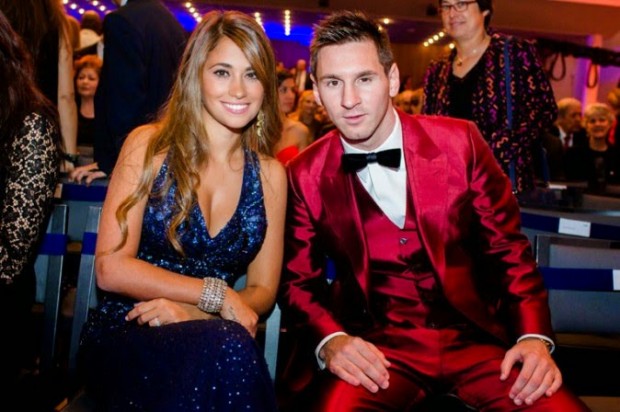
Lionel Messi with wife Antonella Roccuzzo

Football superstar Lionel Messi will marry his childhood sweetheart in his hometown in Argentina today, Friday June 30 in the ‘wedding of the century’.

The winger is returning to the city of Rosario to wed Antonella Roccuzzo, whom he met at the age of five before he moved to Spain.

The venue of Messi’s wedding

The pair already has two children together called Thiago Messi and Mateo Messi, both boys.

The Barcelona winger, who won his 5th Copa Del Rey trophy last season, turned 30 on 24 June.

Two hundred and sixty guests have been invited to the ceremony including his entire senior Barcelona teammates, Gerald Piqué’s pop-star wife Shakira, Sergio Aguero, Xavi and Chelsea midfielder Cesc Fabregas among others.

Guests at the wedding will have the chance to play in the on-site casino while most will also stay in the five-star, 188-room Pullman Hotel inside the complex where rates start from almost £100 a night, all catered for by Messi.

Angel Di Maria is the only player with links to rivals Real Madrid invited to Lionel Messi’s wedding.

Real Madrid star Cristiano Ronaldo also didn’t receive an invite from Lionel Messi.

Former Barcelona boss Luis Enrique and Argentine football icon Diego Maradona are amongst those snubbed.

Since moving to Spain, Messi has won a record-breaking five Fifa Ballon D’Or awards.

The event will take place at Rosario’s City Center hotel complex in Argentina.

Stories Continues after ad

Gov’t lays new strategy to boost investments

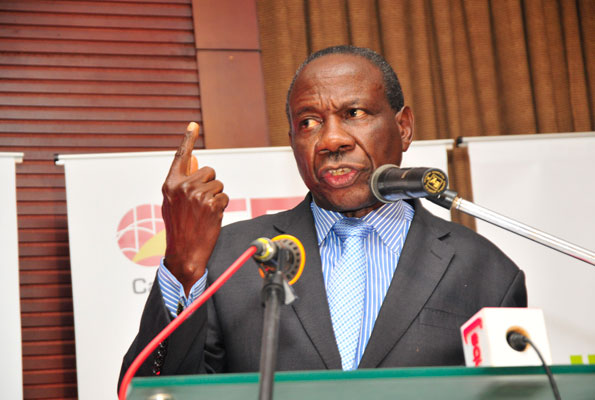
Finance Minister, Matia Kasaija who is worried of the sinking economy.

Uganda has come up with strategies to boost investments in the country, according to the Accountability Sector Strategic Investment Plan 2017/18-2019/20, now in public domain.

Finance minister Matia Kasaija says the initiative comes at the right time when the country is putting a lot of emphasis on the mobilisation of financial resources domestically, to fund development projects.

“There are still concerns of lack of value for money in service delivery, inadequate mobilisation and slow economic growth which may curtail the realisation of NDPII and SDGs,” Minister Kasaija noted.

In the strategic plan, government plans to continue capitalising the Uganda Development Bank (UDB) in a bid to avail cheap loans to medium and long-term projects, and the bank was allocated shs50 billion in the 2017/18 Shs 29 trillion budget.

During the period, government also plans to fully operationalize Islamic Banking and review the current financial institutions regulatory and policy framework to enhance financial inclusion and develop capacity of micro and small enterprises to prepare bankable projects.

Further, government wants to leverage on securities to raise capital, both by the private and public sector but also reduce barriers to setting up and doing business in Uganda.

In the plan, it also wants to liberalise the pension sector by fast-tracking the Pension Liberalisation Bill, now gathering dust on the shelves of Parliament, having faced opposition from trade unions.

Government also intends to strengthen the Credit Reference Bureau (CRB) and develop a collateral registry to reduce defaulter rates but also integrate data systems for TIN, identity cards, utilities and Uganda Registration Services Bureau.

“In order to increase private investment, the sector shall review policies relevant to investment climate and implement policy recommendations arising from the Presidential Investor Round Table and Presidential Economic Council,” the document reads in part.

Further, government wants to facilitate linkage of foreign direct investments that require local partners through web portals, e-marketing.

Under the strategy government wants to make industry membership association mandatory as well as strengthen strategies to increase investor confidence and promote the public and private sectors to work together.

To increase insurance penetration in the country, government plans to develop and implement a national policy on insurance that will also see government insure its assets.

It also plans to fast track the implementation of the National Health Insurance Scheme, enforce workers compensation policy and engage the education system to appreciate and promote insurance of students.

“It will also develop and implement a sector sensitive financial literacy programme and sensitize the public on insurance; and increase government involvement and funding to the insurance sector,” the report states.

Government plans to boost the the pension sector whereby it will review the regulatory framework and transform the public service pension into a savings contributory scheme. This, government says, will boost long- term savings.

In order to increase the level of capitalisation and widen investment pportunities in the capital markets, planners want to revise and amend the legal and regulatory framework for capital markets to ease issuance of securities and encourage innovation and product development.

Government also plants to impose mandatory listing for companies in specific and strategic sectors ,which will require the listing of companies where government holds some shares. These would include Tier 1 Banks, telecommunication companies, insurance companies and energy companies.

It also wants to create access to government bond markets in the primary market and widen widen investor base by undertaking “aggressive investor education on the benefits of raising capital through capital markets.”

statistics show that over the last five years, economic growth averaged 4.5% and inflation was kept at single digit as 85% of the adult population had access financial services, as the average lending rate ranged from 22.1% to 25.2% while private-sector credit to GDP was estimated at 12% in 2015/16.

Over the same period, the total licensed investment ranged from US$1,125m to US$2,058 m.

Uganda continued to be at a low risk of debt distress with the present value of public debt-to-GDP ranging from 19.6% to 24.6%, which is within the “less than 50%” ceiling recommended by the Public Debt Management Framework.


Stories Continues after ad

Rugby Cranes ready for tough Senegal test in the Africa Gold Cup

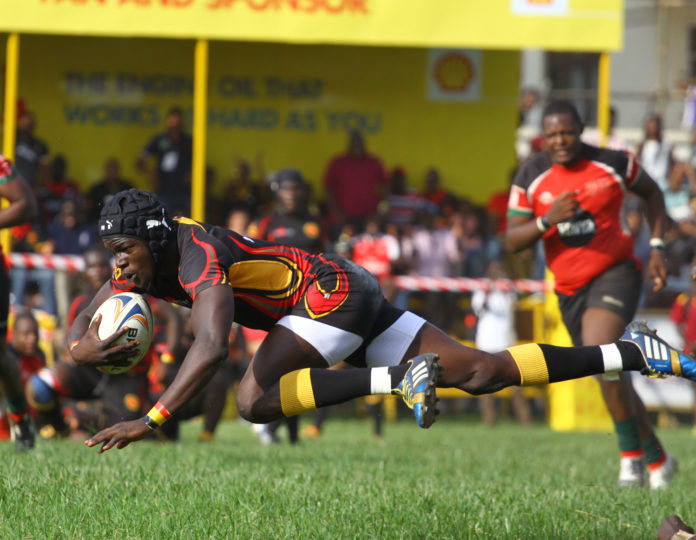
READY: The Rugby Cranes in action

The Rugby Cranes will lock horns with Senegal at the Stade Iba Mar Diop stadium in their second game of the 2017 Africa Gold Cup tomorrow.

The Rugby Cranes of 23 players is already in Dakar ahead of this weekend’s clash, with Ronald Musajja returning to the team to replace Scot Oluoch in the starting line-up.

Uganda looks to continue an impressive run after an away draw in Nairobi, hoping to redeem their hopes of challenging for the title and try to win the African crown for the second time since 2007.

Uganda are placed second with Kenya Simbas after they played to 33-all draw last weekend.

Senegal will look to bounce back after they started their campaign with a disappointing 16-28 home loss to the Zimbabwe Sables.

Senegal are ranked 5th in Africa, a rank below Uganda.

Zimbabwe are still on top of the Africa Gold Cup after match day one that saw four teams get into action on Saturday June 24, 2017.

The tournament takes place until August 5 with Namibia, Zimbabwe, Tunisia, Uganda, Kenya and Senegal participating, playing home and away matches.

For every win, a team gets four points, two in a draw, 0 in a defeat while one is available for a bonus win.

Uganda’s next game will be on July 15, 2017 against Tunisia in Kampala.

The game will be live on Kwese Free Sports at 4 pm

Starting line-up,

Forwards:

  1. Asuman Mugerwa
  2. Alex Mubiru
  3. Brian Odongo
  4. Uhuru Charles
  5. Mathis Ochwo
  6. Asaba Brian
  7. Ronald Musajja
  8. Marvin Odong


Backs:

  1. kevin Makmot
  2. Magomu Ivan
  3. Odong James.
  4. Ogena Pius
  5. Wokorach Michael
  6. Lawrence Sebuliba
  7. Phillip Wokorach


Substitutes:

Wathum Cyrus, Adnan Mutebi, Kimbowa Collins, Oketayot Byron, Musa Mwonge, Ivan Kirabo, Gerald Sewankambo, Justin Kimono.


Saturday, 1 July:

Africa Gold Cup,

Senegal vs. Uganda – 4pm, Dakar.


Stories Continues after ad
Bobi Wine’s victory: Five other East Africa musicians who became MPs

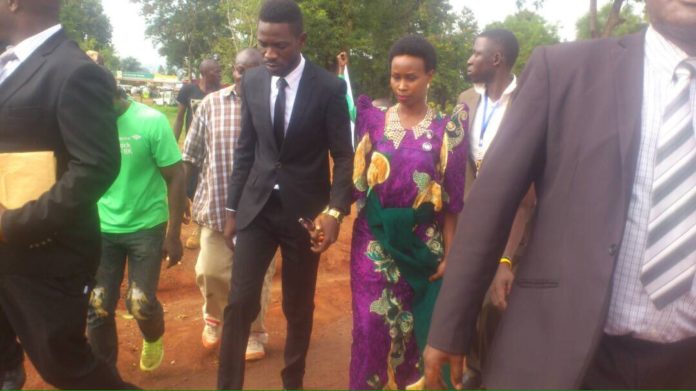
VICTORIOUS: Robert Kyagulanyi aka Bobi Wine and his wife Barbie Kyagulanyi.

Musician Robert Kyagulanyi Ssentamu popularly known as Bobi Wine is now a Member of Parliament representing Kyadondo East constituency, following his Thursday landslide victory.

Bobi Wine won 77.7 per cent of the vote, a decisive 25,659 votes, with NRM’s Sitenda Sebalu coming second with 13.8 per cent and former area MP Apollo Kantinti with 5.5 per cent.

Bobi Wine becomes the fourth entertainer to join the Tenth Parliament following the earlier election of comedian Kato Lubwama, former dancer Peter Ssematimba and singer Judith Babirye.

But these are not the only entertainers voted to Parliament in East Africa.

Tanzanian Hip Hop singer Joseph Haule popularly known as Professor Jay won the Mikumi Constituency parliamentary seat in 2015.

Professor Jay was encouraged to join politics by his close ally and outstanding rapper Jospeh Mbilinyi, better known as Mr Sugu. Mr Sugu himself is also an MP for Mbeya town.

In Kenya, celebrated P Unit member Francis Amisi aka Frasha is also vying for a parliamentary seat in the August elections.

Former Big Brother Africa contestant, Millicent Mugadi is also seeking to retain her seat after winning the Jubilee Party primaries.


Stories Continues after ad
KCCA FC eager to edge FUS Rabat

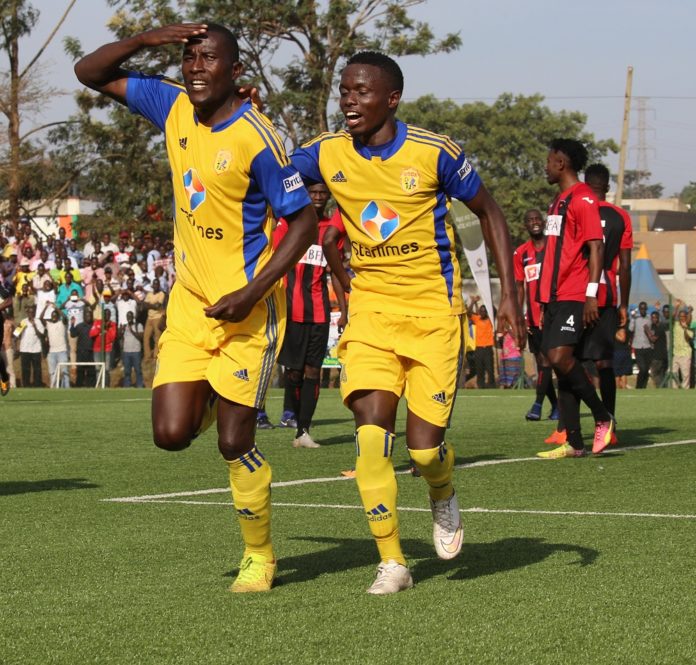
KCCA maestro Geoffrey Sserunkuma and a colleague

KCCA FC hosts Moroccan side FUS Rabat in the return leg of the CAF Confederations Cup this Sunday, following the arrival of the team on Thursday morning.

Mike Mutebi’s side lost 3-0 to FUS Rabat in the first leg on Sunday June 2 away in Morocco but will look for a revenge to keep their Cup quarter final hopes back on track.

KCCA lost its previous match in Nigeria, with two early goals from Bernard Ovoke and Fredrick Obomate, putting the Rivers United side on the front foot. However, Geoffrey Serunkuma reduced the hosts’ goal tally on the stroke of half-time but his effort wasn’t enough to get a positive result.

Habib Kavuma was sent off for a second yellow card in the 89th minute which means he will miss the clash in Lugogo.

Midfielder Saddam Juma is back in the team because he was barred from playing against Rabat in Morocco pending CAF clearance and that dragged on until he was cleared on Wednesday, boosting the club’s confidence.

The Kasasiro boys will also look up to their goal machine and Player of the Season Geoffrey Sserunkuma with his partner Derrick Nsibambi help them as the team gears up to secure the three points at home.

KCCA FC remain bottom of group A on six points as same as the opponents with a goal difference of negative two. but a win will boost their chances of making it out of the group.

At the same time, Club Africain and the Nigerian club Rivers United will battle in Tunis who are in the same group.


CAF Confederation Cup

2nd July 2017,

KCCA (Uganda) Vs FUS Rabat (Morocco),

Phillip Omondi stadium, Lugogo – Kampala (4 p.m)

Stories Continues after ad
Trump, Putin meet next week

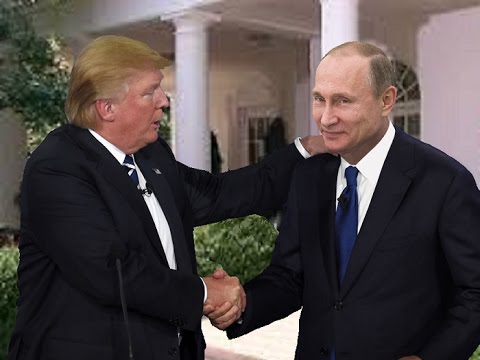
US President Donald Trump with his Russian counterpart Vladimir Putin

US President Donald Trump will meet with Russian President Vladimir Putin in Germany next week, their first face-to-face talks since the US intelligence community formally declared that Moscow had meddled in the 2016 election, the White House announced.

In a briefing for reporters, Gen. H.R. McMaster, Trump’s national security adviser, and Gary Cohn, Trump’s top economic aide, declined to say whether the president would raise the issue of Russian efforts to influence last year’s political contest.

“There’s no specific agenda,” McMaster said. “We don’t have an agenda set up,” Cohn agreed, adding that the White House was “still finalizing schedules” for Trump’s travel next week.

Asked what Trump hoped Putin would do to build trust between Washington and Moscow, McMaster declined to list specific actions.

“Our relationship with Russia is not different from any other country in terms of us communicating to them what our concerns are, where we see problems in the relationship but also opportunities,” the general said.

At the same time, McMaster said, Trump has tasked his top aides to find ways to “confront Russia’s destabilizing behavior” including “political subversion here, in Europe and elsewhere.”

Trump has not been shy about demanding specific steps from other countries. He scolded NATO allies to speed up increased military spending, for example. He warned South Korea and Germany that he expects them to take steps to reduce their trade surpluses with the United States. And he has repeatedly declared that Mexico will pay for a border wall it opposes.

Trump’s talks with Putin will occur on the sidelines of the Group of 20 summit in Hamburg, Germany. Trump also plans to meet with German Chancellor Angela Merkel, British Prime Minister Theresa May, Japanese Prime Minister Shinzo Abe, South Korean President Moon Jae-in, Chinese President Xi Jinping, Mexican President Enrique Peña Nieto, Indonesian President Joko Widodo and Singaporean Prime Minister Lee Hsien Loong.

The meeting comes amid multiple congressional investigations into Russia’s alleged meddling in the 2016 election, as well as a Justice Department special counsel probe into whether Trump’s campaign colluded with Moscow. The president, who has not definitively said he accepts the intelligence community’s findings, has denounced what he describes as a “witch hunt” designed to undermine his legitimacy.

Trump has repeatedly said that he wants better relations with Russia, and his administration made a failed secret push in its early days to ease a range of sanctions former President Barack Obama imposed on Moscow for its alleged interference in the election. At the same time, the State Department has reiterated its commitment to keeping in place sanctions imposed over Russia’s annexation of Ukraine’s Crimea region.

McMaster said Trump hoped to “foster areas of cooperation,” adding that Washington and Moscow could work together to rein in North Korea, battle transnational terrorism, end the Syrian civil war and defeat ISIS.

But the president also wants to “deter” Russia, McMaster told reporters, adding: “Nobody wants a major-power war, right?”


Stories Continues after ad

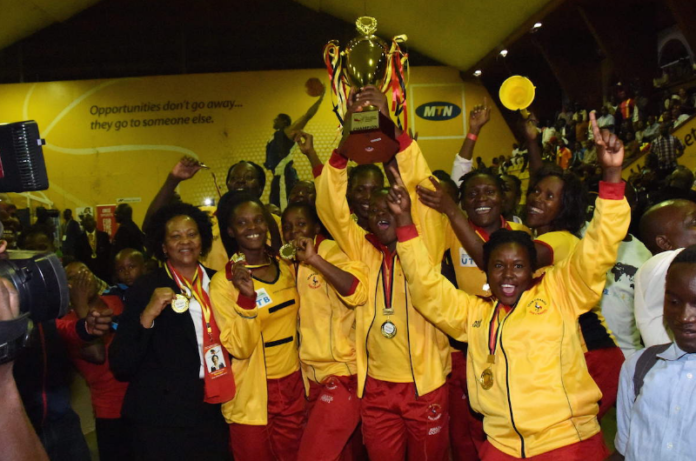
Uganda wins 2017 Africa Netball Championship

2017 CHAMPIONS: The Uganda Netball team, the She Cranes

The She Cranes emerged winners of the 2017 Africa Netball Championship after a 67-50 victory over Zambia in the final game.

Six nations took part in the annual championship: Zambia, Malawi, Namibia Botswana, Zimbabwe and the hosts Uganda, that was led by London-based mercurial player Peace Proscovia.

Five wins out of five, the She Cranes got 10 points and sealed a memorable tournament on the final day of the six-nation event at Lugogo MTN Arena in Kampala by winning all the games at hand, scoring 335 goals and conceding 198.

Uganda started with a convincing victory over Botswana (72-29) on the first day of the tournament last Saturday, the biggest margin in the competition.

Zimbabwe were defending champions of this challenge but the She Cranes managed to outplay them with a 61-45 victory.

Malawi Queens finished with 8 points by winning four games and only lost to the She Cranes 66-43, winning silver.

Uganda is ranked 13th, Zimbabwe 16th and Zambia 15th while Malawi are ranked 6th in the world.


The games Uganda played:

Uganda 72-29 Botswana

Uganda 69-31 Namibia

Uganda 66-43 Malawi

Uganda 61-45 Zimbabwe

Uganda 67-50 Zambia


The table standings

Team          P   W D   L   PTS   

Uganda      5   5   0    0     10      

Malawi      5    4   0    1    8         

Zimbabwe 5   3   0    2     6         

Zambia      5   2   0   3    4         

Botswana 5   1   0    4     2

Namibia    5   0   0    5    0

Stories Continues after ad