Stanbic Bank
Stanbic Bank
25 C
Kampala
Stanbic Bank
Stanbic Bank
Home Blog Page 1833

US$7m for tourism training institute upgrade

ENCOURAGED DOMESTIC TOURISM: Minister Ephraim Kamuntu

The government has secured US$7 million to revamp the Hotel and Tourism Training Institute in Jinja, the Minister of Tourism Prof. Ephraim Kamuntu has disclosed.

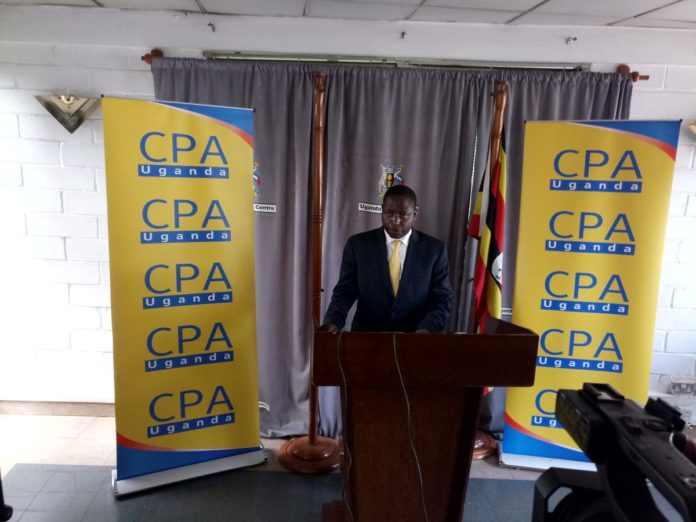
Speaking at the launch of the 5th Annual Hotels and Restaurant Expo that takes place at Hotel Africana early next month, Minister Kamuntu said the government wants to transform the institute into a regional centre of academic excellence in hands-on hospitality training in a bid to tap into the lucrative industry.

According to Kamuntu, Uganda is one of the top world tourist destinations to visit in 2017, based on the study by a UK company – Rough Guides, a reputable world travel guide, which ranked Uganda fourth behind India, Scotland and Canada.

Uganda boasts of fascinating features such as national parks, mountains, lakes and rivers and the diverse culture. All these, though underexplored put Uganda in the limelight when the topic of tourism in Africa comes up.

Currently, the minister said, the number of foreign tourists into Uganda has hit 1.3 million against government target of four million tourists by the year 2020.

In a related development the Minister said that Uganda would earn more revenue if the citizens embrace domestic tourism.

“Tourism is everybody’s business; we want Ugandans to know and enjoy their own country because tourism has become a global phenomenon” Kamuntu said at the government-owned Uganda Media Centre.

Minister Kamuntu said the on-going upgrading and construction of roads across the country is partly geared towards serving the tourism industry.

Economically, the minister said tourism is important to Uganda as the number one foreign exchange earner, bringing in over one billion dollars annually.

UHOA Chairlady Susan-Muhwezi speaking at a recent function

Speaking at the same occasion Mrs Susan Muhwezi, the Chairperson of Uganda Hotel Owners Association (UHOA), noted that despite the challenges faced by the tourism industry today, it directly employs over 450,000 people, 90 percent of whom work ply trade in the hotels and restaurants.

“The hospitality sector is the backbone of the tourism industry and thus the need to harness its potential through events like the hotels and restaurants expo,” she said.

Mrs Muhwezi further said hotels would give special rates to all Ugandans and foreign residents as a way of promoting domestic tourism.

Speaking of the upcoming hotels and restaurants expo, Mrs Muhwezi said it gives local hotels and restaurants platform to market themselves especially to domestic tourists.


Stories Continues after ad

Malakai Eco Lodge: A Getaway from the city

The paved pathway leading to Malakai Eco Lodge

By Cynthia Tumwine

If you are the kind of person who has a hectic schedule and are looking to get away from the city, Malakai Eco Lodge is the place for you.

Located on Entebbe road in Kitende not too far from the city, it could take approximately 40 minutes to get there with traffic. However, on a day when traffic is melting you could get there in 20 minutes.

The place greets you with a quiet and serene environment and is filled with nature for those that love to take in great scenery; suddenly the air is fresh and instantly you forget about all your work, social and personal woes!

The swimming pool at Malakai Eco Lodge

I had the amazing pleasure of experiencing this gorgeous spot first hand and it’s definitely a place worth visiting in Kampala. Immediately you walk in, there is a paved pathway that leads you to the different cozy areas. It leaves you spoilt for choice with African-themed décor and greatly curved, Ugandan made furniture.

There is also a petting zoo, something that would intrigue the kids, making Malakai Eco Lodge family-friendly. The zoo has different birds like parrots, chicken, guinea fowl, pigeons and doves, small cute little creatures like rabbits, hamsters and squirrels can be seen here as well.

By night it is an amazing paradise, lit up with bulbs that are fixed in old wine bottles, giving them a different effect depending on the colour of the bottle. Indeed, it is clear that creativity is really a big consideration in the detail of Malakai’s  general appearance.

And depending on whether you want to stay for a day or night, there are several activities to keep you busy. If you want to relax and just take in the great ambience, have a meal and order drinks, the menu offers several options including stir fry, different pork dishes, fish, chicken, pastas, sandwiches, pizzas and delicious desserts in a beautifully set up dining area.

As regards bedding, Malakai has several rooms depending on what feel you would require while on your mini holiday/ vacation. One is spoilt for choice as all the rooms have a unique feature about them that stands out and leaves you gaping in awe. The golden snail which is a popular pick, gives you an Amazon feel, with beautiful stone walls and a great open space.

The other rooms include The Pebble House, Butterfly House, Light House, Island which are two rooms built on top of water giving you that actual island feeling, Pond House, the Volcanic Hut, Tree House as well as the blue room, true to its name all draped in blue is for the more corporate class that are on a business trip; but its sophistication and yet simplicity makes it stand out and could appeal to even those simply on holiday. There are also poolside rooms for those that love to swim.

If it is a family trip where Mum, Dad and the kids are involved, they have got you covered as well with the family room which is two storied with beds downstairs and upstairs and has a proper home setting with a dining area and a small lounge as well. In all, Malakai Eco Lodge is one of Kampala’s secret jewels and promises to be quite the getaway everyone will be heading to in no time.

According to the proprietor Mrs. Janet Audreast, several people have already visited from around the country as well as abroad and continuously get shocked at how breathtaking this beautiful place in the middle of Kitende is.

“We expect to be fully booked once people discover how easy it is to get a break from the city while at Malakai”, says Ms. Audreast.

So, don’t be left behind; if you are looking for serenity and calm for a few hours or even a few days, this is exactly what you need.

Stay Adventurous.


Stories Continues after ad

Zuma woes intensify, as Public Protector ‘tightens noose’

South African Public Protector Busisiwe Mkhwebane

South Africa President Jacob Zuma has no grounds on which to attack the remedial action former public protector Thuli Madonsela set out in her State of Capture report, her successor says in court papers.

His application for a court to review and set aside Madonsela’s recommendations lacks any prospect of success, Busisiwe Mkhwebane says in an affidavit filed with the High Court in Pretoria.

There is no basis to stop the implementation of the recommendations pending the review, she argues.

In December 2016, Zuma asked the High Court in Pretoria to set aside Madonsela’s recommendations. These included that the Chief Justice should appoint a judge to chair a commission of inquiry into allegations of state capture.

Mkhwebane further argues that Zuma cannot decide who will chair the commission as he has a direct personal or financial interest in its outcome.

She says Zuma’s approach is impermissible given that the remedial action should already have been complied with by December 2 last year.

Madonsela investigated allegations that Zuma’s friends, the Gupta family, offered government officials, including ANC MP Vytjie Mentor, Cabinet posts in exchange for government tenders and other favours.

Zuma allegedly allowed his son Duduzane and the Guptas to be involved in appointing board members of state-owned enterprises, and to be involved in Nhlanhla Nene’s removal as finance minister in December 2015.


Stories Continues after ad

US threatens sanctions against more Kabila allies over elections

TOUGH ROAD AHEAD? DRC President Joseph Kabila

The United States has threatened to impose further targeted unilateral sanctions on anyone who hinders Democratic Republic of Congo’s already delayed preparations for an election to replace President Joseph Kabila.

The country’s election commission president said on Sunday that the vote, originally due in November 2016, was unlikely to take place in 2017, because of delays in registering millions of voters.

Further delays could trigger additional unrest following anti-government street protests last year in which security forces killed dozens of demonstrators. The opposition quickly denounced Sunday’s announcement as a declaration of ‘war’.

“We are ready to take additional action to sanction those who stand in the way of DRC’s first democratic transition of power,” US Deputy Ambassador to the United Nations Michele Sison told the UN Security Council.

The United States imposed sanctions on several Congolese officials last year – blocking any financial assets in the United States and generally barring Americans from engaging in financial transactions with them – for hindering democracy.

“The Security Council should also consider targeted sanctions to reduce the violence in the DRC and help pressure all stakeholders to play a more constructive role in moving the country forward,” Sison said.

Kabila has refused to step down at the end of his second elected term in December, sparking protests that killed dozens of people. Militia violence has also intensified across Congo, raising fears the country will slide back into the wars at the turn of the century that killed millions.

The IMF has told Congo that ‘a credible path toward political stability’ will probably be a condition of any assistance package, a letter seen by Reuters showed on Tuesday.

Under an accord struck on December 31 between Kabila’s representatives and opposition leaders, Kabila, in power since 2001, is barred from trying to change the constitution to stand for a third term.

About 80,000 people have fled fighting between the Congolese army and a new rebel coalition, the United Nations said. Conflict has forced more than 1.5 million Congolese to flee their homes this year, while more than 3,000 have died since last October in central Congo’s Kasai region.


Stories Continues after ad

Nigerian VP meets President Buhari in London, returns home immediately

MET BUHARI: Nigerian Vice President Yemi Osinbajo

Nigerian Vice President Yemi Osinbajo was in London on Tuesday, spending an hour at the country’s High Commission where President Muhammadu Buhari has spent much of the past two months on medical leave.

Osinbajo was seen arrive at Abuja House, the Nigerian High Commission in London late yesterday and left an hour later without comment.

Buhari left Abuja on May 7 and handed over power to his deputy, to allay concerns of a void at the top of Africa’s biggest economy.

“Osinbajo meeting with President Buhari in London today, and returning to Abuja immediately afterwards,” the vice president’s spokesman, Laolu Akande, said in a Twitter message. No details were given.

Officials have not disclosed details of Buhari’s illness, which has caused fierce speculation in Nigerian media and on social media about his ailment and whether he will seek a second term in the 2019 election.

A thin-looking Buhari, 74, was last seen in Nigeria on state television welcoming a group of 82 girls released by Islamist militant group Boko Haram, hours before he flew to Britain.

It is the ailing president’s second break in Britain this year. The first began in January and lasted nearly two months


Stories Continues after ad

State prosecutors go on strike

Director of Public Prosecutions, Mike Chibita.

The strike of State prosecutors under the Directorate of Public Prosecutions (DPP) begins tomorrow.

According to some of the documents seen by EagleOnline, State Attorneys have already informed their respective courts that they will not be available for work effective tomorrow so as to participate in the industrial action.

“I regret to inform you that as members of UAP and pursuant to the Resolutions of the General Assembly arrived at on 23rd of June 2017, we shall be closed from Wednesday the 12th day of July 2017 until further notice to participate in an industrial action,” reads a letter written to the Magistrate of Kajjansi Court.

The prosecutors are protesting over low pay.

According to the current salary structure of prosecutors under DPP, the lowest ranking state prosecutor earns a gross salary of Shs644, 963 a month with the highest paid prosecutor at the rank of Senior Principal State Attorney taking a gross monthly pay of Shs2.1 million.

The Deputy DPP is paid Shs2.9 million while Assistant DPP earns Shs2.4 million.

The association’s president, Baxter Bakibinga says this is too little given the fact that state attorneys handle complicated cases like terrorism and murder yet their salary is less than what a tea girl at KCCA earns.

He also added that they are not funded; do not receive allowances for working in hard-to-reach areas, professional practicing allowance and promotion. Furthermore, government had completely ignored their grievances thus leaving them with just one option – industrial action.


Stories Continues after ad

Parliament new Shs180b chambers construction kicks off

The Uganda Parliament in Session

Movements around Parliament have been curtailed, following the kickoff of construction of new chambers.

Staff and guests using the gate at North Wing were this morning treated to a new entry point after all cars were barred from the parking yard to pave way for the works.

At a Shs180b contract price, Roko Construction Ltd. is executing the works that will see the crowded current chambers expanded to accommodate the pregnant Parliament.

However, the procurement of the new chambers has been bogged by numerous petitions to among other oversight agencies, the Inspector General of Government and the Public Procurement and Disposal of Assets Authority (PPDA).

The other bidders that competed with Roko include CRJE (East Africa) Ltd, China Civil Engineering Construction Company, China Complete Plant Import and Export and Seyani Brothers & Co.

But there has been bickering amongst these firms, protesting the manner in which the procurement process was conducted.

The old chambers were built by the British colonial government and it was meant to cater for only 80MPs, but the numbers have since shot to 427MPs.

In fact, the matter of space has been top of priority for Parliament, with many of its own members decrying the shortage of space.

Last week, Budadiri East MP Vincent Woboya blamed the shortage of space on President Museveni, whom he accused of wrecking ‘more havoc’ on the already crowded chambers, by what he called ‘appointing a beehive of Ministers, to crowd the front bench’.

“The people who designed this House knew that the front bench shouldn’t over flow. The President must also be advised that the front bench shouldn’t over floor. The reason we are having everybody everywhere, it is because of those problems, even to the extent of getting a UPC (Betty Amongi-Minister of Lands) to come and sit here,” Woboya said.


Stories Continues after ad

Comedian Kayibanda in critical condition after attack by thugs

REMOVED NECK BRACE: Comedian Godfrey Seguya aka Kayibanda at Nsambya Hospital

A few days back the entertainment community came together to save the life of fast-rising producer, Danz Ku Mapeesa aka Daniel Mukisa, who at the time was battling for his life after being attacked by thugs.

Well, before healing, another entertainer is currently hospitalized after being attacked by thugs.

Veteran comedian, Godfrey Seguya popularly known as Kayibanda was attacked Tuesday morning by thugs as he headed to his workplace. Sources say he is now admitted at Nsambya Hospital in critical condition.

Kayibanda is among the pioneers of comedy in the country having risen to prominence in the early 2000s. He worked with WBS TV where he used to appear on Straka Mwezi’s ‘Late Show’ and also spent close to two decades at CBS radio as a presenter.

Stories Continues after ad

Jinja agricultural show attracts 400 exhibitors

AGRICULTURE: A woman tends to her banana plantation

The 25th Source of the Nile National Agricultural show to be held at Jinja Show Ground is expected to attract 400 companies.

According to Captain Esau Tisasira, the Vice President of the Uganda National Farmers Federation (UNFF), 280 of them have already confirmed participation.

UNFF is an umbrella of farmers’ organizations representing 3.2 million farmers in the country and is the organiser of the show.

The show, now in its 24th year is expected to be officially opened by President Yoweri Museveni, and will run from July 17-23, 2017.

Addressing the media at the Uganda Media Centre in Kampala today, Capt. Tisasira said this year, unlike the past years, the show will be strictly for agricultural exhibitors such as farmers, agro-dealers, agricultural service providers.

“In the past we included trade but we have realised trade does not serve our objective of helping farmers,” Capt. Tisasira said, adding that exhibitors will come from the EAC countries like  Kenya, Rwanda and Tanzania as well as Egypt, that is expected to showcase irrigation technologies.

Capt. Tisasira said that one of their objectives is to move the Ugandan farmers from peasantry status to commercial. “We want every Ugandan to practice agriculture as a business,” he said.

He added that key government ministries, agencies and NGOs will also grace the show, giving farmers information and services.

At the same occasion UNFF’s Chief Executive Officer, Augustine Mwendya, said that the show will help farmers and exhibitors share information on market access, financing, products, diseases and pests, government policies and networking during the week-long event.

Ugandan farmers at the show will be trained on growing pasture for cattle

Mwendya said there will also be training in poultry, piggery, dairy farming, pasture growing, coffee and banana management.

Status

Agriculture is a core sector of Uganda’s economy. About 60 percent of Uganda’s population is engaged in agriculture, forestry and fishing. It presents immense opportunities for growth in other sectors like manufacturing especially agro-processing.

It is for these reasons that the sector has been given priority in the national development plan. The Agricultural sector is structured along the following lines: traditional cash crops-include coffee, cotton, tea, cocoa, tobacco,sugarcane

Non-traditional Cash Crops- maize, rice, beans, soya beans, palms, and horticultural produce.

The Livestock Census (UBOS 2008) indicated that the national cattle herd is estimated at 11.4 million,12.5 million goats, 3.4 million sheep, 3.2 million pigs and 37.4 million poultry birds. The Census also showed that livestock numbers had increased across all animal types: cattle, sheep, goats, poultry and others. But livestock production levels could only meet half of the domestic and regional demand.

The fishing subsector accounted for 3.1 % of GDP at current prices in the 2011/12 financial year. 20% of Uganda’s surface area is covered by water. The country has enormous potential for fresh water fisheries and aquaculture production. Uganda’s fisheries resources are diverse in aquatic ecosystems and in fish species bio-diversity.

The agricultural sector is fragmented and dominated by small farmers most of whom combine subsistence farming with cash crop and livestock farming. Most farmers own land individually except in parts of Northern Uganda where pastoralists land is owned communally.

Farming is gradually becoming mechanised although the bulk of cultivation is still done by hand or cattle driven ox ploughs. Commercial scale farming of cash crops is found in parts of the Central, South and South Western parts of Uganda. There are commercial plantations of tea, palms, rice, and sugarcane.

Coffee and banana plantations tend to be small although in some parts of the south west, there are some commercial scale banana plantations that supply produce to Kampala and other urban centres.


Stories Continues after ad

Is UNATU funded to promote homosexuality in Ugandan schools?

The logo for Education International


The Uganda National Teachers Union (UNATU) is a member of Education International (EI), a global union federation of teachers’ unions from over 159 countries. In fact, the Secretary General of UNATU James Tweheyo sits on the board of Education International. It has now been uncovered that EI is campaigning for its members including UNATU to recognize homosexual or lesbian teachers who are teaching in schools. EI is pushing for Lesbian, Gay, Bisexual and Transsexual (LGBT) teachers to be promoted and embraced by all members signatory to the organization and that means to be promoted in Uganda. It is disheartening that the very institution that should be championing promotion of moral values in schools is instead used to promote gay rights by a foreign firm.

As you navigate the Education International website, you cannot help but notice statements like schools should provide teaching materials that encourage the respect of human rights of all and that deal with the LGBT rights.

Education union’s promotion of LGBT has been emphasized and promoted during several meetings and conferences. One of the meeting was held in Sweden’s capital Stockhom in 2003 where the Head of Education International, Secretary General Fred Van Leeuwen, who is himself a homosexual, presented a paper entitled “Pushing the Lesbian, Gay and Bisexual Issues”.

During the presentation, Mr. Van Leeuwen, made clear EI’s strategic efforts in empowering teachers to speak out their sexual orientation: “I believe teachers should be open about being gay or lesbian. Today our students are led to believe that they are being taught only by heterosexuals – or worse, by non-sexuals. Many of us would rather pretend neutrality than to reveal what is perhaps the most rudimentary element of our personalities. Yet, we want to help students cope with discovering their own sexual orientation. The LGBT education activist said.

As he concluded this remarks to the delegates, the Secretary General made recommendations that he wanted members to implement once they return to their home countries. “I see three important tasks for national education unions in particular;” he said “Number one is of course to protect their gay and lesbian members….If we believe that teachers have the right to be open about being gay or lesbian we must create the environment in which they can be themselves.”

Part of the funding that Education International in partnership with Public Service International gives to its members is to ensure that gay and lesbian teachers are given the opportunity to freely express themselves not only before other staff members but also before children. This is captured in Van Leeuwen’s concluding remarks at the Stockholm conference.

“Education unions must promote and help develop education programs aimed at fighting intolerance and prejudice….,We do not want gays and lesbians to be tolerated; we want them to be respected and to be recognized as equals. Nothing more, nothing less.”

As a member organization, UNATU has to play by the rules that have been set by the world body. Therefore, secretly, UNATU seeks to identify if there are any members of the union who are gay. If they are any, they follow the recommendation of the EL world congress. Secretly, they support gay men teaching our boys and girls, secretly they support men who dress as women, teaching our children. This is not acceptable in Uganda and enough is enough.

Against this new revelation, there are many questions than answers. How can we trust an organization that is funded to promote gay and lesbian teachers with our children and Ugandan education decisions? What happens to our children when they are at school? Is UNATU encouraging homosexuality in our schools to justify the funds they receive from Education International. Why should Uganda and its Government, allow an organization lead by a gay man in Europe to have any say over what we teach our children and the moral values of Ugandans.

Recently, UNATU Secretary General James Tweheyo accused people of ‘teaching our children things that might be against our moral values’ What he was talking about, I have no idea but what is more immoral than being funded to let gay and lesbian teachers promote their immoral values among our Ugandan children? And been affiliated to an organization that promotes this.

There is no doubt that these LGBT teachers could easily persuade our children to join their clubs. What happens when an LGBT teacher gets attracted any of the students or pupils? What explanation will you give to a parent who finds out that their children are gay because of a teacher at their school?

Mr. Tweheyo and Mr Van Leeuwen, in Uganda, we have values that we respect as a society, we as a people have norms that we respect. We shall not by any chance accept the promotion of homosexuality and lesbians in our schools and we do not think an organization based in Brussels should have influence in Uganda about what happens in our schools. We do not think that the head of UNATU should be involved with EI, sit on its board, or promote its homosexual agenda. That is not what we want in Uganda.

Before UNATU ties itself up any further with Education International, as Ugandans we should ask our Government to stop it and stop Education International being allowed to operate in our country. If parents and teachers knew what Education International wanted to be taught in Ugandan schools and what UNATU as a member is pushing, they would be horrified and all those that work in education should stand up against this vice that is slowly eating away our moral fabric by recruiting our children into these acts in schools.


The writer, who sought anonymity for fear of reprisal, is a teacher


Stories Continues after ad