Stanbic Bank
Stanbic Bank
19.9 C
Kampala
Stanbic Bank
Stanbic Bank
Home Blog Page 1842

EU offers Uganda Euros 85m for refugees

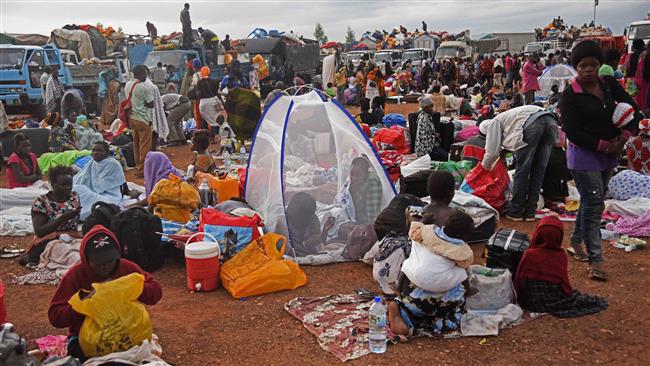
South Sudanese refugees in camp in Uganda

The European Union has said it will provide Uganda 85 million Euros to help fund relief operations for hundreds of thousands of refugees flowing into Uganda from neighbouring South Sudan.

The announcement made today came ahead of meeting in Uganda’s capital Kampala on Friday, aimed at raising some US$2 billion to help Uganda’s surging refugee population. The money would fund operations for 12 months from June.

Uganda is hosting about 1.3 million refugees, of which an estimated 950,000 have arrived from South Sudan, displaced by the country’s escalating civil war that has left hundreds killed.

“Many refugees have fled conflict in South Sudan, seeking sanctuary from violence, hatred and hunger. Uganda’s example of helping vulnerable people cope with displacement is an example for the whole region and the world,” Christos Stylianides, the EU’s commissioner for humanitarian aid and crisis management, said in a press release today.

Fighting broke out in Africa’s youngest nation in December 2013 between the soldiers allied to President Salva Kiir and his then deputy, Riek Machar.

A peace deal in 2015 briefly halted the conflict, but lingering rivalry exploded into deadly warfare again in July last year.

The ensuing fighting and violence, which has often taken place along ethnic lines, has uprooted about a quarter of the country’s population, with both government troops and rebels accused of committing crimes including rape, killings and pillage.

Relief resources have become smaller as Uganda has struggled to cope with the overwhelming numbers of South Sudanese refugees, forcing the UN food agency WFP to cut food rations.

Friday’s summit is jointly organised by the UN and Uganda and will be attended by UN Secretary General Antonio Guterres.


Stories Continues after ad

Makerere University perimeter wall fence project revived

MUK Vice Chancellor Prof. Barnabas Nawangwe.

Stalled plans to have Makerere University get a perimeter wall fence have been revived after a one-year lull, to be carried out under an agreement that was originally agreed upon between the university and the Kampala Capital City Authority (KCCA).

Speaking to the EagleOnline, sources said that under the plan that was spearheaded by the university Deputy Vice Chancellor in charge of Finance and Administration Professor Barnabas Nawangwe, the KCCA had agreed to a raft of undertakings including among others the construction of a 350-metre new perimeter wall fence along the entire stretch of Makerere Hill Road, between Jjunju Road and the Sir Apollo Kaggwa junctions. The wall is in ‘cross-compensation’ of the university land that would be taken up to construct Makerere Hill Road.

Also to be handled under the cumulative Shs7bn mutual agreement was the construction by KCCA of walkways and, the installation of solar lighting street systems around the whole university, all of which were completed and handed over to the university authorities.

“In the entire arrangement with KCCA there was no money involved; everything was to be done through trade-offs between Makerere and KCCA, on mutually agreeable and contributory terms,” the source said.

However, according to the sources, the original plan by the two stakeholders, the university and the KCCA, had been put on hold for one year between March 2016 and March 2017, after a very senior official at Makerere University wrote to the World Bank, faulting the project.

“The university top official opposed to the project wanted to have money replace the trade-offs with the KCCA. After getting frustrated because the project involved the element of non-financial trade-offs, he wrote to the World Bank faulting the project, leading to the one year suspension,” the source added.

The source said development came in the wake of the university searching for the replacement of outgoing Vice Chancellor Prof. John Ddumba Sentamu.

Recently, the university VC search committee shortlisted three candidates: DVC/FA Prof. Barnabas Nawangwe and, Professors Edward Kirumira and Venasius Baryamureeba to vie for the top job at Makerere.

Last week the trio made graphic and oral presentations, and the committee is expected to name to new VC after June 26.

Stories Continues after ad

Onyango keeps clean sheet as Mamelodi Sundowns picks up vital away point

Mamelodi Sundowns in action

Onyango’s Mamelodi Sundowns also known as ‘The Brazilians’ picked up a valuable point away from home against table leaders Espérance Sportive de Tunis at the Olympic stadium in Rades, Tunisia.

This was Denis Onyango’s second clean sheet in the 2017 CAF Champions league campaign. The Ugandan shot stopper made clear saves to deny the hosts a scoring chance for the match to end in a goalless draw.

The vital point saw the defending African champions move to second spot on the four team log on five points, three points behind Esperance in Group C.

The visitors shut out the North Africans, who only had a chance from range, with the ball sailing wide of Onyango’s goal, and another as the clock was running down to the 90th, which the Ugandan-born goalkeeper saved.

Mamelodi’s next assignment will be away to St George, who they lead on goal difference, and the final fixture against AS Vita at home.

The Brazilians clash with St. George on the July 1 in Addis Ababa.

AS Vita of DR Congo occupy bottom of with three points.


Starting line up: Denis Onyango, Anele Ngconca, Motjeka Madisha, Tebogo Langerman, Soumahoro Bangaly, Hlompho Kekana, Themba Zwane, (Lucky Mohomi), Anthony Laffor, (Thapelo Morena), Yannick Zakri, Percy Tau.

Stories Continues after ad

Farmers urged to embrace the agricultural insurance scheme

Insuring growing crops helps farmers to avert financial losses for individual farmers

Ugandan farmers have chance to recover financial losses caused by natural calamities if they can fully participate in the agricultural insurance scheme launched mid last year by the finance minister, Matia Kasaija.

The Uganda Agriculture Insurance Scheme (UAIS), formed through a public-private partnership, was meant to provide insurance cover for farmers’ crops and animals but insurers claim the farmers, especially small-holder ones, have been slow to seize the opportunity as natural calamities like drought and pests destroy their farms.

The insurance policy provides cover against physical loss or damage to growing crops and animals by uncontrollable pests and diseases, drought, fire, malicious damage, riots and windstorms, accidents among others.

Through the arrangement government pays 30 per cent and 50 per cent of the premium incurred by the small-scale farmers and large scale farmers, respectively. Insurance companies charge 5.5-10 per cent of the premium as income, depending on the location of the farms and choice of risks to be insured against.

“This an opportunity that our farmers should take as way of mitigating the effects of climate change,” says Vincent Musoke, an executive from National Insurance Company (NIC) General Insurance Company.

Musoke, however, says that small-holder famers in a given area can form groups to enter the scheme collectively, saying that it makes them enjoy economies of scale. “A farmer with one acre of crops can join with that one with two, five, or more acres,” he says.

“We now know the armyworms destroyed many crops in the gardens in the months of March and April but I can tell you that most farmers in the country made losses as they had not insured the crops;” Musoke says.

The policy value of the crops to be insured is derived from the cost of production which includes costs of fertilizers, chemicals, weeding, among others or A farmer can enter into agreement with the insurers. This, according to insurance companies, requires farmers to keep farm records. For animals, insurance cover can be based on the value of the animal.

Crops covered under the scheme include main cash crops like coffee, cotton, tea as well as maize, beans, rice, bananas, Irish potatoes, oil seeds and barley.

For animals, the policy covers cattle, poultry, pigs and fish.

Georwell Emanu, a prominent fish dealer is optimistic that the scheme will help fish farmers who he says face challenges of drought and malicious damage. “I am sure that with the government subsidy, fish farmers will insure their cages and ponds,” says Emanu, whose company-Geossy Limitd, exports fresh fish to the region.

A coalition of ten insurance companies provides the insurance cover through, a consortium- Agro Consortium. Some of the companies are First Insurance, Lion Insurance and APA insurance.

The National Policy for Disaster Preparedness and Management highlights that in the past two decades, on average more than 200,000 Ugandans were affected every year by disasters.

While Agricultural economists in Uganda estimate that the overall economic impact of agricultural risk is estimated to amount to US $606 million-US $804 million.

Agriculture employs more than 65 per cent of the households and contributes 78 per cent of the country’s export earnings.


Stories Continues after ad

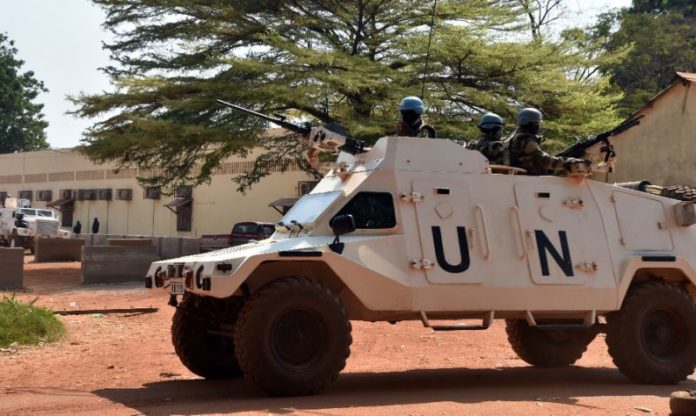
Congo to withdraw peacekeepers from CAR amid rape allegations

Congo Republic UN peacekeepers in the CAR

The United Nations has said that Congo Republic will withdraw its troops from a UN peacekeeping mission in Central African Republic after a review sparked by sexual abuse accusations found “systemic problems in command and control.”

The country has some 630 troops on the ground in Central African Republic, according to the latest UN figures. A UN database of sexual abuse and exploitation accusations showed three reported incidents involving Congo Republic troops in Central African Republic this year. Nine were reported in 2016.

“The review of the deployment of uniformed military personnel from the Republic of Congo found that the nature and extent of existing allegations of sexual exploitation and abuse, in their totality, point to systemic problems in command and control,” the United Nations said in a statement.

“These problems have also been compounded by issues related to the preparedness, overall discipline, maintenance of contingent owned equipment, and logistical capacity of these troops,” it said.

The world body said the review was shared with the Congo Republic authorities who then “decided to withdraw their military personnel.”

The 13,000-strong peacekeeping mission is seeking to contain violence in a multi-year conflict driven by ethnic and religious grievances and vying over vast diamond resources.

The United Nations said some 140 Congo Republic police would remain part of the peacekeeping mission in Central African Republic because “failures identified with the military contingent are not reflected by the performance of the police.”


Stories Continues after ad

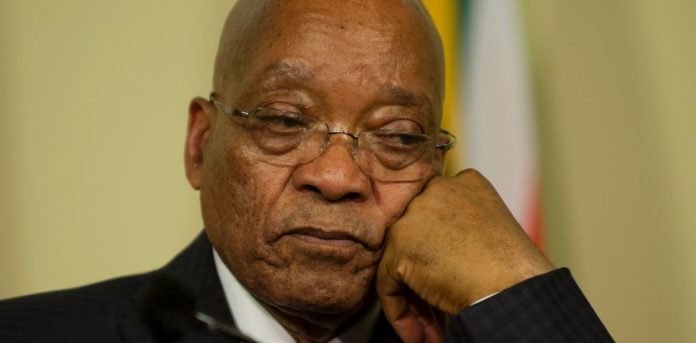
Zuma to answer queries on Gupta connections

What next for President Jacob Zuma.

President Jacob Zuma will respond to his detractors when he answers questions about state capture in Parliament today.

Zuma is under pressure from civil society, opposition parties and alliance partners amid accusations that he is under the sway of the politically-connected Gupta family.

Leaked emails show the family’s alleged influence over government departments and parastatals with Zuma’s son, Duduzane Zuma, at the centre of the controversy.

Zuma has been found wanting by the courts after opposition parties took him to task over the Nkandla scandal.

Anti-Zuma protesters have called for his removal and under his leadership, the Acan National Congress lost key metros in last year’s local government elections.

But it is the issue of state capture that has invigorated opposition against him.

In her ‘State of Capture’ report, former Public Protector Thuli Madonsela recommended that a judicial commission of inquiry be appointed.

President Zuma is legally challenging her report.

Zuma is expected to explain his approach to the matter when he addresses MPs in the National Assembly.

He will also be asked about whether his government intends forging ahead with its proposed nuclear build programme after the Western Cape High Court found agreements and processes related to the project were unlawful and unconstitutional.


Stories Continues after ad

100 companies to benefit from dfcu Bank sponsorship

TO REWWARD BEST INVESTMENT CLUB: The headquarters of dfcu Bank in Uganda

dfcu Bank has today been unveiled as the new sponsor of the 2017 Uganda Top 100 mid-sized companies survey. The announcement was made during a press conference at the Bank’s Headquarters in Nakasero, Kampala.

The Top 100 Survey aims at identifying Uganda’s fastest growing medium-sized companies in order to show case business excellence and highlight some of the country’s most successful entrepreneurs.

Held under the theme, “Staying ahead of the competition in the evolving economic environment”, the 2017 Top 100 mid-sized Companies’ Survey is an initiative of KPMG and the Nation Media Group, represented by The Daily Monitor in Uganda. Launched in 2009, the project currently runs in four East African countries; Uganda, Kenya, Tanzania and Rwanda. dfcu Bank now joins Insurance Company of East Africa (U) Group that has been part of the project for four years now.

And addressing the press briefing, the dfcu Bank Executive Director and Chief of Business, William Sekabembe revealed that the bank will sponsor selected participants to attend Business Clinics conducted by experienced and renowned authorities in the Private Sector, enabling them acquire knowledge and skills for best business practices and good corporate governance.

“dfcu Bank’s sponsorship of the Top 100 mid-sized companies’ survey 2017 is a show of our commitment towards supporting and growing the SME sector which is a key driver of Uganda’s economy.  We believe that a collaborative effort to boost the competiveness of SME sector in general is the silver bullet to ensuring businesses thrive in what is a constantly evolving economic environment in Uganda and East Africa as a whole,” Sekabembe said.

“Constraints notwithstanding, the top 100 Survey will give hundreds of business operations the opportunity to learn from each other; engage policymakers on their contribution to the economy; benchmark themselves against other business operations and so much more. Our belief is that this initiative will go a long way in boosting the skillset of the selected companies, eventually translating to improved business practices and increased profitability,” he added.

The Managing Director, Monitor Publications Limited Tony Glencross,  hailed the Top 100 Survey as ‘…invaluable and highly relevant’.

“Uganda has been recognized as one of the most enterprising countries in the world, which presents us with the need for systems that will create informed and skilled entrepreneurs. On behalf of The Daily Monitor, I thank and applaud dfcu Bank for joining us as we work towards supporting and building the capacity of the SME sector,” Mr. Glencross said.

To take part in the survey a company needs to complete two questionnaires – a general questionnaire and a financial questionnaire. The questionnaires will be available at Monitor Publications Limited, KPMG offices and select dfcu Branches. Questionnaires will also be delivered upon calling 0392-080708.

Any company can participate (with the exception of banks, insurance companies, accounting /financial consulting firms) as long as it has a turnover range of Shs360m to Shs25 billion, has a three year audited financial track record and is not listed on any stock exchange.


Stories Continues after ad

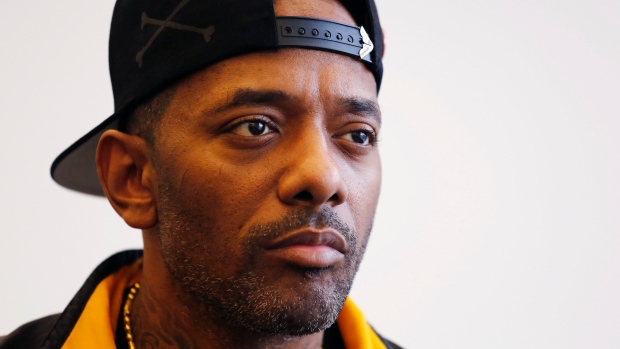
Rapper succumbs to sickle cells

DEAD: Rapper Produgy

Rapper Prodigy, one half of the influential hip hop duo Mobb Deep has died, according to a co-author on one of his books, Kathy Landoli. He was 42.

The cause of death has not been released, but the rapper had been hospitalized for complications caused by sickle cell anemia prior to his death. He had been in Las Vegas for a Mobb Deep performance.

Born Albert Johnson, Prodigy’s family had a storied history.

His great-great-great-grandfather, William Jefferson White, founded Georgia’s Morehouse College in the basement of his Baptist church.

His grandfather, Albert “Budd” Johnson, was a saxophonist and clarinetist for Billie Holiday, Duke Ellington, Dizzy Gillespie, Count Basie and Benny Goodman.

Johnson met fellow Queens, New York native Kejuan Muchita when they were both freshman at Manhattan’s High School of Art and Design.

The pair bonded over their shared love of hip hop and formed Mobb Deep. Johnson took the moniker Prodigy, while Muchita chose the performance name Havoc.

They scored a record deal as teens and released the album ‘Juvenile Hell’ in 1993. The project didn’t generate much buzz, but the duo found more success with their sophomore album ‘The Infamous’.

With its gritty rhymes and contributions by the artists Nas and Raekwon, the album helped launch Mobb Deep to the top of the hardcore, hip hop ladder.

Their 1996 follow-up, ‘Hell on Earth’, included the single ‘Drop a Gem on ‘Em’, which was a response to a Tupac diss track, ‘Hit ‘Em Up’. Prodigy detailed his beef with Tupac in 2012.

“When we made ‘The Infamous,’ we had a song called ‘Survival of the Fittest,'” the rapper explained. “On that song, in the beginning, my man that came home from jail…in the beginning of the song, he says, ‘Thug life, we still living.'”

“Tupac was the one who was most known for saying that,” Prodigy said. “So I think that pissed Tupac off a little bit.” Mobb Deep was entangled in the East Coast/West Coast rapper rivalry of the ’90s.

After West Coast rappers Snoop Dogg and Tha Dogg Pound released the single “New York, New York,” Mobb Deep, along with Capone-N-Noreaga and Tragedy Khadafi, countered with the track “L.A L.A.”

Mobb Deep released several successful albums, including “Murda Muzik” (1999), “Infamy” (2001), “Amerikaz Nightmare” (2004) and “Blood Money” (2006).

Two of their biggest hits were “Quiet Storm” and “Shook Ones.” Being a part of Mobb Deep didn’t keep Johnson from solo projects like his album “H.N.I.C.”

He also appeared on collaborative projects such as 2007’s “Return of the Mac” and 2013’s “Albert Einstein.”

Johnson had some legal troubles. In 2007, he was sentenced to three years in prison for illegal possession of a firearm.

He detailed that incident and more in his memoir “My Infamous Life: The Autobiography of Mobb Deep’s Prodigy.”

“There were too many other adventures to squeeze in: his family’s rich historical and musical legacy; his lifelong battle with sickle cell anemia; UFO sightings; episodes with Lindsay Lohan, Mary J. Blige, and Lil’ Kim; and his contributions to the golden era of hip-hop,” Johnson’s memoir co-author, Laura Checkoway, wrote in a 2011 piece for the Village Voice.

In 2016, the rapper published ‘Commissary Kitchen: My Infamous Prison Cookbook’ with Landoli, which contained recipes and stories about the food he experienced while in prison.

Johnson was mourned on social media Tuesday by many fellow artistes, including rapper Nas, who was the first to post about Johnson’s death.


Stories Continues after ad

Local listed companies see rise in capital gains on the USE

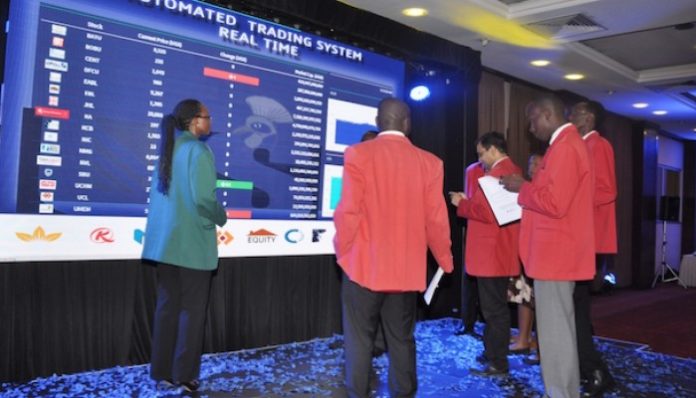
BUSINESS: Brokers at the Uganda Securities Exchange

The local capital markets sector continues to show steady growth as most companies listed on the Uganda Securities Exchange (USE) made capital gains returns to shareholders.

The companies jumped 278.3% to reach shs4.31trillion by end of December, 2016 from shs 1.14 trillion recorded at initial public offers (IPOs), the latest report from USE shows.

Speaking at the 3rd Kampala Private Equity/Venture Capital Conference in Kampala, Keith Kalyegira, CEO-Capital Markets Authority (CMA) asked local companies to organize their businesses if they want to grow. CMA regulates the local capital markets sector.

“There is over USD45 billion out there for the private equity investors,” he said, adding that the future of Uganda’s business expansion lies in the capital markets. “You must have clear investment strategies and show transparency to attract investors,” he said.

There are eight local companies listed on the USE where issued shares are traded in Ugandan shillings. The companies include Uganda Clays, BAT Uganda, Bank of Baroda and Stanbic Bank. Others are Umeme and DFCU.

Building materials maker, Uganda Clays, which was first to list, showed poor performance on the USE as its capital gains value shrunk -50.5% to reach 9.9 billion from shs20 billion value recorded at the IPO.  The company operates two factories in Wakiso and Kamonkoli, eastern Uganda.

NIC Holdings with its 1.42 shares, performed poorly too, as its capital gains value slumped -6.5% to shs16.99 billion, compared to shs18.17 billion.

The best performer was BAT Uganda which saw its capital value rise by 2900.00% to hit shs1.47 trillion from shs49.08 billion at IPO. BAT is the lead equity investor in the local tobacco sub sector.

DFCU and Stanbic Bank also performed well as their capital value gains changed by 736.96% and 257.14% respectively. Stanbic Bank is the largest commercial bank in Uganda by market share and capitalization.

Umme Limited, supplier of electricity, also had its capital value grow from shs 397.85 billion at IPO to 795.700 billion by end of December 2016.

“The above figures indicate that the earnings growth experienced by many of the listed companies since their date of listing on the USE has translated into meaningful value gains, generating attractive risk adjusted returns for shareholders,” the report states in part.

The report calls on local firms to work towards listing on the USE, saying it offers many advantages such as enhancing the market value of the business, increased visibility and prestige, great efficiency as well as easy access to capital and future financing opportunities.

Further, the report indicates that serious investors dealing with listed companies as opposed to privately owned companies, are at an advantage. “If two similar companies exist, one listed and the other not, the listed company will typically be valued approximately 30 percent more than the private company in the marketplace by investors,” the report read in part.

There is fear among economists that African companies businesses use only 5% of equity funds in loans, while commercial banks form 95% as source of capital. Charles Ocici the CEO of Enterprise Uganda says this is not good as commercial banks charge high interest rates on loans.

In America, total loans make 60% equity funds while in Europe equity funds provide 40% of the loans, Ocici says.


Stories Continues after ad

Rugby Cranes to face Kenya in the Africa Gold Cup named

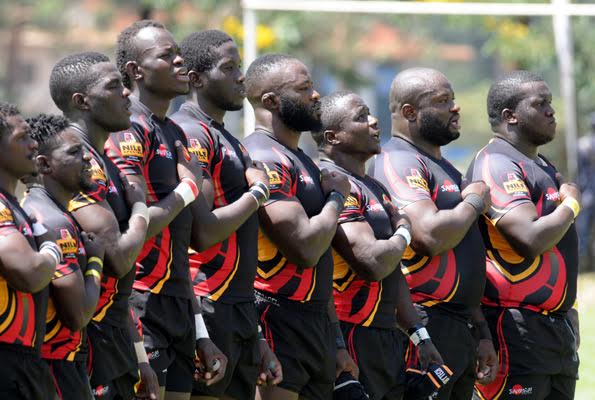
READY: Members of the Rugby Cranes

Uganda continues preparations for the Rugby Africa Gold Cup where six of Africa’s best teams will compete in the seven-week long tournament across the continent.

A 27 man team was revealed in order to help Uganda secure victory come Saturday, June 24 with Uganda travelling to Nairobi to take on neighbors Kenya Simbas in the opening match of the campaign, before travelling to face Senegal on July 1 in Dakar.

The tournament will take place from June 24 to August 5 with Namibia, Zimbabwe, Tunisia, Uganda, Kenya and Senegal participating,  playing home and away matches.

The Rugby Cranes will play against Namibia, Kenya, Zimbabwe and Senegal in the Gold Cup which doubles as the rugby world cup qualifiers.

Fans say Uganda has a great chance of becoming the African champions after being crowned in 2007.

The Uganda-Kenya tie will be officiated by French National Laurent Cardona.

Rugby Cranes team;

Asuman Mugerwa, Alex Mubiru, Brian Odongo, Mathias Ochwo, Charles Uhuru, Brian Asaba, Scott Olouch, Marvin Odong, Ivan Kirabo, Ivan Magomu, James Odong, Pius Ogena, Michael Okorach, Lawrence Sebuliba, Phillip Wokorach, Cyrus Wathum, Collins Kimbowa, Adnan Mutebi, Cox Muhigwa, Musa Mwonge, Gerald Ssewakambo, Justin Kimono, Makmot Kevin, Santos Senteza, Tamale Joseph, Byron Oketayot, Ronald Musajja.


Rugby Cranes International Fixture

24th June, 2017 Kenya vs Uganda

1st July, 2017 Senegal vs Uganda

15th July, 2017 Uganda vs Tunisia

22nd July, 2017 Uganda vs Namibia

5th August, 2017 Uganda vs Zimbabwe


Stories Continues after ad