Stanbic Bank
Stanbic Bank
18.4 C
Kampala
Stanbic Bank
Stanbic Bank
Home Blog Page 1843

Help develop film making industry, UCC boss urges government

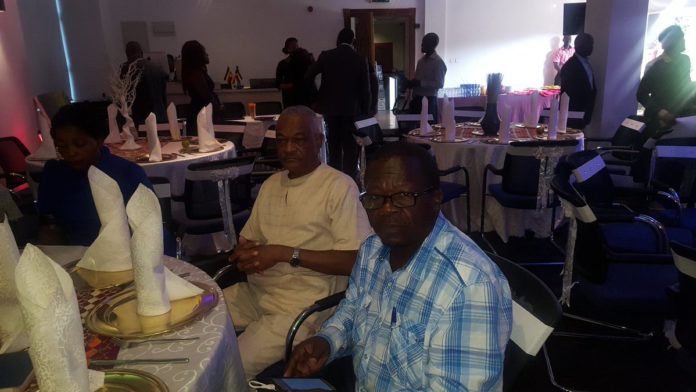
UCC boss Godfrey Mutabazi and other stakeholders in the film-making industry

The Executive Director of Uganda Communications Commission (UCC) Godfrey Mutabazi has urged the government and stakeholders to set up a ‘local content fund’ to help simplify the production of films in a bid to develop the industry.

According to Mr. Mutabazi, the industry has been inundated with copyright piracy and intellectual property infringement, and inadequate training for film makers/producers, something he said, retards the development of the film making industry.

However, Mutabazi, who speaking at the UCC headquarters Bugolobi ahead of the launch of the annual film festival of 2017 scheduled for August 28-September 1, noted that from 2013 the industry, leading to the submission of films at international festivals.

He lauded the key stakeholders like including Andrew Benon Kibuuka and Fagil Monday for continuous production of art pieces and advised them to identify suitable partnerships and opportunities for young film makers.

‘’Once tapped into and geared in the right direction, it has the potential to create employment, promote and preserve our culture,” Mutabazi said.

Art enthusiast General Elly  Tumwiine  called for more engagements and government interventions, noting that revenues earned  from the entertainment industry in Nigeria have almost surpassed oil proceeds.

“Don’t fear making mistakes, fear repeating them and don’t fear failure because amateurs practice until they get it riight while professionals practice until they can’t get it wrong,”  Gen Tumwiine said in a motivational speech to the film makers.

“Africa’s heritage is so rich that film makers should exploit it for the positive change of the community,” Gen. Tumwine added.

Speaking at the same function Stephen Asiimwe, the Executive Director of Uganda Tourism Board (UTB), promised incentives to film makers shooting movies  about Ugandan tourist attraction areas as a way is promoting both sectors.

“This will help bring in foreign exchange for the development of the country,” Mr Asiimwe noted.


Stories Continues after ad

Qatari investors to partner with Ugandan SME entrepreneurs

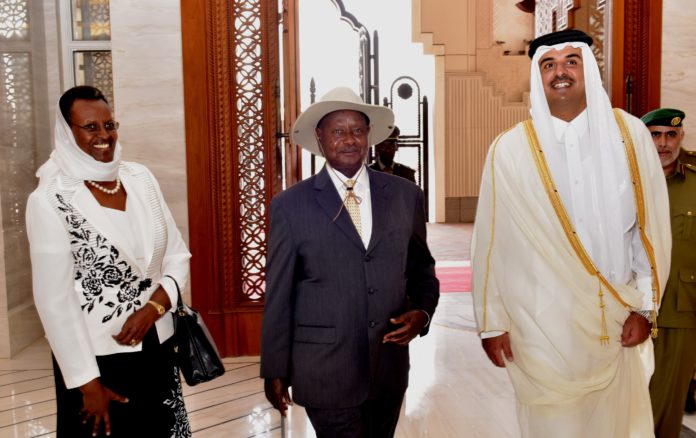
FLASHBACK: President Museveni and First Lady Janet, on visit to Qatar, together with their host, Emir Sheikh Tamim bin Hamad Al-Thani,

President Yoweri Museveni’s recent visit to the oil-endowed middle-east has started yielding positive results, according to the Evelyne Anite, the State Minister for Investment and Privatization. Part of the successes, she says, will be the arrival of Private Equity companies in July.

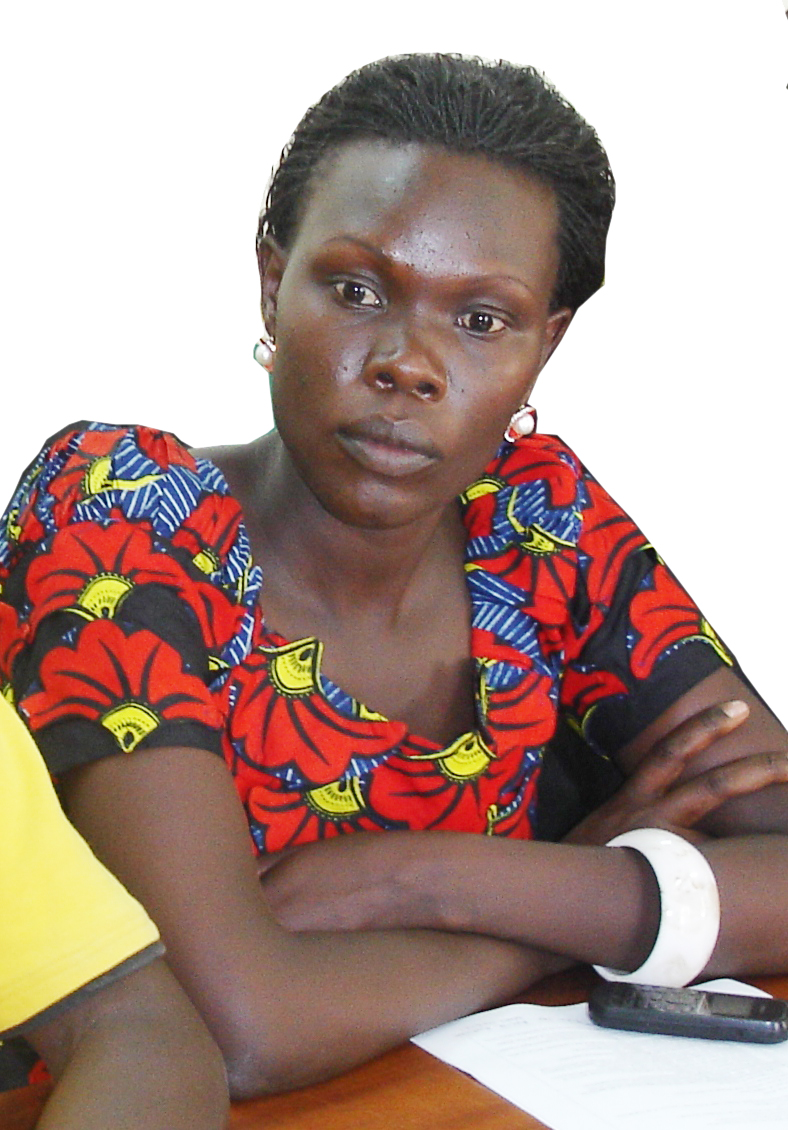
State Minister for Investment and Privatisation Evelyn Anite

“Following President’s Museveni’s visit to Qatar, we have been able to identify private equity companies that are interested in partnering with Ugandan small scale enterprises (SMEs),” Anite says, adding that what Ugandans need now is the application of best business practices, including keeping books of accounts.

Speaking at the 3rd Kampala Private Equity Conference at the Serena Hotel, Minister Anite said the Qatari private equity companies could provide cheap loans to only organized SMEs, urging sector players to employ professionalism in whatever they do access funding for growth. She also urged Ugandan businesspersons to make use of the shs50 billion the government is injecting in the capitalization of Uganda Development Bank for borrowing.

The Minister, who has been directed by Museveni to spearhead investments in the country, says Ugandan SMEs find it hard to access financial loans due their failure to keep audited books of accounts and failure to separate personal interests from the business.

Charles Ocici, the Executive Director of Enterprise Uganda, agrees with the minister, saying that the failure by individuals to distinguish themselves from businesses is one of the major causes that are responsible for the collapse of businesses before they even celebrate their first birthday.

One Enterprise Uganda’s roles is to nurture young entrepreneurs capable of creating future jobs for the rest of society.

“Ugandans should know that for a business to be considered a success, it should survive three generations,” Ocici says, adding that not many businesses in the country have achieved this milestone. He says directors/owners should desist from the habit indiscriminately spending company money.

Minister Anite also decried the high levels of corruption exhibited by the Ugandan youth who got government money to start businesses but instead majority used the money for personal purposes.

“The youth venture capital fund worth shs19 billion was badly misused by the youth and the same is happening with the youth livelihood fund,” she says, adding that the bad practices will turn the youth livelihood programme into a crisis.

“Some of the youths in the north fled to South Sudan after mismanaging the money. The success story is there but failures are very high,” Anite says of the shs53 billion Youth Livelihood Programme that was meant to uplift many Ugandan youths out of unemployment but also provide them with business skills.

However, Mr Ocici, who worked with the PTA Bank, calls for a policy shift in as far as providing money to the youths is concerned. “Government should give money to established and well-run SMEs as these have potential to grow and provide jobs,” he says.

Anite says there is need for SMEs in Uganda to exhibit a high degree of trustworthiness if they are to have partnerships with foreign private equity companies that give money for short and medium term investments at better rates.

Fred Opolot, a board member of the Uganda Registration Services Bureau, says there is need establish business incubators to prepare SMEs for the private equity funds, which he says are cheaper than bank loans. He says focus should be on the export-driven SMEs.

Research show that SMEs make up 67% of Uganda’s business sector and when the Micro businesses which employ less than 5 people are included the figure comes up to 99%. All the major sectors in Uganda’s economy are also dominated by SMEs.

However, despite accounting for a big percentage of Uganda’s business sector, SMEs still heavily rely on internal funds or retained earnings to meet their long-term financing needs which significantly limits their ability to take advantage of new market opportunities, access new technology, and build internal capacity.


Stories Continues after ad

Over 3000 killed in Kasai ethnic clashes – Catholic Church

LISTEN: Pope Francis I meets with DRC President Joseph Kabila. The Catholic Bishops in the country have demanded that elections be held

More than 3,300 people have been killed in the violence in the Democratic Republic of Congo’s Kasai region since last October, the Catholic Church says.

The deaths are the result of clashes between the army and a rebel group, but civilians have also been caught up in the violence.

The UN has reported on the discovery of more than 20 mass graves but has put the death toll so far at about 400.

According to the Church, 20 villages have been completely destroyed, half of them by government troops.

The UN human rights chief, Prince Zeid Ra’ad al-Hussein, said investigators in Kasai province had identified dozens of mass graves along with harrowing evidence of people being shot, burned or hacked to death.

Atrocities were being carried out by the security forces and a government-backed militia, known as the Bana Mura, which was set up to help fight a rival group known as the Kamuina Nsapu, Prince Zeid said.

He added that local authorities had denied the UN access to information about what was happening in the region. The UN has said it has evidence that hundreds of villagers from the Luba and Lulua ethnic groups have been killed.

The UN Human Rights Council is likely to vote this week on whether to mandate an independent investigation into the violence following what the group’s commissioner described as horrific atrocities committed in Kasai province.

The Congolese authorities have said they would reject it.

More than a million people have been displaced in the region in the last year and aid workers say the humanitarian response on the ground has so far been inadequate.

Violence erupted in the once peaceful Kasai region last August, after the death of a local leader during fighting with security forces.


Stories Continues after ad

Saudi King deposes Crown Prince

NEW SAUDI CROWN PRINCE:Mohammed_Bin_ Salman_al-Saud

Saudi Arabia’s King Salman has appointed his 31-year-old son Mohammed bin Salman as crown prince, removing the country’s counter-terrorism czar and a figure well-known to Washington from the royal line of succession.

In a series of royal decrees issued today, the monarch stripped Prince Mohammed bin Nayef, who was first in line to the throne, from his title as crown prince and from his post as the country’s powerful interior minister overseeing security.

Bin Nayef, for years the kingdom’s counter-terrorism chief who put down an al Qaeda campaign of bombings in 2003-06, has pledged allegiance to the kingdom’s new crown prince.

The newly announced Crown Prince Mohammed bin Salman, who also serves as defence minister and oversees a vast economic portfolio, had previously been second in line to the throne, though royal watchers had long suspected his quick rise to power might accelerate his inheriting of the throne.

The young prince was little known to Saudis and outsiders before Salman became King in January 2015. He had previously been in charge of his father’s royal court when Salman was the crown prince.

The Saudi monarch, who holds near absolute powers, quickly awarded his son expansive powers to the surprise of many within the royal family who are more senior and more experienced than Mohammed bin Salman, also known as MBS.

Al Arabiya television reported that the promotion of the prince was approved by the kingdom’s Allegiance Council, and that the king had called for a public pledging of loyalty to Mohammed bin Salman on Wednesday evening in Mecca.

The Allegiance Council is a body made up of the sons and prominent grandsons of the founder of the Saudi state, the late King Abdul-Aziz, who vote to pick the king and crown prince from among themselves.

The surprise announcement follows 2-1/2 years of already major changes in Saudi Arabia, which stunned allies in 2015 by launching a war in Yemen, cutting old energy subsidies and in 2016 proposing partly privatising state oil company Aramco.

Last year Mohammed bin Salman, or ‘MBS’ as he is widely known, announced sweeping changes aimed, as he put it, at ending the kingdom’s ‘addiction’ to oil, part of his campaign to tackle systemic challenges that the kingdom has previously failed to address.

Until his father Salman bin Abdulaziz Al Saud became Saudi Arabia’s seventh king in January 2015, few people outside the kingdom had ever heard of bin Salman, seen more than two years on as the power behind its throne.

Regarded warily by some Saudis and by many foreigners as an unknown quantity in the Middle East’s traditional status quo power, he has over the past year set about building his profile with interviews in some Western media.


Stories Continues after ad

‘Enhanced professionalism is key to our engagement with the public’ – Prisons boss

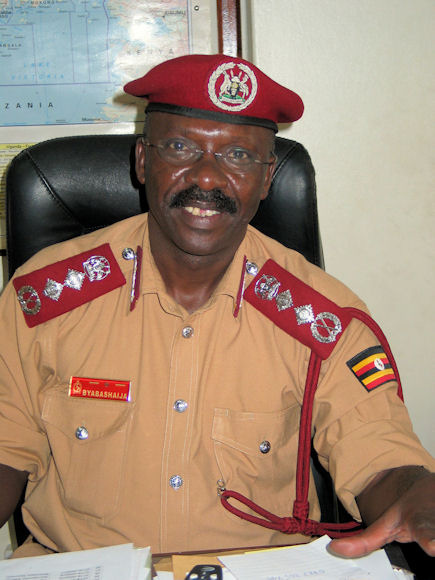
The Commissioner General of Prisons Dr. Johnson Byabashaija

Over several years, one of the government institutions that rarely gets negative publicity is the Uganda Prisons Service. According to the Commissioner General of Prisons Johnson Byabashaija, the staff are under strict instructions to maintain a high level of integrity, earning the Prisons Service top accolades across the globe. Indeed, CGP Byabashaija says Uganda Prisons Service tops Africa in ensuring correctional standards for inmates, and it also comes in at No.4 globally.

The EagleOnline’s Richard Wanambwa caught up with CGP Byabashaija, a Veterinary Doctor by training, in a bid to try and ‘unearth the magic that is at work at the Uganda Prisons Service’.  

Below are excerpts (slightly edited) of the interview.


What are your greatest achievements in the last two terms served as the Commissioner General of Prisons?

It is enhanced professionalism of the service personnel because across the country our staff knows what to do, whether in Arua, Ndorwa or Moroto. You know of a big politician who was taken to Moroto and handled very professionally.

And anyway, can you imagine if they bring you Gen. (David) Sejusa, Charles Wesley Mumbere (King for Rwenzururu), former Vice President Prof. Gilbert Bukenya and something wrong happens in the prison? Then you have let down the state! Therefore, handling them is a great achievement. We make few mistakes and we are not 100 per cent correct but largely our staff across the country knows what to do and that is my greatest achievement.

Should the appointing authority deem it fit, will you consider staying for another term or contract?

When I am given duty, I will do it. But (at times) age negates our abilities and by the time I finish this term I will be 62 years. And, as head of a security institution and I don’t think that is very sustainable. I expect this one to be my last term, but if appointed I will work.

As a department, is Prisons well-facilitated?

No, I think you can’t be well facilitated; I want to give you an example, last year in June 2016 I had 45,000 prisoners, this June, the average is 55,000 prisoners but the budget has not been increased. Therefore, that means that we have to work hard in order to bridge that gap. But because of production, you don’t hear much noise. Available funds for food are completely inadequate but because of that system I introduced, (where you see prisoners on trucks going for labour); that reduces the amount of food I have got to buy so that we could have more money. I have to produce more because the more I produce then the profits come back as appropriation on aid because that is the arrangement I have with finance (ministry).

Parliament appropriated any revenue as part of my budget so if I produce more, I have more revenue and that is why we are serious with cotton, seeds, furniture and all these things that bring in money.

Most Ugandans are saying that you (Prisons Department) is a success story, what do you attribute this to?

Prisons have succeeded because of the systems which are in place; if you fail an interview you will not be recruited! In fact for the first time last year we even dismissed people who failed training regardless of where they came from. It is a meritorious way of doing things. But you hear people saying that we use prisoners to do other work at night, it isn’t true because I wish you knew what is involved in getting a prisoner from prison at night!

There are about four controlled points of keys and I don’t know how all of you will agree! And you cannot gain out of that actually; you will be in real trouble if you get out a prisoner.

Has it ever happened under your leadership that a prisoner escaped at night?

No, it has never happened because the only way you can release a prisoner is when it is his/her time to go. But again, the staff knows the repercussions of that (prisoners escaping).

The establishment of systems in which everything we do: the way we assign staff to a particular prisoner, the way we take prisoners to court, discharge is strict.

We are very strict at the time of admission in that we record all the marks on the prisoner’s body so that you cannot say that they were inflicted on him while in prison. We measure your weight and height and others because all the systems are in place.

Another issue is that you will find out that the prisons are extremely clean and I think that is also part of our achievement.  We actually carry out internal bench marking: go to Mbarara, Bushenyi and Bushenyi prison, which started it; where you see a prisoner and wonder ‘who he is’. Officers in-Charge (OCs) must be clean because when they are not, then they know what will happen next!

It is said you have a very ambitious programme for education, how far have you gone with it?

We have it because what we discovered is that all those who went through formal education did not come back to prison. The government agreed to fund education service and our teachers (primary, secondary and tertiary) are sent by the Education Service Commission. Also, Professor Waswa Balunywa has organized and streamlined secondary and diploma education, he is now going for a degree programme.

We also have a programme under the Africa Prison Project which has offered degrees of the University of London especially in Law. I have a famous prisoner called Susan Kigula, who has got a degree. She made the death penalty not to be mandatory.  The other day Uganda Christian University wrote to us that they want to come in because I called them in 2008 and said “look, can you come in and do something”? Makerere University Business School (MUBS) responded immediately, so we shall continue. We have laboratories inside there; people can do their work there.

Is this programme being implemented at Luzira or in other centres?

We have these programmes in about seven regional prisons including Kigo prison, Mbarara, Masindi, Namalu and Arua but the main one is here (Luzira) where you can do science subjects.

It has been a successful programme that is why we have been ranked the number one rehabilitative correctional service in Africa! This is because we have the lowest number of people coming back to prison (about 20 per cent) which is the lowest in Africa and fourth in the world! 

What have you done about staff housing and reduction of congestion in the prisons?

We are not doing well in this department but again we are not seated. We have 400 houses in Luzira, built by prisoners. We’re building women wing down near the railway and I will call the Minister to commission them. As per the President’s directive, we are building two roomed houses for the warders. For the low cost housing, we are making our own bricks and do our own construction because we don’t buy sand, we collect it from down in Kasangye. That is how housing is going on.

On congestion, we have built new cells in Ndorwa, Moroto Bushenyi, Buga, Kabong, Adjumani, Nebbi, Tororo and Soroti, among other places and all are designed to reduce congestion. Now, we are building a big one in Kitalya which will take about 2,000 inmates and if I transfer 2,000 inmates from Luzira to Kitalya, I would have solved half of the congestion problem in Luzira.

We have to continue doing that and I don’t think that I will solve it in my life time as Commissioner General of Prisons but I can only ease it. I can’t solve it entirely, it is complex; it is a criminal justice system challenge, not just a prison challenge.

You promised in Parliament that you are dedicating this term to making agriculture your top priority and making prisons self-reliant as far as food security is concerned. How far have you gone with this programme?

I am going to grow cotton, that one I can assure you! The first season we had 2500 hectares of cotton, this time, we are doubling it and next year we shall triple it to 10,000 hectares. I am producing maize seeds both hybrid and open variety and this is to enhance acreage and output. I now want to produce 13 million kilograms of maize per annum and my requirement is 15 million kilograms. Within this term, if I achieve that, then I can say that I worked for Uganda. And that is why we are talking agriculture.

Do you have enough land for commercial production?                                              

We have land to do this; about 5,000 acres in Rwimi, Kabarole; 3,000 acres in Longole (Gulu) and 7,500 acres in Kitgum.

‘And you know what has happened?’ Now districts call me and give prisons land because of what we done; they want it replicated in their districts, so we have land to carry out this transformation!

One thing I can assure you, by the time I finish this term, I will have (acquired) a seed processor, combined harvesters with storage facilities with silos.

Don’t you think that talking commercial and going commercial will affect the production of food for the prison services?

No, because all the maize we produce we give it to the prison. We don’t sell any maize and that is why I want to increase it. For cotton, we sell it to the ginneries and out of this, we partly buy some for our uniforms. We also manufacture flags for the government, even those on the presidential vehicles. We have the latest screen printing machines at Luzira.

This might sound funny but how much do you spend on a prisoner in a day?

We just get the budget then divide it by the number of prisoners and of course we don’t exceed Shs2, 000 a day: posho and beans plus water and electricity. In the Maximum Prison we use boilers and we only use firewood when there is no power.

These things need to be factored in. There is also one thing which I didn’t tell you:  the doctor will examine and recommend either a special diet and if you are able, we allow raw food to be brought and that one has enabled us manage our budget. One of the traditional leaders we have had in the recent past used to take millet flour with some cassava which is very soft and nice and I don’t think you have ever heard him complaining of his stay there. We handled him well and this compliment eases the food requirement. Overall, it is about food which is Shs2, 000 and then add water and electricity which comes to Shs7, 000 a day, which isn’t much.

How secure is Luzira and other prisons facilities that handle high profile prisoners, given the numerous rumors that fly around? 

We have a good access control system; we are not yet perfect because we don’t have a scanner for baggage but now you go through security checks and we record your particulars in the computer. I have dogs and this is one of the things I have done in my tenure; to establish the dog section which takes over security at night in the Maximum prison. My idea is to replicate it in almost all the prisons but we started with Upper Prison and so there is no one who can dream of jumping out.

I had an inmate (sentenced to 45 years) coming out of Upper Prison and we have never established how he came out but the good thing is that we recaptured him and now he cannot (escape) because the dogs will have detected him because they don’t sleep. We don’t allow food inside the prison, it must be raw so that the person cooks for himself/herself and so that reduces the issue of poisoning.

And apart from Atwine, who was suspected of being poisoned, I have not heard cases of that nature but people just talk about it. But it is not easy to go and poison people although poisoning happens in anywhere but I don’t think it is the biggest problem we have.

What is the most challenging incident to happen to you as CGP?

When I had just been appointed and on Election Day prisoners run away from Arua prison; I think I was five or six months in office and I was shaken to the core. Then Atwine was the second. And why Atwine? I had been warned that since that guy is the one who pulled the trigger in the death of Robinah Kiyingi ‘be careful’, they would want to kill him and I had taken all the measures possible but they defeated our security by him getting admitted to the sickbay.

How have you managed to steer clear of scandals?

I live a very simple life, I don’t go to bars, and I have no concubine.  I work hard and I also try to be an example to my staff: I don’t harass them but they know that I will punish them very seriously if they are in the wrong and so they try to stay very clear and that helps me in administration, people do work.

My Directors, Commissioners, heads of sections, Assistant Commissioners and I all work hard because we have our land, we are very productive.

I managed to plant a 200 hectare of pine (personal) and I have prison labour which I pay for but it is cheap. It is some of these things that help keep one out of scandals where you see and hear of people taking money that they can’t account for!

I don’t think that can easily happen here because I am very strict and a God-fearing person and that is why I am a Lay Canon of Church of Uganda. It is by God’s grace I have stayed scandal free and I hope I will remain like this in these few remaining years. But like I told you earlier, if I have been given work, I will do work. But you see this body also needs to rest because after 15 years as a Commissioner General, I don’t think that you would really want to add on (laughter), you can break down.

It is strenuous job; stressful job to have 55, 000 souls who don’t want to be with you but you have to keep them. It is very stressful but I enjoy it because I grew through the ranks and I was appointed and it is so motivating.

Is it tense when Luzira gets ‘visitors’ like Dr.Kizza Besigye and Gen. David Sejusa among others?

I have to be more careful and for example I have to visit them (high profile prisoners) to know what they would want to eat, what they are afraid of, their fears and anxieties so that you manage them properly.

But you are not on tension; you have enhanced activity and we treat them with care because we don’t want anything wrong to happen while they are there.

You see, if you handle Sejusa and you don’t have any big problem that is a big achievement. You handle the traditional leader and you don’t have any problem, you handle a VP and you have no big problem, we regard that as a milestone and it is evidence of  the professionalism of our staff.


Stories Continues after ad

Ex-UBC TV spokesman flees Uganda for ‘Kyeyo’

FLED UGANDA FOR KYEYO: Abbey Tatya Rafsanjani

The ongoing axe at UBC TV by the new management has left many employees jobless.

Among those is the station’s former spokesperson, Abbey Rafsanjani Tatya, who left the station a month ago.

We have reliably learnt that on leaving the station, the former KFM presenter couldn’t stand the current poverty ravaging Ugandans and he reportedly connections to get a visa and then used part of his savings and to buy an air ticket to the US.

He is currently on Kyeyo in the US but has successfully kept this a secret, at least for the last month that he has spent in Donald Trump’s country. Not even his close friends know about it.

According to a source, he is staying at a home of a Ugandan in Lowell, Boston. Former NTV presenter, Robin Kisti, also stays in the same city, which is home to many Ugandan and Kenyan migrants in the US.


Stories Continues after ad
‘Kyeyo’ remittances hit the trillion mark

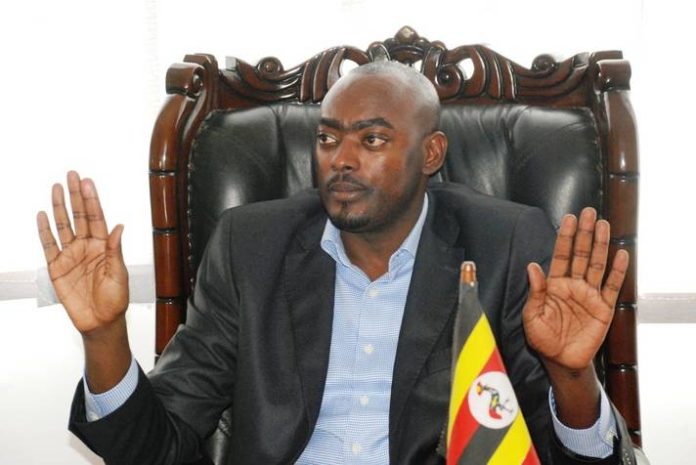
The President of the Ugandan North American Association (UNAA), Monday Atigo

In 2010, Uganda’s remittance earnings surpassed the amount earned from coffee exports, at the time Uganda’s leading forex exchange earner. In fact the coffee export earnings were about US$371million (about Shs1.3 trillion), only dwarfed by US$777.47 million (about Shs2.7 trillion) from immigrant remittances.

And by last year, remittances to Uganda had tremendously increased to $1.078b (Shs3.632 trillion) from $1.049b (about Shs3.631 trillion) in 2015, records from the World Bank have indicated.

A large chunk of this money was from Ugandans working in North America. In addition to this, Ugandans in North America have contributed in many ways to the betterment of Ugandans living in the country and those living in North America.

The president of the Ugandan North American Association (UNAA), Monday Atigo who is currently in the country, has revealed more of their contributions to the country. Among these is the building of hospitals and offering of health services to Ugandans.

“At the time of joining UNAA, we needed leaders with financial decisions with the right judgment and those that are prudent. We continue to empower our members and also create opportunities for them to become successfully financially through our trade and finance forums which we also continue to have at each convention,” says Atigo.

“We also continue to partner with other companies or organisations like the Uganda Fistula. We helped to build a Fistula hospital in Soroti, and helped to provide dental services in Uganda,” he added. In addition to that, he says they have also introduced scholarship programs for Ugandans in the US.

“In the US, we also introduced scholarship programs and also this year, in Miami, we will have an opportunity for those that lost their citizenship in Uganda to actually get dual citizenship certificates,” Atigo says, adding however, that all this “hasn’t been by accident.”

“I would consider myself a child of community because I was raised by one. That’s where the passion comes from. I started with serving Dallas as a two time treasurer, as a president at that point. Then during my term, we were able to host it successfully, International networking event put together by the Ministry of Foreign Affairs, hosted the 2013 UNAA convention, developed the website to connect with our folks,” Atigo says.

It’s against that background that he is seeking a re-election as UNAA president for the second time.

“When I became the UNAA president in 2015, I pledged that I would bring this organization back together and sure enough I created the harmonization committee, a report was submitted, suggestions were presented – everyone had an input: from the UNAA Causes and the UNAA leadership….

“Today I am happy to say we are looking into some of the ideas presented. Some already we are even implementing…that means we are making progress in the right direction. Let’s not deviate. Let’s stick together. Let’s come together. Let’s keep the course UNAA is taking right now. Coming together like I said is the beginning. Ladies and gentlemen, join me as we take UNAA where it’s supposed to be.”


Stories Continues after ad

Mbidde threatens to drag Kenya to court over EALA elections delay

Fred Mukasa Mbidde

Ugandan representative in the East African Legislative Assembly (EALA) Fred Mukasa Mbidde has promised spearhead efforts to drag the Kenyan government court over the delay to elect its members to the Assembly.

According to Mbidde, the Kenyan government insists it will first conduct presidential elections scheduled for August this year, before dealing with the issue of its EALA representation.

Currently, all EA countries except Kenya have already submitted names for their duly elected members to the EAC Parliament.

“South Sudan was once sued for failure to conduct polls for representatives in the Assembly when President Salva Kiir passed a decree which delayed the swearing in of members of the assembly,” Mbidde said while briefing the media at the Democratic Party headquarters today.

Kenya is set to hold elections on August 8, which will pit leading contenders, incumbent President Uhuru Kenyatta and political nemesis Raila Odinga, against each other, a development observers say has affected the country’s programme to elect its EALA members.


Stories Continues after ad

Mourinho faces €3.3m tax fraud case in Spain

TAX CHEAT? Manchester United Manager Jose Mourinho

Jose Mourinho is the latest big name in football that has been accused of tax fraud in Spain between 2011 and 2012.

The Manchester United manager is accused of defrauding Spain of €3.3m (£2.9m) during the time he spent at Real Madrid, and Spanish prosecutors said on Tuesday they had filed a claim against him on two counts.

The tax fraud claims against Mourinho come a week after Real Madrid star Cristiano Ronaldo was also accused of evading €14.7m (£12.9m) in tax between 2011 and 2014.

Ronaldo, who played under Mourinho at the Bernabeu, has denied the charges and is threatening to leave Spain.

Cristiano Ronaldo will have to testify in court over his own tax case on July 31.

Other big names in football have been accused of tax fraud in Spain recently including Barcelona star Lionel Messi, who was given a 21-month jail term.

Stories Continues after ad

Buganda Road Court throws out plea for Stella Nyanzi ‘mental check’

NO MENTAL CHECK! Dr. Stella Nyanzi

Buganda Road Magistrate’s Court has suspended the State’s quest to have Makerere University researcher Dr. Stella Nyanzi undergo a mental examination.

Magistrate James Eremye Mawanda today called off hearing of the application until the Constitutional Court rules on Nyanzi’s application challenging the same issue.

Ruling on Nyanzi’s application, Eremye said his decision was made was to allow the Constitutional Court exercise its jurisdiction and resolve the question of whether the compulsory subjecting of suspects to the Mental Treatment Act enacted during colonial times is still relevant.

Court also declined to grant the State’s request seeking cancellation of Nyanzi’s bail, claiming she defied the subjudice rule by attacking Resident State Attorney, Jonathan Muwaganya, who kept turning up in court while not ready to proceed.

While the magistrate agreed Nyanzi used a ‘hard’ language against the state attorney in her Facebook posts, he also could not find the said posts to be subjudice.

Dr. Nyanzi ran to the Constitutional Court last month seeking to block to the government’s move to have her subjected to a mental status test.

She is facing charges of cybercrime and offensive communication for allegedly calling President Museveni as a ‘pair of buttocks’ on her Facebook wall.

Court adjourned to July 21.


Stories Continues after ad