Stanbic Bank
Stanbic Bank
18.4 C
Kampala
Stanbic Bank
Stanbic Bank
Home Blog Page 1844

Ugandans on ‘kyeyo’ block Fifi Da Queen’s US visa over insults

DENIED US VISA? Phiona Nabitengero aka Fifi Da Queen

It’s just a few weeks to this year’s Ugandan North American Association (UNAA) convention.

However, among those to miss out this year’s convention is Bukedde TV presenter, Fifi Da Queen real names Fiona Nabitengero.

This is after she was denied visa by the US embassy. According to sources close to UNAA management, Fifi’s visa was blocked by Ugandans in the US who accused the presenter of using degrading remarks about them in a video she shared on social media.

In January, Fifi called majority of the ladies on kyeyo ‘sluts’ and vowed to continue insulting them for as long as they continued talking about her.

“The way all Ugandans abroad want respect should be the same way they respect the people they leave home. Ugandans abroad think they are the only people that work hard. They always insult those home but quickly get offended whenever the same words are thrown at them,” she said in a video posted the following day.

Sources say she is currently a depressed woman having missing out on a free flight. Were she to travel, this would have been her second time in the US having attended the same event last year.


Stories Continues after ad

Kwesé Free Sport broadcasts FIFA Confederations Cup 2017

Kwesé Free Sports is broadcasting each of the 16 Confederations Cup matches live from Russia across the country through digital terrestrial transmission (DTT) TV.

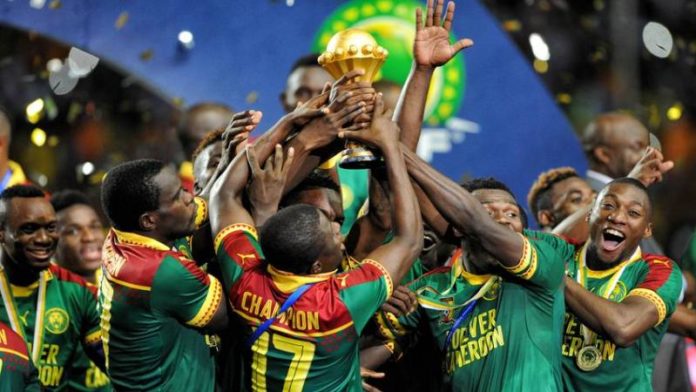
“As a new pan-African broadcaster we want to ensure that all Ugandan soccer lovers have open access to watch our African Champions, the Cameroon Black Lions edge their way to the 2018 World Cup in the simplest and most convenient manner possible,” shared Ben Mwine, General Manager Kwesé Free Sport.

“Gone are the days when sports fans are unable to watch their favourite sports because they can’t afford to access them. Kwesé Free Sports offers 24 hour broadcast of premium sports content through FTA transmission across the country through. Furthermore our innovative multi-platform, multi-screen approach to broadcasting makes sports easily accessible to viewers,” he added.

Kwesé Free Sport is available on your FTA set top box with no subscription fee. Viewers can also access the channel on their mobile devices using the Kwesé App available for download on all Apple and Android. Kwesé Free Sports is also available on the web where viewers can live stream the channel on www.kwese.espn.com wherever they are!

To ensure that Kwesé Free Sports audiences experience the best sporting and behind the scenes access, leading sports commentator Andrew Kabura will provide live pitch side updates to make sure viewers do not miss a thing.

FIFA Confederations Cup is also known as ‘The Tournament of Champions’. The eight teams that make up the competition are the champions from six FIFA Confederations Championships, that is UEFA (Portugal), CONMEBOL (Chile), CONCACAF (Mexico), CAF (Cameroon), AFC (Australia) and OFC (New Zealand), plus the World Cup Champions (Germany) and the host country (Russia).

These eight teams are split into two groups, and the top two teams advance to the semi-finals. Key games to watch out for include Cameroon vs Australia on Wednesday June 21 at 6pm, followed by Germany vs Chile at 9pm.

Cameroon plays Germany Sunday June 25, at 6pm. The top performing teams from the round robin playoffs will proceed to the semi-finals scheduled for June 28 and 29 at 8pm, and the winners will then face off in the finals on Sunday, July 2, at 8pm.


Stories Continues after ad

EAC launches emblem, logo redesign campaign

EAC LOGO REDESIGN: Minister of State for East African Community Affairs Julius Wandera Maganda

The Minister of State for East African Community Affairs Julius Wandera Maganda has launched campaign for re-design of East African community symbols and emblems. According to the EAC, this will help the regional re-align its current developments in the integration process.

Maganda said as part of the EAC brand architecture strategy, the regional body has proposed several initiatives that include re-designing a new EAC logo, flag and developing a common unique identifier for all organs and institutions of the community.

The competition that runs from June 1 to August 31 is exclusively open to youth (18-35 years) from the East Africa community partner states including those in the diaspora, all of who will be required to submit their work in soft copy or hard copy to EAC headquarters in Arusha, Tanzania.

According to Maganda, the competitors’ deliverables shall include one EAC emblem, 10 logos of EAC organs and EAC institutions, the EAC corporate colors, the ‘unique identifier’ that will be adopted in the emblem and logos, justification for all proposals submitted and brief demonstration of the application of the Emblem and Logos in offline and digital forms.

He said that upon hitting the deadline for submission of all projects, a committee comprising of representatives from all EAC partner states and design experts will judge the concepts handed in; designers of the short listed concepts will invited to make a formal presentations to the review panel where the first runner up will walk away with US$5,000, the second with US$ 2,500 and the winner US$ 25,000.

The current logo of the EAC features a map of Lake Victoria with the partner states Burundi, Rwanda, Kenya, Uganda and Tanzania surrounded by an industrial wheel with a leaf arch on either side, with the letters EAC at the top. At the bottom of the emblem is a pictogram of a handshake and below written in Kiswahili are the words ‘Jumuiya ya Afrika Mashariki’ whose meaning translates into the ‘East African Community’.

Stories Continues after ad

Magogo ‘retains’ FUFA presidency unopposed

'UNOPPOSED': FUFA boss Moses Magogo

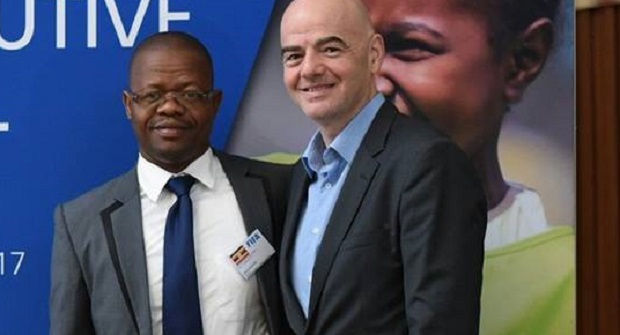
Engineer Moses Magogo is set to serve a fresh four year term as the president of the Federation of Uganda Football Associations (FUFA).

Magogo will extend his term to eight years following the elective Fufa General Assembly to be held on August 5 in Masindi after he was nominated successfully.

Candidate Mujib Kasule did not satisfy the conditions set despite picking the nomination forms last Wednesday making him ineligible to contest for the FUFA Presidency.

According to FUFA, the Proline football director was disqualified after he failed to fulfill the mandatory requirements that were requested on Friday June 16.

He was then given another two days until Monday, June 19 and still failed to comply with the mandatory requirements stipulated in the FUFA Statutes, FUFA Electoral Code and FUFA Electoral Guidelines for candidature of the FUFA President and FUFA Executive Committee.

Mujib served as the Vice President during former president Lawrence Mulindwa’s regime.

However, by press time it was not possible to establish whether Mujib Kasule would contest the outcome in court.

It is said Mr. Kasule Mujib failed to comply with the following articles of the FUFA Electoral Code 2012:

Article 10 (5) Nominations of candidates shall be made by both the Chairman and Secretary of fully subscribed members. Where members are individuals, nominations will be done by fully subscribed members; and

Article 10 (6) Subject to the fulfillment of the eligibility prerequisites, a candidate to the office of the FUFA President shall only be valid if supported by any three members of FUFA where one such member is from the FUFA Super League Clubs or FUFA Big League, the other member being from Special interest groups as defined in article 10 (1) (d-1) of the FUFA Statutes and the other member being a Regional Football Association.

In addition, Mr Mujib Kasule did not also comply with Article 39 (4) of the FUFA Statutes –Only Members of FUFA may propose candidates for the office of President. Members shall notify the general secretariat in writing of the name of a candidate for the presidency of FUFA at least two months before the date General Assembly.

Article 11 (2) of the FUFA Electoral Code 2012 states Candidatures will be registered by the EC, scrutinised by the EC for compliance with this code, the FIFA, CAF, FUFA and/or respective statutes of the organization for whom elections are being conducted and declared eligible for election after payment of the respective fees as stipulated in this code.

Stories Continues after ad

BoU cuts CBR to 10 percent in June

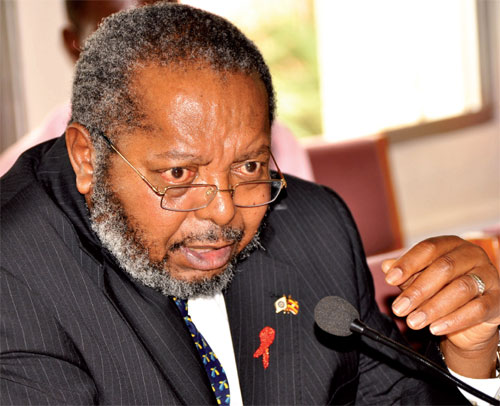
BoU Governor Emmanuel Tumusiime-Mutebile.

In an effort to boost private sector borrowing, the Bank of Uganda (BoU) has reduced its Central Bank Rate (CBR) by 1 percentage point to 10 percent in June 2017, a Monetary Policy Statement issued by the bank’s Governor, Professor Emmanuel Tumusiime-Mutebile, reads.

Mutebile says that the further cut in the CBR should encourage commercial banks to cut their prime rating rates downward to encourage private borrowing, noting that the average lending rates have been declining to 20.5 percent in April 2017 from a peak of 25.2 percent in February 2016, a cumulative decline of 4.7 percentage points.

Stanbic Bank is the only one so far that has cut its prime lending rate to 19%, as the lowest. Other banks are reluctant to reach this level.

Mutebile also confirmed the annual inflation as measured by the change in consumer price index (CPI) increased to 7.2 percent in May 2017, from 6.8 percent in April 2017, largely driven by a sharp increase in food crops and higher energy prices.

Food crops inflation rose to 23.1 percent from 21.6 percent in April 2017, largely on account of the impact of adverse weather conditions on food crop production, Mutebile states in the press release.

The Governor says the relative stability of the exchange rate and subdued domestic demand have contributed to the dampening of core inflationary pressures over the last 12 months, adding that the economy continues to grow at a moderate pace.

According to the latest gross domestic product (GDP) estimates released by Uganda Bureau of Statistics (UBOS), the economy is estimated to grow by 3.9 percent in the Financial Year 2016/17 compared to a growth rate of 4.7 percent in the Financial Year 2015/16.

The slowdown is mainly due to the drought that affected agricultural production, coupled with slow implementation of public investment projects and weak private sector credit growth.

Mutebile says that economic growth is projected to pick up to 5.0 percent in Financial Year 2017/18; supported by improved efficiency and effectiveness in implementation of public investments; higher Foreign Direct Investments, particularly in the oil sector; and recovery in private sector credit growth, as lending interest rates continue declining.

Growth in the agricultural sector is also projected to improve, as normal weather conditions return.

According to Mutebile, the supply side shock that caused inflation to edge-up in the last six months is temporary and is expected to wane in the first quarter of 2017/18. Moderation of food prices is expected over the near to medium-term, he adds.

In addition, Mutebile says, the favourable inflation outlook is to be driven by downward revisions to international oil prices that should lower fuel prices in Uganda as well

“In line with the previous forecast, inflation is forecast to stabilise around the target of 5 percent in 12 months,” he says.


Stories Continues after ad

‘Rich countries’ abandon South Sudan refugees, says Amnesty

TO BE VERIFIED: Refugees at the Bidibidi Reception Centre in Yumbe, Northern Uganda.

Rich countries are failing in their obligation to help Uganda support thousands of refugees fleeing death, rape and other human rights violations in South Sudan, said Amnesty International in a damning report launched ahead of a high-level donor summit in the Ugandan capital Kampala on June 22-23.

More than 900,000 refugees have fled the brutal conflict in South Sudan and sought safety in Uganda, but funding shortfalls mean that many of them are not receiving basic services such as food, water and shelter. At least 86% of them are women and children.

“Uganda has remained welcoming and generous at a time when many countries are closing their borders on refugees, but it is under incredible strain as funds dry up and thousands continue to cross from South Sudan every day,” said Muthoni Wanyeki, Amnesty International’s Director for East Africa, Horn and Great Lakes.

“Donors, including the US, EU countries, Canada, China and Japan, must step up support for Uganda by ensuring timely funding for refugees’ immediate and long-term needs. These refugees must not become the latest victims of a collective and shameful failure of international cooperation.”

Amnesty International’s researchers visited refugee settlements in four districts in northern Uganda – Adjumani, Moyo, Yumbe and Arua – and saw firsthand the impact of these funding difficulties. Refugees and aid agencies spoke of a desperate lack of food, water, shelter and other basic services due to funding shortfalls. Support for vulnerable groups such as unaccompanied children, persons with disabilities, and the elderly, was also severely lacking.

South Sudanese refugees have fled some of the worst violence to hit the southern Equatoria region since the country descended into armed conflict in December 2013. Thousands have been killed and close to 1.8 million forced into exile.

Amnesty International researchers spoke to over 80 refugees in Uganda who all gave horrific accounts of torture, indiscriminate killings, rape, and widespread looting.

Long-term help for these refugees who have experienced high levels of trauma, including psychosocial support, is not widely available due to lack of funding.

By failing to share responsibility with Uganda, donor countries are failing to protect thousands of refugees’ lives; which is an obligation under international law.

Muthoni Wanyeki, Amnesty International’s Regional Director for East Africa, the Horn and the Great Lakes

As of May 2017, only 18% of the required funding for the UN refugee agency, UNHCR, to provide for South Sudan refugees in Uganda, had been met. UNHCR, the World Food Programme (WFP) and 57 aid agencies have since appealed for more than $1.4bn to provide vital support including food and shelter by the end of 2017.

“Despite the dire need, and multiple appeals by Uganda and the UN for increased funding, donors have consistently failed to respond. By failing to share responsibility with Uganda, donor countries are failing to protect thousands of refugees’ lives; which is an obligation under international law. The Uganda Solidarity Summit is an opportunity to change this,” said Muthoni Wanyeki.

Uganda’s refugee policy is one of the most progressive in the world as it gives refugees relative freedom of movement, access to basic services such as education and healthcare, and freedom to work and own a business.

A summit convened by Uganda and the UN to mobilize global support for South Sudanese refugees – the Uganda Solidarity Summit on Refugees – will take place in Kampala on 22 and 23 June.

The South Sudan conflict began in December 2013 after President Salva Kiir accused his then deputy Riek Machar of plotting a coup. Subsequent efforts to reach a diplomatic solution to the conflict have all foundered, resulting in further outbreaks of fighting.

The conflict has had a devastating impact on civilians, including famine, ethnic violence and reports of potential genocide. It has also resulted in Africa’s largest refugee crisis; and the third largest in the world after Syria and Afghanistan.


Stories Continues after ad

American student released from captivity in North Korea dies

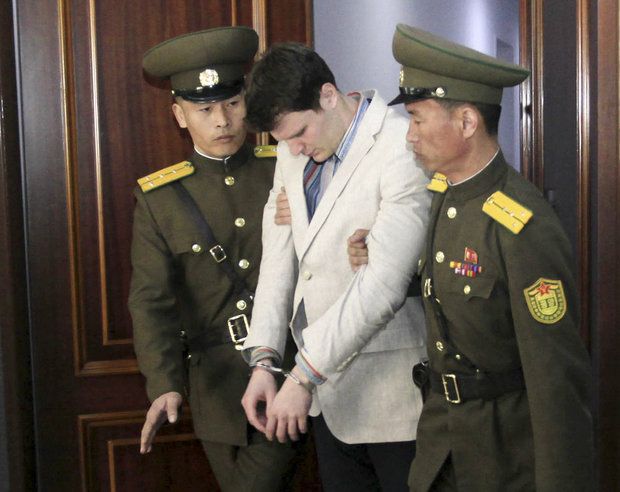
DEAD! Otto Warmbier, the college student held prisoner in North Korea who arrived home last week in a coma, has died,

Otto Warmbier, the college student held prisoner in North Korea who arrived home last week in a coma, has died, his family said Monday.

The 22-year-old Cincinnati-area native arrived home after 17 months in captivity with severe brain damage. He never regained consciousness.

“Unfortunately, the awful torturous mistreatment our son received at the hands of the North Koreans ensured that no other outcome was possible beyond the sad one we experienced today,” his parents said in a statement.

“At least he got home to his parents,” said President Trump, speaking at an American Technology Council roundtable. North Korea, he said, is “a brutal regime and we’ll be able to handle it.”

In a formal statement released by the White House, Trump said “Melania and I offer our deepest condolences to the family of Otto Warmbier on his untimely passing. There is nothing more tragic for a parent that to lose a child in the prime of life. Our thoughts and prayers are with Otto’s family and friends, and all who loved him.”

GOP Sen. John McCain, who spent more than five years as a POW during the Vietnam War, minced no words in reacting to Warmbier’s death. “Let us state the facts plainly: Otto Warmbier, an American citizen, was murdered by the Kim Jong Un regime.”

The student had sobbed in court as he confessed to trying to steal a propaganda banner while visiting the country last year. He was sentenced to 15 years hard labor in a North Korean prison.

Warmbier’s father, Fred, accused the North Koreans of torturing his son.

Fred and Cindy Warmbier received no news about their son while he was behind bars in the communist state. The University of Virginia student was allowed no consular visits.


Stories Continues after ad

UBL announces Kabaka Coronation Ngule Lager promotional offer

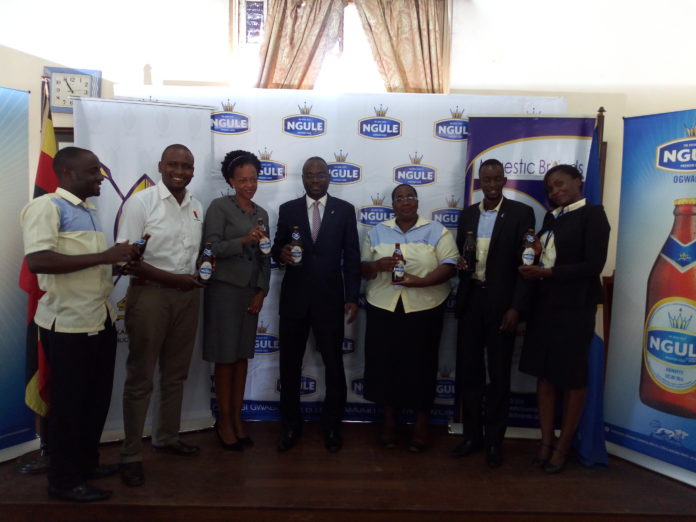
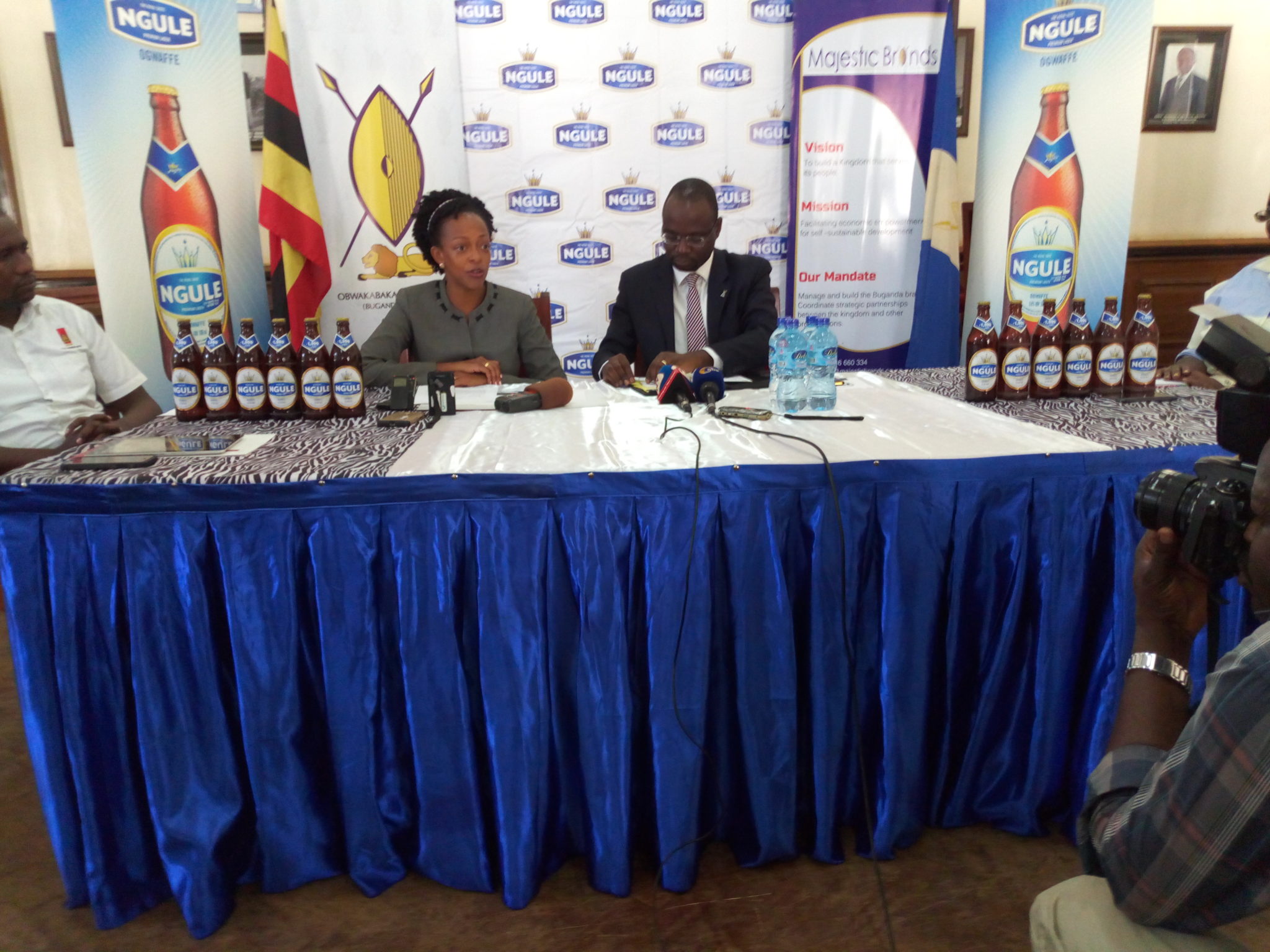
Buganda Kingdom and Uganda Breweries Limited officials at the launch of Engule

Uganda Breweries Limited (UBL) has announced a special promotional offer for Ngule Lager in celebration of the Kabaka’s 24th coronation anniversary, on July 31.

Dubbed ‘Omutanda Agabudde’, the offer will see the beer sold at a special price of Shs1,500. Ngule is a Luganda word that means ‘crown’ or ‘reward’.

The announcement was made at a press conference at Bulange addressed by the Buganda Kingdom Deputy Minister of Finance, Owek. Mulema Mukasa and Uganda Breweries Marketing Director, Juliana Kagwa.

Ngule, which was launched in January 2016, is the official kingdom beer produced under a partnership between Uganda Breweries and the Buganda Kingdom. This partnership consists of a revenue sharing agreement that is beneficial to both entities.

“In celebration of His Majesty’s coronation anniversary, we today announce a special promotional offer of Shs1, 500 on Ngule as a reward to his loyal subjects. Our brands are made to be part of celebratory occasions and we would like to join the people of Buganda to commemorate the Kabaka’s coronation and celebrate this joyous occasion,” said Kagwa.

This year’s coronation anniversary is being held under the theme ‘Useful utilization of land for the upliftment of the wellbeing of the people of Buganda’.


In his remarks, Buganda’s Deputy Minister of Finance, Mulema Mukasa said the promotional offer was a reward to Kabaka’s loyal subjects as they celebrate his coronation.

Buganda Kingdom Deputy Minister of Finance, Owek. Mulema Mukasa and Uganda Breweries Marketing Director, Juliana Kagwa

“The Kingdom of Buganda is essentially about promotion and sustenance of culture and heritage. The Kabaka’s coronation is one such celebration. It is only fitting that our people celebrate with Ngule, the official Kingdom beer,” he said.

He further thanked the people of Buganda for heeding the call to grow cassava from which Ngule is brewed.

“In the 2016/17 budget, the kingdom set aside UGX 500 million to start a cassava nursery in all the 18 counties and UGX 3 billion to procure coffee, matooke, and cassava seedlings. This was done to enable farmers meet the demand from UBL to brew Ngule. This support has been channeled through Majestic Brands and Buganda Cultural and Development Foundation (BUCADEF),” he added.

In the previous financial year, the Kingdom earned royalties worth UGX.515 million from Ngule between January and June 2016. This was handed over to Katikkiro Charles Peter Mayiga.

The beer is made from local ingredients; cassava and sorghum, which are exclusively sourced from the kingdom.

“This beer has contributed to socio-economic growth of the Kingdom. Through the local sourcing of agricultural inputs like cassava to brew the beer, Ngule has contributed to the uplifting of livelihoods of His Majesty’s subjects. Buganda Kingdom has a 5-year strategic plan that focuses on leveraging all the kingdom’s resources to lift His Majesty’s people out of poverty and the partnership with Uganda Breweries to produce Ngule beer, is one of those projects,” Katikkiro added.

Ngule is one of the most affordable beers on the market, a deliberate decision by UBL to get more Ugandans to consume formal beer, thus moving them away from illegitimate, poor quality and potentially hazardous alcohol.

Owekitibwa Mulema Mukasa further said the royalties that the Kingdom was earning from the commercial venture with UBL were being re-invested to develop key sectors in Buganda such as health, education and sanitation.


Stories Continues after ad
SK Mbuga health improves

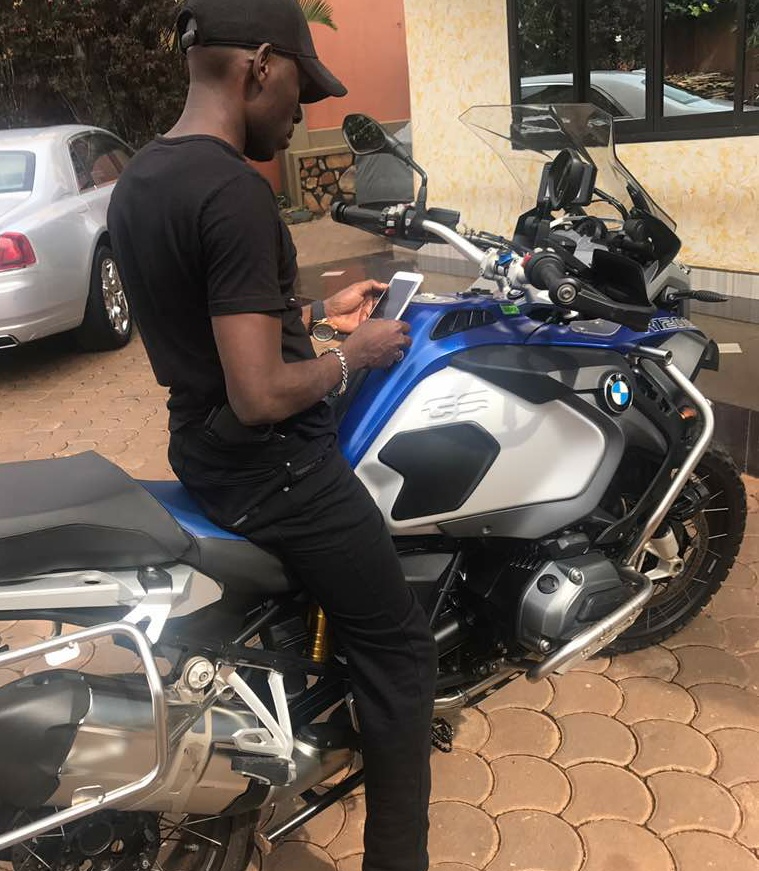
FREAK: The BMW motorcycle SK Mbuga was test-driving is pictured shortly after the accident.

Just weeks after the Ugandan socialite community lost Ivan Ssemwanga, another member survived death by a whisker last night when Sulaiman Kabangala Mbuga popularly known as SK Mbuga, was Sunday involved in a nasty accident.

SK Mbuga just before the test-drive that led to the accident

Mbuga, who was allegedly test-driving a BMW motor bike that he wanted to buy, crashed into a wall near his home in Buziga after reportedly failing to negotiate a sharp corner.

He was rushed to Nakasero Hospital and is steadily recovering. By last night, he could speak and could even remember events before the crash.

According to his close friend at the hospital, so far three scans have been carried out on him and it was found no bone was broken, thanks to the safety gears he was wearing.

It should be remembered that shortly after the death of Ssemwanga, SK Mbuga’s wife took to social media, and ‘asked’ him to make a will.

Tycoon SK Mbuga owns a long fleet of cars including; four Hummers, a fancy Jeep Cherokee that he is seen driving most times, Range Rovers, a Ferrari and a Rolls Royce.

It was actually Mbuga’s Hummers that received the body of the late Ivan Ssemwanga and escorted it to his home in Muyenga.


Stories Continues after ad
Commodity prices drop in most markets

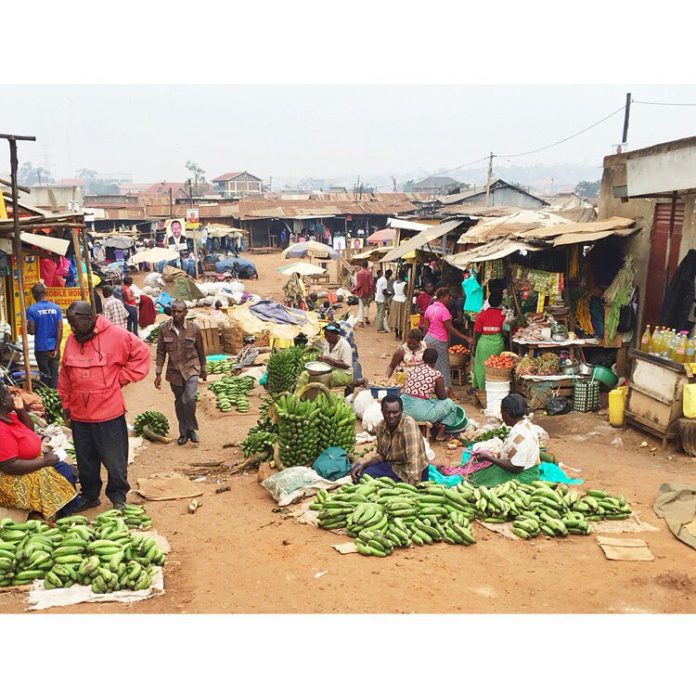
Matooke vendors at the kalerwe Market in the suburbs of Kampala

The price of groundnuts has dropped in markets like Lira and Owino but most noticeably in Kalerwe market where it eased down by shs500 to retail at shs 5,500, a kilogram. A kilogram further dropped shs250 for wholesalers to buy at shs 4,750, the latest market analysis report released for this week shows.

Traders attributed the decrease to the increased supply of the commodity from markets such as Kaliro in Busoga region that grows considerable amounts of the legume.

Simsim, mainly grown in the north of the country, had its prices drop by shs1, 000 and shs850 for retail and wholesale respectively, as other commodities such as rice (Kayiso), cow peas, fresh cassava, beans, soya beans, among others also had their prices come down.

However, commodities such as sorghum flour and grain, maize flour and millet grain all had price increases due to the increased demand for the commodities. Beef and super rice maintained a constant price due to steady supplies to markets.

Matooke prices on average dropped by shs2,350 on retail and shs2,700 on wholesale and traded at shs23,000 and shs20,650 for retail and wholesale, respectively. Of recent there has been a steady supply of matooke from western region where it is most grown.

Meanwhile the report shows that the average fuel prices across all regions of the country reached shs3,350, shs2600 and shs3550 for diesel, kerosene and petrol respectively.

The eastern region, the nearest to the Kenyan fuel suppliers, had the lowest average fuel prices of shs3000 and shs 3450 for diesel and petrol respectively.

Upcountry, the price of processed honey dropped across markets such as Kabale and Katuna by up to shs1,500 and shs1,000 for retailers and wholesalers respectively trading a litre at shs16,500 for retail and shs14,000 for wholesale.

Traders attributed the drop in prices to a decrease in demand of the honey by local consumers. Despite its benefits most Ugandans don’t consume honey putting the blame on high prices. Suppliers have to find market in neighbouring countries.

The central and western regions had the highest average prices of petrol selling at shs3650 and shs3600 respectively.


Stories Continues after ad