Stanbic Bank
Stanbic Bank
18.5 C
Kampala
Stanbic Bank
Stanbic Bank
Home Blog Page 1845

Bebe Cool preaches about appreciating ‘little things in life’

NEW RELEASE: Bebe Cool's Katono

Gagamel boss Bebe Cool has lived to his promise by releasing yet another song.

On the heels of ‘Mboozi Za Malwa’, which is already receiving fair airplay in the country, he has released a new single titled ‘Katono’.

‘Katono’ is a Luganda word which means ‘small’ and it’s a Dancehall tune guaranteed to make everyone dance away to every beat of the song. In this dancehall anthem, Bebe Cool says: “You borrow money to wed your wife but instead the lender takes off with your wife (after you fail to pay back).”

The song’s message is all about being content with the little things in our lives as opposed to flossing with borrowed stuff or worse still living beyond our means, all in the name of creating an impression on society.

It further discourages endless borrowing to satisfy society’s demands at the expense of one’s future. ‘Katono’ was recorded in Kampala – Uganda (East Africa), written by Black Skin, Produced by Eno Beats, Video shot by Sasha Vybzy and Mastered / Mixed by Ogopa Inc.

Bebe Cool is currently in Kenya for the Coke Studio Africa, where he recorded a song with American musician, Jason Derulo.


Stories Continues after ad

Bukedde TV presenters implicated in Angela Kalule’s semi-nude video

IN 'NUDE' SOUP: Angela Kalule

One of the most discussed topics at the weekend was musician Angela Kalule.

This followed a semi-nude video clip which she had record earlier landing in the hands of the public, attracting both criticism and support for her.

Reacting on the video clip, Kalule apologized to everyone offended, saying it hadn’t been intended for public view.

However, it ended up in the hands of the public after she failed to raise the money asked for by radio and TV presenters.

Angela, whose phone was stolen last month, says she was reached by Bukedde TV presenters, Josephat Seguya and Semei; Grace Namiyimbo, Carol and Sula Simplex of Ssuubi FM who asked her for money to block the video from ending up in the hands of the public.

“I was powerless and neither did I have the resources to respond positively to your (their) demands. The search for contentment through blackmail and invasion of privacy will not belittle me nor make me lose my self-esteem. I still hold my head high and will go about my responsibilities as a dutiful fiancé, singer and Mother.”

Meanwhile, appearing on Capital FM Monday, Kalule said like a large section of the public, her family has been by her side during this difficult time.

“The content of the video exactly showed I was speaking to my man although some thought it was a publicity stunt. You cannot get out of the blue to perform such a stunt that you know is going to humiliate you beyond reparable conditions and you know that your children will get to see it. You cannot. You cannot wake up to start planning such a stunt,” she said.

She says no one pushed her to apologise “but I felt like I needed to apologise.”
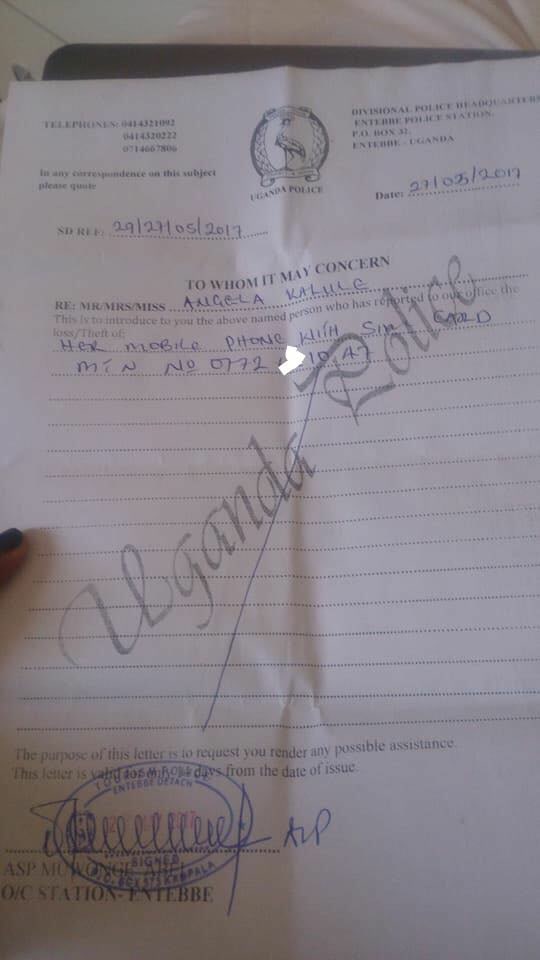
Angela Kalule’s phone was stolen last month and the case was reported to police. The leaked video was is said to have been in the lost phone.


Stories Continues after ad

dfcu injects Shs200m in agriculture, farmers off to The Netherlands

OFF TO THE NETHERLANDS: The 2016 Best farmers competition winners with State minister for agriculture

Small and medium scale farmers are to spend one week in The Netherlands on a learning expedition in the world’s second largest exporter of agricultural produce, thanks to the dfcu bank that has sponsored the trip.

During the trip, the thirteen farmers whose trip has cost dfcu bank over Ugshs200 million, will visit some of the most successful farmers, taking advantage of partnership opportunities as well as exploring innovations and best practice that they can apply in Uganda.

The State Minister for Agriculture Christopher Kibanzanga officially flagged off the farmers who left on Saturday.

Chairman dfcu Bank Jimmy D. Mugerwa shares a moment with State minister for Agriculture Christopher Kibanzanga

Speaking at the event, the chairperson dfcu Bank, Jimmy Mugerwa revealed that dfcu in partnership with Netherlands based Rabobank have set up an Agriculture Advisory Centre, which will be operational by July this year.

“With Uganda’s heavy reliance on agriculture, it is critical that there is cross industry collaboration to support the shift from subsistence to commercial farming which is more lucrative. dfcu’s Advisory Center will complement the efforts towards improving the skills set within the agricultural sector,” he said.

dfcu has adopted the value chain based approach to support the transformation of the agricultural sector through financing and capacity building of farmer organizations/associations engaged in viable agriculture projects including coffee, cotton, tea, among others.

As part of dfcu’s agriculture agenda, the Bank is supporting the small-scale farmers to commercialize through products such as the Farmers Group savings accounts, which encourage farmers to save and have access to affordable credit when the need arises.

The 13 farmers emerged winners in the ‘2016 Uganda Best farmer’s competition’ which show cases the best farmers and the best framing practices nationally with intention to inspire farmers in the adaptation of commercial agriculture methods. It is a partnership between dfcu Bank; Vision Group under the New Vision; KLM and the Netherlands Embassy, which has been running since 2014.


Stories Continues after ad

Disastrous Fall Armyworms to strike again in August, expert warns

Uganda has not won the battle against the notorious Fall Armyworms that destroyed crops in the early months of the new planting season, an agricultural expert familiar with the behavior of the nocturnal moths has warned.

According to Dr John Bahana, who has immense experience in the monitoring of the moths in central and southern Africa, the green pests are only hiding in the soils, ready to strike mainly grain farms in August.

“Warning needs to be sounded out to authorities and all concerned to be aware of the looming disaster that Fall Armyworm will befall Uganda starting this August,” Dr Bahana says of the insects that were first spotted in South Africa last year before they scattered to other Sub-Sahara countries.

Dr Bahana says that come August, the moths will emerge, lay eggs on newly germinated crops ‘and simply devour everything’. He says Uganda’s neighbours, Rwanda and Tanzania face similar situation. Already the moths are destroying maize gardens in western Kenyan district of Kitale, leaving farmers confused on how they will repay loans.

He called for a regional approach to research and management of the carnivorous moths that have a high capability to resist the recommended chemicals.

Government says it has put aside shs 3 billion to tackle the moths. But Dr Bahana says the money is so little compared to what other countries have staked. Kenya budgeted US$2 million whereas Zambia has spent more than US$4 million.

Agriculture minister, Vincent Ssempija, meanwhile says his ministry is finalisng a comprehensive strategy for the management of the worms that struck the country that had just emerged out of the prolonged drought. It is not clear whether Uganda will work with its regional neighbours as grains and cereals form part of the inter-border trade.

He adds efforts on the biological control of the moths are on-going as the chemical use option continues for emergencies.

Mr Okasa Opolot from the MAAIF adds that the research focuses on how the moths breed, feed and move. Should the biological method succeed, it will help protect the environment, given that too much use of the chemicals harm could harm the environment in the long run.

Uganda expects to harvest 4.8-5 million metric tons of maize this year, from the 4 million metric tons it reaped last year. Minister Ssempija says with the interventions to provide chemicals to farmers, the country will lose at least 5% the crops in the gardens to the pests, which is less than 25% that had earlier been expected to be destroyed.

Josephine Okot, the Managing Director of Victoria Seeds agrees with Dr Bahana, saying government should inject in more money. She cited Brazil which invests US$600 million annually to fight the pests.

Minister Ssempija says unscrupulous dealers in efforts to get abnormal profits were supplying farmers with adulterated chemicals. ‘This is why some pests are not dying,” says the minister in reference to chemicals like Rocket, Striker, Ngeyo, among others.

“We have talked to them about this indiscipline. We are going to issue a few guidelines and instructions,” Ssempija says, adding that government will only deal with known manufacturers and agents.

An analyst says agricultural extension workers must be involved deployed at parish levels to monitor the moths as they come back into the gardens.

Brazil, where the moth is perennial makes annual losses of US$3 billion (1,0863.4 billion) worth of crops

The Meteorological Department warned recently that southern part of the country would experience a dry spell in the second season, thrive as rains reduce. The second planting season starts in July, farmers hoping it won’t be bad like the first one that had their gardens infested with the strange Fall Armyworms.


Stories Continues after ad

Poor handling of animals to affect livestock exports, experts warn

CARE: Proper handling of animals will lead to better animal products' exports

As Uganda strategizes to position itself as a regional hub for the export of animal products, there is concern that efforts could be retarded by the careless handling of animals and birds by both farmers and veterinary professionals.

Senior veterinary experts have warned that poor administration of drugs to animals and birds has a negative impact on the quality of products like meat, milk, eggs and honey, hence impacting on consumers’ health.

“The use of veterinary drugs in animals like cattle, goats, poultry, bees has the potential to generate residues in animal derived products,” Dr Fred Monje, a Senior Veterinary Inspector in Uganda’s Ministry of Agriculture Animal Industry and Fisheries (MAAIF), observed.  This, he says, leads to contamination and therefore unsuitable for human consumption.

Dr Monje says that veterinary practitioners and farmers must stick to guidelines, warning that the continued improper immunization of animals weakens body processes like metabolism and detoxification which would otherwise help to filter drug residues that exit the body through urine and faeces.

When processes don’t take place normally, the result is the retention of drug residues in body, which then contaminate meat, milk and eggs in chicken, Dr Monje, adding that “the residues can cause diseases like cancer, allergy and damaged cell genes. The residues could also lead to antimicrobial resistance and congenital malformations.”

“The main reason for drug residues in animal products is due to improper usage and failure to keep the withdrawal period,” he says, advising veterinary shops to destroy expired medicines, as guided.

He advises farmers to use qualified veterinary personnel instead of relying on the unqualified ones but also that they avoid exposing chemicals to the environment as it provides most of the animal feeds.

Dr Monje also warns farms to keep their animals away from spilled chemicals as well as improper use agricultural chemicals such as pesticides.

Dr Mareb Acham, also veterinary inspector in the MAAIF says farmers should utilize the services of district veterinary officers, stating that officers have the obligation to guide farmers on the usage of chemicals and antibiotics. “They should not just buy drugs without the advice of veterinary personnel,” he says.

However, despite Dr Acham’s advice, most farmers in Uganda find it hard to access qualified personnel, and if identified, they are so expensive to engage.

The World Animal Health Organization, says Uganda’s veterinary sub sector is understaffed with minimum structures which offer low services, despite the high economic potential of the animal industry. For instance, Uganda produces 1.5 billion litres of milk annually, records from the Uganda Dairy Development Authority show.

“We have had problems of recent while trying to export our beef and milk. Markets like the European Union emphasise the issue of safety so much because they don’t want our products to cause diseases to their citizens,” says a local milk exporter.

Stories Continues after ad
Kagame endorsed as RPF presidential candidate

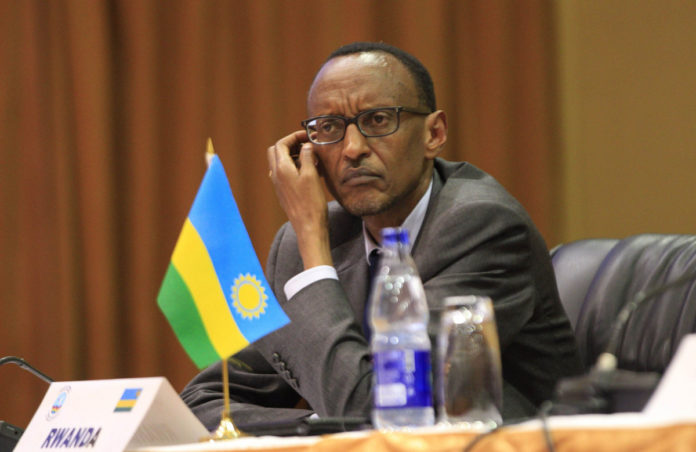
Rwanda President Paul Kagame.

Rwanda’s ruling party has chosen longtime President Paul Kagame as its candidate for the August election, where he is expected to face a handful of challengers who either represent small parties or are independent.

Kagame, 59, who has ruled this East African nation since 2000, was elected unopposed by Rwandan Patriotic Front (RPF) members.

Out of 11 registered political parties, nine have said they would back Kagame instead of fielding their own candidates, drawing criticism from the opposition. In the 2010 election, the president won with 93 percent of the vote.

Kagame’s decision to pursue a third term comes after the country’s constitution was amended in a 2015 referendum, allowing him to run for an additional seven-year term and then two five-year terms. That means he could remain in power until 2034.

Moves by some African leaders to stay in power have caused instability and violence, as in neighboring Burundi.

Rwanda’s opposition called the referendum undemocratic, and the United States, a key ally, opposed Kagame’s decision to stay on. But the president has insisted the referendum occurred after Parliament was petitioned with 4 million signatures. The country’s population is estimated at 12 million.

In a speech Saturday, Kagame urged ruling party members to start thinking about the transition beyond him. “There is no deadline, but I want you to address the reasons that have compelled you to bring me back here,” he said.

Supporters credit Kagame with bringing stability and economic transformation to Rwanda after its devastating 1994 genocide. Rights groups, however, accuse him of being an authoritarian and stifling free speech.

Rwanda’s government-backed electoral commission recently announced it must vet all social media messages by candidates in the presidential election or candidates risk having their social media accounts blocked.


Stories Continues after ad

Kiir issues ‘shoot to kill’ order for robbers

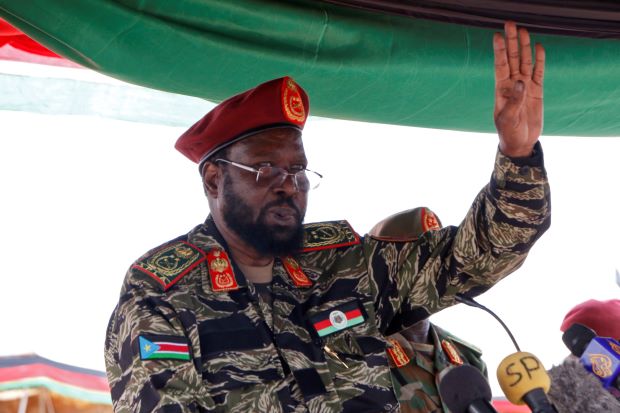
REJECTED CALLS TO STEP DOWN: South Sudan President Salva Kiir.

South Sudan President Salva Kiir has given out orders instructing joint police units to shoot dead robbers, including those who break into shops at night.

President Kiir, who spoke at an official function in Juba, urged police to provide security and protection to the citizens, saying the job of the police is to eliminate crimes.

“Your job as police is to eliminate the thieves who break into shops at night, shoot them whenever you see them trying to break into shops,” ordered Kiir.

The order highlights the frustration with which he and his administration have been grappling to address the rising crime rate in the national capital, Juba, since the conflict broke out in 2013.

He was addressing the passing out of the Joint Integrated Police (JIP) from the training centre as the only body mandated by the 2015 peace deal to carry out joint patrol and provide adequate security during the transitional period in the most fragile and conflict-affected areas in the country.

The agreement specified that the joint unit will comprise of 5,400 police personnel, with equal numbers provided by the government and the opposition.

The head of state used the passing out of the joint police to justify the existence of the peace which he denied to have collapsed but said was progressing well, though he did not publicise progress made in the implementation of the peace deal to the international community.

“I am saying the peace agreement is alive and is progressing well and is very strong,” said Kiir.

He reaffirmed his commitment to implement the peace agreement fully, despite reiterating reservations on specific areas, saying those who designed the deal cannot implement it themselves if it were given to them.

“I said it before that the peace agreement I have signed is a bad agreement. Even those who designed the agreement cannot implement it, and this is why we are not able to implement this agreement all this time because it is very complicated,” said the South Sudanese leader

“Although we have not marketed ourselves to the international community about what we were doing, we are sure that we are doing correct things. We will continue to do those things, and nobody will talk to us again,” he said.

Kiir statements came after a recent regional summit where IGAD leaders decided to convene a ‘Revitalization Forum’ for the implementation of the Agreement on the Resolution of the Conflict in South Sudan (ARCSS)signed in August 2015.

“The full implementation of ARCSS remains to be the only viable way forward to bring about peace and stability and create the basis for a democratic political system in South Sudan,” they said.


Stories Continues after ad

Tanzania bans newspaper for linking former Presidents to US$30b mining scam

BANNED NEWSPAPER: Tanzania's Information, Sports and Culture minister Harrison Mwakyembe

Tanzania’s Information, Sports and Culture minister Harrison Mwakyembe imposed a 24-month ban on Mawio’s print editions and any articles posted online yesterday over articles that mentioned two retired presidents, Benjamin Mkapa and Jakaya Kikwete, in reports on a government investigation into allegations of misconduct in the mining sector.

According to statement by the director of Information Services, Hassan Abbasi, Mawio was accused  of contravening a state directive and the Media Services Act by publishing pictures of the two former presidents on the front page of its June 15-21 edition and writing a story allegedly linking them to the mining investigations. The minister’s statement cited Article 59 of the Media Services Act, which allows authorities to ‘prohibit or otherwise sanction the publication of any content that jeopardizes national security or public safety’.

“We are extremely concerned that Tanzania is using public order as an excuse to frustrate the flow of information and public debate,” said CPJ Africa Program Coordinator Angela Quintal in New York, adding: “A two-year ban is tantamount to closing the publication. We urge the government to let Mawio resume operations and to stop stifling critical voices.”

Speaking at the State House in Dar es Salaam on June 14, Tanzania’s President John Magufuli warned the media not to link the two former presidents to the mining contract investigation in the 1990s and 2000s, where the country may have lost about US$30 billion  in mining revenue due to understatements of the value of exports. Neither of the former presidents is under investigation.

Mawio’s managing editor Simon Mkina said that the newspaper was already being distributed by the time the president gave his directive, after the Committee to Protect Journalists (CPJ) intervened.

Mkina said that he has received three calls from unknown numbers since the newspaper was banned. The callers make threats and then hang up, he said. “When I call them back I do not get a response. Another one called and said, ‘Do you value your life?’ ” he told CPJ.

The information minister, Mwakyembe, told CPJ he was unsatisfied with the explanation that the newspaper could not comply with the directive because it had already gone to press. He said that while Tanzania guarantees freedom of the press, it limits it when the rights and liberties of other individuals are infringed upon or when the press threatens “the foundation of the nation.”

The minister told CPJ the paper can appeal the ban.

Mawio has faced government action previously. In January 2016, CPJ documented how the newspaper was banned for allegedly inciting violence in its articles. A court later overturned the decision.

The ban on Mawio comes amid increasing restrictions on the press by the Magufuli government. Since he came to office in October 2015, Magufuli’s government has stopped live transmission of parliamentary debates. In March, Magufuli warned the media about the limits of press freedom, according to a report by Bloomberg.


Stories Continues after ad
UNBS destroys goods worth Shs50m

EMPHASIS ON STANDARDS: UNBS Executive Director Dr. Ben Manyindo

The Uganda National Bureau of Standards (UNBS) has destroyed substandard goods worth fifty million shillings at the Mbale Municipal Composing Site Doko along Mbale-Pallisa road.

Innocent Namara, the UNBS senior inspector says the destroyed products imported from China and Dubai were seized by the import inspection department for failure to meet minimum standards.

About 90% of the goods were electrical products including extension cables, solar panels, primary batteries, percolators, sockets, compact fluorescent lamps, tiles and blenders. Others were cement and motorcycle helmets.

According to Namara, cooperation between UNBS and URA has helped in ensuring that substandard goods are not released from the customs areas before they are destroyed or re-exported.

To assure Ugandan consumers of the safety and quality of the imported goods they buy, and to protect Ugandan manufacturers from unfair competition, the UNBS, has implemented guidelines called the Pre-Export Verification of Conformity (PVoC) to Standards Programme for exports to Uganda.


Stories Continues after ad

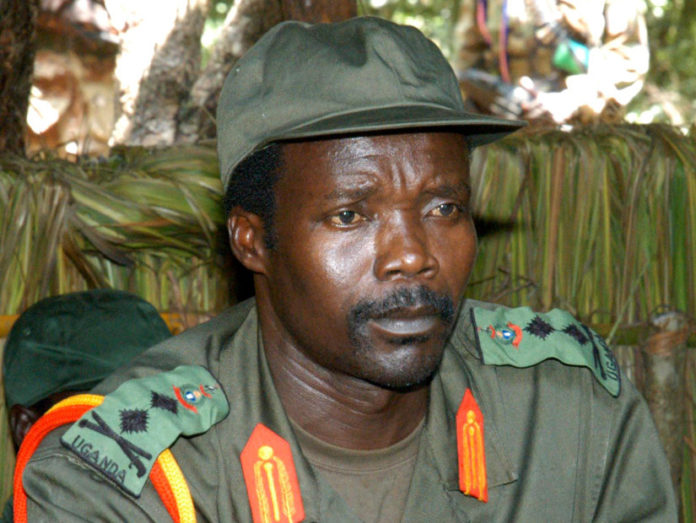
Kony’s LRA resumes attacks in Garamba, says UN

REJUVENATED? LRA Commander Joseph Kony

The outlawed Lord’s Resistance Army (LRA) has stepped up attacks in Democratic Republic of Congo close to the South Sudanese border as a US-supported regional task force pulls out, the UN humanitarian office said in a report.

Forty rebels from the group, which is led by Joseph Kony, kidnapped 61 civilians in a June 7 raid in the Tanganyika mining area near the Garamba National Park in Haut-Uele province, the report said, citing local civil society and aid workers.

The civilians were released after being forced to move goods and food looted by the LRA, and an unknown number of villagers subsequently fled to the nearby town of Gangala Nabodio.

There had been no LRA-related displacement for more than five years in the province, the UN said. But aid workers were now worried about the safety of people across a vast area.

“Since the end of the mission of the Regional Task Force (RTF), which was mandated to eliminate the LRA, the security situation has seriously deteriorated in the Garamba National Park,” the UN report said.

One international non-governmental organization involved in protecting civilians canceled its missions this week because of insecurity, it said.

The UN has reported a surge this year in LRA abductions of girls and boys around the ages of 12 or 13, as well as elephant poaching in Garamba National Park. A clash with Congolese armed forces in March killed one army officer and three LRA fighters.

Kony’s rebels battled Ugandan forces for about two decades, becoming notorious for their brutality and for kidnapping children for use as fighters and sex slaves.

In about 2005, they were ejected from bases in northern Uganda and what is now South Sudan, and retreated to an area of jungle straddling the borders of South Sudan, Congo and Central African Republic, where the task force continued to track them.

The United States said in March it was switching to a broader African security mission and removing US special forces specifically focused on fighting the LRA, declaring success in reducing the group to under 100 active members.

The African Union asked the United Nations to take on the hunt for the LRA and the UN Special Representative for Central Africa, Francois Lounceny Fall, has said the LRA may thrive after the US-backed force leaves.

“I am concerned about the impact of this withdrawal as it will create a security vacuum that may be exploited by the LRA and other armed groups operating in the region,” he told the U.N. Security Council this week.

Uganda’s military began withdrawing from Central African Republic in April, saying it had accomplished its mission, although Kony, who has been indicted by the Hague-based International Criminal Court, remained at large.


Stories Continues after ad