Stanbic Bank
Stanbic Bank
20.5 C
Kampala
Stanbic Bank
Stanbic Bank
Home Blog Page 1855

Uganda fastest growing economy in EA region – Harvard dons

ACCUSED FINANCE MINISTRY OFFICIALS OF CREATING GHOSTS: Minister of Trade and Cooperatives Amelia Kyambadde.

Uganda leads three other East African countries -Kenya, Tanzania and Rwanda in the top 10 fastest growing countries, though, according to projections, a significant fraction of that growth is due to rapid population growth.

On a per capita basis, the report presented by researchers at the Centre for International Development (CID) at Harvard University says Uganda, which follows India, is the only East African country that remains in the top 10 in the growth projections, though at 4.5 percent annually, its prospects are more modest.

The researchers attribute India’s rapid growth prospects to the fact that it is particularly well positioned to continue diversifying into new areas, given the capabilities accumulated to date. India has made inroads in diversifying its export base to include more complex sectors, such as chemicals, vehicles, and certain electronics.

“The major oil economies are experiencing the pitfalls of their reliance on one resource. India, Indonesia, and Vietnam have accumulated new capabilities that allow for more diverse and more complex production that predicts faster growth in the coming years,” said Ricardo Hausmann, director of CID, professor at the Harvard Kennedy School (HKS), and the lead researcher of The Atlas of Economic Complexity.

The growth projections are based on measures of each country’s economic complexity, which captures the diversity and sophistication of the productive capabilities embedded in its exports and the ease with which it could further diversify by expanding those capabilities.

Growth in emerging markets is predicted to continue to outpace that of advanced economies, though not uniformly. The projections are optimistic about new growth hubs in East Africa and new segments of Southeast Asia, led by Indonesia and Vietnam.

“The economic pole of global growth has moved over the past few years from China to neighboring India, where it is likely to stay over the coming decade,” says the report

In examining the latest 2015 global trade data, CID researchers find a clear turn in trade winds, as 2015 marks the first year for which world exports have fallen since the 2009 global financial crisis.

This time around, the decline in trade was driven largely by the fall in oil prices. High oil prices had driven a decade of rapid growth in oil economies, outpacing expectations, says the report.

Since the decline in oil prices in mid-2014, growth in oil economies ground to a halt, where it is likely to stay, according to the projections, given little progress on diversification and complexity.

The projections warn of a continued slowdown in global growth over the coming decade.


Stories Continues after ad

NSSF registers Shs100 billion contributions in June 2017

GOOD PERFORMANCE: NSSF boss Richard Byarugaba

The National Social Security Fund (NSSF) has collected more than Ugx 100 billion in contributions from its members in the month of June 2017, ending a challenging financial year on a high, the Managing Director Richard Byarugaba has said.

It is the first time that the Fund has hit the Ugx 100 billion mark in contributions in a single month; the previous highest mark was Ugx 85 billion that was collected in June 2016.

“This UGX100 billion plus contributions collection performance in a single month is the best ever in the history of the Fund. 2016/17 has been a challenging financial year, but we have come through with yet another collections milestone that is above our monthly collections target of Ugx 77 billion. I applaud all staff at the Fund for their tireless efforts,” Mr. Byarugaba said.

Byarugaba added that he is optimistic the Fund will better last year’s overall financial performance, in spite of the challenges the economy faced in the just concluded financial year, which have had an effect on the business environment.

“We have started appraising our overall performance for the just concluded financial year and we will communicate to our members after completion of this process. But going by our reviews over the last 12 months, I am positive that we have created value for our members”, he said.

Last year, Byarugaba told journalists that despite posting a good return for the year 2015/16, the Fund’s performance was affected by stock markets decline across East Africa that distressed the Fund’s equity portfolio. Other factors included volatility of the Uganda shilling against foreign currencies and pre and post-election uncertainly, which had a knock on effect on the business environment.

As a result, the Minister of Finance, Planning and Economic Planning Matia Kasaija declared an interest rate of 12.3% interest, worth over Ugx 606 billion credited to NSSF members’ accounts.

Byarugaba could not confirm the new interest rate that the Fund will pay, but said that it will be declared by the Minister, in accordance with the NSSF Act.

“The declaration by the Minister will happen possibly in September this year and will depend on how well the Fund has performed. However, I can confirm is that the rate will not be less than the 10 year average rate of inflation plus 2 percentage points, which is in line with our commitment to pay our members a real return,” he said.

NSSF invests in fixed income, real estate and equities. It is the largest institutional investor on the Uganda Securities Exchange (USE) and one of the largest domestic holders of Government of Uganda debt.


Stories Continues after ad

Ugandan cancer patients to access treatment in Eldoret

REGIONAL CANCER CENTRE: The start of radiotherapy services is the fruit of many people’s hard work over the last 24 months

Thousands of cancer patients in Uganda, mostly those from the eastern region, will be able to access treatment following the opening of the Eldoret Comprehensive Cancer Centre, in Kenya.

The facility in the fast-growing agricultural and trade town of Eldoret in Western Kenya, is a subsidiary of Equra Health Kenya, and will reportedly serve a broader population of about 20 million people across Western Kenya, Uganda and parts of Rwanda; ‘many of whom previously would have had to fly or travel over five hours by road to Nairobi for treatment’.

Offering world-class facilities with the latest radiotherapy equipment, the new Eldoret Comprehensive Cancer Centre can treat up to 60 patients a day and brings advanced cancer treatment to the doorstep of a region that was largely under-served in terms of advanced radiotherapy, a statement indicates.

The Eldoret Comprehensive Cancer Centre first opened its doors for oncology consultations, chemotherapy services and 24-hour in-hospital care in August 2016, and began offering comprehensive radiotherapy, a first for Western Kenya, at the beginning of April 2017.  Full services have been available since the beginning of June 2017.

Mr. Erhardt Korf, CEO of Equra Health Kenya Limited, the owners and operators of the facility, notes that Equra Health has also invested significantly in infrastructure to deliver stable power supplies to the facility. “We have implemented additional surge protection and powerful UPS systems to ensure reliable power and stable levels of service,” he says.

He added: “Our company philosophy has always been to take comprehensive oncology services closer to where people live and work. In South Africa too, we invest in centres outside of the major metros to deliver advanced cancer treatment to those who cannot easily travel to the major cities.”

Mr. Korf says Eldoret was selected as the site of the latest Equra Health radiotherapy facility due to its extensive regional population and the fact that the town already has a strong medical referral infrastructure and oncology experts such as Dr. Jesse Opaka, now the main treating Clinical and Radiation Oncologist at the new Centre.

“The opening of the new centre represents a new dawn of quality cancer care in this region. The start of radiotherapy services is the fruit of many people’s hard work over the last 24 months, and we are looking forward to serving the community in Kenya and surrounds with our quality service and excellent patient care. We believe that positive clinical outcomes matter most, and that value in healthcare is always a function of both the outcomes achieved and the cost paid for the services,” Dr. Opakas said.

The new Eldoret Comprehensive Cancer Centre was officially launched with a facility tour, followed by a reception at the Boma Inn Hotel on 6 July, 2017.

Stories Continues after ad

NDA to start regulating food supplements – Ministry of Health

NDA TO TEST FOOD SUPPLEMENTS: Dr. Sarah Byakiika addressing delegates at the Entebbe meet

The Ministry of Health has said it is planning to expand the National Drug Authority (NDA) mandate to include regulating food supplements in addition to drugs.

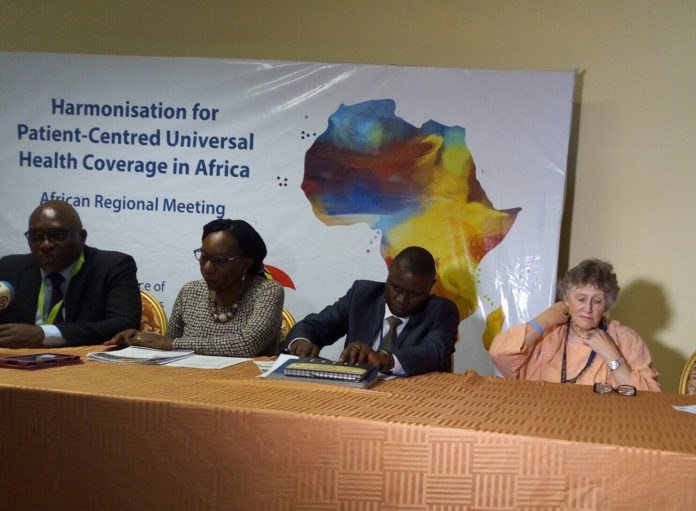
The disclosure was made by the Commissioner of Planning in the Ministry of Health, Dr Sarah Byakika, while addressing the just-concluded continental gathering of patients taking place in Entebbe.

“Before we start harmonising (drug regulations) at a national level, let’s talk about what’s taking place at the lower levels. We have the National Drug Authority (NDA) to ensure that the drugs are safe and utilised. NDA is to strengthen to look beyond drugs; we want to include food because we have realised that people are supplying unsafe food supplements,” Dr. Byakika revealed, stressing that there is an urgent need for regulation of food supplements.

Dr. Byakika was addressing patients from across Africa under their umbrella body, Uganda Alliance of Patients’ Organizations (UAPO), gathering in Entebbe, Uganda to discuss patient involvement in the upcoming plans for the African Medicines Agency (AMA).

Held under the theme: ‘Harmonisation for Patient-Centred Universal Health Coverage in Africa’ the two-day meeting at Imperial Botanical Beach Hotel, Entebbe, deliberated on ways of ensuring the patient voice is reflected in the Agency, which is due to be launched in 2018 as part of the of the African Medicines Regulatory Harmonization Initiative (AMRH).

The global umbrella organization, the International Alliance for Patients’ Organizations (IAPO) based in London, United Kingdom and the Uganda Alliance of Patients’ Organizations (UAPO), based in Uganda have embarked on the process of fostering patient involvement in the creation of AMA.

Kawaldip Sehmi, the Chief Executive Officer, IAPO, said: “Through interactive capacity building and knowledge-sharing sessions, IAPO and UAPO members and stakeholders will develop the tools to ensure that the patient movement across the region is made up of strong patient advocates.

“The goal will be to prepare patient advocates to take on the challenges and opportunities to arise from increasing regulatory harmonisation across Africa over the next few years.”

Joshua Wamboga, Chair-Elect, IAPO and Executive Director, UAPO, said: “Africa’s disease burden is finely balanced between infectious and non-communicable diseases, both of which require quality and safe medicines to address the pressing public health challenges faced by the region today and in the future.

“We believe that patient groups and patient advocates have an important role to play in developing and implementing strategies to meet these challenges. We hope to explore how all stakeholders can better work together to make this a reality.”

In 2009 the African Medicines Regulatory Harmonization (AMRH) Initiative was established to guarantee and accelerate regulatory harmonisation in the African continent. The founding actors, which include the WHO, the New Partnership for Africa’s Development (NEPAD), the Pan African Parliament, the African Regional Economic Communities and Organizations (RECs) and the national medicines regulatory authorities (NMRAs), concluded that “now is the right time to push for regulatory harmonisation in Africa.”

On resources, the AMRH says that 90 per cent of African NMRAs are incapable of guaranteeing quality, safety, and efficacy due to resource constraints. Because inefficient regulation can result in higher costs for medicines, patients in low and middle income countries are likely to particularly suffer from the lack of a harmonised strategy in medicines regulation.

According to the WHO and NEPAD, today there are more than 50 different NMRAs in Africa working independently to assess and authorise medicines.

These authorities rely on different procedures and have different standards in place, exhibiting a situation of structural fragmentation.

Stories Continues after ad

South Africa ‘survives’ referral to UN over Bashir’s ICC arrest warrant

South African President Jacob Zuma (L) and his Sudan counterpart Omar El Bashir

The International Criminal Court (ICC) has rebuked South Africa for not arresting Sudan’s president on a genocide warrant when he visited Johannesburg in 2015, but declined to refer Pretoria to the United Nations for possible censure over the lapse.

The ICC indicted Sudanese President Omar Hassan al-Bashir in 2008 over the deaths and persecution of ethnic groups in Sudan’s Darfur province between 2003 and 2008. But he has continued to travel internationally, visiting Jordan as recently as March.

The first part of Thursday’s ICC ruling was expected as the war crimes court has consistently rejected arguments put forward by the South African government, namely that it could not arrest Bashir because visiting heads of state at the African Union Summit held in the country enjoyed diplomatic immunity.

ICC judges said that heads of state or government clearly fall under the court’s jurisdiction and cannot be exempted at home or abroad, echoing the conclusion of a South African domestic court.

The second stage of the ruling was surprising as it was the first time the ICC found one of its members had defied its rules, yet took no action by reporting South Africa to the U.N. Security Council or ICC member states for possible censure.

“The decision is something of an indictment of the U.N. Security Council and the (ICC’s) Assembly of State Parties,” ICC expert and legal scholar Mark Kersten told Reuters.

Presiding Judge Cuno Tarfusser, reading a summary of the ruling, noted that past referrals of countries to the Security Council for noncompliance were ‘futile’ in terms of leading to further action and also ‘not an effective way to obtain cooperation’ with the ICC.

Bashir denies wrongdoing and has rejected ICC jurisdiction. It was the Security Council itself that referred Sudan’s case to the ICC in 2005 and the ICC’s decision not to refer South Africa might also be intended in part to dissuade it from pulling out of the court.

In February, the African Union called for member states to leave the ICC over a perceived bias by prosecutors in focusing on African conflicts.

Kenya, Namibia, Burundi and South Africa have threatened to ditch the ICC and Pretoria began the formal withdrawal process last year before being blocked by a domestic court for not getting parliament’s approval first before pulling out.

In The Hague, South African Ambassador Bruce Koloane said that for the time being “(we are) still a member effectively of the ICC, we still have to honour all our obligations”, while in South Africa, opinions on what to do next were divided.

Pretoria’s foreign affairs department said the government would study the ruling “and its implications and seek legal opinion on available options”.

Siphosezwe Masango, who chairs parliament’s international relations committee, said he remained convinced South Africa was right not to arrest Bashir, “a sitting head of state”.

Pretoria’s main opposition party, the Democratic Alliance, said the ICC ruling was an indictment of Zuma’s ANC government, noting it had upheld the domestic court’s position.

“The ANC seems intent on relegating South Africa to the status of a scumbag nation which protects the law-breakers and corrupter of this world,” DA Federal Executive Chairperson James Selfe said.


Stories Continues after ad

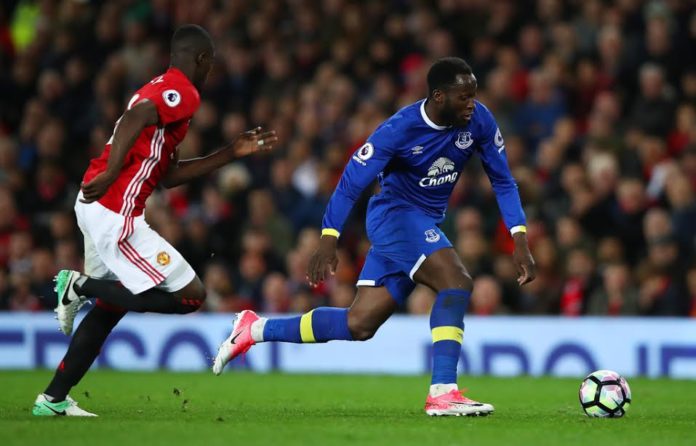
Manchester United agree to pay £75m for Lukaku

Manchester United are confident that the Belgium international will join before tour starts on Sunday after agreeing a fee of £75m with Everton.

This will be United’s second most expensive signing in their history behind Paul Pogba.

The 24-year-old Belgium international scored 25 Premier League goals last season.

It had been thought Romelu Lukaku would return to his former club Chelsea, who he joined from Anderlecht in 2011.

The striker was sold to Everton for £28m by Mourinho during the Portuguese manager’s second spell in charge of Chelsea in 2014. He has also scored more goals than any other Everton player in Premier League history (68).

If the move goes through, it will be a significant blow to Chelsea who had identified Lukaku early on as their main reinforcement for Diego Costa up front. Diego Costa isn’t wanted at Chelsea and set to head back to Atletico Madrid.

The Belgian turned down a lucrative contract offer in Everton’s history in March because he wants to play in the champions league.

Lukaku would be United’s second summer signing after the arrival of Benfica’s Swedish centre-back Victor Lindelof for £31m.

Everton look set to sign United forward Wayne Rooney who may not be in Mourinho’s plans next season.

Man United dropped their interest in Real Madrid’s Morata after the Spanish club refused to lower their asking price of €90m (£79m).


Stories Continues after ad

Remove Centenary Park illegal structures-MPs

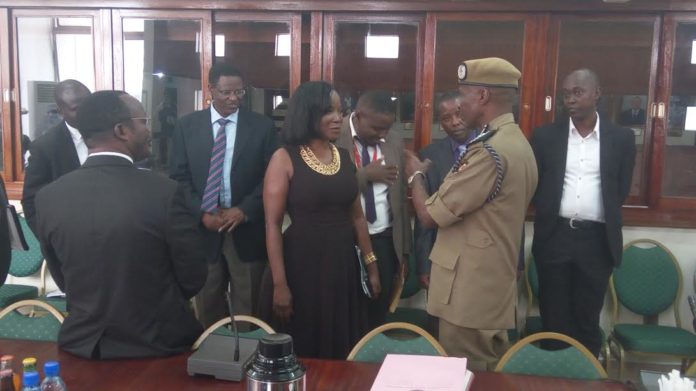
The Parliamentary Committee on Statutory Authorities and State Enterprises (COSASE) has ordered for the eviction of all building constructed on top of water pipes, to pave way for construction of sewerage lines.

The order was issued by COSASE Chairman, Abdu Katuntu, saying the impasse between Kampala Capital City Authority (KCCA) and National Water and Sewerage Corporation (NWSC) has led to tax payers lose Shs1 billion, and there is need to have the losses contained.

This was during a meeting held at Parliament, attended between MPs alongside Police Chief Gen. Kale Kayihura, KCCA Executive Director Jenifer Musisi, NWSC Boss, Eng. Silver Mugisha and former Kampala Central Mayor, Godfrey Nyakana.

“Those structures must be demolished, the contention on who bears the cost, the parties can claim from court. Police must make sure there is security when the illegal structures are being evicted,” Katuntu said.

The investigations kicked off following a letter issued by Inspector General of Government, Irene Mulyagonja, who called on Parliament to investigate the matter, to contain the hemorrhage of public funds.

National Water has contracted an international firm to layover 30 kilometer of sewerage pipe line to serve areas of Serena, Kololo among others.

The Corporation has revealed that Shs100 million is lost daily because Nalongo Estates has barred the contractor to access the sites, claiming ownership of the property, despite the fact that their lease expired.

Nyakana denied any actions to bar NWSC from accessing the site noting, “I do consent that NWSC should come and work, we have no problem against any government institution. There are some few structures that are on top the pipes.”

He however called on KCCA to conduct the eviction with some civility.

Katuntu also warned Nyakana, against organizing any goons to disrupt the eviction process.

Police Chief, Kayihura pledged to issue security during the eviction process, and won’t be part of the obstruction.


Stories Continues after ad

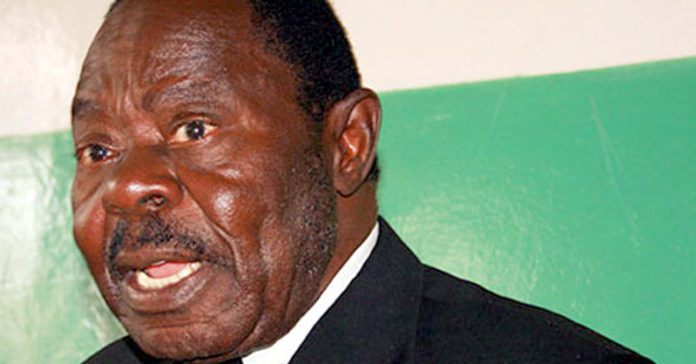
Parliament Eulogizes Ssebaana

Parliament praised late Ssebaana for his contribution to the country.

Parliament has this afternoon held a special sitting, to pay tribute to the fallen Democratic Party official, John Ssebaana Kizito, with calls to government not to amend the Constitution, to scrap off the Presidential age limit.

The call was made by Opposition Chief Whip, Ssemujju Nganda

Who informed Parliament that even on his death bed; Ssebaana raised concerns over maneuvering of what he called Regime loyalists, to change the constitution so as to make President Yoweri Museveni, a life president.

Ssemujju noted, “It is not surprising that even on his death bed, he was still concerned about maneuvers being done by some regime loyalists to change constitution so that President Yoweri Museveni can finally proclaim himself a life presidency.”

He noted scoffed at Government for showering praises at Ssebaana stating that the departed work is being undermined, by the constitutional proposals.

“The only be fitting tribute we can pay to Ssebaana is not to amend the constitution, lifting age limit for presidency,” Ssemujju said.

However, Gen. Kahinda Otafiire, the Minister of Justice and Constitutional Affairs, replied to Ssemujju’s allegations noting, “The Constitution of Uganda isn’t my property, it is the property of the people of Uganda. It isn’t a commandment of God and all articles of the Constitution are amenable to amendment change when the population of Uganda so chooses,” Gen. Otafire said.

Masaka Municipality MP, Mathias Mpugga took to the floor, calling an end to Democratic Party wrangles, urging his fellow party members not to work for their personal benefits, but rather party’s benefit.

“Ssebaana worked for a free and fair society and is information in public domain. He has sponsored more than 400 young people for vocational training. Let us pick lessons in ensuring that we work for collective party goal and work to promote for institution of parties not for cults,” Mpugga said.

Deputy Speaker of Parliament, Jacob Oulanyah also cautioned Ugandans against stereotypes in politics.

“It is only during this tribute that I got to learn that Ssebaana was not a Catholic. We have grown up knowing everyone from DP is Catholic and Muganda and everyone from Uganda Peoples’ Congress (UPC) is Anglican. We must use that past as a resource that we invest for the better future. Some people have defied. We label only to define. Let us stop labeling instead living,” Oulanyah said.


Stories Continues after ad

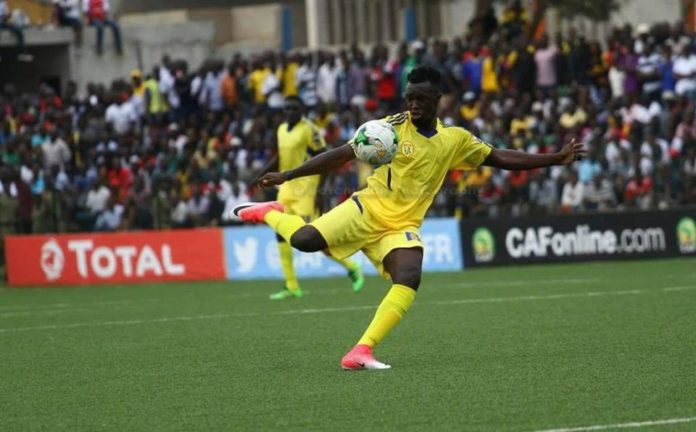
KCCA FC one point away from Confederations Cup quarter finals

KCCA FC travel to Tunisia in their final game of  Group A Confederations Cup group stages against Club Africain.

The Uganda premier league champions aim to continue their fine form and keep their quarter final hopes on track after a comfortable 3-1 win over Moroccan side FUS Rabat on Sunday at Lugogo.

Geoffrey Sserunkuuma, Saddam Juma and Isaac Muleme were the goal scorers before the visitors pulled one back through Lamine Diakite in the closing minutes of the game.

KCCA just need a point to reach the quarter finals of the 2017 CAF Confederation Cup but can still qualify when they lose only if the match between FUS Rabat and Rivers United ends in a draw.

A draw for KCCA and Africain on Friday will assure the two sides of quarter finals places.

Habib Kavuma is back in the squad after missing the FUS Rabat game due to suspension to boost the team’s confidence.

The first leg in Kampala ended 2-1 with a comeback from KCCA thanks to goals from playmaker Derrick Nsibambi and Tom Matsiko after Mokhtar Belkhither gave the North Africans an early lead.

KCCA are second with 9 points on level with table leaders Club Africain who lead on goal difference while Rabat and Rivers United are both locked on 6 points.

At the same time, FUS Rabat from Morocco will play host to Nigeria’s Rivers United FC.

Friday, 7th July 2017

Group A                                                           

Club Africain Vs KCCA FC, At the Stade Olympique de Radès, Tunis.

FUS Rabat Vs Rivers United, Complexe Sportif Moulay Abdallah.


Stories Continues after ad

Chameleone celebrates concert success by selling beers

Following the success of his ‘Legend Hit after Hit’ shows that fetched him over Shs100 million, singer Jose Chameleone appears to still want more.

He was last night seen at Jinja Road based hangout joint, Space Lounge acting as a bar attendant.

He spent most of last night selling drinks to the club’s customers. We are yet to establish how much he was paid for the work but what we know is that he bagged over Shs100 million from his shows held last weekend.

According to a reliable source, Chameleone was paid Shs80 million for the shows by events promoter Balaam Barugahare. At the time of receiving the money, both Balaam and Chameleone were scared the show would end up into a flop a reason why they settled for a relatively small sum of Shs80 million.

But following the success of the first show held at Cricket Oval, Lugogo, Chameleone is said to have demanded for more and was added Shs30 million bringing the sum of money received to Shs110million. Indeed his show at Freedom City Mall was also a success.


Stories Continues after ad