Stanbic Bank
Stanbic Bank
25.5 C
Kampala
Stanbic Bank
Stanbic Bank
Home Blog Page 1869

100 companies to benefit from dfcu Bank sponsorship

TO REWWARD BEST INVESTMENT CLUB: The headquarters of dfcu Bank in Uganda

dfcu Bank has today been unveiled as the new sponsor of the 2017 Uganda Top 100 mid-sized companies survey. The announcement was made during a press conference at the Bank’s Headquarters in Nakasero, Kampala.

The Top 100 Survey aims at identifying Uganda’s fastest growing medium-sized companies in order to show case business excellence and highlight some of the country’s most successful entrepreneurs.

Held under the theme, “Staying ahead of the competition in the evolving economic environment”, the 2017 Top 100 mid-sized Companies’ Survey is an initiative of KPMG and the Nation Media Group, represented by The Daily Monitor in Uganda. Launched in 2009, the project currently runs in four East African countries; Uganda, Kenya, Tanzania and Rwanda. dfcu Bank now joins Insurance Company of East Africa (U) Group that has been part of the project for four years now.

And addressing the press briefing, the dfcu Bank Executive Director and Chief of Business, William Sekabembe revealed that the bank will sponsor selected participants to attend Business Clinics conducted by experienced and renowned authorities in the Private Sector, enabling them acquire knowledge and skills for best business practices and good corporate governance.

“dfcu Bank’s sponsorship of the Top 100 mid-sized companies’ survey 2017 is a show of our commitment towards supporting and growing the SME sector which is a key driver of Uganda’s economy.  We believe that a collaborative effort to boost the competiveness of SME sector in general is the silver bullet to ensuring businesses thrive in what is a constantly evolving economic environment in Uganda and East Africa as a whole,” Sekabembe said.

“Constraints notwithstanding, the top 100 Survey will give hundreds of business operations the opportunity to learn from each other; engage policymakers on their contribution to the economy; benchmark themselves against other business operations and so much more. Our belief is that this initiative will go a long way in boosting the skillset of the selected companies, eventually translating to improved business practices and increased profitability,” he added.

The Managing Director, Monitor Publications Limited Tony Glencross,  hailed the Top 100 Survey as ‘…invaluable and highly relevant’.

“Uganda has been recognized as one of the most enterprising countries in the world, which presents us with the need for systems that will create informed and skilled entrepreneurs. On behalf of The Daily Monitor, I thank and applaud dfcu Bank for joining us as we work towards supporting and building the capacity of the SME sector,” Mr. Glencross said.

To take part in the survey a company needs to complete two questionnaires – a general questionnaire and a financial questionnaire. The questionnaires will be available at Monitor Publications Limited, KPMG offices and select dfcu Branches. Questionnaires will also be delivered upon calling 0392-080708.

Any company can participate (with the exception of banks, insurance companies, accounting /financial consulting firms) as long as it has a turnover range of Shs360m to Shs25 billion, has a three year audited financial track record and is not listed on any stock exchange.


Stories Continues after ad

Rapper succumbs to sickle cells

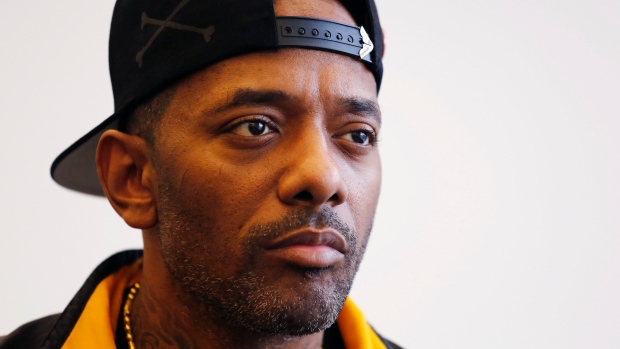
DEAD: Rapper Produgy

Rapper Prodigy, one half of the influential hip hop duo Mobb Deep has died, according to a co-author on one of his books, Kathy Landoli. He was 42.

The cause of death has not been released, but the rapper had been hospitalized for complications caused by sickle cell anemia prior to his death. He had been in Las Vegas for a Mobb Deep performance.

Born Albert Johnson, Prodigy’s family had a storied history.

His great-great-great-grandfather, William Jefferson White, founded Georgia’s Morehouse College in the basement of his Baptist church.

His grandfather, Albert “Budd” Johnson, was a saxophonist and clarinetist for Billie Holiday, Duke Ellington, Dizzy Gillespie, Count Basie and Benny Goodman.

Johnson met fellow Queens, New York native Kejuan Muchita when they were both freshman at Manhattan’s High School of Art and Design.

The pair bonded over their shared love of hip hop and formed Mobb Deep. Johnson took the moniker Prodigy, while Muchita chose the performance name Havoc.

They scored a record deal as teens and released the album ‘Juvenile Hell’ in 1993. The project didn’t generate much buzz, but the duo found more success with their sophomore album ‘The Infamous’.

With its gritty rhymes and contributions by the artists Nas and Raekwon, the album helped launch Mobb Deep to the top of the hardcore, hip hop ladder.

Their 1996 follow-up, ‘Hell on Earth’, included the single ‘Drop a Gem on ‘Em’, which was a response to a Tupac diss track, ‘Hit ‘Em Up’. Prodigy detailed his beef with Tupac in 2012.

“When we made ‘The Infamous,’ we had a song called ‘Survival of the Fittest,'” the rapper explained. “On that song, in the beginning, my man that came home from jail…in the beginning of the song, he says, ‘Thug life, we still living.'”

“Tupac was the one who was most known for saying that,” Prodigy said. “So I think that pissed Tupac off a little bit.” Mobb Deep was entangled in the East Coast/West Coast rapper rivalry of the ’90s.

After West Coast rappers Snoop Dogg and Tha Dogg Pound released the single “New York, New York,” Mobb Deep, along with Capone-N-Noreaga and Tragedy Khadafi, countered with the track “L.A L.A.”

Mobb Deep released several successful albums, including “Murda Muzik” (1999), “Infamy” (2001), “Amerikaz Nightmare” (2004) and “Blood Money” (2006).

Two of their biggest hits were “Quiet Storm” and “Shook Ones.” Being a part of Mobb Deep didn’t keep Johnson from solo projects like his album “H.N.I.C.”

He also appeared on collaborative projects such as 2007’s “Return of the Mac” and 2013’s “Albert Einstein.”

Johnson had some legal troubles. In 2007, he was sentenced to three years in prison for illegal possession of a firearm.

He detailed that incident and more in his memoir “My Infamous Life: The Autobiography of Mobb Deep’s Prodigy.”

“There were too many other adventures to squeeze in: his family’s rich historical and musical legacy; his lifelong battle with sickle cell anemia; UFO sightings; episodes with Lindsay Lohan, Mary J. Blige, and Lil’ Kim; and his contributions to the golden era of hip-hop,” Johnson’s memoir co-author, Laura Checkoway, wrote in a 2011 piece for the Village Voice.

In 2016, the rapper published ‘Commissary Kitchen: My Infamous Prison Cookbook’ with Landoli, which contained recipes and stories about the food he experienced while in prison.

Johnson was mourned on social media Tuesday by many fellow artistes, including rapper Nas, who was the first to post about Johnson’s death.


Stories Continues after ad

Local listed companies see rise in capital gains on the USE

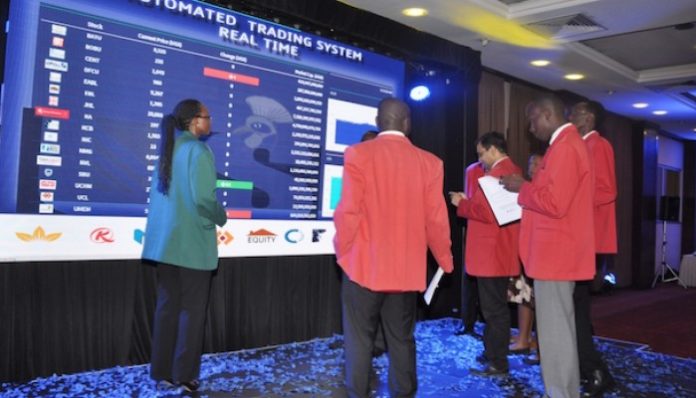
BUSINESS: Brokers at the Uganda Securities Exchange

The local capital markets sector continues to show steady growth as most companies listed on the Uganda Securities Exchange (USE) made capital gains returns to shareholders.

The companies jumped 278.3% to reach shs4.31trillion by end of December, 2016 from shs 1.14 trillion recorded at initial public offers (IPOs), the latest report from USE shows.

Speaking at the 3rd Kampala Private Equity/Venture Capital Conference in Kampala, Keith Kalyegira, CEO-Capital Markets Authority (CMA) asked local companies to organize their businesses if they want to grow. CMA regulates the local capital markets sector.

“There is over USD45 billion out there for the private equity investors,” he said, adding that the future of Uganda’s business expansion lies in the capital markets. “You must have clear investment strategies and show transparency to attract investors,” he said.

There are eight local companies listed on the USE where issued shares are traded in Ugandan shillings. The companies include Uganda Clays, BAT Uganda, Bank of Baroda and Stanbic Bank. Others are Umeme and DFCU.

Building materials maker, Uganda Clays, which was first to list, showed poor performance on the USE as its capital gains value shrunk -50.5% to reach 9.9 billion from shs20 billion value recorded at the IPO.  The company operates two factories in Wakiso and Kamonkoli, eastern Uganda.

NIC Holdings with its 1.42 shares, performed poorly too, as its capital gains value slumped -6.5% to shs16.99 billion, compared to shs18.17 billion.

The best performer was BAT Uganda which saw its capital value rise by 2900.00% to hit shs1.47 trillion from shs49.08 billion at IPO. BAT is the lead equity investor in the local tobacco sub sector.

DFCU and Stanbic Bank also performed well as their capital value gains changed by 736.96% and 257.14% respectively. Stanbic Bank is the largest commercial bank in Uganda by market share and capitalization.

Umme Limited, supplier of electricity, also had its capital value grow from shs 397.85 billion at IPO to 795.700 billion by end of December 2016.

“The above figures indicate that the earnings growth experienced by many of the listed companies since their date of listing on the USE has translated into meaningful value gains, generating attractive risk adjusted returns for shareholders,” the report states in part.

The report calls on local firms to work towards listing on the USE, saying it offers many advantages such as enhancing the market value of the business, increased visibility and prestige, great efficiency as well as easy access to capital and future financing opportunities.

Further, the report indicates that serious investors dealing with listed companies as opposed to privately owned companies, are at an advantage. “If two similar companies exist, one listed and the other not, the listed company will typically be valued approximately 30 percent more than the private company in the marketplace by investors,” the report read in part.

There is fear among economists that African companies businesses use only 5% of equity funds in loans, while commercial banks form 95% as source of capital. Charles Ocici the CEO of Enterprise Uganda says this is not good as commercial banks charge high interest rates on loans.

In America, total loans make 60% equity funds while in Europe equity funds provide 40% of the loans, Ocici says.


Stories Continues after ad

Rugby Cranes to face Kenya in the Africa Gold Cup named

READY: Members of the Rugby Cranes

Uganda continues preparations for the Rugby Africa Gold Cup where six of Africa’s best teams will compete in the seven-week long tournament across the continent.

A 27 man team was revealed in order to help Uganda secure victory come Saturday, June 24 with Uganda travelling to Nairobi to take on neighbors Kenya Simbas in the opening match of the campaign, before travelling to face Senegal on July 1 in Dakar.

The tournament will take place from June 24 to August 5 with Namibia, Zimbabwe, Tunisia, Uganda, Kenya and Senegal participating,  playing home and away matches.

The Rugby Cranes will play against Namibia, Kenya, Zimbabwe and Senegal in the Gold Cup which doubles as the rugby world cup qualifiers.

Fans say Uganda has a great chance of becoming the African champions after being crowned in 2007.

The Uganda-Kenya tie will be officiated by French National Laurent Cardona.

Rugby Cranes team;

Asuman Mugerwa, Alex Mubiru, Brian Odongo, Mathias Ochwo, Charles Uhuru, Brian Asaba, Scott Olouch, Marvin Odong, Ivan Kirabo, Ivan Magomu, James Odong, Pius Ogena, Michael Okorach, Lawrence Sebuliba, Phillip Wokorach, Cyrus Wathum, Collins Kimbowa, Adnan Mutebi, Cox Muhigwa, Musa Mwonge, Gerald Ssewakambo, Justin Kimono, Makmot Kevin, Santos Senteza, Tamale Joseph, Byron Oketayot, Ronald Musajja.


Rugby Cranes International Fixture

24th June, 2017 Kenya vs Uganda

1st July, 2017 Senegal vs Uganda

15th July, 2017 Uganda vs Tunisia

22nd July, 2017 Uganda vs Namibia

5th August, 2017 Uganda vs Zimbabwe


Stories Continues after ad

Help develop film making industry, UCC boss urges government

UCC boss Godfrey Mutabazi and other stakeholders in the film-making industry

The Executive Director of Uganda Communications Commission (UCC) Godfrey Mutabazi has urged the government and stakeholders to set up a ‘local content fund’ to help simplify the production of films in a bid to develop the industry.

According to Mr. Mutabazi, the industry has been inundated with copyright piracy and intellectual property infringement, and inadequate training for film makers/producers, something he said, retards the development of the film making industry.

However, Mutabazi, who speaking at the UCC headquarters Bugolobi ahead of the launch of the annual film festival of 2017 scheduled for August 28-September 1, noted that from 2013 the industry, leading to the submission of films at international festivals.

He lauded the key stakeholders like including Andrew Benon Kibuuka and Fagil Monday for continuous production of art pieces and advised them to identify suitable partnerships and opportunities for young film makers.

‘’Once tapped into and geared in the right direction, it has the potential to create employment, promote and preserve our culture,” Mutabazi said.

Art enthusiast General Elly  Tumwiine  called for more engagements and government interventions, noting that revenues earned  from the entertainment industry in Nigeria have almost surpassed oil proceeds.

“Don’t fear making mistakes, fear repeating them and don’t fear failure because amateurs practice until they get it riight while professionals practice until they can’t get it wrong,”  Gen Tumwiine said in a motivational speech to the film makers.

“Africa’s heritage is so rich that film makers should exploit it for the positive change of the community,” Gen. Tumwine added.

Speaking at the same function Stephen Asiimwe, the Executive Director of Uganda Tourism Board (UTB), promised incentives to film makers shooting movies  about Ugandan tourist attraction areas as a way is promoting both sectors.

“This will help bring in foreign exchange for the development of the country,” Mr Asiimwe noted.


Stories Continues after ad

Qatari investors to partner with Ugandan SME entrepreneurs

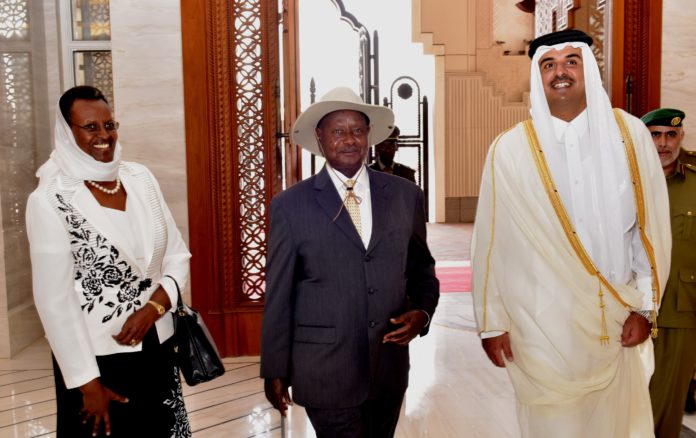
FLASHBACK: President Museveni and First Lady Janet, on visit to Qatar, together with their host, Emir Sheikh Tamim bin Hamad Al-Thani,

President Yoweri Museveni’s recent visit to the oil-endowed middle-east has started yielding positive results, according to the Evelyne Anite, the State Minister for Investment and Privatization. Part of the successes, she says, will be the arrival of Private Equity companies in July.

State Minister for Investment and Privatisation Evelyn Anite

“Following President’s Museveni’s visit to Qatar, we have been able to identify private equity companies that are interested in partnering with Ugandan small scale enterprises (SMEs),” Anite says, adding that what Ugandans need now is the application of best business practices, including keeping books of accounts.

Speaking at the 3rd Kampala Private Equity Conference at the Serena Hotel, Minister Anite said the Qatari private equity companies could provide cheap loans to only organized SMEs, urging sector players to employ professionalism in whatever they do access funding for growth. She also urged Ugandan businesspersons to make use of the shs50 billion the government is injecting in the capitalization of Uganda Development Bank for borrowing.

The Minister, who has been directed by Museveni to spearhead investments in the country, says Ugandan SMEs find it hard to access financial loans due their failure to keep audited books of accounts and failure to separate personal interests from the business.

Charles Ocici, the Executive Director of Enterprise Uganda, agrees with the minister, saying that the failure by individuals to distinguish themselves from businesses is one of the major causes that are responsible for the collapse of businesses before they even celebrate their first birthday.

One Enterprise Uganda’s roles is to nurture young entrepreneurs capable of creating future jobs for the rest of society.

“Ugandans should know that for a business to be considered a success, it should survive three generations,” Ocici says, adding that not many businesses in the country have achieved this milestone. He says directors/owners should desist from the habit indiscriminately spending company money.

Minister Anite also decried the high levels of corruption exhibited by the Ugandan youth who got government money to start businesses but instead majority used the money for personal purposes.

“The youth venture capital fund worth shs19 billion was badly misused by the youth and the same is happening with the youth livelihood fund,” she says, adding that the bad practices will turn the youth livelihood programme into a crisis.

“Some of the youths in the north fled to South Sudan after mismanaging the money. The success story is there but failures are very high,” Anite says of the shs53 billion Youth Livelihood Programme that was meant to uplift many Ugandan youths out of unemployment but also provide them with business skills.

However, Mr Ocici, who worked with the PTA Bank, calls for a policy shift in as far as providing money to the youths is concerned. “Government should give money to established and well-run SMEs as these have potential to grow and provide jobs,” he says.

Anite says there is need for SMEs in Uganda to exhibit a high degree of trustworthiness if they are to have partnerships with foreign private equity companies that give money for short and medium term investments at better rates.

Fred Opolot, a board member of the Uganda Registration Services Bureau, says there is need establish business incubators to prepare SMEs for the private equity funds, which he says are cheaper than bank loans. He says focus should be on the export-driven SMEs.

Research show that SMEs make up 67% of Uganda’s business sector and when the Micro businesses which employ less than 5 people are included the figure comes up to 99%. All the major sectors in Uganda’s economy are also dominated by SMEs.

However, despite accounting for a big percentage of Uganda’s business sector, SMEs still heavily rely on internal funds or retained earnings to meet their long-term financing needs which significantly limits their ability to take advantage of new market opportunities, access new technology, and build internal capacity.


Stories Continues after ad

Over 3000 killed in Kasai ethnic clashes – Catholic Church

LISTEN: Pope Francis I meets with DRC President Joseph Kabila. The Catholic Bishops in the country have demanded that elections be held

More than 3,300 people have been killed in the violence in the Democratic Republic of Congo’s Kasai region since last October, the Catholic Church says.

The deaths are the result of clashes between the army and a rebel group, but civilians have also been caught up in the violence.

The UN has reported on the discovery of more than 20 mass graves but has put the death toll so far at about 400.

According to the Church, 20 villages have been completely destroyed, half of them by government troops.

The UN human rights chief, Prince Zeid Ra’ad al-Hussein, said investigators in Kasai province had identified dozens of mass graves along with harrowing evidence of people being shot, burned or hacked to death.

Atrocities were being carried out by the security forces and a government-backed militia, known as the Bana Mura, which was set up to help fight a rival group known as the Kamuina Nsapu, Prince Zeid said.

He added that local authorities had denied the UN access to information about what was happening in the region. The UN has said it has evidence that hundreds of villagers from the Luba and Lulua ethnic groups have been killed.

The UN Human Rights Council is likely to vote this week on whether to mandate an independent investigation into the violence following what the group’s commissioner described as horrific atrocities committed in Kasai province.

The Congolese authorities have said they would reject it.

More than a million people have been displaced in the region in the last year and aid workers say the humanitarian response on the ground has so far been inadequate.

Violence erupted in the once peaceful Kasai region last August, after the death of a local leader during fighting with security forces.


Stories Continues after ad

Saudi King deposes Crown Prince

NEW SAUDI CROWN PRINCE:Mohammed_Bin_ Salman_al-Saud

Saudi Arabia’s King Salman has appointed his 31-year-old son Mohammed bin Salman as crown prince, removing the country’s counter-terrorism czar and a figure well-known to Washington from the royal line of succession.

In a series of royal decrees issued today, the monarch stripped Prince Mohammed bin Nayef, who was first in line to the throne, from his title as crown prince and from his post as the country’s powerful interior minister overseeing security.

Bin Nayef, for years the kingdom’s counter-terrorism chief who put down an al Qaeda campaign of bombings in 2003-06, has pledged allegiance to the kingdom’s new crown prince.

The newly announced Crown Prince Mohammed bin Salman, who also serves as defence minister and oversees a vast economic portfolio, had previously been second in line to the throne, though royal watchers had long suspected his quick rise to power might accelerate his inheriting of the throne.

The young prince was little known to Saudis and outsiders before Salman became King in January 2015. He had previously been in charge of his father’s royal court when Salman was the crown prince.

The Saudi monarch, who holds near absolute powers, quickly awarded his son expansive powers to the surprise of many within the royal family who are more senior and more experienced than Mohammed bin Salman, also known as MBS.

Al Arabiya television reported that the promotion of the prince was approved by the kingdom’s Allegiance Council, and that the king had called for a public pledging of loyalty to Mohammed bin Salman on Wednesday evening in Mecca.

The Allegiance Council is a body made up of the sons and prominent grandsons of the founder of the Saudi state, the late King Abdul-Aziz, who vote to pick the king and crown prince from among themselves.

The surprise announcement follows 2-1/2 years of already major changes in Saudi Arabia, which stunned allies in 2015 by launching a war in Yemen, cutting old energy subsidies and in 2016 proposing partly privatising state oil company Aramco.

Last year Mohammed bin Salman, or ‘MBS’ as he is widely known, announced sweeping changes aimed, as he put it, at ending the kingdom’s ‘addiction’ to oil, part of his campaign to tackle systemic challenges that the kingdom has previously failed to address.

Until his father Salman bin Abdulaziz Al Saud became Saudi Arabia’s seventh king in January 2015, few people outside the kingdom had ever heard of bin Salman, seen more than two years on as the power behind its throne.

Regarded warily by some Saudis and by many foreigners as an unknown quantity in the Middle East’s traditional status quo power, he has over the past year set about building his profile with interviews in some Western media.


Stories Continues after ad

‘Enhanced professionalism is key to our engagement with the public’ – Prisons boss

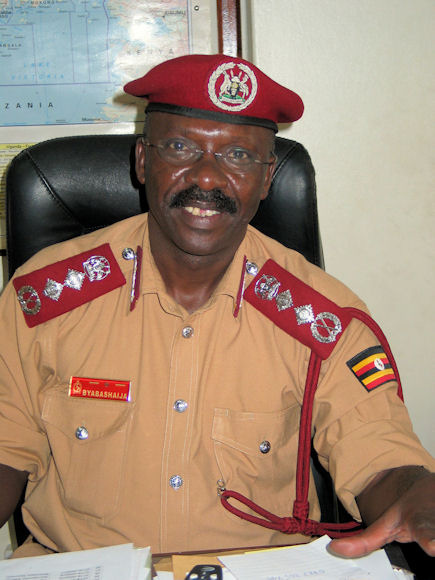
The Commissioner General of Prisons Dr. Johnson Byabashaija

Over several years, one of the government institutions that rarely gets negative publicity is the Uganda Prisons Service. According to the Commissioner General of Prisons Johnson Byabashaija, the staff are under strict instructions to maintain a high level of integrity, earning the Prisons Service top accolades across the globe. Indeed, CGP Byabashaija says Uganda Prisons Service tops Africa in ensuring correctional standards for inmates, and it also comes in at No.4 globally.

The EagleOnline’s Richard Wanambwa caught up with CGP Byabashaija, a Veterinary Doctor by training, in a bid to try and ‘unearth the magic that is at work at the Uganda Prisons Service’.  

Below are excerpts (slightly edited) of the interview.


What are your greatest achievements in the last two terms served as the Commissioner General of Prisons?

It is enhanced professionalism of the service personnel because across the country our staff knows what to do, whether in Arua, Ndorwa or Moroto. You know of a big politician who was taken to Moroto and handled very professionally.

And anyway, can you imagine if they bring you Gen. (David) Sejusa, Charles Wesley Mumbere (King for Rwenzururu), former Vice President Prof. Gilbert Bukenya and something wrong happens in the prison? Then you have let down the state! Therefore, handling them is a great achievement. We make few mistakes and we are not 100 per cent correct but largely our staff across the country knows what to do and that is my greatest achievement.

Should the appointing authority deem it fit, will you consider staying for another term or contract?

When I am given duty, I will do it. But (at times) age negates our abilities and by the time I finish this term I will be 62 years. And, as head of a security institution and I don’t think that is very sustainable. I expect this one to be my last term, but if appointed I will work.

As a department, is Prisons well-facilitated?

No, I think you can’t be well facilitated; I want to give you an example, last year in June 2016 I had 45,000 prisoners, this June, the average is 55,000 prisoners but the budget has not been increased. Therefore, that means that we have to work hard in order to bridge that gap. But because of production, you don’t hear much noise. Available funds for food are completely inadequate but because of that system I introduced, (where you see prisoners on trucks going for labour); that reduces the amount of food I have got to buy so that we could have more money. I have to produce more because the more I produce then the profits come back as appropriation on aid because that is the arrangement I have with finance (ministry).

Parliament appropriated any revenue as part of my budget so if I produce more, I have more revenue and that is why we are serious with cotton, seeds, furniture and all these things that bring in money.

Most Ugandans are saying that you (Prisons Department) is a success story, what do you attribute this to?

Prisons have succeeded because of the systems which are in place; if you fail an interview you will not be recruited! In fact for the first time last year we even dismissed people who failed training regardless of where they came from. It is a meritorious way of doing things. But you hear people saying that we use prisoners to do other work at night, it isn’t true because I wish you knew what is involved in getting a prisoner from prison at night!

There are about four controlled points of keys and I don’t know how all of you will agree! And you cannot gain out of that actually; you will be in real trouble if you get out a prisoner.

Has it ever happened under your leadership that a prisoner escaped at night?

No, it has never happened because the only way you can release a prisoner is when it is his/her time to go. But again, the staff knows the repercussions of that (prisoners escaping).

The establishment of systems in which everything we do: the way we assign staff to a particular prisoner, the way we take prisoners to court, discharge is strict.

We are very strict at the time of admission in that we record all the marks on the prisoner’s body so that you cannot say that they were inflicted on him while in prison. We measure your weight and height and others because all the systems are in place.

Another issue is that you will find out that the prisons are extremely clean and I think that is also part of our achievement.  We actually carry out internal bench marking: go to Mbarara, Bushenyi and Bushenyi prison, which started it; where you see a prisoner and wonder ‘who he is’. Officers in-Charge (OCs) must be clean because when they are not, then they know what will happen next!

It is said you have a very ambitious programme for education, how far have you gone with it?

We have it because what we discovered is that all those who went through formal education did not come back to prison. The government agreed to fund education service and our teachers (primary, secondary and tertiary) are sent by the Education Service Commission. Also, Professor Waswa Balunywa has organized and streamlined secondary and diploma education, he is now going for a degree programme.

We also have a programme under the Africa Prison Project which has offered degrees of the University of London especially in Law. I have a famous prisoner called Susan Kigula, who has got a degree. She made the death penalty not to be mandatory.  The other day Uganda Christian University wrote to us that they want to come in because I called them in 2008 and said “look, can you come in and do something”? Makerere University Business School (MUBS) responded immediately, so we shall continue. We have laboratories inside there; people can do their work there.

Is this programme being implemented at Luzira or in other centres?

We have these programmes in about seven regional prisons including Kigo prison, Mbarara, Masindi, Namalu and Arua but the main one is here (Luzira) where you can do science subjects.

It has been a successful programme that is why we have been ranked the number one rehabilitative correctional service in Africa! This is because we have the lowest number of people coming back to prison (about 20 per cent) which is the lowest in Africa and fourth in the world! 

What have you done about staff housing and reduction of congestion in the prisons?

We are not doing well in this department but again we are not seated. We have 400 houses in Luzira, built by prisoners. We’re building women wing down near the railway and I will call the Minister to commission them. As per the President’s directive, we are building two roomed houses for the warders. For the low cost housing, we are making our own bricks and do our own construction because we don’t buy sand, we collect it from down in Kasangye. That is how housing is going on.

On congestion, we have built new cells in Ndorwa, Moroto Bushenyi, Buga, Kabong, Adjumani, Nebbi, Tororo and Soroti, among other places and all are designed to reduce congestion. Now, we are building a big one in Kitalya which will take about 2,000 inmates and if I transfer 2,000 inmates from Luzira to Kitalya, I would have solved half of the congestion problem in Luzira.

We have to continue doing that and I don’t think that I will solve it in my life time as Commissioner General of Prisons but I can only ease it. I can’t solve it entirely, it is complex; it is a criminal justice system challenge, not just a prison challenge.

You promised in Parliament that you are dedicating this term to making agriculture your top priority and making prisons self-reliant as far as food security is concerned. How far have you gone with this programme?

I am going to grow cotton, that one I can assure you! The first season we had 2500 hectares of cotton, this time, we are doubling it and next year we shall triple it to 10,000 hectares. I am producing maize seeds both hybrid and open variety and this is to enhance acreage and output. I now want to produce 13 million kilograms of maize per annum and my requirement is 15 million kilograms. Within this term, if I achieve that, then I can say that I worked for Uganda. And that is why we are talking agriculture.

Do you have enough land for commercial production?                                              

We have land to do this; about 5,000 acres in Rwimi, Kabarole; 3,000 acres in Longole (Gulu) and 7,500 acres in Kitgum.

‘And you know what has happened?’ Now districts call me and give prisons land because of what we done; they want it replicated in their districts, so we have land to carry out this transformation!

One thing I can assure you, by the time I finish this term, I will have (acquired) a seed processor, combined harvesters with storage facilities with silos.

Don’t you think that talking commercial and going commercial will affect the production of food for the prison services?

No, because all the maize we produce we give it to the prison. We don’t sell any maize and that is why I want to increase it. For cotton, we sell it to the ginneries and out of this, we partly buy some for our uniforms. We also manufacture flags for the government, even those on the presidential vehicles. We have the latest screen printing machines at Luzira.

This might sound funny but how much do you spend on a prisoner in a day?

We just get the budget then divide it by the number of prisoners and of course we don’t exceed Shs2, 000 a day: posho and beans plus water and electricity. In the Maximum Prison we use boilers and we only use firewood when there is no power.

These things need to be factored in. There is also one thing which I didn’t tell you:  the doctor will examine and recommend either a special diet and if you are able, we allow raw food to be brought and that one has enabled us manage our budget. One of the traditional leaders we have had in the recent past used to take millet flour with some cassava which is very soft and nice and I don’t think you have ever heard him complaining of his stay there. We handled him well and this compliment eases the food requirement. Overall, it is about food which is Shs2, 000 and then add water and electricity which comes to Shs7, 000 a day, which isn’t much.

How secure is Luzira and other prisons facilities that handle high profile prisoners, given the numerous rumors that fly around? 

We have a good access control system; we are not yet perfect because we don’t have a scanner for baggage but now you go through security checks and we record your particulars in the computer. I have dogs and this is one of the things I have done in my tenure; to establish the dog section which takes over security at night in the Maximum prison. My idea is to replicate it in almost all the prisons but we started with Upper Prison and so there is no one who can dream of jumping out.

I had an inmate (sentenced to 45 years) coming out of Upper Prison and we have never established how he came out but the good thing is that we recaptured him and now he cannot (escape) because the dogs will have detected him because they don’t sleep. We don’t allow food inside the prison, it must be raw so that the person cooks for himself/herself and so that reduces the issue of poisoning.

And apart from Atwine, who was suspected of being poisoned, I have not heard cases of that nature but people just talk about it. But it is not easy to go and poison people although poisoning happens in anywhere but I don’t think it is the biggest problem we have.

What is the most challenging incident to happen to you as CGP?

When I had just been appointed and on Election Day prisoners run away from Arua prison; I think I was five or six months in office and I was shaken to the core. Then Atwine was the second. And why Atwine? I had been warned that since that guy is the one who pulled the trigger in the death of Robinah Kiyingi ‘be careful’, they would want to kill him and I had taken all the measures possible but they defeated our security by him getting admitted to the sickbay.

How have you managed to steer clear of scandals?

I live a very simple life, I don’t go to bars, and I have no concubine.  I work hard and I also try to be an example to my staff: I don’t harass them but they know that I will punish them very seriously if they are in the wrong and so they try to stay very clear and that helps me in administration, people do work.

My Directors, Commissioners, heads of sections, Assistant Commissioners and I all work hard because we have our land, we are very productive.

I managed to plant a 200 hectare of pine (personal) and I have prison labour which I pay for but it is cheap. It is some of these things that help keep one out of scandals where you see and hear of people taking money that they can’t account for!

I don’t think that can easily happen here because I am very strict and a God-fearing person and that is why I am a Lay Canon of Church of Uganda. It is by God’s grace I have stayed scandal free and I hope I will remain like this in these few remaining years. But like I told you earlier, if I have been given work, I will do work. But you see this body also needs to rest because after 15 years as a Commissioner General, I don’t think that you would really want to add on (laughter), you can break down.

It is strenuous job; stressful job to have 55, 000 souls who don’t want to be with you but you have to keep them. It is very stressful but I enjoy it because I grew through the ranks and I was appointed and it is so motivating.

Is it tense when Luzira gets ‘visitors’ like Dr.Kizza Besigye and Gen. David Sejusa among others?

I have to be more careful and for example I have to visit them (high profile prisoners) to know what they would want to eat, what they are afraid of, their fears and anxieties so that you manage them properly.

But you are not on tension; you have enhanced activity and we treat them with care because we don’t want anything wrong to happen while they are there.

You see, if you handle Sejusa and you don’t have any big problem that is a big achievement. You handle the traditional leader and you don’t have any problem, you handle a VP and you have no big problem, we regard that as a milestone and it is evidence of  the professionalism of our staff.


Stories Continues after ad

Ex-UBC TV spokesman flees Uganda for ‘Kyeyo’

FLED UGANDA FOR KYEYO: Abbey Tatya Rafsanjani

The ongoing axe at UBC TV by the new management has left many employees jobless.

Among those is the station’s former spokesperson, Abbey Rafsanjani Tatya, who left the station a month ago.

We have reliably learnt that on leaving the station, the former KFM presenter couldn’t stand the current poverty ravaging Ugandans and he reportedly connections to get a visa and then used part of his savings and to buy an air ticket to the US.

He is currently on Kyeyo in the US but has successfully kept this a secret, at least for the last month that he has spent in Donald Trump’s country. Not even his close friends know about it.

According to a source, he is staying at a home of a Ugandan in Lowell, Boston. Former NTV presenter, Robin Kisti, also stays in the same city, which is home to many Ugandan and Kenyan migrants in the US.


Stories Continues after ad