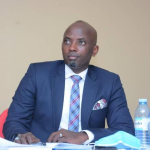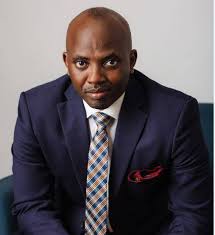
Dr. Lawrence Muganga, the State Minister-designate for Internal Affairs, was notably absent from Monday’s ministerial swearing-in ceremony at State House Entebbe after failing to receive an invitation to the event attended by all other approved Cabinet members.
The ceremony, presided over by President Yoweri Museveni, saw ministers who had successfully passed Parliament’s vetting process take the oath of office and formally assume their new responsibilities in government.

However, Muganga, whose nomination has been at the center of an intense legal and political debate in recent days, did not join the rest of the Cabinet appointees.
His absence comes amid unresolved questions surrounding his citizenship status, an issue that dominated discussions during the parliamentary vetting exercise conducted by the Appointments Committee.
He had previously held Ugandan, Canadian and Rwandan passports. The question is whether he had formally renounced any foreign citizenships as required under Ugandan law before taking up ministerial office.

Muganga was the only ministerial nominee among the 82 individuals presented for vetting whose appointment encountered significant obstacles. Parliament approved 80 nominees, while one nomination remained pending, and Muganga’s case was referred back to the appointing authority following concerns raised by legislators.
The controversy starts from allegations that Muganga holds multiple citizenships, a matter that lawmakers argued could make him ineligible for appointment to certain public offices under Uganda’s citizenship laws. During the vetting process, legislators reportedly questioned him extensively about his citizenship status and whether he had fully renounced any foreign citizenships he may have held.
According to reports from Parliament, the Appointments Committee was not satisfied with the explanations and documentation presented regarding his citizenship status.
Legislators reportedly sought proof that any foreign citizenship had been formally renounced in accordance with Ugandan law before assuming a sensitive government position such as State Minister for Internal Affairs.
Muganga, who serves as Vice Chancellor of Victoria University, has consistently defended his eligibility and maintained that his commitment to Uganda should not be questioned.
Following his appearance before Parliament, he publicly stated that he was Ugandan and expressed his desire to serve his country despite the concerns raised during vetting.
The matter has since attracted attention, drawing reactions from legal experts, politicians and civil society organizations. The debate intensified after the Uganda Law Society weighed in, arguing that the issue should be handled strictly within the framework of the Constitution and the Uganda Citizenship and Immigration Control Act. The legal body also cautioned against attempts to portray legitimate legal scrutiny as tribalism, racism or anti-Rwanda sentiment.
Questions surrounding Muganga’s appointment have further been fueled by legal petitions and public commentary challenging his suitability for ministerial office under existing laws governing dual citizenship and public service. The matter has become a critical test of how Uganda applies constitutional requirements to holders of high public office.
Over the weekend the government lawyers were still examining the legal implications of swearing in nominees whose citizenship renunciation processes may not have been fully concluded.
Muganga was among a small group of nominees whose cases remained under review, although he appeared to face the greatest uncertainty because Parliament had not cleared his nomination.
Under parliamentary procedures, a nominee who fails to secure approval from the Appointments Committee cannot automatically proceed to swearing-in. The matter is instead referred back to the President as the appointing authority, who may decide on the next course of action, including submitting a fresh nomination or pursuing other constitutional options.
By the time ministers gathered at State House to take their oaths, Muganga’s name was missing from the list of those invited to the ceremony, effectively leaving the State Minister for Internal Affairs position without a sworn office holder as uncertainty over his nomination continues.