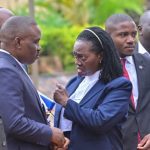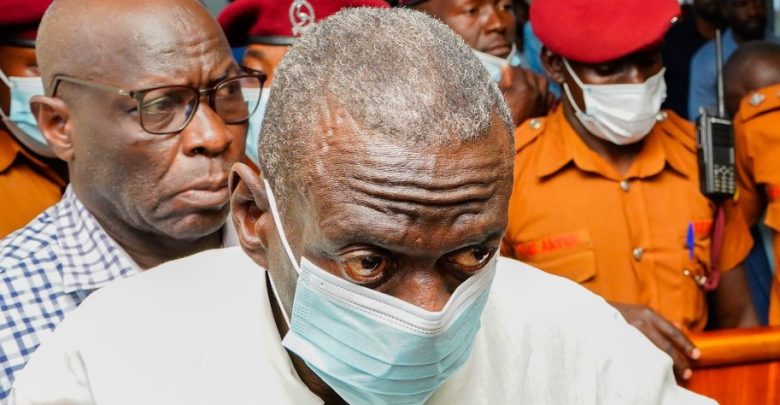
The High Court has dismissed a case filed by jailed opposition politician Dr Kizza Besigye and his co-accused, Haji Obeid Lutale, challenging the exclusion of their lead lawyer, Kenyan Senior Counsel Martha Karua, from Uganda and the detention of their co-counsel, Erias Lukwago.
Acting High Court Judge Simon Peter Kinobe ruled that the two applicants had failed to prove that the actions complained of substantially impaired their constitutional right to a fair hearing or deprived them of their right to counsel of their choice.

Besigye and Lutale had sued Chief of Defence Forces Gen Muhoozi Kainerugaba and the Attorney General, alleging that the deportation of Karua and detention of Lukwago were part of a deliberate effort to interfere with their defence in the ongoing treason proceedings.
The case followed Karua’s denial of entry into Uganda at Entebbe International Airport on June 22, 2026. The Kenyan lawyer had travelled to Uganda as part of the defence team representing Besigye and Lutale but was stopped by immigration authorities, declared a prohibited immigrant and persona non grata, and subsequently returned to Kenya.
Besigye and Lutale argued that Karua’s exclusion violated their constitutional right to be represented by counsel of their choice, particularly because she had been serving as their lead lawyer at a critical stage of the proceedings.

They also challenged the arrest and detention of Lukwago, arguing that his removal from the defence team further weakened their ability to prepare and present their case.
The applicants alleged that the actions against their lawyers amounted to interference with their legal representation, breach of advocate client confidentiality and an abuse of the judicial process.
They further argued that Lukwago’s prosecution on allegations of misprision of treason was linked to his professional representation of them and was intended to intimidate and dismantle their defence team.
The respondents rejected the allegations and argued that Karua’s exclusion was an administrative immigration decision made by the competent authorities.
They maintained that if Besigye and Lutale wanted to challenge the legality of that decision, they should have filed judicial review proceedings rather than attempt to have it determined through a human rights enforcement application.
“This court declines to determine the legality or otherwise of the administrative immigration decision in these proceedings, since a direct challenge to that decision falls within the supervisory jurisdiction of the High Court and is properly pursued by way of judicial review,” the judge ruled.
The ruling therefore did not determine whether immigration authorities acted lawfully in denying Karua entry into Uganda. Instead, the court held that such a challenge must be brought separately through judicial review.
On the constitutional right to counsel, however, the judge found that the applicants had not established that the absence of Karua and Lukwago had made it impossible for them to receive a fair hearing.
Justice Kinobe held that the right to counsel of one’s choice, although protected under Article 28 of the Constitution, is not absolute and must be balanced against the need for the orderly and expeditious administration of justice.
“The right to be represented by counsel of one’s choice under Article 28(3)(d) is a fundamental but not absolute component of the right to a fair hearing,” he said.
The court found that Besigye and Lutale had access to substantial alternative legal representation, noting that their defence included more than 13 law firms and about 50 advocates.
“The record further discloses that the applicants have engaged over thirteen law firms of choice, with instructions to fully represent them. This demonstrates that their constitutional entitlement has been respected and safeguarded,” Justice Kinobe said.
The judge also noted that the court had granted the applicants opportunities to reorganise their defence and had mechanisms available to ensure that proceedings could continue, including virtual participation and the possibility of state brief representation where necessary.
Justice Kinobe, however, cautioned that virtual proceedings should not be interpreted as replacing the constitutional right to counsel of choice.
“The availability of virtual proceedings does not, of itself, extinguish the constitutional right to counsel of choice; rather, it is one of the mechanisms through which meaningful legal representation may, where appropriate, be facilitated,” he observed.
The court separately considered Lukwago’s absence from the proceedings and acknowledged evidence showing that his absence was a result of his detention.
However, Justice Kinobe said the fact of detention alone did not establish a violation of Besigye and Lutale’s constitutional right to a fair hearing.
The applicants had argued that the detention of Lukwago, who was one of their leading lawyers, effectively paralysed their defence and formed part of a wider campaign to prevent them from accessing lawyers of their choice.
The judge, however, found that the evidence before court did not establish a sufficient connection between the alleged actions of the respondents and a deliberate attempt to undermine the applicants’ defence.
The ruling comes against the backdrop of a growing dispute over Besigye and Lutale’s legal representation, which has contributed to delays in the substantive hearing of their treason case.
Besigye and Lutale have previously rejected attempts to have them proceed with alternative lawyers, insisting that they are constitutionally entitled to retain their preferred legal team led by Karua and Lukwago.
The Commonwealth Lawyers Association had also raised concerns over Lukwago’s detention, describing him as joint lead counsel for Besigye and Lutale and calling for respect for the independence of lawyers representing accused persons.
The court nevertheless found that the applicants had failed to discharge the burden of proving, on the balance of probabilities, that their fair hearing rights had been violated.
Justice Kinobe said the right to choose a lawyer must also be exercised in a manner that enables courts to conduct proceedings efficiently and without unnecessary delay.
The judge consequently dismissed the application.
“This application is dismissed, with no order as to costs, given that it touches upon fundamental constitutional questions which ought not to be burdened with pecuniary sanctions,” Justice Kinobe ruled.
The dismissal does not close the door on a challenge to Karua’s exclusion from Uganda. The ruling specifically leaves the immigration decision open to a separate judicial review application, through which the High Court could examine whether immigration authorities acted within the law when they denied her entry.
For Besigye and Lutale, however, the ruling is another setback in their efforts to have Karua and Lukwago recognised as their principal defence lawyers as they battle the treason charges against them.
The two have maintained that the charges are politically motivated and have denied the allegations against them.
The ruling means that unless successfully challenged or overtaken by further court proceedings, the criminal case will proceed with the legal representation available to the accused persons, while any direct challenge to Karua’s immigration status will have to be pursued separately.