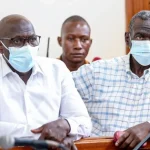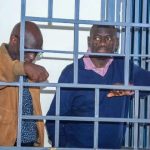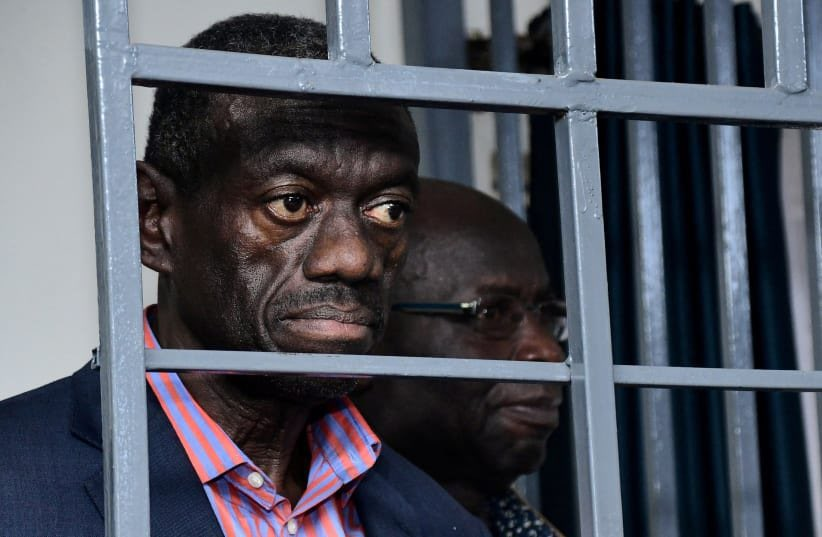
The High Court has directed detained opposition leader Dr. Kizza Besigye and his co-accused, Hajji Obeid Lutale, to select lawyers from a list of state appointed advocates after the two declined legal representation arranged by the court, insisting they want to be represented by their own lawyers.
A letter dated July 14, 2026, signed by Assistant Registrar (Criminal Division) Esther Nakadama Mubiri, informed the two accused that the trial judge had directed that they be furnished with a roll of state appointed advocates for the 2026 legal aid programme.

“I have been directed by the Trial Judge to avail you with a list of advocates on state brief and a copy is hereby attached for you to choose those that can represent you in Criminal Session Case Number 335 of 2025,” the letter states.
The registrar further instructed the accused to communicate their preferred lawyers from the list by July 15, 2026, ahead of the continuation of the trial.
The development follows dramatic proceedings before High Court Judge Emmanuel Baguma on Monday, where Besigye maintained his refusal to participate in a process he says no longer guarantees an independent and impartial hearing.

Before the hearing, Besigye and Lutale had written to the court explaining that they would not voluntarily appear, arguing that they had been denied their constitutional right to legal representation of their own choice after members of their defence team allegedly faced intimidation, arrests, deportation and other forms of interference.
According to a statement issued by Besigye’s legal team and supporters, the court proceeded despite the accused’s objections and initiated the process of assigning state funded lawyers.
“Dr. Besigye had declined to appear before a court he no longer regards as impartial. His protest was neither frivolous nor contemptuous. It was a stand against a State that has tortured, deported, threatened and abducted the very lawyers instructed to defend him,” the statement said.
The statement further alleged that after prison authorities received what it described as instructions communicated through a telephone call, Besigye was forcibly removed from his prison cell, restrained and compelled to change from prison attire into civilian clothes before being transported to court.
“Dr. Besigye and Mr. Lutale had written to the court explaining why they could not attend. The answer to that letter did not come from the Bench. It came by telephone, orders from above, relayed to officials at Luzira. On that instruction, Dr. Besigye was forcibly restrained, stripped of the yellow prison uniform, and re-dressed in the casual clothes in which the public saw him produced at court,” the statement reads.
The defence described the incident as an abuse of state power and accused prison authorities of acting under political direction rather than judicial authority.
“Luzira prison officers seized a remand prisoner, undressed and dressed him against his will following a phone call to manufacture the appearance of a lawful proceeding. This is not the administration of justice. It is its desecration,” the statement added.
During Monday’s proceedings, Besigye reportedly rejected the proposal to be represented by lawyers appointed by the State, telling the court that he would only accept advocates chosen by himself. He argued that Article 28 of the Constitution guarantees every accused person the right to legal representation of their own choosing and that the court could not substitute that right by imposing state appointed counsel.
His lawyers have maintained that the issue is not access to legal representation but the freedom to retain counsel independently without interference.
The latest directive from the Criminal Division effectively requires Besigye and Lutale to select lawyers from the Judiciary’s state brief scheme if they wish to be represented after the court concluded that the trial could not continue indefinitely without defence counsel.
Under Uganda’s State Brief Scheme, the Judiciary appoints advocates to represent accused persons facing capital offences who cannot afford legal representation. However, legal experts note that an accused person who already has privately retained lawyers is ordinarily entitled to be represented by those advocates, unless there are exceptional circumstances.
Besigye has repeatedly accused the State of frustrating his defence by targeting members of his legal team. Among those affected are Kenyan advocates Martha Karua, former Chief Justice Willy Mutunga and other East African lawyers, who were denied entry into Uganda earlier this year when they sought to attend court proceedings. Ugandan lawyers representing Besigye have also alleged harassment and intimidation throughout the case.
The criminal proceedings stem from charges filed after Besigye and Lutale were brought back to Uganda following their arrest in Nairobi, Kenya, in late 2024. They initially faced prosecution before the General Court Martial on security related offences, including treachery and illegal possession of firearms.
However, in January 2025, the Supreme Court ruled that civilians cannot be tried before military courts, declaring the practice unconstitutional. Following that landmark judgment, the Director of Public Prosecutions transferred the matter to the High Court, where the accused are now facing related charges under the civilian justice system.
Despite the transfer, Besigye has consistently argued that the proceedings remain politically motivated and that continued interference with his legal team has undermined his constitutional right to a fair trial.
The Judiciary has not responded to the allegations that prison officials acted on external instructions or that the accused was forced to appear before court against his will. The case will return before the High Court after the deadline for selecting lawyers from the state appointed advocates’ list.