Uganda has distanced itself from allegations that Ugandan nationals living along the Uganda Kenya border are being registered to participate in Kenya’s 2027 General Election, saying it has no role in the electoral affairs of the neighbouring country.
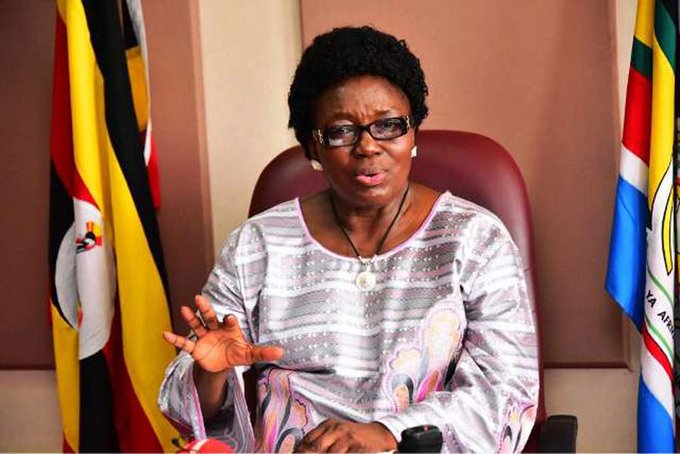
Deputy Prime Minister and Minister for East African Community Affairs Rebecca Alitwala Kadaga said Uganda respects Kenya’s sovereignty and democratic processes and does not interfere in the country’s electoral processes.

Kadaga made the remarks on October 7, 2026, during a press conference at Kingdom Kampala, where she addressed concerns over Ugandan nationals in Kenya and Ugandan owned small and medium enterprises operating in South Sudan.
She said the Government had taken note of allegations circulating in the media and political circles concerning the purported registration of Ugandan nationals as voters in Kenya.
“Let us state clearly that the Government of Uganda has no role in, and does not interfere with, the electoral processes of the Republic of Kenya. The responsibility for determining voter eligibility, registering voters and safeguarding the integrity of Kenya’s electoral system belongs exclusively to the relevant Kenyan institutions operating under Kenyan law,” Kadaga said.

Kadaga said Uganda respects Kenya’s sovereignty in the same way it expects its own sovereignty and democratic processes to be respected by neighbouring countries.
She said it would be improper for Uganda, its institutions or officials to participate in the electoral affairs of another sovereign state, adding that the Government distances itself from any conduct that may have been undertaken by individuals acting outside the law.
Uganda, she said, was ready to cooperate with Kenya through the appropriate diplomatic, immigration, security and electoral channels to establish the facts and ensure that anyone found responsible is dealt with according to the law.
Kadaga also urged political leaders and members of the public to exercise restraint as the relevant institutions establish the facts surrounding the allegations.
“Allegations against particular individuals must not be transformed into collective suspicion against Ugandans living or working in Kenya,” she said.
She warned against threats, intimidation or violence against Ugandan nationals based on claims that have not been legally established, noting that communities along the Uganda Kenya border have longstanding family, cultural and commercial ties.
Kadaga said political disagreements should not be allowed to endanger the communities or undermine peaceful coexistence between the two countries.
“It would be deeply regrettable and profoundly ironic if allegations supposedly raised to protect electoral integrity were instead used to promote hostility, collective punishment or violence against innocent people,” she said.
She stressed that protecting the integrity of elections and protecting human life should go hand in hand.
“Electoral integrity and the protection of human life are not competing responsibilities. Both must be upheld,” Kadaga said.
Turning to South Sudan, Kadaga said the Government had received concerns regarding Ugandan owned small and medium enterprises operating in the country, including reports of business closures and other restrictions affecting their operations.
She said the Government was treating the reports seriously but cautioned that the circumstances surrounding each affected business must first be properly established before definitive conclusions are reached.
Kadaga said Ugandan businesspeople operating in South Sudan contribute to employment, commerce, revenue generation and regional economic integration, and their lawful investments should therefore be protected.
“Ugandan businesspeople operating in South Sudan contribute to employment, commerce, revenue generation and regional economic integration. Their lawful investments should be protected, and any regulatory concerns should be addressed transparently, fairly and through established legal and diplomatic processes,” she said.
While acknowledging South Sudan’s sovereign right to regulate businesses operating within its territory, Kadaga said such regulation should be applied consistently and without discrimination.
She said the process should also respect domestic laws, bilateral commitments and the broader principles of the East African Community.
“Nevertheless, such regulation should be exercised consistently, without discrimination, and in a manner that respects applicable domestic laws, bilateral commitments and the broader principles of the East African Community,” Kadaga said.
Kadaga urged Ugandan traders whose businesses have been closed, restricted or otherwise affected in South Sudan to document the circumstances and report them through Uganda’s diplomatic missions and competent authorities.
She said this would enable the Government to engage its South Sudanese counterparts on the basis of verified information.
Kadaga reaffirmed Uganda’s commitment to peaceful coexistence, lawful cross border trade, regional integration and mutual respect among East African Community Partner States.
“Uganda does not seek to interfere in the electoral affairs of Kenya. Uganda equally does not wish to conduct its relations with South Sudan through accusation or confrontation,” she said.
However, she said Uganda would not remain silent where the safety, dignity and lawful economic interests of its citizens are threatened.
“Good neighbourliness must never mean silence where the safety, dignity and lawful economic interests of Ugandan citizens are threatened. Uganda will defend the legitimate interests of its citizens firmly, responsibly and through established diplomatic and legal channels,” Kadaga said.
She called on all concerned institutions to investigate the matters objectively, communicate responsibly and avoid inflammatory political language.
Kadaga said the challenges facing the region could not be resolved through threats, speculation or collective blame, but instead required evidence, dialogue, institutional cooperation and respect for the law.
“Uganda values its historic relationships with both Kenya and South Sudan. Those relationships are stronger than any single controversy and must be protected through responsible leadership,” she said.