Stanbic Bank
Stanbic Bank
28.4 C
Kampala
Stanbic Bank
Stanbic Bank
Home Blog Page 1871

UBL announces Kabaka Coronation Ngule Lager promotional offer

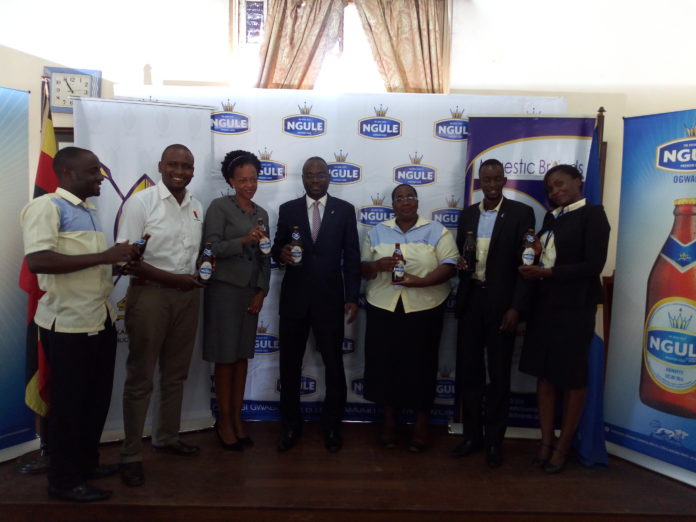
Buganda Kingdom and Uganda Breweries Limited officials at the launch of Engule

Uganda Breweries Limited (UBL) has announced a special promotional offer for Ngule Lager in celebration of the Kabaka’s 24th coronation anniversary, on July 31.

Dubbed ‘Omutanda Agabudde’, the offer will see the beer sold at a special price of Shs1,500. Ngule is a Luganda word that means ‘crown’ or ‘reward’.

The announcement was made at a press conference at Bulange addressed by the Buganda Kingdom Deputy Minister of Finance, Owek. Mulema Mukasa and Uganda Breweries Marketing Director, Juliana Kagwa.

Ngule, which was launched in January 2016, is the official kingdom beer produced under a partnership between Uganda Breweries and the Buganda Kingdom. This partnership consists of a revenue sharing agreement that is beneficial to both entities.

“In celebration of His Majesty’s coronation anniversary, we today announce a special promotional offer of Shs1, 500 on Ngule as a reward to his loyal subjects. Our brands are made to be part of celebratory occasions and we would like to join the people of Buganda to commemorate the Kabaka’s coronation and celebrate this joyous occasion,” said Kagwa.

This year’s coronation anniversary is being held under the theme ‘Useful utilization of land for the upliftment of the wellbeing of the people of Buganda’.


In his remarks, Buganda’s Deputy Minister of Finance, Mulema Mukasa said the promotional offer was a reward to Kabaka’s loyal subjects as they celebrate his coronation.

Buganda Kingdom Deputy Minister of Finance, Owek. Mulema Mukasa and Uganda Breweries Marketing Director, Juliana Kagwa

“The Kingdom of Buganda is essentially about promotion and sustenance of culture and heritage. The Kabaka’s coronation is one such celebration. It is only fitting that our people celebrate with Ngule, the official Kingdom beer,” he said.

He further thanked the people of Buganda for heeding the call to grow cassava from which Ngule is brewed.

“In the 2016/17 budget, the kingdom set aside UGX 500 million to start a cassava nursery in all the 18 counties and UGX 3 billion to procure coffee, matooke, and cassava seedlings. This was done to enable farmers meet the demand from UBL to brew Ngule. This support has been channeled through Majestic Brands and Buganda Cultural and Development Foundation (BUCADEF),” he added.

In the previous financial year, the Kingdom earned royalties worth UGX.515 million from Ngule between January and June 2016. This was handed over to Katikkiro Charles Peter Mayiga.

The beer is made from local ingredients; cassava and sorghum, which are exclusively sourced from the kingdom.

“This beer has contributed to socio-economic growth of the Kingdom. Through the local sourcing of agricultural inputs like cassava to brew the beer, Ngule has contributed to the uplifting of livelihoods of His Majesty’s subjects. Buganda Kingdom has a 5-year strategic plan that focuses on leveraging all the kingdom’s resources to lift His Majesty’s people out of poverty and the partnership with Uganda Breweries to produce Ngule beer, is one of those projects,” Katikkiro added.

Ngule is one of the most affordable beers on the market, a deliberate decision by UBL to get more Ugandans to consume formal beer, thus moving them away from illegitimate, poor quality and potentially hazardous alcohol.

Owekitibwa Mulema Mukasa further said the royalties that the Kingdom was earning from the commercial venture with UBL were being re-invested to develop key sectors in Buganda such as health, education and sanitation.


Stories Continues after ad

SK Mbuga health improves

FREAK: The BMW motorcycle SK Mbuga was test-driving is pictured shortly after the accident.

Just weeks after the Ugandan socialite community lost Ivan Ssemwanga, another member survived death by a whisker last night when Sulaiman Kabangala Mbuga popularly known as SK Mbuga, was Sunday involved in a nasty accident.

SK Mbuga just before the test-drive that led to the accident

Mbuga, who was allegedly test-driving a BMW motor bike that he wanted to buy, crashed into a wall near his home in Buziga after reportedly failing to negotiate a sharp corner.

He was rushed to Nakasero Hospital and is steadily recovering. By last night, he could speak and could even remember events before the crash.

According to his close friend at the hospital, so far three scans have been carried out on him and it was found no bone was broken, thanks to the safety gears he was wearing.

It should be remembered that shortly after the death of Ssemwanga, SK Mbuga’s wife took to social media, and ‘asked’ him to make a will.

Tycoon SK Mbuga owns a long fleet of cars including; four Hummers, a fancy Jeep Cherokee that he is seen driving most times, Range Rovers, a Ferrari and a Rolls Royce.

It was actually Mbuga’s Hummers that received the body of the late Ivan Ssemwanga and escorted it to his home in Muyenga.


Stories Continues after ad

Commodity prices drop in most markets

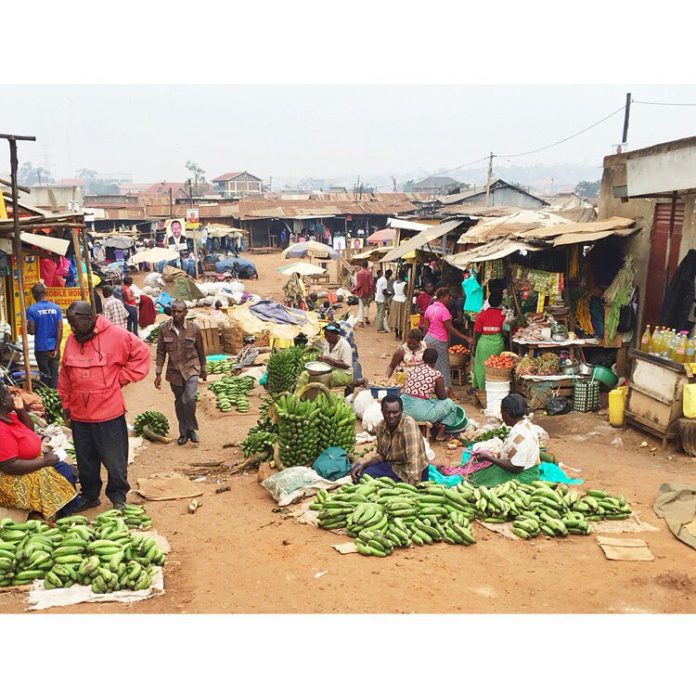
Matooke vendors at the kalerwe Market in the suburbs of Kampala

The price of groundnuts has dropped in markets like Lira and Owino but most noticeably in Kalerwe market where it eased down by shs500 to retail at shs 5,500, a kilogram. A kilogram further dropped shs250 for wholesalers to buy at shs 4,750, the latest market analysis report released for this week shows.

Traders attributed the decrease to the increased supply of the commodity from markets such as Kaliro in Busoga region that grows considerable amounts of the legume.

Simsim, mainly grown in the north of the country, had its prices drop by shs1, 000 and shs850 for retail and wholesale respectively, as other commodities such as rice (Kayiso), cow peas, fresh cassava, beans, soya beans, among others also had their prices come down.

However, commodities such as sorghum flour and grain, maize flour and millet grain all had price increases due to the increased demand for the commodities. Beef and super rice maintained a constant price due to steady supplies to markets.

Matooke prices on average dropped by shs2,350 on retail and shs2,700 on wholesale and traded at shs23,000 and shs20,650 for retail and wholesale, respectively. Of recent there has been a steady supply of matooke from western region where it is most grown.

Meanwhile the report shows that the average fuel prices across all regions of the country reached shs3,350, shs2600 and shs3550 for diesel, kerosene and petrol respectively.

The eastern region, the nearest to the Kenyan fuel suppliers, had the lowest average fuel prices of shs3000 and shs 3450 for diesel and petrol respectively.

Upcountry, the price of processed honey dropped across markets such as Kabale and Katuna by up to shs1,500 and shs1,000 for retailers and wholesalers respectively trading a litre at shs16,500 for retail and shs14,000 for wholesale.

Traders attributed the drop in prices to a decrease in demand of the honey by local consumers. Despite its benefits most Ugandans don’t consume honey putting the blame on high prices. Suppliers have to find market in neighbouring countries.

The central and western regions had the highest average prices of petrol selling at shs3650 and shs3600 respectively.


Stories Continues after ad

Bebe Cool preaches about appreciating ‘little things in life’

NEW RELEASE: Bebe Cool's Katono

Gagamel boss Bebe Cool has lived to his promise by releasing yet another song.

On the heels of ‘Mboozi Za Malwa’, which is already receiving fair airplay in the country, he has released a new single titled ‘Katono’.

‘Katono’ is a Luganda word which means ‘small’ and it’s a Dancehall tune guaranteed to make everyone dance away to every beat of the song. In this dancehall anthem, Bebe Cool says: “You borrow money to wed your wife but instead the lender takes off with your wife (after you fail to pay back).”

The song’s message is all about being content with the little things in our lives as opposed to flossing with borrowed stuff or worse still living beyond our means, all in the name of creating an impression on society.

It further discourages endless borrowing to satisfy society’s demands at the expense of one’s future. ‘Katono’ was recorded in Kampala – Uganda (East Africa), written by Black Skin, Produced by Eno Beats, Video shot by Sasha Vybzy and Mastered / Mixed by Ogopa Inc.

Bebe Cool is currently in Kenya for the Coke Studio Africa, where he recorded a song with American musician, Jason Derulo.


Stories Continues after ad

Bukedde TV presenters implicated in Angela Kalule’s semi-nude video

IN 'NUDE' SOUP: Angela Kalule

One of the most discussed topics at the weekend was musician Angela Kalule.

This followed a semi-nude video clip which she had record earlier landing in the hands of the public, attracting both criticism and support for her.

Reacting on the video clip, Kalule apologized to everyone offended, saying it hadn’t been intended for public view.

However, it ended up in the hands of the public after she failed to raise the money asked for by radio and TV presenters.

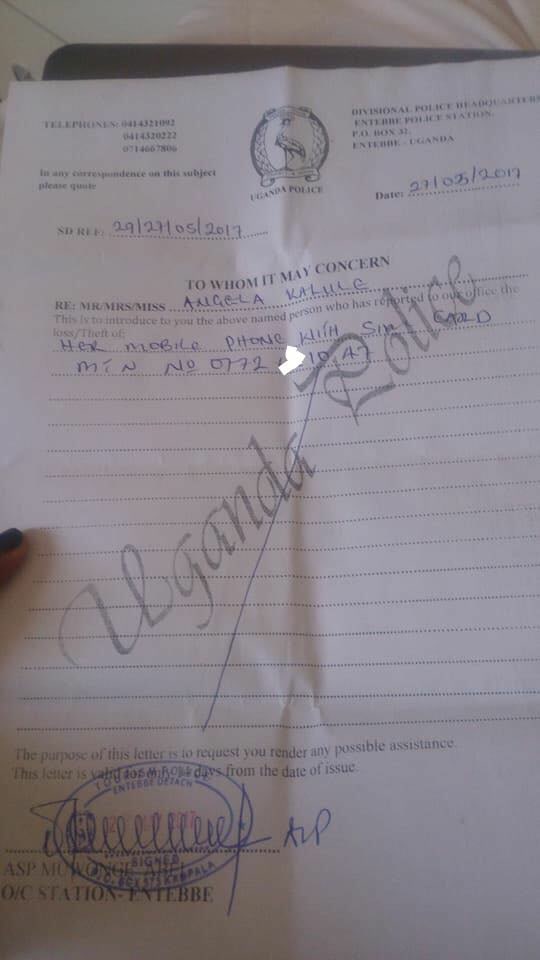
Angela, whose phone was stolen last month, says she was reached by Bukedde TV presenters, Josephat Seguya and Semei; Grace Namiyimbo, Carol and Sula Simplex of Ssuubi FM who asked her for money to block the video from ending up in the hands of the public.

“I was powerless and neither did I have the resources to respond positively to your (their) demands. The search for contentment through blackmail and invasion of privacy will not belittle me nor make me lose my self-esteem. I still hold my head high and will go about my responsibilities as a dutiful fiancé, singer and Mother.”

Meanwhile, appearing on Capital FM Monday, Kalule said like a large section of the public, her family has been by her side during this difficult time.

“The content of the video exactly showed I was speaking to my man although some thought it was a publicity stunt. You cannot get out of the blue to perform such a stunt that you know is going to humiliate you beyond reparable conditions and you know that your children will get to see it. You cannot. You cannot wake up to start planning such a stunt,” she said.

She says no one pushed her to apologise “but I felt like I needed to apologise.”
Angela Kalule’s phone was stolen last month and the case was reported to police. The leaked video was is said to have been in the lost phone.


Stories Continues after ad

dfcu injects Shs200m in agriculture, farmers off to The Netherlands

OFF TO THE NETHERLANDS: The 2016 Best farmers competition winners with State minister for agriculture

Small and medium scale farmers are to spend one week in The Netherlands on a learning expedition in the world’s second largest exporter of agricultural produce, thanks to the dfcu bank that has sponsored the trip.

During the trip, the thirteen farmers whose trip has cost dfcu bank over Ugshs200 million, will visit some of the most successful farmers, taking advantage of partnership opportunities as well as exploring innovations and best practice that they can apply in Uganda.

The State Minister for Agriculture Christopher Kibanzanga officially flagged off the farmers who left on Saturday.

Chairman dfcu Bank Jimmy D. Mugerwa shares a moment with State minister for Agriculture Christopher Kibanzanga

Speaking at the event, the chairperson dfcu Bank, Jimmy Mugerwa revealed that dfcu in partnership with Netherlands based Rabobank have set up an Agriculture Advisory Centre, which will be operational by July this year.

“With Uganda’s heavy reliance on agriculture, it is critical that there is cross industry collaboration to support the shift from subsistence to commercial farming which is more lucrative. dfcu’s Advisory Center will complement the efforts towards improving the skills set within the agricultural sector,” he said.

dfcu has adopted the value chain based approach to support the transformation of the agricultural sector through financing and capacity building of farmer organizations/associations engaged in viable agriculture projects including coffee, cotton, tea, among others.

As part of dfcu’s agriculture agenda, the Bank is supporting the small-scale farmers to commercialize through products such as the Farmers Group savings accounts, which encourage farmers to save and have access to affordable credit when the need arises.

The 13 farmers emerged winners in the ‘2016 Uganda Best farmer’s competition’ which show cases the best farmers and the best framing practices nationally with intention to inspire farmers in the adaptation of commercial agriculture methods. It is a partnership between dfcu Bank; Vision Group under the New Vision; KLM and the Netherlands Embassy, which has been running since 2014.


Stories Continues after ad

Disastrous Fall Armyworms to strike again in August, expert warns

Uganda has not won the battle against the notorious Fall Armyworms that destroyed crops in the early months of the new planting season, an agricultural expert familiar with the behavior of the nocturnal moths has warned.

According to Dr John Bahana, who has immense experience in the monitoring of the moths in central and southern Africa, the green pests are only hiding in the soils, ready to strike mainly grain farms in August.

“Warning needs to be sounded out to authorities and all concerned to be aware of the looming disaster that Fall Armyworm will befall Uganda starting this August,” Dr Bahana says of the insects that were first spotted in South Africa last year before they scattered to other Sub-Sahara countries.

Dr Bahana says that come August, the moths will emerge, lay eggs on newly germinated crops ‘and simply devour everything’. He says Uganda’s neighbours, Rwanda and Tanzania face similar situation. Already the moths are destroying maize gardens in western Kenyan district of Kitale, leaving farmers confused on how they will repay loans.

He called for a regional approach to research and management of the carnivorous moths that have a high capability to resist the recommended chemicals.

Government says it has put aside shs 3 billion to tackle the moths. But Dr Bahana says the money is so little compared to what other countries have staked. Kenya budgeted US$2 million whereas Zambia has spent more than US$4 million.

Agriculture minister, Vincent Ssempija, meanwhile says his ministry is finalisng a comprehensive strategy for the management of the worms that struck the country that had just emerged out of the prolonged drought. It is not clear whether Uganda will work with its regional neighbours as grains and cereals form part of the inter-border trade.

He adds efforts on the biological control of the moths are on-going as the chemical use option continues for emergencies.

Mr Okasa Opolot from the MAAIF adds that the research focuses on how the moths breed, feed and move. Should the biological method succeed, it will help protect the environment, given that too much use of the chemicals harm could harm the environment in the long run.

Uganda expects to harvest 4.8-5 million metric tons of maize this year, from the 4 million metric tons it reaped last year. Minister Ssempija says with the interventions to provide chemicals to farmers, the country will lose at least 5% the crops in the gardens to the pests, which is less than 25% that had earlier been expected to be destroyed.

Josephine Okot, the Managing Director of Victoria Seeds agrees with Dr Bahana, saying government should inject in more money. She cited Brazil which invests US$600 million annually to fight the pests.

Minister Ssempija says unscrupulous dealers in efforts to get abnormal profits were supplying farmers with adulterated chemicals. ‘This is why some pests are not dying,” says the minister in reference to chemicals like Rocket, Striker, Ngeyo, among others.

“We have talked to them about this indiscipline. We are going to issue a few guidelines and instructions,” Ssempija says, adding that government will only deal with known manufacturers and agents.

An analyst says agricultural extension workers must be involved deployed at parish levels to monitor the moths as they come back into the gardens.

Brazil, where the moth is perennial makes annual losses of US$3 billion (1,0863.4 billion) worth of crops

The Meteorological Department warned recently that southern part of the country would experience a dry spell in the second season, thrive as rains reduce. The second planting season starts in July, farmers hoping it won’t be bad like the first one that had their gardens infested with the strange Fall Armyworms.


Stories Continues after ad

Poor handling of animals to affect livestock exports, experts warn

CARE: Proper handling of animals will lead to better animal products' exports

As Uganda strategizes to position itself as a regional hub for the export of animal products, there is concern that efforts could be retarded by the careless handling of animals and birds by both farmers and veterinary professionals.

Senior veterinary experts have warned that poor administration of drugs to animals and birds has a negative impact on the quality of products like meat, milk, eggs and honey, hence impacting on consumers’ health.

“The use of veterinary drugs in animals like cattle, goats, poultry, bees has the potential to generate residues in animal derived products,” Dr Fred Monje, a Senior Veterinary Inspector in Uganda’s Ministry of Agriculture Animal Industry and Fisheries (MAAIF), observed.  This, he says, leads to contamination and therefore unsuitable for human consumption.

Dr Monje says that veterinary practitioners and farmers must stick to guidelines, warning that the continued improper immunization of animals weakens body processes like metabolism and detoxification which would otherwise help to filter drug residues that exit the body through urine and faeces.

When processes don’t take place normally, the result is the retention of drug residues in body, which then contaminate meat, milk and eggs in chicken, Dr Monje, adding that “the residues can cause diseases like cancer, allergy and damaged cell genes. The residues could also lead to antimicrobial resistance and congenital malformations.”

“The main reason for drug residues in animal products is due to improper usage and failure to keep the withdrawal period,” he says, advising veterinary shops to destroy expired medicines, as guided.

He advises farmers to use qualified veterinary personnel instead of relying on the unqualified ones but also that they avoid exposing chemicals to the environment as it provides most of the animal feeds.

Dr Monje also warns farms to keep their animals away from spilled chemicals as well as improper use agricultural chemicals such as pesticides.

Dr Mareb Acham, also veterinary inspector in the MAAIF says farmers should utilize the services of district veterinary officers, stating that officers have the obligation to guide farmers on the usage of chemicals and antibiotics. “They should not just buy drugs without the advice of veterinary personnel,” he says.

However, despite Dr Acham’s advice, most farmers in Uganda find it hard to access qualified personnel, and if identified, they are so expensive to engage.

The World Animal Health Organization, says Uganda’s veterinary sub sector is understaffed with minimum structures which offer low services, despite the high economic potential of the animal industry. For instance, Uganda produces 1.5 billion litres of milk annually, records from the Uganda Dairy Development Authority show.

“We have had problems of recent while trying to export our beef and milk. Markets like the European Union emphasise the issue of safety so much because they don’t want our products to cause diseases to their citizens,” says a local milk exporter.

Stories Continues after ad

Kagame endorsed as RPF presidential candidate

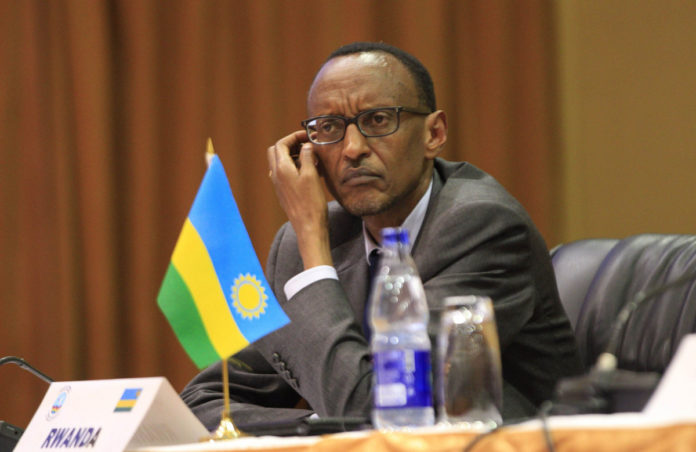
Rwanda President Paul Kagame.

Rwanda’s ruling party has chosen longtime President Paul Kagame as its candidate for the August election, where he is expected to face a handful of challengers who either represent small parties or are independent.

Kagame, 59, who has ruled this East African nation since 2000, was elected unopposed by Rwandan Patriotic Front (RPF) members.

Out of 11 registered political parties, nine have said they would back Kagame instead of fielding their own candidates, drawing criticism from the opposition. In the 2010 election, the president won with 93 percent of the vote.

Kagame’s decision to pursue a third term comes after the country’s constitution was amended in a 2015 referendum, allowing him to run for an additional seven-year term and then two five-year terms. That means he could remain in power until 2034.

Moves by some African leaders to stay in power have caused instability and violence, as in neighboring Burundi.

Rwanda’s opposition called the referendum undemocratic, and the United States, a key ally, opposed Kagame’s decision to stay on. But the president has insisted the referendum occurred after Parliament was petitioned with 4 million signatures. The country’s population is estimated at 12 million.

In a speech Saturday, Kagame urged ruling party members to start thinking about the transition beyond him. “There is no deadline, but I want you to address the reasons that have compelled you to bring me back here,” he said.

Supporters credit Kagame with bringing stability and economic transformation to Rwanda after its devastating 1994 genocide. Rights groups, however, accuse him of being an authoritarian and stifling free speech.

Rwanda’s government-backed electoral commission recently announced it must vet all social media messages by candidates in the presidential election or candidates risk having their social media accounts blocked.


Stories Continues after ad

Kiir issues ‘shoot to kill’ order for robbers

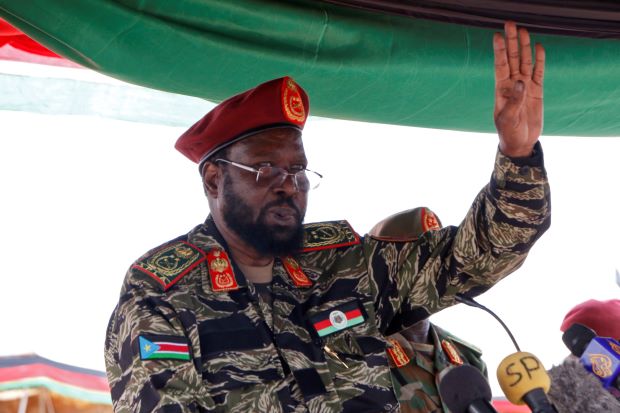
REJECTED CALLS TO STEP DOWN: South Sudan President Salva Kiir.

South Sudan President Salva Kiir has given out orders instructing joint police units to shoot dead robbers, including those who break into shops at night.

President Kiir, who spoke at an official function in Juba, urged police to provide security and protection to the citizens, saying the job of the police is to eliminate crimes.

“Your job as police is to eliminate the thieves who break into shops at night, shoot them whenever you see them trying to break into shops,” ordered Kiir.

The order highlights the frustration with which he and his administration have been grappling to address the rising crime rate in the national capital, Juba, since the conflict broke out in 2013.

He was addressing the passing out of the Joint Integrated Police (JIP) from the training centre as the only body mandated by the 2015 peace deal to carry out joint patrol and provide adequate security during the transitional period in the most fragile and conflict-affected areas in the country.

The agreement specified that the joint unit will comprise of 5,400 police personnel, with equal numbers provided by the government and the opposition.

The head of state used the passing out of the joint police to justify the existence of the peace which he denied to have collapsed but said was progressing well, though he did not publicise progress made in the implementation of the peace deal to the international community.

“I am saying the peace agreement is alive and is progressing well and is very strong,” said Kiir.

He reaffirmed his commitment to implement the peace agreement fully, despite reiterating reservations on specific areas, saying those who designed the deal cannot implement it themselves if it were given to them.

“I said it before that the peace agreement I have signed is a bad agreement. Even those who designed the agreement cannot implement it, and this is why we are not able to implement this agreement all this time because it is very complicated,” said the South Sudanese leader

“Although we have not marketed ourselves to the international community about what we were doing, we are sure that we are doing correct things. We will continue to do those things, and nobody will talk to us again,” he said.

Kiir statements came after a recent regional summit where IGAD leaders decided to convene a ‘Revitalization Forum’ for the implementation of the Agreement on the Resolution of the Conflict in South Sudan (ARCSS)signed in August 2015.

“The full implementation of ARCSS remains to be the only viable way forward to bring about peace and stability and create the basis for a democratic political system in South Sudan,” they said.


Stories Continues after ad