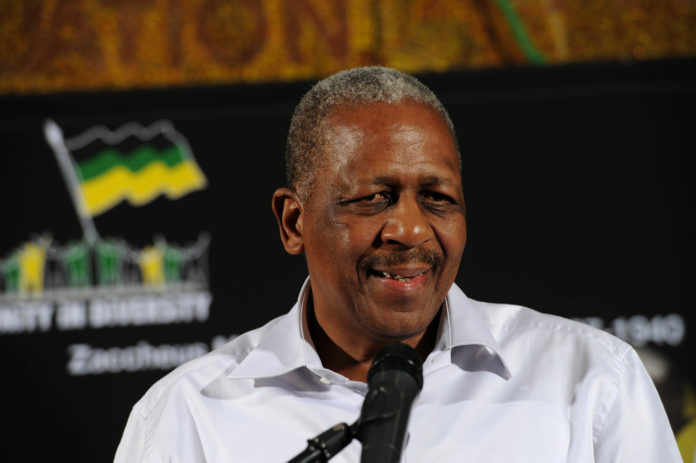
TO VIE FOR PRESIDENCY: Businessman and former ANC treasurer general Mathews Phosa .
South African businessman Mathews Phosa said he accepted a nomination to stand as president of the ruling African National Congress.
Phosa will challenge Deputy President Cyril Ramaphosa and Nkosazana Dlamini-Zuma, a former chairwoman of the African Union Commission, who are seen as the frontrunners to succeed President Jacob Zuma as the party’s leader at a conference in December. Dlamini-Zuma is the president’s ex-wife.
Zuma is under pressure after Standard and Poor (S&P) Global Ratings and Fitch Ratings Ltd. responded to his firing of Finance Minister Pravin Gordhan last month by cutting their assessments of South Africa’s international credit to junk. There have been growing calls for him to step down, and he faces a vote of no confidence in parliament that’s been postponed pending a court ruling.
“I think my movement is in a crisis, my country is in a crisis,” Phosa said by mobile phone on Sunday.
A lawyer, Phosa is a director at coal and platinum companies, and was previously treasurer general at the ANC. He was nominated by the ANC ward in Cape Town. The leader of the party will stand in the country’s general elections scheduled for 2019, with Zuma having served the maximum two terms allowed under the constitution.
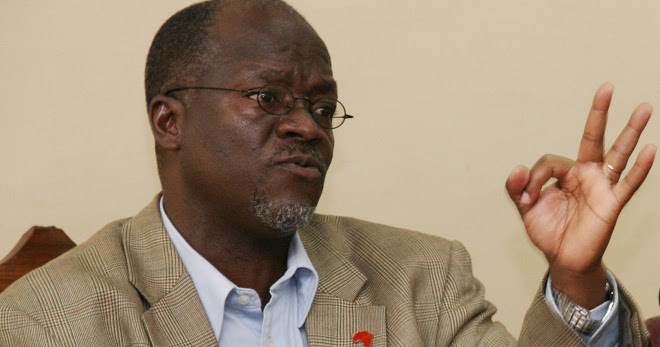
Tanzanian President John Magufuli has sacked nearly 10,000 civil servants for having fake education certificates.
He was responding to the release of a government report into fraudulent qualifications in the public sector.
The education minister said that some had been using their relatives’ school certificates, while others did not appear on official records at all.
President Magufuli has given those on the list until May 15 to resign or face legal action.
“These people occupied government positions but had no qualifications… they robbed us just like other common criminals,” Mr Magufuli said, urging officials to ‘name and shame’ offenders.
“We have been working hard to create new jobs while there are people in government who hold fake degrees,” he added.
He has also asked newspapers to publish the names of everyone on the list.
There isn’t a particular place which is well known for making fake certificates here, but it’s easy enough to get hold of one on the black market.
It is very common for people to use fake certificates in Tanzania.
Police raided a house in Dar es Salaam last year and found two individuals with machines, stamps and piles of templates for fake secondary school, birth and even business licence certificates stacked up in a room.
It is also very common for people to use their friends’ or family members’ certificates.
In this case, when someone gets a job or goes on to higher education, they will actually change their name to match the one on their certificate.
The 9,932 people named in the report account for more than 2% of the country’s estimated 450,000 civil servants.
Officials convicted of fraud could face up to seven years in jail.
Last year, Tanzania removed more than 10,000 so-called ghost workers from its public sector payroll in a crackdown on corruption.
Payments to the non-existent employees had been costing the government more than $2m (£1.4m) a month, it said.
When President Magufuli came to power two years ago, the government temporarily suspended recruitment in some government sectors while they checked up on existing employees’ qualifications.
The report focused exclusively on secondary school qualification and did not examine university degree certificates.
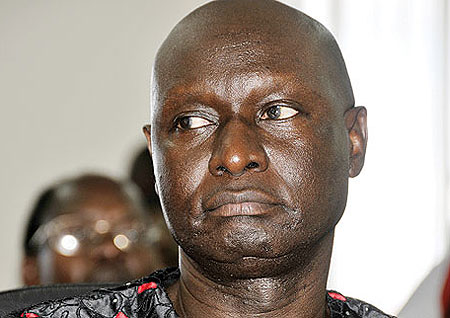
ACQUITTED: Andrew Kananura, alias, Desh, in the dock at Buganda Road Court early this year.
The High Court has acquitted city businessman and rally driver Andrew ‘Desh’ Kananura of murder charges that had been brought against him, his brother Raymond Kananura and three others.
The group had been accused of killing Kananura’s former employee Badru Kateregga at his Ntinda-based Panamera bar on September 31, 2012, following claims that the deceased was in possession of Shs30. 000, against the rules of his workplace.
But in his ruling today Justice Joseph Murangira said the evidence adduced against ‘Desh’ and his co-accused Raymond Kananura insufficient and that the witnesses presented before court based their submissions on hearsay.
In fact in early April, court ordered for Kananura’s release after prosecution failed to table evidence that could lead to his conviction.
Kananura’s case has dragged on for 5 years and been heard by two judges, Justices Murangira and Wilson Masalu Musene, who recused himself.
Meanwhile, Kateregga’s father, the man who was pursuing the case of his son’s death died, and his grandchildren are now abandoned in their home village of Kamonkoli, Budaka district.
WON CASE AGAINST MUSEVENI: Former UPC leader Olara Otunnu.
Court has Friday dismissed President Yoweri Museveni’s defamation case against former Uganda People’s Congress (UPC) party president Dr. Olara Otunnu.
In her ruling delivered today at Buganda Road Court, Grade One Magistrate Joan Aciro dismissed the case citing prosecution’s failure to produce witnesses to pin Otunnu on charges of defaming President Museveni.
LOST CASE AGAINST OTUNNU: Gen. Yoweri Kaguta Museveni
The State had produced only one witness, Journalist Gideon Tumusiime, who testified that he heard Otunnu during defame Museveni at a press conference. But Tumusiime never returned for cross-examination.
“His evidence was not sufficient to prove the allegation. The case is hereby dismissed and the accused set free,” Aciro ruled, adding that court could not depend on the evidence of a single prosecution witness who was not cross examined to convict Otunnu.
In the charges against Otunnu, he allegedly accused Museveni of committing ‘very many crimes’ among which included; atrocities in Luwero and, the massacres of Muslims in Ankole in 1979 when the Museveni was the commander of the Western Axis of anti-Amin forces that was composed mainly of his FRONASA contingent.
Other accusations included the massacre at Ombaci in West Nile in 1981; the scorched-earth counter-insurgency operations and genocide in northern and eastern Uganda between 1986 and 2006 and the ‘wanton killing of unarmed demonstrators on the streets of Kampala’, in September 2009.
Otunnu also reportedly said that several disappearances and mysterious deaths had occurred under Museveni’s watch and authority since the Front for National Salvation’s (FRONASA) struggles to-date, insisting the allegations should be investigated.
His remarks prompted the Attorney General to write to the then UPC president giving him five days to make a public apology for his comments, or face legal action. Otunnu declined to apologise and repeated the same allegations at almost all the subsequent press conferences he addressed.
He also ignored summons to appear before the Media Crimes Department at CIID despite acknowledging receipt of the summons at a press conference he convened at Uganda House, and insisted he would only appear before court.
WANTS KAYIHURA CERTIFICATE REVOKED: Former ESO boss David Pulkol
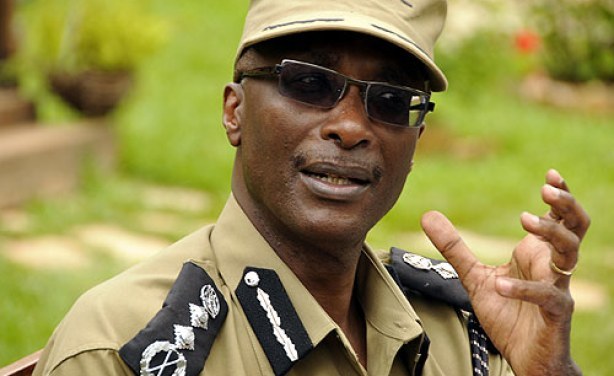
Former Director General of the External Security Organisation (ESO), David Pulkol has urged the Uganda Law Society (ULS) to cancel the law practicing certificate of the Inspector General of Police, General Kale Kayihura.
IGP Gen Kale Kayihura
According to Pulkol, Kayihura, a lawyer with a Masters Degree, is not fit to practice law after he publicly paraded suspects linked to the recent murders in Masaka.
“If we indeed have a Law Council in the country, it should cancel his (Kayihura’s) practicing certificate. How can a lawyer be the one violating the law. Police has become the judges? Totally unprofessional. You can’t just do silly things like that,” Pulkol fumed as he appeared on NTVs ‘On the Spot’ programme.
“If police was parading successful operations in society, then people would be happy but parading suspects?” he charged.
Responding to Pulkol, the spokesperson of Kampala Metropolitan police, Emilian Kayima defended his boss, saying he never said the paraded suspects were criminals.
“The IGP was categorical. He said, these are not criminals but people we are suspecting,” said Kayima.
It turned out Kayihura was following the show on TV and he was the first caller, protesting why he had not been invited to defend himself on the show.
“Security should be handled in a historical context. I would like that the panel also looks at the past successful situations while discussing. You should not just judge, consider the past successes. And we are also making progress,” he said, adding: “This is not the Pulkol I know, he has transformed radically.”
However, responding to Kayihura, Pulkol said: “You are also not the Kayihura I knew. I knew you as a Cpt, Major…..to Gen but I never knew you to be this blind.”
Security expert and former police officer, Fred Egesa said that by parading suspects, “the police wants to look very smart before Museveni”.
Kayima admitted the law enforcement agency is facing challenges but added, “we cannot afford to lose hope.”
“Tell me any country which is completely free from these challenges? It is a continuous process to ensure that men in uniform do what they are mandated to do. It is work in progress. But it should start with you, do you even know the phone number of the OC in your area?” Kayima challenged. He pointed out the problem of youth unemployment as one of the biggest threats to national security.
“Almost all those arrested (in the recent crimes in Masaka) are youths. So many youths leave villages for towns but what do they do for a living? I have always talked about the issue of the youth. We need to be more responsive as citizens,” he said.
However, he was advised by Egesa that as a professional policeman, rather than complain about youth unemployment, they needed to put their house in order.
“As police, your mandate is to keep law and order. Deal with that. Forget about the youth challenges.”
As for Pulkol, he said that sometimes he is tempted to “tell Kayihura to resign, buy a big TV screen then watch how the country is run.”
Kayihura came under fire this week for parading before media youths suspected to have been behind the crime in the Greater Masaka region. They indeed confessed to committing the crimes, but also claimed they were being protected by police.
State Minister for Gender and Culture, Peace Mutuuzo
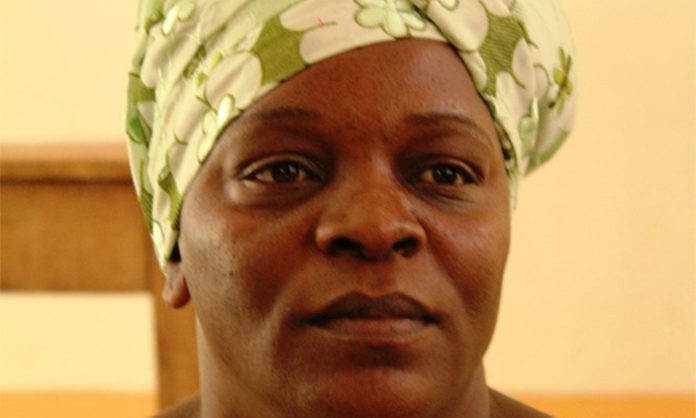
The Minister of State for Gender, Labour and Social Development Peace Mutuuzo has promised to track down and prosecute employers who abuse workers’ rights.
Speaking ahead of the Labour Day to be celebrated in Pallisa on Monday, May 1 Ms Mutuuzo said that the Government is aware of the country’s labour needs and is in a process of meeting them.
“The Labor Day takes off time to congratulate workers for their contributions to Uganda’s development,” Ms Mutuuzo said while addressing the media at Uganda media Centre.
She urged all workers to use this occasion as a turning point, to be used to reflect on good working ethics for better services.
This year’s Labour Day, to be presided over by President Yoweri Museveni, will be celebrated under the theme: ‘Building the Nation through Good Ethics’.
INTRUSION? Former IGP's Personal Assistant ACP Jonathan Baroza
Assistant Commissioner of Police (ACP) Jonathan Baroza, the former Personal Assistant to the Inspector General of Police (IGP), General Kale Kayihura has reportedly left the country for an unknown destination.
According to sources at Entebbe International Airport, Baroza’s exit was coordinated by a one Caleb Kabindi.
ACP Baroza, who was reportedly escorted to the airport, was ushered in the VIP section where he waited until other passengers had boarded the plane, the source further said. EagleOnline couldn’t expose the name of the airline for business and confidentiality purposes.
However, this website also couldn’t easily established whether ACP Baroza is a holder of a diplomatic passport, as this a reserve of very senior officials like Ministers, Permanent Secretaries and Ambassadors.
ACP Baroza was recently relieved off his duties as the Personal Assistant to Gen. Kayihura and according to police sources, he was supposed to go for training in Algeria.
And, contacted for comment, Police Spokesperson AIGP Asan Kasingye said he was yet to establish the facts.
“Anyway, why would you want to know where our officers are travelling to,” he jokingly asked.
Meanwhile, following the killing of Assistant Inspector General of Police (AIGP) Andrew Felix Kaweesi on March 17, there were reports that ACP Baroza sent a junior police officer to the scene of crime in Kulambiro, to allegedly pick soil samples from the point where Kaweesi was shot.
At the time it is said that AIGP Fred Yiga, a very senior police officer who was at the scene queried the junior police officer, who in turn said he had been sent by Baroza, who however, was not one of the forensic investigators.
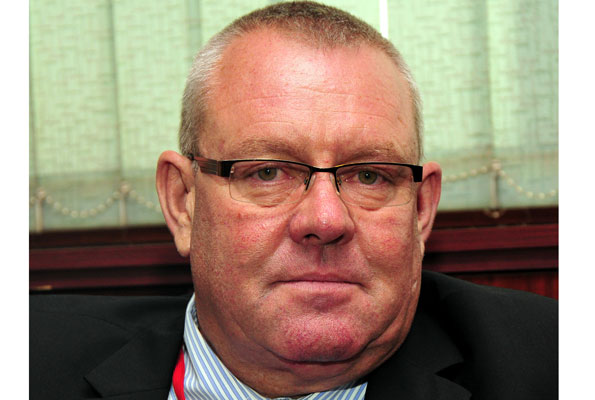
Tony Glencross, the Nation Media Group (NMG) MD for Uganda.
The Daily Monitor newspaper, a publication of the Nation Media Group (NMG) has fired several Editors, among them Ismail Kezaala and Henry Ochieng, who have worked for over 15 years at the Industrial Area-based publication.
Kezaala has been the Society Magazine Photo Editor, while Ochieng has been the Political Editor. Others fired are Faiswal Kasirye, the Acting Photo Editor; photographer Michael Kakumirizi and, Sean Oseku and Jackie Deware of KFM.
Today’s sacking and the new changes announced yesterday by Managing Director Tony Glencross, will also see some Managing Editors’ roles merged.
In fact Glencross said that first priority is going to be given to digital section, a move that will inevitably leave some employees redundant due to the merging of some roles within the company.
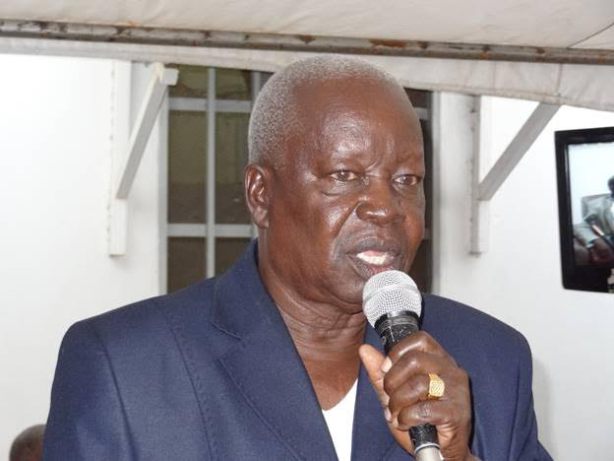
UNDER FIRE: Douglas Lwanga whom authorities at NTV have told will paid per show.
In a related development the NMG, who are also the owners of NTV, Spark Tv, KFM, Dembe FM, will carry out restructuring and, beginning next month most of the workers at the Serena based station NTV will operate on a freelance basis.
“They (workers) will be paid for only their output unlike currently where most earn monthly salaries. Even presenters like Douglas Lwanga and others will be paid for only the time they appear on TV,” a source intimated to us.
Apparently the restructure has been ongoing for the last one year where the heads of different departments were ordered to reduce on the number of their employees, who have been laid off one by one since last year.
“This was further boosted by those who left on their own will like MC Kats, Peter Sserwanga, Robin Kisti and others,” the source added.
Meanwhile, as part of the changes at NTV, sources said Sam Barata returned from Nairobi to take on the post of General Manager Sales, while NTV MD Agnes Konde’s job hangs in the balance as there are reportedly plans to phase out the position.
South Sudan: Intense Fighting Around Kodok Forces up to 25,000 People to Flee Without Humanitarian Support
Tens of thousands of South Sudanese have fled their homes and are now trapped under intense sun without food, water or medical care, aid agencies said on Thursday after fierce fighting forced them to pull out of the region.
Almost 40,000 thirsty people are camped out in temperatures of about 40 degrees centigrade in Aburoc village, near the border with Sudan, said Marcus Bachmann, South Sudan head of mission for the medical charity Médecins Sans Frontières (MSF).
“The quantity of water is not enough to survive in this environment,” he told a news briefing via Skype from Juba.
“With so many people squeezed in one place, the risk of an outbreak of cholera is extremely high. It puts the exhausted population at highest risk of death.”
South Sudan descended into civil war in 2013 after President Salva Kiir fired his deputy, unleashing a conflict that has spawned armed factions which often follow ethnic lines.
The United Nations has raised fears of a possible genocide as millions have fled their homes, the economy is in a tailspin, harvests are devastated by drought and millions of people face famine.
A government offensive in two parts of Upper Nile State, near the border with Sudan, forced 32 humanitarian staff to be relocated on Monday to the capital, Juba, said the U.N. Office for the Coordination of Humanitarian Affairs.
The displaced population in and around Aburoc is likely to hit 50,000 in the coming days, it said in a statement, and people are also reported to be crossing into Sudan for safety.
“People fleeing… to Aburoc are undertaking long and treacherous journeys — some travelling eight days by foot without access to water and food,” it said.
MSF’s Bachmann said water trucks could not reach Aburoc, and it suspended its hospital operations there on Thursday morning.
People are sleeping in the open without mosquito nets to protect against malaria and he said there have been reports of cholera in the area in recent months.
Government forces are in control of nearby Kodok town after fighting ended there on Wednesday, Sudan People’s Liberation Army (SPLA) deputy spokesman Colonel Santo Domic Chol said.
“The SPLA is calling on their citizens to come back to their houses,” he said, declining to give casualty figures.
“War is war and war is ugly in any capacity… there must be refugees and there must be those caught in the crossfire.”
Banks in war-ravaged South Sudan have run out of cash and the crunch is exacerbating hunger and widespread famine, the deputy finance minister says.
‘If you go to the commercial banks, you do not find South Sudan pounds and dollars. They are all in the black market,’ said Deputy Minister Mou Ambrose Thiik.
He said a parallel economy had emerged and people were hoarding cash. Black market rates have reached 150 South Sudanese pounds to the US dollar, up from 105 in mid-February.
South Sudan has a steady stream of hard currency from its oil, but production has been slashed and most of the cash is eaten up by operating costs.
‘We have very minimum foreign reserves. I cannot tell you at the moment how much it is,’ he said in an interview.
The world’s youngest nation plunged into civil war in 2013, just two years after independence from neighbouring Sudan, after President Salva Kiir fired his deputy Riek Machar.
The conflict has split the nation along largely ethnic lines and the United Nations has warned of a possible genocide. More than 3 million people have fled their homes out of a population of 12 million.
The UN has declared famine in some parts of the country and nearly half its population face food shortages.
Thiik said money shortages had worsened the crisis, and also accused UN agencies and foreign businesses of ‘bad practices’ for not depositing dollars in South Sudanese banks.
‘The dollars that are brought to help the country do not arrive in the country but they are banked somewhere else,’ he said, adding: ‘It is something we need to address with the UN agencies, which are the main suppliers of the dollar.’
The UN did not immediately respond to requests for comment.
Last month, a confidential UN report noted the government still spent millions of dollars on security forces despite the famine.