Stanbic Bank
Stanbic Bank
24.9 C
Kampala
Stanbic Bank
Stanbic Bank
Home Blog Page 1932

Tycoon Mbiire’s Daughter: My Parents couldn’t let me marry a broke guy

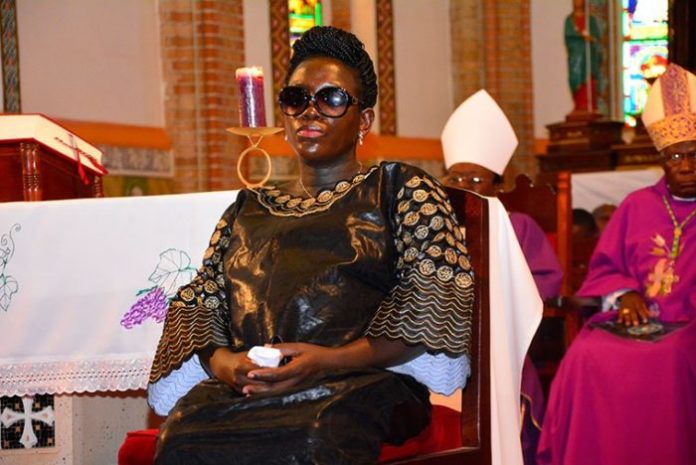
BIG TIME: Nadia Mbiire weds Yassah Matovu

The daughter to city tycoon Charles Mbiire has answered her critics who have been saying that she married a broke guy whom she turned into a toy boy.

Responding to the critics, a seemingly furious Nadia Kabahita has defended her husband Yassah Matovu, saying there was no way her rich family would have let her marry a broke guy.

“My husband comes from a rich family I’m sorry to break it to you, but I’ve always dated men who have been able to match the lifestyle I’m used to. My family would never let me marry anyone who couldn’t take care of me financially,” she hit back via social media. “I have unapologetically high standards (as all women should) which few can meet, and Yassah met them. Since the day he asked me to be his girlfriend, my husband has been spoiling me with flowers, watches, trips abroad, shoes etc. Part of the reason I married him aside from his good heart and loyalty. He blew me away.”

Defending his family’s social status, she said Matovu’s family are the biggest tiles suppliers in East Africa.

“Come we meet and I take you through his family business – the biggest tile supplier in East Africa – YOUMA and his personal business; the biggest warehousing business in Uganda – Gamma Grays.”

Nadia’s rant was sparked off by a one Yvonne Kata, who claimed Matovu was a woman in men cloth’s because Nadia paid him for everything including wedding her.

“All I can say is this guy could have been hired to act as her husband from the start. He is paid for everything he does for her. He was paid to marry her and he is paid to just look good on her arm. Most Ugandans can’t see that but not all are gullible. We see through the curtains…… It’s not easy imitating Kim Kardashian without a man on your arm. She had to buy one,” Yatta claimed.

In her response, she said being a Kim Kardashian is one of the easiest things she can do.

“I can easily live that Kardashian lifestyle – doing nothing but being lazy and spending my husband or fathers money. I could easily be one of these Socialites that does nothing but party and attend social events but I was taught better than that. I have watched my father work hard and that has rubbed off on me. I don’t work in any of his businesses (I could have); instead I decided to be an adult and find a job for myself – not a spoilt brat that works for daddy.”


Stories Continues after ad

Ugandans face xenophobic attacks in South Africa

Nigerian migrants were attacked by a mob.

Ugandans are some of the Africans targeted by South African nationals for reportedly occupying jobs that meant for indigenous people. Majority of Ugandans in South Africa are traditional healers commonly known as Sangomas. They have however, occasionally run in trouble with their South African clients who accuse them of defrauding.

Meanwhile, the latest xenophobic attacks that started on the weekend has seen more than 30 foreign-owned shops looted last night in two neighbourhoods in South Africa’s capital, Pretoria, a police spokesman was quoted by the local media.

Bongi Msimango said: “The looting started in Atteridgeville and spread to the neighbouring Lotus Gardens. Police managed to control the situation and there were no further reports later in the evening”

Some of the owners were in the shops but none were injured. We don’t know at this stage why this erupted.”

Police did not give the nationalities of those targeted.

The looting comes ahead of a march planned for Friday by the little-known Mamelodi Concerned Residents group against undocumented immigrants in South Africa.

In a flyer, it said: “Companies only employ Zimbabweans and other foreign nationals. Where must South Africans work?”

The Southern African Catholic Bishops’ Conference said it had “serious concerns” about the march, and it called on people to show restraint.

One of its senior clerics, Bishop Abel Gabuza, added:

We reiterate our call to the government to strengthen border controls. We also call on the intelligence community to devise more effective ways to detect and counter xenophobic violence before it flares up.”

Yesterday, Nigeria urged South Africa’s government to take decisive action over attacks on its nationals after they were targeted in Pretoria on Saturday.

South Africa has sporadically faced xenophobic attacks with the last being in 2016 in KwaZulu Natal.

Majority of Ugandans in South Africa are traditional healers commonly known as Sangomas. They have however, occasionally run in trouble with their clients who accuse of defrauding. South Africa has sporadically faced xenophobic attacks with the last being in 2016 in KwaZulu Natal.


Stories Continues after ad

Papa Cidy ‘cools Leone Island fire’ with 77 DOGS

Where is our money? Pastor Robert Kayanja (Right) with Papa Cidy aka Hamidu Sekyeru at a past event

Things turned worse for celebrated musician, Papa Cidy real names Hamidu Sekyeru, who was expelled from Leone Island recently. This was the second time he is being expelled from the crew that brought him into the limelight.

Worse still, this came at a time when he was struggling to make a comeback. In such a situation, what would one do?

To Cidy, the only way to get out of his current situation is by becoming a ‘born again’, through the ongoing and much publicised prayers, ‘77 DOGS’.

Like many of his peers, Cidy turned up at Pastor Kayanja’s church for prayers to the excitement of the pastor.

“Hamidu Sekyeru (Papa Cidy) who is a renowned musician who had been sold out to the secular world. With a Muslim background, he’s been known to be a right hand man to one of the most famous artistes in our nation. Yesterday, we rejoiced and celebrated as he came out of the crowd and publicly acknowledged Jesus as his saviour. They’re coming one by one. Our nation belongs to Jesus,” Kayanja said.

Papa Cidy was once one of the biggest musicians in the country with hits like; ‘Meme Katale’, ‘Tolina Kisa’, ‘Evalina’ to mention a few.

Others to have become ‘born again’ at the same venue was Qute Kaye, who was also a big name in the music industry. They were also joined by comedians; Eddie Kigere and Kapere of Amarula Family, formerly the biggest comedy outfit in the country. It’s popularly remembered for its comedy series on WBS TV and Bukedde TV. It’s also remembered for its annual fete, ‘Akabadi K’Omwaka’. But like all those mentioned above, the group is struggling too.


Stories Continues after ad

UACE: 80 per cent opted for Arts

Dan Odong, Executive Secretary of UNEB. Photo credit New Vision.

Despite government laying emphasis on the study of sciences, most candidates who sat for the Uganda Advanced Certificate of Education (UACE) opted for arts subjects.

Speaking at the release of the UACE results today at the Prime Minister’s Office Uganda National Examinations Board (UNEB) Chairperson Professor Mary Okwakol said the candidates top four ‘district performance’ in respect to three principle passes was led by Mukono with 52.9 per cent; Wakiso with 47.7; Kampala with 45.2 per cent and Mbarara with 32.9 percent.

And, delivering a detailed report, the UNEB Executive Secretary Daniel Odong said 104, 234 candidates registered for UACE in 2016, compared to 101, 268 in 2015, implying the candidature improved by 2.9 percent. According to Odong, 39, 797 candidates got three principal passes; 27, 831 got two principal passes, while 21, 031 got one principal pass. Further, he said, 12, 836 candidates got one subsidiary pass, while 1, 363 candidates failed.

Mr Odong said 64 results from 11 centres had been held, a remarkable drop from 279 cases in UACE 2015, noting that Economics and science subjects were poorly done, with biology the worst performed subject.

Overall, many candidates qualified for university and tertiary education, and girls performed better than boys.


Stories Continues after ad

Makerere graduates, UACE results released

INVEST MORE IN EDUCATION: Education Minister Janet Kataha Museveni

The four-day 67th graduation ceremony of Makerere University has started today, with a total number of 14,895 graduands getting their degrees.

Last week the university announced that 500 of the graduates were set to miss the graduation after their lecturers reportedly delayed to submit their marks, but yesterday the standoff was sorted and 470 of those were cleared, leaving out 30 whose marks are suspect.

Meanwhile, the Uganda National Examinations Board is to release the Uganda Advanced Certificate of Education (UACE) results today at the Prime Minister’s Office, at a function presided over by the education and sports minister, Janet Kataha Museveni.

Last year a total 104, 361 students registered for the UACE.

Stories Continues after ad

South Sudan declares famine

A woman returns to Hope Primary School in Juba, South Sudan, with a bunch of firewood. Many families were forced to flee the July 2016 violence and have since been sheltering at the school. Photo © NRC/Davies Okoko.

A severe food shortage has deteriorated into a famine in two counties in South Sudan, the government and United Nations announced, with 100,000 people facing starvation.

Joyce Luma, head of the World Food Program in South Sudan, called the famine “man-made,” blaming it on political turmoil in a country engulfed in civil war since late 2013.

Luma and representatives of two other UN agencies — UNICEF and the Food and Agriculture Organization (FAO) — issued the famine declaration at a news conference in Juba, South Sudan’s capital, along with Isaiah Chol Aruai, the head of the country’s National Bureau of Statistics. A formal declaration of famine indicates that people are dying of hunger.

“Our worst fears have been realized. Many families have exhausted every means they have to survive,” said Serge Tissot, representative of the FAO in South Sudan.

The agencies painted a grim picture of the situation in the impoverished country, saying that 100,000 people are at risk of starvation and that one million more are on the brink of famine.

About 5.5 million people, or about half of South Sudan’s population, will face severe food shortages by the summer unless more relief is provided, they said.

South Sudan, which became independent from Sudan in 2011 with strong support from the US government and the international community, descended into conflict in December 2013, when President Salva Kiir fired his vice president, Riek Machar. The ensuing war took on ethnic overtones, with Kiir’s Dinka group battling members of Machar’s Nuer group.


Tens of thousands of people have died and more than 1.5 million have fled the country.

The UN officials said that war had disrupted agriculture, the main occupation in many parts of the country, crippling the economy and leaving people unable to feed themselves. People were relying on “whatever plants they can find and fish they can catch,” Tissot said. The two counties affected by famine are in Unity, an important oil-producing state in the north.

The UN agencies said that more humanitarian aid is needed to prevent the famine from spreading to other areas.


“If sustained and adequate assistance is delivered urgently, the hunger situation can be improved in the coming months and further suffering mitigated,” the agencies said in a report.

UN officials have complained that both government and opposition forces have blocked humanitarian convoys and attacked aid workers, making it difficult to bring assistance to the worst-affected areas.

Jeremy Hopkins, head of UNICEF in South Sudan, said that more than 250,000 children are severely malnourished and that if they do not receive food immediately, “many of them will die.”

The officials said the hunger crisis is the worst since fighting started three years ago.

South Sudan has experienced starvation before. In 1998, a famine occurred in the region of Bahr El Ghazal after a prolonged drought and fighting between forces supporting Sudan’s government and rebels seeking independence for the south.

The United Nations has been alarmed by the recent deterioration in South Sudan. In December, UN officials warned that ‘ethnic cleansing’ was taking place and that an ‘all-out ethnic civil war’ could occur.

Last week, Arif Husain, the World Food Program’s chief economist, said that 20 million people could die of starvation over the next six months in famines in northeastern Nigeria, Somalia, South Sudan and Yemen.


Stories Continues after ad

Rwanda pushes Uganda to block entrepreneur’s investments over rebel claims

Mr.Rujugiro who the Kigali authorities want the Ugandan government to freeze his asserts.

The relationship between Rwanda and Uganda is likely to deteriorate after Kigali accusing Kampala of shielding wrong elements whom the Kigali regime classifies as ‘rebels’

The latest controversy involving the two countries is that Rwanda government is pushing Uganda government to freeze asserts and investment of Mr. Tribert Rujugiro Ayabatwa who the Kigali regime accuses of being a rebel collaborator.

The relationship between the two countries has just normalized after a decade of bitter affairs and this was after the two countries clashed in the Zaire (Democratic Republic of Congo) when their armies clashed leaving hundreds of soldiers dead on either side.

According to highly placed sources within the security networks, Kigali alleges that businessman Rujugiro who has investments in Arua, West Nile is a threat to their security and therefore, want the investment in Uganda frozen.

Rujugiro intends to open a US $20M tobacco factory which he named Meridian Tobacco Company (MTC) factory next year in May.

Rujugiro also has investments in South Africa, Mozambique Malawi among other African nations.

Rujugiro’s former UTC building which the Kigali regime took over.

The Kigali authorities recently took over Rujugiro’s Union Trade Centre shopping mall in the heart of Kigali city. And the building is yet to be sold and the money will go to the national coffers.

However, last week, one of Kigali dallies ran a story that Uganda was recruiting rebels but sources within the Kigali establishment say, Rwanda is using the story to blackmail Uganda that the Kampala government is training rebels linked to former  Rwanda spy chief Gen. Kayumba Nyamwasa.


Stories Continues after ad

Stanbic Bank launches 2017 National School Championships

HEALTHY COMPETITION: Students pose for a group photo with Brian Mulondo, the MC and Cathy Adengo of SBU

Stanbic Bank Uganda, in partnership with the Ministry of Education and Sports, has launched the 2017 ‘Stanbic National Schools Championship’, an exciting competition that will see over 3,000 students from 40 secondary schools participate in a series of  educational activities from class debates, quiz competitions and dynamic group projects.

The competition aims to encourage and challenge the students in critical thinking and provide exposure to vast knowledge beyond the class room.

“Investing in education is an integral part of the bank’s strategy in fostering development in the country. We believe that a healthy competition and innovativeness among students is a step forward to creating active minds which yield solutions that would steer not only improved academic performance, but also definite solutions to moving Uganda economically forward,” Patrick Mweheire, the SBU Chief Executive Officer said at the official launch.

Students will stand a chance to win amazing prizes including; an educational all-expenses paid for trip to South Africa, I-pads, books and internships with Stanbic.  The schools will also benefit from the competition with prizes like teacher training programmes and books for their libraries.

The competition is expected to provide students with financial literacy and entrepreneurship skills. It will also improve their problem solving skills, build confidence, refine their presentation skills and equip them with critical and creative thinking skills.

The guest of honour, Commissioner for Higher, Benson Kule, said the Ministry of Education is doing everything it can to ensure that students receive the best curriculum of study.

“A project such as the Stanbic National School Championships is an added advantage which tweaks the minds of students to prepare beyond what they might have studied,” Mr Kule said.

He added: “The contribution of the private sector in the education sector is fully respected and needed if we are to adopt higher education as a key step in driving growth in the country. The Ministry expects schools through this project to breed excellence and cultivate cooperation among students but most all, we hope that it will teach students resilience and confidence.”

Mr. Mweheire said the importance of education cannot be underestimated if communities are to achieve development and self-sustainability. “As the world continuously evolves, so does education. The more knowledge we acquire the better we are placed to compete favourably while keeping pace with the changing times. As a leading financial institution we value this concept and believe education is a key driver to sector growth,” he said.

This year will see 40 schools both government and private taking part, the finals are in April 2017.

Commenting on the criteria and implementation process for the Corporate Responsibility Programme, Stanbic Bank’s Head of Communications & CSI, Cathy Adengo said: “All regions are represented in the National School Championships. We will have 10 schools from each region where, the top final schools will battle for the championship in the national finals.”

Ms Adengo noted the programme has been organised carefully and will be implemented seamlessly to make sure there is a positive impact on all the participants. She said, “There will be regional launches to officially kick off the competition. Students and schools will be engaged in both an essay and quiz competition which will then be evaluated to select winners from each region.”

“The students will also be given a student bank assimilation project aimed at imparting knowledge about banking while at the same time stimulating financial literacy. At this stage, we will have chosen four schools that will go to the final competitions,” she disclosed.


Stories Continues after ad

Nansana cracks down of ill-equipped schools

ADVISED: Mayor Nansana Division Mr. Nsubuga Hamidu Kizito

Following a decision by the Ministry of Education and Sports to carry out a nationwide crackdown on schools which lack the requisite operational standards, authorities in Nansana Municipal Council have summoned all primary school and nursery proprietors and heads for talks.

Youth Councillor for Nansana westward Zone Mr Stephen Brian Kaggo

The meeting was organised by the Youth Councillor for Nansana westward Zone Mr Stephen Brian Kaggo and attended by among others the Nansana Division Mayor Hamidu Nsubuga Kizito, the area Inspector of schools Fred Katongole and other local leaders.

The Mayor Nansana Division Mr. Nsubuga Hamidu Kizito cautioned the school heads to fulfill all their obligations to enable the authorities to deliver services.

“We are a local government, collecting taxes helps us in service delivery since the money we receive from government is used to clear up salaries,” he said.

Mr Kizito also advised the school proprietors and heads to keep proper books of accounts, before detailing the different types of taxes levied by the municipality.

Pupils of one of the schools in Nansana Municipality

“Besides the revenue charges, you are tasked to pay operational licence charges for the business, local service tax paid for employees annually, medical examination tax, property tax for owners of buildings and sign post tax,” he noted.

On his part the Nansana Inspector of Schools Mr Katongole said the ministry would not hesitate to close all schools which do not have the minimum requirements of operation, advising the school heads to scrutinize the Education Act of 2008.

“This will help them know all that is required for a school to deliver the said service,” Mr Katongole said. He also advised the director of schools to mind the names they accord to their school to avoid being charged excessively when they use names like ‘academy’, ‘demonstration school’, ‘nursery and primary’ yet they do not possess all the attributes of those names.

Town Agent Mr John Sebulime

Other speakers included the town Agent Mr John Sebulime, who represented the town clerk; Reverend James Kikomeko of Nansana COU Parish and Stephen Kaggo, the youth councillor, who  urged the school heads to be more creative while delivering education services.


Stories Continues after ad

Local service providers must plan strategically in order to succeed in Uganda’s Oil & Gas sector

Edwin Mucai, Head of Corporate & Investment Banking Stanbic Bank Uganda

The Oil and Gas sector in Uganda holds a lot of promise for local content/service providers now that significant milestones in the journey to First Oil have been reached. In particular, the issuance of production licenses to all the upstream players and the commencement of Front End Engineering and Design work means that it is highly likely that the final investment decision by the upstream partners will be taken by early 2018.

In the past 18 months or so, we have also seen the passing of local content regulations and the appointment of the National Petroleum Authority to ensure that both the spirit and letter of the law are enforced.

The local content regulations have ring-fenced certain services for local service companies and hence provide them to a great platform to reap from the future opportunities the sector holds.

Given these positive and timely developments, it is an exciting time for local content providers and the companies looking to provide these services should be getting ready for action!

While these opportunities appear to be very attractive it’s equally important to look at some of the finer details that owners of local entities must pay attention to so as to achieve the maximum benefits from commercialization of Uganda’s oil.

There is a long list of priority areas that local service providers ought to work on but I will address three which I believe are critical in ensuring bankability of the contracts to provide these services.

  1. Improved end to end contract management
  2. Prudent financial planning
  3. Clear assessment of human capital requirements

All local service providers should ensure that contracts with the International Oil Companies (IOCs) and/or the Engineering, Procurement and Construction (EPC) contractors are reviewed by their legal representatives prior to signing them so that they have clarity on their legal rights and more importantly, the contractual obligations imposed by these contracts and that they can fully met these over the life of the contract.

By doing so, the local service provider confirms that not only do they understand the milestones that must be met so as to receive the remuneration under the contract, but also and equally as important, the expectations of the IOCs and/or EPC contractors in the contract and that they have the capacity to deliver on these expectations throughout the life of contract.

Upon signing the contract and on moving to the execution phase, it is important that the local service provider fully understands the financial implications of the contract on their company. In some cases, this contract might be one of the largest the company has ever been involved in and as such, a good financial plan on how they will service it will be important as it may turn-out to be a make or break opportunity for the company.

Some of the practical tips the company should consider include; preparation of a cash flow projection showing the quantum and timing of cash receipts and cash expenses over the life of the contract which means that any financing gap is identified early and thought is given on how it will be financed i.e. from the shareholder’s own resources and if not sufficient, if debt needs to be raised say from a bank.

In case of shareholder’s equity, consideration should also be given on whether forming joint venture with established operators for these services may be the best way forward to raise the shortfall in funds in a relatively short time as it will also have the added advantage of skill transfer as the JV partner may have done similar work elsewhere.

In addition, when preparing the cash flow projections, it’s important to ensure any tax liability that may arise from the operations of the company is determined and financial resources for the payment of the tax is provided for.

The final point worth considering is the elevated standards which the local services provider must adhere to so as to meet the requirements of the IOC and the EPCs. Here I am talking specifically about human capital and work place standards (such as Health & Safety standards) which cannot be compromised and are often, a deal breaker in the Oil and Gas sector.

Given this, it is important for the local service provider to consider carrying out a skills audit of the human capital requirements necessary to deliver against these standards.

Such a process would usually entail looking at the experience and capability of the current management team to understand and deliver against the contract and if any gaps are identified, a remediation plan such as a training programme for the current team or even bringing in skilled resources from companies that have worked in the industry or with these companies elsewhere and understand the high standards required by the IOCs.

In closing, it is worth noting that the move from the exploration phase to full to commercial development of Uganda’s Oil resource will undoubtedly present a multitude of opportunities for Local content providers. Whether they succeed or not will depend on their level of preparedness, awareness of the opportunities and willingness to invest long term in improving the overall quality of their services.

This is why Stanbic Bank and its partners are hosting the 4th annual local content conference in order to give Local Service Providers insights on how best to position themselves today to make the most of the opportunities opening up tomorrow.


The writer is Edwin Mucai, Head of Corporate & Investment Banking

Stanbic Bank Uganda


Stories Continues after ad