Stanbic Bank
Stanbic Bank
18.6 C
Kampala
Stanbic Bank
Stanbic Bank
Home Blog Page 1958

Health ministry flags off team to distribute free treated mosquito nets

Minister Ruth Acen and PS Diana Atwine flag off the team.

The Ministry of Health has flagged off a team of 287 people to distribute free treated mosquito nets across the country.

The function took place today January, 16, 2017 at the ministry headquarters in Kampala. Accordingly, over 24 million nets will be given out.

The minister of Health, Dr. Ruth Acen says the first trip will last for 20 days and will end on February 19. Dr. Acen stressed that only those who register for the nets are the ones to get.

The exercise is funded by the government of Uganda through global fund against malaria and the malaria consortium was contracted by the government of Uganda through the ministry of health to help conduct the activity.

Dr Diana Atwine the Permanent Secretary in the ministry of health cautioned all the hired supervisors and coordinators to bring back good quality reports.

”Do not just stay in your hotel rooms and them go to night clubs to enjoy yourselves but rather go to the communities and maximize your stay there by educating the people about good hygiene and advise them to sleep in treated mosquito nets” Dr. Atwine said.

Adding ”Be our eyes and ears and report everything as you go to the field and interact with the people”


Stories Continues after ad

Gambia’s Chief Justice refuses to ban inauguration as locals flee the country

he ferry takes people across the River Gambia towards Senegal's capital, Dakar.

The Gambia’s Chief Justice has declined to rule on an application by President Yahya Jammeh to ban the inauguration of Adama Barrow as his successor.

Yahaya’s legal team had asked for an injunction to block Mr Barrow’s inauguration.

The BBC’s Umaru Fofana reports from Banjul that Chief Justice Emmanuel Fagbenle said he could not rule on the issues as he is a subject of it.

Mr Barrow won the election and an inauguration is planned for Thursday.

But Mr Jammeh rejected the result and is refusing to step down until the Supreme Court hears his challenge, in May.

The motion sought to stop him from swearing in Mr Barrow.

Meanwhile a worker at The Gambia’s main ferry crossing has told the BBC that thousands of people are fleeing every day as they are “afraid of war”.

“People are in chaos, people are leaving” as they don’t know what is going to happen, he said.

WHAT NEXT? Gambian President Yahaya Jammeh seems to be pondering on what step next after he rejected presidential poll results.


Parliament has also reconvened for an emergency session. While the reasons for the meeting are unclear, our correspondent says that parliament may be asked to extend Mr Jammeh’s term of office.

Mr Barrow will stay in Senegal until his inauguration, state media in Senegal say.

The Gambia, a tiny country of less than two million people, is surrounded on three sides by Senegal and regional bloc Ecowas has said it is considering military intervention to force Mr Jammeh to relinquish power.

One woman boarding the boat with her three children told our correspondent that the political uncertainty made it hard to ensure she could look after her children.

“We don’t know what to expect with electricity outage, water shortage, and food supplies,” she said.

Another said she was going “because things are not safe”.

“I’m going because I am afraid. I’m going until we have peace and then we can come back.”

The UN refugee agency said last week that several thousand people, mainly children, have crossed into Senegal from The Gambia since 3 January.

Adama Barrow has proved popular with younger voters.


“UNHCR teams report seeing buses filled with children, accompanied by women, cross the border,” said Liz Ahua, the regional representative for UNHCR.

Mr Jammeh’s attempt to overturn the election result has been delayed because of a shortage of judges.

The African Union has said it will no longer recognise Mr Jammeh’s authority after his term ends.The 51-year-old leader seized power in the country in 1994 and has been accused of human rights abuses, although he has held regular elections.


Stories Continues after ad
Kiir creates four more states

South Sudan President Salva Kiir .

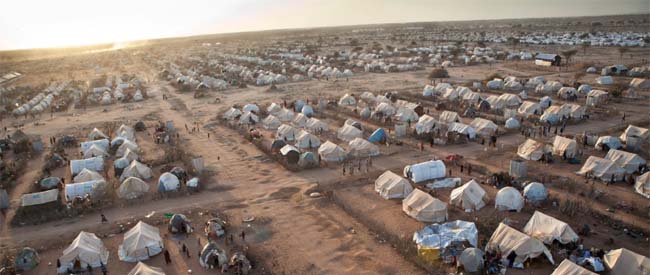
South Sudan president Salva Kiir has created for additional states, raising the number of the states in the world’s youngest nation to 32.

The order creating new states, which was announced over the state-owned media, saw Eastern Nile states divided into Northern Upper Nile state with Renk as its capital.

Others are Central Upper Nile state with Malakal as capital, Maiwut and Tumbura states.

Also split, according to the decree, was Latjor into Maiwut state with Maiwut as its capital.

The state comprises of Koma, Longuchuk, and Maiwut counties. It further divided Gbudwe state into Tumbura state with Tumbura as its capital. It comprises of Tumbura and Nagero counties.

No reasons were given for president Kiir’s decision to create the new states.

Stories Continues after ad
Burundi orders troop withdrawal from Somalia

ANNOUNCED AMISOM WITHDRAWAL PLANS: Burundi Vice President Gaston Sindimwo

Burundi has today begun the process of withdrawing its troops from the African Union Mission in Somalia (AMISOM) due to a dispute with the EU over the payment of wages.

AMISOM salaries are paid by the EU but have not been received in Bujumbura for months as European diplomats seek to avoid sending money directly to a government against which the bloc imposed sanctions in response to a nearly two-year-long political crisis.

The EU wants to pay the salaries, worth 5 million euros ($5.3 million) per month, directly to the troops. But with no agreement yet made President Pierre Nkurunziza has instructed his foreign and defence ministers to begin the process of withdrawing Burundi’s 5,400 soldiers, roughly one quarter of the AMISOM total.

The EU’s decision to suspend payment of Burundian soldiers’ salaries via Bujumbura is part of efforts to increase pressure on the government. But if the withdrawal goes ahead it could seriously weaken the ability of AMISOM to fight the Shabaab, an al Qaeda-linked jihadist group committed to overthrowing Somalia’s internationally-backed government.

“We have decided to begin the process, as we have long promised, because our troops engaged with AMISOM cannot continue to work without being paid,” said first vice-president Gaston Sindimwo. Burundi’s government threatened the withdrawal of its troops last month.

“We would like to continue supporting and securing Somalia, but we are obliged to put the withdrawal mechanisms in place,” Sindimwo said, adding that Burundian soldiers have not been paid for 12 months. Burundi has been in the throes of a serious, sometimes deadly political crisis since April 2015 when Nkurunziza announced his intention to run for a third term which opponents said was unconstitutional. He went on to win an election in July that was boycotted by the opposition and criticised by outside observers.

Violence in Burundi has so far killed at least 500 people and driven more than 300,000 to leave the country.

In March, the European Union — Burundi’s largest donor — suspended direct aid to the regime. The African Union, which is due to hold its next summit in Addis Ababa at the end of January, in November condemned the EU decision to suspend payment of Burundian soldiers’ wages, warning of a potentially negative impact on the security situation in Somalia.

Stories Continues after ad
Bebe Cool sets ‘tough’ conditions for Dizzy Nut’s return to Gagamel

FORGIVEN: Dizzy Nuts has returned to Gagamel Crew after his boss Bebe Cool forgave him

Bebe Cool, real names Moses Ssali, has finally forgiven former Gagamel member Dizzy Nuts and returned him to the crew, with a strong warning to the latter to quit ‘weed’.

Dizzy Nuts was once one of the biggest musicians from Gagamel following his hit ‘Fire Burn Dem’ with boss Bebe Cool but quit around 2007. However, he has been struggling make a hit since then, but now Bebe Cool has come in to his rescue, albeit with conditions.

“I believe he has now learnt a lesson…. You know sometimes people think things are that easy. It’s only after giving it a try that you get to know that they are not as easy as you thought,” Bebe Cool said during his performance at Pool Nest bar in Kireka where Gagamel band was performing.

Bebe Cool added: “Well, I forgave him and the good thing he still has his voice. My only advice to him was to quit weed. As long as he quits weed, I’ll have no problem with him.”


Stories Continues after ad

Singer Denis Rackla buried

RIP! A photograph of the late Denis Mpiima aka Denis Rackla is placed on top of the coffin containigng his remains.

Celebrated musician Denis Mpiima aka Denis Rackla was buried yesterday in Masooli along Gayaza Road.

Rackla died on Friday following a fatal accident that occurred at Kayonza as he was heading to his farm in Kayunga. He was with his wife and mother in the car at the time of the accident.

There were efforts to get him to Mulago hospital for treatment but unfortunately he didn’t make it as he died the way.

Hundreds turned up for the burial of Denis Mpiima aka Denis Rackla

Hundreds of relatives, fans and his colleagues in the music industry turned up for Rackla’s burial, among them musicians Irene Namubiru, Aziz Azion and Halimah Namakula.

Halimah described the late as a jolly and talented person whose gift was going to be greatly missed. Rackla, popularly known for his hit ‘Tugenda Kusula Mu Ngatto’ was a good friend of Halima and the two had worked on a couple of songs together among which include ‘Kibaduguda’.

He also wrote many songs like Kabiite for Desire Luzinda and a host of others for musicians including Juliana Kanyomoozi, Iryn Namubiru, Desire Luzinda, Lyani Nakaweesi and Abawala ba City Rock Entertainment.

Surprsingly, most of these artistes didn’t show up at the burial.

RIP Rackla.


Stories Continues after ad

Oil cash bonanza: Parliament to resume business tomorrow

ISSUED RELEASE: The Clerk to Parliament Jane Kibirige

All Parliament committee activities will resume business tomorrow after the Speaker Rebecca Kadaga adjourned parliamentary proceedings sine die on January 10.

According to a January 16 release signed by the Clerk of Parliament Jane Kibirige, the plenary sittings will also resume on Wednesday, January 18.

The adjournment followed a public spat between Kadaga and constitutional court Judge Steven Kavuma, after the latter issued an injunction, ordering Parliament not to debate the sharing out of Shs6 billion among 43 senior government officers, a matter that has since caused a public outcry given that some key services in the country are wanting.

In the ensuing saga Kadaga, who cited infringement on the ‘seperation of powers’ of the three arms of government, called Kavuma’s order ‘stupid’, and ordered the deliverer, Deputy Attorney Attorney General Mwesigwa Rukutana, to return it to the judge and have it vacated, and in the process the Speaker vowed to suspend parliamentary proceedings till her order was adhered to.

The money in question, now dubbed the ‘presidential handshake’ or ‘oil cash bonanza’, is part of the US$434 million ‘saved’ following the conclusion of litigation involving the Uganda government and two oil prospecting companies, Heritage Oil and Gas and Tullow Oil.

The court had been petitioned by Eric Sabiiti, a lawyer working with the Electoral Commission, who has since withdrawn this petition and was later also subjected to disciplinary action by his employer, the Electoral Commission.

By press time it was not possible to establish whether Justice Kavuma had vacated his order, or whether Kadaga will stick to her guns and have the debate on the oil cash bonanza.


Stories Continues after ad

Queen of Katwe’s Madina Nalwanga to get Hipipo Award

'QUEEN OF KATWE': Ugandan Actress Madina Nalwanga

Actress Madina Nalwanga is to be awarded at the upcoming Hipipo Awards.

We have exclusively learnt that Madina will be awarded with the “Entertainment Showpiece Act of 2016” award in recognition and celebration of her role in  ‘Queen of Katwe’ a 2016, American biographical sports drama film directed by Mira Nair and written by William Wheeler. Based on Ugandan chess prodigy Phina Mutesi’s life story, the film also features Nigerian actor David Oyelowo and Oscar-award winning Kenyan actress Lupita Nyong’o.

According to the organisers of the Hipipo awards, ‘Queen of Katwe’ story telling would have fallen short without a befitting actress like Madinah.

“She was superb for a debutant resulting into numerous commendations from movie reviews across the world for Madina Nalwanga the true star of the movie. The movie also shone a spotlight on the talent that lies untapped. The movie also served as a lesson for Ugandan Film makers,” noted Innocent Kawooya, CEO HiPipo awards.

He further added that: “Madina Nalwanga is a talented young dancer that has turned celebrated Hollywood superstar in her debut act. Courtesy of this accomplishment, the 5th prestigious HiPipo Music Awards will celebrate Madina Nalwanga with The Entertainment Showpiece Act of 2016.”

The Entertainment Showpiece Act is an award to an entertainment act that attracts critical attention and admiration and is an outstanding performance in the entertainment industry during the year. The award is open for performing arts industry works and personalities including for Music, Dance, Drama, Comedy and Film.

The prestigious HiPipo Music Awards that occurs yearly since 2012 is an annual extravaganza organized by HiPipo, to celebrate, promote and recognize music excellence in Uganda, East Africa and the whole of Africa.

HiPipo and her partners will present the 5th prestigious HiPipo Music Awards (#HMA2017) winners on Saturday, February 4, 2017 at Kampala Serena Hotel.

A total of 35 categories for nominees were earlier released including special categories namely; Quinquennial Africa Music Vanguard Award (2012/2016), Music Icon of the Decade (Uganda: 2006-2016), HiPipo Video Trailblazer Award and Lifetime Achievement Award. The other categories include East Africa Best Video, East Africa Super Hit, Song of the Year from Kenya, Tanzania, Rwanda and South Sudan.

The awards event will be graced with star studded epic performances from Ziza Bafana, Sheebah Karungi, Bebe Cool, Maureen Nantume and Ziwuuna band (led by Sammy Kasule and Frank Mbalire) among others. The Co-Host of the night will be Douglas Lwanga, the CEO Brand Purple and Wesley King (The King of Radio) who also doubles as the resident HiPipo events host since 2014.

The prestigious HiPipo Music Awards 2017 tickets will be sold exclusively through PayWay. To book a ticket, visit any PayWay location and purchase one, keep your ticket safe and present it for scanning by PayWay team at the entrance on 4th February 2017. Find PayWay points at all Total and Shell petrol stations, Mogas, Major supermarkets, Shops, Shopping malls and wherever you see the PayWay logo.


Stories Continues after ad

Museveni’s keynote address at The France-Africa Summit on “Partnership, Peace and Emergency” in Bamako, Mali


Your Excellency Ibrahim Boubacar Keita, President of Mali;


Your Excellency Francois Hollande, President of France;


Your Excellencies the visiting Heads of State;


Distinguished Guests;


Ladies and Gentlemen,


I greet you.

I want to take this singular opportunity to thank Their Excellencies President Keita and Hollande for inviting me to talk about a subject, I am familiar with, especially here in Africa regarding “Partnership, Peace and Emergency”

We are here to discuss mainly the security situation in Africa.  Up to 1990, the insecurity in Africa was, in part, being caused by colonialism.  When the Organization of the African Unity (OAU) was founded in 1963, only 36 countries attended the founding  conference.

The rest of the present 54 countries were still under colonialism.  That OAU Conference resolved, among other decisions, to liberate the whole continent, by force if necessary.  Supported by some few African countries, the socialist countries and some progressive countries and forces in the West, the African Liberation Movements, by 1974, a mere 11 years after the 1963 Addis Ababa Conference, were able to inflict defeat on the Portuguese Empire in Africa, leading to the Independence of Mozambique, Angola and Guinea Bissau.  By 1994, the whole of Africa had been liberated.

Indeed, Southern Africa, which was the last to be liberated is  now the most peaceful except for some isolated remnants of actions such as those of Renamo in Mozambique.

In other parts of the continent, however, there is quite alot of insecurity.  I do not have to enumerate the areas.  Many peace conferences are held to address these conflicts, including this one in Bamako.  I, however, always feel concerned because these conferences tend to address the consequences of these conflicts rather than the causes.  They address wars, coup d’états, election results disagreements, sometimes total breakdowns of state structures, etc

The question, however, is: “What is the cause of these endless conflicts and upheavals?”  Our observation of the last 55 years, starting with the Congo crisis of 1960 but without forgetting the earlier problems, is that the main problem in Africa is ideological.  The political elite, many of them acting on behalf of foreign interests, have failed to determine what is more important: interest or identity.  What is more important ─ identity of groups or interests of those particular groups?  The correct answer is that interests are always more important than identity. However, sometimes, identity is also important ─ not to the exclusion of interests but important enough to become a main problem.  When the Whites in South Africa said that Black people could not vote and, along with dogs, could not enter certain hotels, then identity had become a major problem.  Our brother country, the Sudan (the old Sudan), faced the issue of identity.  Was it Arab or was it African?  Was it Islamic or Christian?  That question, among others, was at the root of the civil war that broke out immediately after Independence.

Our brother peoples of the Sudan have been trying to deal with that issue and the efforts are going on.  Somebody seeking to eclipse or obliterate the identity of any of our African peoples is to commit a crime against humanity. In Uganda’s case, we had a lot of turmoil and lost 800,000 people killed extra-judicially on account of those ideological mistakes.   The manipulation was to create conflicts among the tribes and the religious denominations: Baganda vs Banyoro, Catholics vs Protestants, Christians vs Moslems etc.

Therefore, in the cases where our people are persecuted for their identity by chauvinists of any description (religious, racial or tribal sectarianism and chauvinism), we must take a principled position and oppose the mistake makers.

Nevertheless, much of the chaos in Africa and, indeed, in other parts of the world, is not caused by the legitimate struggle for defending identity threatened by chauvinism, but, rather, by opportunists manipulating identity and totally forgetting about the peoples interests. What are the legitimate interests of the people?  The major interests are: prosperity and security.  Prosperity involves dealing with the 10 strategic bottlenecks we have identified in Uganda.  These are:


(i)    Ideological disorientation;

(ii)          A weak State, especially the Army, that needs strengthening;

(iii)  Under-developed infrastructure (the railways, the roads, the electricity, the telephones, piped water, etc.);

(iv)   The underdevelopment of the human resource (lack of education and poor health for the population);

(v)    Interfering with the private sector (either by policy or by corruption);

(vi)   A fragmented African market on account of colonialism;

(vii) Exporting unprocessed raw materials and, therefore, getting little money and losing jobs; this is caused by lack of industrialization;

(viii) The underdevelopment of the services sector (hotels, banking, transport, insurance, etc.);

(ix)   The underdevelopment of agriculture;

(x)    The attack on democracy.

As you can see, the 10 strategic bottlenecks include the pseudo-ideology of sectarianism as bottleneck number one described as “ideological disorientation”. Except where identity is threatened by chauvinism, emphasizing identity or trying to manipulate that issue for politics and popular support, is a false step.  It forgets about the real interests of the people.   I am a cattle keeper from the savannah part of the Great Lakes region of Africa. First of all, within the savannah areas, there were job specialization castes of cultivators, cattle-keepers, blacksmiths (Abaheesi), textiles people (Abakomagyi), ceramics people (Abanogoozi), etc. etc.  These groups, invariably and without exception, depend on each other.  Cattle-keepers buy crops, beverages, alcohol etc, from the cultivators.  Cultivators, get ghee, milk, meat, leather (skins and hides), etc., from the cattle-keepers.  Especially in the past, with a low-level of technology, to keep cattle and seriously grow crops at the same time, was very difficult.  Therefore, specialization and symbiosis was correct and efficient in the circumstances.  All the groups would buy iron products from the Baheesi (blacksmiths), pottery items from the Banogoozi (ceramics people), textiles from the Bakomagyi (bark cloth makers).  The bark cloth were called embugu or ebitooma.  This barter trade was called okuchurika.

The exchange of goods and services among the people of the savannah notwithstanding, the savannah people, additionally, in order to improve their lives, had to exchange goods and services with the peoples of the forest (present day Congo), the peoples of the mountains (Rwenzori, Elgon) and the Kigyezi Highlands) and the peoples of the Indian Ocean Coast (Zanzibar, Tanganyika, present day Tanzania).  Out of the forest, the savannah people were getting copper, Ivory, giraffe hair products (amooshe) and, sometimes, iron products while from the coast we were getting textiles, guns and gun-powder, glass beads (enkwaanzi) from Mesopotamia and cowries-shells (ensiimbi) that we were using as money.  Up to today, money (modern paper money) is called ensiimbi (cowries-shells).

Therefore, since time immemorial, the peoples of the Great Lakes, the Congo forest, the mountains of Central Africa and the Indian Ocean coast, were depending on one another.  It was the ego-centric chiefs that interfered with this inter-dependence by trying to maintain fiefdoms over their people and inflicting extortions on the very useful long distance travellers. It is these chiefs that weakened us from within and caused us to be colonized.  If the people of the Great Lakes had combined, we would have defeated any colonizer.

That was in the past.  Even at that time, the need for interdependence was clear. That logic was betrayed by the ego-centric chiefs that failed to unite our people and promoted fratricidal conflicts. Today, the logic is even clearer. With modern industrial and commercial production, you need big markets.  Being a cattle-keeper, I produce milk, beef and leather.  I also produce bananas, coffee, tea, cassava, fruits etc.  The people in my area do not buy my products because they produce the same products.

The complementarity among the people of my area in terms of the exchange of goods and services is very low because those most industrious people produce similar products. The saviors of the people of the savannah are, therefore, the people of Kampala and beyond (Kampala is in what would have been forest zone if it was not for human settlement).  It is those people of the cities of Uganda and the other parts of East Africa that buy products of my area.  It is them that are responsible for the prosperity of my area.  The people of Kampala are also benefitting from the savannah area. Many Kampala people are traders or manufacturers.  They sell their products to the people of the savannah.

The Kampala hotel owners accommodate hundreds of thousands of tourists destined for the National Parks in the savannah area.  The wider East Africa sells products to Uganda including the savannah area.  Kenya sells to Uganda goods and services worth US$ 600 million per annum.

The people of Uganda, the people of East Africa support one another’s prosperity.  On account of the people of Uganda, the people of East Africa and the people of the world buying my products, I am able to build a good house, to buy a car, to support my children’s education, etc., etc.

That is why my ideology is patriotism within Uganda (as opposed to sectarianism) and Pan-Africanism when it comes to Africa. A united East Africa enables us to negotiate better with the rest of the world. The unity of the people of Uganda, the unity of the people of East Africa, the unity of the people of Africa are instruments for our people’s prosperity.

Therefore, sectarian ideologies are inimical to the prosperity of the people of Africa.  They are pushed by parasites who manipulate identity for narrow personal interests, camouflaged as interests of the respective factions. It is a pseudo-ideology with no benefit for the people and with only destruction and regression.  Therefore, when somebody opportunistically highlights identity (religion, tribe, etc) instead of highlighting interest, he acts against our prosperity. That unprincipled highlighting of identity is a pseudo-diagnosis of societal problems.  Almost inevitably, it creates friction which results into conflict that scares away investments, diverts resources from infrastructure to security and, above all, leads to tension among the otherwise partners in prosperity creation, the buyers and the sellers of Africa.

The second legitimate strategic interest of the people of Africa is strategic security.  The 1.25 billion people of Africa, who will be 2.5 billion by 2050, should not be threatened by anybody either from within Africa or from outside. By dealing with sectarianism, we deal with internal war-causers using identity. We must, however, also deal with external aggressors of whatever type. Hence, African sovereignty must be protected from any external military and non-military interventions. You have all seen the chaos generated in Libya and the whole of the Sahel as a consequence of military action by foreigners against the express objection of the African Summit of Heads of State. Such a crime should never be tolerated again. Genuine African freedom fighters do not need external militaries to assert their rights against internal dictators. The African stand-by forces and the African Crisis Response Force (Acril) will provide the answer if there is any need for military intervention.

We stood against the external influences in Somalia by fighting the criminal Al-Shabaab. We must stand against all foreign intervention in Africa without the approval of appropriate and legitimate African bodies. In the Bible there is the concept of the Trinity: God the Father, God the Son and God the Holy Spirit.  The three combine to form one God although each one can also perform tasks independently like when Jesus came to die for us. Similarly, the Trinity of the national effort, the regional effort and the international effort, where there is genuine partnership like in Somalia, works well and can make impact. As our economies improve, we can rely more on the duolity of the national and the regional.  This does not preclude sovereign Governments having bilateral arrangements with non-African partners.

I salute France for providing financial and technical support to the African Union Mission for Somalia (AMISON) in Somalia which has enabled the African Union to continue getting rid of Al-Shabab and providing an enabling environment for a government to be put in place.

Combining ideology collaborative and the efforts at the national, regional and international levels, in the short-run, with genuine partnership, will bring good results. In the medium and long term, as our economies improve, the peace-making packaging should entail using the national level and the regional level.

Unilateral actions by the international forces without the permission of the African Union or a legitimate national force (an elected Government) is imperialistic and must be rejected completely.  It should never happen again.  That is why I salute the recent stand in the Security Council when the African members ─ Senegal, Angola and Egypt refused to vote for the resolution that aimed at imposing sanctions on South Sudan. The Security Council and the UN in general are becoming famous in Africa for being terrorism conservators and vacuum creators.  In Congo (DRC), the UN has been promoting dictatorship (Mobutu vs Lumumba) and conserving terrorism for the last 56 years.

Even today, there are 22,000 UN troops in the Congo but in Eastern Congo, poor Congolese are being slaughtered almost every week.  In Libya and beyond, the UN has created dangerous vacuums.

You generally have four types of situations in Africa.  There are countries where a vacuum of political and State actors has been created by either internal actors or foreign ones. In such countries, there are no pillars of State (Army, Police, Administration, Judiciary) or political parties with a national appeal. In such situations, you get political fragmentations as had happened in Somalia or the situation is held together by external forces without capable internal pillars of control.  It is a type of ideological and political leukemia where the body can no longer manufacture its own blood and must depend on endless blood transfusions from outside.  The unfortunate citizens who find themselves in such situations need serious ideological therapy.

The second scenario is where the politics has taken an unprincipled sectarian character but it is not yet a vacuum because there are capable factions that are still in conflict. Our task here should be to encourage these factions to work together and not aim at creating a vacuum by aiming at eliminating the exiting factions.  Targeting those factions will negatively promote that country to category I where a vacuum has been created.

Scenario III is where the sectarian factions reach agreement and start working together. These efforts should be welcome and not impeded in any way or to be undermined.

Scenario IV is when the ideological therapy has been applied and the population has moved away from sectarianism (either wholly or partially) and to behaving in a political way rather than being manipulated along identity lines. They vote guided by need for employment, service delivery, wealth creation issues etc. etc. This is the healthy situation that we should ultimately aim at. Therefore, the uninformed and highhanded ways like some elements were utilizing in the recent Security Council debate on South Sudan in spite of our advice should be completely rejected.  This is also another problem. Why should some players ignore our advice when we, obviously, know some of those situations better?

Where political fragmentation has already taken place, ideological therapy can be applied and reverse the situation. That is what saved Uganda.  Starting with student groups in the mid-1960s, we were able to defeat the sectarian pushers sand reverse the decline of our country. A country cannot work for unity when there are no political groups with national ideological and political ideas.  These national ideological and political ideas like the ones I have pointed out above, will generate a followership. The followership will help in forming national political parties and, eventually, other state organs like the Army.  It is not correct to start fires guided by wrong ideas and then work to put out the fires.  That way Africa will continue to be a continent of endless fire brigading.


I thank you.


Stories Continues after ad

EALA to deliberate on EAC senior staff retirement benefits

FLASHBACK: President Museveni addresses a previous EALA session in Kampala. On his left is EALA Speaker Dan Fred Kidega

The East African Legislative Assembly (EALA) is holding two-week session Uganda beginning today to Thursday, January 26, 2017 to deliberate on among others, the retirement benefits of senior staff of the East African Community (EAC).

According to a release, EALA will debate the EAC Retirement Benefits for Specified Heads of Organs Bill, 2016, which makes provision for retirement benefits in respect of the former President(s) of the East African Court of Justice, former Speaker(s) of the EALA and former Secretary(ies) General of the EAC–specified leaders who have honourably served and completed their terms of service in the Community.

The Assembly is to be presided over by the Speaker Rt. Hon Daniel F. Kidega, and is also expected to be addressed by President Yoweri Museveni, at a Special Sitting on January 17.

Meanwhile, the key Bill on the agenda during the period is that on EAC Gender Equality and Development 2016 that makes provision for gender equality, protection and development in the Community.

The Bill was introduced during a sitting held in August 2016 in Arusha, Tanzania. It sailed through the First Reading and was committed for public participation thereafter.

Three other Bills; the Administration of East African Court of Justice Bill, 2016, the EAC Cross-Border Trade in Services Bill, 2016 and the EAC Prohibition of Female Genital Mutilation Bill, 2016 are also expected to be on the cards.

The EAC Prohibition of Female Genital Mutilation Bill, 2016, originally moved by Hon Dora Byamukama, is seen as critical in outlawing the cultural practice.

Other matters also to be deliberated on during the two-week period are reports from various Committees of the House, including that of the Committee on Communication, Trade and Investment on the status of the Railway Infrastructure Development in the EAC and that of the Accounts Committee on the Audit Report.  The Report of the Committee on Legal Rules and Privileges on Procurement and that of the Regional Affairs and Conflict Resolution with respect to the issues raised under the African Peace and Security Architecture Project (APSA) of the Community.

The Assembly is also expected to pose pertinent questions on matters of the integration process to the EAC Council of Ministers.

The EALA Sittings are held in rotational principle in line with Article 55 of the Treaty for the Establishment of the EAC.  Article 55 (1) states that the Meetings of the Assembly shall be held at times and places that the Assembly may appoint.  The Assembly however meets at least once a year in Arusha, Tanzania as it determines.

The tenure of the 3rd Assembly is expected to end in June 2017.


Stories Continues after ad