Stanbic Bank
Stanbic Bank
18.3 C
Kampala
Stanbic Bank
Stanbic Bank
Home Blog Page 196

Uganda, UAE sign agreement to revitalize UTCL

Uganda Telecommunications Corporation Limited (UTCL) has received a new lease of life following the signing of an agreement between the Government of Uganda and Rowad Capital Commercial (RCC), a company based in Dubai, United Arab Emirates (UAE).

The event was witnessed by President Yoweri Kaguta Museveni at State House, Entebbe.

Following the agreement, the government is to immediately partner with RCC to revamp and rejuvenate UTCL to make it vibrant, capable of offering quality services to the people of Uganda and beyond.

The agreement was signed on behalf of the government of Uganda by the Minister of ICT and National Guidance, Dr. Chris Baryomunsi.

In his remarks, President Museveni said the government aims at creating jobs for Ugandans, that’s why it partnered with RCC.

“Our main interest is to get investors to create wealth and jobs,” he said.

On his part, Dr. Baryomunsi lauded President Museveni for supporting the revival of UTCL.

“I would like to express my appreciation to our President Yoweri Museveni who has worked hard to see that we bring new life to UTCL because he has passion for the telecommunication sector like many other sectors and has been personally involved in ensuring that this partnership matures to reality,” the Minister noted.

Dr. Baryomunsi also strongly pledged to accord RCC the necessary support as a reliable partner to ensure that UTCL grows into a strong and viable telecommunication entity.

The CEO and Managing Director of RCC, Mr. Chaher Al Taki was extremely delighted to finally see the project come to fruition and pledged to open up other new projects in Uganda.

“I am very happy to be here at the State House to meet His Excellency President Museveni and the government officials who have come to bless the signing of the agreement.

Uganda is our second home, and we can invest in more projects here as we had promised,” he said.

The Chairman of RCC, Mr. Kantu Moses thanked President Museveni and the First Lady and Minister of Education and Sports, Maama Janet Museveni for their unwavering support.

He also thanked the Minister of State for Investment and Privatisation, Hon. Evelyn Anite and all stakeholders for their support and guidance in ensuring the success of the project.

The event was also attended by the Minister of State for Finance, Planning and Economic Development (General Duties), Hon. Henry Musasizi.


Stories Continues after ad

Judiciary embraces mediation to address case backlog and enhance justice delivery

In a continued effort to tackle Uganda’s longstanding judicial backlog and high caseload, the Judiciary has underscored the importance of Alternative Dispute Resolution (ADR) mechanisms, particularly mediation.
According to Chief Registrar Sarah Langa Siu, mediation is vital to expedite case resolution and make justice accessible, despite the judiciary facing a significant strain with over 163,000 pending cases and a backlog of more than 40,000 as of September 2024. This overwhelming caseload is managed by just 655 judicial officers, highlighting the urgency of ADR adoption.
“Without ADR mechanisms such as mediation, it is impossible for the Judiciary to significantly and expeditiously dispose of these pending cases and reduce backlog using the usual adversarial methods of litigation,” stated Langa, emphasizing the transformative role of mediation.
Despite its proven benefits, mediation in Uganda has faced several challenges, including a lack of standardization, inadequate training for mediators, credibility concerns, and remuneration issues. The Judiciary is addressing these challenges through a comprehensive training program designed to enhance mediator skills and ensure consistent practice across courts.
“This training comes in to harmonise and promote consistency on how to conduct mediation. The programme is rich with topics and facilitators carefully selected to sharpen you as mediators,” Langa remarked, urging participants to actively engage.
To boost mediator credibility, the Judiciary has started accrediting respected figures, such as retired judicial officers and senior lawyers, to take on mediation roles, ensuring that litigants can trust their mediators.
“Our confidence is that persons of your calibre are respected in this society, and once you are accredited, the litigants will trust you with their matters,” Langa affirmed.
The issue of mediator remuneration, previously a point of contention, has been addressed through Office Instruction No. 1/2024 issued by Chief Justice, ensuring standardized and reliable payment structures for mediators.

Stories Continues after ad

Vivo Energy Uganda Launches ‘Simbula ne Rimula R3X’ Campaign with New Shell Rimula Lubricant

Vivo Energy Uganda has introduced its latest campaign, ‘Simbula ne Rimula R3X,’ alongside the launch of Shell Rimula R3X 20W-50 API CH-4, a lubricant tailored for heavy-duty diesel engines in vehicles such as taxis, lorries, trucks, and buses. The product offers triple-action protection against heat, engine wear, and deposits, meeting new Uganda National Bureau of Standards (UNBS) recommendations for optimal performance.

The campaign encourages trials of the new lubricant and rewards over 7,000 commercial drivers with prizes worth 200 million Uganda shillings. By purchasing a 5-litre pack of Shell Rimula R3X 20W-50 and entering a unique code, drivers stand a chance to win prizes, including two brand-new canter trucks and weekly full tanks of fuel.

Rebecca Nassiwa, Lubricants Brand Manager at Vivo Energy Uganda, emphasized the campaign’s commitment to quality, while Francis Kayoki, Lubricants Manager, highlighted the benefits of transitioning to Shell Rimula R3X for older engines. Joanita Menya, Managing Director, expressed excitement about the impact of Rimula R3X on business efficiency for commercial drivers.

For more details, visit any Shell station or authorised distributor nationwide.

Stories Continues after ad

Over 1, 000 students graduate at Uganda Christian University  

Uganda Christian University graduands ) on the 25th Graduation Ceremony on October 25, 2024.

A total of 1,189 students have graduated at Uganda Christian University (UCU) on the 25th Graduation Ceremony at the main campus in Mukono, Kampala.

Among the graduates, 673 (57%) are female and 516 (43%) are male. Of these, 60 students achieved first-class honors, with 33 being female and 27 male.

This year’s graduation ceremony has seen UCU introduce new graduation gowns, abandoning the traditional black ones. The introduction of the blue gowns is part of the university’s transformation initiative, aimed at rebranding and enhancing the student experience.

Speaking during the gown unveiling ceremony, Prof. John Kitayiimbwa explained that the black gowns have been over used by many institutions, including those offering short courses and even kindergarten schools.

According to him, in Uganda the graduation gown has become the most abused symbol of education, noting that one cannot differentiate between a student who has completed university education from one who has received a three-months certificate since they all put on the same gowns.

“We have chosen to be different, thinking about our brand and protecting it. We have chosen to be bold and unique,” he said.

The new gowns feature a primary blue color, complemented by variations that represent different faculties with distinct designs that differentiate between diplomas, degrees, master’s degrees, and PhDs.

The Vice-Chancellor, Prof. Aaron Mushengyezi, congratulated the graduates and urged them to pursue greater milestones beyond their degrees.

 “Congratulations to all our graduating students! UCU has equipped you to be problem solvers, not part of the problem. Go forth, pursue greater milestones, and trust that God will make your dreams a reality,” he said.

He advised the graduates that while the world of work presents many challenges, they are being sent out as leaders, change agents, and ambassadors—vessels through which God will transform communities.

Prof. Mushengyezi announced the appointment of new members to the University Governing Council following the retirement of five members who had completed their full terms.

He also highlighted the university’s ongoing efforts to achieve a world-class status by launching a seven-year campus transformation initiative, the effects of which are already visible on campus.

Some of the ongoing campus transformation initiatives include upgrading and paving Bishop Orombi Road, renovating old buildings, paving parking lots and walkways, and installing multiple outdoor and indoor directional signs, starting with the main campus to ensure convenient navigation.

“Our vision is to transform UCU into one of the most beautiful, clean, orderly, green, and modern campuses in the region, providing a conducive environment for both learners and staff,” he stated.

Prof. Mushengyezi commended the friends of UCU from USA and other countries for supporting students in need and helping them achieve their dreams. He noted that through the UCU Fundraising Initiative, UGX 174,613,621 has been raised, benefiting over 107 students.

He also expressed gratitude towards the UCU faculty, college, and management teams for their efforts in enhancing UCU’s global reputation by winning several research grants, publishing their findings, and building partnerships with reputable institutions.

Prof. Alfred Olwa, the Chairperson University Council implored the graduates to go forth, not just as graduates, but as ambassadors of Christ’s love in a broken world.

“May you bring light where there is darkness, hope where there is despair, and love where there is hate. And may you always give glory to the one who has brought you this far,” Prof. Olwa said.

The Chancellor of UCU, the Most Rev. Dr. Stephen Kaziimba Mugalu, encouraged the graduates to aspire to be servant leaders, emphasizing the importance of humility and serving others.

“Remain humble despite your academic excellence, true power lies in serving others. Be diligent in your work and strive to be exemplary ambassadors of this university,” Dr. Kaziimba said.

He also appealed to the government to fulfill the President’s promise to tarmac Bishop Tucker Road, noting its importance for improved access and the university’s growth.

Among the graduates were three PhD recipients: Alfred Wonyaka (PhD in Theology), Annet Musiimenta (PhD in Education Administration and Management), and Ssebyanzi Bonaventure Wasswa (PhD in Education Administration and Management).

Stories Continues after ad

Joshua Baraka to captivate global audiences with the release of his latest single

Kampala-born singer-songwriter and producer Joshua Baraka, a rising Spotify RADAR Africa artist, is set to captivate global audiences with the release of his latest single ‘Lonely’ alongside an intimate documentary.

This upcoming phase marks a pivotal moment in Joshua’s career as he prepares to solidify his place on the international stage.

The documentary offers a rare glimpse into Joshua’s journey, featuring moments with his family, a visit to the boxing gym that shaped his discipline, and the premiere of “Lonely,” his next big hit. It provides fans with a deeper understanding of his roots, artistic process, and future ambitions.

 “I’m really thankful to be part of the RADAR program this year. It’s been an opportunity for me to showcase my art and show people a bit of my world. It feels good to be recognised by a program that has birthed a lot of the artists I look up to. I hope this opens doors for other Ugandan artists like me.” Baraka said.

Joshua’s rise has been impressive. His debut EP, Growing Pains, saw collaborations with major names like Bien, King Promise, and Joeboy, while his breakthrough hit “NANA” has garnered over five million streams. His music has reached audiences across Nigeria, Kenya, Uganda, the United Kingdom, and the United States, with his tracks added to over 240,000 playlists on Spotify.

With ‘Lonely’, Joshua enters his next era, showcasing the unique sound and storytelling that have made him one of East Africa’s most exciting new artists.

Stories Continues after ad

Kyambogo University suspends guild elections amidst EC internal conflicts

Kyambogo University main building.

Kyambogo University has announced the suspension of the 2024/2025 Guild elections due to internal conflicts and unresolved issues within the electoral process.

The suspension was revealed in a letter issued by the Vice Chancellor, Prof. Eli Katunguka Rwakishaya, dated October 25, 2024, following a management meeting held on October 23.

In the letter addressed to all students, the Vice Chancellor explained that the decision to suspend the elections was based on several factors raised by the Dean of Students and the Chief Security Officer.

Prof. Katunguka stated that the Office of the Dean of Students had received petitions from candidates challenging the electoral process. However, “these petitions had not yet been addressed,” creating dissatisfaction among the candidates.

Katunguka said that there were serious internal conflicts within the Electoral Commission and that these conflicts led to the dismissal of “the Secretary to the Electoral Commission and one (1) Commissioner a few days to the general elections further complicating the electoral process.

Prof. Katunguka also highlighted the disqualification of three presidential candidates just three days before the elections, which resulted into legal challenges.

“Three (3) Presidential Candidates were disqualified three (3) days to the general elections,” the letter noted, which led the candidates to file a Miscellaneous Cause in the High Court.

Katunguka stressed that this legal action meant the university could not proceed with the elections as planned.

The Electoral Commission faced further administrative shortcomings, particularly with the failure to submit required documents in a timely manner.

“There was a delay in the submission of information relating to details of aspiring candidates to facilitate the printing of the ballot papers,” Katunguka stated in the letter.

Therefore, the university management decided to suspend the 2024/2025 Guild elections.

The Vice Chancellor announced that an Ad Hoc Committee would be established to “investigate and review the conduct of the 2024/2025 Guild electoral process.”

The University will institute an Interim Caretaker Government, as per Article 7, Clause 4 of the Guild Constitution to ensure the smooth running of Guild activities during the suspension.

Despite the suspension of the elections, the Vice Chancellor assured students that the academic calendar remains unaffected.

“The Academic Calendar remains the same and examinations will commence as scheduled,” Prof. Katunguka wrote, urging students to continue preparing for their upcoming exams.

Katunguka urged the students to remain calm during this period. “I implore you to remain calm as Management finds a solution for your governance organ,” he wrote.

Stories Continues after ad

Court sentences former LRA commander Thomas Kwoyelo to 40 years in prison

Kwoyelo in the dock.

The International Crimes Division sitting in Gulu has sentenced former Lord’s Resistance Army (LRA) Commander, Thomas Kwoyelo, to 40 years in jail.

The court found Kwoyelo guilty and convicted him of 44 crimes against humanity. Kwoyelo was grappling with 78 of the 93 counts of murder, aggravated robbery, extensive destruction of property, causing serious injury to body or health, and inhumane treatment, rape, and torture, among others, that he is alleged to have committed against the civilian population of northern Uganda, southern Sudan, and the northeastern regions of the Democratic Republic of the Congo (DRC).

Appearing before a panel of judges led by Andrew Bashaija, Stephen Mubiru, Michael Elubu, and Duncan Gaswaga Kwoyelo was found guilty and convicted on charges of charges of murder, attempted murder, pillage, cruel treatment, inhuman acts, outrages, kidnapping, kidnapping with intent to murder, imprisonment, aggravated robbery, outrage, outrages upon personal dignity, enslavement, rape, torture, and violence to life.

In a ruling delivered by Justice Michael Elubu, court acquitted him of three charges of murder and dismissed 31 charges of murder, attempted murder, aggravated robbery, and pillage.

Kwoyelo’s trial resumed on April 17, 2023, at the International Crimes Division of the High Court (ICD) sitting at Gulu High Court in Gulu City, Northern Uganda; however, it stalled due to a lack of funds.

Having commenced the trial on September 24, 2018, the court had its first prosecution witnesses testify in March 2019, and since then, trial sessions have been held periodically between Kampala and Gulu.

Kwoyelo was abducted by the LRA on his way to school in 1987, remained in captivity, and later became a colonel. The worst attack of the paramilitary group that was under the leadership of Joseph Kony occurred in Haute-Hele Province (DRC) in December 2008, the so-called Christmas massacre, where over 200 people were killed and over 800 houses razed down.

The rebels split up into groups to attack the villages of Faradje, Batande, Duru, Bangadi, and Burgi. They waited until people had gathered for Christmas festivities, then surrounded and killed them with axes, machetes, and clubs.

In 2009, Kwoyelo was captured in the neighbouring DRC during a raid by regional forces.

In March 2009, Kwoyelo was injured during hostilities between the Ugandan army and the LRA in the DRC and brought into Uganda for medical treatment and subsequently into custody.

His trial, however, commenced in July 2011. Before ICD, a division of Uganda’s High Court. Constitutional Court resolved that the suspect’s trial should stop as it found grounds for the failure by the DPP and the Amnesty Commission to act on Kwoyelo’s application. In 2015, the Supreme Court decided that Kwoyelo’s trial should resume.

Stories Continues after ad

EU announces Shs673b to revamp Nalubaale power dam

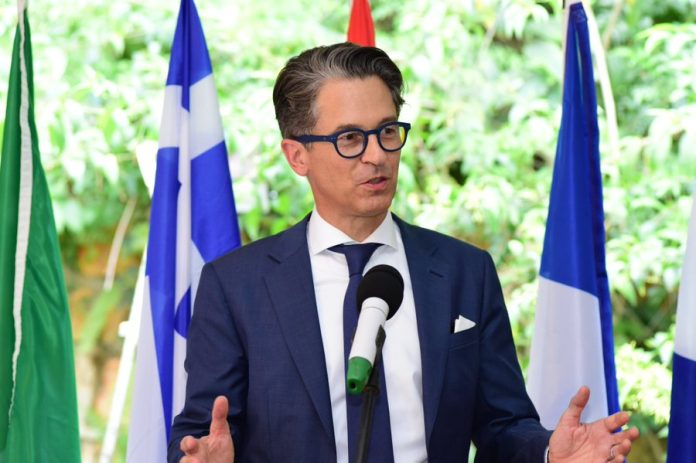
H.E. Jan Sadek, head of EU delegation to Uganda.

The European Union (EU) has announced 170 million euros (Shs673.2 billion) in financing towards the revamping of Nalubaale power dam.

The financing was announced by Ambassador Jan Sadek, the EU head of mission to Uganda.

According to Ambassador Sadek, out of the 170 million euros, 30 million euros (Shs118.8 billion) will be a grant, with the rest being a line of credit from the European Investment Bank and the French Development Agency.

“Nalubaale and Kiira power plants are critical infrastructure in Uganda’s energy sector. This support will help stabilise the national grid and ensure a reliable power supply,” he said.

Officials estimate that the dam will operate for another 30 years after operating for about 70 years.

Nalubaale Power Station, formerly known as Owen Falls Dam, is a hydroelectric power station across the White Nile near to its source at Lake Victoria in Jinja district.

It is the oldest hydropower station in Uganda, commissioned in 1954. Originally, Owen Falls Dam was designed to generate 150 megawatts. In the 1990s, the station was refurbished to repair the accumulated wear from a decade of civil disorder and hence increased its generation capacity to 180 megawatts.

Stories Continues after ad

Uganda Baati introduces regional trainings to equip fundis with latest market knowledge and trends in construction

Uganda Baati Limited, a trusted building solutions provider has set out on regional trainings, targeting fundis, with the aim to equip them with the current market trends and knowledge that will enable them offer value to their customers during construction.

These trainings, which target over 2,500 fundis across the country, are part of the company’s ongoing initiative to educate, support, and equip fundis with knowledge whilst offering customers tailored construction needs with the current market trends.

During the training session in Bulindo, Patrick Katende, the Head of Service Centers at Uganda Baati Limited commended the fundis for their dedication to ensuring high-quality service, emphasizing the importance of these sessions in equipping fundis with the necessary skills they need to offer customer satisfaction.

“Fundis interact directly with customers, helping them make decisions in selecting products to use during the construction phase. Sessions like these, bring them up to update the latest products, insights, knowledge and market trends enabling them to grow, succeed, and deliver exceptional service whilst developing the housing landscape in their different regions,” he said.

“During the training engagements, we focus on disseminating roofing solutions, and after-sales support processes. We also encourage the fundis to exchange insights about the challenges faced in the field and share feedback on customer preferences. This then enables us to curate building solutions skewed towards the customers’ needs,” Katende said.

“Previously my customers used to import roof sheets from South Africa for their houses. This caused a delay in my work. From the time I introduced them to quality products from Uganda Baati, and others made from Uganda, they have since switched with ease and my work is made easier and faster,” Daniel Serunkuma, a fundi based in Kira commented.

“With building projects continuing through the year-end, we understand the need to keep these professionals equipped and motivated. We place great trust in this network of professionals and recommend them with confidence whenever customers require expert assistance. So far we have conducted these trainings in Hoima, Fort Portal, Mbarara and other showrooms across Kampala. We are set to continue with additional engagements in other locations such as Gulu, Arua, and Masaka,” Katende remarked.

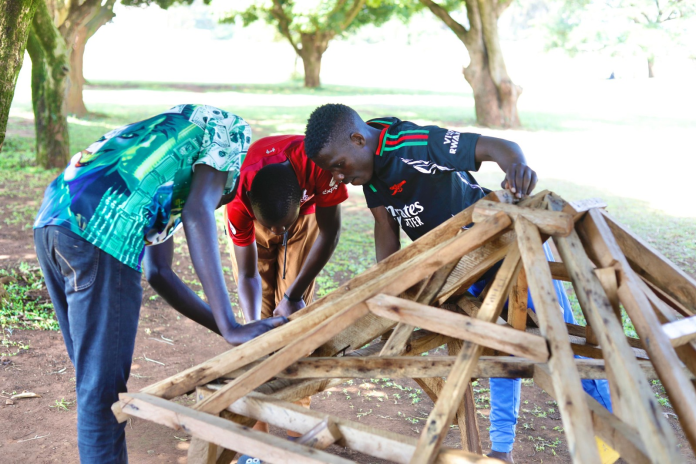
Uganda Baati under the Safal Uganda Baati Foundation also launched the second phase of its Economic Empowerment Skilling Program targeting out-of-school youth in Tororo District. The initiative aims to address pressing social issues, including high youth unemployment and teenage pregnancies, by equipping young people with practical, employable skills.

Following the outbreak of COVID-19, Tororo District, with its young population of nearly 373,317 individuals aged 15-30, continues to face significant challenges. Youth unemployment stands at an alarming 62%, and teenage pregnancies are 29.5%, higher than the national average of 25%.

The initiative, which began this month, will run for three months and reach over 260 young people aged 16-25. Through this program, participants will receive free access to employable skills, designed to not only provide immediate solutions to unemployment but also empower youth to take control of their economic futures.

George Arodi, the Business Head of Uganda Baati, emphasizes the broader mission behind the skilling program, “This program is not just about imparting technical skills, it’s about nurturing a generation of self-reliant young people who can contribute positively to society. We are providing the youth with tools to build their own futures, economically and socially.”

Participants will engage in four key training programs which include Backyard Gardening, Fundi Roofing,

Liquid Detergent Making, and Hairdressing, aligned with the Safal Uganda Baati Foundation’s development pillars. Alongside technical skills, the curriculum also integrates essential life skills such as financial literacy, sexual and reproductive health, branding, marketing, and business management.

“We believe that skilling young people holistically prepares them for the dynamic demands of today’s economy. Our goal is to give them not just the skills but the confidence to succeed,” adds Aroodi.

As Uganda Baati celebrates its 60th anniversary, initiatives like these highlight the company’s commitment to social responsibility and community empowerment, making a meaningful difference in the lives of Uganda’s youth.

Stories Continues after ad

Corruption, tax evasion named as biggest sources of illicit funds in Uganda

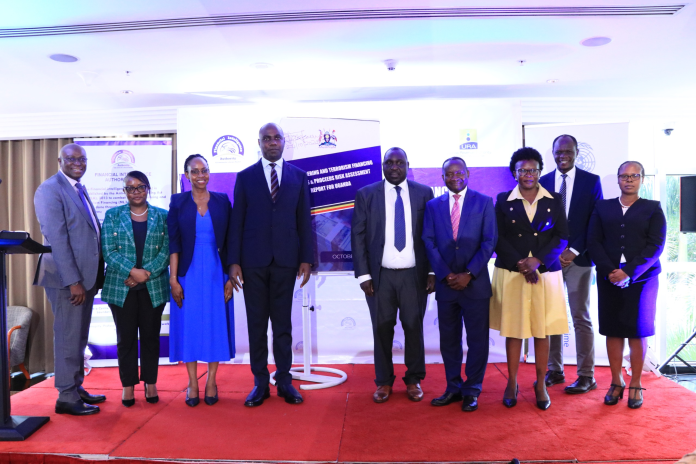
State Minister for Finance in charge of General Duties, Henry Musasizi,Executive Director of FIA, Were Wandera and other guests at Sheraton Hotel.

A new report by the Financial Intelligence Authority (FIA) has revealed that tax crimes are the second-largest source of illicit funds for money laundering in Uganda, second only to corruption.

The Tax Crimes and Proceeds Risk Assessment Report, which was released at Kampala Sheraton Hotel on Thursday, highlights serious risks, including smuggling, undervaluation of goods, false declarations, and non-filing of tax returns.

“These activities undermine our tax system and damage our economy. To address these issues, we must increase our capacity to investigate tax-related money laundering and work closely across agencies and borders,” the Executive Director of FIA, Were Wandera, said at the release.

“The findings provided in this report will help us develop better policies and enforcement strategies. They will also guide our risk-based approach to supervision, ensuring that resources are allocated where they are most needed, in line with international standards

Mr Wandera urged URA to build momentum in prosecuting tax crimes with Money Laundering added on the charge sheet as a separate offence.

Speaking at the launch of the report, Mr Henry Musasizi, the State Minister for Finance (General Duties), encouraged all agencies responsible for implementing the respective measures in the action plan of the report to do so within the agreed timelines.

“Let me remind you that tax crimes and money laundering techniques are changing as criminals employ new technology tools,” said the minister, adding that Uganda should stay up-to-date with technological developments that are leading to the emergence of new risks.

Stories Continues after ad