Stanbic Bank
Stanbic Bank
28.4 C
Kampala
Stanbic Bank
Stanbic Bank
Home Blog Page 1967

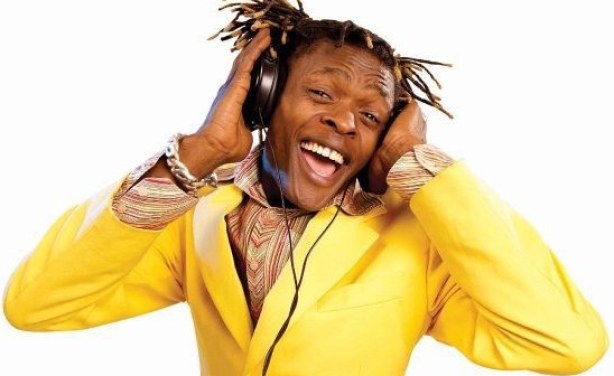
Jose Chameleon drops first video for 2017

Jose Chameleone has been working hard to build a massive profile in the East African nation but he’s really outdone himself this time.
He just dropped the music video for his brand new track “Sweet Banana” and he’s done nothing short of taking us to paradise on the track.

The song came out in December but it’s only in January that we’ve been treated to the video. Produced by popular Ugandan audio music producer, Producer Kays, it is already a huge club banger, receiving massive airplay on radio stations as well as night clubs and bars.

Watch Video 

Stories Continues after ad

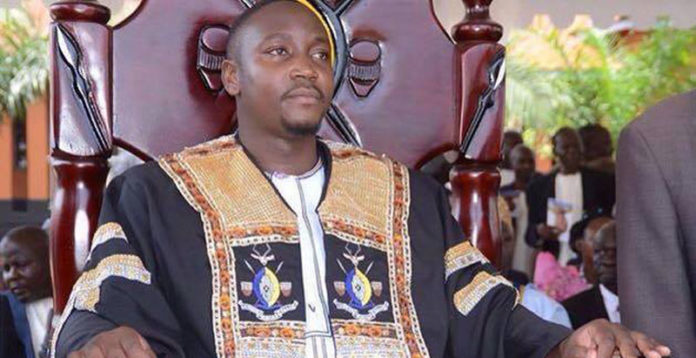
Busoga elders bicker over appointment of Kyabazinga as ambassador

Former Presidential candidate Maureen Kyalya threatens him with Court action if he accepts appointment

President Yoweri Museveni in a new reshuffle of ambassadors appointed the King of Busoga, William Wilberforce Gabula as his ambassador Special Duties.

However, the appointment isn’t going down well with some of the elders of Busoga. The only candidate in last year’s presidential race, Maureen Kyalya Waluube has threatened to drag the King to court if he takes up the appointment.

Kyalya says that Kyabazingaship is a job and Gabula has a five year contract with the people of Busoga.

“I am leading the legal team to challenge Gabula in Court for frustrating our contract after frustrating our sitting Kyabazinga and overthrowing him. You can’t serve two masters at a go. Gabula must resign before he becomes Museveni’s watchdog. Gabula must resign if he takes the appointment,” Kyalya says in a statement posted Friday on social media.

Adding “If he accepts he must resign. I too will undress as Kadaga threatened us to enthrone him with force. So many friends I worked with died to clear his way. Their deaths cannot be in vain. I will die failing but trying to restore the pride and status of Busoga. His job is lower than the job I had so what job should I do, clean toilets at Rwakitura? Give me a break”.

Former Makerere University lecturer Charles Fred Oweyegha Afunaduula, one of the elders in Busoga is of the same view like Kyalya.

“Is the demeaning of the Basoga continuing? Obote ensured the Kyabazinga of Busoga, Sir William Wilberforce Kadhumbula Gabula Nadiope, was not only the Vice President of his Party, Uganda Peoples’ Congress, but also, by compromise, Vice President of Uganda, as he made sure the Kabaka of Buganda,  Edward Mutesa, became the President of Uganda, thereby involving the two in politics at the centre. So when there was political disharmony at the centre, the Kabaka of Buganda found himself in exile in England while the Kyabazinga of Busoga found himself in prison.”

Mr Afunaduula says that by being involved in the murky politics at the centre the two men were reduced to nothingness as their areas of influence and glory disintegrated when the UPC government endorsed the removal of Kingdoms. He says now President Museveni has decided to appoint the Kyabazinga of Busoga, Gabula Nadiope Ambassador with Special Duties in his Office, President’s Office, it is another demeaning act because Kyabazinga whom many Basoga regard as a king and a uniting factor, has been giving new hope to the Basoga whom politicians at the centre have been using for their political gain.

”Clearly the act by the poresident reduces the stature of the Kyabazinga and makes him one of the workers in his office just as he himself (Museveni) says he is not a worker or servant of Ugandans. Will the Basoga agree that their Kyabazinga becomes a worker in Museveni’s office, which is a landmine of political activity? Is Museveni’s act of appointing Gabula an ambassador a message to Ugandans that it is he who makes and unmakes kings; some kind of king of kings? Wasn’t the constitutional machination against kings and the continuing treatment of Mumbere as a non-king enough signals as to who is the king? Well, the unexpected always happens!”

However, the president of journalists at Parliament, Isaac Imaka, who also hails from Busoga disagrees with the two elders.

The appointment of William Gabula Ambassador Special Duties/Diplomacy is a very strategic move for Busoga. We appreciate it and we shall take it.

“Now all you social media cultural experts can talk the talk until the cows (if you have any) come home but we refuse to be dragged to the 21st century mentality of “a king does not work”. You expect a 28 year old with Magna cum laude Masters in Economics from Coventry to sit home all his life?”

Adding “To you the Basoga who are yet to understand the appointment, don’t be like the Galatians.The appointment is good for the kingdom and for the king”.

Responding to him, senior Constitutional lawyer and Makerere University law don, Peter Walubiri says the king can still put his Masters Degree to use without necessarily occupying a public office.

“You do not have to necessarily use a Masters’] degree in government public service. That is too narrow an approach. The Kyabazinga need not report to directors and under-sectaries in the public service to use his degree. As a cultural leader of four million people largely afflicted by poverty the best he can do is to mobilise and guide his people to improve their economic status and set an example for the rest of the country”.

Adding “Politically an ambassador is subject to sectarian politics. Indeed the Kyabazinga may even come under challenge if he accepts to submit his higher office to this partisan office,” he advises.


Stories Continues after ad

Trump bars door to refugees, visitors from seven Muslim nations

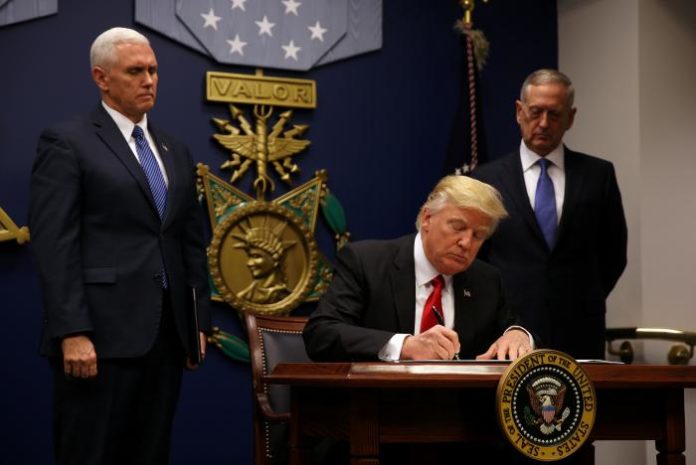
U.S. President Donald Trump signs an executive order he said would impose tighter vetting to prevent foreign terrorists from entering the United States at the Pentagon in Washington, U.S., January 27, 2017. REUTERS/Carlos Barria

President Donald Trump on Friday put a four-month hold on allowing refugees into the United States and temporarily barred travelers from Syria and six other Muslim-majority countries, saying the moves would help protect Americans from terrorist attacks.

In the most sweeping use of his presidential powers since taking office a week ago, Trump paused the entry of travelers from Syria and the six other nations for at least 90 days, saying his administration needed time to develop more stringent screening processes for refugees, immigrants and visitors.

“I’m establishing new vetting measures to keep radical Islamic terrorists out of the United States of America. Don’t want them here,” Trump said earlier on Friday at the Pentagon.

“We only want to admit those into our country who will support our country and love deeply our people,” he said.

The order seeks to prioritize refugees fleeing religious persecution, a move Trump separately said was aimed at helping Christians in Syria. That led some legal experts to question whether the order was constitutional.

One group said it would announce a court challenge on Monday. The Council on American-Islamic Relations said the order targets Muslims because of their faith, contravening the U.S. Constitutional right to freedom of religion.

“President Trump has cloaked what is a discriminatory ban against nationals of Muslim countries under the banner of national security,” said Greg Chen of the American Immigration Lawyers Association.

The bans, though temporary, took effect immediately, causing havoc and confusion for would-be travelers with passports from Iran, Iraq, Libya, Somalia, Sudan, Syria and Yemen.

Trump has long pledged to take this kind of action, making it a prominent feature of his campaign for the Nov. 8 election, but people who work with Muslim immigrants and refugees were scrambling on Friday night to determine the scope of the order.

Even legal permanent residents – people with “green cards” allowing them to live and work in the United States – were being advised to consult immigration lawyers before traveling outside the country, or trying to return, said Muslim Advocates, a civil rights group in Washington.

On Friday evening, Abed Ayoub of the American-Arab Anti-Discrimination Committee said he had fielded about 100 queries from people anxious about the order, which he said he believed could affect traveling green card holders, students, people coming to the United States for medical care and others.

“It’s chaos,” Ayoub said.

SYRIAN REFUGEES                                          

During his campaign, Trump tapped into American fears about Islamic State militants and the flood of migrants into Europe from Syria’s civil war, saying refugees could be a “Trojan horse” that allowed attackers to enter the United States.

In December 2015, he called for a ban on all Muslims entering the United States, drawing fire for suggesting a religious test for immigrants that critics said would violate the U.S. Constitution.

His idea later evolved into a proposal for “extreme vetting.”

Trump’s order also suspends the Syrian refugee program until further notice, and will eventually give priority to minority religious groups fleeing persecution.

Trump said in an interview with the Christian Broadcasting Network that the exception would help Syrian Christians fleeing the civil war there.

Legal experts were divided on whether this order would be constitutional.

“If they are thinking about an exception for Christians, in almost any other legal context discriminating in favor of one religion and against another religion could violate the constitution,” said Stephen Legomsky, a former chief counsel at U.S. Citizenship and Immigration Services in the Obama administration.

But Peter Spiro, a professor at Temple University Beasley School of Law, said Trump’s action would likely be constitutional because the president and Congress are allowed considerable deference when it comes to asylum decisions.

“It’s a completely plausible prioritization, to the extent this group is actually being persecuted,” Spiro said.

Trump’s order had been expected to include a directive about setting up “safe zones” for Syrian refugees inside the country, but no such language was included on Friday.

The order may also affect special refugee programs for Iraqis who worked for the U.S. government as translators after the 2003 invasion of Iraq.

It is already affecting refugees and their families, said Jen Smyers of the Church World Service, a Protestant faith-based group that works with migrants.

Smyers said she spoke to an Iraqi mother whose twin daughters remain in Iraq due to processing delays. “Those two 18-year-old daughters won’t be able to join their mother in the U.S.,” she said.

POLITICAL FIRE

Democrats on Friday were quick to condemn Trump’s order as un-American, saying it would tarnish the reputation of the United States as a land that welcomes immigrants.

“Today’s executive order from President Trump is more about extreme xenophobia than extreme vetting,” said Democratic Senator Edward Markey in a statement.

Some Republicans praised the move. Representative Bob Goodlatte, chairman of the House of Representatives Judiciary Committee, said Islamic State has threatened to use the U.S. immigration system, making it important to do more screening.

“I am pleased that President Trump is using the tools granted to him by Congress and the power granted by the Constitution to help keep America safe and ensure we know who is entering the United States,” Goodlatte said in a statement.

Republican Speaker Paul Ryan, who had panned Trump’s original campaign pledge to ban Muslims from entering the United States, expressed some support on Friday.

“We are a compassionate nation, and I support the refugee resettlement program, but it’s time to reevaluate and strengthen the visa vetting process,” Ryan said.

“President Trump is right to make sure we are doing everything possible to know exactly who is entering our country,” Ryan said.


Stories Continues after ad

Museveni directs Brigadiers Ggwanga, Kayanja to be promoted to Major Generals

Major General Kasirye Ggwanga.

President Yoweri Museveni has directed the UPDF leaders to promote two brigadiers to the rank of Major General.

The two are controversial Brig. Kasirye Ggwanga and Brig. Elly Kayanja.

Brig. Ggwanga is currently serving as presidential advisor on security in Buganda region while Brig. Kayanja works at Operation Wealth Creation.

According to sources, Gen. Museveni who is also the Commander in Chief of the armed forces made the directive yesterday in Masindi during the 31th National Resistance Movement (NRM) party celebrations.

Sources further say that what triggered Gen. Museveni to give directives was when Sgt. Abdullah Sempagala Mwebe aka Sergeant Kifulugunyu, was called to receive his medal and after the ceremony.

Kifulugunyu is chief composer of morale boosting songs within the army and is supposed to be promoted to the rank of Captain.

Another person the president directed to be promoted is Maj. David Muwanga who Museveni said he should be elevated to the rank of colonel.

It is  said that whereas Gen. Museveni said Brigadiers Ggwanga and Kayanja be retired, the two have insisted in remaining in active service.

Recently Brig. Ggwanga told the media that he wouldn’t salute the new crop of young leaders at the helm of the force because he considered them junior.


Stories Continues after ad
Judge pulls out of Mumbere’s case over re-arrest

Rwenzururu king Wesley Mumbere being arrested before being taken to Nalufenya Police Station in Jinja.

The High Court judge hearing the treason case against Rwenzururu King Charles Wesley Mumbere, has pulled out of the case.

Citing disrespect for her orders, Jinja High Court Judge Eva Luswasta withdrew from the case following a meeting she had with other judicial officers; Justice Michael Eludu and court Registrar Jesse Byaruhanga.

Apparently, Luswata informed her colleagues she had pulled out of the case because of Mumbere’s re-arrest by police shortly after she granted him bail.

She added that she couldn’t continue with such a case where she is humiliated by disrespecting her orders.

Luswata granted Mumbere bail on January 13 after he presented six sureties including five Members of Parliament from his region led by the Leader of Opposition Winnie Kiiza and his former premier Constantine Bwambale.

The other MPs are Robert Centenary of Kasese Municipality, Tonny Muhindo of Bukonzo East, William Nzoghu of Busongora North and Atikins Katusabe from Bukonzo West.

He was however re-arrested as he exited court premises. The DPP had earlier opposed Mumbere’s bail and requested for his transfer to International Crimes Division of the High Court for his bail hearing.

However, Justice Luswata agreed with King Mumbere’s lawyers that at that stage when the king had not yet been committed for trial before the ICD, he can appear before any High Court judge to seek bail. She went ahead and granted him bail.

Speaking out on Mumbere’s re-arrest then, police spokesman, Andrew Felix Kaweesi defended the re-arrest, sayingthat sometimes evidence of new crimes committed by those who have just been set free comes to light and the police and other security agencies are compelled to rearrest them.


Stories Continues after ad

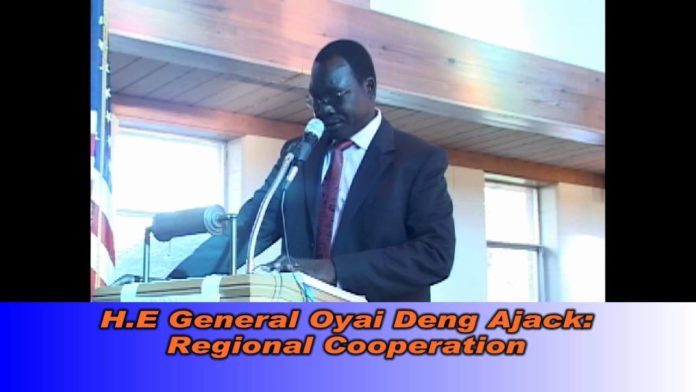
Former SPLA chief denies joining Machar

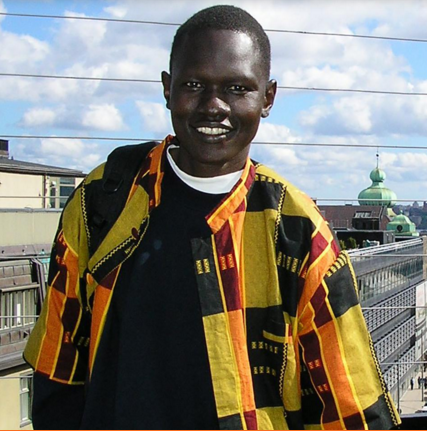
DENIED: Former SPLA chief Deng Ajak

A former South Sudanese army (SPLA) chief has dismissed claims that he joined rebellion under former Vice President Riek Machar.

General Oyai Deng Ajak, a senior member of the country’s ruling party, described the allegations made by South Sudan presidential spokesman Ateny Wek Ateny, as false.

Ateny Wek Ateny claimed on Thursday that Ajak had joined ex-First Vice President Riek Machar’s rebel faction as the chief of staff.

“When the time comes, I will make it public to [South] Sudanese people,” Deng Ajak said in an audio shared on Facebook.

The former army chief, however, hinted on the possibilities of taking up arms against President Salva Kiir’s government.

Ateny could not back up his allegations, but a document said to have been signed by Machar to acknowledge Ajak’s appointment was disowned by the armed opposition.

However, in a separate interview held with the Australian-based Dinka language SBS radio, Ajak said he remains an member of the country’s former political detainees.

Ajak was detained at the onset of the South Sudanese conflict in mid-December 2013, along dozen others and charged with treasons by the government. The charges were dropped after pressure mounted on president Kiir’s government. The former army chief has since not returned to Juba, despite the peace accord signed in August 2015.


Stories Continues after ad

Machar rebels threaten to kidnap Kenyans in South Sudan

HELD: Dong Samuel Luak, a South Sudanese activist, who has been detained in Kenya

A senior South Sudanese rebel official has warned Kenya against deporting opposition dissidents to South Sudan, saying it could attract retaliation.

In a statement, Koang Rambang Chol ordered forces loyal to former Vice President Riek Machar not to allow Kenyan nationals to leave the South Sudan’s newly-created state of Bieh.

“I am ordering all security organs, including military intelligence not to allow Kenyan citizens, including those working in the humanitarian organizations to leave Bieh state territory until further directive from my office,” said Koang.

The directive comes barely a week after two South Sudanese opposition figures, Dong Samuel Luak and Aggrey Idris, were detained by Kenyan authorities amid fears they could be deported back to the young nation.

Koang said any move by Kenya to deport the duo would be retaliatory and affect relations between the two nations.

“If Dong Samuel is deported to Juba, I am afraid Kenya government would have hit the last nail on the coffin,” he said.

Several human rights bodies, including the New York-based Human Rights Watch have accused Kenyan authorities of unlawfully deporting several prominent opposition members from neighboring countries to their countries of origin, despite being recognized as refugees under Kenyan law.

“Dong Samuel Luak has been a vocal advocate for human rights in South Sudan for many years, and could face serious mistreatment if returned to South Sudan,” said Leslie Lefkow, deputy Africa director at Human Rights Watch.

“Kenyan authorities should respect his rights, allow him access to legal counsel and United Nations refugee officials, and immediately halt any deportation proceedings against him,” he added.

Kenya has, in recent years, unlawfully deported several prominent opposition members from neighboring countries to their countries of origin, despite being recognized as refugees under Kenyan law and protests by the Office of the UN High Commissioner for Refugees (UNHCR).

In November last year, Kenya arrested and deported James Gatdet Dak, the spokesperson for rebel leader, Riek Machar. Dak is currently being held, without charge, at South Sudan National Security Services headquarters.


Stories Continues after ad

Airtel to exit Uganda and 14 other countries

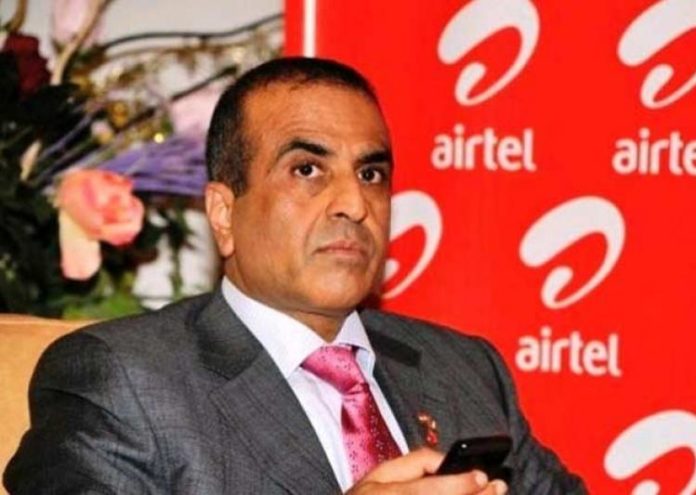
EXITING: Bharti Airtel Chairman Sunil Bharti Mittal

Bharti Airtel has announced that it will be exiting 14 African countries including Uganda within a year, with claims that the telecom operator is faced with poor performance across those markets.

The exit would pare the size of operations on the continent and could be completed within a year, Chairman Sunil Bharti Mittal said in an interview.

Faced with an escalating price war in its home market, India, Bharti is looking for ways to pare net debt equivalent to about $12 billion as of September.

The company has sold its Sierra Leone and Burkina Faso operations, as well as some of its tower businesses, as it reorganizes assets it bought in 2010 in a $9 billion deal with Kuwait’s largest mobile-phone operator.

Bharti’s African unit lost $91 million in the quarter ended September, compared with a $170 million loss in the previous year. Some of Bharti’s businesses in 15 African nations would be affected by their exit, he said.

The affected countries include: Uganda, Chad, Congo, Gabon, Ghana, Kenya, Madagascar, Malawi, Niger, Nigeria, Rwanda, Seychelles, Tanzania and Zambia.

Bharti’s woes are said to have started from its home market, India; the November 8 late evening announcement by Prime Minister Narendra Modi that canceled 15.4 trillion rupees of the 17.7 trillion rupees in circulation may have an 8 percent to 10 percent impact on revenue.

About 94 percent of Bharti’s India customers use prepaid phone connections and were unable to recharge their phones in the ensuing cash shortages that plagued the nation.


Stories Continues after ad

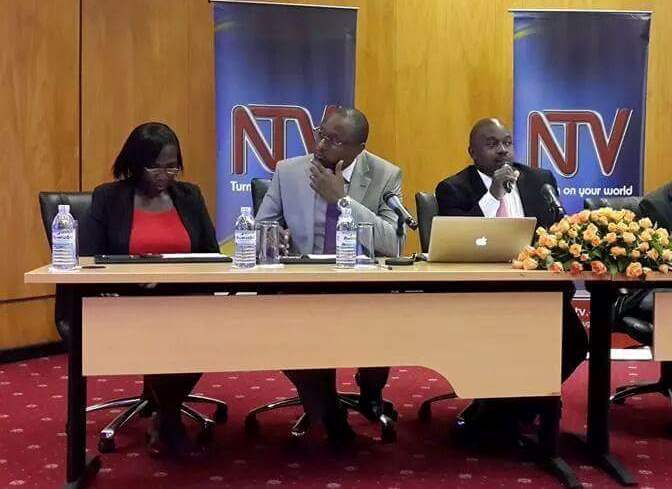
Former NTV employee appointed CEO of Kwese Sports

MOVED ON: Former NTV marketer Herbert Mucunguzi, who has since moved on to Kwese Sports TV

Former NTV marketer, Herbert Odankie Mucunguzi is the new CEO of Kwese Sports TV, formerly WBS TV, which was owned by tycon Gordon Wavamuno.

The EagleOnline has reliably learnt that Mucunguzi was confirmed CEO this week, and will reportedly be earning Shs17 million per month.

“When Passion meets Opportunity Herbert Odankie Mucunguzi will never disappoint. I now announce yet another big step in my career as i become the CEO of Econet Kwese Free Sports…and thanks to your prayers Experience, Exposure, Passion, God’s guidance plus YOU are my weapons to success …….Lets promote SPORTS…Odankie promises to look as sportish as he used,” he confirmed the good news.

WBS TV went off air in December last year after being acquired by Econet Media, which is behind Kwese Sports, a brand owned by Zimbabwean tycoon, Strive Masiyiwa.


Stories Continues after ad

BoU, DFCU confirm Crane Bank takeover

TAKEOVER: Bank of Uganda bullion vans ferry documents from Crane Bank on Kampala Road.

Bank of Uganda has confirmed the takeover of Crane Bank by DFCU Bank.

In a statement issued Friday, the BoU said it had exercised its powers as receiver under section 95(1) (b) of the FIA and transferred the liabilities (including deposits) of Crane Bank to DFCU Bank Limited (‘DFCU Bank’) and in consideration of that transfer of liabilities has conveyed to DFCU Bank, Crane Banks assets.
The news was welcomed with excitement from DFCU Bank, which issued a statement minutes later announcing to their clients the takeover of Crane Bank.

“Growing bigger and better; DFCU Bank has acquired all Crane Bank assets and assumed all liabilities. To all customers, both new and old, we look forward to serving you…with pleasure,” reads a statement by DFCU.

It will be recalled that on October 20, 2016, Bank of Uganda took over the management of Crane Bank and issued a notice to the public, setting out the reasons for the takeover. Since then, Crane Bank has been conducting banking business but under the management and control of Bank of Uganda.

Subsequent to the takeover, Bank of Uganda, as required by law, appointed an independent external auditor to make an inventory of the assets and liabilities of Crane Bank exercise confirmed that Crane Bank’s liabilities, as at 20th October 2016, being the date of takeover, grossly exceeded its assets and that it was insolvent, which insolvency has continued to date.

On January 24, 2017, BoU progressed Crane Bank from statutory management to receivership, with the central bank as Receiver.

“All customers and depositors of Crane Bank shall now have their accounts operated by DFCU Bank through its wide branch network, which will now include some of which were formerly branches of Crane Bank. Bank of Uganda congratulates DFCU Bank upon this significant milestone that will certainly make the bank’s footprint wider,” reads a statement by Bank of Uganda.


Stories Continues after ad