Bebe Cool’s first born, Alpha Thierry was this week treated to a Manchester United-themed birthday party as he made 12 years.
Despite his dad being a staunch Arsenal fan that he even named his son after Arsenal’s legend, Thierry Henry, this didn’t stop his mum, who is a baker to make her son a cake in Man U colours, after all that’s the team her son supports.
“Alpha’s birthday cake made by mummy…this boy’s love for Manchester United.I decided to surprise him with his best team’s cake. You should have seen his face priceless,” she shared on social media on Friday.
Musician, Bebe Cool’s manager, Tickie Tah has quit the league of renowned city bachelors.
This is after he began the journey of legalizing the relationship with his girlfriend, a one Shapiro. The gospel and dancehall singer was escorted yesterday to Shapiro’s parents’ home for their introduction.Among those who escorted him was longtime friend, Bebe Cool and his wife, Zuena Kirema.
Bebe and Zuena graced the function.
“Yesterday was a great day…we escorted our brother Tickie Tah (Bebe’s manager) to his fiancé’s home where he was introduced to her parents. Deal was sealed…batuwade mukyala wafe wululululu.
Congratulations Shapiro & Joseph,” a delighted Zuena shared the good news via social media.
Happy New Year friends! I didn’t have a good night. It happens when one is bothered. I kept waking up to reflect on Mr Andrew Mwenda’s recent anti Besigye campaign (that’s what it appears) and arrived at the conclusion that he’s being grotesquely unfair to not only Besigye but his own readers to whom he supplies what some consider half-truth (about the history of NRM/A ascension to power and how that’s his measure of Mr Museveni’s superior organisational skills.) I have talked to actors close to the happenings then that are persuading in the narrative that Museveni and group had actually been defeated and were starting to push for negotiations with Obote through Mwalimu Nyerere.
He knows of a letter from NRA/M to Mzee Nyerere asking him to get the two sides talking peace and power sharing. This is around 1984 by which time the NRA had essentially been defeated. Mr Museveni’s ascension to power wasn’t a military victory per se but partly attributable to luck (according to those who know what happened) thanks to the Obote centre internally failing to hold because of his own wanting leadership skills, ethnic contradictions in the army and his defence anchor man, Paulo Muwanga growing frustrated and feeling bogged down by those contradictions). Had Obote managed those contradictions better, the way Mr Museveni has managed his regime’s contradictions, our history would be different. Museveni didn’t even defeat Obote. He was thrown out by the Lutwa group which was easier fodder for the NRA.
Had Lutwa not over thrown Obote, would our history be different? Of course you have to give it to Museveni for keeping his forces intact till the end of the civil war (which they call a liberation struggle today). Be that as it may, Mwenda can’t compare Museveni who rose to power after half a decade of bloodletting to Besigye who’s seeking power by way of elections (civil means). Had Besigye picked guns and for 15 years failed to get power, then a comparison of the two Men’s organisational skills would suffice. In any case you can assess Museveni’s organisation skills by the 1980 election. How many candidates did UPM field? How many won and how? One. Dr. Crispus Kiyonga (partly because of the Democratic Party’s candidate death in that constituency, blamed on the UPC). So where is organisational genius of Mr Museveni in 1980? Even in post 1996 electoral period that organisational genius can be doubted to the extent that his electoral victory has been a result of a cocktail of electoral irregularities that can’t be wished away by the dishonest wave of the hand argument, “there’s no perfect election.” No one said there is or expects one. What we have here is for all intents and purposes an all-out war to get the incumbent re-elected at all costs including to human life and the economy. It’s the state versus his opponent.
He’s a better organiser no doubt of his military apparatus, the reason he pushed through that civil war to the end even after Col. Ogole flashed them to the Rwenzoris and why he continues to hold power using military might with a clever facade created to disguise the same using such institutions as Parliament which as his son in law Odrek Rwabogo in his latest write up innocently admitted, exercises delegated power from the military. It’s unfair though to use that as the basis of assessing the organisational skills of a man who seeks power through elections.
Even then let’s look at African countries with the same situation (of leaders entrenched in power and keeping it using the state that they hijack and personalise). Angola, Zimbabwe, Egypt under Mubarak, Tunisia under Ben Ali, Libya under Gaddafi (though he didn’t exactly have presidential polls), Kenya under Moi, Rwanda under Kagame, Sudan under Bashir, Congo Brazzaville. under Dennis Ngueso. Are all the opponents of these leaders just unserious or the pattern is evidence of how difficult it is to dislodge dictatorship through the ballot? Is Besigye expected to be super human? I have shared my view on elections with Dr. Besigye and why he keeps taking part in them aware the ground is not levelled. I am not persuaded by his explanation of using elections to freely reach out to his supporters and as a stepping stone to causing change. I can’t pretend to know an alternative to his approach but can only take solace in the fact of life that human beings can’t stop trying their best.
Mwenda then wonders how and why Besigye doesn’t translate his popular support into an uprising (akin to Arab spring?) to defend his claimed victory. Certainly every country has a context but what’s true also is that in the recent few years of mass popular action causing regime change (even in Burkina Faso), that change has been more spontaneous than as a result of the ingenuity of Organisation of those opposed to dictatorship. When will Uganda’s time come, if ever it will? No one can tell as indeed no one predicted the Arab spring or Burkina Faso uprising that saw Blaise Campore exit the stage. So when Besigye chose to exit NRM in 1999/2000, he wasn’t assigned a time table by Mwenda or any one within which to have caused change. He’s only human, he’s subject to many obstacles in his ambition.
Mwenda as a business man should know this better. It would be unfair for anyone to accuse him of being a bad businessman simply because the Independent hasn’t out sold/ shone Monitor, New Vision, Observer and Red Pepper for almost a decade now yet Andrew and team do their best to be the best in the market. The dynamics are complex. It’s unrealistic to expect timelines in political struggle because of the many obstacles. Mwenda, like some in the NRM, has chosen to take issue with Besigye’s perennial candidature. Friends in the NRM are now turning on default settings and using that to justify Mr Museveni holding onto power. This is flawed.
There is no single political party in Uganda which under their constitutional framework limits how often one can run for office.
Our Constitution doesn’t limit ambition especially in respect to how many times one can contest for office. It does, however, establish limitations on when one can run for president (age: 35-75). So legally and even morally, there is no point in Mwenda’s charge against Besigye’s unending candidacy. It’s a defective charge no prosecutor worth the name can present even in a kangaroo court. So both Mr Museveni and Dr. Besigye are ambitious. One wants to be president. The other wants to retain power. Here’s the catch. For Mr Museveni, as we saw in 2005, that ambition can be achieved, in his outlook and style of politics, by bribing MPs with Shs5 million to amend the rules (read Constitution). We are set for a similar scene before 2021, where our Constitution is reduced to vegetables on the market to suit the ambition of one man and his entourage. What does Besigye do to attain his objective? Does he amend the rules? The Forum for Democratic Change can tell us. In my humblest view this is what should be concerning Mwenda; how the two men get to their destination. Even more, for a country with a young population such as ours, it’s dangerous to create the impression that being ambitious is harmful and demonise the same rather than applaud it.
We should however focus on how ambition is achieved. If you are going to tinker with the supreme law of the land by paying off/intimidating and black mailing legislators to amend the rules of the game and worse still ring fencing positions of power as we saw with the ill treatment of Mr Amama Mbabazi for committing the single most heinous crime in NRM’s unwritten penal code (of challenging the supreme leader) then your approach should concern all because it’s everything barbaric. Examples across historical time and geographical space are overwhelming on how many times some politicians stood for office and eventually got it but also how rulers stuck to power at all costs and the damage they left behind. Which page of history do we prefer to read? Why then is Mr Mwenda more concerned with a man seeking power severally than one who seeks to retain it at all costs? The very last point: Mr Mwenda also falls victim of a rather reductionist approach that looks at the tragedy of failed governance of Uganda from and through the prism of Besigye failing to get power.
How so? Besigye has no contract with anyone to dislodge Mr Museveni, except perhaps, with his own conscience and the chamber of ambition in his heart. The wanton injustice manifest in land grabbing aided, abetted and condoned by the state, the tragedy that’s UPE (see: Uganda’s Leap Forward—for dropout rates analysis), the failed health care system ( see: WHO country reports), the erosion of decorum in politics that’s now transactional with Mr Museveni as chief deal maker and State House the headquarters of the same, the systemic incompetence and endemic graft of and in government, the glaring regional imbalance in our 30 years of what Andrew (with compelling evidence) calls a tremendous story of economic transformation (some argue this isn’t entirely because of Mr Museveni’s ingenuity and this has happened in spite of and not because of him). I am still studying the evidence for an pro before forming an opinion on this. May be those figures would be rosier with better leadership). All these and more. Let’s reflect on them. Let’s be honest. Let’s listen to our hearts. How can they be reduced to one man and how he’s failed to get power? Or a party (I must confess I despise the FDC and think if they got power they’d be worse than NRM), and how it’s failed to field a winning candidate since 2001? Shouldn’t Mr Mwenda instead be concerned that Ugandans wallowing in abject poverty (over five million are starving as we cross the year) and the gaps in social service delivery are not doing more to ameliorate their situation? This to me is a more tempting area of scholarly interest. This is about Uganda. It can’t be about Besigye who tomorrow can pass on or choose to retire. He’s only a flag bearer of these frustrations and may be like any other shrewd politician using them as a platform for his own program of power acquisition).
Once I sat in Mr Mwenda’s lovely car (on the day of the February 2016 election actually). It was a Friday. He’d just hosted the 93.3 KFM Hot seat and offered to give me a lift (from where I would get a taxi home). But Mr Mwenda true to his character got me absorbed in this discussion about Uganda and our state of affairs so much that I wanted to listen to him more and more. When I was in upper primary school I would run home after 5pm class to listen to Andrew Mwenda live. I wouldn’t miss his column (without mincing words) and (24/7). His views appealed to me as a child and he’s one of if not the reason I got interested in things journalists do so to this day I hold Andrew in really high esteem regardless of the many charges leveled against him by mainly social media investigators, prosecutors, judges and executioners).
We all have weaknesses. Anyway, I ended up sitting in that car till he hooted at the gate of a prominent lawyer friend of his at whose home we had diner and continued discussing Uganda till he dropped me in Kololo and he proceeded to Mr Sudhir’s home. In those hours however, Mr Mwenda spoke his heart. The next president of Uganda, he opined, “should come from the east or north.” “Why,” I asked. He explained how he had traversed the country during campaigns and appreciated the disparity between the East, North vs the rest of Uganda. There’s lots of evidence on this (see: Are our children learning? —-by Uwezo/Twaweza). Of course Andrew has also expressed his appreciation for the recovery efforts in the North with infrastructure as a case in point but by and large, if he can arrive at the conclusion that perhaps Uganda’s next president should come from the east or north (as a rudimentary distribution of prosperity mechanism, I suppose), then surely he too appreciates that the rosy statistics he cites don’t tell the entire story of the situation of the Ugandan. (We can return to this another time). I know that leading economists like Jeffrey Sachs are inviting peers to reflect on the use of the measure of development of countries based on GDP and conventional statistics.
Therefore, with all these problems afflicting Uganda, how can any analyst be bitter that a party keeps fronting a failing candidate for 15 years? Shouldn’t that frustration instead be channeled to asking why with all these issues at hand, Ugandans (not just Kizza Besigye) are not doing enough to help their situation? And more importantly how meaningfully change can be attained in the face of dictatorship taking into account that (as examples above show across Africa), taking on the state is no walk to a massage parlor. It’s tough. It takes time. Lives are lost. Hopelessness reigns. People get bought. There is no script as to time or even who will deliver the change and how. The examples he cites of citizens in Libya, Egypt and Tunisa with more sophisticated armies and higher GDP than Uganda ( so it should be easier to cause change here?) are blind to the context of each country and process (Libya for instance had international actors boosting the population to give Gadaffi a knockout punch). Those examples, used to illustrate Besigye’s inability to get Ugandans rising against Museveni, are premised on the wrong theoretical framework; the assumptions stand on weak limbs; that some amazing mobiliser got these people to rise against those regimes. I repeat, it was more spontaneous than thanks to a central figure around whom a fulcrum of mass Anger and unrest was anchored. Change across the world has no formula, no script and no time table. Thank you and happy new year of good health, wisdom and luck!!
Ivan Okuda is a student of law at Makerere University and an investigations writer with the Daily Monitor.
Burundian President Pierre Nkurunziza announced during a public program, that the Burundian troops who are in the African peace keeping mission in Somalia, AMISOM, would be withdrawn within one month if their wages were not paid soon.
“If the Burundian troops in Somalia are not paid until January 2017, they will immediately come back to their home country”, said the President before requiring the African Union and European Union to quickly find a solution and pay what he called the “Burundian soldiers rightful due”.
In total, there are more than five thousand troops who have not been paid their allowances for nearly twelve months, funding which is paid by the European Union. The EU had suspended direct aid to Burundi including funds for its peacekeeping contingent in Somalia since March 2016.
During the public program through the National Radio, the Burundian president also threatened to interrupt all relations with Rwanda and Belgium.
“Relations and cooperation with Rwanda and Belgium may be brought to an end if those countries don’t change their attitude vis-a-vis of Burundi”, he pointed out.
Relations between Burundi and the two countries have been deteriorating since Burundi descended back into a new crisis following the decision of President Nkurunziza to bid for a controversial third term.
Bujumbura accused the two countries of being behind nearly all the problems Burundi is currently facing since the crisis broke out in April 2015.
During that program, which is held once a year, President Nkurunziza said he could even try for a fourth term in 2020 if the Burundian people asked him to do it.
Joseph Kabila will step down as president of the Democratic Republic of Congo after elections held before the end of 2017, under a draft agreement reached by political parties, according to a lead mediator from the Catholic Church.
Under the deal, reached on Friday but not yet signed, Kabila will be unable to change the constitution to extend his mandate and run for a third term, said Marcel Utembi, president of the Catholic Bishops’ Conference in the DRC.
A transitional government will be put into place by March next year, media sources said.
If the deal is finalised, it will be DRC’s first peaceful transfer of power since independence in 1960.
Kabila’s two-term mandate ended on December 19, but authorities have effectively extended it until 2018.
His actions led to demonstrations, with security forces killing about 40 people just last week alone.
Western and African powers feared the failure to secure peaceful transition of power could lead to a repeat of conflicts seen between 1996 and 2003 in eastern DRC in which millions died, mostly from starvation and disease.
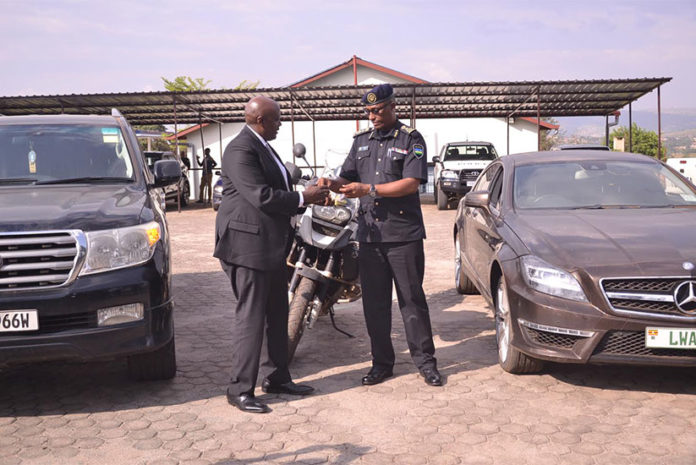
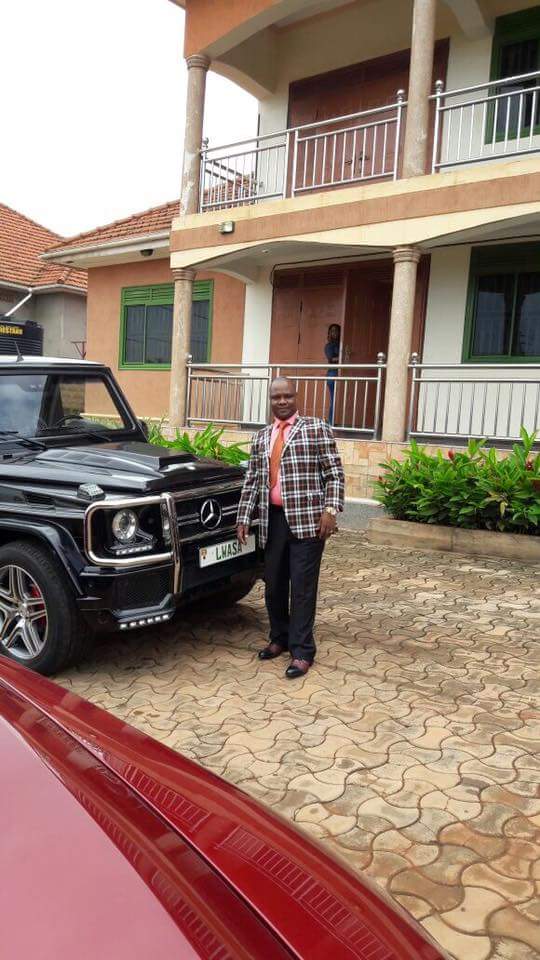
As the year comes to an end, one of Eddy Kenzo’s biggest achievements this year has been the acquisition of a new vehicle, a luxury Range Rover sport.
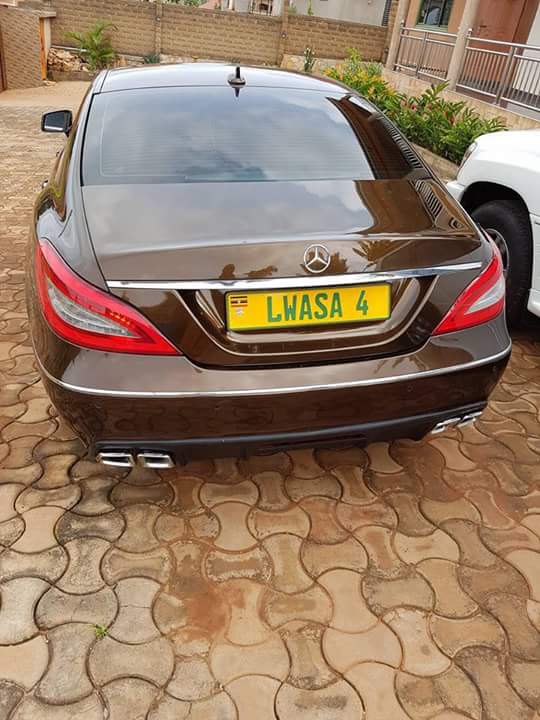
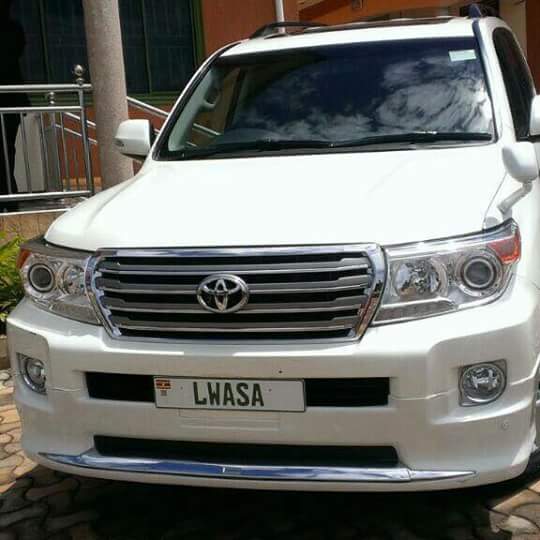
Following months of cruising it on our dusty roads, the musician has decided to customize it just like many artistes.He has customised the number plate from UAY 667T to the initials of his name ‘EK’ for Eddy Kenzo.
Customisation of one’s plate into a number of your choice currently costs Shs20 million at the moment. Initially it was Shs5 million though this was pushed to Shs20 million in July.
But would this be too much to a person who received a car believed to be worth over Shs200 million at a zero cost?! Kenzo, formerly a street child was gifted with the same vehicle in August by city businessman, Kaki, one of his biggest music fans.
Airtel Uganda has today December 30, 2016 handed prizes worth millions of shillings to lucky winners in third draw of their Tulumbe AFCONcampaign.
The prize awarding ceremony took place at Airtel Uganda’s office on Clement Hill in Kampala.
Speaking at the handover, Remmie Kisakye Kakuru reaffirmed Airtel Uganda’s commitment to football in Uganda.
“Our support for the development of football in Uganda begins at the grassroots with our Airtel Rising Stars platform. That support is further displayed in our sponsorship of the Uganda National Football team; the Uganda Cranes who as you know made history this year by qualifying for the 2017 AFCON tournament.”
“It is upon this win that Tulumbe AFCON was built. Essentially, Airtel is rallying Ugandans to support the Uganda Cranes as they head to Gabon in January 2917,” she added.
Also speaking at the event, Phanindra Nichanametla, Airtel Uganda’s Finance Director congratulated the winners and encouraged the rest of the country to actively participate in the campaign saying, “These winners are from various parts of the country including Mbale, Masindi, Hoima and Bulooba, among others. My hope is that this will encourage everyone across Uganda to participate in Tulumbe AFCON.”
The day’s big winner, Ms. Joan Namazi Sengo took home the coveted ticket for 2 to an all-expenses trip to Gabon come January. Ms. Namazi is also the first female winner of the tickets to Gabon. Barely able to contain her excitement, she expressed her gratitude to Airtel Uganda and support to the Uganda Cranes.
This is the third round of subscribers to benefit from the Tulumbe AFCON campaign.
For one to take part in the campaign, Airtel Uganda subscribers are required to dial *162#, where they have the choice to opt into the campaign by selecting option 1. Customers will then be made aware of their target and will be required to recharge and use Airtel Uganda services up to this target. Upon reaching the targets, subscribers will receive 100 per cent bonus, which, on accumulation, will be rewarded to them as airtime to be used for voice (prepaid), data and SMS.
Participants are entered into a weekly draw where they could win 5 TVs, smartphones, and an iPhone 6 Plus. The grand prize of a pair of tickets to Gabon is awarded fortnightly. Winners will be contacted by Airtel on 0752-600-222.
The world's highest bridge, the Beipanjiang Bridge in China.
A bridge in China suspended over a 1854-foot gorge became the ‘world’s highest’ when it opened to automotive traffic, reports said.
The Beipanjiang Bridge took three years to build, cost more than $146.7 million dollars, and stretches to be 4,396 feet long. Its four-lane roadway sits nearly two thousand feet over the Beipan River, which it’s named after, to connect the Yunnan and Guizhou provinces in southwest China
It surpassed the 1,837-foot-tall Sidu River Bridge for its world record title.
We know what you’re thinking: $146.7 million is cheap! And it is! After all, when the Golden Gate Bridge spanning San Francisco Bay was built in 1933 it cost $1.5 billion (in adjusted dollars), and the brand new New Bay Bridge, on the other side of town, ended up costing a whopping $6.7 billion when it was finished in 2013.
The Beipanjiang Bridge is part of the 2,115 mile Hangrui Highway which connects Hangzhou to the China-Myanmar border crossing in Ruili. Construction actually finished on the bridge September 10, but the massive sky-scraping overpass only opened to vehicular traffic yesterday, Thursday December 28.
Though the Beipanjiang Bridge might be the highest bridge in the world, the world’s ‘tallest’ bridge is still the Millau viaduct in France which tops out at 1,125 feet.
With just three weeks in the Oval Office, President Barack Obama has expelled 35 Russian intelligence operatives and sanctioned five Russian entities and four individuals for an alleged cyber assault on Democratic political organizations during the 2016 presidential campaign, the White House announced.
“I have ordered a number of actions in response to the Russian government’s aggressive harassment of U.S. officials and cyber-operations aimed at the U.S. election,” Obama wrote in a statement. “These actions follow repeated private and public warnings that we have issued to the Russian government and are a necessary and appropriate response to efforts to harm US interests in violation of established international norms of behavior.”
ON SPOTLIGHT: Russian President Vladimir Putin
He said all Americans ‘should be alarmed by Russia’s actions’, which were designed to ‘interfere with the US election process’.
“These data theft and disclosure activities could only have been directed by the highest levels of the Russian government,” Obama said. “Moreover, our diplomats have experienced an unacceptable level of harassment in Moscow by Russian security services and police over the last year. Such activities have consequences.”
Kremlin spokesman Dimitry Peskov said the sanctions are intended to ‘spoil’ U.S. relations with Russia and ‘undermine’ the incoming Trump administration.
Obama issued an executive order, amending his April 2015 decree to expand authorization for a response to certain cyberactivity that seeks to interfere with or undermine US election processes and institutions.
Obama said that the State Department is also shutting down two Russian compounds, in Maryland and New York, used by Russian personnel for intelligence-related purposes, and has ordered 35 Russian intelligence operatives to leave the US within 72 hours.
State Department deputy spokesman Mark Toner wrote in a statement: “The Russian government has impeded our diplomatic operations by, among other actions: forcing the closure of 28 American corners which hosted cultural programs and English-language teaching; blocking our efforts to begin the construction of a new, safer facility for our consulate general in St. Petersburg; and rejecting requests to improve perimeter security at the current, outdated facility in St. Petersburg.”
“Today’s actions send a clear message that such behavior is unacceptable and will have consequences,” he added.
House Speaker Paul Ryan supported the new sanctions, saying in a statement that “Russia does not share America’s interests. In fact, it has consistently sought to undermine them, sowing dangerous instability around the world. While today’s action by the administration is overdue, it is an appropriate way to end eight years of failed policy with Russia. And it serves as a prime example of this administration’s ineffective foreign policy that has left America weaker in the eyes of the world.”
The Democratic National Committee, which was targeted by the attacks, applauded the president for taking action, but said that he didn’t go far enough.
“These intrusions were not just ‘hacks.’ They were attacks on the United States by a foreign power and should be treated as such. Therefore, today’s action alone by the White House is insufficient,” the DNC said.
“Now it’s time for President-elect Trump and the Republican leadership in Congress to put our national security before politics and show the American people that they are serious about protecting our democracy.”
The Department of Homeland Security and the Federal Bureau of Investigation said that Russian military and intelligence organizations hacked digital files belonging to the Democratic National Committee and continue to target US entities.
“These cyber-operations have included spearphishing campaigns targeting government organizations, critical infrastructure entities, think tanks, universities, political organizations and corporations leading to the theft of information,” according to a report issued by the DHS and FBI. “In foreign countries, [Russian] actors conducted damaging and/or disruptive cyberattacks, including attacks on critical infrastructure networks. In some cases, [Russian] actors masqueraded as third parties, hiding behind false online personas designed to cause the victim to misattribute the source of the attack.”
Obama warned that today’s actions will not be the full extent of his administration’s response to Russia’s interference in the election, which some Democrats partly blame for Hillary Clinton’s loss to Donald Trump.
“We will continue to take a variety of actions at a time and place of our choosing, some of which will not be publicized,” Obama promised. “In addition to holding Russia accountable for what it has done, the United States and friends and allies around the world must work together to oppose Russia’s efforts to undermine established international norms of behavior and interfere with democratic governance.”
He pledged that his administration will provide a report to Congress in the coming days about Russia’s efforts to interfere in the election, as well as “malicious cyberactivity related to our election cycle in previous elections.”
The announcement is not the culmination of the broad review of Russian hacking recently ordered by Obama. That review is ongoing, and the government is expected to release its findings before Obama leaves office next month.
The timing of today’s announcement is notable, with Obama’s term coming to a close in 22 days. Trump has questioned the intelligence community’s conclusions and has not said he firmly believes that Russia was behind the hacks.
In a statement Thursday, Trump said it was “time for our country to move on,” but said he would meet with intelligence officials nonetheless.
CONVEYED MESSAGE: South Sudan Second VP James Wani Igga. Photo Credit/eyeradio.org
South Sudan President Salva Kiir is considering, as a New Year ‘gift’, an amnesty for several inmates imprisoned for various offenses across the nation, a senior official said.
While addressing inmates at Juba Central Prison, Vice President, James Wani Igga said the president’s national dialogue initiative is a program designed to bring real peace in the country.
He explained that the peace ‘vehicle’, embedded in the president’s national dialogue initiative, will also cover prison inmates.
“If you are released from here and you go and commit the same mistake that you brought here in the first place, then it will be unfortunate and you will face your own crime under law without further help,” stressed Igga, amidst cheers from the various inmates.
The Vice-President, formerly a speaker of the country’s Parliament, vowed to meet the President and First Vice-President General Taban Deng Gai to reach a decision regarding the prisoners’ complaints.
Igga said although the inmates have been convicted for different offences, others have been convicted due to ‘rumour’ and ‘ear say’.
“Others [inmates] may have committed a crime without knowing and others may have been brought here by other powerful forces, but all in all, we are reaching out to all the people of South Sudan to embrace peace and close dark chapters of our country’s history and to start the New Year 2017 as the year of peace,” he added,
The Vice-President shared some light moments and shook hands with former senior officials from the President’s Office, who were convicted in June and are now serving life imprisonment at Juba Central prison.
Child inmates at Juba Central Prison’s juvenil section.Many are charged with murder and theft.
Speaking during the same occasion, a prisoner, only identified as Kaunda, highlighted some of the challenges facing his colleagues and faulted the country’s judiciary mismanaging cases.
“There are people remanded for more than 10 years because the complainants have either forgotten they arrested somebody or no longer interested in the case, but police investigators and prosecutors are still holding such people in prison here,” he stressed.
He complained about cases before the Court of Appeal; the nation’s second highest court, saying it does not work in public interest.
“People wait for their appeal result between five to 10 years for a case to be concluded. The common jargon in the appeal court is that the first opinion is finished and from there you will never hear of the second and third opinion anymore,” Kaunda said on Tuesday.
“Lawyers and family will also forget you in the process of this long wait,” he added.
The Director of Juba prison, Brigadier General, Michael Malou Makuach told the inmates that their complaints would be forwarded to relevant authorities and encouraged the inmates to support the President’s dialogue initiative.