Stanbic Bank
Stanbic Bank
21.2 C
Kampala
Stanbic Bank
Stanbic Bank
Home Blog Page 1972

KAMADHI SERIES: MPs tax exemption irks Mutungo Malwa Club members

SITTING: Members of Parliament attend a plenary session.

Joel Kamadhi has been away for most of last week, recuperating from a bout of malaria.

But his return just yesterday filled members of the Mutungo Malwa Club with anxiety, and the sage did not disappoint.

“By the way, I have been suffering from Malaria, but can you imagine I had to struggle to get the appropriate drugs for my treatment from the nearest government health facility, and was referred to pharmacies in town which are run by the same doctors who referred me there!” he started off, sending members into a bout of laughter.

“Interestingly, all this is happening while our MPs lavish themselves with goodies including exempting themselves from having their allowances taxed,” Kamadhi, a hitherto self-avowed National Resistance Movement (NRM) diehard supporter, railed on.

According to Kamadhi, even President Yoweri Museveni, his party chairman, has fallen for the MPs’ antics and assented to the bill.

FALLEN FOR MPs ANTICS: Yoweri Museveni

“My Chairman has always insisted he is a pro-people leader and I just don’t understand how he can assent to such a bill that will see just 435 people swallow over 40 billion by dodging taxation,” he said before adding: “Perhaps it is because he (Museveni) is also spending several millions a day that he just can’t realize how bad the issue of tax exemptions on MPs allowances is for the country.”

Apparently, Kamadhi was in foul mood and wanted to hear nothing of his party and its MPs who he says, are intent on ‘bleeding the country to skeletal proportions’.

“For such a bill to pass it must have gotten support and you all know very well that the NRM has the majority MPs in the House. This makes them highly culpable! Unfortunately, there are no drugs in hospitals; children still study under trees; the roads are in a sorry state; and these fellows are just pillaging Uganda as if it is coming to an end tomorrow; so where are our leaders’ priorities for the country?” Kamadhi wondered, to the surprise of all other members who are aware of his political inclination.

Yorokamu Bwambale, Kamadhi’s hitherto ‘lifetime adversary’ in the club this time came in to his support, giving an example close to his home district of Kasese. “Even those who stole timber, gold and coltan from the Democratic Republic of Congo (DRC) did not succeed in making the country lose of its mineral wealth and other natural resources,” Bwambale submitted, citing names of various military officials from Uganda and Rwanda.

A map of the Democratic Republic of Congo (DRC).

“Some are dead but the DRC is still here with us!” Bwambale said, before giving the members what he called ‘a piece of advice’.

“My friends, we are here, poor men and women, but should one of us ever rise to a position of authority, please remember that your first duty is to serve the people of Uganda not yourself; none of us here came into this world with any property,” Bwambale said.

Shortly after Bwambale’s presentation, Joseph Lakony P’Orach, a member more known for his laid back attitude, spoke.

“Brothers, we live in a country where leaders seem to have lost it all; can you imagine one highly-placed leader told the people in a certain area to pack food for their school-going children in food flasks?” Lakony asked.

He added: “It is ironic; in a country where pupils still study under trees, how can a leader tell parents to pack food in a food flask? I find that strange given the fact that even most people in the major towns and in the city do not know or have never come in contact with a food flask,” Lakony P’Orach said, and summed up: “In times like these which are difficult, with despondency driven by poverty clearly setting in among the citizenry, leaders should mind what they say, otherwise the name ‘Marie Antoinette’ might just keep popping up during discussions like this one.”

Just after Lakony P’Orach’s submission, Kamadhi ‘reclaimed’ his position of being ‘an authority on matters of national importance’.

“Well I have heard that civil society organisations in the country are moving to court, seeking to reverse the position of Parliament taken by the MPs. I think this is a positive move which will also act as a benchmark when issues of separation of powers arise,” Kamadhi said, before bidding the members ‘good night’.

But just as he exited the door, Hitler Eregu, who had all along been immersed in The Daily Monitor newspaper, asked: “By the way Kamadhi, what happened to the proposed construction of the fruit factory in my home region of Teso?”

KNOWS MORE ABOUT SOROTI FRUIT FACTORY? Former Education Minister and Katakwi Woman MP Maj. (rtd) Jessica Alupo.

In haste, Kamadhi answered: “May be you need to re-elect Jessica Alupo as MP for Katakwi; she was the brains behind that project.”

“Good night’, we’ll meet after the festive season,” Kamadhi said as he announced he would have his Christmas and New Year in Itakaibolu, Busoga.


This is a burlesque column that will be running every Friday.


Stories Continues after ad
Justice Bamugemereire to head Commission of Inquiry into land matters

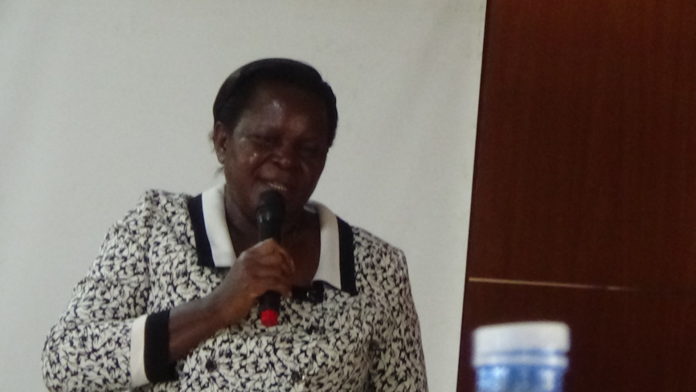
Justice Catherine Bamugemereire

After establishing herself as a competent and credible judge, Lady Justice Catherine Bamugemereire will now head a commission of inquiry into land matters in Uganda, expected to last six months.

The December 8 appointment of Justice Bamugemereire was made by President Yoweri Museveni, and she will serve with six other members among them Robert Sebunya, Ms. Mary Oduka Ochan, Ms. Joyce Habasa, Dr Rose Nakayi, former Justice and constitutional affairs minister Fred Ruhindi and Mr George Bagonza Tinkamanyire. Secretary to the Commission is Ms.Olive Karazarwe and Assistant Secretary Research is Dr Douglas Singiza, while Lead Counsel to the Commision is lawyer Ebert Byenkya, deputised by John Bosco Rujagaata Suuza.

The letter appointing the team that will inquire into land matters in Uganda.

The six-man team appointed under the Commissions of Inquiry Act is tasked to, among other issues, ‘inquire into the effectiveness of law, policies and processes of land acquisition; land administration; land management and land registration in Uganda’.

Previously, Lady Justice Bamugemereire chaired KCCA Tribunal in 2013 which was tasked to probe fights at City Hall between Executive Director Jennifer Musisi and Lord Mayor Erias Lukwago, and she also chaired the Commission of Inquiry into the scams at the Uganda National Roads Authority (UNRA).

Meanwhile, over the past 20 years, land matters in Uganda have increasingly become a complex issue, with thousands of land grabbers reportedly securing false documents and wrongfully acquiring land, in exercises carried out in connivance with officials from the lands office and the District Land Boards.

Stories Continues after ad
Museveni, Kiir discuss South Sudan UN arms embargo

CONGS! President-Yoweri-Museveni-congraculates-President-Salva-Kiir-of-South-Sudan-for-signing-the-peace-agreement-as-Ethiopian-Prime-Minister-Haile-Mariam-Desalegne-applauds./ FILE PHOTO

Ugandan President Yoweri Museveni has held a closed door meeting with his South Sudanese counterpart, Salva Kiir, during which the two discussed the imminent arms embargo against the world’s youngest country.

The United Nations Security Council (UNSC) is due to hold a vote today to determine whether to impose arms sanctions against South Sudan, arising out of a motion sponsored by the US. Previous efforts at sanctions have been thwarted by Russia, but given the deteriorating situation in South Sudan, it might be difficult for the antagonists to carry the day.

Meanwhile, media sources also indicated the two leaders Thursday held talks about the over three year conflict in South Sudan, with Mr Museveni reportedly calling for inclusive dialogue involving all belligerent factions.

The Ugandan leader whose visit to Juba was unannounced did not speak to the media on arrival and no immediate release was made after the talks he had with president Kiir.

But South Sudanese presidential spokesperson, Ateny Wek Ateny said discussions involving two leaders focused on bilateral relations between the two nations as well as the upcoming United Nations Security Council vote on an arms embargo due today.

Highly placed sources at the presidency said that the Ugandan leader informed president Kiir that the region wants him to implement key provisions in the peace agreement in order to resuscitate the agreement and move the country forward.

President Museveni, the source said, told president Kiir to extend dialogue to both the armed and non-armed opposition figures to make it a broad and inclusive dialogue.

“You know President Museveni is our strongest and longest ally in the region. He is more than just a brother and so he came to consult his brother and to provide some advises which I know will definitely be taken into consideration by our President,” the source said.

Museveni reportedly emphasized the need for inclusive dialogue and asked Kiir to allow the church lead the process so that everybody feels included and have the opportunity to participate and be represented in the recent calls for national dialogue.

Since 2013 South Sudan has been engulfed in a raging civil war pitting President Salva Kiir against his biggest political rival Riek Machar Teny, in which over a million people have been displaced both internally and externally, while thousands have reportedly been killed.

Meanwhile, it has been established that during the meeting Presidents Museveni and Kiir also discussed and agreed on how to pay Ugandans who supplied South Sudan with food items between 2008 and 2010 but are yet to be paid, amounts reportedly close to Shs365 billion.


Stories Continues after ad

Museveni hold talks with Salva Kiir in Juba

President Yoweri Museveni on today Thursday December 22, visited South Sudan and held a closed door meeting with hiscounterpart, Salva Kiir, at State House in Juba.

The visit of the President Museveni to the war torn country was unannounced. Both Kampala and Juba did not make any statement. On arrival at Juba Airport,Gen. Museveni  was immediate driven to Plot 1 Juba  for talks with Kiir.

Museveni remains a regional key ally to the troubled Kiir whose government is embroiled in an internal disintegration between his forces and the those of the First former Vice President, Dr. Riek Macha who fail out with the Juba regime.

Museveni’s journey remains unclear on what the two leaders discussed behind the door.   South Sudan Presidential Press Secretary, Ateny Wek Ateny told reporters on Thursday that discussions between the leaders were based on bilateral relations and the upcoming UN Security Council   vote on arms embargo due to take place on Friday.

However, Don Innocent Wanyama, President Museveni’s Senior Presidential Press Secretary told EagleOnline that President Museveni was today, on the invitation of Salva Kiir, undertaken an official visit to Juba. The two leaders held bilateral talks on issues of mutual interest to their countries.

On the political situation in South Sudan, President Museveni advised that all warring parties should lay down arms and seek political authority through the ballot.

“My prayer is for the people of South Sudan to regain sovereignty through the vote. The fighting should stop and allow the people to regain their power which currently is with those with guns,” said President Museveni.


Stories Continues after ad

BOU warns on economy as debt burden rises

BoU Governor Emmanuel Tumusiime-Mutebile.

Bank of Uganda (BOU) predicts a tough period ahead for Uganda’s economy, a predicament mostly linked to among other factors low revenue collections by the Uganda Revenue Authority (URA).

According to the Bank’s statement for the month of December, the Bank notes that the implementation of the budget for FY 2016/17 faced challenges in the initial phase of budget execution.

During the first four months of FY 2016/17, URA revenue collections amounted to Shs3, 641.3 billion, representing a shortfall of Shs165.6 billion when compared to the target of Shs3, 806.9 billion.

Similarly, relative to the URA target as per the approved budget, domestic revenue registered a shortfall of Shs165.6 billion.

As a result, domestic financing requirement has been increased by Shs300 billion to Shs912 billion to cover the projected underperformance in revenue collections. This was further worsened by the World Bank withholding new lending to Uganda effective August 22, 2016 due to poor management. This, in addition to the cancellation and suspension of two loans is having ripple effects on the economy, BOU notes.

“If Government revenues continue to underperform, and there is recourse to the domestic market to salvage the revenue deficit, then PSC (Private Sector Credit) may be constrained further. There is also a risk that increased domestic financing will lead to a substantial increase in yields on Government securities, which may not only keep lending rates elevated, but also lead to an increase in interest costs,” reads the statement.

It also observes that Uganda’s public debt burden has risen to 38.6 per cent in 2016/17 from 25.9 per cent in 2012/13 and is projected to continue rising towards 45% of GDP by 2020.

“Debt as a percentage of revenues has risen by 54pp since 2012 and is expected to exceed 250 per cent by 2018. This has prompted Moody’s recent down grade of Uganda’s long-term bond rating by one notch to B2 from B1, but changed the outlook from ‘negative’ to ‘stable’. Moody’s said Uganda’s debt burden has “risen faster than the government’s own resources, resulting in a debt-to-revenue ratio of 236 per cent, one of the highest amongst B-rated sovereigns.”

The stock of reserves at the end of October 2016 was estimated at US$2.859.8 million.

In relation to that, lower commodity prices and a less-supportive global environment have also sharply decelerated economic activity in recent past.

Over the last five years, real GDP growth has averaged 4.5 per cent compared to an average of about 7.5 percent between 2000 and 2011. Growth in Private sector credit (PSC) has slowed markedly since October 2015. The slowdown in credit growth was reflected across sectors with the exception of lending to electricity & water and personal & household loans.

BOU attributes the slowdown in growth in PSC to bad loans, which has heightened risk aversion in banks.

“The demand for credit has remained relatively robust. On the other hand, the supply of credit has however remained subdued, an indication that the subdued growth in PSC could be driven by tightening credit standards. The nominal growth in PSC was affected by exchange rate changes.”

Shilling denominated loans grew by 7.9 per cent in the 12 months to October 2016 compared to 12.7 per cent in the previous 12 months period.

BOU further adds that despite the unfavourable international economic environment, the domestic economy has remained resilient.

“Macroeconomic stability has been maintained, with reasonable rates of growth, low inflation, and adequate international reserves. Nonetheless, the inherent risks in the global economy call for coherent domestic policies in order to manage market expectations and avoid erosion of confidence in the economy.”


Stories Continues after ad

Museveni, University VCs meet over curriculum development

President Yoweri Museveni meeting the Vice Chancellors of public universities in Uganda.

President Yoweri Museveni has directed that each public university second a lecturer to work with National Curriculum Development Center on the proposed reforms of the Lower and Secondary education curriculum.

The President was yesterday meeting officials from National Curriculum Development Center (NCDC), Education Ministry Officials as well as Vice Chancellors of all Public Universities in Uganda.

The meeting, which was attended by the First Lady and Minister of Education and Sports Janet Kataha Museveni, took place at State House Entebbe.

The President emphasized the need to reduce the number of subjects taught in schools from the current 48 to 14 and urged the team to identify loopholes with a view to cut out repetition, duplication and overload of subjects on students. He said the move if well monitored will be easier in terms of content and work load for students. He noted that practical skills as well as linkages of knowledge to real life experiences should be emphasized

The meeting agreed to improve the current curriculum especially on reduction of subjects, linking subjects taught to real life and reducing on the time children spend at school to allow them have time to interact with home environment.

The Minister of Education and Sports Janet Museveni commended the committee that seeks to address the new challenges in the education curriculum, calling on all the stakeholders to work together to see that the revised curriculum helps Ugandan children reduce on the work load and perform better.

The meeting was attended by NCDC Director Ms. Grace Baguma, Ministry of Education officials as well as Vice Chancellors from Public Universities of Makerere, Kyambogo Mbarara, Kabale, Gulu, Lira, Busiitema and Soroti among others.


Stories Continues after ad

Jailed Kazinda calls out to StanChart bank boss

IN TROUBLE! Jailed former Principal Accountant in Office of the Prime Minister Geoffrey Kazinda

‘A friend in need is a friend indeed’ or so the old adage goes. But this seems not the case for the former Principal Accountant in the Office of the Prime Minister (OPM), Geoffrey Kazinda, who has written to his friends, accusing them of abandoning him in his hour of need.

Kazinda, who was sentenced to 5 years in Luzira Maximum Prison by the Anti-Corruption Court in 2013, was found guilty of abuse of office, forgery and unlawful possession of government stores and subsequently diverting Shs20billion public funds to his personal gain, has penned an emotive letter to among his other friends, Standard Chartered Bank, Herman Kasekende, for ‘forgetting him’.

In Kazinda’s December 19 letter to Kasekende titled ‘Festive Season greetings’, he also ‘sends regards’ to close friends Louis Alex Mubiru, Charles Makaayi, Anthony Masozera, High Court Judge Michael Elubu and Benjamin Bwanika.

The letter written by former Principal Accountant (OPM) to StanChart Bank boss Herman Kasekende.

“Kindly permit me to congratulate you upon the great work you are doing, which has come to my attention through the media and several friends of ours. After realizing that for the past four years I have spent in prison, you have not visited me or sent me someone on your behalf, which are the only ways I could speak or hear from you. I zeroed the cause to be either that you may not know how to find your way to prison, or you may perceive it as unlawful for you to visit someone in prison,” Kazinda writes to seasoned Economist Kasekende.

Kazinda adds: “I am writing to let you know that it is not unlawful to visit a prisoner and for that reason, there are designated official visiting days, unless a public holiday falls on such a day. The designated visiting days to prisoners incarcerated at upper prison Luzira are Mondays, Wednesday and Fridays, from10:00am to 3:30pm. However, for some of your status, with clearance from Headquarters located at Parliamentary Avenue, alternative arrangement for visit may be arranged.”

Alternatively, he advises Mr. Kasekende to pay him a visit at court if he can’t make it to prison.

“A prisoner may be visited at court within the prison arrangement supervised by the prison warder designated to take the prisoner for court business on that particular day. My nephew Ivan Tusuubira always knows my court programs and you may contact him on 0753957231 for any arrangements you may have for me….otherwise I have hope to see you or hear from you, and kindly pass my regards to Louis Alex Mubiru, Charles Makaayi, Anthony Masozera, Michael Elubu and Bwanika Benjamin.”

The letter comes just two days to Christmas, a time people check on their family and loved ones.


Stories Continues after ad

International community implore DRC forces to respect human rights

TROUBLE: Youths in the DRC block a road as they stage a demonstration against President Joseph Kabila's continued stay in power.

Security forces in the Democratic Republic of Congo have ignored intensifying international pressure to halt a wave of repression aimed at preventing any further protests against the government of President Joseph Kabila.

Police, paramilitaries and soldiers rounded up demonstrators and opposition activists across the vast central African country on Wednesday despite calls from the US, Britain, the European Union and the United Nations for authorities and security forces to respect human rights.

In a strongly worded statement, the US government said Kabila and local security forces had an “obligation to … respect the rights of Congolese citizens to assemble peacefully and express their opinions without fear of retaliation, retribution, or arbitrary arrest.”

But at least 20 activists from LUCHA, a campaign group calling for reform and political change in the DRC, were arrested in Goma when they gathered in front of government offices to call for Kabila to resign.

In Kinshasa the Guardian saw a military truck full of youths apparently under arrest being driven through the city centre, and in the south-eastern mining hub of Lubumbashi local activists said security forces had suppressed a protest, leaving 10 dead and more than 31 injured.

Kabila’s second five-year term in office expired on Monday night. The 45-year-old former guerrilla has said he will respect the constitution, which bars him from standing for a third term, but many fear he intends to remain in power indefinitely.

Supporters of Kabila say logistical and financial issues mean a fresh election cannot take place until 2018, and it is the president’s duty to remain in power in the interim.

Though sporadic gunfire was heard early in the day, normal life appeared to be returning to the Kinshasa on Wednesday, with some shops opening after almost three days of shutdown. There remained a heavy security presence on the streets, however, with hundreds of police and armoured vehicles deployed to key sites.

There is no reliable count of the people detained over recent days, but estimates vary from the 275 admitted by police to more than 600. Col Pierre Mwanamputu, a police spokesman, said 116 people were still being detained.

Human rights groups and the UN say they have evidence that between 19 and 26 people were killed on Tuesday during scattered clashes in the capital, Kinshasa, and in Lubumbashi on Monday night and Tuesday. Nearly 50 people were wounded, they say.

The protests started at midnight on Monday with a chorus of whistles, klaxons and banging of cooking pots, and intensified over the next 12 hours as protesters burned tyres and set up makeshift barricades that were cleared by security forces using live ammunition and teargas.

The US and European powers had already imposed travel bans and asset freezes on individuals close to Kabila. Most are senior security officials accused of human rights abuses. They include the commander of military forces alleged to have been involved in the deaths of more than 60 people when troops opened fire on an opposition demonstration in September.


Stories Continues after ad

Burundi leader, EU up in arms over unpaid AMISOM wages

IN FIGHT WITH EU OVER AMISOM WAGES: Burundi President Pierre Nkurunziza.

Embattled Burundi President Pierre Nkurunziza has announced that his government is to open judicial proceedings on the issue of unpaid wages of more than five thousand Burundi military personnel who are in the African Union Peace keeping Mission in Somalia, AMISOM.

The Burundian troops have not been paid their allowances for eleven months, from funding which is totally assured by the European Union.

In March, the EU had suspended direct aid to Burundi, including funds for its peacekeeping contingent in AMISOM, saying the Burundi government had not done enough to address the political crisis which has gripped the country for nearly two years.

But Nkurunziza said his government was not going to sit with ‘crossed arms’.

“Burundian interests cannot be hijacked. We will claim our rightful due, including compensation,” he said.

For several months the EU and Burundian government have been at loggerheads over the payment terms of the troops deployed in Somalia.

The EU announced it would now only pay the military personnel salaries directly into their own accounts, but this decision was rejected by Burundian authorities who believed it was an attempt to destroy the Burundian Army.


Stories Continues after ad

URA ‘deactivates’ KCB

STOPPED: the URA communication to taxpayers

The Uganda Revenue Authority (URA) has ordered taxpayers not to pay money through the Kenya Commercial Bank (KCB), ‘pending the resolution of key issues’.
The decision took effect December 21 and, in a brief communication, the URA advised its clients to use other banks on its portal to pay taxes.

Stories Continues after ad