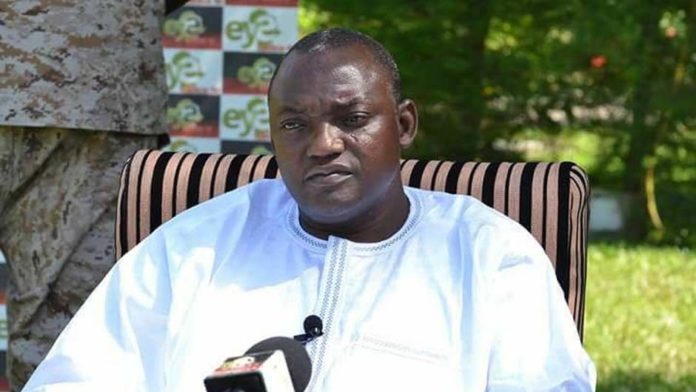
The new Gambian president has said that he considers the UK to be his country’s number one trading partner.
In his first interview with a British media outlet, Adama Barrow told Sky News: “There is a strong tie with Britain and Gambia if you recall history.
“They colonised Gambia and we are part of the Commonwealth and we will return to the Commonwealth again. Any aspects that’s going on in Gambia, Britain will be our number one partner in terms of trade, in terms of democracy, in terms of good governance. They will be our partners.”
President Barrow was at pains to try to calm fears about The Gambia as a holiday destination after thousands of British tourists were caught up in the turmoil over the past few days.
With President Barrow’s predecessor Yahya Jammeh still ensconced in the capital’s State House, many holidaymakers have already been evacuated on safety grounds for fear of violence.
The Presidents of Guinea and Mauritania arrived in Banjul this morning in an attempt to offer the former leader one last chance to leave peacefully.
The former leader, who has ruled Gambia for the past 22 years, has been attempting to negotiate an amnesty against potential prosecution for human rights abuses during his time in office. President Barrow didn’t rule that out but wouldn’t be drawn on any commitment.
In an interview at a secure location in the Senegalese capital Dakar, the newly appointed President said: “We cannot make any premature decision. Once in office we will look at everything comprehensively.”
One of his aides has previously said the Barrow administration would take action against Mr Jammeh for decades of abuse.
The Senegalese army spokesman was quoted saying his troops are on the outskirts of the capital awaiting orders.
A noon deadline appears to have been extended while negotiations continue for a peaceful resolution. Mr Jammeh has asked for an extension until 4pm UK time.
President Barrow appeared calm and relaxed. Like the new US President, Donald Trump, he was the surprise victor in Gambia’s election last month.
“We have a lot in common,” he said, “We are both businessmen”. He urged the new American leader to be open to business and trade with Gambia and Africa generally.
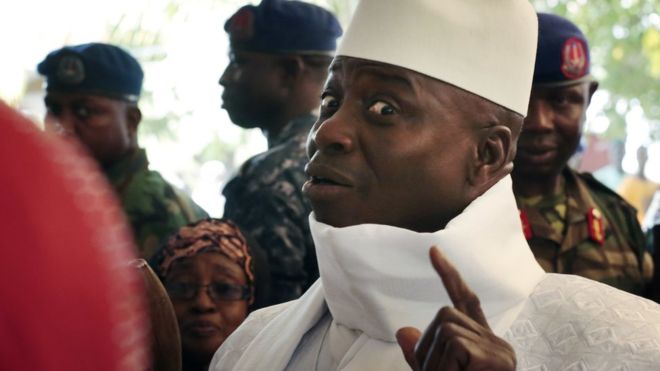
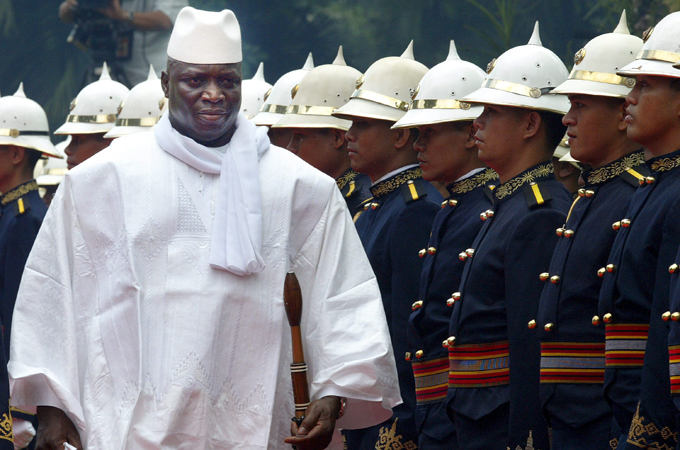
STILL AROUND: Embattled Gambian leader Yahya Jammeh
The deadline for embattled Gambian leader Yahaya Jammeh to relinquish power has been extended, media sources indicate.
Jammeh, who has been holding day-long talks with Presidents Mohamed Ould Abdel Aziz and Alpha Conde of Mauritania and Guinea, had been given up to midday today to relinquish power to president-elect Adama Barrow, who was sworn in yesterday in at the Gambian embassy in the Senegalese capital, Dakar.
Long-serving ruler Jammeh, 51, initially accepted defeat to Barrow following the December 1 elections but later rejected the result and by early today regional body ECOWAS, acting with the support of the UN, had threatened to force Jammeh out but the combined forces were asked to halt advance until the deadline is over.
Late yesterday Senegalese army spokesman, Col Abdou Ndiaye, said that troops who were now in The Gambia were prepared to fight if necessary.
“It is already war, if we find any resistance, we will fight it,” he said, adding: “If there are people who are fighting for the former president, we will fight them,” he said.
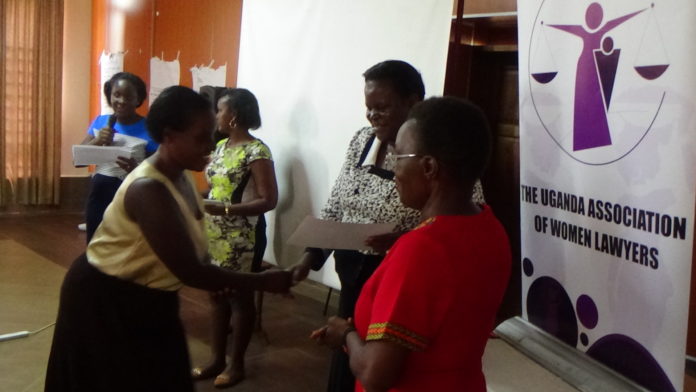
The Association of Women Lawyers (FIDA Uganda) has today launched the FIDA legal Aid app in a bid to provide easy accessibility of legal services.
FIDA Executive Director Irene Odida Ovonji
The launch presided over by FIDA Chief Executive Irene Odida Ovonji took place today at Esella Hotel in Kira Town council, Wakiso district, where the women lawyers had camped for a three day training programme for Community Legal Volunteers {CLVs}. The CLVs were selected from the districts of Kampala, Kapchorwa, Lwengo, Kabale and Arua.
Harriet Nabankema, a Senior Legal Advocate at FIDA Uganda said the App will provide instant and free legal aid to all people. She further noted that the profiling of different legal aid service providers across the country will help courts by settling some disputes out of court in the process reducing on the case backlog.
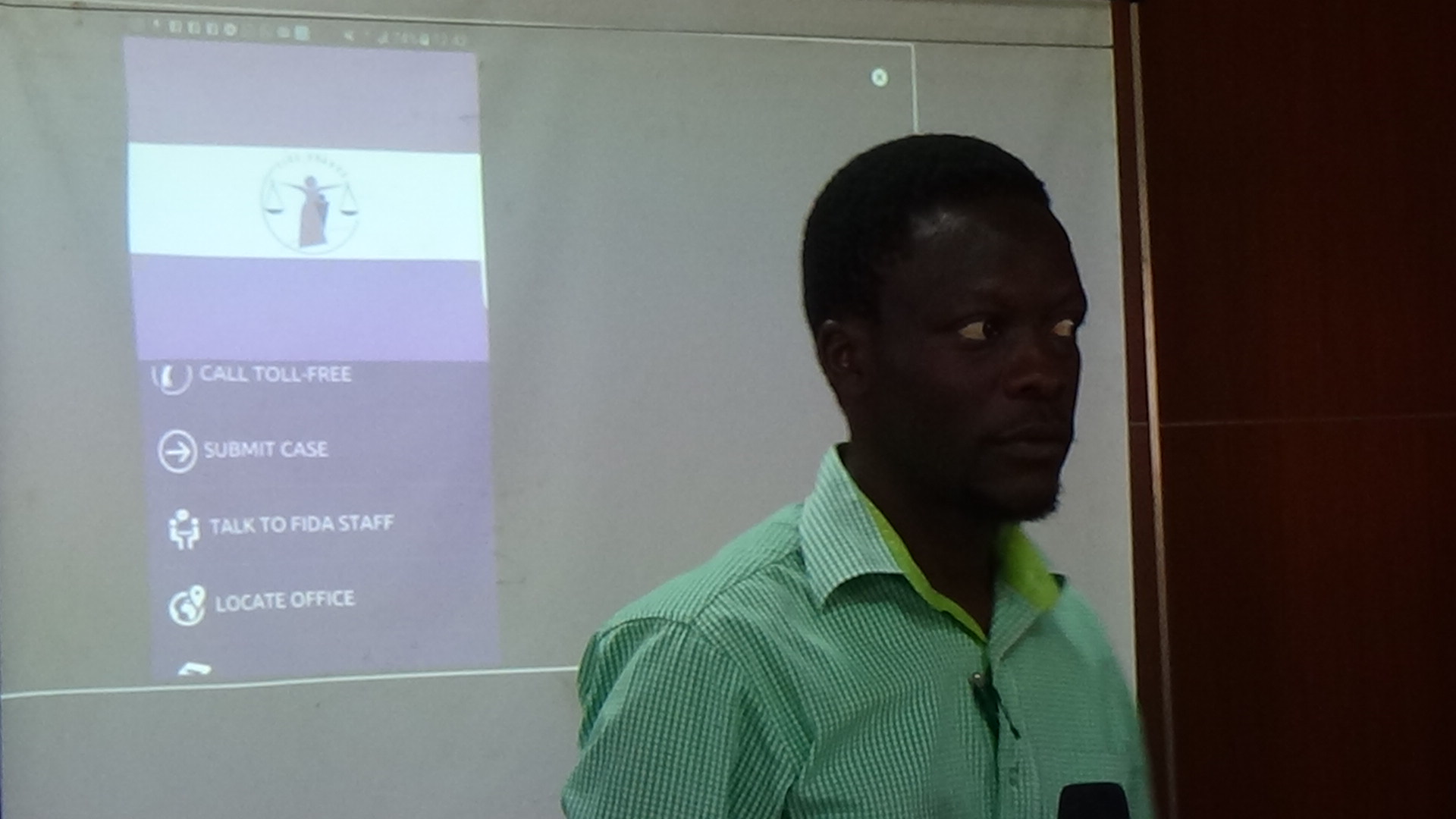
Raymond Mudduawulira explaining the features of the App.
Raymond Mudduawulira, a programmer who developed the app with colleagues said some of the features on the FIDA Legal Aid App, expected to come into use in a week’s time, include a call button which leads users to a toll free line; a case section which allows one to write and post any issue of concern to FIDA, display of all workers of FIDA and their profile, a list of FIDA offices which will display all the officers and ability to contact UBER service.
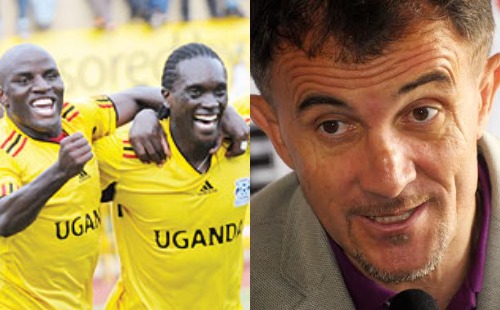
FEUDING: Former Cranes skipper David Obua (L) and Coach Micho Sredjovic
The Uganda national football team, the Uganda Cranes, played its first match at the Africa Cup of Nations on Tuesday against Ghana.
Sadly, Cranes lost the match to Ghana. In his analysis at the Super Sport studios where he is currently one of the commentators analysing AFCON, former Cranes captain David Obua likened the National Team’s system of play to street football.
“The structure was not there. I’ll be honest with you. They (Uganda Cranes) were playing street football,” he said attracting a barrage of attacks from fans.
It turned out most of the fans didn’t understand by what he meant by street football. He would later take to social media to explain what he meant.
“Street football was having players running all over the place, losing our shape but it looks good to watch coz the effort is there. If you saw how we played with the same system but on many occasions having our centre back Isinde getting caught out of position!” he wrote on twitter.
This didn’t save him the fans wrath either. And it appears the comments rubbed the coach of the national team, Micho the wrong side.He has since taken to the same forum to attack the former cranes skipper, calling him a perennial loser.
“Perennial losers & failures with UG CRANES that never qualified for AFCON talk with jealousy same like Bodaboda driver dream & talk of Formula 1,” he wrote Friday morning. However, he too has come under fire from fans over attacks on the skipper revered by many as a legend.
Apart from playing for the National team, Obua played for Scottish Premier League club, Hearts, and also played for a number of other clubs including Kaizer Chiefs (South Africa), Wilmington Hammerheads (US) and Express (Uganda).
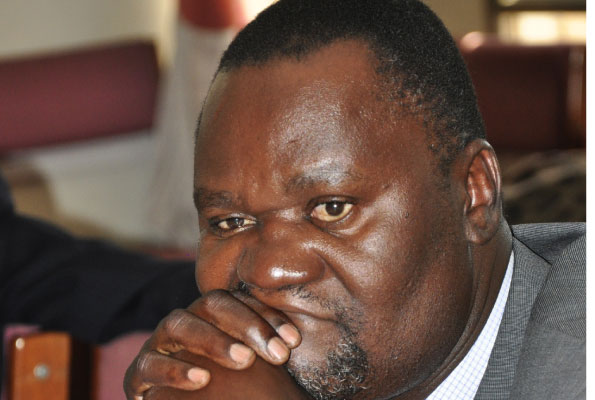
“This Musoga lawyer will leave a mark on the history of investigations carried out by the Parliament of Uganda, and I think this time round he will help expose the irregularities in the oil sector. I also think that at one time in future he could become the first Musoga to have real presidential prospects if politics in this country somehow changes,” Kamadhi said, just after taking his now traditional seat next to Gaudensia Mbaroraburora, aka Club Belle.
But as usual, Yorokamu Bwambale shot up, saying he was not taking Kamadhi’s ‘lies while sitting down’. “Who is that you are talking about? Abdu Katuntu? I don’t see that (leading Uganda) happening anytime in the near future; has he ever held a gun or even gone to Kyankwanzi?” Bwambale, the cool-headed but obstinate man from the Rwenzori region asked, adding: “I think Katuntu is just like his other learned friend, retired Justice James Ogoola Munnange, whose biggest contribution to Uganda is finding comfort under his bed!”
However, Kamadhi insisted ‘Katuntu’s qualities make him stand out as one of the few nationalists and patriots capable of defending the interests of Uganda’.
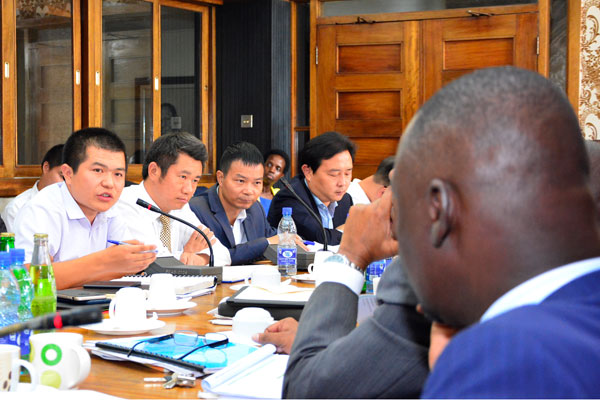
Officials of some Chinese construction companies appearing before COSASE led by Bugweri MP Abdu Katuntu
“You know Katuntu heads the committee that oversees Statutory Agencies like Uganda Revenue Authority and Uganda National Roads Authority and just recently he managed to expose a rip-off of over 30 billion shillings by some shadowy Chinese road construction firm, reportedly authorized by one of the beneficiaries of the handshake. The committee is called COSASE,” Kamadhi said, adding that Katuntu had been assigned another task that links him directly to defending the interests of Uganda.
“You wait it is going to be fire in Parliament; do you know Abdu Katuntu? Don’t you know that the Speaker who, I must proudly say is also a Musoga, has asked him to lead the investigations into the presidential handshake in which 6 billion shillings was shared out by just 42 senior government officials? Ask the top executive of the Uganda National Roads Authority,” Kamadhi said, before delving into details about the money which, he said, had accrued from a ‘Capital Gains Tax’ case reportedly won by the said officials against two oil firms, Heritage Oil and Gas and Tullow Oil.
“Anyway, isn’t it ironic that just a few months after the President giving the so-called patriotic Ugandans that humongous reward, one of them gets involved in the Shs30 billion scam and ‘apologises to Ugandans’; another who heads the revenue collection body fails to ensure that the set target is less by a whooping Shs200 billion, while yet several others who work both in the Attorney General’s chambers and the Solicitor General’s Office had to be reminded to file submissions for defence at the International Court of Justice in a case in which Uganda could lose 10 billion dollars to the Democratic Republic of Congo, for acts of plunder reportedly committed by Ugandan senior military officials in the DRC in the 2000s?” ‘Insect Professor’ Maurice Ogeng Ladit, asked.
“By the way I hear the person who rewarded our so-called gallant Ugandans called the ruling party caucus to justify the payments but it seems all did not go as expected and that is how the Parliament now comes in to carry out the investigation,” Prof. Ogeng said, adding: “This is the first time such a thing is happening but trust the person who gave the reward, he eventually advised the caucus members on the parameters the investigation should focus on!” The good old Professor even wondered whether the money won had actually reached the state coffers.
“You see, I heard that the portion that remained after the sharing out was used on Karuma Hydropower Dam, but that is strange given that the construction of the dam started years ago yet the money won is a yesteryear issue,” Prof Ogeng, the most educated member of the group alongside lawyer Rebecca Kagada, said.
Lawyer Kagada aka Rebecca K, who incidentally also hails from Kamuli in Busoga, then weighed in on the discussion, saying she trusted her ‘colleague lawyer’ Katuntu to do a good job.
“Like Kamadhi said, counsel Katuntu helped us expose some of these thieves, some of who pass of as born-again Christians,” Rebecca K, known for her acerbic tongue, went off.
Rebecca K added: “It is a shame that the names of these so-called born again women who head very powerful government institutions are cropping up in almost all scams we are witnessing in the country; I think in future, in order to deter such spiteful persons from occupying public office, they should also be subject to parliamentary approval.”
It was at that moment that an anchor read news about embattled President Yahaya Jammeh of The Gambia, drawing the attention of club members to the radio.
“You mean that man is still the President?” Hitler Eregu, the former rebel-turned-ruling party supporter, asked. “I thought he had been flushed out by now,” he added.
Then Kamadhi joined in, giving a lengthy history of Jammeh and how he had ‘ruined Gambia, a formerly very good tourism destination’.
“The man is a dictator per excellence, even after 22 years as president, presiding over a poverty-stricken population, he doesn’t see reason to leave the stage for another person to try and correct his errors,” Kamadhi said, adding: “I just can’t help imagine that his country has a population of only two million people and that they are very poor.”
“Anyway, at any rate Jammeh is going because all the relevant regional and global authorities including the Security Council have abandoned him; that makes the continent one dictator less,” Insect Professor Ogeng Ladit said, sheepishly looking at Kamadhi.
“Why are you looking at me like that?” Kamadhi asked before the Professor and other members of the group bust out laughing.
“Are there some other dictators on the continent?” Kamadhi asked, before declaring his intention to “go home early today and wait for what my ‘brother Katuntu’ will unearth in the two-month investigation.”
Kamadhi then walked off, closely followed by Mbaroraburora aka Club Belle, raising suspicion of a developing relationship between the two. Next to leave was Insect Professor Ogeng Ladit, in the company of lawyer Rebecca K, who both declared they were out for ‘a frothy one’.
Chairman Akalyamaggwa Bonnabagaga, who had all along had little contribution to debate, wished us all a ‘goodnight’.
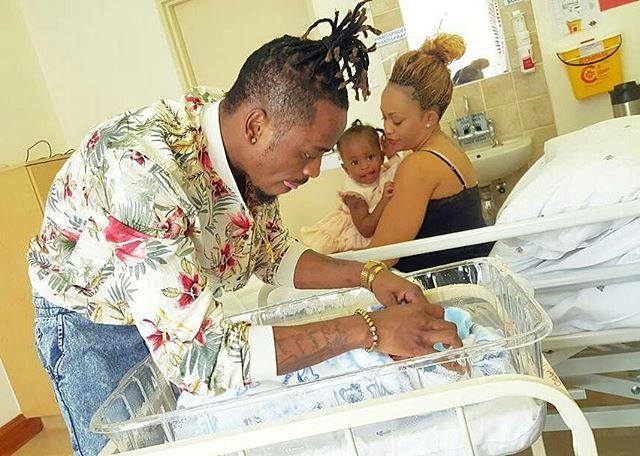
ADMIRING: Tanzanian crooner Daimond Platinumz admires his new-born baby boy. He is planning a big party to expose the toddler to relatives and frinds
The face of the Diamond Platnumz and Zari Hassan’s first born Tifah Chibu was exposed to the public for the first time when the baby made 40 days.
The unveiling was at a grand party that saw even corporate companies sign the baby as the face of their products! Today, we can exclusively report that East Africa’s most famous celebrity couple is planning the same for their second born Nillan Chibu, who’ll be making 40 days soon.
According to Islamic tradition, women are encouraged to stay indoors for 40 to ensure their newborns are not exposed. They then celebrate their baby’s 40th day after birth, allowing them to step out and even unveil them to other people.
And, Diamond Platnumz, who has already revealed the date and venue of the party, said Nillan’s 40th day celebration is going to be ‘lit’.
Diamond Platnumz is more excited than anyone else to unveil his second child’s face to the world and through Instagram, the dad of two announced that Nillan Chibu’s party will be a day to remember as he plans to host it in Dar es Salaam, just like Tiffah’s unveiling party.
The Kokoro hit maker also revealed that this party will be held on January 28, meaning that he will have to fly in his mother, baby mama and his in-laws who are currently in South Africa.
“Talking to my Mini me, @princenillan about his 40 on the 28th Jan in Dar es Salaam…. Trust me! It’s gonna be a day to remember!” he captioned a photo of his son.
END OF THE ROAD? Mexican drug lord Leora Guzman aka 'El Chapo' after he was extradited to the US yesterday.
Drug kingpin Joaquin ‘El Chapo’ Guzman, who became a legend in Mexico through his dramatic prison escapes and years of staying just ahead of the law, arrived late Thursday in New York after he was extradited to the United States.
Guzman will appear Friday in a federal courtroom in Brooklyn, where he will stand trial at a later date. Stringent security measures were being put in place around the Manhattan jail where Guzman is to be held, a law enforcement source said. The Brooklyn Bridge will be closed while the drug lord is being transported to court.
The extradition appears to be timed. Mexican authorities wanted to turn over Guzman, head of the Sinaloa cartel, before Friday’s inauguration of President-elect Donald Trump, a US official said. Trump angered Mexico during his campaign by demanding it pay for a border wall.
Guzman, who was moved last year to the border city of Ciudad Juarez, was picked up by a team from the Drug Enforcement Administration, Immigration and Customs Enforcement and US marshals.
Six separate indictments across the United States lay out wide-ranging cases against Guzman and others, alleging they have brought in billions in drugs to the United States and laundered profits back to Mexico.
The extradition brings an end, at least for now, to Guzman’s exploits in Mexico, which included a 2015 prison escape through a mile-long tunnel that featured a motorcycle on tracks.
Guzman will not face death penalty in the US
A court in Mexico City on Thursday denied the drug lord’s appeal of the extradition.
The US Justice Department thanked officials in Mexico “for their extensive cooperation and assistance in securing the extradition of Guzman … to the United States.”
Guzman and other cartel leaders were indicted in 2009 in US District Court in Brooklyn on charges of conspiring to import more than 264,000 pounds of cocaine into the United States between 1990 and 2005. The alleged traffickers are accused of sharing drug transportation routes and obtaining their drugs from various Colombian drug organizations.
Guzman also faces charges in California, Texas, Illinois, Florida and New Hampshire. Mexico’s Foreign Ministry has said it had received assurances that if convicted Guzman would not receive the death penalty. Mexico opposes death sentences.
Federal indictments described the Sinaloa cartel as an enterprise that utilizes murder, kidnappings and bribes.
The indictments refer to Guzman by various nicknames, including “El Rapido,” “Papa,” “El Viejo” and “El Chapo” (which means “Shorty.” Guzman is 5 feet 6 inches tall.)
Over the years, Guzman gained near-mythic status in his home country. He has been the subject of ballads called “narcorridos,” a subgenre dedicated to cartels and their narco-violence.
Tunnels and a laundry cart getaway
For years, the notorious cartel leader proved slippery, staying just ahead of the law. He is known for using intricate tunnel systems for both evading authorities and moving the massive quantities of drugs that made the Sinaloa Cartel so powerful.
Guzman’s recapture in January 2016, after six months on the lam, represented a major success in what has been an embarrassing ordeal for Mexico. For many, “El Chapo” is a symbol of the Mexican government’s corruption.
In 2001, he escaped from a prison in Jalisco in a laundry cart. Guzman was apprehended in February 2014 and escaped from Altiplano prison in July 2015 by crawling through an opening in the shower area of his cell block leading to a mile-long tunnel.
In August, Guzman’s son was kidnapped from a Puerto Vallarta restaurant, in what was perceived as an attempt to exploit the cartel’s vulnerability. He was later freed.
The trafficking of heroin, marijuana, cocaine and methamphetamine into the United States from Mexico is an annual $19 billion to $20 billion industry, according to a Department of Homeland Security report.
And the Sinaloa cartel has traditionally held a dominant share of that, thanks to Guzman’s sophisticated business strategies and Sinaloa’s control of trafficking routes.
A Customs and Border Protection report that analyzed seizure data along the border between 2009 and 2010 found that “the removal of key personnel does not have a discernable impact on drug flows” into the US.
“El Chapo” was aware that drug trafficking won’t end once he’s gone. “The day I don’t exist, it’s not going to decrease in any way at all,” he told actor Sean Penn in an interview in October 2015.
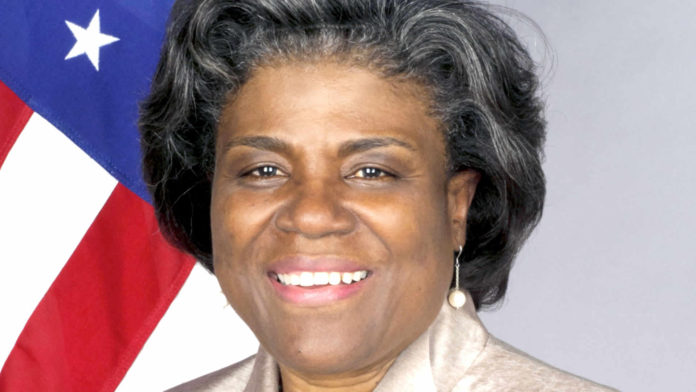
SNUBBED: Outgoing US Assistant Secretary for the Bureau of Africa
Outgoing United States Assistant Secretary of State for the Bureau of African Affairs visited Juba but failed to meet President Salva Kiir or any government representative.
Before travelling to Ethiopia, Linda Thomas-Greenfield was in Juba on Wednesday for a one-day visit, to discuss issues of mutual concern including humanitarian assistance with the international organisations working in the country.
Thomas-Greenfield, who, in the wake of the swearing in of Donald Trump as the 45th US President today, was probably carrying out her last assignment as a US government official, concluded her visit to South Sudan by meeting only the US embassy staff and a selected number of editors from South Sudanese newspapers and radio stations.
“I am disappointed that I cannot meet the President or other member of his government,” Thomas-Greenfield reportedly told the journalists.
The American diplomat, said her one day trip was meant to emphasise Washington’s position on deployment regarding the UN Security Council authorized Regional Protection Force and continued support to the full implementation of the shaky peace agreement.
She also said the national dialogue announced by President Salva Kiir last month should be inclusive.
“It has to be one in which people feel confidence in the process,” she told editors from the US funded Eye Radio, UN’s Radio Miraya and independent The Juba Monitor newspaper in a brief encounter in Juba on Wednesday.
“So it is not just the process that is being controlled by the government but is an open process that everyone who is participating makes some contribution to how it will be organized,” she said.
The National Dialogue announced by President Kiir will be headed by former political and religious leaders.
President Kiir appointed the steering committee of more than 50 members without consulting his rivals from the armed SPLM In Opposition or any other political parties, attracting criticism of attempting ‘to negotiate with himself’.
West African leaders have given Yahya Jammeh a final opportunity to relinquish power after Senegalese troops entered The Gambia.
Mr Jammeh has been given until today noon to leave office or be forced out by UN-backed regional forces, and troops have been told to halt their advance until the deadline passes.
The Economic Community of West African States (Ecowas) is acting in support of Adama Barrow, who was sworn in as the new Gambian president on Thursday.
His legitimacy as president, after winning last month’s election, has been recognised internationally.
Last-ditch mediation talks, led by Guinea’s President Alpha Conde, are due this morning.
Chairman of the Ecowas commission, Marcel Alain de Souza, said that if the meeting with Mr Conde proved unsuccessful, militarily action would follow.
“If by midday, he [Mr Jammeh] doesn’t agree to leave The Gambia under the banner of President Conde, we really will intervene militarily,” he said.
Ecowas said that its forces had encountered no resistance after entering The Gambia on Thursday.
Troops from Senegal and other West African countries crossed into The Gambia after an initial deadline for Mr Jammeh to stand down passed with his resignation.
Mr Barrow, who remains in Senegal, has said that he will not return to Gambia’s capital, Banjul, until the military operation had ended.
The threat by the West African regional bloc Ecowas to remove Mr Jammeh by force is supported by the 15-member UN Security Council, although the council has stressed that a political solution should be the priority.
A Senegalese army spokesman, Col Abdou Ndiaye, said that troops who were now in The Gambia were prepared to fight if necessary.
“It is already war, if we find any resistance, we will fight it,” he said, adding: “If there are people who are fighting for the former president, we will fight them.”
But Col Ndiaye said the main goal of Ecowas was to restore democracy and to allow the newly-elected president to take power.
In his inaugural speech at the Gambian embassy in Senegal’s capital, Dakar, President Barrow ordered all members of The Gambia’s armed forces to remain in their barracks.
Any found illegally bearing arms would be considered “rebels”, he said.
After first accepting defeat he reversed his position and said he would not step down. He declared a 90-day state of emergency, blaming irregularities in the electoral process.
The electoral commission accepted that some of its early results had contained errors but said they would not have affected Mr Barrow’s win.
Mr Jammeh has said he will stay in office until new elections are held.
Remaining in power would also give him protection against prosecution for alleged abuses committed during his rule.
Senegalese forces (seen in this archive photo) are among the best trained in Africa.
Senegalese troops have entered The Gambia to ensure Adama Barrow assumes power as the country’s new president, a Senegalese army spokesman has said.
It comes shortly after Mr Barrow took the oath of office at The Gambia’s embassy in the capital of Senegal.
He has been recognised internationally. But strongman Yahya Jammeh has refused to quit and is backed by parliament.
West African leaders have threatened to remove Mr Jammeh by force. The UN has backed their support for Mr Barrow.
The 15-member Security Council stressed on Thursday that this should be pursued “by political means first”.
Senegalese army spokesman Col Abdou Ndiaye was quoted by news agencies as saying the country’s troops entered The Gambia on Thursday afternoon.
Nigeria said earlier in the day that its “armed reconnaissance air force are over Gambia”, AFP reports.
“They have the capacity to strike,” Nigerian Air Force spokesman Ayodele Famuyiwa told the news agency.
West African military forces have made it clear they are ready to enforce a transfer of power in the country, a popular beach destination among European holidaymakers.
Mr Barrow took oath at the Gambian embassy in Dakar.
In his inauguration speech, he ordered all members of The Gambia’s armed forces to remain in their barracks.
“Those found illegally holding arms will be considered rebels,” he warned.
Western ambassadors to Senegal, the UN envoy for West Africa and officials from the regional bloc Ecowas (Economic Community of West African States) attended the ceremony, while hundreds of Gambian expatriates gathered outside the compound.
At the scene – Thomas Fessy, BBC News, Banjul, The Gambia
People have been following the inauguration of Adama Barrow live on Senegalese TV, which many receive here in The Gambia.
Few people have come out to celebrate, timidly chanting the name of Mr Barrow or waving at the cars driving by.
Tension is still running high, as people are very much aware that the political crisis is not over.
Banjul feels like a ghost town. Even the usually busy thoroughfares of Serekunda, on the outskirt of the capital, are deserted.
Many say the military remain – like Yayha Jammeh – unpredictable.
But in a sign that parts of the security forces may switch sides, I have met five police officers standing outside their station, relaxed and visibly happy.
I asked how things were going, and one of them replied with a smile “everything is alright, change is good.”
Meanwhile, Mr Jammeh’s term in office has been extended for three months by a two-thirds majority in parliament. Some experts say he still has a legitimate claim to be called the country’s president.
Gambian Information Minister Sidie Njie told the BBC on Thursday that Mr Jammeh would not leave his office.